

Finding the Best Coffee Beans for Your Business
Choosing the best coffee beans isn't just about flavour; it's a strategic move that helps shape your company culture and what clients think of you. For any workplace or hospitality venue, the right coffee is a surprisingly powerful tool for connection, boosting morale, and making a brilliant first impression.
The True Value of a Perfect Cup of Coffee

Coffee is so much more than a morning ritual. In any professional setting, it’s the unofficial currency of collaboration and creativity. The simple act of offering a beautifully brewed cup can turn a standard meeting into a warm, welcoming experience, or a flat afternoon into a productive brainstorming session.
Think of your office coffee as a welcoming handshake. A weak, bitter, or uninspired brew sends a subtle message of indifference. But serving rich, aromatic, high-quality coffee? That silently communicates a commitment to excellence, care, and attention to detail. It shows your team and your guests that you value quality in everything you do.
Before we dive in, here’s a quick roadmap of the essential factors we'll cover in this guide. Think of it as your checklist for making a smart, informed decision that will pay dividends with every single cup.
Quick Guide to Selecting Your Coffee Beans
| Factor | Why It Matters for Your Business | What to Look For |
|---|---|---|
| Flavour Profile & Roast Level | Caters to diverse tastes, ensuring everyone finds a drink they enjoy. | Balanced, crowd-pleasing notes (e.g., chocolate, nuts, caramel). Medium roasts are a safe bet. |
| Single-Origin vs. Blend | Blends offer consistency and balance; single-origins provide unique, distinct flavours. | Blends for reliable, everyday quality. Single-origins for a premium, talking-point option. |
| Freshness & Storage | Freshly roasted beans deliver far superior aroma and taste, directly impacting quality. | A recent roast date on the bag; whole beans stored in airtight, opaque containers. |
| Machine & Grind Compatibility | The wrong grind can ruin great beans and damage your equipment. | Beans optimised for professional bean-to-cup machines; a consistent, appropriate grind size. |
| Sourcing & Sustainability | Reflects your company's values and commitment to ethical, responsible practices. | Certifications like Fairtrade or Rainforest Alliance; roasters with transparent supply chains. |
| Cost-Per-Cup & Supply | Balances budget with quality and ensures you never run out of a crucial daily perk. | A partner who offers competitive pricing, reliable delivery, and scalable supply plans. |
| Training & Support | Empowers your team to make the most of the investment and maintain quality. | Suppliers who provide machine training, maintenance support, and brewing guidance. |
This table lays out the journey ahead. Now, let’s get into the details of why this matters so much today.
A Cultural Shift in the Workplace
The expectation for high-quality coffee has completely changed. Gone are the days when a jar of instant granules and a kettle would do the job. Today’s workforce is used to the craft of high-street cafés and now expects that same level of quality at work. This cultural shift is actually a brilliant opportunity for businesses to stand out.
- Boosting Morale: Offering premium coffee is a daily perk that genuinely makes employees feel valued and appreciated, which has a direct impact on their satisfaction and productivity.
- Enhancing Brand Image: For clients and visitors, a superb coffee experience reflects positively on your brand, setting a high standard from the moment they walk through the door.
- Fostering Connection: The coffee machine naturally becomes a hub for interaction, where ideas are shared and relationships are built, strengthening your company culture from the ground up.
More Than a Beverage—An Investment
The scale of coffee's importance is staggering. In the UK, we collectively get through around 98 million cups of coffee every single day, highlighting just how central it is to our daily lives. With 63% of UK adults now drinking coffee regularly, it’s become a dominant cultural force. You can discover more about these coffee consumption statistics and what they mean for businesses.
Investing in the best coffee beans is an investment in your people, your brand, and the very atmosphere you want to create. It’s a simple yet profound way to show that you care about the small details that make a big difference.
This guide is designed to help you make that investment wisely. We'll explore everything from flavour profiles to machine compatibility, ensuring you can confidently choose the perfect coffee that aligns with your company’s values and elevates every single cup.
Decoding the Language of Coffee Flavour
Choosing the right coffee beans can feel a bit like learning a new language. The bags are often covered in words like "bright," "full-bodied," or "long finish," but what does that actually mean for the cup of coffee you’ll be serving in your office or cafe? Let's break down the jargon and turn these abstract terms into real flavours you can pick with confidence.
Just describing a coffee as 'strong' or 'mild' is like calling a song 'loud' or 'quiet'. You miss all the good stuff—the melody, the rhythm, the feeling. To really get a handle on what you’re buying, we need to look at the three core elements that give a coffee its character: acidity, body, and finish.
Nailing these concepts means you can explain what you like and choose beans that will hit the right note with a wide range of people. It’s about turning every coffee break into a genuinely great experience.
Understanding Acidity in Coffee
When we talk about acidity in coffee, we’re not talking about something sour or sharp. Think of it as the bright, tangy, lively quality that makes your mouth water—like the crisp bite of a green apple or the zesty pop of a ripe orange. It’s a really desirable quality that adds life and complexity to a brew.
A coffee with a high, sparkling acidity often feels clean and refreshing. You’ll find this trait a lot in beans grown at high altitudes, especially in places across Africa.
A coffee's acidity is the sparkle, the high note that cuts through richer flavours and gives the cup its life. Without it, even the most flavourful coffee can taste flat and one-dimensional. It’s the difference between still and sparkling water.
On the flip side, a coffee with low acidity will feel smoother and rounder. These beans, often coming from places like Brazil or Sumatra, are loved for their gentle, comforting profiles, which makes them a fantastic choice for an all-day, crowd-pleasing office coffee.
Exploring the Body of a Bean
Next up is body. This is all about the weight and texture of the coffee in your mouth—the feeling of richness and thickness. The easiest way to get your head around it is to think about different types of milk.
- Light Body: This feels thin and delicate on the tongue, a bit like skimmed milk. It’s clean, light, and doesn’t leave much of a lingering texture.
- Medium Body: This has a bit more presence, like whole milk. It gives you a smooth, balanced mouthfeel that’s satisfying without being heavy.
- Heavy or Full Body: This is the richest and most viscous of the lot, almost like the velvety texture of double cream or melted dark chocolate. It coats your tongue and has a powerful, lasting presence.
A coffee’s body is massively influenced by where it’s from and how it was processed back at the farm. For instance, natural processing—where the whole coffee cherry is dried with the fruit intact—often creates a heavier, more syrupy body because all the sugars from the fruit pulp soak into the bean. Washed processing, where the fruit is removed before drying, usually gives you a lighter, cleaner body.
What Is the Coffee Finish?
Finally, there’s the finish. This is simply the taste and feeling that stays with you after you’ve swallowed your coffee. Does the flavour vanish straight away, or does it hang around on your palate? A really good coffee will have a clean, memorable finish that can even evolve over several seconds, sometimes minutes.
Think of it as the afterglow of a great conversation. A short, abrupt finish can feel a bit underwhelming. But a long, complex finish invites you to savour the moment, revealing subtle hints of chocolate, spice, or fruit long after you've put the cup down. This lasting impression is often the sign of a truly exceptional, well-roasted coffee.
How Roasting Unlocks Your Coffee's True Character
Think of a green, raw coffee bean. It’s packed with all the potential for an incredible cup of coffee, but that potential is completely locked away. The roaster is the one who holds the key, turning that dormant promise into the complex, aromatic brew we all know and love. Roasting is a masterful blend of science and art—a delicate dance with heat that ultimately defines the character of the beans you choose.
The process isn't too different from how a chef treats a prime ingredient. A light, quick sear is perfect for preserving the delicate, natural notes of a beautiful piece of fish. In the same way, a light roast is a brief tumble in the roaster’s heat, designed to keep the bean's inherent bright, fruity, or floral characteristics front and centre. It’s the purest expression of where that bean came from.
On the other hand, think about how slow caramelisation brings out deep, rich flavours in food. A dark roast does exactly that for coffee, pushing the beans further in the roaster to develop bold, smoky, and chocolatey notes. One isn't necessarily better than the other; the "best" roast is simply the one that delivers the experience you want to create for your team or your guests.
The Spectrum of Roasts
Getting to grips with the different roast levels is the first step in picking beans that will hit the right note with everyone. Each stage of the roast coaxes out different qualities.
-
Light Roasts: These beans are light brown, with no visible oil on the surface. They’re known for their bright acidity and higher caffeine kick, really letting the bean’s origin shine through—think citrus, berry, or floral hints.
-
Medium Roasts: A classic medium brown, these beans strike a brilliant balance. They have less acidity and a fuller body than light roasts, often carrying notes of caramel, nuts, and chocolate. It’s no surprise they’re an incredibly popular, crowd-pleasing choice.
-
Dark Roasts: These beans are dark, almost black, and often have a tell-tale oily sheen. Here, the roasting process itself becomes the dominant flavour, resulting in a heavy body with deep, smoky, and bittersweet notes.
This diagram breaks down the core components that roasters are working with to shape the final taste in your cup.
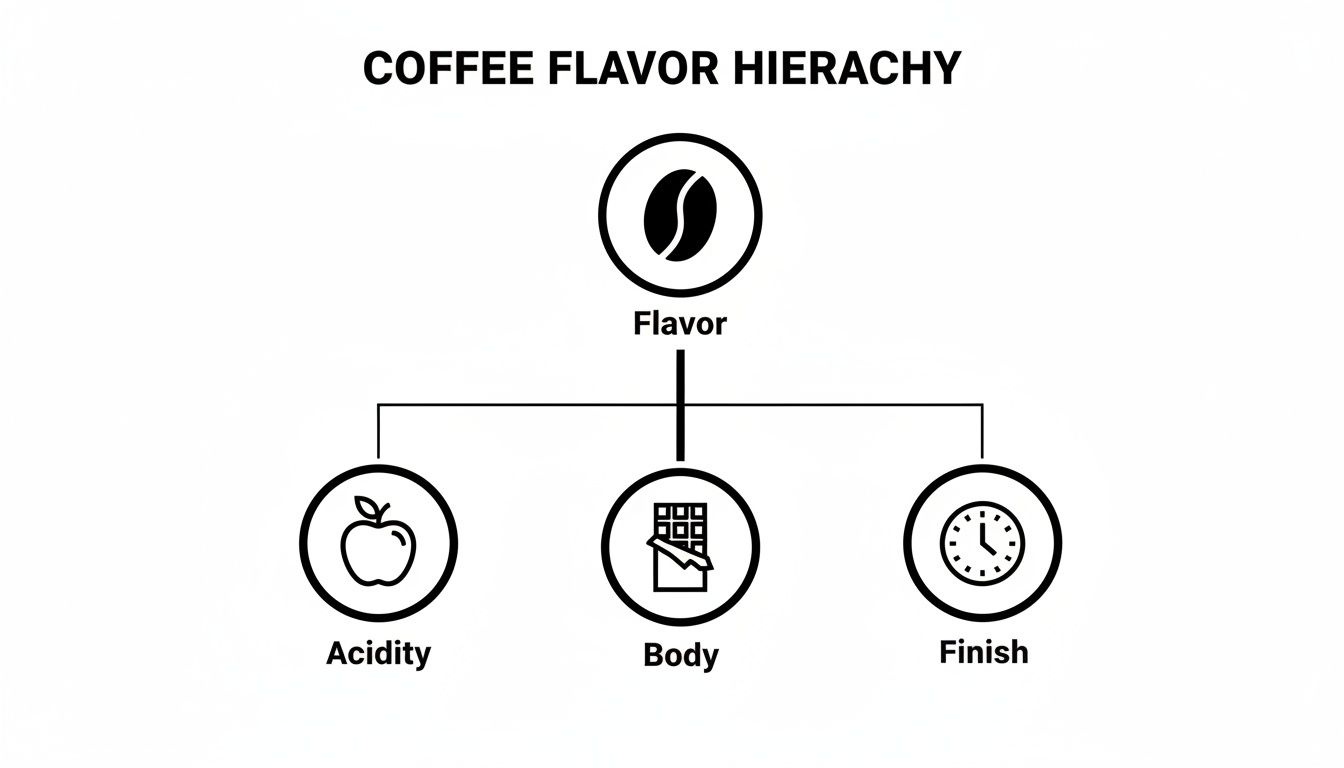
As you can see, the overall flavour is a harmony of acidity, body, and finish—and all three are profoundly influenced by how long and how hot the beans are roasted.
Matching the Roast to Your Machine
For offices and hospitality venues using automated bean-to-cup machines, the roast level isn't just a matter of taste. It’s a practical consideration, too. And very dark, oily roasts can be a real headache for this kind of equipment.
The intense heat of a dark roast draws the natural oils to the surface of the bean, leaving a shiny, greasy coating. While it might look appealing, these oils can build up inside the machine's grinder and brewing unit, leading to clogs, malfunctions, and a lot of maintenance calls.
For this reason, a well-balanced medium roast is often the perfect choice for automated systems. It delivers a rich, satisfying flavour that appeals to a wide audience, but without the excess oils that can compromise your machine's performance and lifespan.
It’s the ideal middle ground—offering complexity and depth without the operational headaches of a very dark, oily bean.
The Roaster's Craft in a Growing Market
The art of roasting is becoming more important than ever as the UK’s love for quality coffee continues to boom. Our coffee shop scene is thriving, with an incredible 80% of Brits visiting at least once a week and a dedicated 16%—that’s one in six people—stopping by for their daily fix. This isn't just a trend; it's a huge cultural shift, with UK consumers spending over £3.2 billion on coffee, tea, and cocoa in 2023, nearly double what it was a decade ago. Discover more insights into the UK's coffee consumption habits.
What does this mean for you? People now expect and appreciate a much higher quality brew, not just in their local café but in their workplace, too. By understanding the roaster's craft, you’re far better equipped to meet that expectation and turn a simple coffee break into a genuinely enjoyable moment.
Single Origin or Blend? Let’s Break It Down
When you start digging into the world of coffee beans, you'll quickly run into two main camps: single origins and blends. Getting to grips with the difference isn't just about showing off your coffee knowledge; it’s about deciding what kind of experience you want to create in your workplace or venue. Each has a completely different philosophy, and the right choice depends on the story you want each cup to tell.
Think of a single-origin coffee as a solo artist. It’s all about individuality, a pure expression of one specific place. These beans come from a single farm or a small, defined region, and their flavour is a direct result of the soil, climate, and altitude of that one location. In the coffee world, we call this the terroir.
A single-origin coffee is a real conversation starter. It offers a distinct, often adventurous flavour profile that can take your palate on a journey. If you’re a business looking to impress coffee lovers or create a memorable, premium experience, having a rotating single origin on offer can be a fantastic talking point.
The Power of the Solo Artist
Single-origin coffees are prized for their unique, specific characteristics. Because they aren’t mixed with anything else, their flavour is undiluted and totally true to where they came from.
- Distinct Flavour Notes: You can expect clear, pronounced tastes. It might be the bright, citrusy acidity of a high-altitude Ethiopian bean or the deep, earthy notes of one from Sumatra.
- A Story in Every Cup: Every single origin tells the story of its home. This traceability connects you to the farmer and the land, adding a genuine layer of authenticity to the experience.
- Seasonal Excitement: Just like with fine wine, many single origins are seasonal. This gives you the chance to introduce new and exciting coffees throughout the year, keeping your menu fresh and engaging.
But that individuality can also be a downside. The very thing that makes single origins special—their unique character—also means they can be less consistent from one harvest to the next. For a busy office where people want their reliable morning brew, that variability might not be the best fit.
The Harmony of the Orchestra
On the other hand, a blend is like a masterfully conducted orchestra. The roaster is the conductor, carefully selecting different single-origin beans—each one like a unique instrument—and combining them to create a harmonious, balanced, and complete symphony of flavour.
The goal here isn't to showcase one single note, but to create a brand-new, cohesive profile that’s often greater than the sum of its parts. This is where the real artistry of a roaster shines.
A blend is intentionally designed for balance and consistency. It’s a reliable, repeatable flavour experience crafted to perform perfectly, cup after cup, day after day. This makes blends the workhorse of the speciality coffee world and, frankly, the superior choice for most professional settings.
For an office or a busy café, consistency is king. You need a coffee that delivers the same delicious result every single time someone presses a button on the machine. Blends are engineered to do exactly that, smoothing out the seasonal quirks of single origins to give you a dependable, crowd-pleasing flavour all year round.
Why Blends Just Work in Professional Environments
While the romance of a single origin is tempting, the practical benefits of a well-crafted blend usually make it the smarter choice for a business. Roasters design blends with a specific job in mind, whether it's pulling a perfect, rich espresso or brewing a smooth filter coffee that almost everyone will enjoy.
For instance, a roaster might combine the chocolatey, low-acidity notes of a Brazilian bean with the bright, fruity character of a Colombian. The result? A perfectly balanced cup that has both a comforting richness and a pleasant lift—a flavour that’s complex but still incredibly approachable. This deliberate construction ensures your coffee isn't just good, but consistently great, making blends the solid foundation for finding the best coffee beans for your daily service.
The Story and Impact Behind Your Beans
The conversation around the best coffee beans isn't just about flavour anymore. It's about the story, the journey, and the values that come with every single cup. When you choose coffee for your business, you're not just picking a beverage; you're making a statement about who you are and what you stand for.
Every bean has travelled from a farm, often in a distant corner of the world, all the way to your machine. By choosing ethically and sustainably sourced coffee, you become a positive part of that journey. It’s a quiet but powerful way to show your team and your customers that you’re committed to quality and global citizenship.
This decision elevates your brand. It transforms a simple daily ritual into a meaningful act, telling everyone that you care about fairness, the environment, and the people who grow the incredible coffee you serve.
Beyond the Label: What Ethical Sourcing Means
Ethical sourcing isn’t just a buzzword. It’s a genuine commitment to fairness and transparency right through the supply chain. It means making sure that coffee farmers are paid a fair, sustainable price for their hard work, allowing them to invest back into their farms, support their families, and build stronger communities.
One of the best ways to do this is through direct trade. This is where a roaster builds a personal, long-term relationship directly with a farmer or cooperative. By cutting out the middlemen, more of the profit goes straight to the people who deserve it most.
This connection creates a true partnership. It allows roasters and farmers to work together, improving quality year after year, all built on mutual respect and a shared passion for great coffee.
Choosing ethically sourced coffee is a direct investment in the future of the coffee industry. It ensures the craft of coffee farming remains a viable, dignified livelihood for generations to come, protecting both the people and the planet.
This commitment to doing the right thing is something your employees and customers will genuinely appreciate and admire.
How Conscious Choices Build Your Brand
In a world where people are more conscious of their impact than ever, the story behind your coffee really matters. For an office, it aligns perfectly with corporate social responsibility (CSR) goals and sends a powerful message to your team.
- Employee Pride: People feel good working for a company that prioritises ethical practices, which is a natural boost for morale and loyalty.
- Attracting Talent: For many job seekers today, a visible commitment to sustainability can be a real deciding factor when choosing where to work.
For a cafe or hotel, it adds a priceless layer of authenticity that attracts a more discerning clientele. Suddenly, your coffee becomes a core part of your brand narrative—a story you can share with genuine passion.
This isn't just about making people feel good; it’s about building a brand with integrity. When you partner with a roaster dedicated to transparency, your coffee becomes a testament to your own company’s values, turning every cup into a quiet ambassador for your brand’s character.
Pairing Great Beans With the Right Machine
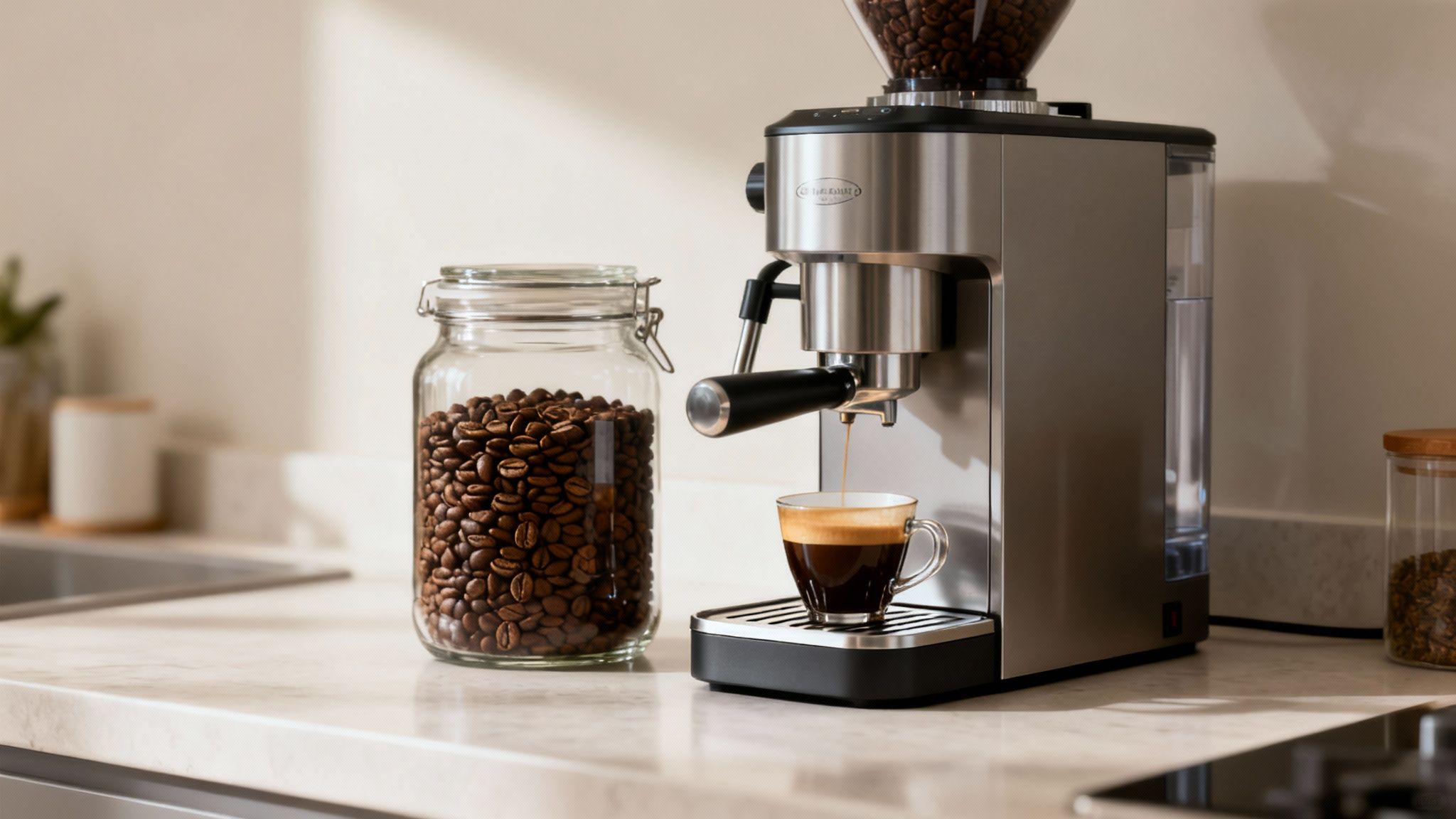
So, you’ve picked out the best coffee beans with a flavour profile you know everyone will love. But that’s only half the battle. Even the most incredible coffee in the world can be let down by the wrong equipment or a poor process.
Think of your beans and your machine as a partnership. For the relationship to work, they need to be in perfect sync. A top-of-the-line machine can’t save stale beans, and a premium bag of single-origin coffee can be completely ruined by the wrong grind. To get the most out of your investment, you have to connect the dots between your beans and your hardware.
Getting this harmony right is what turns a decent cup into an unforgettable one. And since the machine itself plays such a huge role, a good guide to buying a commercial coffee machine can be an invaluable resource.
Freshness: The Unspoken Ingredient
When it comes to coffee, freshness is everything. It’s the invisible ingredient that dictates the aroma, flavour, and overall quality of the brew. So many people make the mistake of looking at the 'best before' date, but the real story is told by the ‘roasted on’ date.
Coffee beans are at their best within weeks of being roasted. After that, the delicate flavour compounds start to break down, and that vibrant character begins to fade.
The 'roasted on' date is your guarantee of quality. For peak flavour, always aim to use beans within four weeks of this date. A 'best before' date, which can be a year or more away, just tells you about shelf life, not freshness.
This is why buying smaller batches more frequently is always a better strategy than stockpiling. Treat your coffee beans like any other fresh product, and every cup will taste as aromatic and delicious as the roaster intended.
The Art of Proper Storage
How you store your beans is just as critical as when you buy them. The three biggest enemies of fresh coffee are oxygen, light, and moisture. Let any of them get to your beans, and they’ll go stale in no time, leaving you with a flat, lifeless brew.
To keep those delicate oils and aromas locked in, just follow these simple rules:
- Use an Airtight Container: Keep your beans in an opaque, airtight container to shut out oxygen and light.
- Keep It Cool and Dark: A cool, dark cupboard is the perfect spot, well away from heat sources like an oven or a sunny window.
- Avoid the Fridge and Freezer: It might seem like a clever idea, but storing beans in the fridge or freezer can introduce moisture and cause them to absorb unwanted odours.
Creating the right storage environment protects your beans from the moment you open the bag right down to the very last cup.
Why Grind Size Is a Game Changer
The final, crucial link between your beans and your machine is the grind. The size of the coffee grounds directly controls how water flows through them, which in turn determines the flavour of the final drink. It’s a delicate balance—get it wrong, and even the best beans will disappoint.
If the grind is too coarse, water rushes through too quickly, resulting in a weak, sour, and under-extracted coffee. On the other hand, if the grind is too fine, the water struggles to get through, leading to a bitter, harsh, and over-extracted brew.
For high-performance bean-to-cup machines, getting that consistent, perfect grind is absolutely essential. It’s the secret to unlocking a balanced, rich, and repeatable flavour profile every time. This is where working with a coffee partner who understands the specific calibration needs of your equipment really pays off. They can make sure your grinder is perfectly dialled in, guaranteeing a flawless cup for every single person.
Your Coffee Questions Answered
Let's face it, diving into the world of coffee can feel overwhelming, especially when you’re picking beans for an entire office or for discerning customers. To help you make that final decision with total confidence, we’ve put together answers to some of the most common questions we hear.
Think of this as your go-to guide. It builds on everything we’ve talked about and gives you practical solutions for the real-world challenges of setting up a brilliant coffee experience.
How Do I Choose a Coffee That Pleases Everyone?
The secret is to aim for balance. A good medium roast blend is almost always the perfect starting point. Blends are specifically designed for a consistent, well-rounded flavour that works for just about everyone. Keep an eye out for tasting notes like 'chocolate', 'caramel', or 'nuts'—these are proven crowd-pleasers.
For a general office machine, it’s wise to steer clear of highly acidic single origins or very dark, bitter roasts. Offering a fantastic primary blend alongside a decaf option is a simple way to make sure you're catering to the majority while still providing choice.
What Is the Real Difference Between Supermarket and Speciality Coffee Beans?
It really comes down to three things: quality, freshness, and transparency. Speciality coffee comes from the very top tier of global production, where the focus is on incredible flavour profiles and ethical, traceable sourcing. Crucially, it’s roasted in small batches and comes with a ‘roasted on’ date, so you know you’re getting it fresh.
Supermarket beans are typically mass-produced commodity coffee, often roasted months before they ever hit the shelf. This leads to a stale, generic taste. Choosing speciality coffee shows you care about quality and delivers a far superior experience for your team and visitors.
It’s a small detail, but one that makes a massive difference to how valued people feel.
How Often Should We Order Coffee Beans?
Freshness is everything. Coffee is at its absolute best within a few weeks of roasting, so you should aim to order quantities you’ll get through in a 2-4 week period. Ordering smaller batches more often is always better than buying in bulk and letting those beautiful beans go stale.
A good supplier can work with you to figure out a delivery schedule based on how much you use, ensuring you always have fresh coffee without having to stockpile old beans. This regular rhythm protects your investment and guarantees every single cup is as delicious as possible. For venues, ensuring repeat business is also key, so exploring strategies to create a coffee shop loyalty program can be a great way to maximise customer retention.
At Ue Coffee Roasters, we partner with businesses to create exceptional workplace refreshment solutions. From selecting the perfect beans to professional installation and ongoing support, we deliver a seamless, high-quality coffee experience that inspires.