
The Best Way to Store Ground Coffee for Peak Flavour in the UK
That first sip of a truly exceptional coffee is a moment to savour. But what happens after that? The secret to keeping your ground coffee tasting its best isn't some complicated ritual. It’s simple: store it in an airtight, opaque container and tuck it away in a cool, dark cupboard.
This one small step is your best defence against the four enemies of freshness: air, moisture, heat, and light. It’s how you protect the roaster’s craft and ensure your last cup tastes just as good as the first.
The Secret to Preserving Your Perfect Brew at Home
For coffee lovers across the UK, especially those who’ve invested in speciality blends, making that fresh-from-the-roastery experience last is everything. Forget the common myths and conflicting advice. There’s a clear, actionable way to make sure every brew is as flavourful as you expect. It's about honouring the bean and getting the most from your purchase.
The drive to replicate cafe-quality drinks at home has never been stronger. With UK households now spending around £6.42 per week on coffee for home brewing, making every gram count is a real priority. This shift makes proper storage more than just a good idea—it’s essential for maximising both flavour and value. For more on the UK's home coffee habits, check out the latest insights from Qahwa World's 2025 report.
Why Proper Storage Matters
Think of coffee as a delicate agricultural product, because that's exactly what it is. Once roasted and ground, its surface area expands dramatically, leaving it incredibly vulnerable to the elements. These enemies get to work fast, stripping away the complex aromas and flavours you paid for.
Here’s a breakdown of what you’re up against:
- Oxygen is the big one. It causes oxidation, the same process that turns a cut apple brown, making your coffee taste stale and lifeless.
- Light, especially direct sunlight, is a killer for the fragile oils and fats that give coffee its rich body and wonderful aroma.
- Heat is an accelerator. It speeds up the chemical reactions that cause flavour loss, essentially "cooking" the delicate compounds right out of the grounds.
- Moisture is a disaster. Not only does it ruin the taste, but it can also encourage mould growth, making your coffee completely unusable.
The core principle is simple: create a stable environment. Your goal is to minimise your coffee's contact with its natural adversaries, turning your cupboard into a sanctuary for flavour.
This idea of protecting perishables isn't unique to coffee, of course. For a deeper dive into how to extend the life of all sorts of things in your kitchen, it’s worth exploring some general food preservation techniques. Understanding these fundamentals gives you a great foundation for keeping everything in your pantry, including your precious coffee, at its absolute best.
To make it even easier, I've put together a quick guide that summarises everything you need to know.
Quick Guide to Ground Coffee Freshness
Here’s a simple table to keep the core principles for storing ground coffee top of mind.
| Enemy of Freshness | The Problem | The Solution |
|---|---|---|
| Oxygen (Air) | Causes stale, flat-tasting coffee through oxidation. | Store in a truly airtight container that expels or minimises air. |
| Light | Degrades fragile oils and aromatic compounds. | Use an opaque (non-transparent) container made of ceramic or stainless steel. |
| Heat | Speeds up the loss of flavour and aroma. | Keep away from the oven, hob, dishwasher, and sunny windowsills. |
| Moisture | Introduces unwanted flavours and can cause mould. | Store in a dry cupboard, never in the fridge or freezer for daily use. |
Sticking to these rules will make a noticeable difference in every cup you brew.
Choosing the Right Storage Container
Your coffee container is the first line of defence against flavour degradation. Think of it as the gatekeeper protecting your precious grounds; your choice here has a direct impact on every single cup you brew. It's less a simple box and more a crucial piece of brewing equipment.
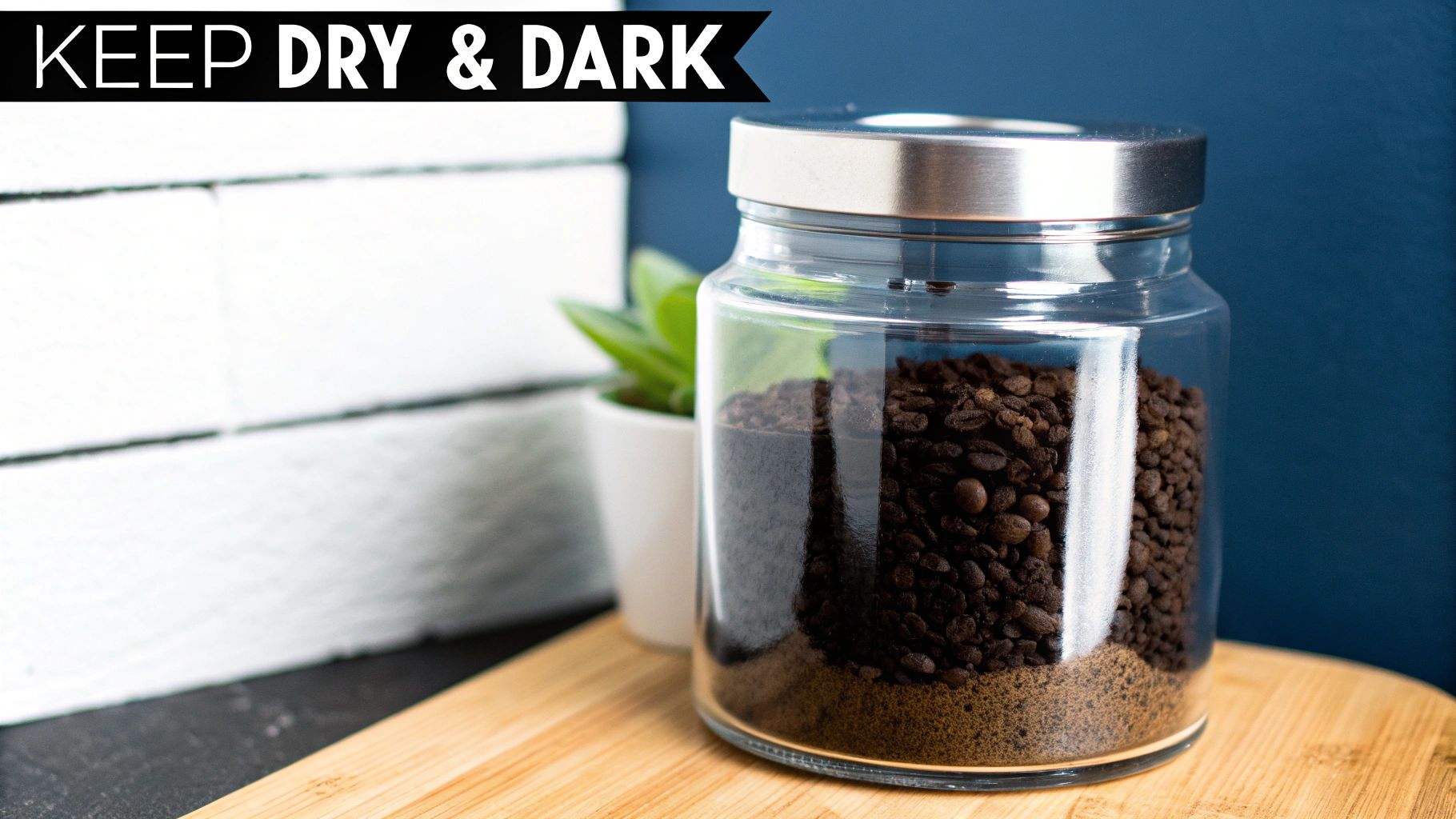
Not all containers are created equal. That stylish, clear glass jar sitting on your kitchen counter might look the part, but it’s actively harming your coffee by letting in damaging light. Finding the best way to store ground coffee starts with selecting a vessel that creates a true sanctuary for those delicate aromas.
Material Matters Most
The material of your container plays the biggest role in preservation, as different materials offer varying levels of protection against coffee's main enemies. Let’s break down the most common options you'll come across here in the UK.
- Ceramic: This is often the top choice for coffee purists. It’s completely opaque, blocking out all light, and it's non-reactive. That means it won't impart any unwanted metallic or plastic flavours to your coffee.
- Stainless Steel: A fantastic and durable alternative. Just like ceramic, it's opaque and non-reactive. Its main advantage is its sheer robustness, making it a great, long-lasting investment for any kitchen.
- Glass: While popular for its aesthetic appeal, clear glass is a poor choice unless it's stored inside a dark cupboard at all times. If you must use glass, opt for an amber or smoked-colour variety to filter out at least some of the light.
- Plastic: I’d recommend avoiding plastic containers if you can. Over time, plastics can absorb coffee oils and develop a stale smell that will taint fresh grounds. They can also impart a subtle, chemical-like taste.
When you're trying to choose the right storage container, the material used really does impact freshness. For a deeper dive into advanced container materials and their benefits, you might find it useful exploring specialized storage blogs.
Beyond the Material: The Airtight Seal
The second most critical feature is the quality of the seal. The term "airtight" gets thrown around a lot by manufacturers, but for speciality coffee, it’s non-negotiable. You need a lid that clamps down securely or has a silicone gasket to create a genuine vacuum seal.
A container is only as good as its weakest point. A poor seal on a premium ceramic canister is just as bad as a clear glass jar, as it allows flavour-killing oxygen to seep in continuously.
Look for features like a one-way valve, often found on high-quality coffee bags and some advanced canisters. This clever little mechanism allows the carbon dioxide (CO2) naturally released by freshly roasted coffee to escape without letting any oxygen in. It's a sure sign of a container designed specifically with coffee freshness in mind.
With proper storage, your ground coffee should maintain its quality for up to two weeks. That makes the right container a seriously worthwhile investment to protect every single sip.
Defeating the Four Enemies of Fresh Coffee
To get the most out of your coffee, you need to know what you're up against. Think of it like a battle plan. Your mission is to protect the beans from their four sworn enemies: oxygen, heat, light, and moisture. These are the culprits responsible for turning a vibrant, flavourful coffee into something disappointingly dull.
Oxygen is public enemy number one. It causes oxidation, a process that makes your coffee taste stale and flat in no time. Heat is its destructive partner-in-crime, acting as an accelerator that cooks away all those delicate aromatic compounds the roaster worked so hard to develop. Then you have light, which degrades the essential oils that give coffee its rich body, and moisture—a fast track to musty, spoiled flavours.
Knowing how to fend off these elements is more important than ever. Here in the UK, we get through a staggering 98 million cups of coffee every single day, and the shift towards brewing high-quality, speciality coffee at home is undeniable. With more people investing in great coffee, it’s crucial to know how to store it properly. For a deeper dive into our national coffee habit, you can find more UK coffee statistics.
This simple graphic breaks down the essentials for keeping your ground coffee at its absolute peak.
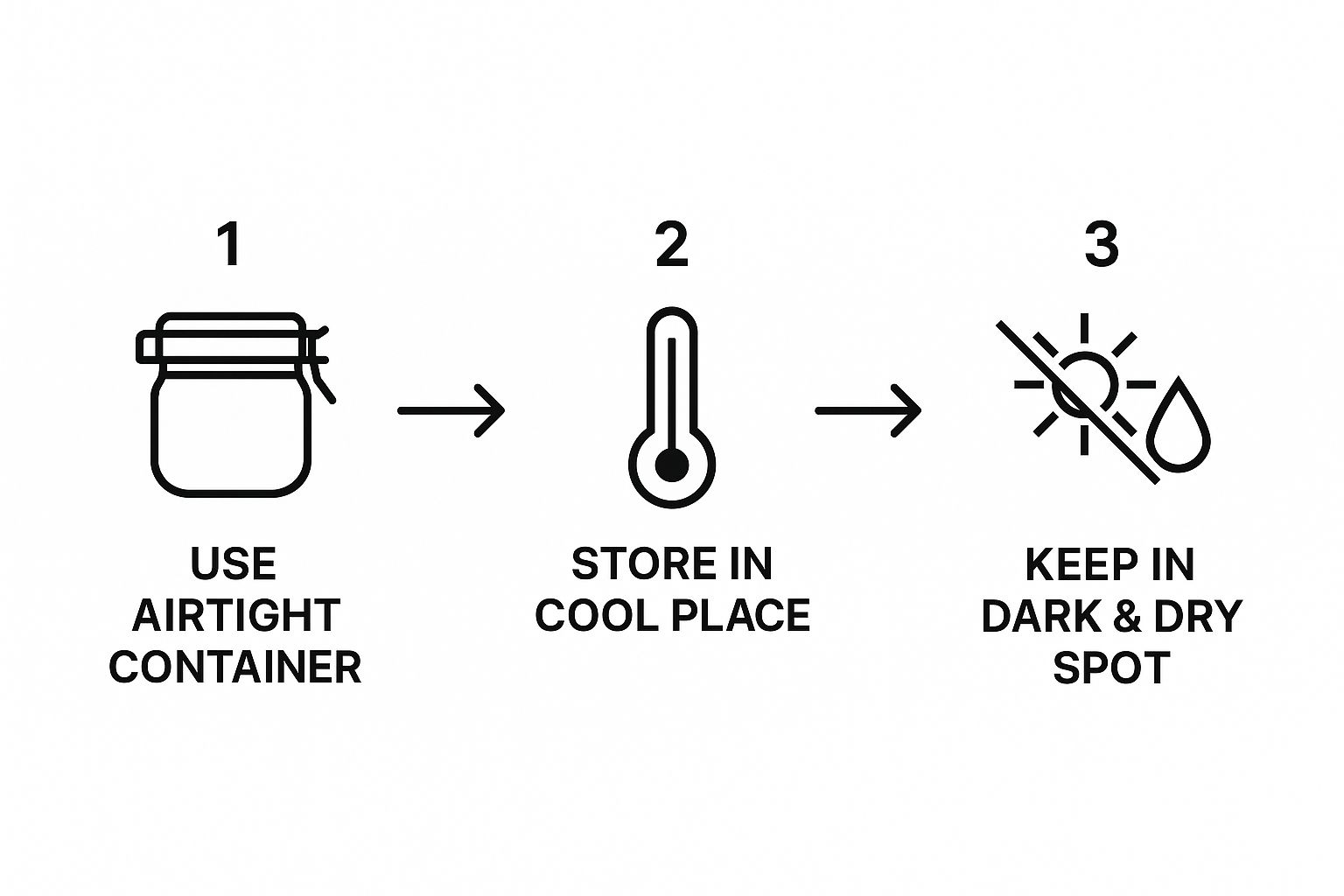
The takeaway here is simple but powerful. Protecting your coffee means mounting a three-pronged defence: sealing it from air, shielding it from heat, and securing it from both light and moisture.
Creating a Safe Haven in Your Kitchen
Your kitchen is probably riddled with danger zones for fresh coffee. The first step to better flavour is simply identifying and avoiding these spots. Take a moment to think about the layout of a typical UK kitchen; the warmest, brightest areas are often exactly where people instinctively put their coffee canister. That's a huge mistake.
Here are the common problem spots to steer clear of:
- The kitchen counter: This is a big one, especially if it gets hit by direct sunlight from a window. Those UV rays are incredibly efficient at destroying your coffee’s flavour.
- A cupboard directly above the hob or oven: It might seem convenient, but the residual heat that rises from cooking will slowly bake the life right out of your grounds.
- Next to the kettle or dishwasher: Both of these appliances generate bursts of heat and steam, introducing the double-threat of heat and moisture.
So where should it go? The ideal spot is almost always a cool, dark, and dry kitchen cupboard or pantry—well away from any heat-producing appliances and shielded from sunlight.
Your goal is to find a stable, protected environment. The less your coffee has to deal with fluctuations in temperature, light, and humidity, the longer it will hold onto that vibrant character you paid for.
The Great Freezer Debate
This question comes up all the time: what about the freezer? It’s a bit of an old wives' tale that, for daily coffee drinkers, often does more harm than good.
Here’s the problem. Every time you pull the container out of the icy cold, condensation immediately forms on the grounds. This moisture gets into the coffee, and if you put it back, it refreezes, damaging the cellular structure and introducing those weird "freezer" tastes. Nobody wants that.
For the coffee you’re brewing every day, the cupboard is king. If you’ve bought in bulk, then yes, freezing a completely unopened, vacuum-sealed bag is a decent option for long-term storage. But once you thaw it out, it should never, ever be refrozen.
Common Coffee Storage Mistakes to Avoid
The quest for that perfect cup of coffee is a noble one, but it's littered with well-meaning yet damaging advice that can completely sabotage the flavour. We've all been there. You spend good money on beautiful beans, only to undo all the roaster's hard work with a simple storage slip-up. Understanding these common pitfalls is your first big step toward mastering how to store ground coffee properly.
Let's start with the big one. So many of us have been told to store coffee in the freezer, but for daily use, this is one of the worst things you can do. It sounds logical – cold preserves things, right? In reality, it’s a fast track to a disappointing brew.
The Freezer Fallacy
The freezer introduces ground coffee's number one enemy: condensation. Every time you pull that container out into your warm kitchen, moisture forms on the grounds. Not only does this introduce water where it shouldn't be, but it also causes the coffee to absorb every stray odour from your freezer. Think frozen peas and last night's curry. That’s a recipe for a flat, cardboard-tasting cup.
This yo-yoing of temperatures also wreaks havoc on the coffee's cellular structure. It ruptures the delicate oils and aromatics that hold all those wonderful, complex flavours you paid for. For any coffee you plan on drinking in the next week or two, the cupboard is always, always the better choice.
Freezing is only a viable option for long-term storage of a completely unopened, factory-sealed bag. Once you thaw it out, it must stay out and be used quickly. Never, ever refreeze coffee.
Relying on the Retail Bag
I get it, that bag your speciality coffee came in looks the part, and it even has a resealable zip. But it is not a long-term storage solution. While it’s designed to protect beans on the shelf, it’s not truly airtight once you’ve broken that initial seal. That little one-way valve is for letting CO2 out post-roasting, not for keeping oxygen from getting in day after day.
Think of the original bag as a temporary home. Its job is done once it gets the coffee safely to your kitchen. Your job is to then move those grounds to a more permanent, protective sanctuary. Leaving it in the bag means you're just inviting fresh, flavour-killing oxygen in every single time you open it.
The Problem with Bulk Buying
Buying a massive bag of pre-ground coffee can feel like a smart, economical move, but it often ends in disappointment. Ground coffee has an enormous surface area compared to whole beans, which makes it incredibly vulnerable to going stale fast. Its peak flavour window isn't weeks, it's days.
To make sure every cup you brew is as vibrant as the first, stick to this simple rule:
- Buy smaller quantities of ground coffee, more frequently. A week or two’s supply is the sweet spot. This ensures you’re always brewing with grounds that are at or very near their peak freshness.
By sidestepping these common mistakes, you’ll move beyond just storing coffee and start truly preserving it. It’s a small shift in your routine that makes an enormous difference, protecting your investment and ensuring every cup you make at home is a genuinely remarkable one.
Your Daily Ritual for Ultimate Freshness
Making a great cup of coffee isn’t just about the brewing; it starts the moment you bring your coffee home. Let’s turn the simple act of storing your ground coffee into a mindful daily ritual. Think of it as honouring the journey of the bean, from the farm right to your kitchen in the UK.
This isn’t a chore. Getting this right is what separates a decent brew from a truly memorable one. It all begins when you unbox your delivery from your favourite British roaster.
The Moment of Transfer
That beautiful, sealed bag of speciality coffee has done its job—it got the grounds to you safely. Now it's your turn. Your very first move should be to get those grounds into their new, more permanent home. This transfer is a critical moment where you can lock in freshness by keeping air exposure to an absolute minimum.
My advice? Work quickly and decisively. Have your airtight container open and ready before you even touch the coffee bag. Once you open the bag, pour the grounds smoothly into your canister in one fluid motion. Try to avoid shaking or tapping the bag to get every last speck out—that just agitates the coffee and invites in more oxygen. Seal the container immediately. It’s a small, swift action that makes a huge difference.
Think of this transfer as the final, respectful handover. You're taking on the responsibility for that coffee's quality from the roaster and promising to protect it until the very last scoop.
Creating Your Coffee Sanctuary
Now that your coffee is secure, where should it live? The best storage spots are purpose-built, not accidental. You need to create a dedicated, stable environment for it. I always recommend designating a specific spot in a kitchen cupboard as your official 'coffee sanctuary'.
This spot needs to be:
- Cool: Well away from the oven, hob, dishwasher, or any other appliance that kicks out heat.
- Dark: Completely shielded from direct sunlight. Even indirect light filtering in when you open the cupboard door can degrade your coffee over time.
- Dry: Kept clear of the steam and ambient moisture from a boiling kettle or a simmering pan.
Organising your cupboard this way does more than just protect the coffee; it makes your daily brewing process smoother and more intentional. You know exactly where everything is, and you can trust that your coffee is being kept in peak condition. This isn't just about storage; it's about curation.
Honouring the Roast Date
Every bag of proper speciality coffee comes with a vital piece of information: the roast date. Forget the 'best before' date; the roast date is what truly matters. It tells you exactly when that coffee was at its absolute peak of flavour and aroma.
When you transfer your grounds, make a note of this date. A little piece of masking tape on the bottom of the container works wonders. Or, if you prefer, a quick note on your phone.
Why bother? Because it helps you manage your coffee like a pro. It encourages a "first in, first out" system, ensuring you always use the oldest coffee first and nothing goes to waste. For ground coffee, you really want to aim to use it all within two weeks of that roast date to experience its most vibrant and expressive flavours.
This simple habit stops you from accidentally brewing stale coffee and helps you appreciate the grounds when they are at their best. It's a small detail, but it's what separates a casual coffee drinker from a true enthusiast.
Your Coffee Storage Questions, Answered
Even when you think you've got it all figured out, a few questions always seem to pop up on the journey to the perfect brew. Here in the UK, we hear the same queries time and again from fellow speciality coffee drinkers.
Let's tackle some of the most common ones. My goal is to give you total confidence in your storage game, making sure every single cup is a delight.
Should I Buy Whole Beans or Ground Coffee?
For absolute, peak freshness, nothing beats buying whole beans and grinding them right before you brew. It's a simple fact. The second that coffee is ground, its surface area expands massively, and the clock on flavour loss starts ticking—fast.
But let's be realistic: not everyone in the UK owns a good quality grinder, and that’s perfectly fine. A high-quality, pre-ground coffee from a speciality roaster can still deliver an exceptional cup, especially if you nail the storage methods we’ve already covered.
The real key is to shrink the time between grinding and brewing, whether that happens at the roastery or in your kitchen.
How Long Does Ground Coffee Really Stay Fresh?
Once you snip open that bag, the countdown begins. Ground coffee starts losing its vibrant character in just a few days once it's exposed to air. Stored perfectly—in a completely airtight, opaque container—you can expect it to hold on to its best qualities for about one to two weeks.
This short window is precisely why we're such big advocates for buying smaller bags more often. It’s the single best thing you can do to guarantee you’re always brewing with grounds that are full of life.
Think of its freshness in days, not weeks. Treating your ground coffee like you would a loaf of artisan bread from a local bakery will completely change your perspective and elevate your daily cup.
Can I Just Use a Vacuum-Sealed Bag Instead of a Canister?
You absolutely can. Vacuum-sealing is a brilliant method because it aggressively removes the main enemy of freshness: oxygen. It’s a fantastic choice for longer-term storage, say, for an unopened bag you don’t plan on touching for a while.
For your daily brewing ritual, however, a quality airtight canister is far more practical. The faff of cutting open, scooping out, and re-sealing a vacuum bag every single morning is just too much. It also defeats the purpose by reintroducing air each time. A good canister gives you that perfect balance of protection and everyday convenience.
Does the Roast Level Change How I Should Store It?
In a practical sense, no. Whether you prefer a light, fruity single-origin or a rich, dark espresso blend, the fundamental rules are exactly the same.
All roasted coffee, regardless of its profile, is vulnerable to those same four enemies—air, light, heat, and moisture. The principles of keeping it in a cool, dark, dry, and airtight place apply universally. Protect your investment, no matter the roast.
At Ue Coffee Roasters, we're passionate about helping you get the most from every cup. From our carefully sourced beans to our expert advice, we're here to elevate your entire coffee experience. Explore our range of exceptional coffees and brewing equipment today. Discover your next favourite coffee at uecoffeeroasters.com.