

Essential Guide: coffee beans uk for Better Office Coffee
Choosing the right coffee beans is the first step in turning your workplace from just an office into a real hub for creativity and connection. It’s a bigger deal than you might think. With the UK getting through an incredible 98 million cups of coffee every single day, a great brew is no longer a nice-to-have; it's a powerful statement about your company's commitment to quality and your team's well-being.
This guide will walk you through the journey from bean to cup, giving you the confidence to make a choice that truly inspires.
Your Guide to UK Coffee Culture
Coffee has woven itself deep into the fabric of British life. What was once a simple morning ritual has blossomed into a sophisticated cultural touchstone, and the sheer volume we consume says it all. The UK’s growing love for quality coffee has created a vibrant, discerning market, which is a golden opportunity for businesses to lift their brand and build a brilliant internal culture.
Imagine the break room buzzing with the aroma of freshly ground coffee—a space where your team can properly connect, collaborate, and recharge. Offering them barista-quality drinks is a tangible way to show you appreciate them. It boosts morale and makes everyone feel genuinely valued. It’s a small change that pays back in spades through productivity and satisfaction.
The Power of a Premium Brew
A premium coffee experience does more than just caffeinate your team; it sends a clear message. It says you care about the details, you invest in quality, and you put your people first. This seemingly small perk can quickly become a cornerstone of your workplace identity.
For any business, offering exceptional coffee is a direct investment in its most valuable asset: its people. It transforms a routine break into a moment of genuine refreshment and connection, fostering a culture of excellence from the inside out.
The UK's coffee scene is a testament to this growing appreciation for quality. With 63% of UK adults now drinking coffee regularly, preferences have become far more refined. People know the difference between a mediocre cup and a truly memorable one—a standard they now expect in their workplace, not just in high street cafés.
This snapshot of the UK's coffee habits really brings the numbers to life.
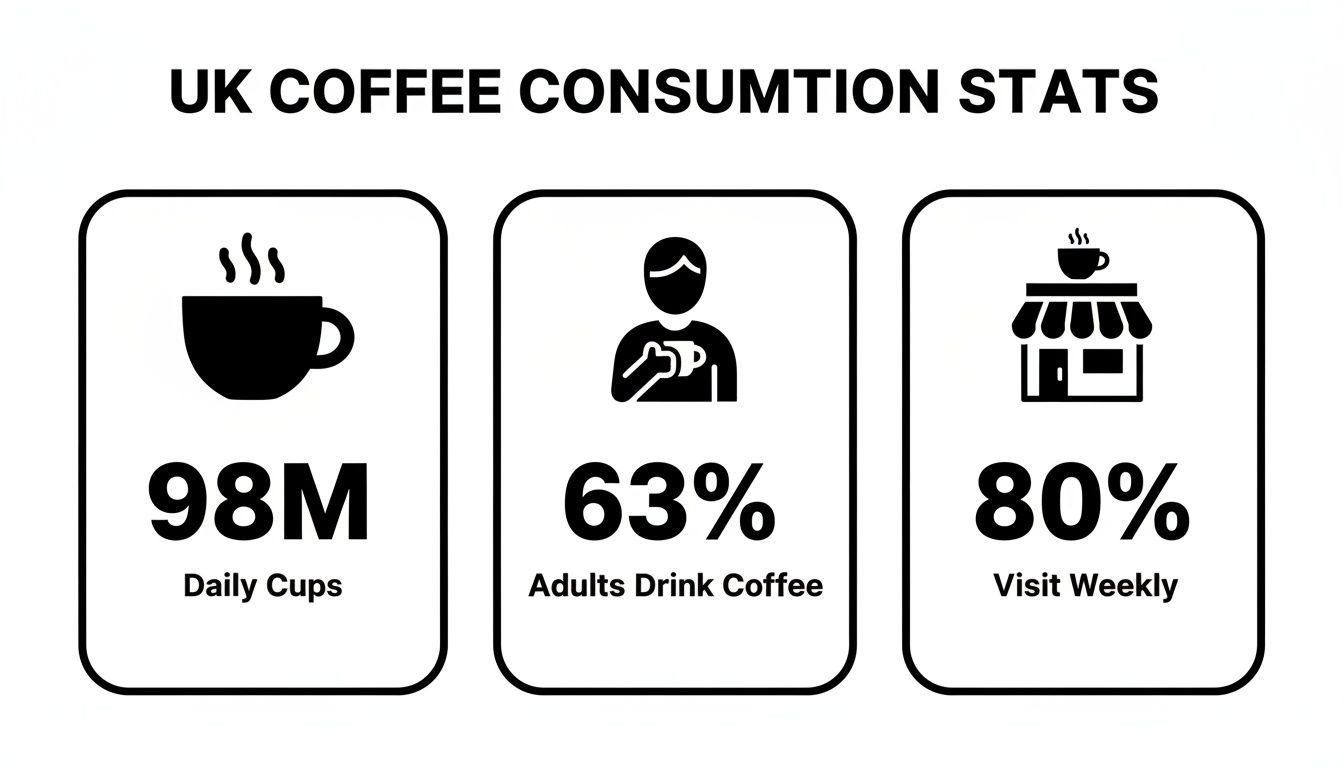
These figures show just how integral coffee is to the daily life of the modern UK workforce.
Understanding Today's Coffee Drinker
The national appetite for coffee is immense. That 98 million cups a day adds up to a staggering 35 billion cups a year. But this demand isn't just about quantity; it's about quality. As a nation, we’ve moved on from instant granules to appreciating the complex flavours of freshly roasted coffee beans UK roasters have to offer. You can dive deeper into the latest UK coffee consumption statistics here.
This shift has huge implications for every kind of business, from hotels and cafés to corporate offices.
- High Expectations: With 80% of Brits visiting a coffee shop at least weekly, employees and clients now bring those café-level expectations into your building.
- A Valued Perk: A great coffee offering is consistently ranked as one of the most desired office perks.
- Brand Perception: The quality of the coffee you serve reflects directly on your brand's image and your attention to detail.
This guide will walk you through everything you need to know, making sure you can confidently choose the perfect coffee solution to inspire your team and impress your guests.
Understanding the Two Giants of Coffee: Arabica and Robusta
At the heart of every great coffee experience, from the high street café to your office break room, are the beans themselves. To really get what makes an exceptional cup, you first need to know the two biggest players in the coffee world: Arabica and Robusta. Getting to grips with their distinct personalities is the key to choosing the perfect coffee beans UK businesses can rely on to keep their teams happy and energised.
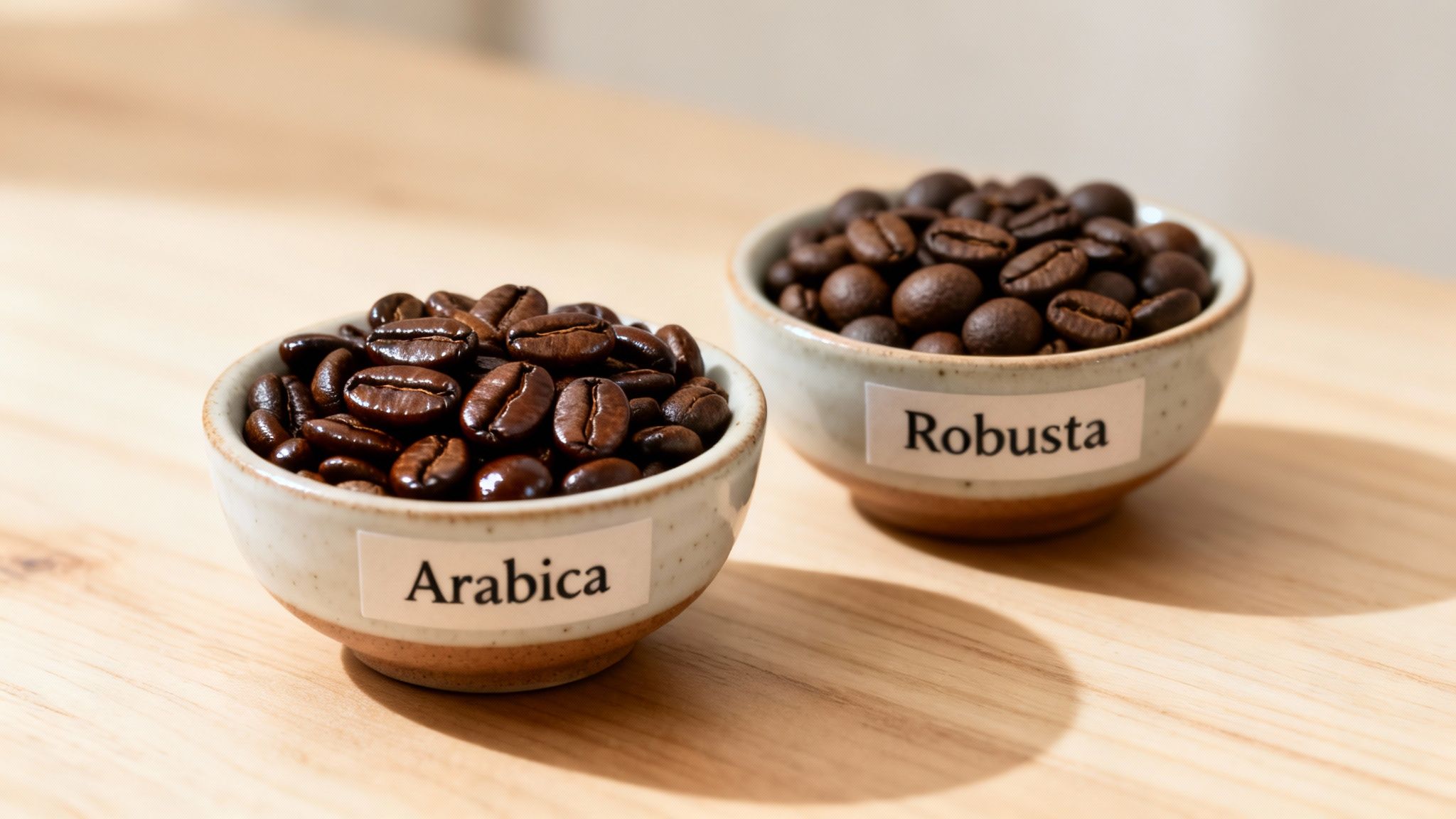
Think of Arabica as the fine wine of the coffee world—it's complex, nuanced, and grown with meticulous care. It only thrives at high altitudes in what’s known as the "Bean Belt," requiring very specific conditions to flourish. This demanding upbringing results in a flavour profile that’s bright, aromatic, and incredibly smooth.
This delicate nature is precisely what gives Arabica its sought-after qualities. Its higher acidity translates to vibrant notes of fruit, flowers, and even hints of sweet caramel. It’s the bean behind the sophisticated, aromatic brews that define the speciality coffee movement, making up over 60% of the world's coffee production.
Arabica: The Elegant Aromat
Arabica's elegance comes from its intricate balance of sweetness and acidity. This is the bean you choose when you want to savour a coffee's origin and explore all its subtle complexities.
- Flavour Profile: Known for a wide spectrum of delicate notes, from bright citrus and berry to gentle floral and wine-like tones.
- Acidity: Higher acidity levels create a crisp, bright, and clean finish on the palate.
- Body: Generally lighter in body, offering a smoother, less intense mouthfeel.
This bean is absolutely perfect for filter brewing methods like a pour-over or drip coffee machine, as these techniques really highlight its nuanced aromas and clean taste. It’s the ideal choice for creating an inspiring and refined coffee experience in any professional setting.
Robusta: The Bold Powerhouse
In stark contrast, Robusta is the powerhouse of the coffee world. Just as its name suggests, it’s a much hardier, more resilient plant that can grow in hotter climates and at lower altitudes. It’s bold, unapologetically strong, and packs a serious punch.
This resilience translates directly into its flavour. Robusta delivers a deep, earthy, and often chocolatey profile, sometimes with a distinct rubbery or nutty undertone. A key characteristic is its low acidity and high caffeine content—it can contain more than double the caffeine of Arabica.
The real magic of Robusta is its ability to produce a thick, stable, and long-lasting crema. This rich, golden-brown foam is the hallmark of a traditional Italian-style espresso, giving it a rich texture and sealing in the coffee's powerful aroma.
This quality makes Robusta an indispensable part of many classic espresso blends. While it can be a bit much on its own, a small percentage of high-quality Robusta adds incredible depth, body, and that desirable crema to an espresso shot. It creates a balanced and satisfying cup that also stands up beautifully to milk.
Arabica vs Robusta At a Glance
To make things even clearer, here’s a quick side-by-side comparison. This table breaks down the key differences between Arabica and Robusta, helping you understand how they impact the flavour, caffeine, and cost of your daily cup.
| Characteristic | Arabica | Robusta |
|---|---|---|
| Flavour Profile | Complex, aromatic, fruity, floral, sweet | Bold, strong, earthy, nutty, chocolatey |
| Acidity | High (bright, crisp) | Low (smooth, sometimes bitter) |
| Caffeine Content | Lower (approx. 1.5% by weight) | Higher (approx. 2.5% or more by weight) |
| Growing Conditions | High altitude, specific rainfall | Hot climates, lower altitudes |
| Bean Shape | Oval | Round |
| Cost | Higher | Lower |
| Best For | Speciality filter coffee, nuanced espresso | Traditional espresso blends, instant coffee |
As you can see, neither bean is inherently "better"—they simply offer different experiences. Your choice ultimately depends on the kind of coffee you want to create and enjoy.
How Roasting Unlocks Your Coffee's True Flavour
Before it meets the intense heat of a roaster, a green coffee bean is full of quiet potential. It’s the roasting process—a delicate dance of time, temperature, and airflow—that truly unlocks the incredible spectrum of over 800 aromatic compounds hidden within. Think of a roaster as a conductor, guiding an orchestra of raw potential to create a symphony of flavour.
This stage is where the magic really happens. The roaster doesn't just darken the bean; it kicks off a series of complex chemical reactions. Sugars caramelise, acids transform, and the very structure of the bean changes, all to create the distinct taste and aroma we love in our daily cup. Every decision a roaster makes is critical in shaping the final profile of the coffee beans UK drinkers enjoy.
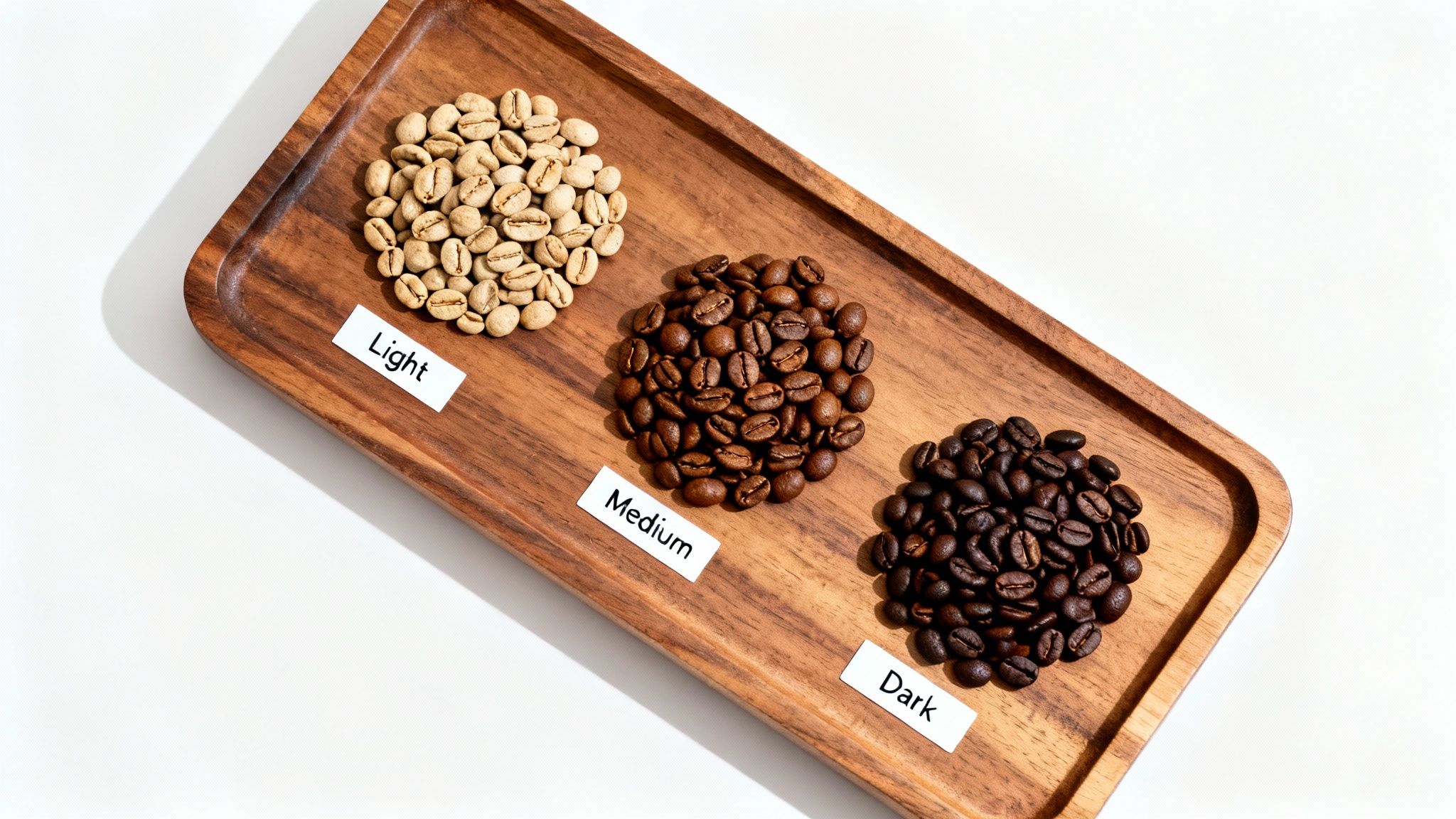
The Brightness of a Light Roast
Light roasts are all about celebrating the coffee's origin. Roasted for a shorter time and at lower final temperatures, these beans hold onto much of their original character. They’re typically a light brown, with no oil on the surface, and possess a bright, crisp acidity that can be quite surprising.
Imagine the flavour of a freshly picked berry versus a jam. A light roast is that fresh berry—vibrant, zesty, and showcasing the pure, unadulterated taste of where it was grown. This approach preserves the delicate floral, fruity, and citrus notes unique to its home soil.
- Flavour Notes: Expect bright, lively flavours such as lemon, jasmine, green tea, or berries.
- Acidity: High and pronounced, giving the coffee a crisp, clean finish.
- Body: Lighter and more tea-like in its mouthfeel.
- Best For: Filter methods like a pourover or drip machine that really let its delicate aromatics shine.
The Harmony of a Medium Roast
Medium roasts hit that perfect middle ground, striking a beautiful balance between the bean's inherent qualities and the flavours developed during roasting. It’s arguably the most popular roast profile in the UK, prized for its versatility and crowd-pleasing nature.
These beans are a richer brown and rarely have an oily sheen. The roast has progressed just enough to mellow the bright acidity and develop deeper notes of caramel, chocolate, and toasted nuts. The result is a fuller-bodied coffee that is smooth, balanced, and wonderfully satisfying.
A medium roast is the sweet spot where the unique story of the bean's origin meets the comforting, rich flavours of the roast itself. It offers a complete and harmonious flavour experience that appeals to a wide range of palates.
This balanced profile makes medium-roasted coffee beans a fantastic choice for any office or hospitality setting. It delivers a consistently delightful cup that works just as well black as it does with milk.
The Intensity of a Dark Roast
A dark roast is a bold, powerful statement. Taken to a higher temperature for longer, these beans are a deep, dark brown and often have a glossy, oily surface. Here, the roasting process dominates the flavour profile, transforming the bean's original notes into rich, smoky, and intense characteristics.
The original acidity is almost entirely gone, replaced by a heavy body and deep, resonant flavours. Think dark chocolate, burnt caramel, and even hints of tobacco or spice. This is the roast behind the classic, punchy espresso that forms the backbone of lattes and cappuccinos.
- Flavour Notes: Bold and intense with notes of dark chocolate, smoke, and roasted nuts.
- Acidity: Very low, resulting in a smooth but heavy profile.
- Body: Full and rich, with a lingering finish.
- Best For: Espresso and French press, where its robust character can really stand out.
Understanding these roast levels is the key to choosing the perfect coffee for your workplace, ensuring every cup is a masterpiece perfectly suited to your team's tastes.
Choosing Between Single Origin and Blended Coffee
When it comes to selecting the perfect coffee beans UK businesses can offer, one of the first and most important decisions you'll make is whether to go with a single origin or a beautifully crafted blend. This choice really sets the tone for the entire coffee experience you provide. It’s not about one being better than the other; it’s about what story you want each cup to tell.
Think of a single origin coffee like a captivating solo performance. It’s the pure, unfiltered expression of a specific place—a single farm, an estate, or a small, distinct region. Every sip is a snapshot of its unique terroir: the soil, the altitude, the climate, and even the hands that harvested it. It’s an adventure in a cup, perfect for anyone who loves exploring distinct, nuanced, and sometimes surprising flavours.
The Allure of the Single Origin Story
A single origin coffee is all about transparency and character. Because all the beans come from one place, their individual flavour profile gets to shine through without anything else getting in the way. This is where you’ll find those bright, acidic coffees from Ethiopia bursting with notes of blueberry, or the smooth, chocolatey beans from a particular farm in Colombia.
These coffees are fantastic for creating a memorable, high-end experience. They spark conversation and curiosity, making them a brilliant choice for client-facing areas or for teams who really appreciate the finer details.
- Distinct Flavour: Showcases the pure, unique taste of its specific growing region.
- Traceability: Offers a clear story right from the farm to the cup, highlighting ethical sourcing and craftsmanship.
- Seasonal Variety: The lineup changes with the harvest seasons around the world, giving you an ever-evolving menu of new tastes to discover.
The Harmony of a Perfectly Crafted Blend
If a single origin is a solo artist, then a blend is a full orchestra creating a harmonious masterpiece. This is where the art of the roaster truly takes centre stage. They skilfully combine beans from different origins to craft a consistent, balanced, and complex flavour that you can rely on, every single time.
This consistency is the secret weapon of a great blend. Roasters create them to hit a specific flavour target—maybe a smooth, full-bodied espresso with low acidity, or a rich, chocolatey profile that sings when paired with milk. By combining beans with complementary characteristics, they can smooth out any sharp edges and build layers of flavour that would be impossible to find in a single bean.
A great blend is a masterpiece of balance and consistency. It’s designed to deliver a reliably delicious and satisfying experience day after day, making it the perfect foundation for a workplace coffee solution that needs to please a wide range of palates.
For an office, this reliability is priceless. A well-constructed blend ensures that the first coffee of the day tastes just as exceptional as the last, no matter who’s making it. It provides a comforting and dependable flavour that keeps everyone happy, from the espresso enthusiast to the latte lover.
This is what makes blended coffee beans the workhorse of so many successful workplace and hospitality coffee programmes. They form the perfect, consistent base for bean-to-cup machines, delivering a delightful and balanced cup with every single press of a button. It’s this dependable excellence that turns a simple coffee break into a consistently rewarding ritual.
Why Freshness and Grind Size Are Non-Negotiable
Think about the incredible aroma that hits you when you open a new bag of expertly roasted coffee beans. That captivating scent is freshness, and it’s the secret to a truly great cup. But from the moment the roast is finished, coffee beans are in a race against time.
As soon as they’re exposed to oxygen, their delicate aromatic compounds begin to break down. This process, called oxidation, is the enemy of flavour. Within just a few weeks, a bean’s vibrant character can be lost forever, leaving you with a dull, flat, and lifeless taste. Sourcing freshly roasted beans isn't just a nice-to-have; it's the most important step you can take.
The Clock Is Ticking The Moment Roasting Ends
To hang on to that peak flavour, proper storage is everything. Coffee beans need to be kept in an airtight container, away from direct sunlight, heat, and moisture. Following best practices is vital, similar to those outlined in this helpful guide to shipping perishable food safely. While whole beans are fairly resilient, the clock speeds up dramatically the moment they’re ground.
Grinding coffee massively increases the surface area exposed to oxygen, which is why pre-ground coffee simply can’t compete with grinding beans moments before brewing. The aromatic oils are released instantly, ready to infuse your water with incredible flavour.
Grinding your coffee just before brewing is the single most impactful action you can take to elevate your coffee experience. It ensures the maximum transfer of flavour and aroma from the bean to your cup, preserving the roaster's craft.
This is where modern, high-quality bean-to-cup machines really shine in a workplace. They store whole beans in sealed hoppers and grind the perfect amount on demand for each drink, guaranteeing a vibrant and aromatic cup every single time.
Why Grind Size Is the Key to Flavour Extraction
If freshness is the foundation, then grind size is the blueprint for your brew. It dictates how quickly water flows through the coffee grounds and, ultimately, how much flavour gets extracted. Get the grind size wrong, and you're on the fast track to a disappointing cup.
Think of it like this: water rushes quickly through large pebbles but trickles slowly through fine sand. The same principle applies to coffee.
- Too Coarse: If the grind is too coarse for your brew method (like using a French press grind for an espresso), the water will fly through it. This causes under-extraction—a coffee that tastes weak, sour, and hollow.
- Too Fine: On the other hand, if the grind is too fine (like an espresso grind in a French press), the water struggles to get through. This leads to over-extraction, creating a harsh, bitter, and unpleasant taste.
The goal is to hit that sweet spot—a balanced extraction where the water has just enough time to dissolve the good stuff (sugars and oils) while leaving the bitter compounds behind.
Matching Your Grind to Your Brew
Achieving this balance means matching your grind size to your brewing method. An espresso machine, which uses high pressure to force water through coffee in about 25-30 seconds, needs a very fine, almost powdery grind. In contrast, a French press, where the coffee steeps in water for several minutes, calls for a coarse, sea salt-like grind.
This is another area where automated systems are a huge plus in an office. Professional bean-to-cup machines are calibrated to automatically select the perfect grind for each drink—a fine grind for a rich espresso or a slightly coarser one for a longer Americano. It removes all the guesswork and ensures flawless consistency, cup after cup.
Bringing Premium Coffee Into Your Workplace
Investing in really good office coffee is one of the best things you can do for your team’s well-being. It’s a simple change that transforms a quick break into a proper moment of connection and refreshment, and it sends a clear message: you care about quality and you value your people. Setting up a high-quality coffee programme is more straightforward than you might think, and it all starts with a bit of planning.
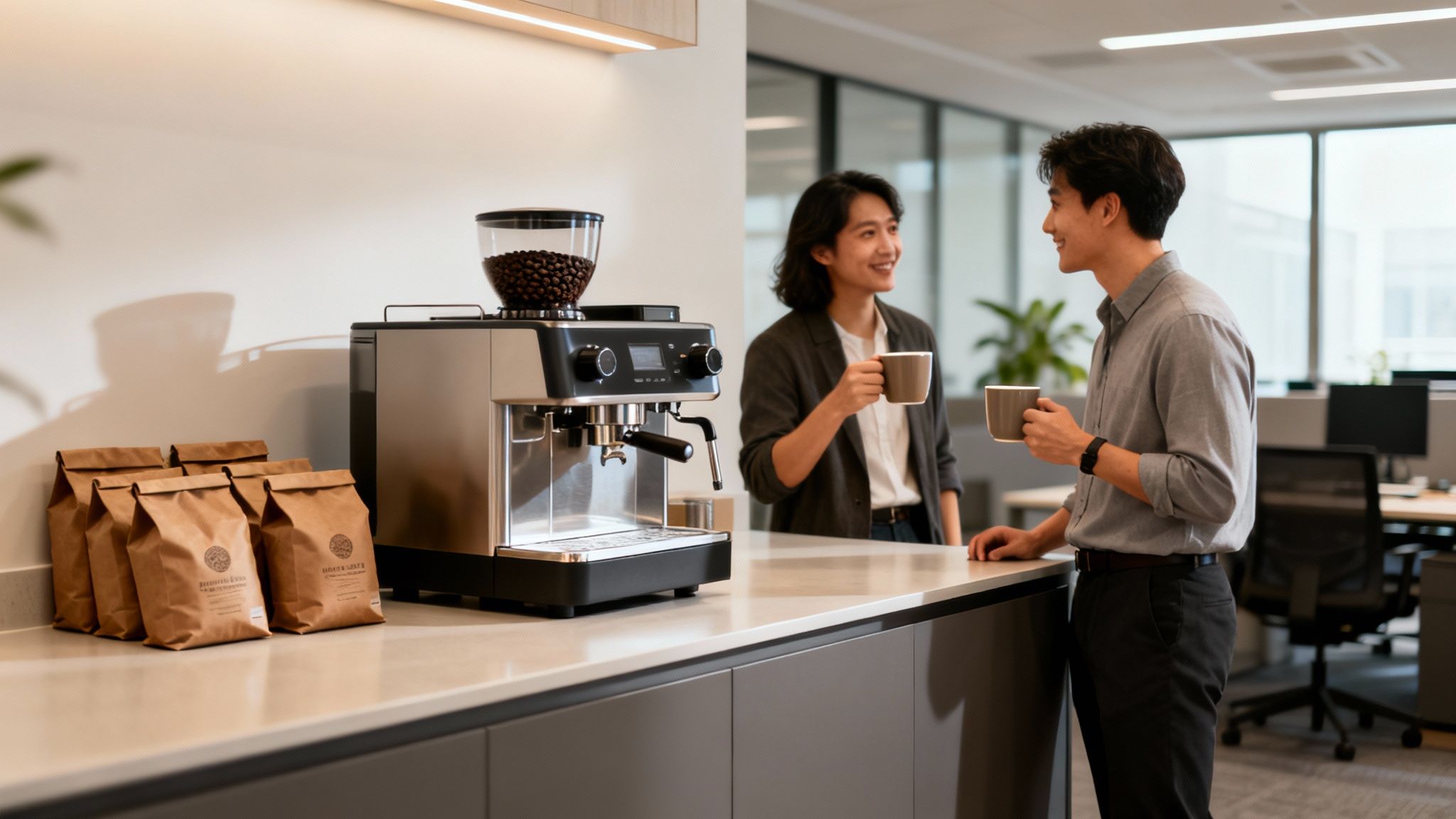
This move towards better workplace coffee really just mirrors what’s been happening in the UK’s café scene for years. People expect the same quality they get on the high street to be available in the office. Providing it is a tangible perk that gives morale a serious boost and helps create a much more welcoming and vibrant company culture.
Planning Your Office Coffee Needs
First things first, you need to get a handle on how much coffee your team actually drinks. A good rule of thumb is to plan for 1-2 cups per employee per day. So, for an office of 30 people, you’re looking at around 30-60 cups a day. This simple bit of maths helps you set a realistic budget and make sure your supply of coffee beans UK roasters provide never runs dry.
From there, you can work out your bean requirements. A standard 1kg bag of whole coffee beans typically yields between 120 and 140 single espresso shots. Sticking with our 30-person office example, this means you'd probably need a fresh 1kg bag every two to four working days, depending on how much of a caffeine habit your team has. It’s always best to start with this baseline and then tweak it as you see what’s actually being used. And when you're bringing in great coffee, remember that professional and appealing custom packaging labels can make the whole experience feel even more premium.
Investing in a premium coffee solution is an investment in your company's culture. It fosters an environment where employees feel appreciated, encouraging informal collaboration and boosting overall workplace satisfaction.
Keeping costs in check is obviously key. Partnering with a wholesale supplier means you get access to top-notch, speciality-grade coffee at a much better price than you’d find at retail. This direct relationship isn’t just good for your budget; it also guarantees a consistent supply of freshly roasted beans, which is absolutely crucial for amazing flavour.
The Perfect Partnership: Bean-to-Cup Machines
For most modern workplaces, the dream team is a combination of wholesale speciality beans and a high-quality bean-to-cup machine. This pairing delivers the best of both worlds: the incredible taste of café-quality coffee and the effortless convenience you need in a busy office.
These machines are built for simplicity and consistency. They take all the guesswork out of brewing, handling everything from grinding the beans on demand to frothing milk for lattes and cappuccinos—all at the press of a button.
- Ultimate Convenience: Anyone can make a perfect espresso, Americano, or flat white in under a minute. No training needed.
- Guaranteed Freshness: The built-in grinder ensures every single cup is made from freshly ground beans, locking in all that rich aroma and flavour.
- Minimal Mess and Maintenance: Self-cleaning cycles and internal waste bins keep the coffee station tidy and hygienic with next to no effort.
This seamless setup means you can offer an impressive menu of drinks that caters to everyone, from the espresso purist to the fan of a creamy hot chocolate. It’s all about creating an inclusive and enjoyable experience for the whole team.
More Than Just Coffee
A truly great refreshment station goes beyond the coffee pot. To create a proper hub that everyone loves, think about curating a complete drinks solution.
Offering a diverse selection shows you’ve really thought about your team’s well-being. By providing premium alternatives, you make sure every single person feels included and valued when they take a break. It's a small touch that makes a huge difference in creating a positive, supportive atmosphere.
- Speciality Teas: Stock a range of high-quality loose-leaf teas, from classic black teas to herbal and fruit infusions.
- Premium Hot Chocolate: Add a single-estate cocoa for a rich, indulgent alternative.
- Flavoured Syrups: Let people customise their drinks with popular choices like vanilla, caramel, and hazelnut.
By thoughtfully combining wholesale speciality coffee beans UK roasters supply with the right equipment and a varied menu, you can turn your office break room into a cornerstone of your company culture. It becomes a space that doesn't just fuel productivity, but also sparks connection and makes every employee feel genuinely looked after.
Your Office Coffee Questions, Answered
Thinking about bringing brilliant coffee into your workplace? It's a great move, but it often comes with a few questions. To help you feel completely confident in your decision, we've put together answers to some of the most common queries we hear from business owners and office managers.
Let’s clear things up so you can plan your supply, understand the lingo, and get to grips with the technology that makes it all happen.
How Much Coffee Do I Need for My Office?
A good rule of thumb is to plan for 1-2 cups per employee, per day. So, for an office of 50 people, you’re looking at around 1kg of coffee beans every one to two days. That single kilogram bag will typically produce about 120-140 single shots of espresso.
Of course, every office is different. Your team might be full of serious coffee lovers, or maybe they’re more of a one-a-day crowd. It’s always best to start with this baseline, keep an eye on how quickly you get through it, and then tweak your order. That way, you’ll always have fresh beans ready without having them sit on the shelf for too long.
What Is the Difference Between Speciality and Gourmet Coffee?
This is a really important one, especially when you’re looking for the best coffee beans UK roasters have to offer. The term 'speciality' coffee isn’t just marketing fluff; it’s a formal grade awarded by the Speciality Coffee Association (SCA). For a coffee to earn this title, it must score 80 points or more on a 100-point scale, which guarantees exceptional quality and full traceability right back to the farm.
'Gourmet', on the other hand, is a marketing term. It sounds nice, but it has no official definition or quality control behind it. If you want to be sure you're getting a genuinely premium coffee that will impress your team and clients, always choose speciality-grade.
How Do Bean-to-Cup Machines Keep Coffee Fresh?
This is where the clever engineering comes in. High-quality bean-to-cup machines are designed from the ground up to protect the flavour of the coffee. They store whole beans in airtight hoppers, shielding them from their biggest enemies: oxygen, light, and moisture.
The real magic, though, is their 'grind-on-demand' technology. The machine only grinds the exact amount of beans needed for the drink you’ve selected, just moments before it starts brewing. This simple but crucial step means every single cup is made from the freshest possible grounds, locking in all the vibrant aroma and complex flavour the roaster worked so hard to create.
Ready to transform your workplace with an exceptional coffee experience? UE Coffee Roasters partners with industry-leading bean-to-cup technology to deliver seamless, barista-quality refreshment solutions. Explore our offerings and elevate your office culture at https://www.uecoffeeroasters.com.