

Finding the Perfect Coffee for Espresso in Your Office
The humble coffee break has evolved. It’s no longer just a quick pit stop; it’s become a powerful way to build culture and connection in the office. Choosing the right coffee for espresso is the first, most crucial step in making that happen. A top-tier coffee setup, powered by a high-performance machine, isn’t a luxury anymore—it’s a clear signal of how much you value your team.
The Espresso Revolution in the Modern Workplace
Forget those days of bland instant coffee simmering away in a forgotten pot. Today's most forward-thinking businesses get it: a truly great coffee programme is a strategic investment in their most important asset—their people. It’s a tangible sign of appreciation that speaks louder than any line in an employee handbook.
This shift isn't happening in a vacuum. It reflects a much bigger cultural movement. Across the UK's bustling coffee scene, espresso-based drinks are now the heartbeat of office life. With the out-of-home coffee market recently hitting a staggering £6.1 billion turnover and over 7.9 million Brits grabbing a coffee each week, the demand for that café-quality experience has officially landed in the workplace.
More Than Just a Morning Jolt
Serving high-quality coffee for espresso does more than just wake people up. It fosters a vibrant, collaborative atmosphere. It transforms the kitchen into a natural hub where ideas are sparked, relationships are built, and creativity flows. When you invest in a superior coffee experience, you’re really investing in:
- Elevated Staff Morale: A simple, delicious cup of coffee can genuinely lift someone's day, making them feel properly looked after and valued.
- Increased Productivity: That perfectly pulled espresso or silky latte provides the focus and energy needed to power through big projects and daily hurdles.
- A Lasting Client Impression: Offering a brilliant cup of coffee to visitors and clients says a lot about your company's commitment to quality in every single detail.
A premium coffee station is the new water cooler. It’s the central spot where your team connects, recharges, and collaborates—an investment in the small moments that build a strong, positive company culture.
Crafting a Complete Wellbeing Experience
This commitment to quality doesn’t have to end with the coffee. As part of this espresso revolution, it’s worth thinking about employee wellbeing more holistically. This could mean providing a range of healthy and convenient options like smart snacks to bring to work.
Ultimately, a well-thought-out refreshment programme, with exceptional espresso at its core, is a powerful tool for attracting and keeping top talent. It shows you understand that a great workplace is built on care, quality, and a shared appreciation for the finer things—starting with that perfect morning cup.
How Roast Profiles Shape Your Perfect Espresso
Think of choosing the right coffee for your espresso machine as an art form, and the roast profile is your primary colour palette. The time a coffee bean spends in the roaster completely transforms its character, turning it from a simple green seed into the aromatic, flavourful bean we all know and love. Getting this right is the first step to brewing coffee that genuinely delights everyone in the office.
A simple analogy is toasting a slice of bread. A quick toast gives you a light roast—soft, a bit grainy, and true to its original character. Toast it a bit longer, and the sugars start to caramelise, creating a golden-brown slice with richer, sweeter notes. That's your medium roast. Leave it in too long, and you get a dark roast—smoky, brittle, and intensely toasted.
This is exactly what happens to coffee beans. Two bits of science are at play here: the Maillard reaction and caramelisation. The Maillard reaction is a chemical dance between amino acids and sugars that creates hundreds of new aroma and colour compounds. Caramelisation is simply the browning of sugar, which brings out those deep, sweet, and sometimes bittersweet flavours. The longer a bean is roasted, the more intense these effects become.
Decoding the Roasts: Light to Dark
Each roast level offers a totally different experience in the cup. Your choice will directly impact the body, acidity, and flavour notes that your team tastes every single day, so it’s worth understanding the difference.
-
Light Roasts: These beans are roasted just until the “first crack” (a sound a bit like popcorn popping). They keep the most original character of where the coffee was grown, often tasting bright, fruity, or floral with a zesty acidity. Coffee connoisseurs often love their complexity, but they can come across as a bit sharp or thin in an espresso, especially when you add milk.
-
Medium Roasts: This is the sweet spot for a versatile office espresso. Roasted a touch longer, these beans have a much more balanced flavour. The acidity is softer, and the body is fuller. You’ll start to taste notes of caramel, nuts, and milk chocolate, making them a fantastic all-rounder for everything from a straight espresso to a creamy latte.
-
Dark Roasts: Taken past the “second crack,” these beans are often oily, dark, and bold. At this point, the roasting process itself becomes the main flavour, creating deep, rich notes of dark chocolate, smoke, and spice. With very low acidity and a heavy body, they produce that classic, powerful espresso shot that punches through milk perfectly.
For automated office machines, medium to dark roasts are almost always the best bet. Their natural sweetness, lower acidity, and richer body create a consistently delicious and balanced cup. It’s the secret to making sure every latte, cappuccino, and flat white is spot-on.
Espresso Roast Profile Comparison
To make it even clearer, here's a quick summary of how the different roast levels stack up for office coffee machines.
| Roast Level | Key Flavour Notes | Acidity Level | Best For Office Machines |
|---|---|---|---|
| Light Roast | Fruity, Floral, Citrus | High | Rarely. Can be too acidic and thin for automated systems. |
| Medium Roast | Caramel, Chocolate, Nuts | Balanced | Excellent. A crowd-pleasing, versatile choice for all drinks. |
| Dark Roast | Dark Chocolate, Smoky, Spicy | Low | Very Good. Creates a bold, classic espresso that excels in milk drinks. |
As you can see, sticking to the medium-to-dark end of the spectrum is a safe and effective strategy for keeping the whole team happy.
Why Medium and Dark Roasts Excel in Office Machines
Modern bean-to-cup machines like the ones from Franke are built for consistency and ease. They work best with beans that deliver a reliable and satisfying flavour, brew after brew. Medium and dark roasts are perfectly suited for this. Their flavours are robust and less delicate, so they stand up well to the automated brewing process without losing their character.
This is more than just about taste; investing in a quality coffee programme can create a positive ripple effect throughout your entire organisation.
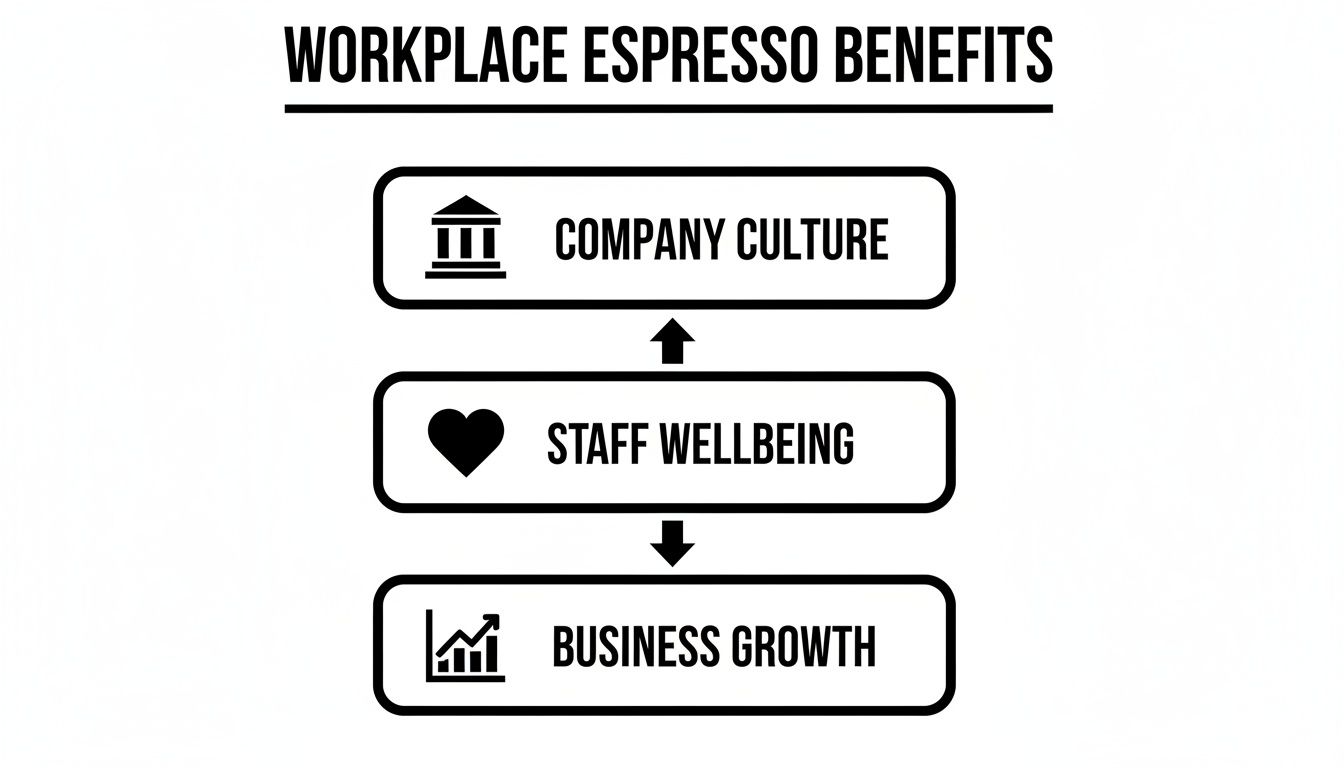
As the diagram shows, a great coffee experience contributes directly to a stronger company culture, better staff wellbeing, and ultimately, sustainable business growth.
What’s more, the natural oils you see on the surface of darker roasts help create a thicker, more stable crema—that beautiful reddish-brown foam on top of a great espresso. Not only does it look fantastic, but it also traps aromas, making the whole experience richer. By choosing a medium or dark roast, you’re setting your team up for a consistently flavourful coffee break that can turn a simple perk into a genuine daily highlight.
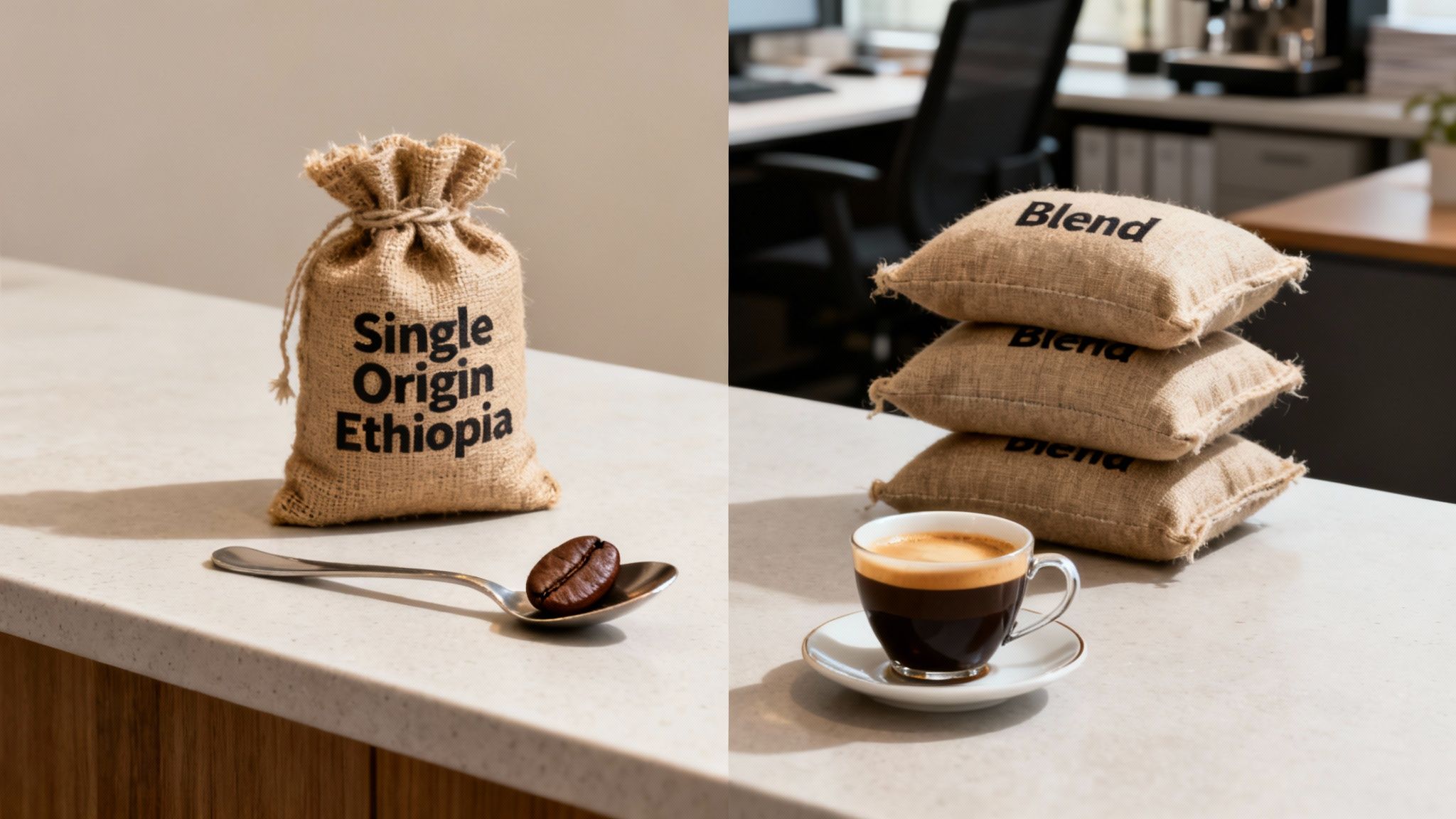
Right, you've settled on the perfect roast. Now for the next big question: single origin or a blend? This choice really gets to the heart of what you want your office coffee to be. Each one offers a totally different experience, and figuring out which is right for your team is key to a successful espresso setup.
Think of a single origin coffee as a captivating solo artist. It comes from a single farm or a specific region, and its flavour is a pure, unadulterated reflection of that one place—the soil, the altitude, the climate. This is where you find those really distinct, vibrant notes, like wild berries from an Ethiopian bean or a deep, nutty character from a Brazilian one. It’s an adventure in every cup, but that uniqueness can also mean it varies from one harvest to the next.
A blend, on the other hand, is like a brilliantly conducted orchestra. Here, a master roaster carefully chooses beans from different origins, combining them to create a specific, balanced, and harmonious flavour profile. The goal isn't just to mix them together; it's to build something more complex and, crucially, more consistent than any single bean could be on its own.
Why Blends Are Built for the Workplace
While the romance of a single origin is undeniable, a well-crafted blend is almost always the smarter choice for a busy office. The number one reason? Consistency. A great blend is engineered to taste exactly the same, day in, day out. Roasters can tweak the recipe by adjusting the components to smooth out any seasonal variations, so your team’s favourite coffee is always exactly how they remember it.
This reliability is a massive advantage, especially for automated bean-to-cup machines. Blends are often designed with these systems in mind, ensuring the coffee extracts perfectly and predictably every time.
Blends are also put together specifically to taste fantastic in milk-based drinks. Let's be honest, in the UK, where we get through about 98 million cups a day, a huge number of those are lattes, flat whites, and cappuccinos poured straight from an office machine. With the UK's coffee processing industry now worth £1.5 billion, the demand for roasted beans that just work has never been higher. You can dig into more stats about the UK's growing coffee industry to see just how big it's become.
The Art of Creating the Perfect Blend
Putting together a world-class espresso blend is a real craft, demanding a deep understanding of flavour and a seriously good palate. Roasters don’t just chuck a few different beans into a bag; they have a clear goal in mind and pick coffees that each bring something special to the party.
Here’s a rough idea of how it comes together:
- The Base: Most blends start with a solid foundation, often a bean from Brazil or Colombia. These are known for their deep chocolate and nut flavours and a full, satisfying body. This is what gives the espresso its backbone and helps produce that rich, beautiful crema.
- The Mid-Palate: Next, the roaster might bring in a coffee from Central America to add some sweetness and balance. Think notes of caramel or toasted almond that add a layer of complexity and a smooth mouthfeel.
- The Accent: To finish it off, a small amount of a brighter, more aromatic coffee—maybe from Africa—is often added. This "accent" bean can introduce a pop of fruitiness or a floral aroma that lifts the entire blend, making it that much more interesting and memorable.
An exceptional blend is a symphony of flavours, where each origin plays its part to create a cohesive and deeply satisfying whole. It’s designed for balance, ensuring that no single note overpowers another, resulting in a reliably delicious espresso every time.
Choosing a blend for your office coffee machine isn’t just a preference—it's a strategic move. It's an investment in consistency and balance, guaranteeing a fantastic coffee experience that will unite and energise your whole team. It gives you a dependable foundation for building a truly excellent workplace coffee culture.
Mastering the Essentials of Grind, Dose, and Freshness
Even the most exceptional coffee beans can fall flat if they aren't treated with care. Choosing the right beans is just the start of the journey; unlocking their real potential comes down to three crucial pillars: the grind, the dose, and an unwavering commitment to freshness. Nailing these elements is the secret to transforming your office coffee station from something purely functional into a source of daily inspiration.
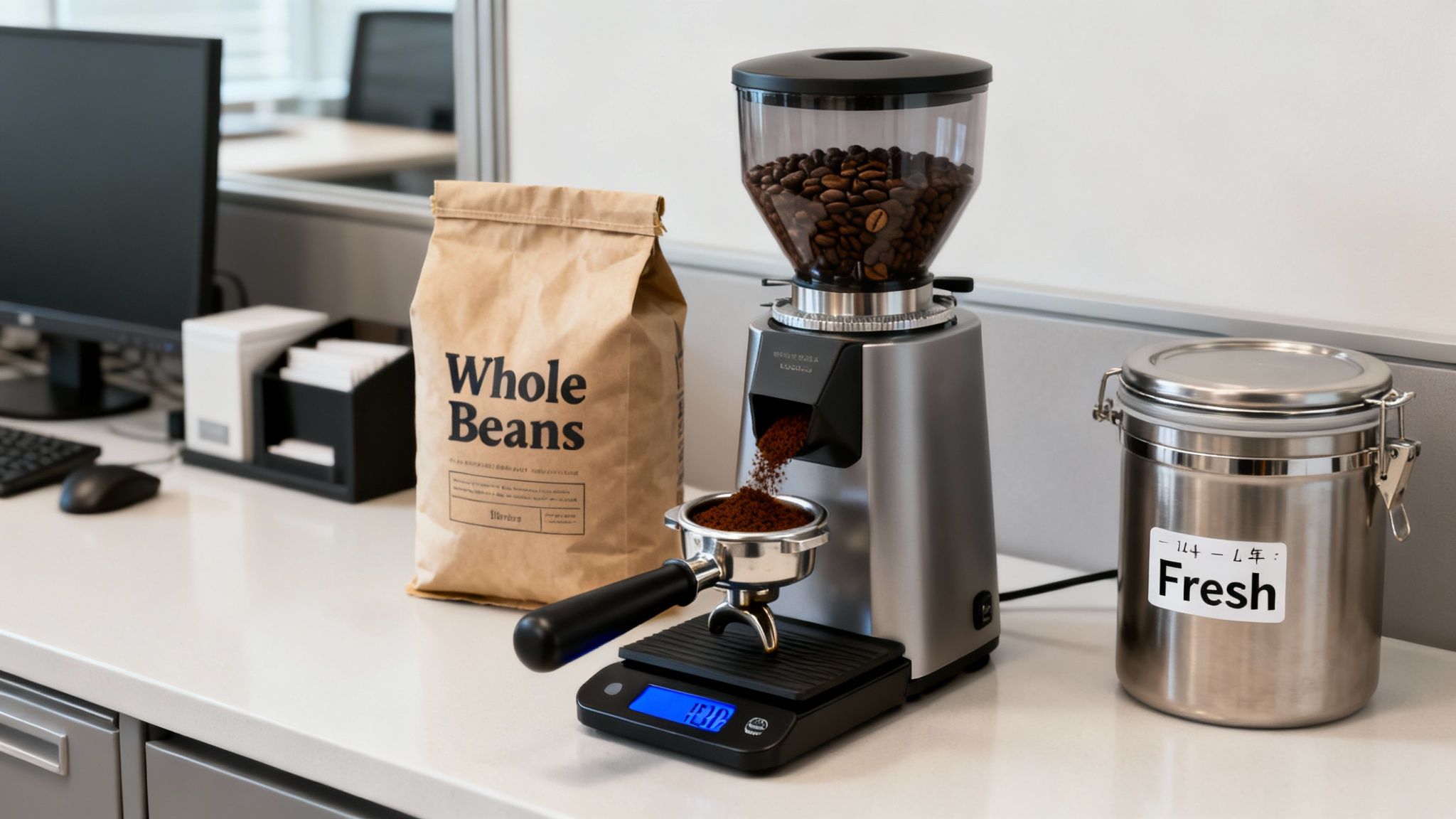
This might sound a bit complex, but for a modern office with a high-performance automated machine, it's actually wonderfully simple. These machines are engineered to handle the technical details for you, but understanding the principles behind them will help you appreciate every single cup that much more.
The Power of the On-Demand Grind
If you want to make a huge impact on flavour, the single best decision you can make is to use whole beans. Think of a coffee bean as a tiny, natural time capsule, perfectly designed to protect the fragile oils and aromatic compounds that give coffee its incredible taste and smell. The moment you grind it, you break that seal, and the clock starts ticking.
This is exactly why high-quality bean-to-cup machines have a grinder built right in. With every press of a button, the machine grinds the exact amount of coffee needed for that one drink, just seconds before brewing. This on-demand grinding ensures that the maximum amount of flavour makes it from the bean into your cup, delivering a vibrant and aromatic espresso every single time. It’s the difference between a coffee that’s bursting with life and one that tastes dull and flat.
Understanding the Perfect Dose
Immediately after grinding, the machine moves on to dosing. This is simply the precise measurement of ground coffee used to brew a single shot of espresso. It's a critical variable that directly affects the strength, body, and overall balance of the final drink.
The dose is the foundation of your espresso recipe. Too little coffee, and the shot will be weak and watery; too much, and it will be overwhelmingly strong and bitter. Automated machines are factory-calibrated to use the perfect dose, guaranteeing a consistent and delicious result with every brew.
This automated precision takes all the guesswork out of the equation, which is a massive advantage in a busy office. It means that whether it's the first coffee of the morning or the last of the afternoon, the quality remains consistently high.
Of course, beyond the beans themselves, mastering the art of espresso involves some very precise techniques. For those looking to refine their brewing skills and understand the finer points of extraction, a dedicated home barista's guide to espresso offers a wealth of knowledge.
The Non-Negotiable of Freshness
Finally, we arrive at the most crucial element of all: freshness. Coffee is a fresh product, much like artisan bread or just-cut flowers. Its greatest enemy is oxygen, which immediately begins to degrade the delicate flavour compounds after roasting and especially after grinding. It's not an exaggeration—research shows that pre-ground coffee can lose up to 60% of its aroma within just 15 minutes of being exposed to air.
To preserve this precious flavour, proper storage is absolutely key. You need a system that ensures your beans are always at their peak.
- Airtight Storage: Always store your whole beans in an airtight container, away from direct sunlight, heat, and moisture. And despite what you might have heard, never store them in the freezer—this can seriously damage the fragile oils.
- Smart Ordering: Work with your supplier to establish a reliable ordering schedule. The goal is to have just enough coffee on hand, ordering every two to four weeks to ensure your supply is constantly being replenished with freshly roasted beans.
By prioritising on-demand grinding, relying on your machine’s precise dosing, and championing freshness through smart storage and ordering, you ensure that every cup of coffee served in your office is a true testament to quality.
Curating Your Perfect Office Coffee Menu
Choosing the perfect coffee beans is just the first step. To create a truly fantastic office coffee programme, you need to think a little bigger—more like a café owner. It's about curating a drinks menu that has something for everyone on your team. This is how you turn a simple coffee machine into the vibrant heart of your workplace.
Today’s high-performance machines are built to handle a whole menu of classic espresso drinks. With a single touch, your team can get anything from a powerful double espresso to kick-start their morning to a velvety flat white for that afternoon boost.
The goal is simple: bring that coveted coffee shop experience into the office, so no one feels the need to leave the building. This isn't just a nice-to-have anymore. The UK's love for good coffee is transforming workplaces into café-like havens, especially as people get used to better brews at home—with UK consumers averaging £6.42 a week on their home setup. Offering a full menu of lattes, mochas, and everything in between is the perfect way to meet this demand, blending quality with the efficiency modern teams need. You can find more insights on the UK's evolving coffee market and its rapid growth here.
More Than Just Milk
A great coffee menu is an inclusive one, and that means offering a good range of milks. Dairy is the classic, of course, but the demand for plant-based alternatives has absolutely soared. Stocking a few popular options is a simple gesture that shows you're thinking about everyone's preferences and dietary needs.
- Oat Milk: This is the current superstar of plant-based milks, and for good reason. Its creamy texture and fairly neutral flavour profile let the espresso’s character shine through, making it brilliant for lattes and flat whites.
- Almond Milk: A lighter option with a subtle nutty taste. It tends to pair really well with darker, chocolatey roasts and is a go-to for anyone looking for a lower-calorie alternative.
- Soya Milk: As a long-standing favourite, soya offers a rich texture and a distinct flavour that many people genuinely love. It also froths beautifully, creating a stable, impressive foam for cappuccinos.
Offering a thoughtful selection of milks is one of those small details that makes a massive difference. It says you care, and it ensures every single person on your team can make their perfect cup, exactly how they like it.
Beyond the Perfect Coffee for Espresso
While espresso is clearly the star of the show, a complete beverage station caters to all kinds of moods. By expanding your offerings beyond coffee, you create a proper refreshment hub that becomes a natural destination for connection and collaboration.
Think about curating a selection that complements your coffee programme, turning the kitchen into a space where everyone feels welcome.
- Gourmet Hot Chocolate: A rich, single-estate cocoa provides a luxurious and comforting alternative for those non-coffee moments or chilly afternoons.
- Artisan Teas: A carefully chosen range of loose-leaf teas—from a classic English Breakfast to calming herbal infusions—offers a sophisticated and refreshing choice for the tea lovers in the office.
- Flavoured Syrups: Adding a few high-quality syrups like vanilla, caramel, or hazelnut allows for a bit of creative customisation, empowering staff to become their own baristas.
When you thoughtfully curate your menu, you're doing more than just providing drinks. You’re building a dynamic social hub that fuels creativity, boosts morale, and fosters the genuine human connections that are the bedrock of any great company culture.
Finding the Right Partner for Your Coffee Programme
Bringing great coffee into the workplace isn’t just another line on the procurement list; it’s about starting a partnership. The right supplier does so much more than drop off a box of beans. They become an extension of your team, making sure your coffee setup runs like a dream and keeps everyone happily caffeinated.
This is a really important final step. You’re not just looking for a vendor, but a partner who gets the unique rhythm of a busy office and can offer a completely hassle-free service. That means they should have fantastic coffee, of course, but also the technical know-how to support the high-performance machines that brew it.
This all-in-one approach is what separates a simple supplier from a true coffee partner. When you choose someone who can provide the complete solution, you’re investing in reliability, quality, and a smooth experience that genuinely lifts the entire workplace.
What to Look for in a Coffee Supplier
When you’re weighing up potential partners, try to look beyond the price per kilo. The real value is in the support, expertise, and tailored service they bring to the table. A brilliant supplier acts more like a consultant, helping you build and maintain a drinks programme that adds genuine value to your business.
Here are a few things that set the best partners apart:
- Equipment Expertise: They should know professional-grade machines like the back of their hand, offering advice, installation, and ongoing maintenance to make sure you never have to face a dreaded "out of order" sign.
- A Complete Beverage Solution: Look for a supplier who can sort you out with everything from artisan teas and decadent hot chocolate to quality syrups and all the essential bits and bobs.
- Training and Support: A great partner will get your team trained up, making sure everyone feels confident using the equipment to get consistently brilliant results.
Having this kind of support system in place means your investment is protected and your team can enjoy a fantastic coffee experience, day in and day out, without any hitches.
Your coffee supplier should be as committed to your team's satisfaction as you are. They aren't just selling a product; they are delivering an experience, providing the support and reliability needed to make your workplace coffee programme a resounding success.
Streamlining Your Office Refreshments
One of the biggest wins of working with a single, dedicated partner is just how much simpler it makes things. Juggling multiple vendors for coffee, tea, milk, and other supplies can quickly become a logistical nightmare. A consolidated approach tidies all that up, saving you a ton of time and admin headaches.
Think about the perks of a streamlined system:
- Flexible Subscriptions: The best suppliers offer adjustable subscriptions, letting you scale your orders up or down based on how much you’re using. No more running out or having stale coffee sitting in the cupboard.
- Reliable Delivery Schedules: A dependable delivery cadence, tailored to your office’s needs, ensures your beans are always fresh and your supplies are always topped up.
- Consolidated Invoicing: Getting one clear, straightforward invoice for all your beverage needs makes life much easier for your accounts team and simplifies budget management.
By choosing a partner who can manage your entire refreshment programme, you free yourself up to focus on what really matters—your people. It’s an investment in a smooth, efficient, and quality-driven experience that will pay dividends in staff morale and workplace satisfaction.
Got Questions? We’ve Got Answers
Stepping into the world of speciality office coffee can bring up a few queries. Don’t worry, that’s completely normal. Here are some straightforward answers to the most common questions we hear, designed to help you build an incredible espresso programme for your team.
How Often Should We Be Ordering Coffee Beans?
For the best possible flavour, you’ll want to get a fresh delivery of beans every 2-4 weeks. This schedule keeps you well within coffee’s peak freshness window, which usually starts a few days post-roast and lasts for about a month.
The best suppliers offer flexible subscriptions that you can tweak based on how much coffee your team is actually drinking. It’s the smartest way to make sure you never run out of the good stuff—or worse, end up serving stale, lifeless coffee.
Is a Dark Roast Always the Best Choice for Espresso?
It’s a fantastic and hugely popular choice for that classic, bold espresso, but it’s not the only option. Dark roasts are brilliant because their rich, low-acidity profile is a perfect match for milk, making them a dream for lattes and cappuccinos.
That said, a well-chosen medium roast can produce an equally stunning espresso, often with more intricate and nuanced tasting notes. For most offices, sticking to a medium-to-dark roast is a winning strategy. These profiles are consistent crowd-pleasers and deliver a delicious, balanced cup every time.
Think of your roast profile as the foundation for your entire coffee experience. A dark roast brings those comforting, chocolatey notes, while a high-quality medium roast can introduce a brighter, more complex character to your daily brew.
Can We Just Use Supermarket Beans in Our Office Machine?
While it might seem like a simple shortcut, we really advise against it. Those beans on the supermarket shelf were likely roasted weeks, if not months, ago. By the time they get to your office, all the vibrant aromas and delicate flavours that make speciality coffee special have faded away.
There’s another issue, too. Many mass-produced beans are roasted in a way that leaves them excessively oily. This oil can build up and clog the sensitive grinders inside high-performance espresso machines, leading to some very costly repairs down the line. Using freshly roasted, speciality-grade coffee is the only way to guarantee fantastic taste while protecting your investment.
Ready to bring a truly exceptional coffee experience into your workplace? At Ue Coffee Roasters, we provide complete, premium refreshment solutions designed to inspire your team.