

A Guide to Coffee From Guatemala
If you’ve ever had a coffee so rich and complex it tells a story, there's a good chance it came from Guatemala. This is more than just a morning brew; it's a cultural treasure, celebrated by coffee lovers for its incredible diversity and depth of flavour.
The Soul of a Nation in a Coffee Cup
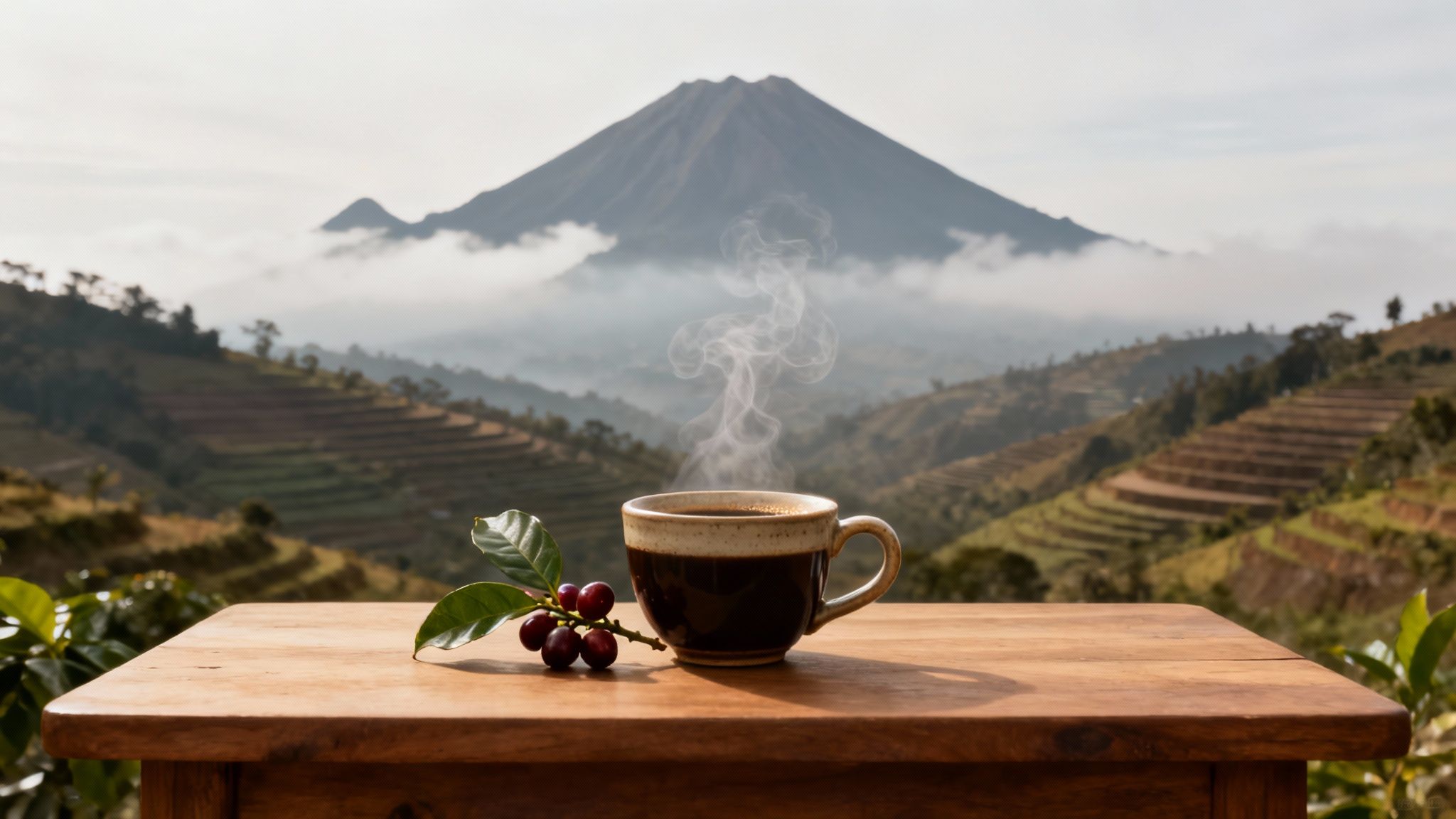
To sip Guatemalan coffee is to taste a story shaped by nature and perfected by tradition. It isn't just something to kick-start your day; it’s an invitation into a world where every single bean carries the fingerprint of its origin. The country's dramatic landscape, defined by towering volcanoes and misty highlands, creates hundreds of distinct microclimates—each one producing a coffee with its own unique personality.
This guide is your passport to that world. We’ll journey into the heart of what makes Guatemalan coffee so special, exploring the history, the people, and the distinct characteristics that make it stand out on the global stage.
More Than Just a Drink
The story of coffee is woven deep into the fabric of Guatemalan life. For countless communities, growing coffee isn't just a business but a generational legacy—a craft passed down with immense pride. It’s this profound connection between the land and its people that you can taste in the final cup.
Guatemalan coffee is a benchmark for quality because it reflects a perfect harmony between ideal growing conditions and a deep respect for the cultivation process. The result is a cup that is consistently clean, complex, and full of character.
What truly sets it apart, though, is its remarkable spectrum of flavours. Unlike coffees from other places that might have one dominant taste, Guatemalan beans offer something for everyone. The range is astonishing, a direct result of all those different terroirs.
- Rich & Chocolatey: Coffees from regions like Antigua are often full-bodied with deep notes of cocoa and a smooth, velvety texture.
- Bright & Fruity: Beans from the highlands of Huehuetenango can surprise you with a vibrant acidity and bright, citrusy or berry-like notes.
- Spicy & Floral: Other areas produce delicate cups with subtle hints of spice, jasmine, or orange blossom.
This incredible diversity means that exploring Guatemalan coffee is a continuous adventure. Get ready to find your new favourite brew as we uncover the secrets behind this Central American gem.
A Journey Through Coffee History
Every cup of Guatemalan coffee tells a story of transformation. It’s a narrative steeped in ambition, resilience, and a little bit of luck. The journey of this celebrated bean began in the mid-18th century when Jesuit missionaries first introduced coffee plants to the country. Back then, they were little more than pretty ornaments, admired in the courtyards of colonial Antigua.
For nearly a hundred years, coffee remained a curiosity. The nation's economy was built on other exports—indigo and cochineal, natural dyes that were highly prized in Europe's booming textile industry. But when chemical dyes were invented in the mid-1800s, the market for Guatemala’s key exports collapsed, plunging the country into an economic crisis.
A New National Identity
Faced with this challenge, Guatemala’s leaders needed to find a new crop to revitalise the nation’s fortunes. They turned to coffee, which was already showing incredible promise in the country’s rich, volcanic soil. This decision didn't just change the economy; it marked the beginning of a whole new era for Guatemala.
The government threw its weight behind coffee cultivation, providing land and resources to farmers willing to take a chance on this new venture. This wasn't just an economic pivot; it was a cultural one. The humble coffee plant became a symbol of hope, resilience, and a new path forward for the entire country.
From a garden ornament to the backbone of an economy, the coffee bean's rise in Guatemala is a testament to the nation’s ability to adapt and innovate. It became more than a crop; it became a source of national pride.
This period saw the birth of the great coffee plantations, or fincas, many of which are still family-owned and operated today. These early pioneers experimented with different Arabica varietals, painstakingly discovering which ones flourished in specific microclimates. Through sheer hard work, they laid the foundation for the exceptional quality that defines Guatemalan coffee.
Perfecting the Craft
As the industry grew, so did its reputation. By the late 19th century, coffee was king, accounting for nearly 90% of Guatemala's total export revenue. This incredible success wasn't just down to the ideal growing conditions; it was driven by a deep-seated commitment to quality that set a new standard.
Farmers and producers became masters of their craft, focusing on meticulous cultivation and processing. They perfected the washed processing method, which is responsible for the exceptionally clean, bright, and nuanced flavour profiles that specialty coffee lovers prize. This dedication ensured that coffee from Guatemala became synonymous with premium quality on the world stage.
Here are a few key milestones in this incredible journey:
- Mid-1700s: Jesuit missionaries bring the first coffee plants to Guatemala.
- 1860s: The government begins actively promoting coffee to replace the failing dye industry.
- Late 1800s: Coffee becomes the dominant force in the Guatemalan economy, transforming its agricultural landscape.
- 20th Century: Guatemala solidifies its reputation as a world-class producer of high-quality Arabica coffee.
This rich history isn't just a thing of the past; it lives on in every single bag of beans. The centuries of accumulated knowledge, the generational passion, and the unwavering pursuit of perfection are what make each sip a truly inspiring experience. It’s a legacy of perseverance you can taste in your cup.
Discovering Guatemala's Famous Coffee Regions
When we talk about Guatemalan coffee, we’re not talking about one single flavour profile. Instead, Guatemala is a vibrant mosaic of eight distinct growing regions, each with its own signature character. This incredible diversity is the country's greatest strength, offering a coffee for just about every palate imaginable.
The secret? A unique trifecta of rich volcanic soil, soaring altitudes, and over 300 microclimates.
Think of it like winemaking. Just as the terroir of Bordeaux produces a completely different grape than that of Burgundy, the unique environment of each Guatemalan region shapes the coffee bean's final taste. A bean grown in the misty highlands of Huehuetenango will taste worlds apart from one cultivated in the shadow of Antigua's volcanoes. Let's take a closer look at this beautiful spectrum of taste.
The infographic below shows the simple yet powerful journey of coffee in this part of the world, from its arrival and cultivation to becoming a celebrated global export.
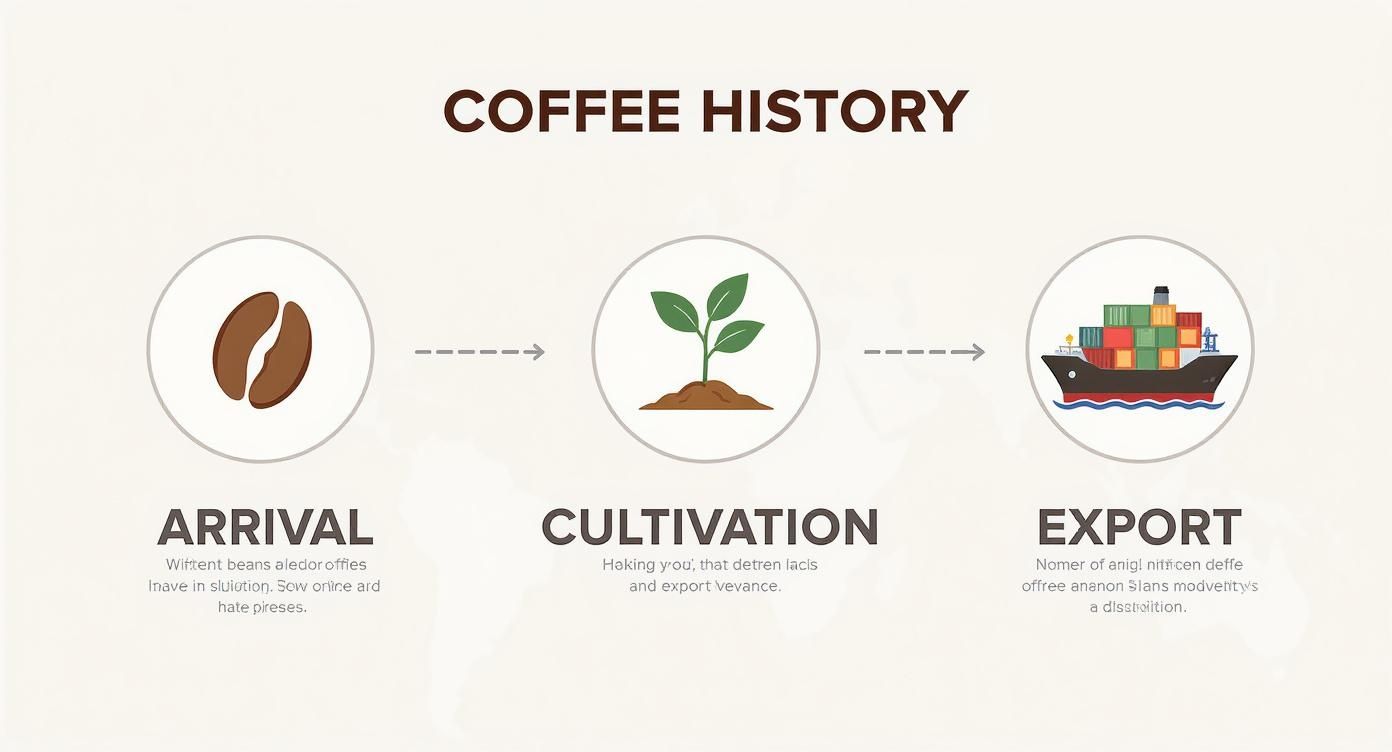
This journey shows just how deeply rooted coffee is in Guatemala's identity. It’s evolved from a simple plant into a cornerstone of its worldwide reputation.
The Famous Eight: A Flavour Journey
While there are eight official coffee regions recognised by Anacafé (Guatemala's National Coffee Association), a few have become particularly famous for their outstanding quality and distinctive profiles. Let's explore some of the most celebrated areas.
Antigua: The Classic and Elegant
Often considered the birthplace of Guatemalan coffee, Antigua is arguably its most famous region. Nestled between three majestic volcanoes—Agua, Fuego, and Acatenango—the valley enjoys a near-perfect coffee-growing climate. The volcanic pumice in the soil is fantastic for retaining moisture, which is crucial during the dry season.
Coffees from Antigua are the very definition of elegance and balance. They typically have a full body, a rich aroma, and a velvety smoothness. Expect delightful notes of dark chocolate, caramel, and a hint of spice, with a bright, clean acidity that makes each sip incredibly satisfying.
Huehuetenango: The Bright and Fruity
Tucked away in the remote western highlands, Huehuetenango is the highest and driest of the non-volcanic regions. It has a unique advantage: hot winds blow in from Mexico's Tehuantepec plain, protecting the crops from frost. This allows coffee to be grown at incredible altitudes of up to 2,000 metres.
That high altitude results in a coffee that is exceptionally vibrant and complex. Beans from Huehuetenango are known for their bright, crisp acidity and distinct fruity notes. You might taste green apple, citrus, or even wine-like flavours, all wrapped in a wonderfully light and delicate body. It's a truly inspiring and lively cup.
Atitlán: The Rich and Aromatic
Surrounding the shores of the stunning Lake Atitlán, this region's coffee farms are dotted along the slopes of volcanoes. The area gets a constant, gentle breeze from the lake, which shapes the local microclimate, and the soil here is incredibly rich in organic matter.
Coffee from Atitlán is wonderfully aromatic, often with pronounced floral and nutty characteristics. It boasts a full body and a crisp, citrus-like acidity. The farmers in this region also have a strong tradition of organic cultivation, adding to the unique purity of their beans.
The sheer diversity within Guatemala means that every bag of single-origin coffee is a new discovery. It's a chance to taste not just a beverage, but a specific place and the dedication of its people.
Guatemalan Coffee Regions Flavour Profiles
To help you find your perfect match, let's compare the key characteristics of these iconic regions side-by-side. This table simplifies the complex world of coffee from Guatemala, allowing you to pinpoint the flavour profiles that appeal most to you. The farmers behind these amazing beans are true artisans. To get a feel for the broader landscape of those who cultivate exceptional goods, you could explore information about other global producers.
| Region | Primary Flavour Notes | Acidity Level | Body | Typical Altitude |
|---|---|---|---|---|
| Antigua | Dark Chocolate, Caramel, Spice | Bright & Refined | Full | 1,500 - 1,700m |
| Huehuetenango | Green Apple, Citrus, Wine-like Fruit | Intense & Crisp | Light to Medium | 1,500 - 2,000m |
| Atitlán | Floral, Nutty, Lemon | Bright & Citrusy | Full | 1,500 - 1,700m |
| Cobán | Stone Fruit, Spice, Floral | Delicate | Medium | 1,300 - 1,500m |
| Fraijanes | Bright, Sweet, Tangy | Pronounced | Full & Velvety | 1,400 - 1,800m |
Of course, this is just the beginning of your journey. Exploring each region offers a new perspective on what coffee can be, turning every brew into an exciting and memorable experience.
The Art of Transforming Cherry to Cup
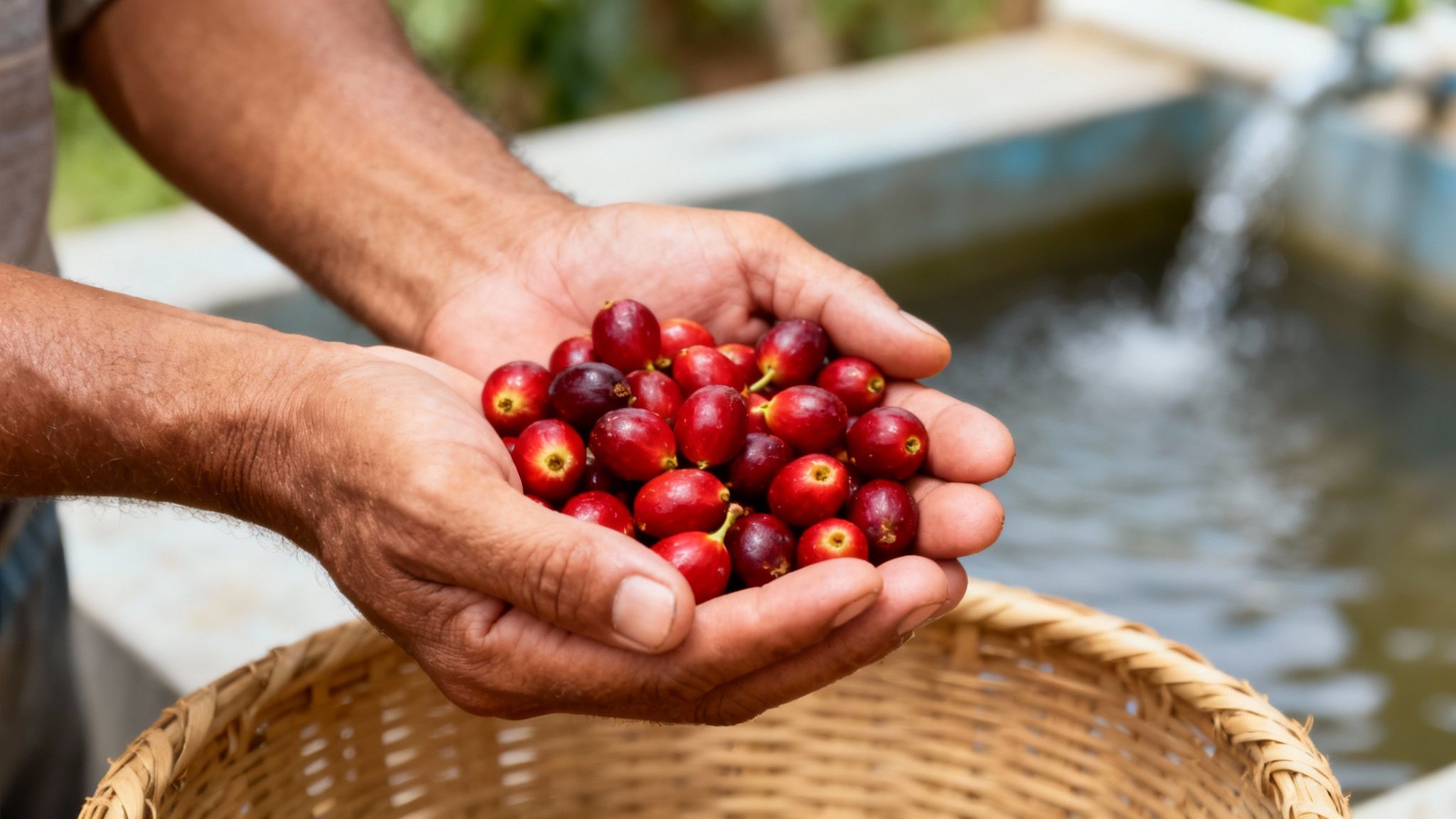
Ever wondered how that brown, aromatic coffee bean in your grinder got its start? It’s a bit of a journey. It begins its life not as a bean at all, but as a bright red fruit, hanging in clusters and looking a lot like a cherry.
The magic happens in the transformation from this simple fruit into the complex bean we know and love. This stage is called processing, and it's a delicate art form. Get it right, and you unlock all the incredible, nuanced flavours inside. Get it wrong, and they can be lost forever. It’s a craft that requires immense skill, precision, and an intimate understanding of the coffee itself.
In Guatemala, this art has been perfected over generations, and the chosen method is often what defines the final taste in your cup.
The Signature Washed Method
The hallmark of premium coffee from Guatemala is its exceptionally clean, bright, and articulate flavour profile. This isn't an accident. This distinct character is largely thanks to the meticulous washed processing method, which is the go-to choice for the majority of the country's producers.
Let’s use an analogy. Think of the coffee cherry like an avocado. You've got the outer skin (the red peel), the fleshy fruit (the green part), and the coffee bean (the stone in the middle). The whole point of the washed process is to get to that stone as cleanly and quickly as possible, removing every last bit of fruit before drying.
This approach lets the bean's intrinsic flavours—those shaped by the soil, altitude, and varietal—shine through without any influence from the fruit. It’s pure, unadulterated terroir.
The process involves a few key steps:
- De-pulping: Almost immediately after being picked, the cherries are run through a machine that strips away the outer skin and most of the fleshy pulp.
- Fermentation: The beans, now coated in a sticky layer called mucilage, are placed in fermentation tanks with water for anywhere between 12 to 48 hours. This step naturally breaks down the remaining fruit, cleaning the bean completely.
- Washing: After fermenting, the beans are given a thorough rinse with clean water, washing away any last traces of fruit.
- Drying: Finally, the squeaky-clean beans are spread out on large patios or raised beds to dry in the sun until they reach an ideal moisture level of around 11%.
Sure, this method demands significant resources—especially fresh water—but the result is a coffee with that trademark sparkling acidity and a crystal-clear flavour. It’s the secret behind the classic elegance of a great Guatemalan brew.
Exploring Alternative Paths
While the washed method reigns supreme, some innovative Guatemalan farmers are venturing down different paths. They’re exploring other processing styles to create wonderfully unique taste experiences, using the cherry’s own fruit to add new layers of sweetness and complexity.
Processing is the artist's final touch on the canvas of terroir. By choosing how to treat the coffee cherry, a producer can either polish the bean to its purest expression or paint it with the sweet, fruity hues of its own pulp.
To put it another way: if washed coffee is like a crisp, dry white wine, these other methods are more like a rich, full-bodied red.
Natural Processing
Also known as the dry process, this is the oldest method of them all. It's beautifully simple. The entire coffee cherry is left intact and dried in the sun, just like a raisin. The bean ferments inside its own fruit, absorbing sugars and developing bold, fruity, and often wine-like flavours.
Honey Processing
This is a fantastic middle ground between washed and natural. Honey processing involves de-pulping the cherry but leaving some of the sticky mucilage—the "honey"—on the bean as it dries. The amount of mucilage left on the bean dictates the final flavour, creating a cup that balances the clean acidity of a washed coffee with the syrupy sweetness of a natural.
Understanding this transformative stage gives you a whole new appreciation for the incredible skill that goes into every single bean. It's the moment where nature's potential meets human artistry, creating the inspiring cup of coffee from Guatemala that you get to enjoy every morning.
Brewing Your Perfect Cup of Guatemalan Coffee
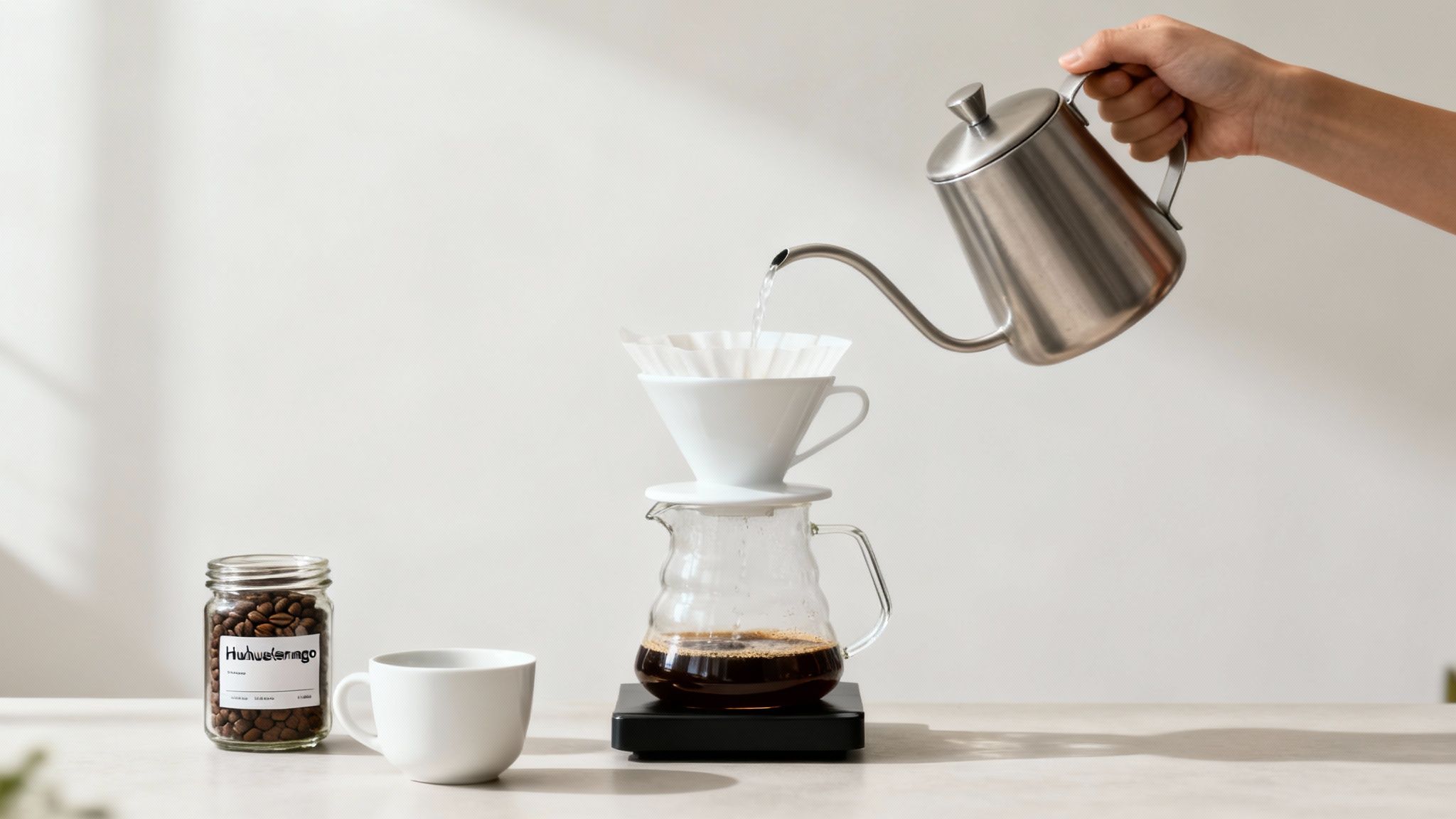
You’ve got the beans. That bag of exceptional Guatemalan coffee is sitting on your counter, full of potential. Now for the final, and most rewarding, step: unlocking those incredible flavours yourself. This is where the bean’s entire journey comes together.
The goal is to honour the coffee's origin. Whether your beans are from Antigua or Huehuetenango, the right brewing method will highlight their unique character—from deep chocolatey notes to bright, fruity acidity. This isn’t about complicated machinery; it’s about thoughtful preparation.
Choosing Your Brewing Companion
Different methods will bring out different sides of a Guatemalan coffee. A full-bodied Antigua bean, for example, really shines in a French press, where its rich oils create a velvety, satisfying texture. On the other hand, the delicate, bright notes of a high-altitude Huehuetenango are beautifully expressed through a clean, crisp pour-over.
Here are two fantastic starting points:
- The Pour-Over: This method gives you total control, producing a clean, clear cup that lets those nuanced floral and fruit notes sing. It’s perfect for exploring the subtle complexities of single-origin coffee from Guatemala.
- The French Press: If you love a rich, full-bodied brew, this immersion method is for you. It delivers a robust cup that beautifully showcases the chocolatey, nutty, and caramel profiles found in so many Guatemalan coffees.
Brewing is a conversation with your coffee. The method you choose, the grind you select, and the water you use are all part of a dialogue that reveals the bean's true story.
Mastering the Fundamentals
No matter which brewer you pick up, three variables will make or break your brew: grind size, water temperature, and brewing time. Think of them as the pillars supporting a perfect cup. Getting these right is essential for a balanced extraction—drawing out all the delicious flavours without any of the bitterness.
A common mistake is getting the grind wrong. Too fine, and you’ll over-extract, leaving you with a bitter taste. Too coarse, and you’ll under-extract, resulting in a weak, sour cup.
- Grind Size: Aim for a medium-coarse grind for French press (think coarse sea salt) and a medium-fine grind for pour-over (like table salt). Always grind your beans just before brewing for maximum freshness.
- Water Temperature: The sweet spot is between 90-96°C. Boiling water can scorch the delicate flavours, so let your kettle sit for about 30 seconds after it clicks off.
- Brewing Time: For a pour-over, you're aiming for a total brew time of 2.5 to 4 minutes. A French press needs to steep for around 4 minutes before you plunge.
Start with these guidelines, but don’t be afraid to experiment. Tweaking one variable at a time will help you fine-tune your technique and discover the precise recipe that makes your Guatemalan coffee taste absolutely perfect to you.
A Few Final Questions
As you get to know Guatemalan coffee, you’ll probably have a few questions. We get it. To help you feel more connected to every cup you brew, we’ve put together some straight answers to the most common queries we hear. Think of this as the final piece of the puzzle.
What Makes Guatemalan Coffee So Unique?
In a word: diversity. Guatemala’s secret weapon is its incredible range of environments. With over 300 distinct microclimates, rich volcanic soil, and seriously high growing altitudes, the country produces coffees with a vast and complex spectrum of flavours. This means it isn't known for just one single taste.
You can find everything from deep, chocolatey notes in Antigua to bright, floral, and fruity profiles in Huehuetenango. This remarkable variety ensures there’s a perfect Guatemalan coffee for almost anyone, making the journey of discovery a real adventure.
Is Coffee From Guatemala Best as a Light or Dark Roast?
For the most part, specialty roasters lean towards a medium roast for their Guatemalan beans. Think of it like finding the perfect lighting for a masterpiece; it illuminates all the delicate and complex flavour notes without overpowering them. This approach beautifully preserves the bright acidity and subtle floral aromas that make these beans so special.
A dark roast can sometimes mask the nuanced character that makes Guatemalan coffee stand out. That said, some beans from lower altitudes are robust enough to create a fantastic, rich espresso when roasted darker.
Essentially, a medium roast respects the bean's origin and lets its true story shine through in your cup.
How Should I Store My Guatemalan Coffee Beans?
Proper storage is absolutely key to keeping those fresh, vibrant flavours you love. Your goal is simple: protect the beans from their four main enemies—air, moisture, heat, and light.
Here’s how to do it right:
- Find the right container: Store your beans in an airtight, opaque container. This is your first line of defence against oxygen and light.
- Choose the right spot: Keep the container at room temperature in a cool, dark place, like a pantry or cupboard.
- Avoid the fridge: Never store coffee in the refrigerator or freezer. Condensation and smells from other foods can ruin the delicate oils that carry all that beautiful flavour.
And for the absolute best taste possible, always grind your beans just moments before you brew. It's a small habit that makes a world of difference.
At Ue Coffee Roasters, we believe a truly great cup of coffee has the power to inspire connection and elevate your day. Discover our curated selection of single-origin beans and bring the exceptional quality of Guatemalan coffee into your workplace. Explore our premium coffee solutions at https://www.uecoffeeroasters.com.