

UK Coffee Machine Rental for Offices | Perfect Office Brew Solutions
Picture this: the scent of freshly ground speciality coffee wafting through the office, sparking conversations and fuelling creative energy. This isn't a perk reserved for flashy tech start-ups anymore. It’s a smart, simple move for any business looking to boost morale, and a quality coffee machine rental for offices is all it takes to make it happen.
The right setup can completely transform the humble coffee break into a valuable daily ritual, creating the kind of collaborative, lively culture that modern UK businesses thrive on.
Crafting an Unforgettable Office Coffee Experience
This guide isn't just about the logistics of renting a machine. It’s about the art of creating an in-house coffee experience that genuinely rivals the best high street cafés, making your office a place where your team truly wants to be. Think of it as an investment in your company culture and your team's well-being, not just a caffeine supply.
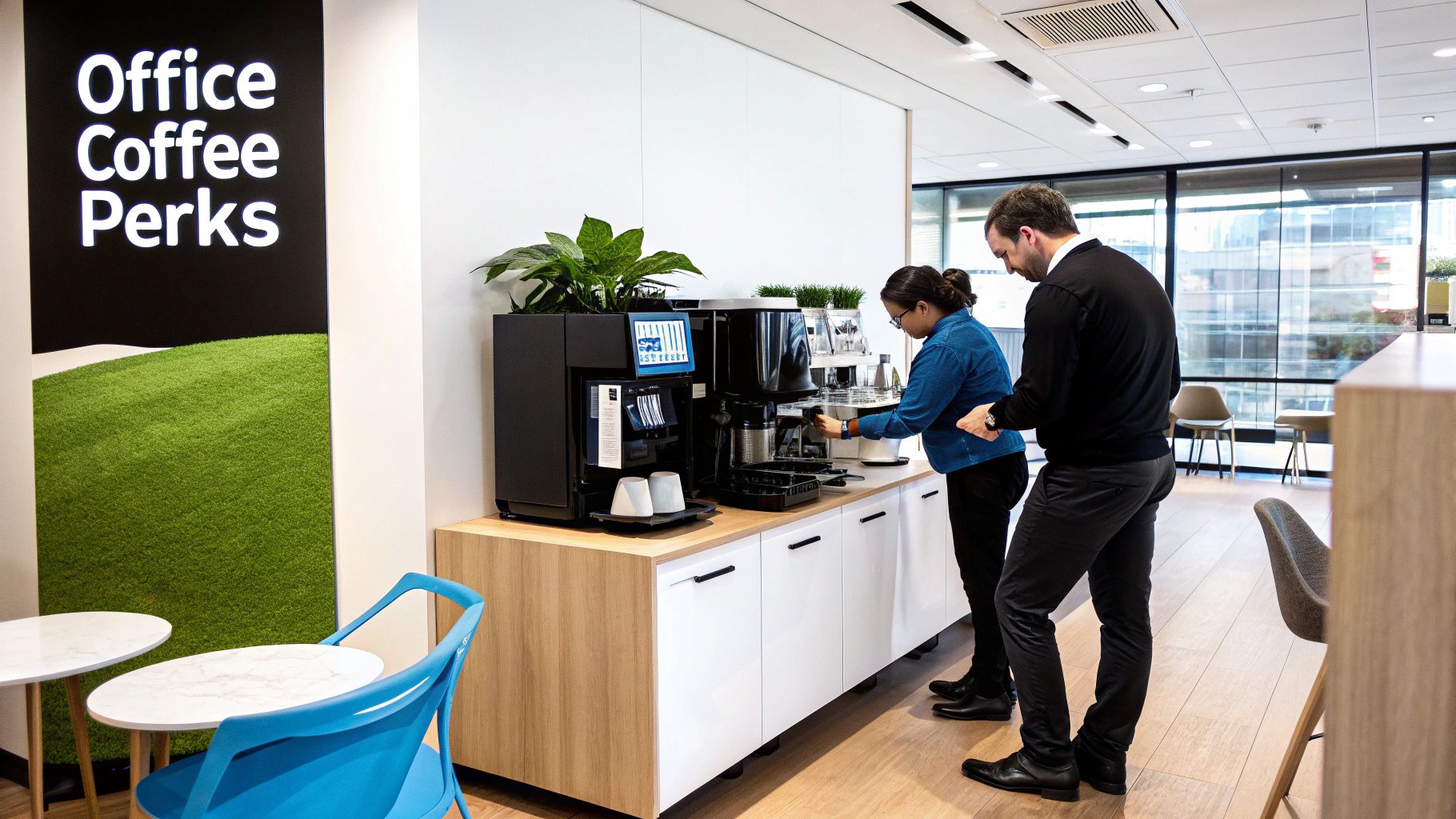
A fantastic office coffee programme sends a clear message: you value quality, and you care about the details of your employees' day-to-day experience. In a competitive UK job market, small things like exceptional coffee can make a surprisingly big difference to employee satisfaction and retention.
More Than Just a Perk
Upgrading your coffee offering is one of the most tangible ways to instantly enhance the work environment. It creates a natural hub where colleagues from different departments can cross paths, share ideas, and build stronger working relationships. You’d be surprised how often real innovation sparks during those impromptu chats over a great flat white.
And let’s not forget the impact on productivity. Providing top-tier coffee in-house means fewer people nipping out to the local café for their caffeine fix. Improving your on-site facilities directly supports a more focused and efficient workday for your UK-based team.
By investing in a high-quality coffee experience, you're not just buying a service; you're cultivating a more connected, creative, and energised workplace culture. It's a small change that delivers a substantial return.
Ultimately, a speciality coffee setup is a signal of commitment to excellence. It shows you’re in tune with the sophisticated, quality-focused tastes of a modern UK workforce and that you’re a company that pays attention to the details that make daily office life genuinely better.
Choosing the Right Machine for Your Team
Finding the perfect coffee machine feels like a big decision, but it really boils down to one simple question: what does your team actually want to drink? Are you a small, fast-paced agency that runs on quick, consistent espressos? Or are you a larger firm where variety and choice are key to keeping everyone happy?
The right machine is more than just a perk; it’s a catalyst for connection and productivity. Think about the daily rhythm of your workplace. A team of 20 in a UK office might be perfectly served by a sleek bean-to-cup machine that delivers lattes and flat whites at the touch of a button. An office of over 100, on the other hand, will likely need a more robust system—or even multiple machines—to avoid those dreaded morning queues.
Matching the Machine to Your Office Culture
The kind of coffee machine you choose says a lot about your company culture. A traditional, manual espresso machine, for example, signals a real appreciation for the craft of coffee. It’s a great fit for a creative agency where team members enjoy the ritual of pulling their own shots and playing barista for a moment.
But for a fast-moving finance or law firm in the City, efficiency is everything. In that environment, a high-capacity, fully automated bean-to-cup machine is usually the best bet. These workhorses minimise fuss and deliver consistently great drinks without needing any special skills. Your team can grab a premium coffee and get straight back to it.
The goal isn't just to provide caffeine. It's to create an experience that slots seamlessly into your team's workflow and genuinely makes their day better. The best machine is one that feels like it’s always been there.
The image below gives a great visual breakdown of how different machines stack up on factors like cost, variety, and upkeep.
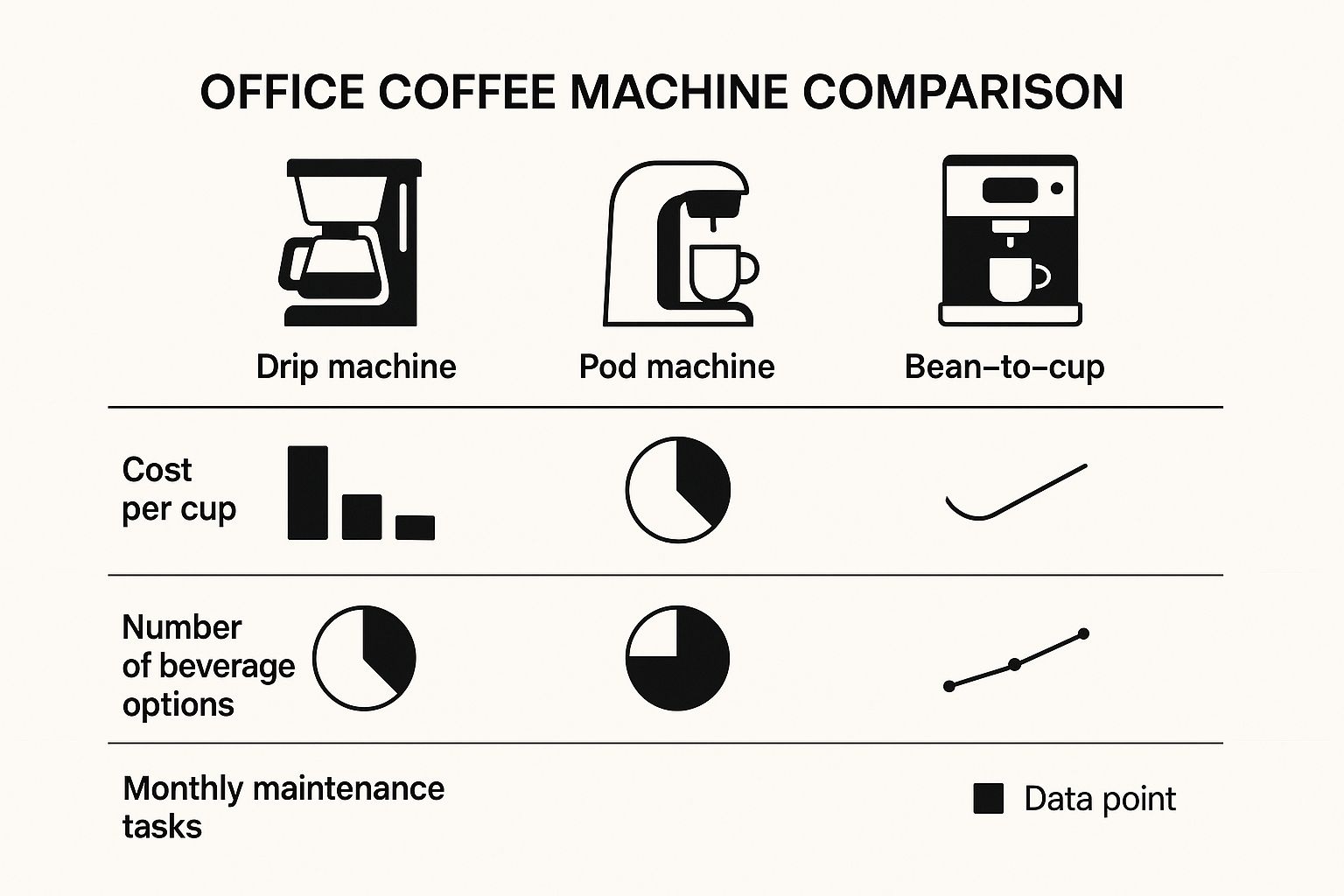
As you can see, there’s a trade-off. Bean-to-cup machines offer the widest variety, while simpler options might have a lower cost per cup but fewer choices to impress your team.
Coffee Machine Types At a Glance
To help you navigate the options, here’s a quick comparison of the most common types of office coffee machines available for rent in the UK. Each has its own strengths and is suited to a different kind of workplace.
| Machine Type | Best For | Key Benefit | Consideration |
|---|---|---|---|
| Bean-to-Cup | Most UK offices, from small teams to large corporates. | Unbeatable convenience and variety with fresh beans. | Higher initial rental cost, requires regular cleaning. |
| Traditional Espresso | Creative agencies or offices that value a "café culture." | Top-tier coffee quality and a hands-on experience. | Requires staff training and is more time-consuming. |
| Pod/Capsule | Small teams, meeting rooms, or client-facing areas. | Extremely clean, simple, and consistent results. | Higher cost per cup and significant environmental waste. |
| Filter Brewer | High-volume needs like big meetings or communal kitchens. | Produces large quantities of quality coffee quickly. | Limited to black coffee; less "premium" feel. |
Choosing the right type is the first major step. From here, you can start looking at specific models that fit your team’s size and your budget.
This move towards better office coffee is part of a much bigger trend. The European professional coffee machine market is set to grow from US$ 2.07 billion in 2024 to around US$ 3.69 billion by 2033. This boom is being driven by UK businesses wanting to avoid a big upfront investment while getting the full benefit of maintenance and support included in rental deals. You can discover more insights about this expanding market and its trends.
Decoding Rental Agreements and Finding Hidden Costs

The rental agreement shouldn’t be a source of anxiety. Think of it as the foundation for a brilliant partnership—one that brings fantastic coffee to your team day in, day out. Knowing what to look for empowers you to see beyond the headline price and understand the real, long-term value you’re getting.
It’s so important to move past the initial quote. For most small and medium-sized UK businesses, renting is a brilliantly cost-effective way to get premium equipment without a huge upfront investment. Weekly rental prices can start from as little as £25 for entry-level professional models, rising to over £100 for high-capacity, state-of-the-art machines. That’s a world away from purchase prices that can soar past £15,000.
To get the most out of renting, you need to get comfortable with the details in the fine print.
Looking Beyond the Weekly Price
That advertised weekly fee? It's just the start of the story. A genuinely good deal is transparent, with no nasty surprises waiting for you down the line. Hidden costs often lurk in the small print around service, supplies, and contract terms.
It can be helpful to see how other industries handle this. For instance, the principles behind transparent pricing for costs to rent event equipment are universal. Your goal is to build a complete, honest picture of your total monthly outlay.
Here are the key areas to scrutinise before signing any UK rental agreement:
- Installation and Training Fees: Is the initial setup and a 'how-to' session for the team included? Or is that an extra one-off charge? It’s a common “gotcha.”
- Water Filtration: Hard water is a major issue in many parts of the UK and ruins coffee. Ask if filter changes are part of the service package or billed separately. This is a recurring cost, so it adds up.
- Minimum Consumable Orders: Many suppliers tie you into a minimum monthly purchase of beans or other supplies. Make sure this actually aligns with what your team will drink, otherwise, you're just paying for products you don't need.
Key Clauses to Clarify in Your Contract
Your rental agreement is the roadmap for your relationship with the supplier, so you need to know what every clause means for your business. Don't ever be afraid to ask for clarification. A good UK-based supplier will be more than happy to walk you through it.
A great supplier doesn’t just provide a machine; they provide clarity and peace of mind. The contract should feel like a promise of excellent service, not a list of potential pitfalls.
Make sure you get crystal-clear answers on these critical points:
- Service Level Agreement (SLA): This is their commitment to you when things go wrong. What's their guaranteed response time for a breakdown? Is it a 4-hour or a next-business-day call-out? For a busy office, that difference is huge.
- Minimum Term and Notice Period: How long are you locked in for? Standard UK contracts are often 36 months. What’s the process for ending the contract if your business needs change?
- Upgrade and Downgrade Options: Can you switch to a bigger machine if your team grows? Or a smaller one if you downsize? A flexible contract shows a provider is genuinely invested in a long-term partnership.
By asking these pointed questions, you shift from being just another customer to an informed partner. You'll be ready to build a brilliant office coffee culture with total confidence.
Your Guide to a Seamless Installation and Support Plan
The day your new machine arrives is a big moment for the office. Getting off to a smooth start really sets the tone for the whole rental experience. The difference between a flawless launch and a frustrating one often boils down to a few simple preparations that are easy to overlook in the excitement.
A little planning goes a long way. Getting the practical details sorted beforehand prevents annoying delays and ensures your team can start enjoying great coffee from day one. When you're planning the setup, understanding the logistics is crucial. For a wider view, you might find these essential considerations for beverage system installation useful to see how the pros approach similar projects.
Before the engineer turns up, run through this quick pre-installation checklist:
- Power Supply: Does the machine need a standard 13-amp socket, or is it something more heavy-duty? Check with your supplier so the right power is ready and waiting in the right spot.
- Water Connection: Is the machine going to be plumbed into the mains? If so, you’ll need a water source and an isolation valve within about one metre of where it’s going to live. This is essential for consistent quality in the UK's hard water areas.
- Location and Space: Pick a spot that’s a natural hub for conversation but won’t cause a traffic jam. Don’t forget to leave enough room around the machine for access, refilling, and cleaning.
Nurturing a Great Supplier Relationship
Think of your rental agreement as more than just a contract—it’s the start of a partnership. Honestly, the relationship you build with your supplier is just as important as the machine itself. A great supplier becomes an extension of your team, making sure everything runs smoothly long after installation day.
This partnership really proves its worth when you need a bit of help. It’s a great idea to assign a clear point of contact on your team—an office manager or a designated coffee champion—who can liaise directly with the supplier. This simple step cuts out miscommunication and gets any issues sorted out much faster.
Don't just see your supplier as a vendor. Think of them as your dedicated coffee consultant. A strong relationship means they'll be more proactive with maintenance, quicker to respond to your needs, and generally more invested in keeping your office happy.
Arranging Training and Ongoing Support
Even the most user-friendly bean-to-cup machine can look a bit intimidating at first. Proper training is what unlocks its full potential and makes sure everyone feels confident enough to use it. Any good supplier will include a full training session as part of the installation.
This session needs to cover more than just how to make a flat white. Make sure your team learns how to handle the daily cleaning routines, what to do when common error messages pop up, and how to restock essentials like beans and milk.
Giving your team this knowledge minimises downtime and cuts down on needless service calls. It empowers everyone to become their own barista, and that initial investment in training pays for itself every single day.
Building a Thriving Office Coffee Culture
Your new machine is more than just hardware; it’s the heart of a new office ritual. An exceptional coffee machine is your chance to create a space that genuinely encourages connection, creativity, and a bit of community. The real return on your investment comes not just from the quality of the coffee, but from the culture you build around it.
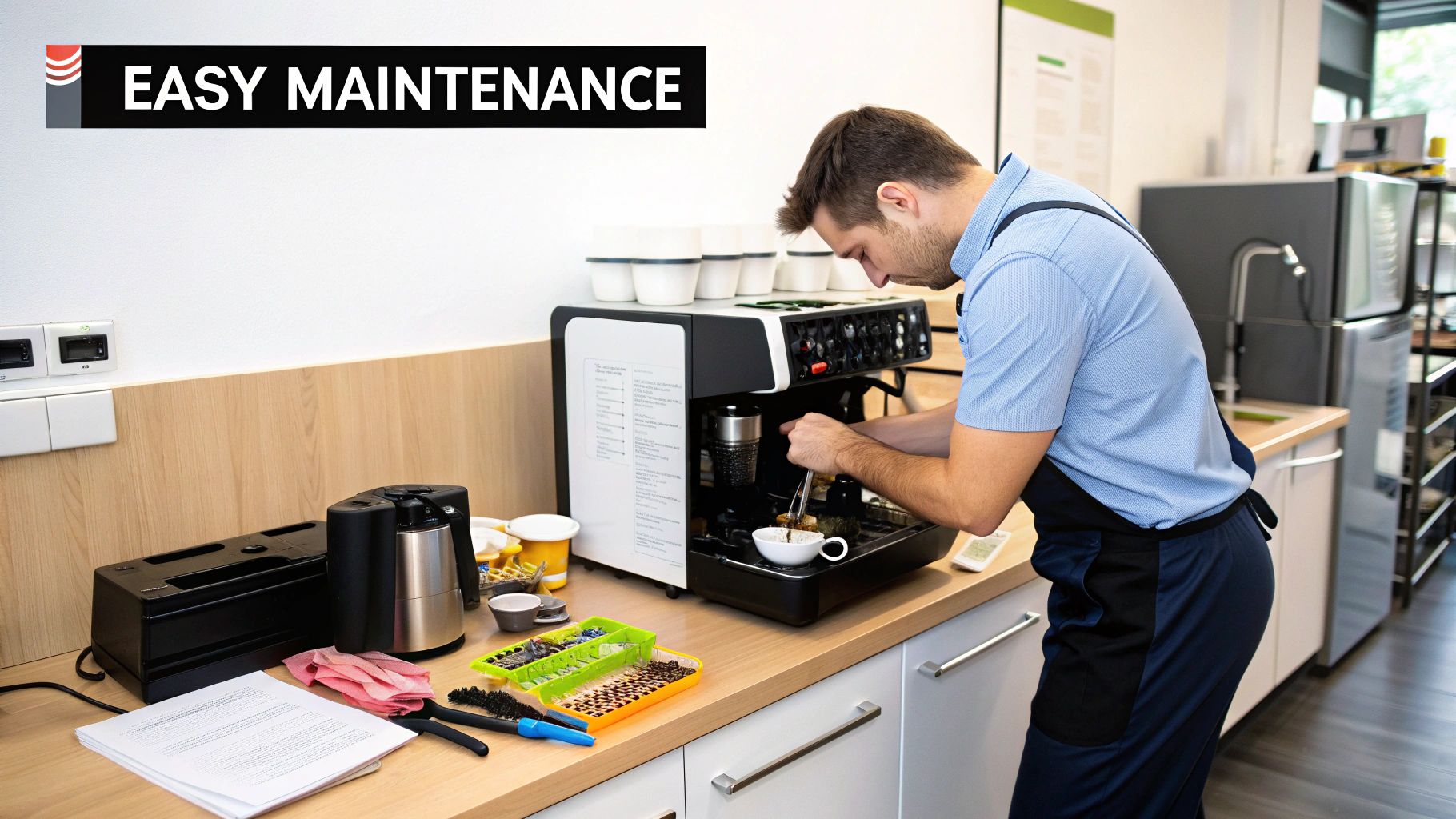
This all starts with designing a welcoming coffee station. Don't just tuck the machine away in a forgotten corner. Carve out a dedicated, well-lit area with everything your team needs, from a decent variety of mugs to different milk options (oat milk is a must-have in the UK market) and a few syrups. Make it a destination, not just an appliance.
This simple bit of strategic placement turns the coffee break into a natural hub for collaboration. It’s where people from different departments will bump into each other, sparking those spontaneous chats that often lead to the most brilliant ideas.
Sourcing and Sharing a Great Brew
To really elevate the experience, think about partnering with a UK-based speciality roaster. This is a great way to support local businesses, and it introduces your team to the exciting and diverse world of speciality coffee. Many roasters offer detailed tasting notes and stories behind their beans, which you can share to make each cup feel more special.
You could even set up a simple feedback system. A small whiteboard or a dedicated Slack channel where people can share their thoughts on the latest beans makes everyone feel involved. It creates a fun, interactive element and ensures your coffee offering stays fresh and exciting.
Here are a few actionable ideas to keep the momentum going:
- "Guest Bean" of the Month: Feature a new single-origin coffee from a different UK roaster each month.
- Tasting Notes Display: Post the flavour profiles of the current coffee near the machine. It’s a small touch that encourages appreciation.
- Feedback Loop: Actively ask for and, more importantly, respond to your team's preferences.
This proactive approach shows you're listening and are committed to providing the best possible experience, which fosters a huge amount of goodwill.
Weaving in Sustainable Practices
A great coffee culture can also reflect your company’s values, especially around sustainability. This is more than just a trend; it's a core expectation for many employees today and a growing factor in the UK market.
A thoughtful coffee programme is a powerful, daily reminder of your company's commitment to quality and sustainability. It demonstrates that you care about your people and the planet, one cup at a time.
Promote the use of reusable cups by providing branded ones for every team member. You could also partner with local services that collect used coffee grounds for composting or biofuel. These small, visible actions make a big impact and reinforce a positive, forward-thinking company image.
The UK market is rapidly adapting to these trends. The office space segment is actually the largest application for coffee machine rentals, driven by a growing demand for premium, convenient, and sustainable solutions. Recent regulations around water usage have also influenced machine pricing, highlighting the industry's shift towards environmental responsibility. You can learn more about UK market dynamics and how sustainability is shaping the future of office coffee.
By embracing these practices, you're not just making coffee; you're making a statement.
Still Have Questions About Office Coffee Machine Rental?
Thinking about a coffee machine rental for your office can feel like a big commitment, but it’s usually more straightforward than you might think. To help clear things up, we’ve put together answers to the questions we hear most often from UK office managers. Our goal is to give you the confidence to make a great decision for your workplace.
Is It More Cost-Effective to Rent or Buy a Machine?
For the vast majority of UK businesses, especially small to medium-sized ones, renting is the smarter financial move. It completely removes the hefty upfront cost of a high-quality commercial machine, which can easily set you back anywhere from £1,500 to over £15,000.
With a rental agreement, you get the machine, regular maintenance, and breakdown cover all bundled into one predictable monthly payment. This makes budgeting a breeze and shields you from any nasty surprises like unexpected repair bills.
While buying might look cheaper on a spreadsheet over a five- or ten-year period, those numbers rarely factor in the real-world costs of servicing, replacement parts, call-out fees, and the inevitable need to upgrade. Renting gives you flexibility and total peace of mind.
What Is Included in a Standard UK Rental Agreement?
A good rental agreement is less of a transaction and more of a partnership. It should always cover:
- The Coffee Machine: The exact model you’ve picked out for your team.
- Professional Installation: Proper setup, plumbing (if needed), and thorough testing.
- Staff Training: A complete walkthrough for your team on how to use, clean, and look after the machine.
- Scheduled Servicing: Regular maintenance checks to keep everything running smoothly and to replace key parts like water filters on time.
- Breakdown Cover: This is non-negotiable. It should include call-outs for repairs, along with the cost of both parts and labour.
Things like coffee beans and milk are usually billed separately. Many agreements will also include a minimum monthly coffee order, so it's important to make sure this fits with how much your team actually drinks.
Choosing a rental package isn't just about getting a piece of equipment; it's about investing in a fully managed service. The best providers design their agreements to take the entire coffee operation off your plate, so you can focus on running your business.
How Do We Choose a Coffee Supplier?
Many machine rental providers are also speciality coffee roasters, which creates a seamless, all-in-one solution. When your machine and your coffee come from the same expert source, you know the equipment has been perfectly calibrated to get the absolute best flavour out of the beans.
If you go down this route, always ask for a tasting session. It’s your best chance to make sure the quality and flavour profiles are a good match for your team. Look for UK-based suppliers who are passionate about ethical sourcing and have strong, direct relationships with their coffee-growing communities. The story behind the coffee adds a wonderful touch to your office culture.
Opting for a supplier that roasts their own beans nearly always guarantees a fresher, more vibrant cup and gives you a fantastic opportunity to support the UK's brilliant speciality coffee scene.
Ready to create an office coffee experience that inspires and delights? At Ue Coffee Roasters, we provide comprehensive office coffee solutions, from premium machine rentals to exceptional, ethically sourced beans roasted right here in the Cotswolds. Discover how we can elevate your workplace at https://www.uecoffeeroasters.com.