

Your Ultimate Guide to Equipment for Coffee Shops
So, you’re ready to turn that coffee shop dream into a reality. It’s an exciting place to be—where a genuine passion for coffee starts to meet the nuts and bolts of building a real, thriving business. But here’s the thing: choosing the right equipment for coffee shops isn't just another item on a shopping list. It’s one of the most important decisions you’ll make, shaping your brand, your workflow, and your bottom line from the moment you open the doors.
This guide is your blueprint.
Brewing a Blueprint for Your Coffee Shop Dream
Turning an empty room into a buzzing café is a powerful vision. But at its heart, that transformation depends entirely on the machinery you choose. It helps to think of your equipment not as a random collection of items, but as a single, connected ecosystem built to do two things: produce amazing coffee and create a smooth experience for your customers. Every single piece, from the espresso machine to the water filter, has a vital part to play.
Your journey starts here, by understanding that your equipment choices are a direct reflection of your café's identity. A gleaming, manual espresso machine tells a story of craft and barista artistry. On the other hand, a sleek, modern bean-to-cup machine signals efficiency and consistency—perfect for a high-volume, fast-paced spot.
The Foundation of Quality and Efficiency
Ultimately, your equipment will determine the quality of your drinks and the speed of your service. These two things are the absolute pillars of a successful café. The right tools empower your baristas to work like a well-oiled machine, keeping waste down and consistently pulling the kind of shots that build a loyal following.
As you start planning, keep these four questions in mind:
- Quality: Does this machine help you get the very best flavour out of your beans?
- Workflow: How will this piece of kit fit into your counter layout and service speed?
- Reliability: Can you count on this machine when the morning rush hits its peak?
- Brand Alignment: Does your equipment tell the story you want to tell your customers?
A well-equipped coffee shop is a promise to your customers. It says you've invested in the details, you care about quality, and you are prepared to deliver an outstanding experience every single time they walk through your door.
Getting this right has never been more important. The UK coffee shop scene is absolutely booming, with revenues recently hitting £6.1 billion across more than 12,000 outlets. While that highlights a massive opportunity, it also means you need to stand out with operational excellence. You can discover more insights about the growing UK coffee market and its trends. This guide will walk you through building that operational foundation, one piece at a time, so you can start your venture with confidence and clarity.
The Heartbeat of Your Café: Selecting Your Coffee Machine
This is where the magic really begins. Your coffee machine is the soul of your café—the engine that dictates not just the quality of your signature product, but the entire rhythm and flow of your baristas. Choosing the right one is less about buying an appliance and more about selecting the very heart of your business.
Think of it like choosing an engine for a high-performance car. Do you want the raw, hands-on control of a manual gearbox that lets a skilled driver feel every nuance of the road? Or do you need the flawless, computer-guided precision of an automatic that delivers consistent speed, every single time? This choice sets the tone for everything that follows.
This flowchart illustrates the foundational decision-making process for anyone starting their coffee shop journey.
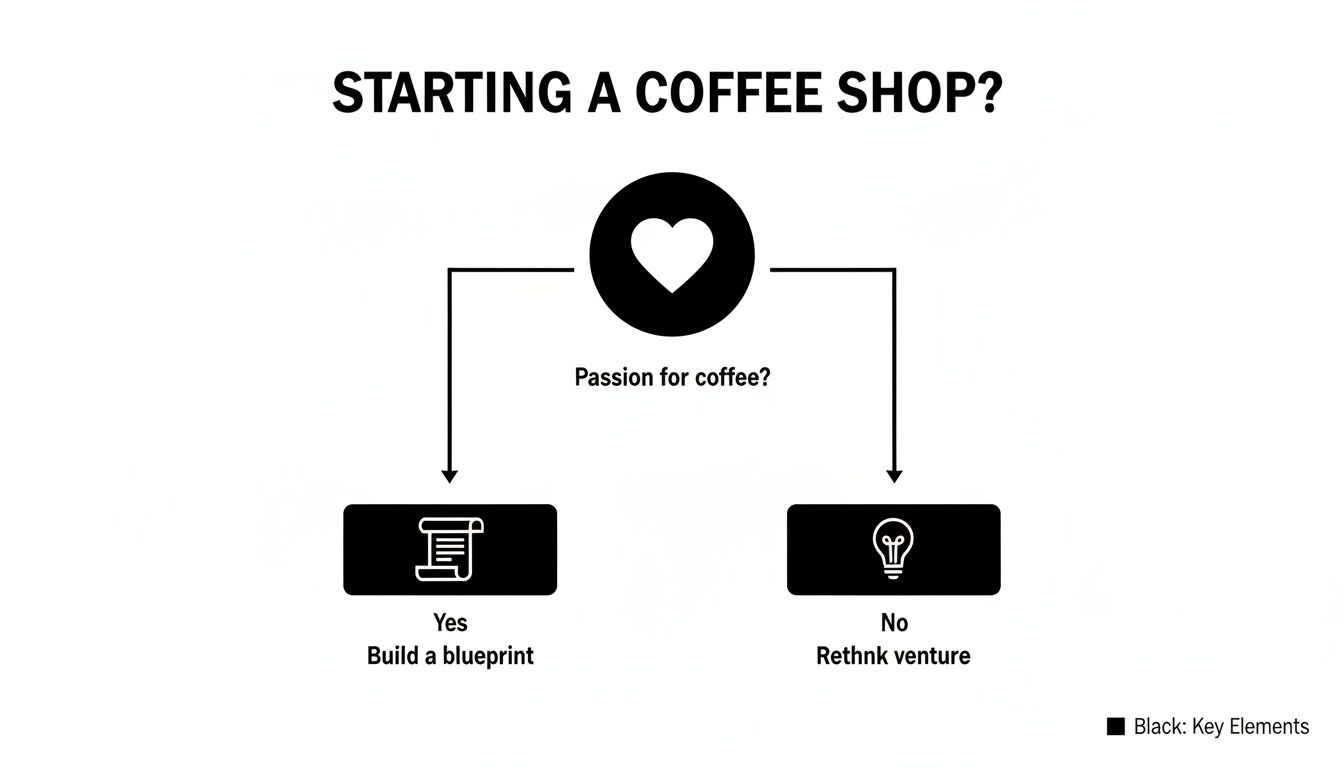
It highlights that passion is the essential starting point, leading directly to the practical step of building a strategic blueprint for your equipment and operations.
Understanding Traditional Espresso Machines
At the centre of most speciality coffee shops stands the traditional espresso machine. This is the classic, iconic piece of kit that customers recognise and baristas revere. But even within this category, crucial distinctions can define your workflow.
A semi-automatic machine gives your barista complete creative control. They start and stop the extraction, deciding the precise moment the shot is perfect based on sight, sound, and experience. This is the choice for cafés that pride themselves on artistry and the unique touch of their team.
On the other hand, a volumetric machine is built for consistency under pressure. The barista selects a pre-programmed volume, and the machine delivers the exact same amount of water every time. During a frantic morning rush, this guarantees that every single espresso shot is pulled to your exacting standards, removing guesswork and ensuring quality.
The Grinder: Your Secret Weapon
Behind every incredible espresso machine is its indispensable partner: the grinder. It’s often overlooked by newcomers but is arguably just as important as the machine itself. The grinder is the secret weapon that unlocks the full potential of your expensive coffee beans.
An inconsistent grind leads to an inconsistent extraction, resulting in coffee that can be bitter, sour, or weak. A high-quality burr grinder provides the uniform particle size needed for a balanced, delicious shot of espresso. Investing in a great grinder is investing in the flavour of every single cup you serve.
Choosing your espresso machine and grinder is not just a technical decision; it's a statement about your philosophy. It declares whether your brand promise is built on artisanal craft, unwavering consistency, or a perfect blend of both.
The market for professional machines reflects this focus on quality and technology. The global professional coffee machine market is currently valued at USD 7.1 billion and is expected to almost double by 2035. In the UK, a major trend is the rise of advanced espresso machines with pressure-profiling technology and IoT capabilities, with these machines projected to command 55.6% of the market share by that year. You can read the full research about professional coffee machine trends to understand the evolving landscape.
Choosing Your Core Coffee Machine
To make this decision clearer, let's break down the main options. This table compares the core machine types to help you find the right fit for your business model, staff skill level, and expected customer volume.
| Machine Type | Best For | Pros | Cons | Typical UK Price Range |
|---|---|---|---|---|
| Traditional Espresso Machine | Speciality coffee shops, restaurants, and venues focused on artisanal quality and the theatre of coffee making. | Ultimate control over extraction, highest quality potential, iconic look and feel. | Requires highly skilled baristas, slower workflow, can be inconsistent under pressure. | £4,000 - £15,000+ |
| Bean-to-Cup (Super-Automatic) | Offices, hotels, self-service areas, and high-volume sites where speed and consistency are key. | Easy to use, minimal training needed, fast and consistent output, wide drink variety. | Lower quality ceiling than traditional, less customisation, complex internal mechanics. | £2,000 - £20,000+ |
| Commercial Filter Brewer | Cafés serving batch brew, diners, offices, and anywhere needing large volumes of quality black coffee quickly. | Brews large quantities efficiently, highly consistent, simple to operate, very cost-effective per cup. | Limited to black coffee, less engaging for customers, potential for waste if batches aren't sold. | £300 - £2,500 |
Ultimately, the best machine is the one that aligns perfectly with your brand promise. A high-end speciality shop will almost always choose a traditional machine, while a busy office canteen will benefit immensely from a super-automatic.
Super-Automatic Machines: Speed and Simplicity
For some business models, the priority isn't barista craft but speed, simplicity, and accessibility. This is where super-automatic or bean-to-cup machines shine. These machines are the epitome of efficiency, handling every step of the process—grinding, tamping, and brewing—at the simple touch of a button.
Consider where they fit best:
- High-Volume Locations: In places like busy transport hubs or quick-service restaurants, a super-automatic machine can serve hundreds of excellent coffees per day with minimal staff training.
- Corporate Offices: They provide a premium, café-style experience for employees, boosting morale and workplace satisfaction without requiring a dedicated barista.
- Hospitality Settings: Hotels and self-service breakfast bars can offer guests a high-quality coffee experience with unmatched ease of use.
These machines empower any team member, regardless of their coffee knowledge, to serve a consistently good drink. They democratise the coffee-making process, making them a powerful tool for businesses where speed and operational simplicity are paramount.
Building an Efficient Workspace with Support Equipment
A world-class café runs on more than just spectacular coffee; it’s powered by a hidden network of essential support equipment. This is the gear that keeps service running like clockwork, ensures every drink is perfectly made, and sends every customer away happy. Think of it as the ultimate support crew for your star barista—the unsung heroes working quietly behind the scenes.
Let’s start with the most important ingredient you can’t see but can absolutely taste: water. A typical cup of coffee is over 98% water, so its quality has a direct and massive impact on flavour. A professional water filtration system isn't a luxury; it's a non-negotiable guardian for both your expensive machines and the taste of your coffee.
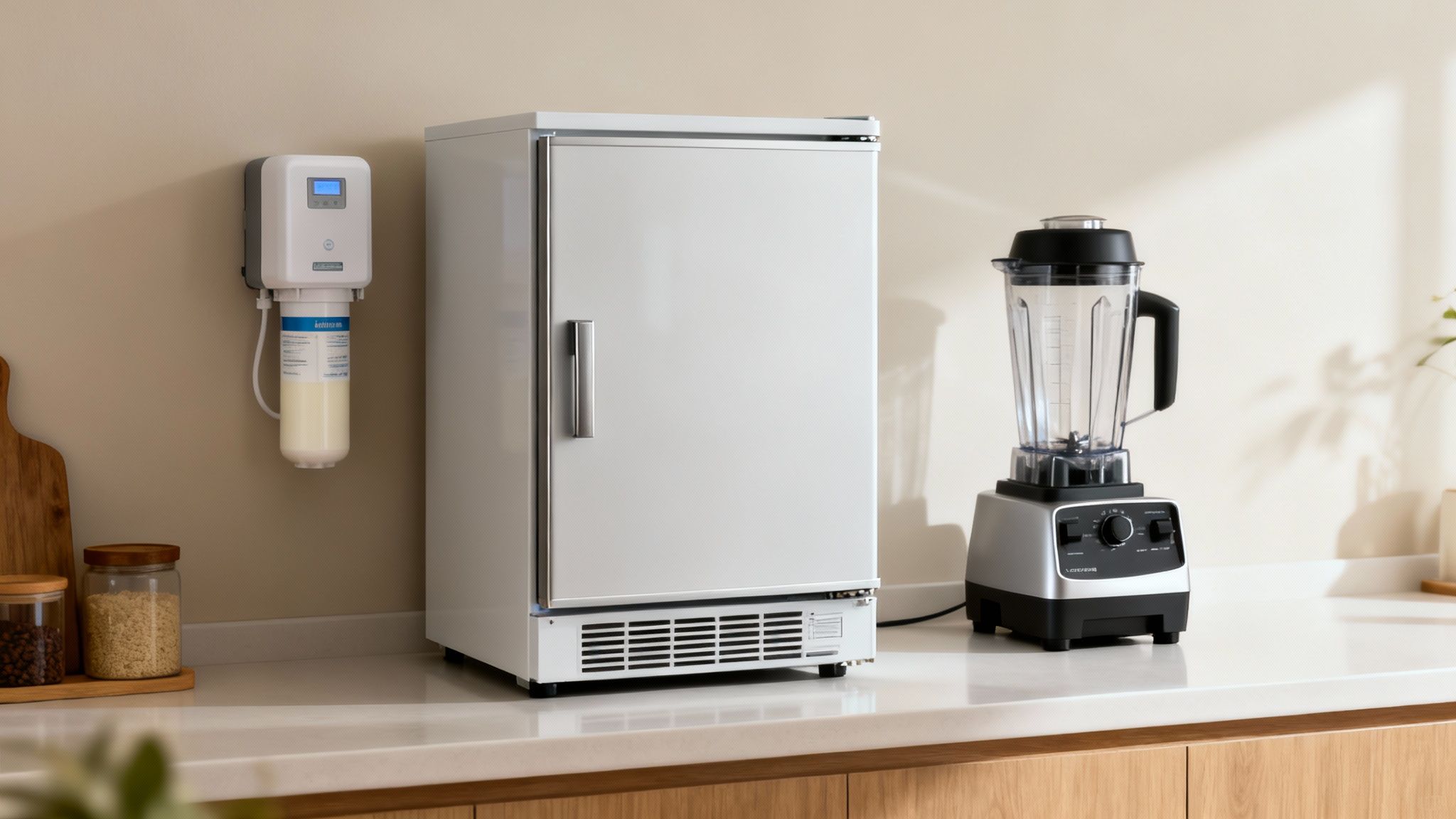
This system is your first line of defence against limescale build-up, the number one cause of costly breakdowns in espresso machines and boilers. By investing in good filtration, you’re not just protecting your core assets—you’re unlocking the true, subtle tasting notes in your carefully sourced beans.
Refrigeration and Cold Creations
Next, let's map out your refrigeration strategy. This goes way beyond just keeping the milk cold. A smart refrigeration setup is central to your workflow and can even become a serious revenue driver.
Your key units will include:
- Under-Counter Milk Fridge: This is a workflow essential. Positioned right beside the espresso machine, it allows your barista to grab milk instantly for lattes and cappuccinos without ever turning their back on the customer.
- Upright Storage Fridge: This is your back-of-house workhorse for storing backup milk cartons, alternative milks, and fresh ingredients for any food items you offer.
- Display Refrigerator: Placed front-and-centre, this is a silent salesperson. It turns pastries, cakes, and bottled drinks into powerful impulse buys that customers can’t resist while they wait.
Getting your refrigeration right means your ingredients are always held at the perfect temperature, guaranteeing both safety and quality in every single item you serve.
Of course, beyond the big machines, a well-run shop relies on a whole host of other tools. To get your workspace humming, it's worth exploring the various essential commercial kitchen accessories that complete your setup.
The Workhorses of Your Operation
Beyond coffee and cooling, several other pieces of equipment are vital for expanding your menu and keeping things professional. These are the workhorses that let you cater to a wider range of tastes.
A high-speed commercial blender is a must-have if you plan to offer smoothies, frappes, or other iced blended drinks. These powerful machines crush ice and frozen fruit effortlessly, creating that smooth texture customers expect. A standard domestic blender would burn out in a week.
Another game-changer is a dedicated hot water tower. This gives you instant, temperature-controlled hot water, which is crucial for serving tea drinkers properly without disrupting the espresso machine's workflow. It ensures tea is brewed at the right temperature and frees up your barista to focus on coffee.
An efficient workspace is a symphony of moving parts. Every piece of support equipment, from the water filter to the dishwasher, must work in harmony to create a seamless rhythm that elevates both the employee and customer experience.
Finally, we have the commercial dishwasher, the true bedrock of your café's hygiene and professionalism. It can wash and sanitise a full rack of cups in just a couple of minutes, keeping your service flowing during the busiest rushes. It means you’ll always have clean, sparkling crockery ready to go, reflecting the high standards of your entire operation and keeping your team focused on customers, not washing up.
Crafting a Memorable Customer Experience
Great coffee might be the soul of your café, but the heart of your business beats in the experience you create for customers. It’s a feeling crafted long before they take their first sip. It all starts with a seamless ordering process and extends right down to the little details that show you care.
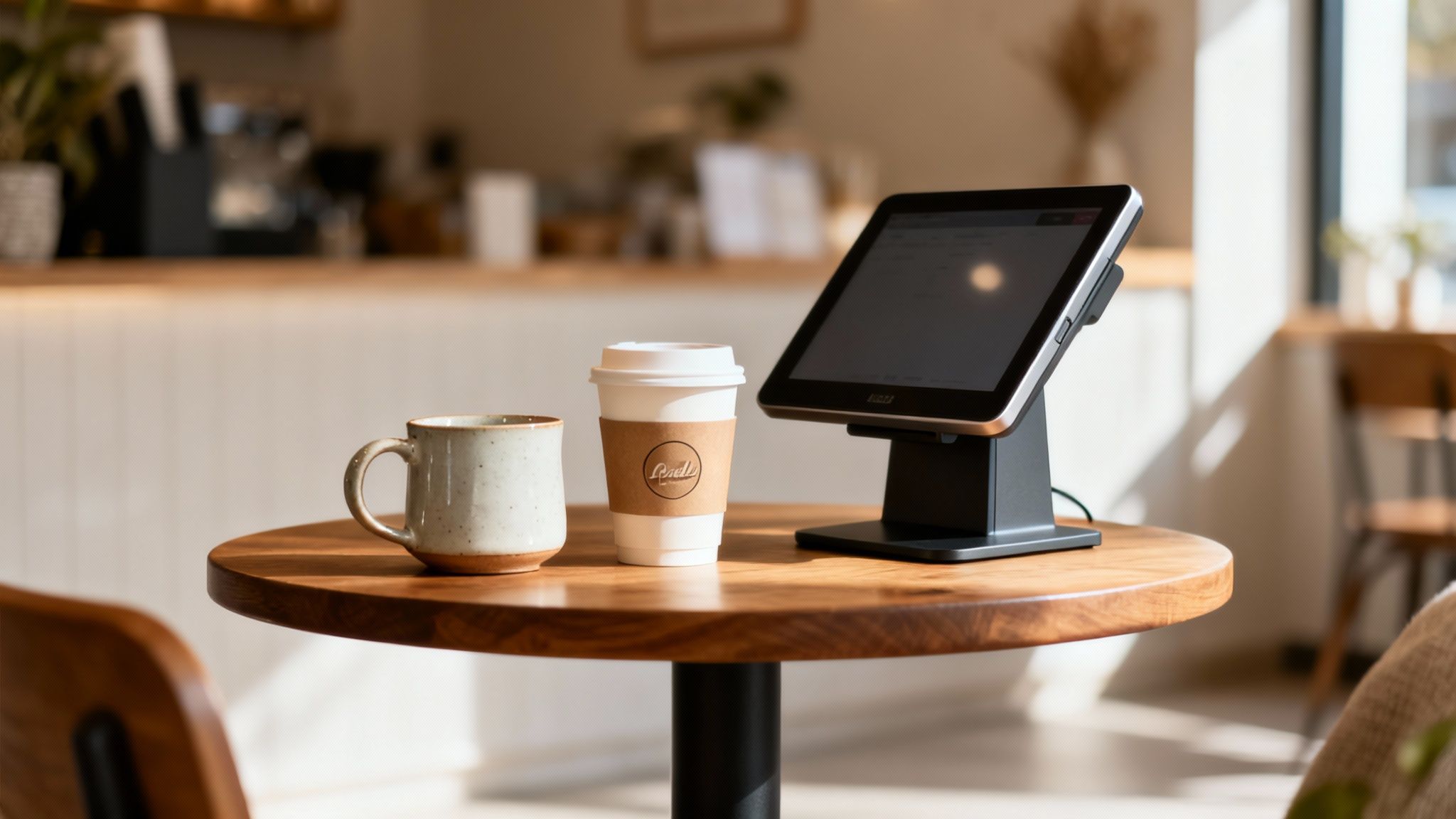
Your Point of Sale (POS) system is the brain of the whole operation. Forget the clunky old cash tills; today’s POS is a command centre that keeps the entire customer journey running smoothly. It allows your team to take orders, manage customisations, and handle payments without a hiccup, which means shorter queues and happier customers.
But its real magic is in the data. Your POS offers a window into what your customers truly love, tracking popular items and peak hours. This information is gold dust, helping you tweak your menu, manage stock levels, and even run loyalty programmes that turn first-time visitors into regulars.
The Power of Tangible Details
Once the order is placed, the physical experience takes over. This is your chance to elevate your brand from just a coffee spot to a place that creates a memorable moment. The right serveware makes a quiet but powerful statement about your standards.
Think about the sensory details:
- The Weight of a Mug: A sturdy, well-balanced ceramic mug feels substantial and comforting—a world away from a thin, generic cup.
- The Design of Cutlery: Sleek, clean cutlery for that slice of cake adds a touch of class and shows you’ve thought about everything.
- The Clink of Glassware: Serving an iced latte in beautiful, high-quality glassware makes the drink feel like a premium, crafted beverage.
These small investments in good crockery and glassware pay for themselves by reinforcing the quality of the drinks you’ve so carefully prepared. And to really showcase your delicious treats and encourage those impulse buys, think about using specialised display units like commercial bakery cases.
Conscious Choices for Takeaway Customers
Here in the UK, sustainability is a huge deal for consumers. Your choice of takeaway packaging says a lot about your brand. A flimsy cup with a leaky lid can ruin someone's morning, but a well-chosen, eco-friendly option can actually build loyalty. For any coffee shop with a commuter base, this is a critical piece of kit.
The experience doesn't end when the customer leaves your shop. The cup they carry is a walking advertisement for your brand and a reflection of your values. Make it a positive one.
Today’s market is full of fantastic, sustainable choices that connect with conscious consumers. Opting for compostable cups made from plant-based materials or encouraging reusable cup schemes shows a commitment that goes beyond just coffee. It shows you care about your community and the planet.
This final touchpoint ensures the memorable experience you’ve built inside your four walls continues long after your customer has walked out the door, building a positive impression that lasts.
Budgeting and Sourcing Your Coffee Shop Equipment
You’ve got the vision for your perfect coffee shop, complete with a dream list of kit. Now comes the moment to turn that vision into a smart, practical financial plan. Buying your equipment for coffee shops is one of the biggest cheques you’ll write, but if you approach it strategically, you can build your ideal setup without breaking the bank.
This stage is all about taking control. It’s about understanding where to invest for maximum impact and where you can find clever savings. The key is to match your budget to your business concept, making sure every pound spent pushes your dream forward.
Charting Your Financial Course
First things first: there’s no magic number for a coffee shop budget. A tiny, takeaway-focused kiosk will have wildly different costs compared to a large, sit-in café with a full food menu. The best way to start is by breaking down your equipment list into categories—from the core coffee gear to refrigeration and dishwashing—and then researching the price for each item.
This exercise is incredibly revealing. It forces you to get real about what’s absolutely essential for day one versus what can be added later as your business grows. Is that third display fridge a must-have for launch, or can it wait until your pastry sales actually justify the expense?
Think of your equipment budget as a roadmap, not a restriction. It guides your decisions, highlights your priorities, and ensures that your financial foundation is just as strong as your coffee.
With a clear budget in hand, you can start exploring your sourcing options with the confidence of knowing exactly what you can realistically afford.
New Versus Refurbished: A Smart Decision
One of the biggest calls you'll have to make is whether to buy brand-new or go for certified refurbished equipment. Each path has its perks, and honestly, the smartest strategy often involves a bit of both.
Buying new gives you the ultimate peace of mind. You get the latest tech, a full manufacturer's warranty, and the assurance that everything is in pristine condition. For your most critical, money-making machines—like your espresso machine and main grinder—investing in new is almost always the wisest choice to minimise the risk of downtime.
On the other hand, certified refurbished equipment can be an absolute game-changer for your budget. Sourced from reputable suppliers, these items are professionally serviced, tested, and usually come with a limited warranty. This route lets you get your hands on high-quality machinery like fridges, blenders, or dishwashers for a fraction of the cost, freeing up cash to invest elsewhere.
Forging the Right Supplier Partnerships
Choosing where you buy your equipment is just as important as what you buy. Your suppliers are more than just vendors; they’re long-term partners whose support will be invaluable long after the initial sale is done. Before you commit to anyone, make sure you ask some critical questions:
- Warranty and Support: What exactly does the warranty cover, and for how long? What’s their process for service calls?
- Training: Do they offer proper barista training on the new machines for you and your staff?
- After-Sales Service: How quickly can they get an engineer out to you if a machine breaks down? Do they offer loaner equipment to keep you serving while yours is being fixed?
This is a big market, and it’s only getting bigger. The UK coffee machine sector was recently valued at around USD 699.77 billion and is expected to grow to USD 1,211.32 billion by 2035, all thanks to the nation's ever-deepening love for great coffee. As you navigate this thriving industry, finding a supplier who is genuinely invested in your success is crucial. You can discover more insights about the UK coffee machine market and its growth.
By asking the right questions and choosing partners who offer solid, reliable support, you build a resilient foundation for your coffee shop, ensuring you’re ready for whatever comes your way.
Your Final Coffee Shop Procurement Checklist
This is it—the final hurdle before your vision becomes a reality. You've spent countless hours poring over budgets, researching suppliers, and dreaming up your perfect space. Now, it’s time to transform that carefully curated equipment list into a living, breathing coffee shop.
This isn't just about ticking off boxes. This is your last chance to make sure every single piece of gear works in perfect harmony, creating a workspace that’s a joy to be in, even during the morning rush.
Think of your counter as a stage, and your barista as the lead performer. The exact placement of the espresso machine, the grinders, and the milk fridge will dictate their entire workflow. Is it a smooth, natural dance from taking an order to handing over a flawless flat white? Walk through the process yourself, right now, before anything is bolted down. It’s the single best way to iron out any kinks and prevent those frustrating bottlenecks when you’re five-deep at the counter.
Technical and Practical Verification
Before those shiny new machines arrive, you absolutely have to confirm your site is ready for them. A commercial espresso machine isn't something you can just plug into any old socket, and getting this wrong can lead to some seriously expensive delays.
Run through this checklist to make sure you're good to go:
- Electrical Readiness: Have you checked the specific voltage and amperage needed for your heavy-duty kit? A qualified electrician needs to have installed the correct outlets in exactly the right places.
- Plumbing and Drainage: Is the water filtration system properly plumbed in? Your espresso machine and dishwasher need both a water supply and an adequate drainage line ready and waiting.
- Ventilation: Does your space have the right ventilation for equipment that generates a lot of heat, especially if you’re also running ovens or panini presses?
- Physical Dimensions: This might sound obvious, but have you double-checked the exact measurements of every machine? You need to be sure they’ll actually fit through the door and into their designated spots on the counter.
This final check is where the coffee shop you’ve imagined in your head becomes a functional, working reality. It’s the crucial last step that ensures the heart of your operation—your equipment—has the solid foundation it needs to perform day in, and day out.
Ticking off this list will give you that final peace of mind. You’ve balanced the big-picture brand vision with the nitty-gritty practical details that make or break a launch. You’re organised, you’re prepared, and you’re finally ready to flip that switch and open the doors.
A Few Common Questions
Starting a coffee shop is an exciting venture, but it’s completely normal to have questions. Here are some straightforward answers to the queries we hear most often from new owners thinking about equipment for coffee shops.
Should I Buy New or Used Equipment?
This really comes down to balancing your initial budget against how much risk you're comfortable with. Brand new equipment gives you total peace of mind—it comes with a full warranty, the latest tech, and it's in perfect condition, but the upfront cost is obviously higher.
On the other hand, high-quality used gear from a reputable dealer can save you a serious amount of money. A smart move is often to take a hybrid approach. Invest in new, bulletproof core machines like your espresso machine and main grinder, but look at certified refurbished options for supporting kit like fridges or dishwashers. It's a great way to manage costs without compromising where it counts.
How Important Is a Water Filtration System?
It’s not just important; it's non-negotiable. A cup of coffee is over 98% water, so the purity and mineral balance of your water directly dictates how your coffee tastes. A good system is what unlocks the true, nuanced flavour of the beans you've so carefully sourced.
But even more critically for your business, hard water and limescale are the number one cause of expensive, disruptive breakdowns in espresso machines and boilers. Don’t think of a water filtration system as an optional extra. It’s an essential investment that protects your most valuable assets, keeps maintenance costs down, and guarantees consistently brilliant coffee, day in and day out.
What Should I Look for in an Equipment Supplier?
You're looking for a long-term partner, not just a seller. A great supplier does so much more than just drop off a machine; they should offer comprehensive installation, proper barista training for your team, and a rock-solid, transparent warranty.
Before you sign anything, ask the tough questions about their after-sales support. What are their engineer response times? Will they provide a loaner machine if yours needs a major repair, so you don't have to close? The best suppliers take the time to really understand your vision and recommend equipment that genuinely fits your workflow, ambition, and future goals.
What Is the Most Common Equipment Mistake New Owners Make?
Hands down, it's underestimating the electrical and plumbing needs. Commercial coffee equipment is power-hungry and has specific water requirements that your standard home outlet or pipe can't possibly handle.
Always, always consult with a qualified electrician and plumber right at the start of your café's design phase. Making sure your space is properly and safely kitted out from day one will save you an incredible amount of time, money, and stress later on. Planning your layout around these utilities from the beginning is the key to a smooth and successful launch.
At Ue Coffee Roasters, we understand that the right equipment is the foundation of a great workplace coffee experience. We partner with world-class brands to provide premium bean-to-cup machines and full refreshment solutions that bring high-street quality coffee directly into your office. Explore our office coffee solutions and elevate your workplace culture.