

Your Guide to Perfect Espresso Coffee Beans
There's a reason the world of espresso is so captivating. It’s about more than just a strong coffee—it’s about the ritual, the rich aroma, and the satisfaction of pulling that perfect shot. It’s an art that turns your kitchen into your favourite café.
This guide is here to walk you through it all.
Your Journey into Espresso Starts Here
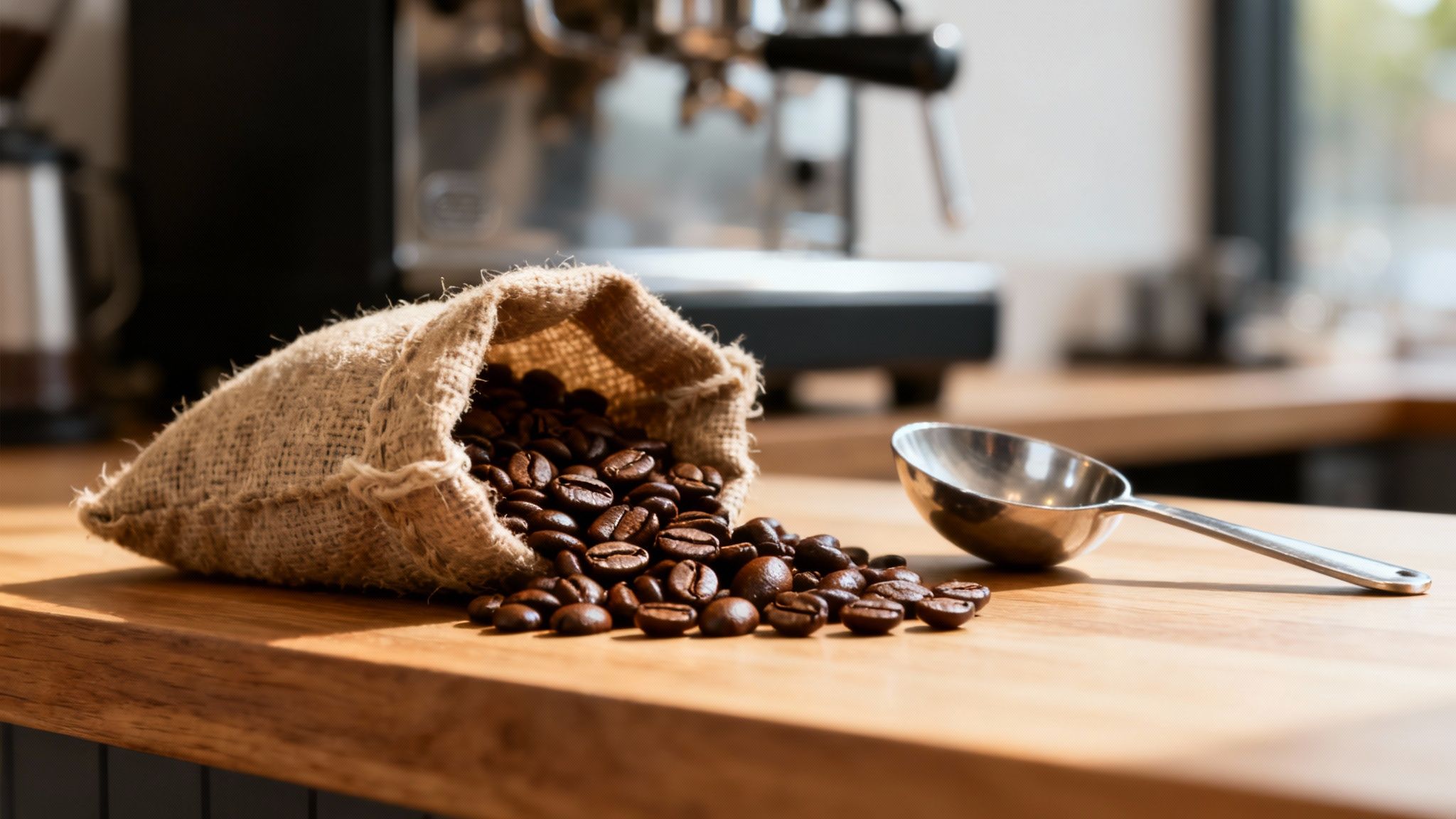
Welcome. If you’re here, you already know that a truly great espresso is something special. It’s a culture, a craft, and a personal experience that begins long before the machine even starts. It all starts with the espresso coffee beans—the very soul of your drink. This guide will demystify the entire process, so you can start making exceptional coffee right at home.
We’ll build your knowledge from the ground up, starting with the basics and moving on to the finer details. Think of it like learning an instrument: we’ll cover the basic notes and scales first, then you’ll be ready to create your own masterpiece. All you need is a passion for great coffee.
What Awaits You on This Adventure
This journey is all about building your confidence and sparking your curiosity. We'll cover everything you need to know to take your daily brew from just okay to genuinely extraordinary.
Here’s a quick look at what we'll cover:
- Bean Selection Mastery: We’ll teach you how to pick beans that perfectly match your taste, whether you love bright and fruity notes or deep, chocolatey flavours.
- The Roast Spectrum: We'll dive into the different roast levels and show you how each one unlocks a unique dimension of flavour and aroma in your cup.
- Brewing with Intention: You'll master the key variables that decide the fate of your final shot, helping you pull a flawless, crema-topped espresso every time.
The Rise of Home Baristas
Here in the UK, our appreciation for high-quality coffee has never been stronger. There's been a massive shift towards brewing at home, driven by a desire for those premium café experiences without the price tag. In fact, home coffee consumption is booming, with around 57% of coffee drinkers enjoying more than one cup a day at home.
While instant coffee still has its place, more and more people are turning to premium espresso blends to elevate their daily ritual. You can read more about the UK's growing home coffee market on qahwaworld.com.
Your espresso machine is the stage, but the coffee beans are the star performers. Understanding their character is the first step toward a standing ovation in a cup.
Our mission is simple: to give you the knowledge and inspiration to become the master of your own coffee. By the end of this guide, you won't just make espresso—you'll understand it, appreciate it, and create it with the skill of a true enthusiast. Let’s get started.
What Makes a Bean Perfect for Espresso?
Let’s get one thing straight right away: there’s no such thing as an ‘espresso’ coffee bean. It’s a common myth. ‘Espresso’ is a brewing method, not a variety of coffee tree. So, an espresso coffee bean is simply a coffee bean that a roaster has carefully selected, possibly blended, and roasted specifically to shine when put through the intense process of an espresso machine.
Think of it like choosing the right wood for a piece of furniture. You wouldn’t use soft pine to build a heavy-duty workbench; you’d want something dense and durable like oak. In the same way, a roaster picks beans with certain qualities—like lower acidity and a fuller body—that can handle the high pressure and speed of an espresso shot. This is how you get that balanced, sweet, and complex flavour, all topped off with that gorgeous, velvety crema.
Understanding this helps you look past the marketing jargon on a bag of coffee and start to appreciate the real craft involved.
The Science of Espresso Extraction
Making an espresso is a fast and furious affair. We’re talking about just 25 to 30 seconds where hot water is forced through a tightly packed ‘puck’ of finely ground coffee. The pressure is immense—often nine times the atmospheric pressure at sea level.
This intensity means not just any bean will do. The process is so quick and powerful that it rips out the oils, sugars, and acids from the coffee grounds in a flash. If you use a bean that’s naturally high in acidity, the shot can taste sharp, sour, and just plain unpleasant. That’s why roasters tend to lean towards beans that have a naturally full body and lower acidity, creating a smoother, richer, and more rounded flavour in the final cup.
The magic of espresso is how it concentrates flavour. A bean that’s perfectly suited for this method gives you a shot that is incredibly powerful and complex, yet beautifully balanced. It’s the most intense expression of a coffee's potential.
Blends Versus Single Origins
When you're browsing for espresso coffee beans, you'll generally find two main camps: blends and single origins. Each offers a different kind of coffee experience.
-
Blends for Classic Harmony: For decades, the classic Italian espresso has been built on blends. This is where a roaster combines beans from different countries to create a consistent and balanced flavour profile that tastes great all year round. A typical recipe might use a Brazilian bean for a chocolatey, nutty base, add some beans from Central America for body and sweetness, and maybe finish with an African bean to bring a hint of fruity brightness. The goal is harmony and reliability.
-
Single Origins for Distinctive Character: A single-origin coffee comes from one specific farm or region. Choosing a single origin for your espresso is like listening to a solo artist instead of a full orchestra. You get to taste the unique character of that one place—its soil, climate, and altitude (what the pros call terroir). This is where you find those really distinct and often surprising flavour notes, from the bright citrus of a Kenyan coffee to the deep, nutty sweetness of a Guatemalan.
How Roasting Defines the Espresso Bean
The roast profile is probably the single most important factor in creating a great espresso bean. While you can technically use any roast level, there’s a good reason why medium to dark roasts have been the go-to for so long. Roasting for longer caramelises more of the bean’s natural sugars. This process mellows out any sharp acidity and develops those deep, rich flavours we all love in an espresso—think chocolate, roasted nuts, and caramel.
These well-developed flavours are also more soluble, meaning they’re easier to extract properly during that super-fast brewing time. Lighter roasts can be fantastic, but they hold onto more of the bean's original bright, acidic notes. This makes them trickier to work with on an espresso machine, and if you don’t get the extraction just right, you can easily end up with a sour shot. Ultimately, it’s the roaster’s skill that unlocks a bean's full potential for espresso.
Exploring Roasts and Regional Flavours
Every single espresso shot you pull tells a vivid story. It's a tale of distant mountainsides, unique climates, and the transformative power of heat. Understanding this story—the journey from a coffee cherry in Ethiopia to the rich crema in your cup—is the key to unlocking a world of flavour.
This exploration begins with the roast. Think of the roaster as a chef and the green coffee bean as a prime ingredient. The roasting process doesn't just darken the bean; it develops its character, caramelises its sugars, and unlocks the unique potential hidden within.
This infographic simplifies the core elements that shape your perfect espresso.
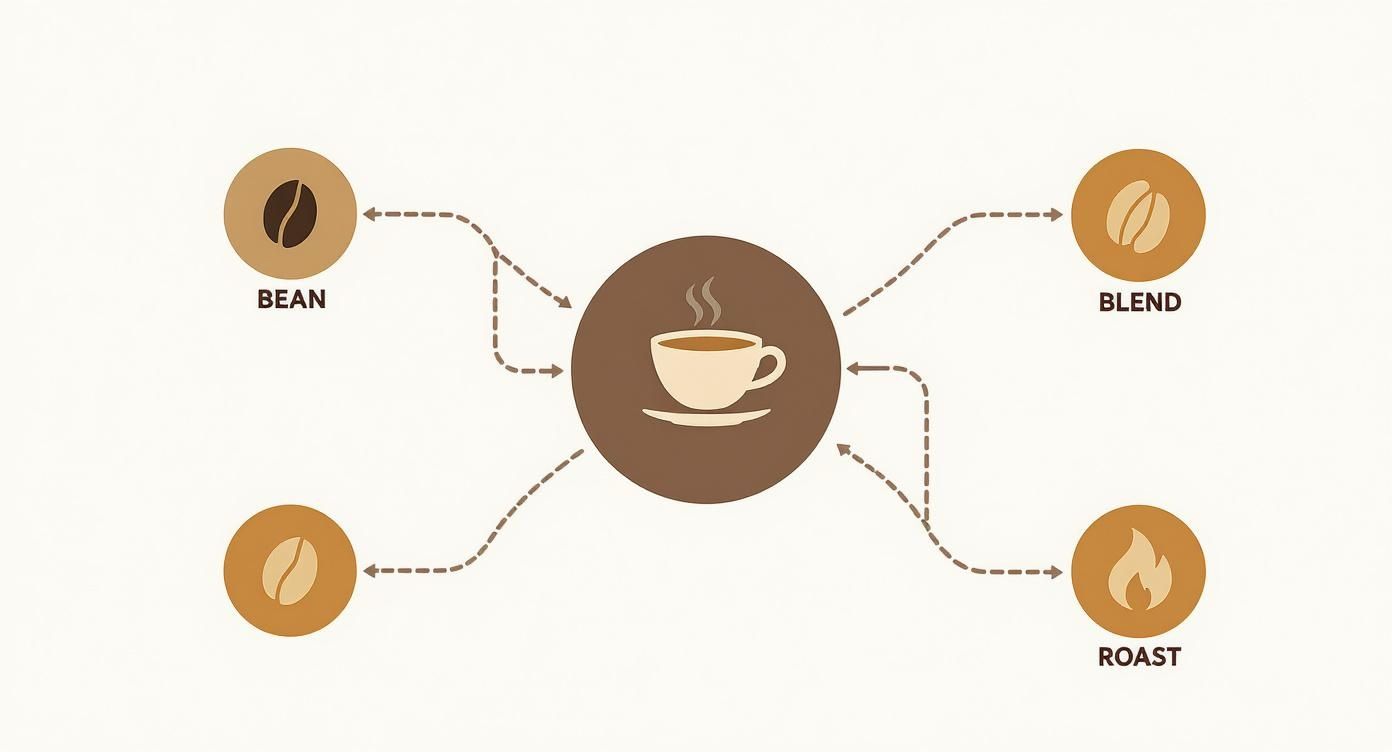
It connects the idea of espresso to the three pillars of its creation: the bean's origin, the blend, and the roast profile. Each one plays a critical role in what you end up tasting.
The Spectrum of Roast Profiles
Let’s walk through the three main roast categories. None is better than the other; they're just different paths to a delicious destination.
- Light Roasts: These beans are roasted just long enough to hear the "first crack," a little pop not unlike popcorn. They hold onto most of the bean's original character, showcasing bright acidity with delicate floral and fruity notes. A light-roasted Ethiopian bean might hit you with hints of blueberry and jasmine—a lively shot that really challenges the traditional idea of espresso.
- Medium Roasts: This is often the sweet spot for many specialty espresso beans. Roasted past the first crack but stopped before the second, these beans strike a beautiful balance. The sharp acidity of a light roast mellows out, and deep caramelisation flavours start to come through. You’ll find notes of milk chocolate, nuts, and stone fruit, creating a smooth and wonderfully rounded espresso.
- Dark Roasts: Famous in classic Italian espresso culture, dark roasts are taken all the way to the second crack and sometimes beyond. This intense process brings natural oils to the surface, giving the beans a glossy sheen. It mutes the bean's origin flavours, replacing them with bold, powerful notes of dark chocolate, smoke, and roasted nuts. The result is a heavy-bodied espresso with low acidity and a rich, lingering finish.
A Flavour Tour of the Coffee World
Just like the terroir of a French vineyard defines its wine, the region where coffee grows imparts a unique flavour signature. Geography, you could say, is the first author of your coffee's story.
A single-origin espresso coffee bean from one specific place offers a pure taste of that location. While every farm is different, certain regions are known for particular flavour profiles that can help guide your choices.
Think of single-origin beans as a solo performance, showcasing the unique talent of one artist. Blends are the orchestra, where different talents combine to create a complex and harmonious symphony.
Notable Coffee Growing Regions
Exploring coffees from around the globe is one of the most exciting parts of the journey. Here are a few key regions and the general flavour notes they are famous for:
- Ethiopia: Often called the birthplace of coffee, Ethiopian beans are known for their incredibly diverse and aromatic profiles. Expect vibrant floral notes like jasmine, bright citrus, and distinct fruit flavours from stone fruit to wild blueberry.
- Brazil: As the world's largest coffee producer, Brazil is the backbone of countless espresso blends. Its beans typically offer a comforting, familiar profile with low acidity, a heavy body, and notes of chocolate, roasted nuts, and caramel.
- Colombia: Colombian coffees are famous for their balance and crowd-pleasing character. They often deliver a medium body with a bright but gentle acidity, showcasing sweet notes of caramel, chocolate, and hints of citrus or red fruit.
Embracing the stories told by roasts and regions transforms how you choose and enjoy your coffee. It turns a simple daily routine into a mindful ritual. Your next espresso isn't just a drink; it's an adventure waiting to be discovered.
How to Choose Your Ideal Espresso Beans
Walking into a speciality coffee shop or scrolling through endless options online can feel a bit much. Bags with exotic names, cryptic tasting notes, and a dozen different certifications… where do you even start?
Think of it less as a challenge and more as a treasure hunt for your perfect flavour. Selecting your ideal espresso coffee beans is an art, but it's one you can easily master. It’s all about learning to read the clues on the bag and understanding a few core principles. Get these right, and every bag you buy will be a confident step towards your ultimate espresso.
Look for the Roasted On Date
This is it. The single most important piece of information on any bag of coffee. Forget ‘best before’ dates; that’s supermarket thinking. Coffee is a fresh product, and its flavour peaks within a very specific window. The ‘roasted on’ date is your guarantee of freshness.
Why does it matter so much? Immediately after roasting, coffee beans start to release carbon dioxide in a process called de-gassing. If you brew right in the middle of this, you’ll get a weird, uneven, and often sour extraction. But wait too long, and the beans go stale as all those amazing aromatic compounds escape and oxygen gets in.
For espresso, the sweet spot is usually between 7 and 21 days after the roast date. This gives the beans enough time to settle down while holding onto their vibrant flavours and the ability to produce that rich, stable crema we all chase.
Decode the Tasting Notes
Those three little words on the front of the bag—like 'cherry, nougat, and spice'—aren’t artificial flavourings. They're the roaster's guide, a cheat sheet to the natural flavours they’ve worked hard to bring out in the coffee. Learning to read them is like learning a new language of taste.
Here’s a simple way to think about it:
- Fruity Notes (e.g., Berry, Citrus, Stone Fruit): These usually point to a lighter roast or beans from places like Ethiopia or Kenya. Expect a brighter, more acidic, and lively shot of espresso.
- Nutty & Chocolatey Notes (e.g., Almond, Walnut, Milk Chocolate): Very common in beans from Latin America, like Brazil or Colombia. These signal a balanced, comforting, and sweet profile—the foundation of most classic espresso blends.
- Spice & Earthy Notes (e.g., Cinnamon, Clove, Tobacco): These can suggest beans from regions like Indonesia or a darker roast profile. You're heading into bold, rich, and intense territory here.
Choose Whole Beans Every Time
Sure, pre-ground coffee is convenient, but that convenience comes at a steep price: flavour. The moment a coffee bean is ground, its surface area explodes, and the staling process goes into overdrive. Oxygen, the enemy of freshness, has thousands more surfaces to attack.
Grinding your beans just before you brew is the single biggest upgrade you can make to your coffee game. It preserves all the delicate oils and compounds that create the incredible flavour and aroma of fresh espresso. The difference isn't subtle; it's night and day.
This focus on quality is driving a huge shift in coffee culture. The UK coffee market is set to grow at a compound annual rate of roughly 4.2% between 2025 and 2032, with a new generation choosing speciality drinks over instant coffee. Discover more insights into the UK's coffee market growth.
Look for Ethical Sourcing
Finally, look beyond the flavour and consider the journey your coffee has taken. Those little logos on the bag tell a story about the people and the planet behind your brew.
- Fair Trade: This certification ensures that farmers received a fair price for their crop, helping to support them and their communities.
- Rainforest Alliance: This seal means the farm meets strict standards for environmental, social, and economic sustainability.
- Organic: This guarantees the coffee was grown without synthetic pesticides or fertilisers—better for the environment, and potentially for you too.
Choosing ethically sourced beans means your daily ritual isn't just delicious; it’s a small force for good in the world.
The Art of Storing Your Coffee Beans
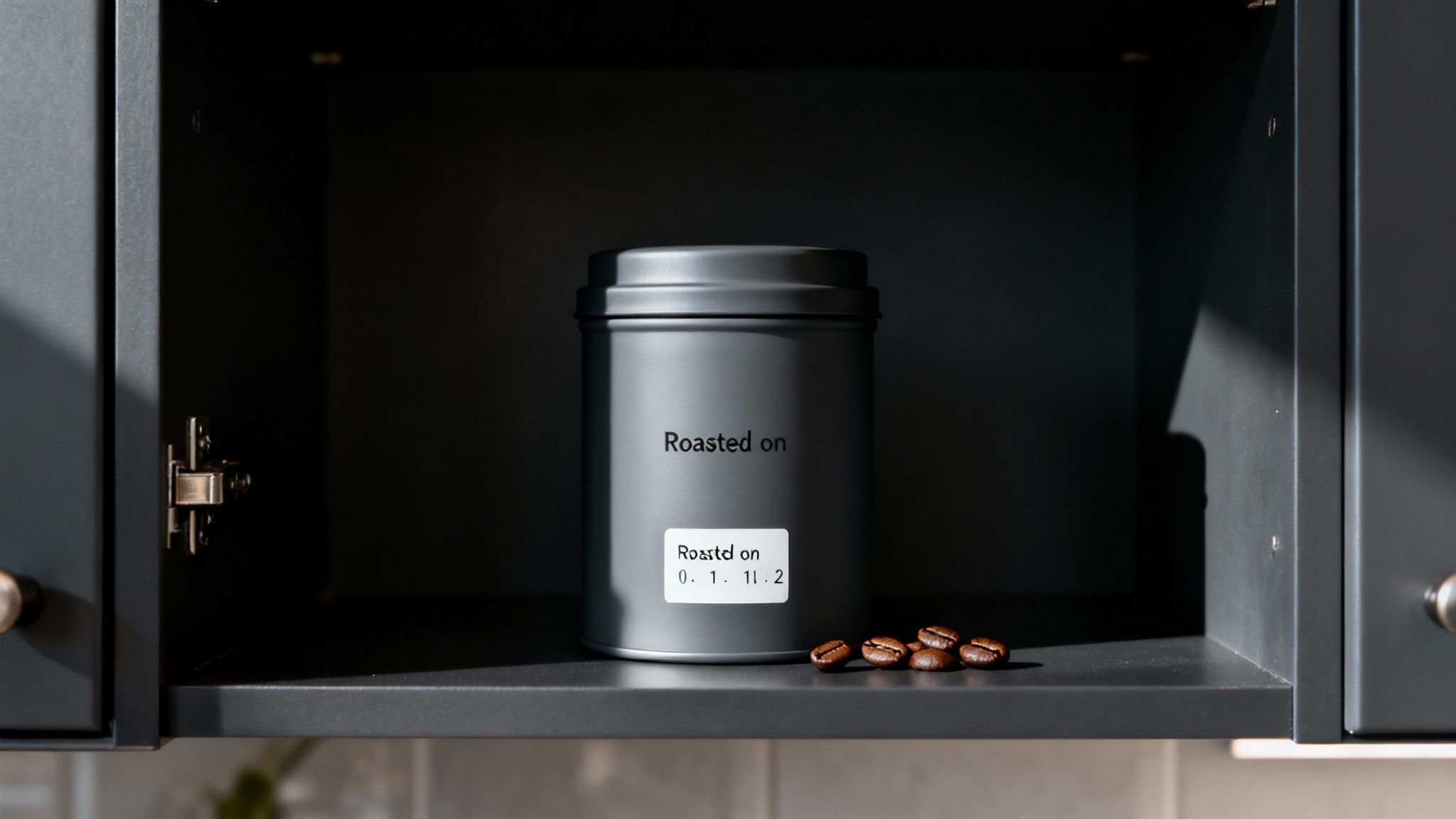
You’ve put in the time and care to select the perfect espresso coffee beans. Now comes the final, crucial step: protecting that investment. Like any fresh ingredient, coffee is fragile, and how you store your beans from the moment they get home will directly impact every single shot you pull.
Think of fresh coffee as having a ticking clock. The moment those beans leave the roaster, their incredible aromatic compounds start to escape. Your job is to slow that clock down as much as humanly possible, creating a little sanctuary where their flavour and freshness are preserved.
The Four Enemies of Fresh Coffee
Your mission is to shield your precious beans from their four greatest nemeses. These elements are constantly working to rob your coffee of its vibrancy, leaving you with a dull, lifeless brew. Getting to know them is the first step towards perfect preservation.
- Oxygen: This is public enemy number one. Oxidation is a chemical process that breaks down the delicate oils and aromatics, making your beans taste flat and old in no time.
- Heat: Warm temperatures are like a fast-forward button for the staling process. They cause those precious flavour compounds to degrade at a seriously accelerated rate.
- Light: Direct sunlight, and even strong artificial light, will damage the beans. UV rays break down the complex molecules responsible for all that delicious flavour and aroma.
- Moisture: Coffee beans are porous little things. They’ll readily absorb moisture and any weird odours from their surroundings, which can ruin the flavour and even encourage mould.
The goal of proper storage is simple: create an environment so stable and protected that the last bean in the bag tastes almost as fresh and vibrant as the first. This commitment separates a good espresso from a truly great one.
The Myth of the Freezer
One of the most persistent myths in coffee is that the freezer is the best place for your beans. Honestly, it’s a crucial mistake. Freezing can do far more harm than good, as the extreme cold can damage the beans' cellular structure.
Even worse, when you take beans out of the freezer, condensation immediately forms on their surface. This moisture is a powerful enemy, damaging the beans and potentially clogging up your grinder. It’s best to keep your espresso coffee beans out of the freezer entirely.
Your Three-Step Storage Solution
The ideal storage method is beautifully simple and incredibly effective. Just follow these three steps.
- Choose the Right Container: Your new best friend is an opaque, airtight container. Opaque materials block out damaging light, while a proper airtight seal keeps oxygen from getting in.
- Find a Cool, Dark Place: A kitchen cupboard or pantry, well away from the oven or any direct sunlight, is the perfect spot. The key is a consistent, cool temperature.
- Buy Little and Often: This is a big one. Only purchase enough coffee to last you for two to three weeks. This ensures you’re always brewing with beans at their absolute peak of freshness and flavour.
Connecting Your Beans to Your Brew
Brewing espresso is a beautiful conversation between you, your machine, and your coffee beans. You’ve picked out beans with a unique story and a world of flavour waiting to be unlocked; now, it’s time to bring that character into the cup. This isn't about following rigid rules. It's about making smart, intuitive adjustments that do justice to the coffee you're working with.
Think of your grinder and espresso machine as instruments, not just appliances. A musician adjusts their technique for different pieces of music, and in the same way, a barista tunes their process for different beans. Getting a feel for these fine adjustments is what turns a daily routine into a genuine craft, empowering you to pull shots that perfectly express the soul of your coffee.
How Roast Level Shapes Your Technique
The roast profile of your espresso coffee beans is your biggest clue for how to approach the brew. It has a massive impact on how the bean behaves in the grinder and during extraction.
-
Dark Roasts: These beans have spent longer in the roaster, making them more brittle and porous. This means their flavour is easier to pull out. You'll often need a slightly coarser grind than you would for a lighter roast to avoid over-extraction, which creates that classic bitter, harsh taste.
-
Light Roasts: On the flip side, light roast beans are much denser and less soluble. To properly extract their complex, delicate flavours, you'll need a much finer grind. This creates more surface area for the water to work its magic, pulling out all those bright, fruity notes without the shot tasting sour or weak.
Your grind setting is the main dialogue you have with your beans. A tiny turn of the dial can completely change the conversation, transforming a disappointing shot into something exceptional. You just have to listen to what the coffee is telling you.
Tuning Your Brew Temperature
Water temperature is another powerful tool in your barista kit. Most home espresso machines give you some control over temperature, and even a few degrees can make a world of difference. It's like adjusting the heat in an oven—a subtle change can totally alter the final result.
A higher temperature can help you extract more from a dense, light-roasted bean, coaxing out its bright acidity and floral aromas. On the other hand, if you find a dark roast is tasting a bit too smoky or intense, dropping the temperature slightly can soften that boldness, bringing forward more of its deep, chocolatey sweetness.
The UK's passion for great coffee has never been stronger. In fact, the out-of-home coffee spend is projected to hit a massive £6.1 billion in 2025, a clear sign of how deeply this culture runs. That same pursuit of excellence is what's now inspiring home baristas to master these very techniques. You can dive deeper into the UK coffee market statistics on lumina-intelligence.com.
Listening to Your Palate
At the end of the day, the goal is simple: make an espresso that you love to drink. All the numbers—grind size, temperature, shot time—are just starting points. The most important guide you have is your own palate.
If a shot tastes overly bitter, you’ve probably extracted too much. Try coarsening your grind or dropping the temperature a touch. If it’s sour and thin, you’re under-extracting. A finer grind or a slightly hotter brew will likely fix it.
This constant feedback loop of tasting and adjusting is the heart of becoming a great home barista. Embrace the process, trust your senses, and let every cup you brew be another step forward on your coffee journey.
Your Espresso Questions, Answered
Every coffee journey is full of discovery, but it’s natural to have a few questions along the way. Getting clear on the fundamentals is what turns a simple morning routine into a genuine passion.
Think of this section as a quick chat with your local roaster. We’re here to tackle some of the most common curiosities we hear about espresso coffee beans, giving you the straightforward answers you need to keep brewing with confidence.
Can I Use Espresso Beans for Other Brewing Methods?
Absolutely! This is one of the most common (and important) questions we get. Just because a bean is roasted with the high-pressure world of espresso in mind doesn't mean it’s a one-trick pony. At the end of the day, it's still a high-quality coffee bean, and using it for other methods can be a fantastic experience.
Try your espresso beans in a French press, drip brewer, or a pod-based coffee maker. You'll likely get a cup that's rich, full-bodied, and low in acidity. It won't have the same concentration or that signature crema as a shot, but the result is often an incredibly delicious and comforting brew. It’s a brilliant way to see a new side of your favourite beans.
What’s the Difference Between Arabica and Robusta?
Arabica and Robusta are the two superstars of the coffee world, and each brings something unique to the cup. Understanding what they do is key to appreciating why certain blends work so well for espresso.
- Arabica: This is the connoisseur's choice, loved for its complex, aromatic flavours and bright, vibrant acidity. Arabica is where you find those delicate floral notes, sweet fruity hints, and all-around nuance.
- Robusta: Just like its name suggests, Robusta is bold and powerful. It delivers earthy, chocolatey flavours and a serious punch. Crucially for espresso, it also contains more caffeine and is legendary for producing a thick, stable, and long-lasting crema.
This is why so many classic Italian blends include a small amount of Robusta. It’s the secret to that beautiful crema, a fuller body, and an assertive kick that many espresso lovers crave.
Think of Arabica as the lead singer, providing the melody and nuance, while Robusta is the rhythm section, laying down a powerful, reliable foundation for the perfect espresso shot.
How Long Do Espresso Beans Stay Fresh?
For the absolute best flavour, you’ll want to use your whole espresso coffee beans within two to four weeks of their roast date. This is the magic window where the coffee is at its most vibrant and expressive.
Once you open the bag, oxygen starts to do its work. If you store them properly in an airtight container away from light and heat, they’ll still be fantastic for about two weeks. Pre-ground coffee, on the other hand, loses its freshness at an alarming speed—sometimes in just a few hours. This is the single biggest reason why grinding your beans right before you brew is the gold standard for exceptional coffee.
At Ue Coffee Roasters, we believe that a truly great cup of coffee has the power to elevate any part of your day, especially at work. We bring speciality, café-quality refreshments directly to your office, helping you create a more inspired and satisfying workplace culture. Discover our premium office coffee solutions.