

A Guide to Home Coffee Roast in the UK
Imagine waking up to the rich aroma of coffee you roasted yourself, a brew fresher and more alive than anything you could ever buy off a shelf. This guide is your doorway into that world, showing you how a home coffee roast can turn your daily ritual from a simple habit into a genuinely rewarding craft. It’s all about taking control of flavour in a way pre-packaged beans just can't match.
Your Journey Into Home Coffee Roasting
There’s a quiet but passionate movement brewing in kitchens across the UK. More and more coffee lovers are looking beyond their grinders and brewers, venturing into the captivating world of home coffee roasting. This isn’t just about trying to save a few quid; it’s a pursuit of the ultimate cup, tailored precisely to your own palate.
What's driving this trend? It really boils down to three things: ultimate freshness, total flavour control, and a deeper connection to the whole process. When you roast at home, you unlock a sensory experience that buying beans from a shop can never replicate. You get to watch the beans transform from pale green to a rich, oily brown, hear the audible 'cracks' that signal key stages, and smell the incredible aromas shift from grassy to sweet and chocolatey.
Why Now Is the Perfect Time
The UK's speciality coffee scene has properly come of age. We’re savvier than ever about the nuances of single-origin beans and how different processing methods shape the final taste. Home roasting feels like the natural next step in this journey—it empowers you to get hands-on and experiment with the variables that define what ends up in your cup.
Of course, the economics of it all play a part, too. With the rising cost of living, many of us are looking for ways to enjoy top-quality coffee without the daily expense of a café visit. Recent market reports highlight a significant shift, with more consumers brewing at home, which in turn has boosted the demand for premium home gear. You can read more about these UK coffee trends to get a feel for the market shift.
For many, roasting at home becomes more than just a hobby—it becomes a ritual. It's that moment you slow down, engage all your senses, and create something truly special from a simple, raw ingredient.
Embracing the Craft
This guide is designed to show you that mastering a home coffee roast is more accessible than you might think. It’s a skill that rewards curiosity and patience, letting you craft a brew that is uniquely, personally yours. Forget settling for beans that have been sitting on a shelf for weeks; the freshest coffee you'll ever taste is the one you roast yourself.
So, let's explore how you can turn your kitchen into a personal roastery and start creating coffee that exceeds every expectation.
Sourcing Your Beans and Roasting Gear
The heart of every truly exceptional home-roasted coffee comes down to two things: the green beans you start with and the gear you use to transform them. Getting these right from the beginning sets you up for a rewarding journey, letting you craft coffee that's perfectly, uniquely yours. It’s not about hitting perfection on day one, but about making smart choices that match your taste, budget, and curiosity.
Your adventure starts with finding great green coffee. Unlike their roasted counterparts, green beans are incredibly stable and can be stored for months without losing their potential. For those of us in the UK, a growing number of online suppliers specialise in high-quality, traceable green beans, often selling them in small, manageable bags that are perfect for experimenting.
Finding the Best Green Coffee Beans in the UK
When you start browsing for beans, you'll see a few key details that offer clues to the flavours locked inside. Don't let the terminology put you off; just think of it as a preview of the tasting notes you can aim for in your final roast.
Here’s what to look for:
- Origin: Where the coffee is grown has a massive impact on its flavour. Beans from South America, like Brazil or Colombia, often give you those classic nutty and chocolatey notes. African coffees, especially from Ethiopia or Kenya, are famous for their bright, fruity, and floral character.
- Processing Method: This is all about how the coffee cherry is removed from the seed (the bean). 'Washed' coffees tend to be cleaner and brighter. 'Natural' processed coffees are dried with the fruit intact, which often results in sweeter, fruit-forward, and more intense flavours.
- Varietal: Just like with wine grapes, there are different varieties of coffee plants (e.g., Bourbon, Typica, Geisha). Each one has its own unique flavour potential, adding another layer of discovery to your hobby.
A great way to start is by buying a couple of different 250g bags from contrasting origins—say, a washed Colombian and a natural Ethiopian. This will give you a real, tangible sense of how much a bean’s background shapes what ends up in your cup.
The chart below shows the typical origins available to UK home roasters, with South American beans being a really popular and accessible starting point.
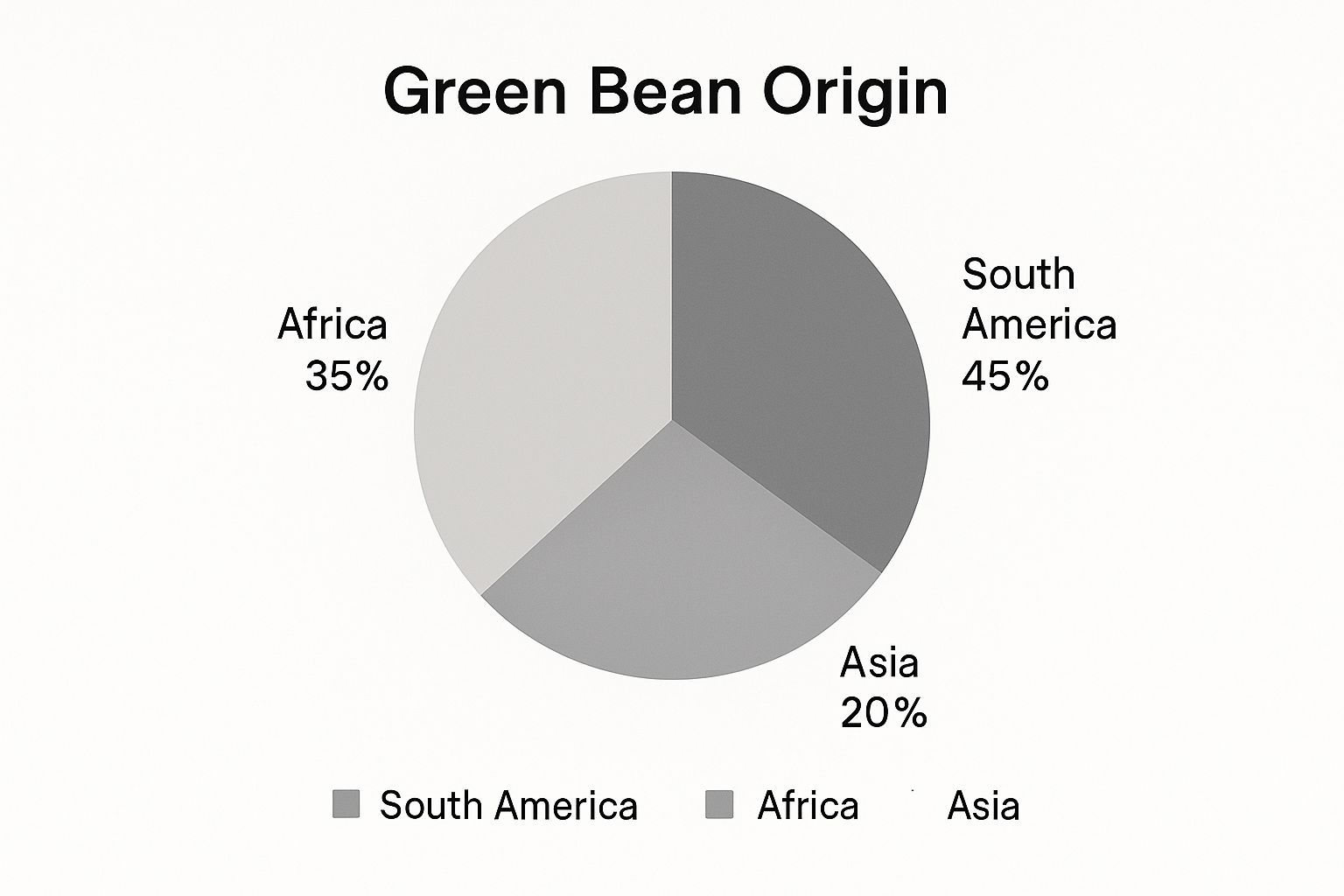
It’s clear from the data that almost half of the speciality green beans you can get your hands on come from South America, making them a brilliant and reliable choice for your first few home roasts.
Choosing Your First Home Roasting Method
Once you've got your beans, you need a way to roast them. The good news? You don't have to spend a fortune to get going. The right equipment really depends on your budget, how much space you have, and how much control you want over the process.
The best roaster for you is the one you'll actually use. Starting simple is often the key to building a lasting passion for home roasting, allowing you to learn the sensory cues of the process without being overwhelmed by technology.
For anyone just dipping their toes in, something as simple as a non-stick pan on a camping stove outdoors can work surprisingly well. For a bit more consistency, though, many newcomers in the UK start with a modified air popper. While not designed for coffee, they circulate hot air effectively. The downsides? They offer very little control and can be messy with chaff (the bean's skin).
For a more dedicated approach, you can step up to purpose-built electric home roasters. These machines manage temperature and airflow much more precisely and often include chaff collectors, making them a far cleaner option for indoor use. They represent a fantastic middle ground, offering solid consistency and control without the complexity of professional gear.
To help you decide, here’s a quick comparison of the common methods you'll find in the UK.
Choosing Your First Home Roasting Method
| Roasting Method | Initial Cost (Approx.) | Batch Size | Consistency | Best For |
|---|---|---|---|---|
| Pan/Stovetop | £10 - £30 | 50-100g | Low | The absolute beginner curious to see the process firsthand. |
| Hot Air Popper | £20 - £40 | 60-90g | Low-Medium | Hobbyists on a tight budget who enjoy a bit of DIY. |
| Electric Air Roaster | £150 - £500 | 80-250g | Medium-High | Those seeking a clean, user-friendly indoor roasting experience. |
| Drum Roaster | £400+ | 200g - 1kg | High | Enthusiasts wanting maximum control over the roast profile. |
Ultimately, whether you begin with a simple pan or a dedicated machine, the goal is the same: apply heat evenly and learn to react to the sights, sounds, and smells of the beans as they transform.
The Sensory Experience of Your First Roast
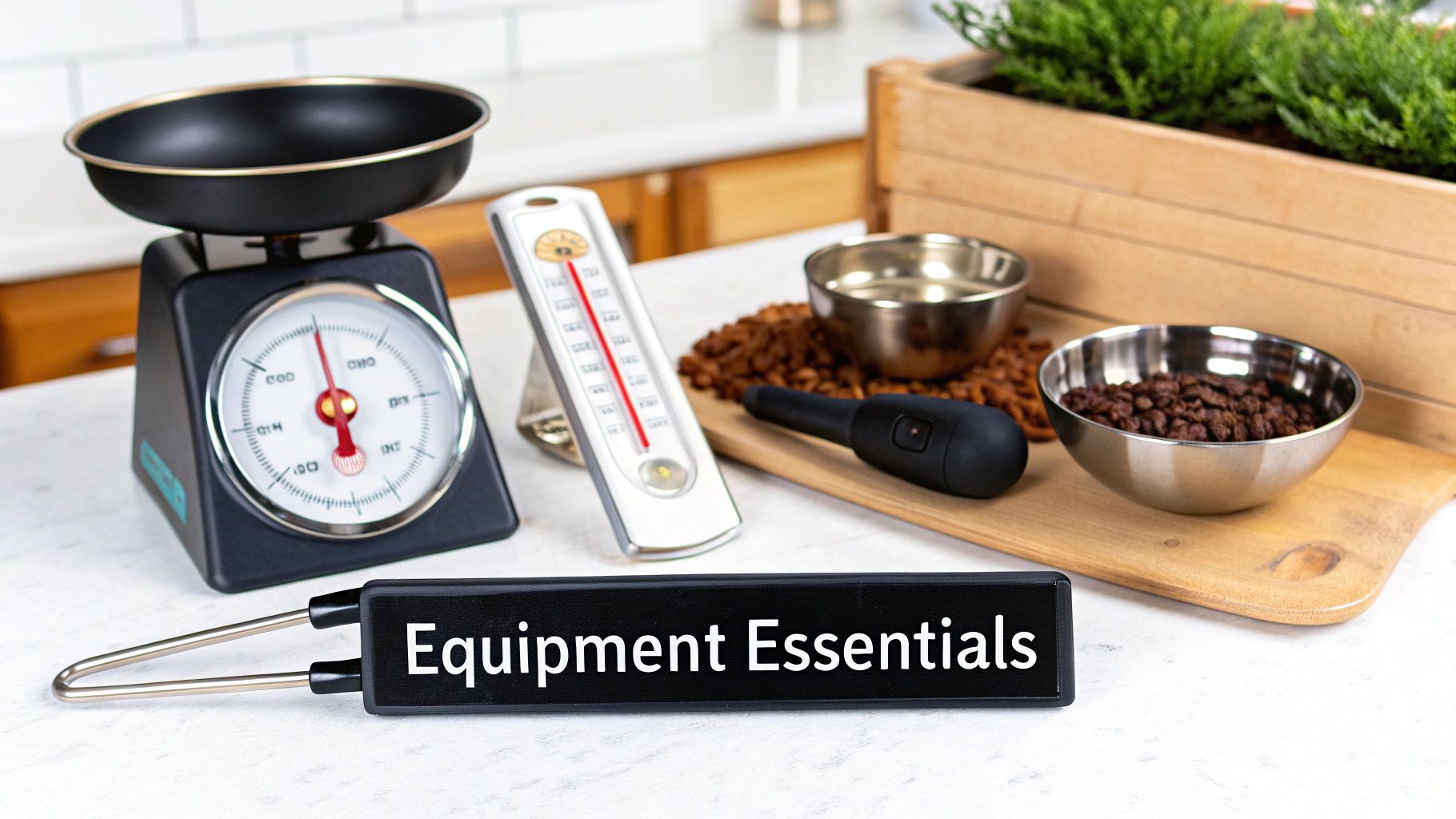
This is where the real magic happens. Roasting coffee is an experience that grabs all your senses. It's less about following numbers on a screen and more about learning to see, smell, and hear the beans as they transform. Your first home roast is a live performance, and your senses have front-row seats.
For a moment, forget the complex charts and focus on the two core ingredients: green coffee beans and heat. As you start to apply warmth, the journey begins. The first part of the process is all about watching and listening as everything unfolds through a series of distinct, sensory-rich phases.
The Drying Phase: From Green to Yellow
Your green beans, which hold a surprising amount of moisture, start their journey in what we call the drying phase. In these first few minutes, it might not look like much is happening, but the beans are steadily losing water. You'll see them turn from a pale green to a soft yellow, and then a light tan.
The most obvious change here is the smell. What starts as a grassy, almost vegetal aroma slowly gives way to something warmer, a bit like hay or toast baking in an oven. This stage sets the foundation for your entire roast; getting it right ensures heat penetrates the bean evenly, which helps you avoid a sour or underdeveloped final taste.
The Maillard Reaction and First Crack
As the beans turn a light cinnamon brown, you’re entering one of the most exciting moments of any roast. This is the Maillard reaction, a chemical process that creates hundreds of new aromatic and flavour compounds. It’s the very same reaction that gives bread its crust and a steak its savoury sear.
The aroma will shift dramatically, becoming much sweeter and more complex. You might pick up notes of biscuit, caramel, or even a hint of nuts. This is the point where you need to listen closely, because the most important sound cue is just around the corner: the first crack.
First crack is the defining moment of the roast. It’s a sharp, audible cracking sound, a lot like popcorn popping, which tells you the beans are expanding rapidly as water vapour is forced out. This is the point where the coffee truly becomes drinkable and its unique flavours begin to emerge.
Once the first crack begins, you’re in the driver’s seat. How long you continue roasting from this point on—a period known as development time—will shape the final flavour profile more than anything else.
From Caramelisation to Cooling
After the symphony of first crack subsides, the process shifts into caramelisation. The sugars inside the beans start to break down and reform, creating the deeper, richer notes we all associate with coffee. The beans will darken further, and their surface will become smoother as oils start to migrate outwards.
Your job now is to decide when to stop. Pulling the beans just after first crack finishes will give you a light roast, preserving the bean's natural acidity and bright, fruity or floral notes. If you extend the roast by a minute or two, you'll create a medium roast with a more balanced sweetness and body. Hear the beginnings of a quieter, more rapid 'second crack'? You're heading into dark roast territory.
Here’s a quick sensory guide to keep in mind:
- Sight: Watch the beans change colour from green → yellow → tan → cinnamon → deep brown. Notice the surface texture shifting from matte to a slight sheen as oils appear.
- Smell: Follow the aromatic journey from grassy → toasty → sweet & biscuity → rich & complex. A burnt or smoky smell is a dead giveaway you’ve gone too far for a speciality roast.
- Sound: Listen intently for the loud, distinct pops of the first crack. This is your number one indicator that flavours are developing.
Getting this sensory experience right is huge, especially here in the UK, where home coffee has become such a big part of daily life. According to recent data, a significant majority of UK consumers drink coffee more than once a day at home, making mastering your own roast a direct way to control a ritual so many of us cherish. You can find more details in these fascinating UK coffee consumption statistics.
Once you hit your target colour and aroma, cooling the beans down quickly is just as important as the roast itself. This final step locks in all the incredible flavours you've worked so hard to create. By tuning into these sensory cues, you'll demystify the entire process and build the confidence to pull off an amazing roast, every single time.
Right, so you've managed to roast your first batch without setting off the smoke alarm. Congratulations! Now the real fun begins. This is where you move beyond just roasting coffee and start crafting it to match your own taste.
This is the heart of the home roasting adventure. It's about discovering how tiny tweaks to time and temperature can completely transform the final cup. The terms light, medium, and dark aren't just about colour; they’re different destinations on a flavour map. By understanding this, you can take one bag of green beans and unlock a whole spectrum of experiences.
Understanding Roast Levels and Their Impact
Think of the roast level as a dial. You can either turn it up to bring out the deep, roasty notes, or keep it low to let the coffee’s natural personality shine. Lighter roasts are all about celebrating the bean's origin—the unique soil, altitude, and processing that give it a specific identity. As you push the roast longer and darker, those origin notes begin to mellow, making way for the rich, comforting flavours created by the heat itself.
Here's a breakdown of what that means for your morning brew:
- Light Roasts: If you pull the beans just after the ‘first crack’ finishes, you’re preserving the highest level of acidity. We’re not talking sour, but a bright, vibrant quality that can taste like crisp green apples, zesty lemon, or sweet berries. The body is often lighter, almost tea-like. This is the perfect way to show off the delicate floral and fruity notes of a top-notch Ethiopian or Kenyan coffee.
- Medium Roasts: This is the sweet spot for a huge number of coffee drinkers here in the UK. By roasting a little longer, you start to caramelise the sugars, creating a much rounder body and a more balanced profile. That bright acidity mellows into a satisfying sweetness, and notes of milk chocolate, caramel, and toasted nuts start to pop. A medium roast is absolutely brilliant for coffees from Brazil or Colombia, making for a reliably delicious daily cup.
- Dark Roasts: Push the roast towards the 'second crack' (a second, quieter series of pops), and you change the beans completely. The original flavours are almost entirely replaced by bold, smoky notes of dark chocolate and spice. There’s very little acidity left, and the body becomes heavy and rich. You'll often see a glossy, oily sheen on the surface of the beans.
The real art is in matching the roast to the bean. You wouldn't want to dark roast a delicate Geisha, as it would completely wipe out its beautiful floral character. In the same way, a super-light roast on a bean intended for a classic, punchy espresso might just taste sharp and thin.
Knowing how the roast level shapes the final cup is key to getting the results you want.
Impact of Roast Level on Coffee Flavour
The table below gives you a quick reference for how each roast level typically translates into the cup. Use it as a starting point to figure out which direction you want to take your beans.
| Roast Level | Key Flavour Notes | Acidity Level | Body | Best For Brewing |
|---|---|---|---|---|
| Light | Floral, fruity, citrus, berry | High & Bright | Light, tea-like | Pour-over, filter |
| Medium | Caramel, milk chocolate, nuts | Balanced | Medium, smooth | All-rounder, great for drip or Aeropress |
| Dark | Dark chocolate, smoky, spicy | Low | Heavy, rich | Espresso, French press |
Ultimately, this is all about your personal preference. There’s no right or wrong, just what you enjoy drinking.
Logging Your Roasts for Consistency
To get from lucky successes to repeatable triumphs, you need to keep a log. It doesn’t have to be some complex software—a simple notebook works perfectly. Jotting down a few key details from each roast is the fastest way to understand what works, what doesn't, and why.
Make sure your log captures the essentials:
- Bean Details: Note the origin, processing method (e.g., washed, natural), and where you bought it.
- Key Timings: Record how long it took to reach the first crack and the total roast time.
- Sensory Cues: What colour were the beans at the end? What did they smell like?
- Tasting Notes: A day or two later, brew a cup and write down what you taste. Note the acidity, body, and dominant flavours. Did it turn out how you expected?
This simple act of paying attention is what separates a casual hobbyist from a skilled home roaster. It gives you the power to recreate that one perfect batch and to learn from the ones that missed the mark. The growing passion for great coffee in the UK is all about this desire for more control and a deeper connection to what we drink. You can discover more about UK coffee market trends to see just how much this home-brewing and roasting scene is growing.
By playing around with different profiles and keeping good notes, you’ll soon find yourself able to coax out specific, delicious notes with real confidence. You're not just making coffee; you're developing a craft.
Perfecting Your Post-Roast Routine
Think the work is done once you drop the beans? Think again. What you do in the moments right after the roast is just as critical as the roast itself. How you cool, rest, and store your coffee will make or break the final flavour, turning a potentially vibrant cup into a flat, disappointing one.
First things first: cooling. The second you end the roast, those beans are still incredibly hot and packed with thermal energy. If you just leave them to cool on their own, they'll keep on roasting—or 'baking'—which will push the profile darker than you wanted and kill all those delicate aromas you worked so hard to create. Your job is to stop the roast in its tracks, and fast.
The Art of the Quick Cool Down
For small home batches, the easiest way is to get two big metal colanders and pour the beans back and forth between them. It’s a beautifully simple, hands-on technique that creates a constant flow of air, pulling the heat out of the beans rapidly. If your roaster has a built-in cooling tray, get it fired up before you drop the beans. The goal here is to get them down to room temperature in just a few minutes.
Think of it like searing a steak. You pull it from the pan at the perfect moment, but it's the resting that stops the cooking process. Freshly roasted coffee needs that same immediate attention to lock in its peak flavour.
Letting it Breathe: The Degassing Period
Once your beans are cool, they need to rest. This is called degassing. During the roast, a whole lot of carbon dioxide (CO2) gets trapped inside the beans, and it needs time to escape. One of the most common rookie mistakes is brewing coffee that’s too fresh.
All that trapped gas gets in the way of a good extraction, acting like a barrier between the hot water and the coffee grounds. The result is often a cup that tastes sour, thin, and just all over the place, completely hiding the bean’s true character. Giving your coffee a little time to breathe is non-negotiable if you want a great brew.
The ideal rest time can vary, but here are some solid guidelines for home roasters in the UK:
- For Filter Coffee (V60, French Press): A rest of 24 to 72 hours is usually about right. This gives enough time for the most aggressive CO2 to escape, letting you pull a balanced and flavourful brew.
- For Espresso: Espresso is way more sensitive to CO2. You'll need to be more patient here, letting the beans rest for 5 to 14 days before pulling any shots. That extra time really mellows out the coffee and helps you get that rich, stable crema we're all chasing.
Common Roasting Mistakes and How to Fix Them
Even when you’re being careful, roasts can go wrong. Learning to spot the issue is the first step to nailing your next batch. Here are a few common problems and what to do about them.
Uneven Roasting
- The Problem: You’ve got a mix of light and dark beans in your final batch. This leads to a confusing cup with a muddle of sour and bitter notes.
- The Fix: This usually comes down to two things: either you’ve overloaded the roaster, or the beans aren’t moving around enough. Try reducing your batch size. If your machine lets you, you could also increase the drum or fan speed to get those beans tumbling and heating more evenly.
Scorching or Tipping
- The Problem: The beans have dark, burnt-looking spots on their flat sides (scorching) or on the tips (tipping). This gives the coffee an unpleasant ashy, smoky taste.
- The Fix: This is a classic sign of hitting the beans with too much heat, too early. Try starting with a lower charge temperature, or turn down the heat for the first few minutes of the roast. You’re aiming for a gentler start that lets the heat sink into the core of the bean without burning the outside.
Baked Coffee
- The Problem: The coffee just tastes flat. It’s bready and lifeless, with none of the sweetness or character you were hoping for, even though the colour looks about right.
- The Fix: 'Baking' is what happens when a roast loses momentum and stalls out, often dragging on for too long before it hits first crack. You need to make sure you’re applying enough energy throughout the roast to keep the bean temperature climbing at a steady pace. A slow, sluggish roast just cooks the sugars without developing them, which is why you end up with such a dull flavour.
Getting this post-roast routine down is what turns home roasting from a hobby into a real craft. By cooling your beans properly, respecting the degassing process, and learning to troubleshoot, you’ll give every bean the best possible chance to shine.
Your UK Home Roasting Questions Answered
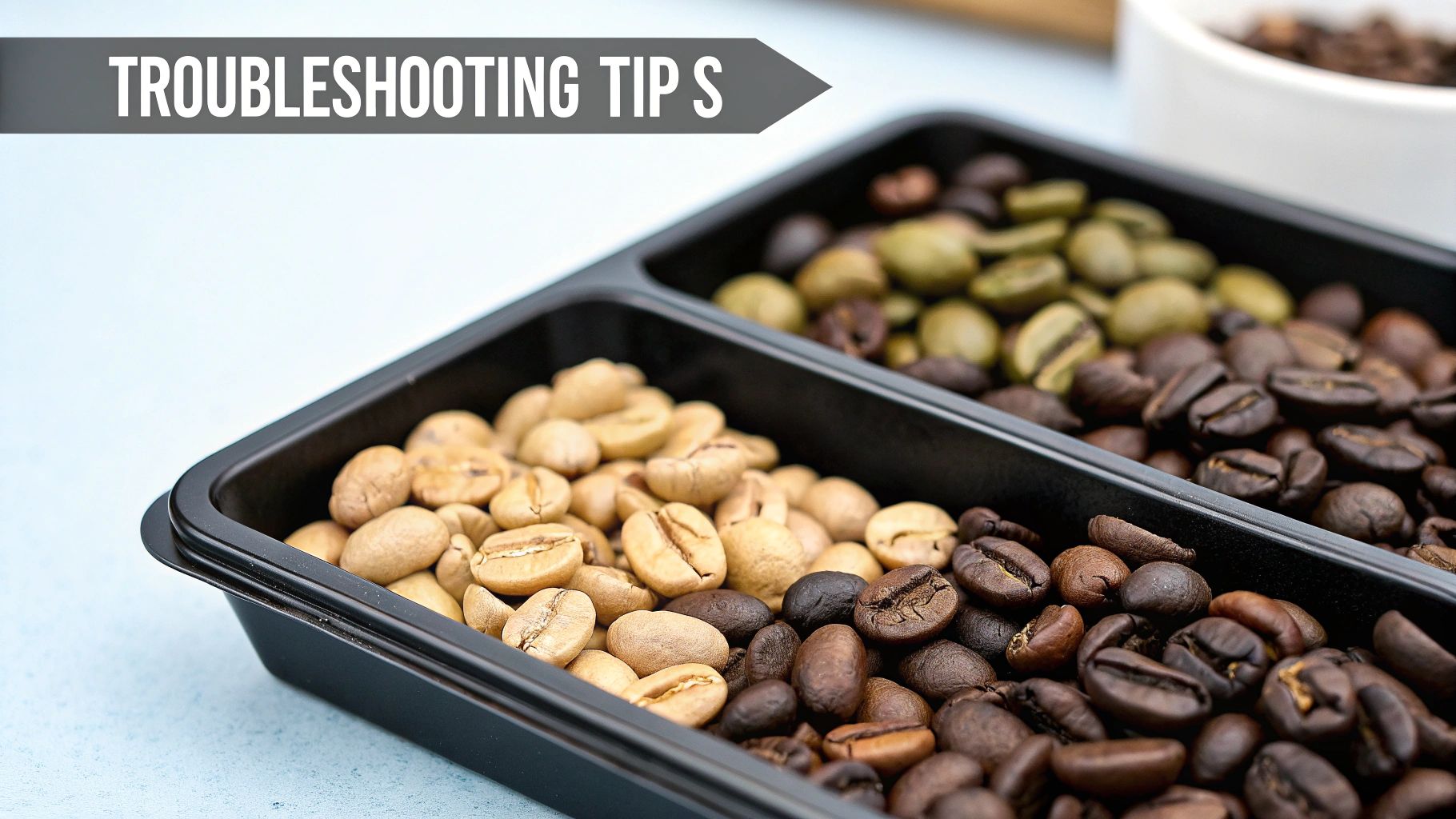
As you get stuck into the world of home roasting, it’s completely normal for questions to start bubbling up. The path from a humble green bean to that perfect morning brew is full of tiny details that can make or break the final cup.
Here, we'll run through some of the most common queries we hear from new roasters across the UK. Think of this as your go-to guide for troubleshooting the finer points and building the confidence to get the best out of every single batch.
How Much Can I Actually Save by Roasting Coffee at Home in the UK?
The savings can be genuinely massive, especially if you have a taste for speciality coffee. Green coffee beans typically cost 50-70% less than their expertly roasted counterparts. Yes, there's an initial investment in equipment, but the per-cup cost plummets once you're up and running.
For anyone drinking one speciality coffee a day, the money you save on beans alone can often pay for a solid home roaster within the first year. And all the while, you’re enjoying coffee that is fresher than anything a shop can realistically offer.
The real win isn't just about saving money; it's the huge leap in freshness and flavour. You end up paying less for a far superior product, crafted by you just when it's hitting its peak.
Is Roasting Coffee Indoors Going to Set Off My Smoke Alarm?
It’s a very real possibility, especially as you start exploring medium and darker roasts. The process creates both smoke and chaff (the bean's flaky skin), which means good ventilation is non-negotiable.
At the very least, get your windows wide open and stick the cooker's extractor fan on full blast. Many UK home roasters, particularly those in smaller flats or terraced houses, will set up right by an open door to get maximum airflow. A practical tip is to start with lighter roasts, as they produce significantly less smoke. Alternatively, you could invest in a dedicated roaster with built-in smoke suppression to make indoor roasting far more manageable.
How Long Should Freshly Roasted Beans Rest Before Brewing?
This waiting game is called degassing, and it's a vital step. Freshly roasted coffee releases a huge amount of carbon dioxide (CO2), which will get in the way of a good extraction and leave you with a sour, uneven brew if you jump the gun. A little patience here pays off tenfold in the cup.
Here are some solid guidelines to follow:
- For filter methods like a V60, Chemex, or French press, you’ll want to wait at least 24-72 hours. This gives the most aggressive gases time to escape, leading to a much cleaner and more nuanced cup.
- For espresso, which is incredibly sensitive to CO2, a longer rest is absolutely key. Aim for somewhere between 5 and 14 days. This allows the flavours to settle and develop, which is crucial for pulling a shot with a rich, stable crema.
Where Are the Best Places to Buy Green Coffee Beans in the UK?
Thankfully, the UK now has a fantastic community of green bean suppliers who cater specifically to home roasters. Your best bet is to look for online retailers that specialise in speciality-grade green coffee.
Many of these suppliers offer small 250g sample bags, which are perfect for experimenting with different origins and processing methods without committing to a large quantity. When browsing, always look for the details—the bean's origin, varietal, how it was processed (e.g., washed, natural), and the supplier's tasting notes. This information is your treasure map to unlocking the flavours inside.
Ready to explore the world of exceptional coffee? At Ue Coffee Roasters, we not only source and roast the finest beans but also provide the gear, training, and support to help you master your home brewing. Discover our curated selection of green beans, equipment, and masterclasses by visiting uecoffeeroasters.com.