

How to Keep Office Coffee Fresh: how do i clean a coffee machine
That first cup of coffee can make or break a morning. But its quality hinges on far more than just the beans you choose. The real secret to a consistently brilliant brew is a sparkling clean machine.
Let’s reframe the question from how do I clean a coffee machine? into a simple, empowering routine—one that guarantees a perfect cup, every single time.
Great Coffee Starts with a Clean Machine
That gleaming bean-to-cup machine in your office kitchen is more than just an appliance; it's a promise. A promise of productivity, a moment of connection, and a small daily delight.
But that promise can quickly sour. When cleaning gets overlooked, the machine becomes a breeding ground for bitter flavours and, worse, unwelcome breakdowns. Suddenly, the morning coffee run turns into a game of chance.
If left unchecked, stale coffee oils and mineral deposits start to build up. These residues don't just taint the taste; they clog up the internal workings, leading to sluggish performance and, eventually, a costly service call. Think of it as the difference between a finely tuned instrument and one left to gather dust—one makes beautiful music, the other just noise.
The True Cost of a Dirty Machine
The fallout from a poorly maintained machine goes far beyond a single bad cup. It ripples through the entire workplace, subtly affecting morale and perception. A consistently dirty or broken coffee station sends a quiet message that the small details don't matter.
On the flip side, a pristine, reliable machine contributes to a culture of care and excellence.
A clean coffee machine is an investment in both flavour and function. A few minutes of daily care prevents the buildup of rancid oils and limescale, protecting your equipment and ensuring every cup tastes fresh and vibrant.
This guide is designed to completely change how you approach coffee machine maintenance. We'll show you how a few simple, consistent actions can make all the difference.
You’ll learn how to:
- Preserve Coffee Flavour: Eliminate that bitter, burnt aftertaste caused by old coffee residue.
- Extend Machine Lifespan: Prevent the limescale and oil buildup that leads to expensive repairs.
- Boost Office Morale: Ensure the office’s most popular perk is always a positive experience.
- Improve Workplace Hygiene: Keep a high-traffic area sanitary and safe for everyone.
By mastering a simple cleaning routine, you become the guardian of great coffee—the undisputed champion of the office break room.
Building Your Daily and Weekly Cleaning Habits
Great coffee doesn't happen by accident. It's the result of small, consistent habits that become part of the daily rhythm. Turning the chore of cleaning into a simple, effortless ritual is the secret to unlocking your machine's potential and making sure every single cup is genuinely enjoyable.
Think of it like this: you wouldn't cook a gourmet meal in a dirty pan. The exact same principle applies to your coffee machine. Old coffee oils and milk residue are the biggest enemies of fresh flavour, and letting them build up is the fastest way to turn amazing beans into a bitter, disappointing brew. Just a few minutes each day creates a powerful cycle of quality.
This visual says it all—a clean machine is directly linked to a happy, caffeinated team.

The takeaway is simple: looking after your equipment translates directly into a better day at the office, one cup at a time.
To make things even clearer, here’s a simple checklist to create a consistent cleaning schedule that anyone in the office can follow.
A Quick Look at Daily vs Weekly Cleaning
| Essential Task | Daily Routine (Under 5 Mins) | Weekly Refresh (15-20 Mins) |
|---|---|---|
| Steam Wand | Wipe and purge after every use | Soak nozzle in cleaning solution |
| Group Head | Quick flush with hot water | Backflush with cleaning powder |
| Trays & Bins | Empty and rinse grounds/drip trays | Deep clean all removable parts |
| Exterior | Wipe down surfaces with a damp cloth | Polish stainless steel surfaces |
| Components | N/A | Soak portafilters & baskets in solution |
This simple breakdown turns a daunting task into a manageable routine, ensuring nothing gets missed.
The Essential End-of-Day Shutdown
The single most important habit you can form is the end-of-day shutdown. This five-minute routine is your best defence against buildup and flavour contamination. It’s a non-negotiable step that paves the way for a perfect coffee experience the next morning.
Make these quick actions part of your closing routine:
- Wipe and Purge the Steam Wand: As soon as it's been used for the last time, give the steam wand a wipe with a dedicated damp cloth and purge it for a couple of seconds. This stops milk from drying and hardening inside the nozzle—a real headache to remove later and a prime spot for bacteria.
- Rinse the Group Head: Run a quick blast of hot water through the group head (where the coffee comes out). This simple flush dislodges any stray coffee grounds caught in the screen.
- Empty Drip Trays and Grounds Bins: Leaving these full overnight creates a damp, inviting home for mould. A quick empty and rinse is all it takes to keep things fresh and hygienic.
This daily reset stops minor residue from snowballing into a major problem, keeping your machine ready for peak performance. It’s a tiny investment of time that pays off massively in taste and reliability.
Your Weekly Refresh Ritual
While daily habits keep things ticking over, a more thorough weekly clean is essential to tackle the buildup that naturally happens with heavy use. Think of it as a mini-service for your machine. Set aside 15 minutes at the end of the week—maybe on a Friday afternoon—to give your machine the attention it deserves.
Embracing a weekly cleaning rhythm isn't just about maintenance; it's about honouring the craft of good coffee. This deeper clean ensures that the complex notes of your specialty beans are never masked by the ghosts of last week's brews.
For this weekly refresh, you’ll do all the daily tasks plus a few more crucial steps. You'll need a specialised cleaning powder or tablet made for commercial machines. These products are formulated to dissolve stubborn coffee oils that water alone can't touch.
Backflushing the group head with a cleaning agent is a vital part of this. It forces the cleaning solution back through the machine’s internal pathways, clearing out trapped residue and guaranteeing a clean path for the water. You'll also want to soak components like portafilter handles, filter baskets, and drip tray grates in the cleaning solution to dissolve any baked-on grime, leaving them sparkling.
Conquering the Monthly Deep Clean and Descaling
Your daily and weekly habits are a great first line of defence, but the monthly deep clean is where you truly safeguard your machine's future. This is when you go beyond a surface tidy-up and tackle the invisible enemy lurking in your machine's pipes and heating elements: limescale.
Limescale is the silent performance killer. It’s a stubborn build-up of mineral deposits—mostly calcium and carbonate—that gets left behind by water. If you're in a hard water area, this builds up much faster, silently constricting water flow and insulating the heating elements. This forces your machine to work harder than it should, leading to slower brewing, lukewarm coffee, and eventually, a total system failure.
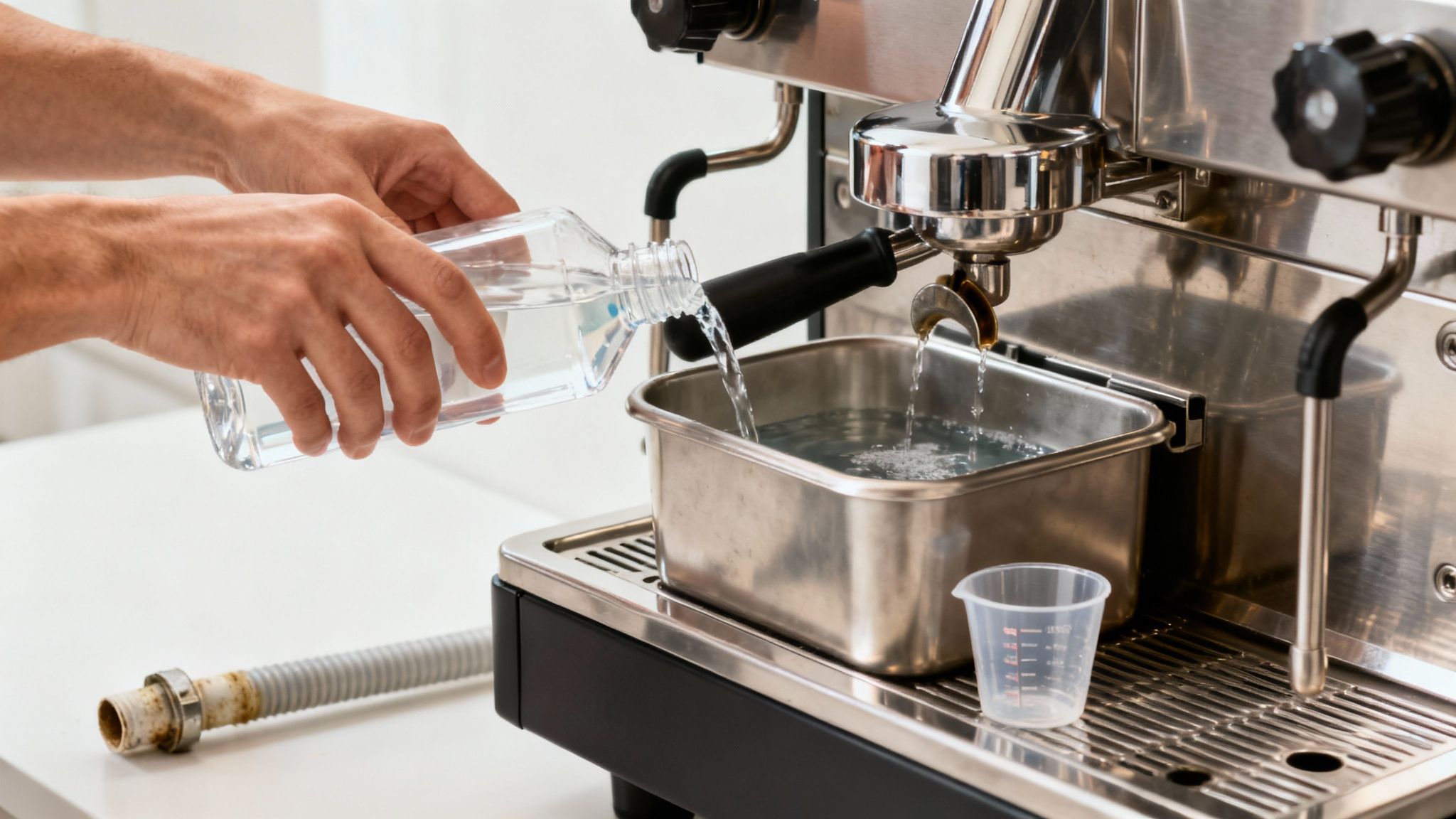
This isn’t just a minor hassle; it's a huge operational risk. In my experience, ignoring limescale is the number one reason for costly and disruptive service calls. A breakdown doesn’t just mean no coffee for an afternoon—it means lost productivity and very unhappy colleagues.
Why Descaling is Non-Negotiable
Descaling is simply the process of using a mild acidic solution to dissolve these mineral deposits, restoring your machine's internal pathways so they are clear and free-flowing again. It is, without a doubt, the single most effective piece of preventative maintenance you can do.
Think of it like clearing a blocked artery. The descaling solution runs through the machine, dissolving the scale and flushing it out. This allows water to heat up properly and flow without restriction. Not only does this protect the machine, but it also dramatically improves the taste of the coffee. Why? Because those mineral deposits can leave a nasty chalky, flat flavour in the cup.
Descaling isn't just cleaning; it's preventative healthcare for your coffee machine. A monthly descaling cycle dissolves the mineral buildup that chokes performance, preventing the slow, silent damage that leads to major breakdowns and expensive repairs.
I’ve seen this happen time and time again. A client invests in a fantastic machine, but a few months down the line, the complaints start rolling in. The coffee isn't hot enough, the machine is slow, or worse, it's stopped working altogether. Nine times out of ten, the culprit is limescale.
Your Monthly Maintenance Mission
Get it in the diary. Set a recurring calendar reminder for your monthly deep clean, because out of sight is truly out of mind here. This session isn't just about descaling; it's a chance to give your entire system a proper check-up.
Here are the key things to focus on:
- Run a Full Descaling Cycle: This is the main event. It’s absolutely crucial to use a descaling solution designed for commercial coffee machines. Please, don't be tempted by home remedies like vinegar—it's far too harsh and can corrode sensitive internal parts like rubber seals and metal components, which will almost certainly void your warranty.
- Inspect and Clean the Grinder: Coffee oils build up in the grinder burrs and eventually turn rancid, which taints the flavour of every single cup. Check your manufacturer’s guide for instructions on how to safely access and clean the burrs with a stiff brush.
- Check the Water Filter: Most commercial machines have an in-tank water filter, and it's your best friend for preventing scale in the first place. These filters soften the water and catch impurities before they even get into the system. Stick to the recommended replacement schedule—usually every one to three months, depending on how much you use the machine.
- Examine Seals and Gaskets: Take a quick look at any visible rubber seals, like the one around the group head. If they look cracked, brittle, or worn out, it's a good sign that you need to order a replacement before a leak starts.
To get the job done right, especially during your deep clean, using a professional product is a must. Consider a purpose-built chemical like a special descaler for espresso and automatic coffee machines to guarantee every bit of mineral deposit is gone.
By turning this task from a chore into a valued ritual, you become the champion of your office’s coffee culture, ensuring a flawless brew, day after day.
Mastering Your Milk System Hygiene
If you’re a fan of a creamy latte or a frothy cappuccino, you know the milk system is where the magic happens. It’s also the most critical part of the machine to keep clean. Milk is a dairy product, after all, and even tiny residues can quickly become a playground for bacteria, posing health risks and, frankly, making your coffee taste awful.
A pristine milk system is non-negotiable. If you neglect it, even for a day, you’re asking for sour flavours, unpleasant smells, and blockages that will stop the frother from doing its job. Think of it this way: you’re aiming to create a premium, coffee-shop-quality drink, and that demands the highest standards of cleanliness. It’s a simple act of care that protects your team and makes every single cup better.
The Daily Milk System Purge
The number one rule for milk hygiene? Clean it daily. This isn't a suggestion; it's essential. Most modern bean-to-cup machines come with an automated milk cleaning cycle, and it needs to be run at the end of every single day. No exceptions. This cycle is designed to flush the internal pipes with hot water and a specialised cleaning solution.
This process is so important because it dissolves the milk proteins and fats that plain water just can't touch. These milk-specific cleaners are formulated to be tough on residue but perfectly safe for your machine’s delicate parts. Always stick to the solution recommended by your machine's manufacturer—it ensures you get the job done right without causing any damage.
A clean milk system is the foundation of a great milky coffee. Daily purging with a proper milk-cleaning solution is the only way to prevent bacterial growth and ensure the sweet, creamy flavour you expect in every latte and flat white.
Manual Cleaning for a Thorough Finish
While the automated cycles are a fantastic help, they don’t get everything. You’ll still need to give the external parts some manual attention. This hands-on approach is what guarantees every nook and cranny is properly sanitised.
Here’s your quick manual cleaning checklist:
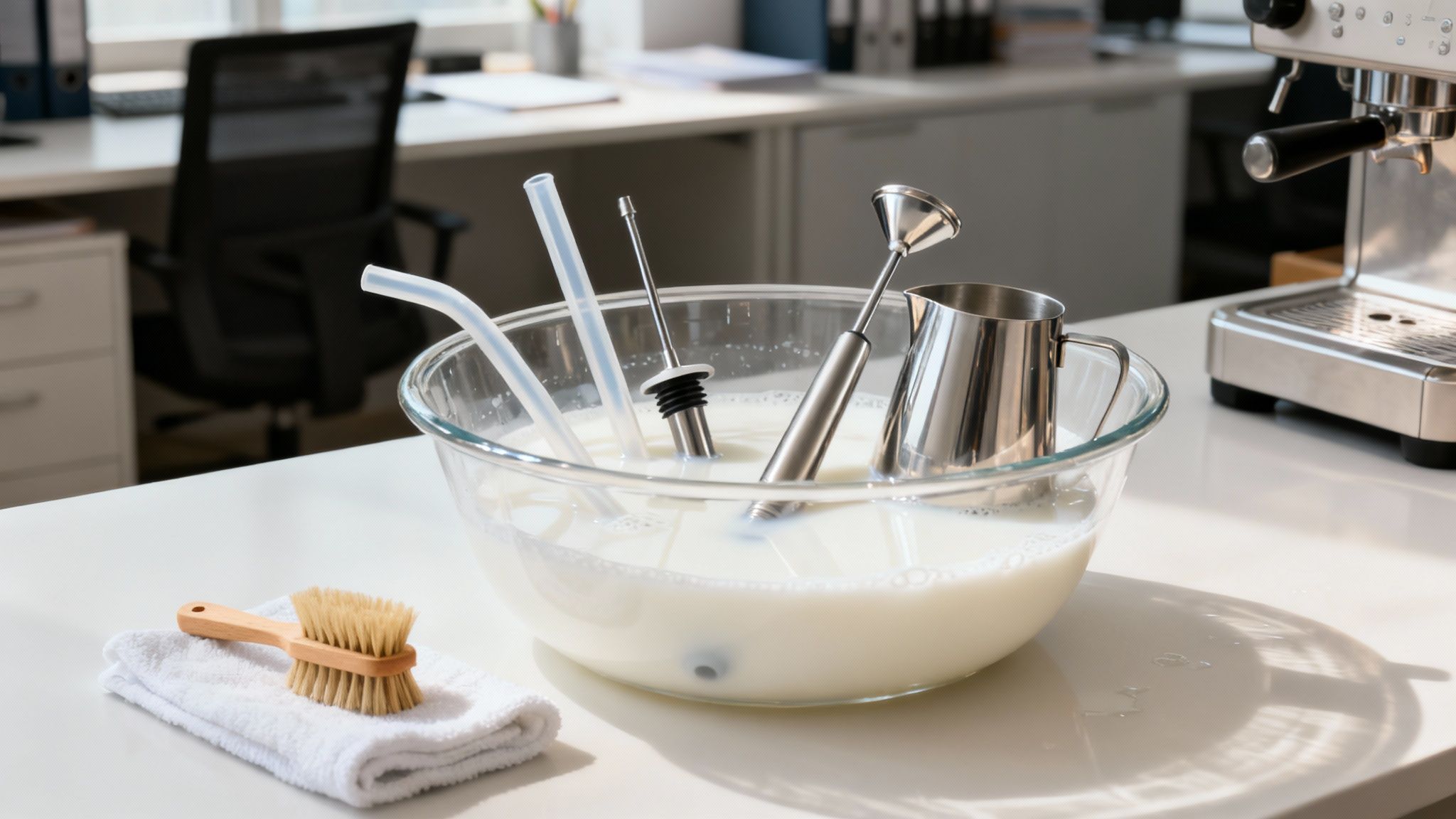
- Wands and Nozzles: Pop off any frother nozzles or steam wand tips. Let them soak in a solution of warm water and milk cleaner for about 15-20 minutes, then give them a good scrub with a small, dedicated brush.
- Tubes and Pipes: If you have external milk tubes connecting to a fridge or container, disconnect them. Use a flexible pipe brush to clean the inside properly before flushing them out with clean water.
- Milk Container: The jug or container that holds the milk needs to be emptied and washed with hot, soapy water every day. Let it air dry completely overnight to stop any moisture from building up.
Choosing the Right Milk Cleaning Solution
Don't just grab any old cleaner. Avoid general-purpose detergents or—even worse—bleach. These can damage your machine and leave behind nasty chemical residues you definitely don't want in your coffee. A professional milk system cleaner is specifically designed to break down milk fat and scale without being corrosive.
I once visited an office where they were pulling their hair out over an underperforming milk frother. The drinks were just… sad. The issue wasn't the machine; it was their "cleaning" routine, which was just a quick rinse with hot water. After we got them started on a proper daily purge with a dedicated milk cleaner, the problem vanished almost overnight. The frother was back to its best, and the taste improved dramatically. It was a perfect reminder that in the world of coffee, it's the little details that make all the difference.
Solving Common Coffee Machine Problems
Even with the best intentions and a solid cleaning routine, things can sometimes go a bit sideways with your coffee machine. Before you start imagining expensive repair bills and reaching for a technician's number, take a breath. Most common issues are simply the machine's way of telling you it needs a little TLC.
Think of it like being a coffee detective. The clues are right there in the cup and the way the machine is behaving. Once you learn to interpret them, you can solve most problems in minutes, not hours.
Why Does My Coffee Taste Burnt or Bitter?
This is easily the most frequent complaint we hear, and 99% of the time, the culprit is the same: old, rancid coffee oils.
Every time a coffee is brewed, natural oils from the beans are left behind inside the brew group, on filter screens, and in the spouts. Over time, these oils build up. Exposed to heat and air, they oxidise and turn foul, tainting every single cup that follows with a nasty, bitter flavour.
The Fix: This is a clear signal that the machine is overdue for a deep clean using proper coffee machine cleaning tablets. A simple water rinse won't cut it here; you need a specialised detergent designed to break down and strip away those stubborn, oily residues. Just run a full cleaning cycle, like you would for your weekly maintenance, and you'll bring that pure coffee flavour right back.
The Machine Is Slow and the Water Flow Is Weak
Is your machine groaning and sputtering, taking an eternity to fill a cup? Maybe the coffee is coming out as a sad little dribble instead of a healthy, steady stream.
These are the classic calling cards of limescale buildup. Mineral deposits from the water have started to clog up the internal pipes and heating elements, literally strangling the flow.
The Fix: Don't put this off. Run a full descaling cycle immediately. A weak flow means the machine's pump is working incredibly hard to force water through the blockage, which can lead to a costly breakdown if you ignore it. A good descaling solution will dissolve those mineral deposits and get things flowing freely again.
Many machine issues that seem technical are actually hygiene-related. A bitter taste points to old oils, a slow flow indicates limescale, and poor milk foam often means a simple blockage. Learning to spot these signs turns you into a proactive problem-solver.
My Milk Isn't Frothing Properly
There’s nothing more disappointing than a latte that comes out flat or a cappuccino without its signature pillowy foam. When this happens, the problem is almost always located in the milk system.
Perfectly frothed milk depends on a powerful, uninterrupted jet of steam. Even a microscopic blockage in the steam wand nozzle, usually from dried-on milk residue, can completely throw off the entire process.
The Fix: Your mission is simple: clear that blockage.
Start by detaching the steam wand tip and letting it soak in a solution of hot water and milk-cleaning fluid. While it's soaking, grab a small, dedicated brush to scrub away any visible gunk, paying extra attention to the tiny steam holes. You can also use a pin or a paperclip to carefully poke through the holes and dislodge any stubborn residue. This one simple action can instantly restore your machine's frothing power.
Your Top Coffee Machine Cleaning Questions, Answered
You’re well on your way to becoming the office coffee hero. Now that you’ve got the hang of the daily, weekly, and monthly jobs, let’s wrap up with a few of the most common questions we hear. Think of this as the final piece of the puzzle, giving you the confidence to keep your machine in top-notch condition.
How Often Do We Really Need to Descale Our Office Machine?
The honest answer? It all comes down to your water.
If your office is in a hard water area, a busy machine is going to need descaling every 1-2 months. Trying to put it off is a false economy, trust me. Limescale buildup is the number one culprit behind slow-running machines and expensive breakdown calls.
Most modern commercial machines will flash up a warning when it’s time, but don't just wait for the light. If you notice the flow of coffee or hot water is sluggish, that’s your machine’s way of crying out for help. Listen to it and get the descaler out.
Can I Just Use Vinegar to Clean a Commercial Machine?
In a word: no. We get asked this all the time, and we strongly advise against it.
While vinegar might be a go-to for your kettle at home, it’s a seriously risky choice for high-performance commercial equipment. The acid in vinegar is surprisingly aggressive and can slowly eat away at sensitive internal parts, like metal components and rubber seals. Over time, this can cause irreversible damage.
Here's the bottom line: using unapproved substances like vinegar not only puts your machine at risk, but it can also completely void your manufacturer's warranty. Always stick to professional, non-toxic descaling solutions designed for the job—they protect your investment.
What’s the Difference Between Cleaning and Descaling Anyway?
This is a brilliant and crucial question. They sound similar, but they tackle two totally different problems. Both are absolutely essential for that perfect cup.
- Cleaning: This is all about flavour. The process, usually done with special tablets or powders, specifically targets and breaks down the rancid coffee oils and old grounds stuck in the brew group.
- Descaling: This is all about the health of your machine. It uses a mild acidic solution to dissolve the mineral deposits (limescale) that build up in the boiler, pump, and all the internal pipework.
Getting both of these right is the secret to ensuring every single coffee you serve is a masterpiece of flavour, poured from a machine that runs like a dream. You've got this.
Ready to transform your office break room into a hub of inspiration and great taste? At Ue Coffee Roasters, we provide premium bean-to-cup machines and speciality refreshments designed for the modern workplace. Discover our office coffee solutions today.