

How to Improve Office Morale A Practical Guide for UK Businesses
When we talk about improving office morale, we’re really talking about creating a place where people genuinely want to be. It’s about building a positive, supportive, and engaging environment. This comes from consistently recognising employee contributions, making wellbeing a real priority, and fostering open, honest communication. Get that right, and you build a culture where people feel valued and connected.
The Hidden Costs of Low Office Morale

Low morale is so much more than a bad mood doing the rounds in the office; it's a silent drain on your company’s resources. When teams feel disconnected, the effects ripple outwards, touching everything from daily output to your biggest strategic goals. It often starts small—a few missed deadlines, a noticeable lack of energy in meetings, or a slow creep in sick days.
These little signs are often symptoms of a much bigger problem. Disengaged employees are far less likely to innovate, collaborate with enthusiasm, or deliver the kind of stand-out service that sets your business apart. This quiet erosion of productivity is a massive financial burden that too many businesses simply underestimate.
The Real Price of Disengagement
The tangible costs are just the beginning. The UK is currently facing a critical engagement crisis. Alarming research shows that only around 10% of UK workers are considered fully engaged, which puts the nation at a dismal 33rd out of 38 European countries. This level of disengagement isn't just a number; it's a significant competitive disadvantage. You can explore more about these workplace statistics and see just how the UK compares.
Beyond the hit to productivity, low morale fuels a costly cycle of high staff turnover. When your talented people start walking out the door, you don't just lose their skills—you lose their institutional knowledge, their relationships, and their momentum. This has a knock-on effect on the rest of the team, who have to pick up the slack while you navigate the expensive and time-consuming process of recruiting and training someone new.
The greatest cost isn't just replacing an employee; it's the dip in team spirit and momentum that happens when good people decide their best opportunities are elsewhere.
An Opportunity for Positive Change
The trick is to see low morale not as a failure, but as a crucial piece of feedback. It’s an invitation to listen, adapt, and reinvest in your most valuable asset: your people. By getting to the root causes, you have a genuine opportunity to create a workplace where everyone doesn't just show up, but truly thrives.
Building Morale Through Authentic Recognition
If you really want to boost office morale, a great place to start is by making people feel genuinely seen and valued for their work. It’s easy to fall into the trap of big, infrequent gestures like an annual awards night, but the real magic happens in the small, consistent, and authentic moments of recognition.
It's about weaving appreciation right into the fabric of your day-to-day operations. This approach is so powerful because it taps into a core human need: to be acknowledged. When someone’s hard work gets noticed and specifically praised, it validates their effort and reinforces just how much they contribute to the team’s success. A generic "good job" is okay, but it pales in comparison to timely, specific feedback that connects their actions to a positive result.
Moving Beyond Generic Praise
Building a culture of authentic recognition doesn't happen by accident—you have to be intentional. It means leaders and peers alike need to actively look for opportunities to celebrate wins, both big and small. This isn't about creating more work; it's about shifting your perspective.
Here are a few low-cost, high-impact ideas you can put into action straight away:
- Create a 'Wins' Channel: Dedicate a space in your team chat (like Slack or Teams) just for celebrating successes. This creates a public forum where anyone can give a shout-out to a colleague for helping with a tough project, solving a tricky problem, or going the extra mile for a client.
- Personalise Your Thank Yous: A handwritten note or a thoughtful email that details why you're grateful can be incredibly powerful. Instead of just saying thanks, explain the specific impact. For example, "Sarah, thank you for staying late to finalise those slides. Your attention to detail meant the client presentation was flawless and helped us secure the deal."
- Celebrate the Process, Not Just the Result: Don't wait until a six-month project is over to offer praise. Acknowledge the milestones along the way. Celebrating the completion of the research phase or a smooth user testing session keeps momentum and morale high throughout the entire journey.
"When recognition is specific and tied to a company value or goal, it does more than just make one person feel good. It shows the entire team what success looks like in practice, inspiring everyone to aim higher."
Fostering Peer-To-Peer Recognition
While a nod from leadership is always crucial, creating a system where colleagues can easily and publicly appreciate each other is a total game-changer for office morale. When appreciation flows in all directions, it builds stronger relationships and fosters a collaborative, supportive environment.
This doesn't need to be complicated. It could be a simple "kudos" feature on your intranet or a dedicated spot in the weekly team meeting. The goal is to make recognition a shared responsibility.
When employees feel empowered to celebrate each other's wins, they become active participants in building a more positive workplace. It creates a powerful cycle of positive reinforcement that lifts everyone up.
Championing Wellbeing and Sustainable Work Habits
Burnout is the ultimate morale killer. It creeps in quietly and can dismantle even the most positive and tight-knit teams. If you're serious about boosting office morale for the long haul, you have to look beyond the occasional perk and build a culture that genuinely champions wellbeing.
This means weaving sustainable work habits into your company’s DNA—proving you value your team as people, not just as units of productivity.
It all starts with leaders setting healthy boundaries around working hours. When managers are firing off emails late into the evening or working through their holidays, it sends a clear message: an "always-on" culture isn't just accepted, it's expected. The fix? Lead by example. Log off at a reasonable time, take your full lunch break (away from your desk!), and be vocal about encouraging your team to do the same.
Fostering Flexibility and Trust
Flexible working arrangements aren't just a nice-to-have anymore; they're a cornerstone of a modern, high-trust workplace.
When you allow employees to adjust their start and finish times or work from home when life calls for it, you're showing you trust them to manage their own time and get the job done. That autonomy is a massive motivator and a clear sign that you respect their life outside of the office.
This is where many businesses stumble. Research shows that while over 80% of employees feel more positive when they receive recognition, many UK organisations don't have a meaningful programme in place. This is made worse by the fact that 55% of workers feel trapped in an always-on culture, pointing to a desperate need for better work-life balance.
The infographic below shows just how much different forms of recognition can move the needle on your team's experience.
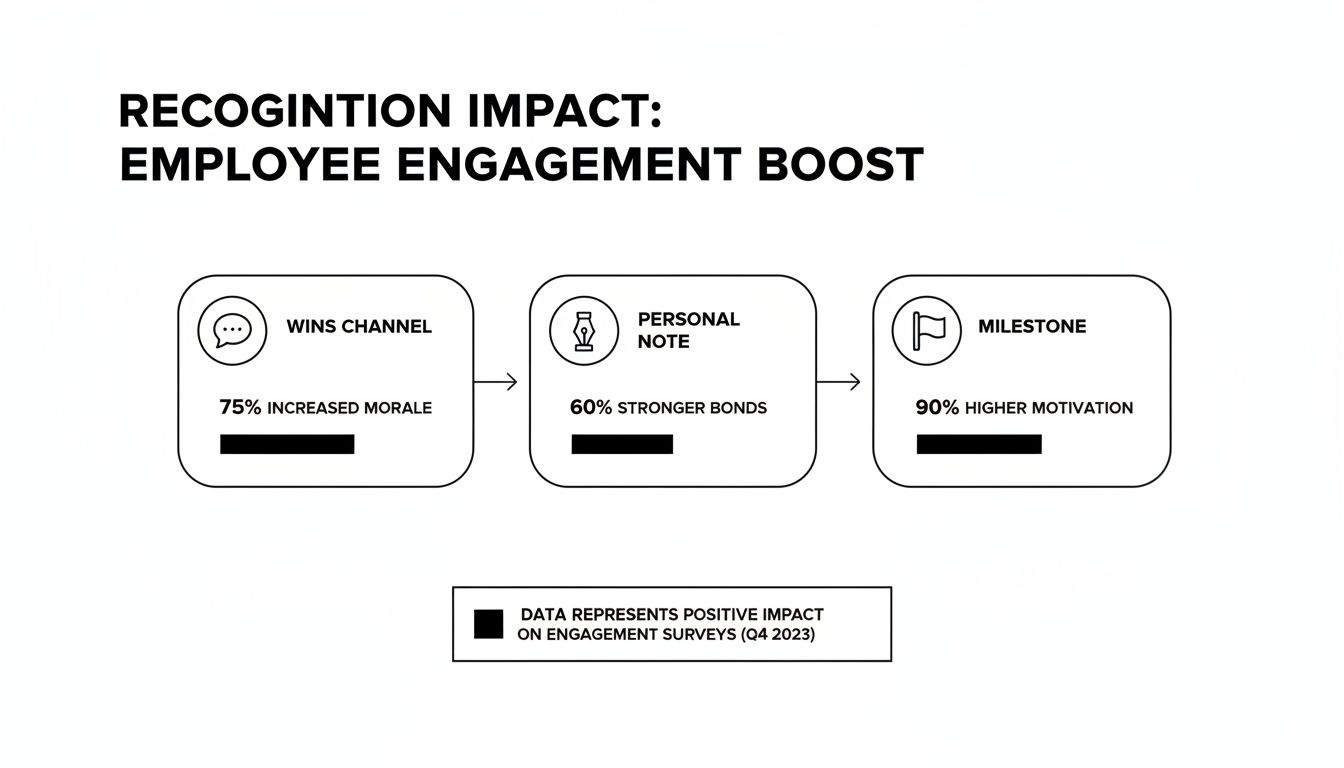
It really highlights that simple, consistent acts—like a personal thank you note or celebrating a work anniversary—go an incredibly long way in making people feel seen and valued.
Normalising Mental Health Conversations
For morale to truly thrive, you need to cultivate a psychologically safe environment. That means taking the stigma out of mental health conversations and making sure support is easy to find and access.
A few simple actions can make all the difference:
- Signpost Your Resources: Make it crystal clear how everyone can access mental health support, whether that’s through company benefits, an EAP, or external charities. Don't hide it in a hard-to-find handbook.
- Train Your Managers: Equip your leaders to spot the early signs of burnout and give them the confidence to have supportive, confidential conversations with their team members.
- Invest in Wellbeing: Consider tangible initiatives that give people a real break, like offering a dedicated day to focus on wellbeing through organised external activities.
By fostering a culture where it's okay to not be okay, you build a foundation of trust and support that is essential for a resilient, high-morale team.
When it comes to boosting morale, you have a range of options, from small, quick wins to more significant cultural shifts. Here’s a look at how some of these initiatives stack up against each other.
Actionable Morale-Boosting Initiatives
| Initiative | Potential Impact | Typical Cost | Implementation Speed |
|---|---|---|---|
| Introduce flexible hours | High | Low | Fast (policy change) |
| Upgrade office coffee & tea | Medium | Low to Medium | Fast |
| Launch a formal recognition programme | High | Medium | Medium (requires planning) |
| Organise regular social events | Medium to High | Medium | Medium (ongoing effort) |
| Provide mental health training for managers | High | Medium | Slow (requires rollout) |
| Redesign a breakout space | Medium | High | Slow |
As you can see, you don't always need a huge budget or a long timeline to make a meaningful difference. Quick, thoughtful changes can have an immediate and positive effect.
Ultimately, championing wellbeing is an ongoing commitment. It’s about consciously protecting your team’s time, energy, and mental health every day. These sustainable habits are the bedrock of any workplace that is genuinely positive, productive, and a great place to be.
Designing a Workspace That Fosters Connection
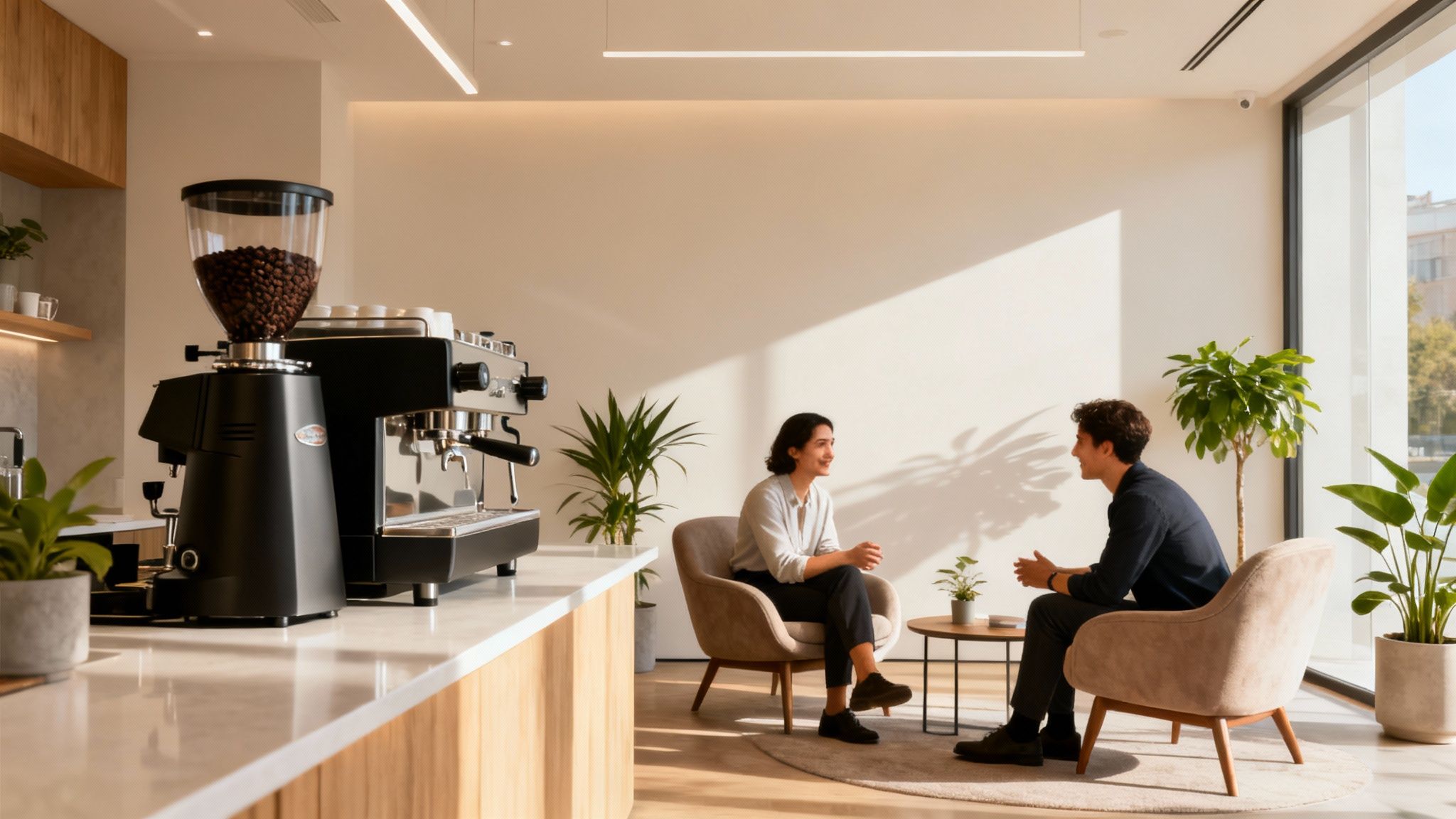
The physical space where your team works does more than just hold desks and chairs. It sends a powerful, unspoken message about your company’s culture and what you value. A drab, purely functional office can quietly drain creativity, while a thoughtfully designed environment can become a genuine catalyst for collaboration and positive energy.
You don’t need a massive budget or a complete overhaul to see a difference. Often, the most impactful changes are simple ones that focus on human comfort. Think about the basics: is the lighting harsh and clinical, or warm and natural? Are there plants to bring a bit of life indoors? Small adjustments can completely transform the atmosphere.
The goal is to shift your office from a place people have to be into a place they actually want to be. By investing in your workspace, you're directly investing in your team's daily experience—and by extension, their morale.
Creating Zones for Different Needs
The one-size-fits-all office layout is a relic of the past. Modern teams are dynamic, and they need different types of spaces to suit different tasks and moods throughout the day. Creating distinct zones can give a serious boost to both productivity and morale.
Try to carve out a few different environments:
- Quiet Zones: Designate a specific area for focused, heads-down work. This could be a small room or just a corner with comfy seating and a clear "no-phone-calls" rule. It gives people a sanctuary from the daily buzz when they need it.
- Collaborative Hubs: Equip meeting rooms and open areas with whiteboards, large screens, and furniture you can move around. Make it easy for teams to gather spontaneously, sketch out ideas, and solve problems together.
- Relaxation Areas: Create comfortable breakout spaces with soft seating, set away from the main work areas. This gives your team a proper place to decompress, have a casual chat, or just take a five-minute mental break.
This approach shows you understand that not everyone works the same way. Giving people the freedom to choose an environment that suits their task is a powerful way to show you trust and respect their individual styles.
When your workspace is designed with real intention, it tells your team that their comfort, focus, and collaboration are priorities. That feeling of being cared for is a fundamental building block of high morale.
The Social Heart of the Office
Every great office needs a central point for social connection—a place where informal conversations can spark new ideas and strengthen team bonds. More often than not, this natural hub forms around the refreshment station.
This is where you have a golden opportunity.
Instead of a sad kettle and a jar of instant granules, imagine a vibrant social heart for your office. A premium, bean-to-cup coffee machine and a curated selection of speciality teas can completely transform this corner of the workplace. It turns a routine coffee run into a genuinely enjoyable ritual.
This small upgrade does more than just provide a better drink; it creates a destination. It becomes a natural magnet for spontaneous chats, where colleagues from different departments can connect and build the informal relationships that are the bedrock of a strong, resilient company culture. It’s a daily, tangible signal that you invest in the small details that make their workday better.
Strengthening Trust With Transparent Communication
Nothing kills morale faster than the feeling of being left in the dark. When your team feels like they’re the last to hear about big decisions or important changes, it creates an undercurrent of instability and mistrust that can do some serious damage. A culture of trust is built on one thing: open, honest, and consistent communication.
This goes way beyond the occasional, highly polished all-hands meeting. Real transparency is about creating channels for genuine, two-way dialogue. It’s about making sure every single person feels like a valued part of the company's journey, not just a spectator.
Opening Up The Dialogue
One of the best ways to build trust is to give people direct access to leadership, but in a relaxed, informal setting. Regular ‘ask me anything’ (AMA) sessions can completely shift the dynamic in an office. These forums give everyone a chance to ask candid questions and get straight answers, breaking down the invisible walls that so often pop up between management and the rest of the team.
When leaders openly talk about business challenges, celebrate the wins, and even admit when they don’t have all the answers, it humanises them. That kind of vulnerability shows respect for the team's intelligence and maturity, and it builds a powerful sense of shared purpose.
The goal of transparent communication isn't just to inform, but to involve. When people understand the 'why' behind decisions, they are far more likely to feel invested in the outcome and contribute their best work.
Creating Actionable Feedback Loops
For communication to truly be a two-way street, you need proper feedback systems where employees feel their ideas are actually heard and considered. That dusty old suggestion box in the corner just won't cut it. You need a process where feedback is acknowledged, reviewed, and—most importantly—visibly acted upon.
Here are a few ways to create a more responsive feedback culture:
- 'You Said, We Did' Updates: Regularly share updates that directly connect employee feedback to company changes. For example, "You told us the project approval process was too slow, so we've streamlined it into two stages."
- Pulse Surveys: Use short, frequent surveys to get a quick snapshot of how the team is feeling. Acting on what you find shows you’re listening and serious about making things better.
- Focus Groups: For bigger topics, bring small, diverse groups of employees together to dive deep into specific issues.
This proactive approach proves that employee voices matter and have a real impact on the business. To take things a step further and strengthen bonds, you could also explore some innovative corporate team building activities. When open communication is paired with strong team relationships, you create an unstoppable positive force.
Your Blueprint for a High-Morale Workplace
Building a workplace with genuine high morale isn't a project you finish; it’s a constant commitment built on thoughtful, consistent action. We've walked through the essentials—authentic recognition, real wellbeing, physical connection, and open communication. The secret lies in weaving these threads into the very fabric of your company culture.
This doesn't have to be a massive, disruptive overhaul. In my experience, the most powerful changes often start small.
Think about a simple but immediate upgrade, like introducing a premium office coffee station. It’s a single move, but it enhances the workspace, signals a tangible investment in your team's wellbeing, and creates a natural hub for the daily interactions that build strong bonds.
True cultural change is the sum of many small, consistent actions. By championing these positive shifts, you are not just improving the office mood—you are building a resilient, engaged, and thriving organisation that stands out.
Start today. Pick one area and make a noticeable improvement. Whether it’s celebrating a team win properly or finally upgrading the break room, each step you take reinforces a culture where people feel genuinely valued.
Ultimately, this commitment is your greatest competitive advantage, turning your workplace into a destination for top talent.
Your Office Morale Questions, Answered
Even with a solid plan in place, it’s natural to have a few lingering questions. When leaders get serious about boosting morale, a few common queries always seem to pop up. Let's dig into them.
Most managers want to know where to start and how to get some quick wins. The secret is that small, consistent actions often deliver the biggest returns.
How Can We Boost Morale Quickly and Cost-Effectively?
Focus on actions with low cost but high impact. Public recognition, for instance, is practically free. You could start a 'kudos' channel on your team chat or make a point of giving shout-outs in meetings. It’s a simple way to celebrate success, validate people’s effort, and build a genuinely positive atmosphere.
Another quick win? Take a look at your communal spaces. Upgrading the office coffee from that dusty tin of instant to a premium bean-to-cup experience is a tangible, daily improvement. Staff will notice it immediately, and it sends a clear message that you’re invested in their wellbeing. It becomes a natural focal point for a chat, all without breaking the bank.
How Can We Measure if Our Efforts Are Working?
You'll want a mix of hard data and human observation. Short, regular 'pulse' surveys are great for tracking engagement levels over time and giving you some real numbers to work with. Keep an eye on key metrics like staff turnover and absenteeism, too—a genuine lift in morale nearly always moves the needle here.
But don’t just live in the spreadsheets. Pay close attention to the vibe in the office. Are people collaborating more freely? Are the conversations in the kitchen more upbeat? This kind of observational feedback is every bit as important as the numbers.
Can Premium Refreshments Really Make a Difference?
Absolutely. It’s not a silver bullet for deep-seated cultural problems, but think of it as a consistent, daily signal that the company cares. A fantastic coffee machine or a curated selection of speciality teas turns a simple break from a necessity into a pleasant ritual.
It creates a natural hub for those informal interactions that are so crucial for building strong team bonds and a positive culture. It's a tangible perk that affects everyone, every single day, reinforcing the idea that their experience at work truly matters.
Ready to make an immediate, positive impact on your team's day? At Ue Coffee Roasters, we provide premium, bean-to-cup coffee and refreshment solutions that elevate the workplace experience. Discover how our office coffee solutions can boost morale.