

How to reduce absenteeism in the workplace: Quick strategies to boost attendance
If you want to get a handle on absenteeism, you have to look beyond the empty desks and sick day logs. The real solution lies in building a culture people want to be part of—a place that actively supports their wellbeing and engagement. This means digging into the root causes, from burnout to feeling undervalued, and tackling them head-on with better policies, smarter management, and an environment that genuinely puts people first.
The True Cost of a Disconnected Workforce
That feeling of a half-empty office isn't just in your head; it's a reality hitting UK businesses hard. Rising workplace absence isn't just an entry on a spreadsheet—it's a disruptive force that sends ripples through every team, project, and deadline.
When a team member is unexpectedly away, the knock-on effect is immediate. Colleagues are forced to pick up the slack, which piles on the stress and pushes them closer to burnout. Project timelines start to slip, creative energy drains away, and the momentum that drives a business forward begins to stall. The financial hit is obvious, but the hidden costs to morale and productivity are often far worse.
This infographic lays out just how sharply UK workplace absence has climbed since the pandemic.
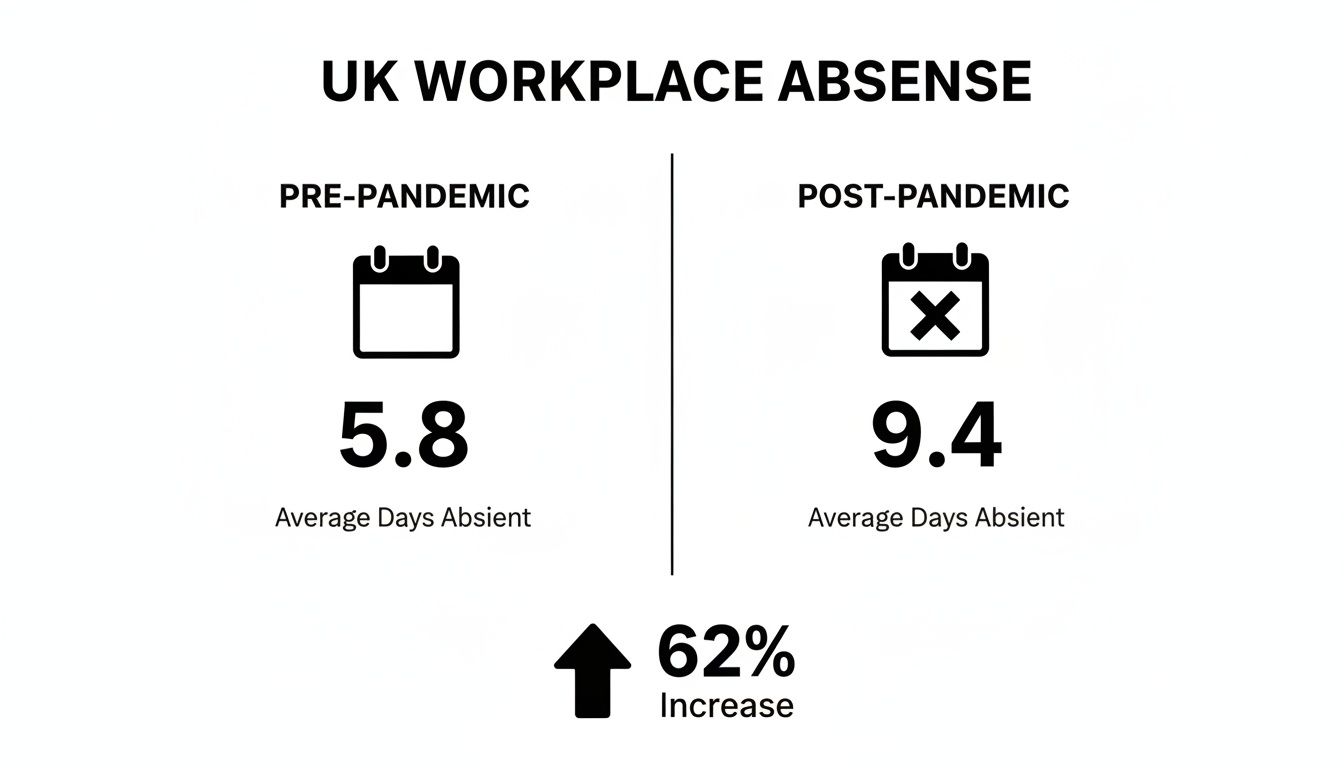
The numbers make it clear: this isn't just a minor blip. It's a major cultural shift in employee attendance that needs your attention now.
Beyond the Empty Desk: The Threat of Presenteeism
The direct cost of sick days is only half the story. The other, more insidious problem is presenteeism—when employees show up to work but are so mentally and emotionally checked out that they can’t contribute meaningfully. They’re physically at their desks, but their productivity, creativity, and enthusiasm are gone.
This phenomenon can be even more damaging than someone taking a day off. It quietly erodes team morale, spreads negativity like a virus, and leads to subpar work that can tarnish a company's reputation.
An employee who is present but not engaged can cost a business far more in lost productivity than one who stays home. Tackling the root causes of disengagement isn't just an HR nice-to-have; it's a critical strategy for long-term success.
Recent research highlights the sheer scale of this challenge. In the UK, absenteeism has shot up, with employees now missing an average of 9.4 days per year. That's a staggering 62% increase from the pre-pandemic average of just 5.8 days. You can dig into the full CIPD and Simplyhealth research behind this dramatic rise in workplace absence rates.
This isn't just about people catching more colds. It points to a much deeper issue with employee wellbeing, where mental health struggles and chronic conditions are on the rise. Acknowledging this trend is the first step toward building a more resilient, connected, and present workforce.
Uncovering the Real Reasons People Stay Home
To get a real handle on absenteeism, you have to look beyond the surface-level excuses. It's all too easy to assume people are off because they're lazy or just not committed, but that's a mistake that stops leaders from seeing the bigger picture.

More often than not, repeat absences are a symptom of something much deeper. We're talking about anything from personal health struggles and family emergencies to workplace-specific problems like burnout, chronic stress, or just feeling completely disconnected from the team's purpose. The only way to get to the bottom of it is to create a space where people feel safe enough to talk openly.
Moving Beyond Assumptions with Empathy
Before you can even think about solutions, you need honest information. This means ditching the suspicion and leading with support. When an employee genuinely believes their manager cares about their wellbeing, they're far more likely to open up about what's really going on.
This simple shift opens the door to meaningful conversations that can shine a light on systemic issues you’d otherwise miss entirely. Is one particular project causing burnout across the board? Are workloads completely lopsided? You'll never know unless you ask.
The most powerful tool you have for reducing absenteeism is empathy. Understanding the 'why' behind an absence allows you to address the root cause, not just the symptom, fostering a culture of trust and support where people feel valued and understood.
Practical Methods for Gathering Honest Feedback
Of course, getting this feedback requires more than just asking. You need to build safe, structured channels for communication where employees can be vulnerable without worrying about judgement or negative consequences.
A great place to start is by using effective employee satisfaction survey questions to understand the underlying issues.
Here are a few proven ways to get that honest feedback:
- Confidential Wellness Surveys: Ask specific questions about workload, stress levels, and management support. The key here is anonymity—it's what encourages people to be truly candid and helps you spot trends across the whole organisation.
- Structured One-on-One Check-ins: These meetings need to be more than just a project status update. Make dedicated time to ask how your team members are really doing. Try open-ended questions like, "What's one thing we could change to make your work life better?"
- Return-to-Work Conversations: Reframe these chats. They aren't interrogations; they're supportive check-ins. The goal is simply to understand if there are any lingering issues or workplace adjustments that could help them get back on their feet and thrive.
By putting these diagnostic tools to work, you stop reacting to absences and start proactively building an environment that truly supports wellbeing. You'll create a workplace where people don't just feel looked after—they feel genuinely inspired to show up and do their best work.
Building a Culture That People Want to Be a Part Of
Once you've dug into the 'why' behind absences, it's time to build a workplace that people genuinely want to show up for. This isn’t about just plugging leaks; it's about creating a culture so positive and supportive that coming to the office feels less like an obligation and more like a destination.
It’s a shift from surface-level perks to meaningful initiatives that build real connections and ease the daily grind that so often leads to burnout. To create a space that buzzes with energy, you need to lean on effective employee motivation strategies that encourage people to be present and participate. The best place to start? By seeing the day-to-day through your team's eyes.
Elevating the Daily Office Experience
Think about the small moments that define an employee's day: the first-morning greeting, that mid-afternoon energy dip, the quick chat between meetings. These are the touchpoints where your culture is either strengthened or weakened. Investing in these moments is one of the most powerful ways to show you're paying attention.
One of the simplest yet most effective ways to do this is by turning a simple break into a restorative ritual. A premium refreshment station isn’t just about providing drinks; it’s a tangible sign that you value your team’s wellbeing and comfort.
A high-quality, bean-to-cup coffee machine, for instance, does so much more than just serve caffeine. It becomes a natural hub for connection, a place where colleagues can step away from their screens, recharge together, and return to their work feeling genuinely refreshed. When you offer truly great coffee, speciality teas, and other thoughtful options, you're not just offering a perk—you're investing in daily morale.
The Clear Link Between Stress and Amenities
This kind of investment directly tackles one of the biggest drivers of absenteeism: stress. The statistics on workplace stress in the UK are frankly alarming. Work-related stress is responsible for 17.1 million lost working days every year, accounting for half of all ill-health cases.
This stress directly fuels both absenteeism and the phenomenon of 'presenteeism,' where employees are physically present but mentally checked out, costing an estimated 44 lost productive days per worker.
Thoughtful amenities act as a crucial buffer. They offer small moments of relief and enjoyment that make a demanding day feel more manageable. It's a practical, everyday demonstration of a supportive culture in action.
Creating a workplace people love isn’t about grand, expensive gestures. It's about consistently showing you care in small, thoughtful ways that improve the daily grind and make people feel seen, valued, and supported.
To truly make a dent in absenteeism, you have to prioritise initiatives that deliver genuine, lasting value over those that are merely 'nice-to-have'. It's about understanding what moves the needle versus what just looks good on a recruitment page.
This table breaks down the difference between high-impact strategies and low-impact perks.
High-Impact Wellbeing Initiatives vs Low-Impact Perks
| Initiative Type | High-Impact Example (Drives Presence) | Low-Impact Example (Nice-to-Have) |
|---|---|---|
| Wellbeing Support | Flexible working policies that accommodate real-life needs. | Occasional free yoga classes that few can attend. |
| Work Environment | Premium refreshment hub with speciality coffee and teas. | A rarely used ping-pong table in the corner. |
| Recognition | Consistent, public praise for great work during team meetings. | An annual "Employee of the Month" award. |
| Management | Training for managers on empathetic leadership and communication. | A generic open-door policy that isn't actively used. |
Choosing high-impact strategies sends a clear message. You aren’t just trying to look like a great place to work; you are actively building a culture that supports its people, fosters resilience, and makes the office a place where your team can thrive.
Laying the Groundwork with Supportive Policies and Management
A great company culture isn’t just about good intentions. It needs a solid framework of supportive policies and thoughtful management to really take hold. While a brilliant office atmosphere makes people want to come to work, it’s your official policies that show them they’re supported through life’s inevitable curveballs. This is how you turn values into real-world actions that get absenteeism under control.

The aim here is to build a system that empowers everyone—from your employees right up to your managers. When policies are clear, fair, and designed with a bit of human empathy, they create the mutual respect and trust that form the bedrock of consistent attendance. It’s about building a safety net, not a rulebook for punishment.
This is especially critical when you look at different working environments. For instance, UK public sector workers average 10.6 sickness days a year, which is significantly higher than in the private sector. These numbers highlight how sector-specific pressures can fuel absenteeism. And while private offices often have more leeway to bring in wellbeing perks, the need for a strong policy framework is universal. You can dive deeper into a full analysis of the factors driving UK absenteeism rates in 2025.
Designing Flexible Policies for Modern Life
Let's face it, today’s workforce is juggling more than ever. Rigid, one-size-fits-all attendance policies just don't reflect the reality of modern life anymore. Worse, they can end up punishing your best people for situations completely out of their control. Building in flexibility is a massive signal of trust.
Think about introducing arrangements that acknowledge this reality:
- Hybrid Working Models: A structured mix of in-office and remote days can be a game-changer, helping people balance professional duties with personal appointments and family commitments.
- Flexible Start/End Times: Letting staff tweak their hours—maybe starting earlier to make the school run—can slash stress-related absences.
- Compressed Hours: The option to work contracted hours over fewer days gives people longer weekends to properly switch off and recharge.
This isn't about letting people work whenever they feel like it. It's about providing structured, sensible options that accommodate real life, removing the common friction points that often lead to unplanned time off.
Training Managers to Be Your First Line of Support
Your managers are the most important piece of your attendance strategy. A good manager can spot the early signs of burnout or personal distress and step in with support before it becomes a long-term absence. But that’s a skill, and it doesn't always come naturally.
A return-to-work interview should feel like a supportive catch-up, not a disciplinary hearing. The focus needs to be on understanding what the employee needs to get back on their feet and reintegrate smoothly. That’s how you build trust and encourage honesty.
You have to invest in training that gives your leaders the right tools. Focus on the "soft skills" that have a hard impact on attendance figures. We’re talking about active listening, asking open-ended questions about wellbeing, and knowing exactly how to point employees towards resources like mental health support or HR. When managers lead with compassion, they build teams that are resilient, engaged, and consistently there.
Measuring Your Progress and Refining Your Approach
Launching new wellbeing initiatives and updating policies is a fantastic start, but how do you actually know if any of it is working? To really get a grip on absenteeism, you need to move beyond guesswork. It’s all about embracing a data-driven mindset. This isn't just about crunching numbers; it's about telling a compelling story about what’s working, securing future investment, and tweaking your approach for the best possible results.
Measuring success isn't just about watching the absence rate go down, although that's obviously a key goal. A more holistic view gives you much deeper insights into the cultural shifts you're hoping to inspire. The trick is to track a balanced set of metrics that paint a complete picture of how your employees are feeling and performing.
Key Performance Indicators to Track
To understand the real return on your investment, you've got to look beyond simple attendance figures. Often, the most insightful data comes from measuring how people feel about their work environment and their place in it.
Start by keeping an eye on these essential KPIs:
- Employee Satisfaction Scores (eNPS): Regularly survey your team to get a read on their overall happiness. A rising eNPS score is a brilliant indicator of a healthier, more positive culture.
- Engagement Survey Results: This is where you dig into the specifics. Look for feedback on management support, workload, and a sense of belonging. Are people feeling more connected and valued since you rolled out your new initiatives?
- Team Productivity Metrics: Track things like project completion rates and output quality. When people are present, engaged, and happy, their performance naturally improves. This creates a direct, tangible link between wellbeing and business outcomes.
- Staff Turnover Rates: A drop in voluntary resignations is one of the most powerful signs you can get. It shows that your supportive policies and improved environment are making people want to stick around.
A data-driven approach transforms your efforts from "nice-to-have company perks" into strategic business investments. By tracking the right KPIs, you can clearly show the real-world impact of a supportive culture on both your people and your bottom line.
Adopting a Mindset of Continuous Improvement
The best strategies are never set in stone; they grow and adapt based on feedback and results. Don’t be afraid to experiment and see what sticks. A brilliant way to test new ideas without committing your entire budget is to run a pilot programme.
For instance, you could trial a new flexible working arrangement with just one department. Or, why not install a premium coffee station on a single floor to see how it affects morale and informal collaboration?
By collecting data from this smaller group over a few months, you can accurately measure its impact on their attendance, satisfaction, and productivity. This gives you a solid business case before rolling the initiative out company-wide, ensuring your resources are always channelled towards what genuinely works for your team.
Tackling Tricky Absence Scenarios
Navigating employee absence can throw up some tough situations. As a manager or HR leader, you're bound to run into grey areas. Here are some practical ways to handle the most common challenges when trying to reduce absenteeism.
What to Do When an Employee Doesn't Think Their Absences Are a Problem
This is a classic mismatch of perception, and the best way forward is with clear, data-driven communication. This is where a rock-solid attendance policy is your best friend—one that clearly defines what "excessive" actually means.
When you sit down to chat, bring the facts, not feelings. Show them their attendance record, point out the pattern you’ve noticed, and explain the knock-on effect it has on their teammates and the workflow. The conversation shouldn't be about blame; it's about connecting their attendance back to the standards everyone agrees to in the company handbook. This moves the discussion from a difference of opinion to the real-world impact on the business.
How to Manage Absences for Chronic Health Conditions
This one requires real care. You need to find a balance between empathy, genuine support, and your legal responsibilities. Always start with a private, supportive conversation. The goal is to understand their situation without prying for medical details they aren't comfortable sharing.
Your next step should be to loop in HR. They’re there to make sure you're offering the right support, which could include exploring reasonable adjustments like flexible hours or a temporary shift in duties. You’re aiming to support their wellbeing while keeping the business running smoothly, showing you’re a compassionate employer who wants to find a solution that works for everyone.
High absenteeism isn't just about individuals. If you're seeing it across the board, treat it as a symptom of a deeper organisational issue. It could be a red flag for low morale, ineffective management, or even a toxic culture that needs sorting out, fast.
What If You Suspect Someone Is Abusing Their Sick Leave?
Tread very carefully here. Direct accusations will only destroy trust and could land you in hot water. Instead, start with a conversation framed around their wellbeing and mention the pattern you’ve seen in a non-confrontational way.
If things don't improve, it's time to consistently enforce your company’s policy on requiring a doctor's note for absences. The key word here is consistently—apply the rule to everyone to avoid any claims of unfair treatment. Always follow your established procedures and get HR involved to ensure you’re on solid legal and ethical ground. It’s a structured approach that keeps things fair while nipping the problem in the bud.
Ready to create a workplace people genuinely want to be part of? Ue Coffee Roasters provides premium, bean-to-cup coffee and refreshment solutions that boost morale and make your office the place to be. Discover how our speciality coffee can transform your daily culture and help reduce absenteeism by visiting https://www.uecoffeeroasters.com.