

Master the Art of Making Cafetiere Coffee
Brewing with a cafetiere is all about slowing down and savouring the moment. It’s a simple, hands-on method: you steep coarse coffee grounds in hot water for about four minutes, then gently press a mesh filter down to separate the grounds. The result is a wonderfully aromatic, rich, and full-bodied cup of coffee.
The Enduring Ritual of Cafetiere Coffee
In a world obsessed with speed and convenience, the cafetiere stands as a quiet tribute to the art of patience. It’s more than just another way to make coffee; it’s an invitation to take part in a mindful ritual. The simple act of measuring your grounds, pouring the water, and just waiting for the magic to happen turns a routine task into a genuine moment of connection.
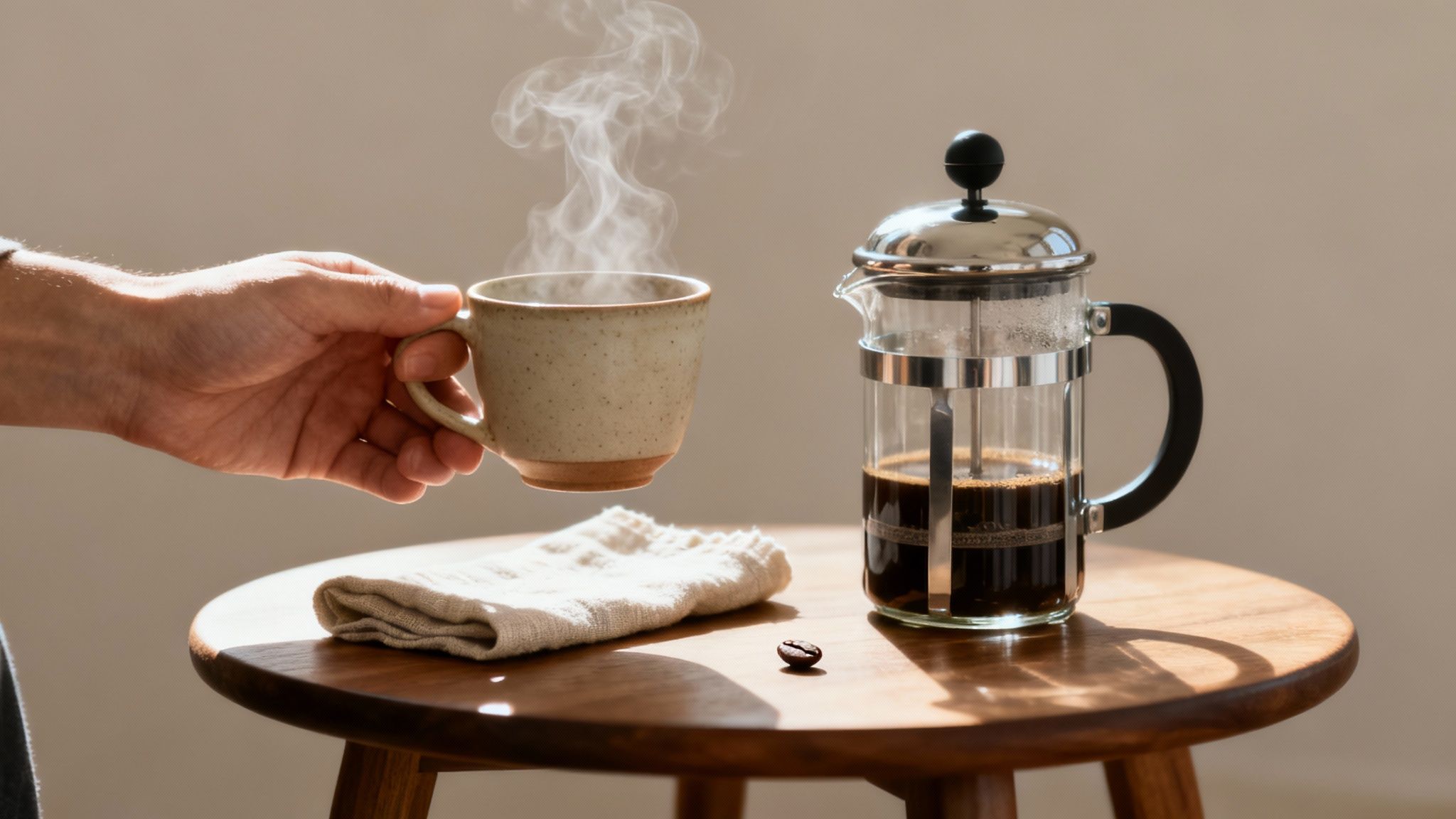
This hands-on approach is exactly why so many coffee lovers are moving away from instant alternatives. While the cafetiere is a staple for many UK enthusiasts, our coffee habits have long leaned towards speed. In fact, 80% of UK households were still buying instant coffee in 2025, particularly those aged 65 and over.
But a real cultural shift is happening. Ground coffee is seeing a steady rise in popularity, especially among millennials, who now make up 16% of ground coffee buyers.
Why the Ritual Matters
The real magic of cafetiere coffee is in the exceptional flavour it delivers. Unlike paper filters, which can trap and strip away the coffee’s natural oils, the metal mesh filter lets all those flavourful compounds pass straight into your cup. This gives you a brew with:
- A rich and full body: The coffee has a heavier, more satisfying texture and mouthfeel.
- Complex flavour profiles: Those oils carry the most intricate notes from the beans, creating a much more nuanced taste.
- A beautiful aroma: The open brewing process fills your kitchen with the incredible scent of fresh coffee.
The cafetiere doesn’t just make coffee; it celebrates it. It reminds us that the best things in life often require a little time and attention, rewarding our patience with an experience that truly nourishes the senses.
This commitment to quality has turned the humble cafetiere into a symbol of great home brewing. It’s an accessible art form, allowing anyone to elevate their daily routine into something special. For those who appreciate this ritual and want to share the passion, there are some fantastic gifting ideas for coffee lovers and baristas out there.
Getting Your Kit Together
Making a truly great cafetiere coffee doesn't start when you pour the water. It begins with getting the right tools for the job. This isn't about collecting expensive gadgets; it’s about understanding how a few simple, quality items work together to create that perfect brew.
Your cafetiere is, of course, the main event. They come in all sorts of sizes, from a single-cup pot just for you to larger ones for sharing. Think about the material, too. Glass is a classic choice, letting you watch the magic happen, while stainless steel is brilliant for keeping your coffee hot and is tough enough for a busy kitchen or even a camping trip.
Start with Great Coffee Beans
The heart and soul of your drink is the coffee itself. While pre-ground coffee is tempting for its convenience, switching to whole beans is the single biggest upgrade you can make. Whole beans lock in all the delicate, aromatic oils that start to disappear the moment they’re ground, giving you a vibrant flavour that pre-ground just can't compete with.
So, what beans should you choose? Think about what you enjoy. Are you after something bright and fruity, or do you prefer those deeper, chocolatey notes? Don't be shy about exploring beans from different parts of the world.
This thoughtful approach is becoming the norm. UK coffee drinkers are increasingly interested in where their coffee comes from and how it's produced. In fact, by 2025, a huge number of UK coffee lovers are actively looking for information on the origin and environmental impact of their beans. Many are choosing premium, traceable coffee to support fair trade and reduce their carbon footprint. You can dig into these UK coffee consumption statistics to see just how much conscious consumerism is shaping the market.
The All-Important Coarse Grind
Once you've got your beans, the grind is the most critical detail. For a cafetiere, you absolutely need a coarse and consistent grind. Picture the texture of rough sea salt, not fine beach sand.
A coarse grind is the secret to a clean, grit-free cup. It allows for a balanced extraction over the four-minute brew time without letting fine particles slip through the mesh filter, which is what causes that unpleasant muddy sediment at the bottom of your mug.
This is where a good burr grinder really earns its keep. Unlike blade grinders that just smash beans into a mix of dust and chunks, a burr grinder gives you uniform particles. That consistency is key—it means every little bit of coffee extracts its flavour at the same rate, giving you a beautifully balanced brew, every single time.
To help you visualise it, here’s a quick rundown of how grind size changes for different brewing methods.
Grind Size Guide for Different Brewing Methods
| Brewing Method | Recommended Grind Size | Appearance | Why It Works |
|---|---|---|---|
| Cafetiere (French Press) | Coarse | Like sea salt | Prevents over-extraction and sediment passing through the filter. |
| Drip Coffee Maker | Medium | Like granulated sugar | Allows for steady water flow and balanced extraction. |
| Pour-Over (e.g., V60) | Medium-Coarse | Slightly finer than sea salt | Provides the right resistance for a controlled pour and clean cup. |
| Espresso Machine | Fine | Like table salt or flour | Creates high pressure needed for a fast, concentrated extraction. |
As you can see, getting the grind right for your chosen method is fundamental to the final taste. For the cafetiere, coarse is king.
Don't Forget the Water
Finally, let’s talk about water. It might seem basic, but your final cup of coffee is over 98% water, so its quality makes a huge difference. Tap water, especially in hard water areas of the UK, often contains minerals and a hint of chlorine that can easily overpower the delicate notes in your coffee.
Using simple filtered water is an easy win. It gives you a clean, neutral canvas, allowing the true character of your beans to shine through without anything getting in the way. It’s a small step that ensures all your careful preparation pays off in the final taste.
Your Perfect Cafetiere Brewing Method
Right, this is where the magic happens. Making great cafetiere coffee isn't about following a rigid set of rules; it's more like a mindful ritual. Each part of the process, from warming the pot to that final, gentle plunge, is a chance to craft something genuinely special.
First thing’s first, and it’s a tiny step that makes a huge difference. Before you even think about adding coffee, fill your cafetiere with a bit of hot water from the kettle. Let it sit for a minute to warm up the glass. This simple act stops the brewing temperature from dropping suddenly later, giving you a much more balanced and consistent extraction.
The Golden Ratio of Coffee to Water
Once your cafetiere is nicely warmed, it's time to talk ratios. The industry standard, and a fantastic place to start, is the "golden ratio" of 60 grams of coffee per litre of water. For a typical 2-cup cafetiere (which holds about 500ml), that means you'll need around 30 grams of coffee.
Using digital scales is the best way to keep things consistent day after day, but don't feel locked in. Think of this ratio as your reliable baseline. If you find you prefer a stronger, bolder cup, try nudging it up to 65 or even 70 grams per litre. The real beauty of making coffee this way is tweaking it until it's perfect for you.
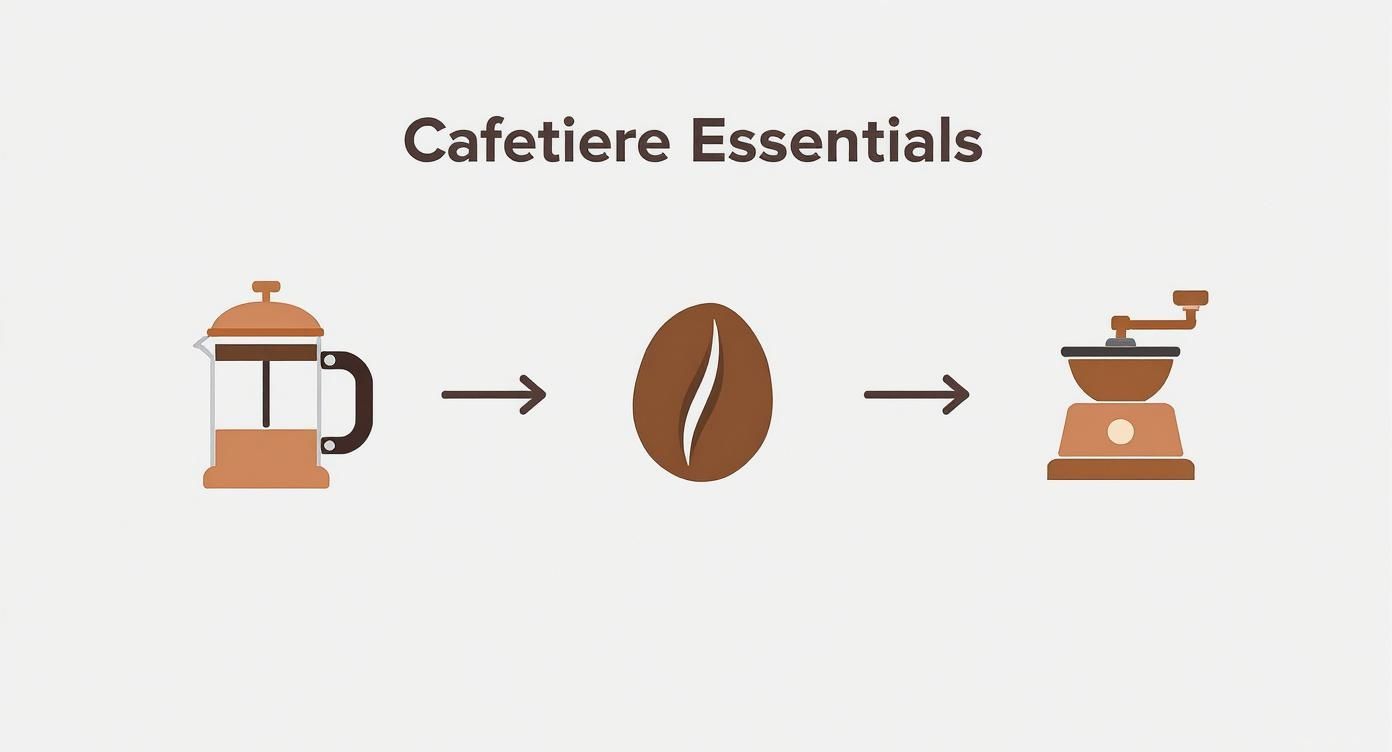
This simple visual breaks down the journey from the whole bean to the final brew, reminding us that every single element plays a crucial part.
Unlocking Flavour with the Bloom
With your coarsely ground coffee now in the warmed pot, we get to my favourite part of the process—the bloom. Boil your kettle, then let it stand for about 30-45 seconds. The ideal temperature for a cafetiere is just off the boil, somewhere between 92-96°C. This stops the water from scorching the delicate grounds.
Now, gently pour just enough of that hot water to completely saturate the grounds—about twice the weight of the coffee is a good guide. You’ll see the coffee bed swell up and bubble. That’s the bloom. It’s the release of trapped CO2 from the fresh beans, and it's what unlocks the most aromatic and complex flavours. Give it 30 seconds.
"The bloom is the coffee's first breath. It's a sign of freshness and the moment your brew truly comes to life, releasing its full aromatic potential before the main extraction even begins."
After that brief pause, pour the rest of your water in a slow, steady circle to make sure all the grounds are evenly soaked. Pop the lid on with the plunger pulled all the way up. This traps the heat, and now, all you have to do is wait.
The Four-Minute Steep and Gentle Plunge
Set a timer for four minutes. For most coffees, this is the sweet spot. It’s long enough for the water to pull out all those rich oils and desirable flavours without straying into bitter territory.
When the timer goes off, it's time for the plunge. The key here is to go slow and steady. Whatever you do, resist the urge to slam the plunger down quickly. All that does is stir up the fine sediment at the bottom, forcing it through the mesh filter and leaving you with a muddy, gritty brew.
Apply gentle, even pressure. A slow plunge that takes around 15-20 seconds will keep that bed of grounds settled and deliver a much cleaner cup. A perfect cafetiere brew relies heavily on getting the grind right, so it's always worth consulting an ultimate coffee grind size chart if you're ever in doubt.
Once the plunger hits the bottom, your coffee is ready. Pour it immediately and enjoy.
How to Elevate Your Brew from Good to Great
Once you’ve nailed the basics, the real fun begins. This is where you move beyond simply following a recipe and start developing an intuition for what your coffee needs to truly shine. It’s the difference between a good cup and a genuinely memorable one.
Think of your cafetiere less as a simple brewer and more as a tool for flavour exploration. Every coffee bean has its own unique character, and your technique is what allows that character to come through.
Fine-Tuning Your Extraction
Extraction is the heart and soul of brewing. Your goal is to hit that perfect sweet spot—pulling out all the complex, desirable notes without straying into the territory of bitterness. Luckily, you have a few levers you can pull to get it just right.
Grind size is a great place to start. While a coarse grind is the standard advice for a cafetiere, tweaking it slightly can have a massive impact. For a light-roast bean, for instance, a slightly finer grind can help you extract more of its delicate, fruity notes and give the final cup a richer body. It’s a subtle shift, but it can completely change the profile of your brew.
Water temperature is another powerful variable. If your coffee is tasting a bit flat or underwhelming, try bumping the temperature up to around 96°C. This can help draw out more brightness and acidity. On the other hand, if you’re getting harsh, overly bitter notes, dropping the temperature by a degree or two can mellow things out beautifully.
The single most important secret to exceptional cafetiere coffee is this: never, ever let the coffee sit on the grounds after brewing. Once you’ve plunged, pour every last drop out immediately.
If you leave the brew in the pot, the grounds at the bottom will just keep on extracting. All your careful work gets undone as bitter compounds slowly leach into your coffee. This is easily the most common mistake people make, and fixing it is the quickest win you’ll get.
Advanced Techniques for a Cleaner Cup
If you’re chasing that ultra-clean, refined cup, a couple of extra steps can make all the difference. These techniques are all about minimising the fine sediment—the 'silt'—that can sometimes create a muddy texture in the final cup.
One popular method is to delay the plunge. After your usual four-minute steep, give the surface a very gentle stir to break the crust, then just wait for another minute or two. This pause gives the vast majority of the coffee grounds time to settle naturally to the bottom.
When you finally do plunge, don't press the filter all the way down. Stop about halfway. This creates a barrier that holds back the settled grounds, letting you pour a much cleaner, brighter coffee from the top layer. It’s a simple trick, but one that many pros use to refine the final texture.
These little adjustments are your next step toward mastering the cafetiere. They aren't complicated, but they are powerful ways to tailor every single brew to your exact preference, turning a daily routine into a moment of genuine craft.
Troubleshooting Your Common Cafetiere Problems
Even when you follow all the steps perfectly, some days your coffee just doesn't hit the mark. Don't sweat it—every coffee lover has been there. A disappointing cup isn't a failure; it's a chance to fine-tune your technique and understand the little details a bit better.
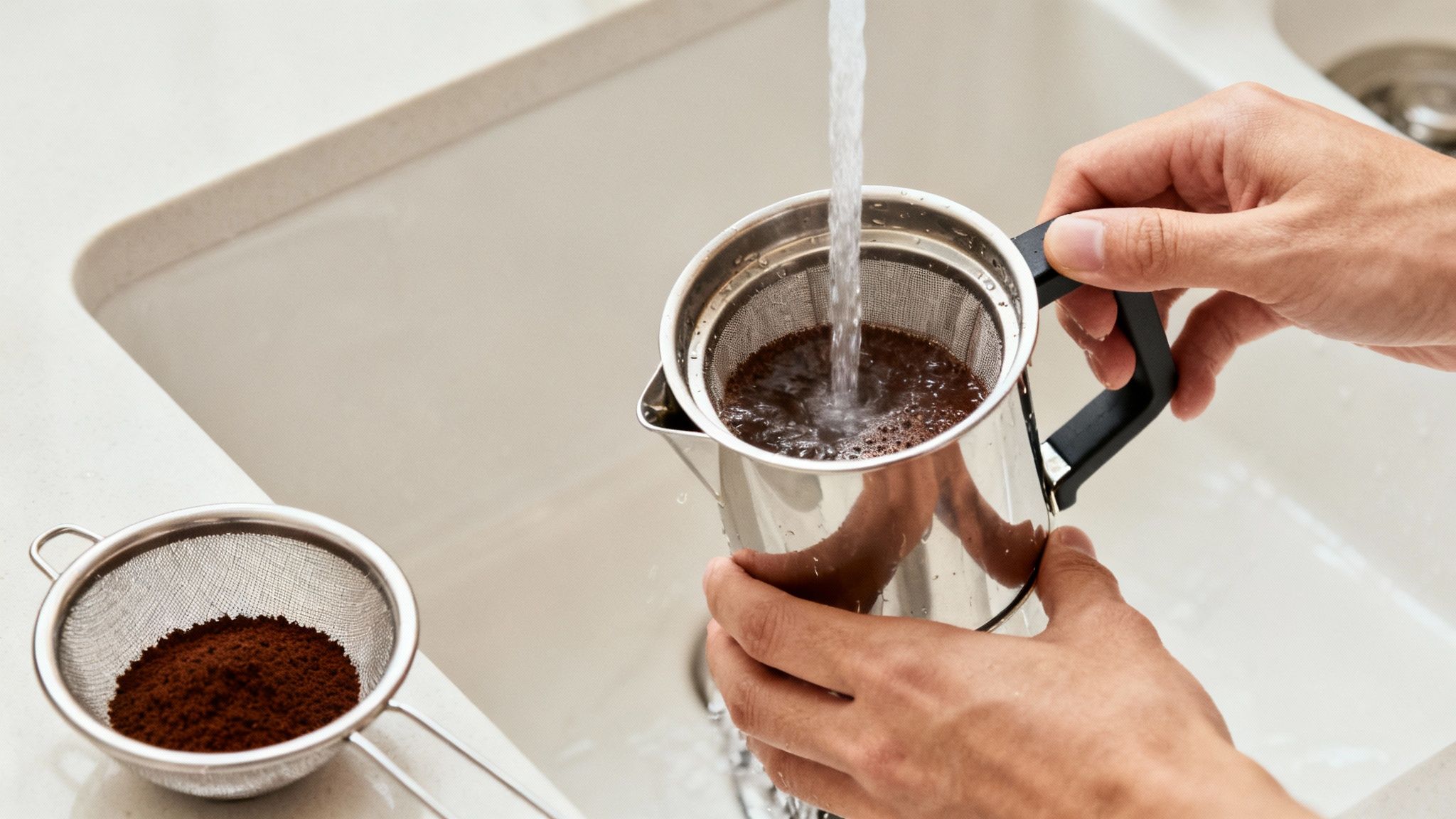
Mastering the cafetiere is really a journey of small, satisfying refinements. Most brewing issues can be traced back to just a handful of variables, and figuring out which one is the culprit is the first step toward that perfect cup.
The rise of the cafetiere in the UK is tied closely to the boom in specialty coffee culture. A few years ago, you'd be lucky to find one in most kitchens, but its popularity has soared. This is especially true for younger coffee drinkers. A 2025 breakdown showed that 16% of UK millennials (aged 16–34) buy ground coffee, a habit shared by just 8% of those aged 65 and over. You can find more fascinating stats in these UK coffee consumption statistics on balancecoffee.co.uk.
Solving Weak or Bitter Flavours
Does your coffee taste thin, watery, or maybe even a little sour? This is an almost certain sign of under-extraction. It means the water didn't have enough time, or wasn't quite hot enough, to pull out all the deep, sweet flavours locked inside the grounds.
On the flip side, if you're getting a harsh, bitter, or astringent taste that coats your tongue, you’re looking at over-extraction. In this case, the water has pulled too much from the coffee, including all the unpleasant, bitter compounds that should have been left behind.
Coffee brewing is all about finding that sweet spot. If your brew is off, one of these common issues is usually the reason. This quick table should help you diagnose the problem and get your next cup tasting just right.
Common Cafetiere Issues and How to Fix Them
| Problem | Likely Cause | Solution |
|---|---|---|
| Weak & Watery | Your grind is too coarse, your water isn't hot enough, or your steep time is too short. | Try making your grind a touch finer or letting it steep for an extra 30-60 seconds. |
| Bitter & Harsh | The grind is too fine, the water is boiling hot, or it's been steeping for far too long. | Go for a coarser grind, let your kettle sit for 45 seconds after boiling, or shorten the steep time. |
This reference should cover the vast majority of flavour problems you'll encounter. Remember, small adjustments make a big difference!
The Gritty Coffee Conundrum
The number one complaint I hear from people new to the cafetiere is about the silty sludge at the bottom of their mug. That grit is a direct result of fine coffee particles sneaking right past the metal mesh filter.
The secret to a clean, grit-free brew comes down to two things: using a consistent, coarse grind and plunging with a slow, steady hand. If you push the plunger down too fast, you force all those fine particles straight through the filter and into your cup.
If you’re still getting sediment after a gentle plunge, take a closer look at your coffee grounds. If your grinder produces a lot of "fines"—powdery dust mixed in with the coarse bits—it might be time to think about upgrading to a quality burr grinder.
Keeping Your Cafetiere Clean
Finally, you can’t make great coffee in a dirty brewer. Proper cleanup is non-negotiable. First rule: never tip used grounds down the sink unless you enjoy calling a plumber. Scoop them into the bin or, even better, add them to your compost pile.
After every use, give the plunger and jug a good rinse with hot water. Once a week or so, it's a good idea to completely disassemble the plunger's filter assembly and give it a deep clean. Soaking the metal parts in a dedicated coffee equipment cleaner—or even a simple solution of bicarbonate of soda and hot water—will dissolve the oily residue that builds up over time. If you don't, that residue can turn rancid and taint the flavour of every coffee you make.
Your Cafetiere Coffee Questions Answered
Even after you’ve got the basics down, a few questions always seem to pop up on the journey to the perfect brew. Let’s tackle some of the most common ones I hear, so you can keep making cafetiere coffee with total confidence.
Think of these as the finishing touches to your newfound expertise.
Can I Use Pre-Ground Coffee in My Cafetiere?
You can, but I really wouldn’t recommend it. Most pre-ground coffee is milled for drip machines, which is far too fine for a cafetiere. This almost always leads to over-extraction, leaving you with a bitter, sludgy cup as fine particles slip right through the filter.
For the cleanest flavour and that classic, rich body, always start with whole beans and go for a coarse grind. It makes all the difference.
How Long Should Coffee Sit After Plunging?
This is a big one, and it separates a great cup from a truly bitter one. You need to pour the coffee immediately after plunging. Don’t leave it sitting in the pot.
Even after you’ve pressed the plunger down, the coffee is still in contact with the grounds at the bottom. This means it’s still extracting, and it will quickly turn a beautifully balanced brew into a harsh, astringent drink. Decant the entire batch into your mugs or a separate server right away to lock in that perfect flavour.
Getting into this one habit will dramatically improve the quality of your daily coffee.
What Is the Best Way to Clean a Cafetiere Filter?
A clean filter is non-negotiable for fresh-tasting coffee every single time. For a quick daily clean, a simple rinse with hot water will do the trick. But over time, coffee oils build up, turn rancid, and will absolutely taint your future brews.
To stop that from happening, give it a proper deep clean every now and then:
- Unscrew the entire filter assembly at the bottom of the plunger. It usually comes apart in three or four pieces.
- Soak the metal components in a solution of hot water and a specialised coffee equipment cleaner.
- After about 20 minutes, use a soft brush to gently scrub away any lingering residue and then rinse everything thoroughly.
This keeps your gear in top nick, ensuring that every cup tastes exactly as you intended.
Ready to bring the quality of a high-street café into your workplace? At Ue Coffee Roasters, we supply premium speciality coffee and state-of-the-art bean-to-cup machine solutions designed to boost morale and create a fantastic office culture. Discover how our coffee can transform your team's day at https://www.uecoffeeroasters.com.