

Your Guide to Specialty Coffee Beans
Think about your morning coffee for a moment. Is it just a routine, a quick caffeine hit to get the day started? Or could it be something more?
That’s the promise of specialty coffee. It's not about a stronger brew or a different label; it's an invitation into a world of incredible flavour, meticulous craftsmanship, and a passion that all starts with one, single, high-quality specialty coffee bean.
A Journey Beyond the Everyday Brew
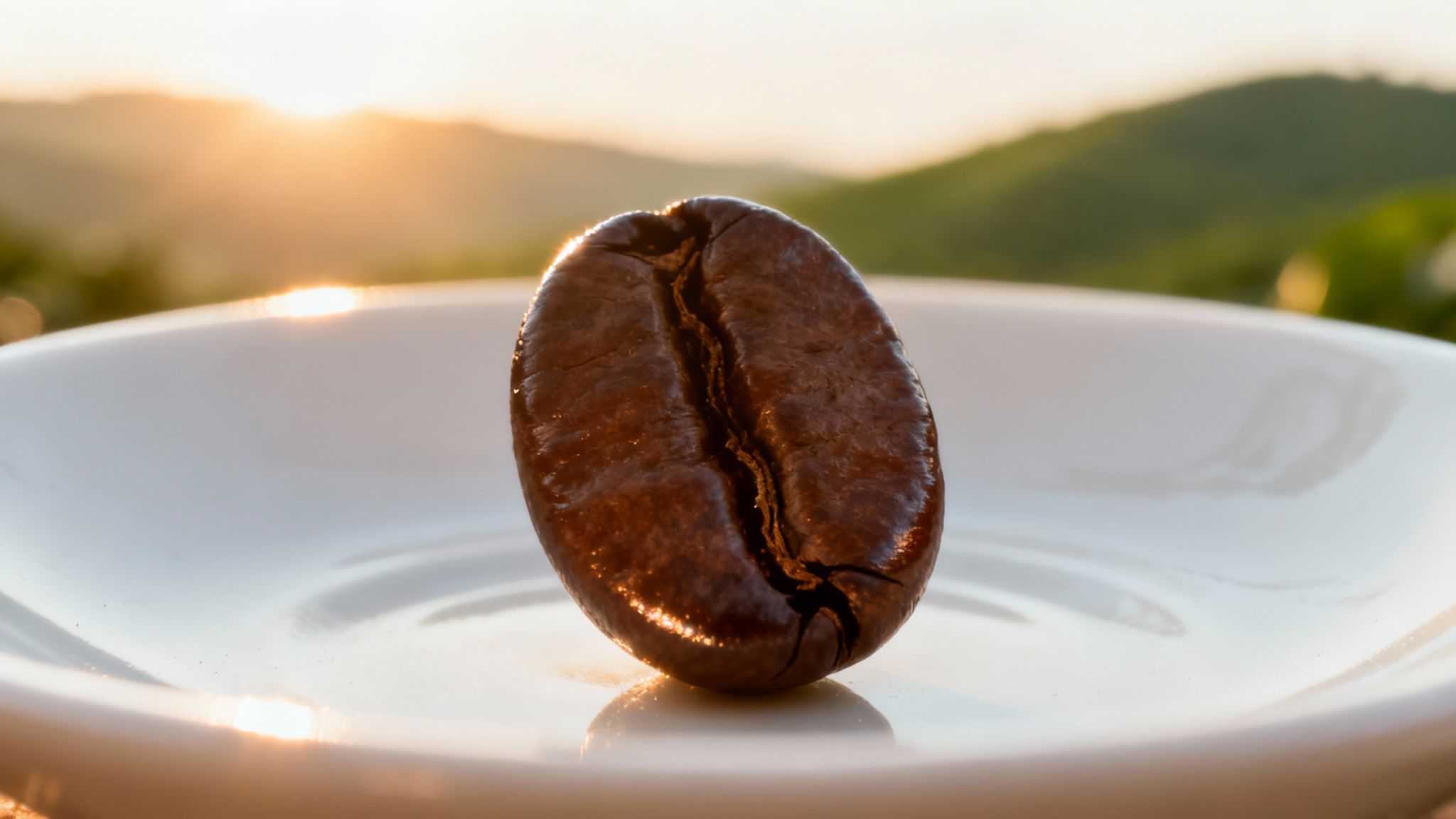
It’s easy to think of coffee as just a commodity. But behind every genuinely great cup, there’s a story that stretches across continents—one shaped by dedicated farmers, unique microclimates, and the careful hands of artisan roasters. The specialty coffee bean is the hero of that story. It’s a testament to what happens when quality is championed over quantity, every single step of the way.
This guide will take you past the marketing noise to show you what truly makes these beans a world apart. We'll explore the dedication and artistry that define every exceptional cup you drink.
The Rise of Conscious Coffee Culture
In the last few years, something has shifted. The way we think about coffee is changing. Much like the appreciation for fine wine or craft beer, people are now actively looking for coffee that is higher quality, ethically sourced, and transparently produced. This isn't just a fleeting trend; it’s a cultural shift, driven by a desire for better flavour and a real connection to the things we enjoy.
This growing curiosity has built a brilliant community of coffee lovers who truly value the bean's journey. The UK specialty coffee market is growing fast, with an expected Compound Annual Growth Rate of 10.7% from 2025 to 2030, leaving the wider UK coffee market behind. This growth is being fuelled by a clear preference for high-quality, ethically sourced beans among younger drinkers, showing a real generational shift in how we consume coffee. You can discover more insights about the UK's growing appetite for specialty coffee.
"Specialty coffee is more than a beverage. It is a shared experience that connects us to the land where it was grown and the people who nurtured it. It's an invitation to slow down and savour the moment."
What You Will Discover
As we dive deeper into the world of the specialty coffee bean, you’ll gain a whole new appreciation for what makes your daily brew so extraordinary. Think of this guide as the starting point for your own journey of discovery. We'll give you insights into:
- The Mark of Quality: Understanding the tough standards that separate specialty from commodity coffee.
- The Story of Terroir: Exploring how a bean’s origin—its soil, climate, and altitude—shapes its unique and unforgettable flavours.
- The Craft of Brewing: Learning how to unlock the full potential of these exceptional beans, right in your own kitchen or office.
Get ready to see coffee in a new light. Your morning ritual is about to become an adventure.
What Defines a Specialty Coffee Bean
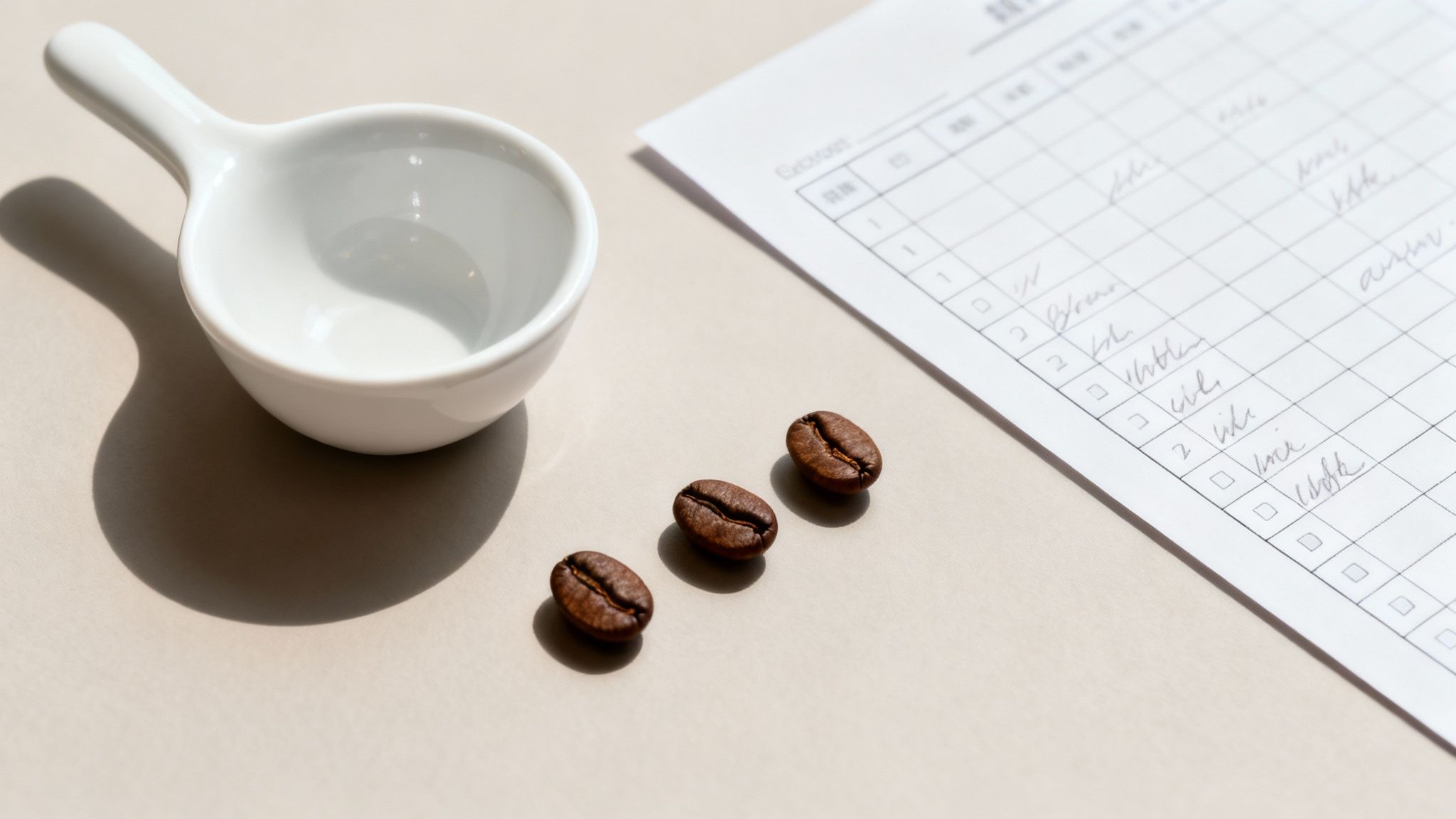
So, what really separates a standard coffee bean from a truly special one? It all comes down to a relentless pursuit of perfection, a standard that elevates a simple crop into something closer to culinary art.
The term 'specialty' isn't just a trendy label; it's a formal classification earned through a tough, internationally recognised grading process. It's a guarantee that the specialty coffee bean in your cup has met an exceptionally high bar for quality long before it ever meets our roaster.
The Official Seal of Quality
The gatekeeper of this standard is the Specialty Coffee Association (SCA), which created a comprehensive 100-point scale to formally evaluate coffee. This system is the bedrock of the specialty coffee world, giving farmers, buyers, and roasters a universal language to talk about excellence.
Only coffees that score 80 points or higher on this scale are officially granted the specialty grade. This score isn't handed out lightly. It means a coffee is free of any major defects and possesses a distinct, desirable character. If you want to dig a bit deeper into the specifics, there’s a great breakdown of what is specialty coffee that covers the essentials.
The Art and Science of Cupping
How is this score actually decided? Through a methodical tasting process known as cupping, carried out by certified professionals called Q Graders. Think of a Q Grader as a wine sommelier for coffee; they have a highly trained palate that can pick up on the most subtle nuances in flavour, aroma, and mouthfeel.
During a cupping session, these experts meticulously evaluate every aspect of the coffee. Each attribute gets its own score before contributing to the final tally.
Here’s what they’re looking for:
- Aroma: What does it smell like as dry grounds, and how does that change once hot water is added?
- Flavour and Aftertaste: What are the main taste characteristics, and do they leave a pleasant impression?
- Acidity: Is there a brightness or sparkle? Good acidity is vibrant and crisp, never sour.
- Body: How does the coffee feel in your mouth? Is it light and tea-like, or rich and creamy?
- Balance: How well do all these elements—flavour, acidity, body—work together in harmony?
The whole point of cupping is to provide an objective measure of quality. It strips away all the branding and marketing, forcing the coffee to stand on its own merits.
A huge part of this process is spotting defects. A single primary defect, like a sour or mouldy bean, can disqualify an entire batch from earning a specialty grade. The standard is unforgiving because the goal is absolute purity of flavour.
The SCA Coffee Quality Scale Simplified
The 100-point scale can seem a bit abstract, but it's really just a way of categorising quality. While any score of 80 or above is technically specialty, there are levels to this game.
To make it clearer, we've broken down what those scores actually mean for the coffee in your cup.
The SCA Coffee Quality Scale Simplified
| Score Range | Quality Classification | What This Means for You |
|---|---|---|
| 90-100 | Outstanding | These are the unicorns of the coffee world. Expect exceptional, rare, and complex flavour profiles that deliver a truly memorable experience. |
| 85-89.99 | Excellent | A clear step up. These coffees showcase distinct origin characteristics, bright acidity, and a well-balanced, engaging cup. |
| 80-84.99 | Very Good | This is the entry point for specialty coffee. These beans are clean, sweet, and well-balanced, free from defects and offering a consistently enjoyable brew. |
| Below 80 | Below Specialty Grade | Coffees in this range are considered commercial or commodity grade. They may have noticeable defects and lack the flavour clarity of specialty coffee. |
Ultimately, this meticulous grading system is the promise behind every specialty coffee bean. It’s your assurance that what you’re drinking is the result of immense care and passion that starts at the farm and follows the bean all the way to your cup.
The Bean's Journey from Farm to Cup
The story of every great coffee begins long before it ever reaches a roaster, let alone your cup. It’s a story of place, passion, and meticulous process—one that starts on a mountainside, in the rich soil of a distant farm. This is where the real magic happens, driven by the people who dedicate their lives to cultivating perfection.
That morning cup isn't just a drink; it's the final chapter of an incredible journey. It connects you to the passionate communities who grew it and shows how your choice supports a more sustainable, ethical future for coffee. And for today's coffee lovers, that connection matters more than ever.
The Influence of Terroir
In the world of wine, you’ll often hear the word terroir (pronounced ter-wahr). It’s the idea that a region’s unique soil, altitude, climate, and geography all shape the final flavour in the glass. This very same principle is the heart and soul of specialty coffee. A bean is a direct reflection of its home.
Imagine two coffees from completely different corners of the world.
- An Ethiopian bean, grown at high altitude in volcanic soil, might burst with bright, floral notes of jasmine and the crisp acidity of lemon.
- A Brazilian bean from a lower-lying farm could offer a totally different experience—deep, nutty, and full of rich, chocolatey smoothness.
These distinct profiles aren't created in the roastery; they are born from the earth itself. The terroir is the bean's inherent identity, its unique fingerprint. It’s what makes exploring coffee from different origins such an exciting adventure for your palate.
A specialty coffee bean is a postcard from its origin. Each sip tells a story of the sun, the soil, and the rain that nurtured it from a small seed into a flavourful cherry.
From Cherry to Green Bean: The Art of Processing
Once the coffee cherries are picked at peak ripeness, they need to be processed to remove the fruit and reveal the precious bean inside. This step is absolutely critical in defining the coffee’s final flavour. Think of it like a chef deciding how to prepare a beautiful, fresh ingredient—the method they choose can either highlight its natural qualities or completely transform them.
There are three main methods you'll come across, and each one imparts a totally unique character to the bean.
Processing Methods Explained
| Method | The Analogy | Resulting Flavour Profile |
|---|---|---|
| Washed | Like rinsing fresh fruit to reveal its pure, clean taste. | Creates a clean, crisp, and bright cup. This method highlights the coffee's inherent acidity and delicate floral or citrus notes. |
| Natural | Like sun-drying grapes into raisins to concentrate the sweetness. | Delivers a heavy-bodied, sweet, and intensely fruity cup, often with notes of strawberry, blueberry, or tropical fruit. |
| Honey | A middle ground, like leaving some fruit pulp on to add sweetness. | Produces a balanced cup with notable sweetness, a rounded acidity, and a smooth mouthfeel, often with stone fruit or honey-like notes. |
The choice of processing method is a true art form, guided by the farmer's expertise, local traditions, and the specific qualities they want to bring forward in their coffee.
Ethical and Sustainable Sourcing
The final, crucial piece of the puzzle is sourcing. In the specialty coffee world, this isn’t about just buying beans; it’s about building direct, transparent relationships with farmers and cooperatives. It’s about making sure the people who pour so much care into growing exceptional coffee are rewarded fairly for their hard work.
This commitment isn't just about doing the right thing—it's about creating a sustainable future for the entire industry. Here in the UK, this focus is resonating deeply. Recent market analysis shows that almost half of the country’s daily coffee drinkers in the 18–24 age group are particularly attuned to the social and environmental impact of their choices. This conscious consumerism, shaped by a vibrant café culture and a desire for transparency, is fuelling the growth of the specialty sector. Learn more about how UK consumer habits are shaping the coffee market.
When you choose a specialty coffee bean, you become part of this positive cycle. You’re supporting a system that values quality over quantity, people over profit, and sustainability for generations to come.
Exploring the Spectrum of Coffee Flavours
Ever wondered how one coffee can taste so clearly of fresh blueberries, while another brings to mind the delicate scent of jasmine? The secret is a beautiful interplay of origin, processing, and the final roast profile. Together, they create a unique symphony of flavour inside every single specialty coffee bean.
Learning to pick out these notes isn't about becoming a coffee snob. It's about starting a conversation with your palate—a journey that transforms you from someone who just drinks coffee into someone who truly experiences it. Suddenly, each cup becomes an opportunity to discover something new.
And that famous coffee flavour wheel? Don't let it intimidate you. Think of it as a friendly map for your taste buds. It’s a tool designed to give you the words to describe what you're already sensing. It helps you connect a feeling, like a bright, zesty kick, to a word like 'citrus' or 'grapefruit'. Simply naming what you taste is the first step toward knowing exactly what you love.
From Origin to Flavour Profile
The story of flavour always starts at the bean's origin, its terroir. Much like the soil and climate of a French vineyard shape its wine, the environment where a coffee grows gives it a distinct character. This is why coffees from different corners of the world can offer such dramatically different experiences in the cup.
A great way to start is by comparing coffees from well-known regions to recognise their unique personalities.
- Ethiopian Yirgacheffe: Often celebrated for its bright, clean, and floral notes. You might taste hints of bergamot, lemon, or jasmine, with a light, almost tea-like body.
- Colombian Huila: Known for its classic, well-rounded profile. Expect a deeper sweetness with notes of caramel, milk chocolate, and sometimes a hint of orange or red apple.
- Sumatran Mandheling: Famous for its full-bodied, earthy, and complex character. Flavours of dark chocolate, cedar, and sweet tobacco are common, with very low acidity.
Exploring these regional differences is like travelling the world, one cup at a time. Each origin offers a new landscape of flavour waiting to be discovered, putting you in control of finding the profiles that truly speak to you.
How Terroir and Processing Shape Your Cup
The incredible diversity in flavour is a direct result of the bean's entire journey, from the soil it grew in to how it was handled after being picked. The infographic below shows just how fundamental terroir, processing, and sourcing choices are in building the final flavour profile.
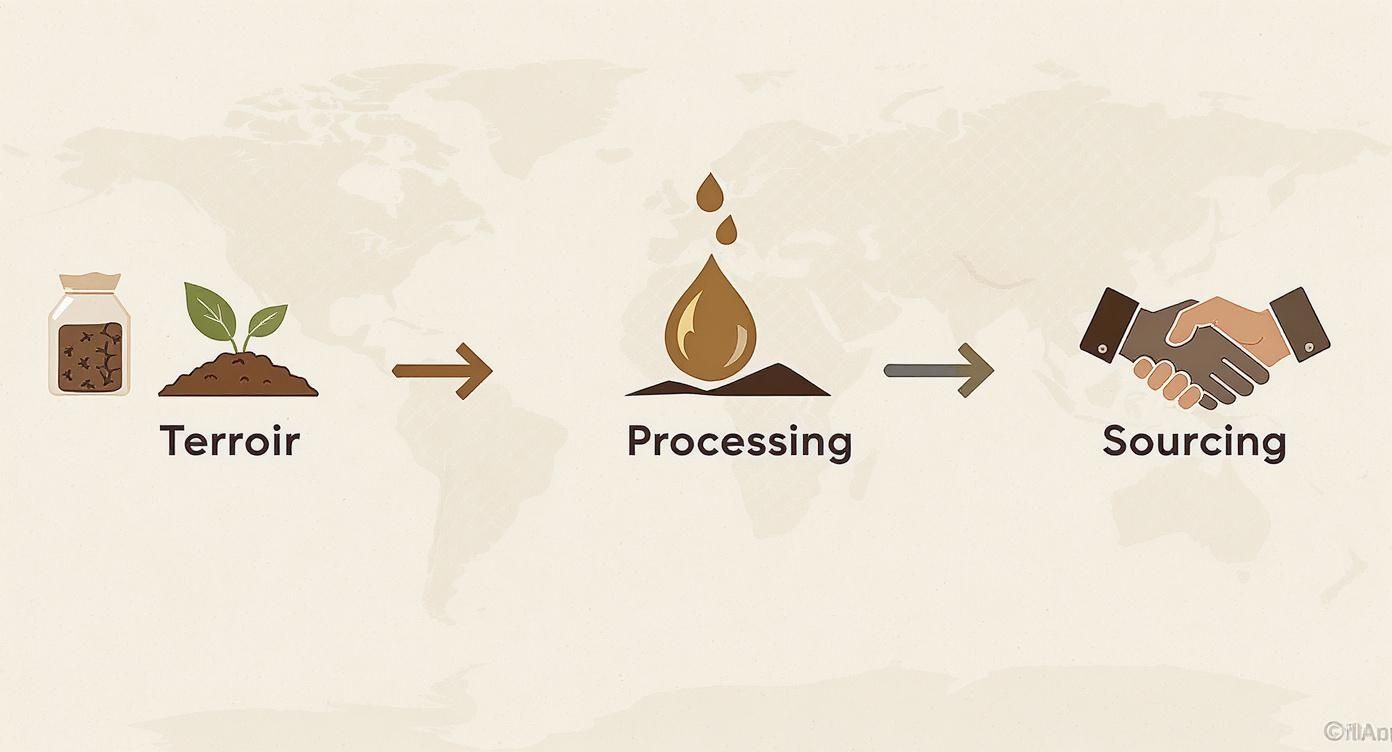
This visual journey makes one thing clear: the distinct notes in your cup aren't additives. They are unlocked through meticulous cultivation and expert handling right at the source.
The most magical thing about a specialty coffee bean is its potential. It holds within it the story of its home—the sun, the rain, the soil. The roaster's job isn't to create flavour, but to carefully reveal the incredible flavour that is already there.
This understanding completely changes how you see coffee. That "fruity" note in an Ethiopian coffee isn't an artificial flavouring; it's the beautiful, natural expression of a bean that was dried with the coffee cherry still intact, concentrating all its inherent sweetness.
Recognising these nuances gives you a new kind of confidence. It means you can walk into a café or browse for beans online and know exactly what you’re looking for. You're no longer guessing—you’re making an informed choice based on a real understanding of your own preferences. This knowledge is empowering, turning every coffee break into a moment of intentional enjoyment. Your daily ritual becomes a deliberate act of savouring something truly special.
Brewing Your Perfect Cup at Home
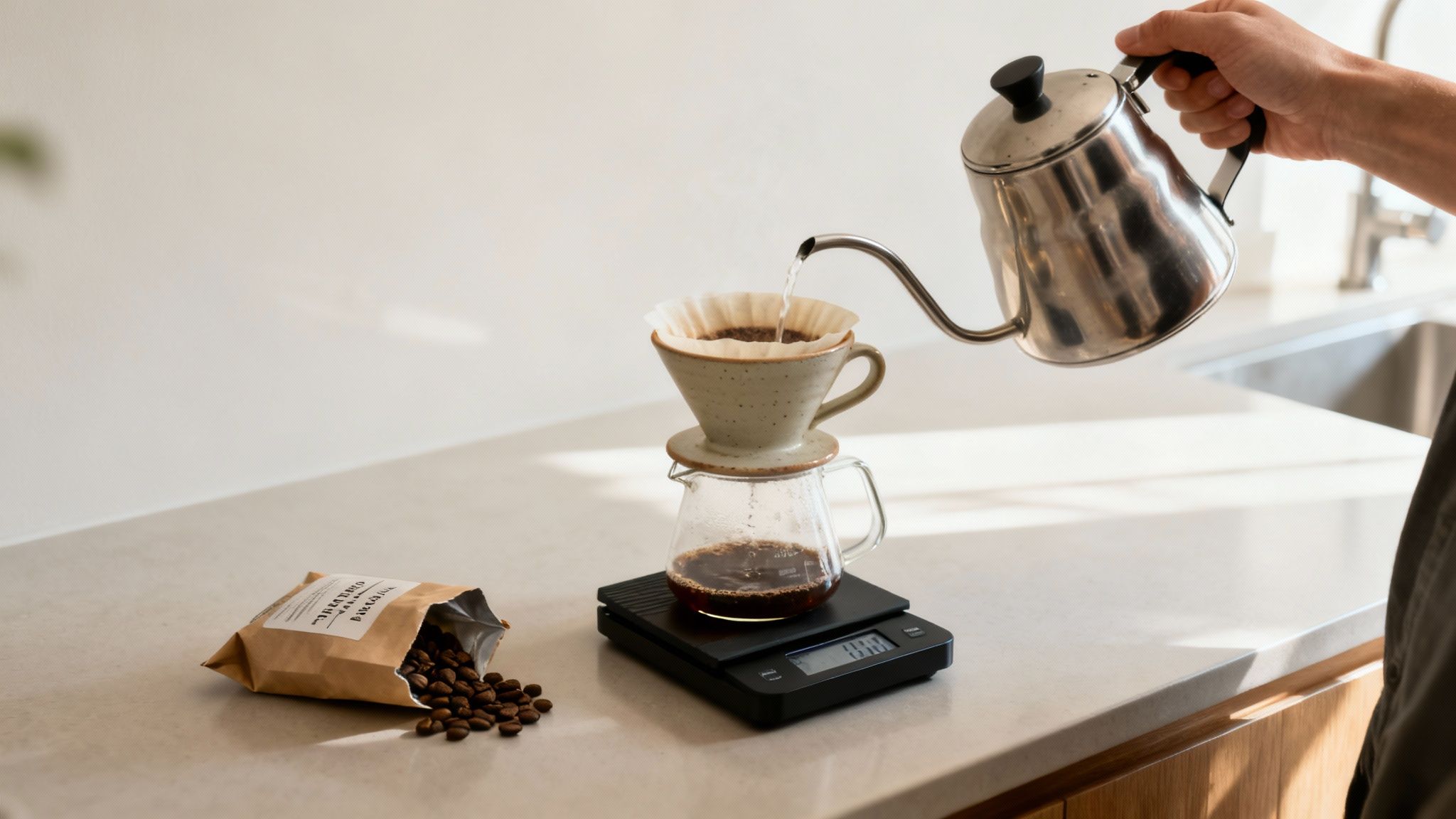
This is it—the grand finale. The entire journey of a specialty coffee bean, from the meticulous care of the farmer to the art of the roaster, finds its culmination right here in your kitchen. And the best part? Mastering home brewing isn't about intimidating rituals or complicated gear. It’s simply about unlocking the incredible potential already waiting inside every bean.
With just a few simple tools and a bit of know-how, you can transform your daily coffee from a mundane routine into a rewarding moment of pure delight. You are the final artist in the bean's story. Let’s make it an exceptional one.
The passion for brewing at home is completely reshaping how we enjoy coffee. The UK’s at-home coffee market is gaining serious momentum, projected to grow from £899 million in 2025 to a massive £1.15 billion by 2030. This isn't just about convenience; it's a clear shift towards wanting premium quality, with more of us investing in great grinders and specialty whole beans to recreate that café experience. You can explore more on the UK's home coffee trend to see just how big the movement has become.
Choosing Your Bean and Brew Method
The first step to a perfect cup is pairing the right specialty coffee bean with your favourite brewing method. Each technique interacts with the coffee grounds differently, highlighting certain characteristics while muting others. A French press, for instance, is brilliant for showcasing a coffee's rich body, while a pour-over can bring its delicate acidity and floral notes to the forefront.
Think of it like choosing the right lens for a camera. Each one offers a different perspective on the same beautiful subject. Understanding this relationship empowers you to select beans that will truly shine with the equipment you already have in your kitchen.
To help guide your choices, we've put together a simple breakdown of how to match your brewer with the ideal grind and bean profile.
Matching Your Brew Method to the Bean
Choosing the right bean for your brewer can be a game-changer. This table is your cheat sheet for getting it right every time, ensuring the flavours locked inside that specialty bean are expressed perfectly in your cup.
| Brewing Method | Recommended Grind Size | Ideal Bean Profile (e.g., Flavour Notes, Roast Level) |
|---|---|---|
| French Press | Coarse (like coarse sea salt) | Medium to dark roasts with bold, rich notes like chocolate, nuts, or caramel. The full immersion highlights body and sweetness. |
| Pour-Over (V60, Kalita) | Medium-fine (like table salt) | Light to medium roasts, especially single origins with bright, complex flavours like floral, fruity, or citrus notes. This method showcases clarity and acidity. |
| AeroPress | Fine to medium (very versatile) | Excellent for experimenting with almost any bean. It works beautifully with fruity, light roasts as well as balanced, medium-roasted coffees. |
| Drip Coffee Machine | Medium (like granulated sugar) | Well-balanced medium roasts are a safe bet. Look for coffees with notes of caramel, stone fruit, or mild chocolate for a crowd-pleasing cup. |
| Espresso Machine | Very fine (like powdered sugar) | Espresso roasts or medium-dark roasts designed to produce a rich crema and balanced shot. Notes of dark chocolate, toasted nuts, and deep sweetness work well. |
With this as your guide, you're well on your way to brewing coffee that not only tastes great but also honours the unique character of the beans you’ve chosen.
The Small Details That Make a Big Difference
Once you have your bean and your brewer, a few small adjustments can elevate your results from good to truly outstanding. These aren't complicated techniques but simple, powerful habits that honour the quality of the specialty coffee bean you’re using.
The secret to exceptional coffee isn't a single, magical trick. It's the sum of many small, intentional actions that come together to create a moment of perfection.
Paying attention to these details ensures you’re giving your coffee the best possible chance to reveal its full spectrum of flavour.
Here are a few game-changing tips to fold into your routine:
-
Use Quality Water: Your coffee is over 98% water, so its quality has a massive impact on the final taste. Using filtered water, free from chlorine and other impurities, allows the bean's true flavours to shine through without any off-tastes getting in the way.
-
Weigh Your Coffee and Water: Precision is your best friend. Using a simple digital scale to measure your coffee-to-water ratio is the single most effective way to achieve consistent, repeatable results. A great starting point for most methods is a 1:16 ratio—that's 1 gram of coffee for every 16 grams of water.
-
Grind Just Before Brewing: This one is non-negotiable. The moment coffee is ground, its aromatic compounds begin to escape. Grinding your beans immediately before you brew is the most impactful step you can take to preserve the vibrant aromas and flavours that make specialty coffee so special.
Embracing these practices turns brewing into a mindful ritual. It connects you more deeply to the process and guarantees that every cup you make is a true reflection of the incredible journey that specialty coffee bean has taken.
Of course. Here is the rewritten section, crafted to match the human-written, expert tone and style of the provided examples.
Your Specialty Coffee Questions Answered
As you dive deeper into the world of specialty coffee, you’ll naturally start asking questions. That’s a brilliant sign. It means you’re moving beyond just drinking coffee and starting to truly appreciate it. This section is here to clear up some of the most common queries we hear from curious customers.
Our aim is to give you the confidence that comes with knowledge, turning those little uncertainties into a solid understanding. We’ll cover everything from tricky terminology to practical tips, so you can carry on with your coffee adventure.
Is Single Origin the Same as Specialty Coffee?
This is a fantastic question, and the answer gets to the heart of what makes a coffee stand out. While you’ll often see the two terms together, they aren’t interchangeable. Specialty coffee is all about its quality score, while single origin is all about its traceability.
Think of it like this: all squares are rectangles, but not all rectangles are squares. Most specialty coffee is single origin because knowing exactly where a bean comes from is vital for quality control. However, not all single origin coffee meets the strict 80+ point score needed to earn the specialty title.
- Single Origin: This simply means the coffee can be traced back to one specific farm, cooperative, or region. It tells you its exact address.
- Specialty Coffee: This is a formal grade, awarded after a tough quality assessment. It confirms the coffee is free from defects and has a genuinely remarkable flavour profile.
The two work together to tell a coffee's full story—where it was grown and just how exceptional it really is.
Why Is Specialty Coffee More Expensive?
The higher price of a specialty coffee bean is a direct reflection of the incredible amount of care, labour, and expertise that goes into producing it. The cost is rooted in quality and ethics, making sure every person along the supply chain is properly valued.
It’s a sum of many important parts:
- Fairer Farmer Compensation: Farmers receive a premium for their meticulous work—often hand-picking every cherry—which is far above the standard commodity price.
- Superior Processing: The cost covers advanced, labour-intensive processing methods chosen specifically to enhance the bean's unique flavours.
- Rigorous Quality Control: Every bean is carefully sorted to remove defects, guaranteeing that clean, vibrant taste you expect from a great cup.
- Sustainable Practices: The price supports environmentally friendly farming that protects biodiversity and ensures the long-term health of coffee-growing regions.
- Roaster Expertise: Finally, it honours the roaster's skill in developing a precise roast profile to perfectly unlock everything the bean has to offer.
When you buy specialty coffee, you're not just buying a beverage. You're supporting a transparent, sustainable, and quality-driven ecosystem that values both people and the planet.
Does Roast Level Affect If Coffee Is Specialty?
A coffee has to qualify as 'specialty' in its green, unroasted state. The quality is already locked inside the bean itself, determined by how it was grown, its terroir, and the way it was processed. Roasting is the final, crucial step that showcases those intrinsic qualities—it doesn't create them.
The roast is like the key that unlocks a treasure chest of flavour. Most specialty coffee is roasted light to medium to preserve the delicate floral, fruity, and bright notes that tell the story of its origin. A very dark roast can introduce powerful, smoky flavours that might completely overshadow those unique characteristics.
While you can find dark-roasted specialty coffee, it’s less common. The main goal is always to let the bean's origin sing, not to taste the roast itself. The roast should complement the bean, never overpower it.
How Should I Store My Specialty Coffee Beans?
Protecting the complex flavours of your coffee beans is easy once you know their four biggest enemies: oxygen, light, heat, and moisture. Storing them properly is the final step in preserving all the hard work that went into them, ensuring every cup is as vibrant as the roaster intended.
The best approach is to keep your beans in an opaque, airtight container and store it in a cool, dark place, like a kitchen cupboard. Steer clear of the fridge or freezer—the condensation from temperature changes introduces moisture that can ruin the beans' delicate structure and flavour.
For the best possible taste, always live by this golden rule:
- Buy Whole Beans: Ground coffee loses its amazing aromas much faster.
- Grind on Demand: Only grind what you need, right before you start brewing.
This one habit makes the biggest difference to your final cup, preserving those incredible aromas and letting you experience the full potential of every single specialty coffee bean.
At Ue Coffee Roasters, we believe an exceptional coffee experience can transform the workplace. We bring the passion and quality of specialty coffee directly to your office, providing everything you need to foster a more engaging and enjoyable culture.
Discover our premium office coffee and refreshment solutions.