

Best Coffee Machine for the Office Culture
When it comes to the best coffee machine for your office, the right choice is always a careful balance of quality, capacity, and sheer convenience. For bigger teams, a robust bean-to-cup system often hits the sweet spot, delivering fresh, barista-style coffee whenever someone needs a boost. But for smaller offices, a high-end pod or even a great filter machine can offer fantastic value without the fuss.
More Than Just a Morning Brew
Let’s be honest, finding the perfect office coffee machine is an investment in your most important asset: your people. A great coffee station isn't just a perk; it quickly becomes the natural heart of the office. It's where collaborations happen, problems get solved over a quick flat white, and teams genuinely connect. It’s a small but powerful signal that you care about your team's well-being and want to create a workplace they actually enjoy being in.
This guide is designed to go beyond the basic specs and help you see the bigger picture. From high-volume bean-to-cup workhorses to sleek, efficient pod machines, we’ll explore the options that will not only energise your team but also fit right in with your business goals.
What’s Happening in the Office Coffee World?
The demand for genuinely good coffee at work has exploded. The UK office coffee machine market pulled in £224.2 million in 2022 and is expected to climb to a massive £354.9 million by 2030. This isn't surprising when you think about it. The rise of speciality coffee culture has made everyone a bit of a coffee snob, and that expectation for quality has followed us into the workplace.
While the humble drip filter machine still made up over half the market in 2022 thanks to its simplicity, the real momentum is with more sophisticated espresso and bean-to-cup models. A well-chosen machine can completely change the office vibe, turning a routine break into a moment that sparks creativity and strengthens team bonds. Of course, a great work environment is about more than just coffee. Thinking about the entire space, including things like optimizing your home office for productivity, is all part of a bigger strategy to support your staff.
Picking an office coffee machine isn't just about logistics; it's a cultural choice. The right machine becomes a cornerstone of the daily employee experience, directly impacting morale, interaction, and even productivity.
Comparing the Main Contenders
To make a smart decision, you need to understand the real-world differences between the main types of coffee machines. Each one comes with its own set of pros and cons that make it a better fit for certain office environments.
| Feature | Bean-to-Cup Machines | Pod/Capsule Machines | Filter Drip Machines |
|---|---|---|---|
| Coffee Quality | Excellent. Uses fresh whole beans, so the flavour and aroma are top-notch. | Good and consistent. The quality really depends on the brand of pods you choose. | Good. Perfect for brewing smooth, classic black coffee for a crowd. |
| Best For | Offices that prioritise premium quality and variety for medium to large teams. | Small to medium offices looking for speed, convenience, and minimal mess. | Cost-conscious offices that need to serve lots of people quickly and simply. |
| Maintenance | Higher. Expect daily rinsing and regular deep cleaning to keep it running well. | Very low. Just needs the odd descale and someone to empty the pod bin. | Low. A quick daily clean of the carafe and filter basket is all it takes. |
| Per-Cup Cost | Low to moderate. Buying whole beans is usually much more economical in the long run. | High. You’re paying a premium for the convenience of each individual serving. | Very low. Easily one of the most affordable ways to brew coffee at scale. |
Matching the Machine to Your Team Size
Picking the right coffee machine for your office isn't about finding a single "best" model. It's about finding the perfect fit for your team's unique rhythm. The needs of a nimble five-person start-up are worlds apart from those of a bustling fifty-person department, so this is a strategic choice that should reflect your company's scale and workflow.
A machine that’s ideal for a small, tight-knit team would quickly create queues and frustration in a larger office. On the flip side, a high-capacity industrial unit would be a hugely inefficient and costly mistake for a business with only a handful of employees. Aligning the machine’s capabilities with your team size is the key to creating a seamless experience that boosts morale, rather than causing morning bottlenecks.
This decision tree infographic helps you visualise how key priorities—like culture, speed, and cost—steer you toward the right type of coffee solution.
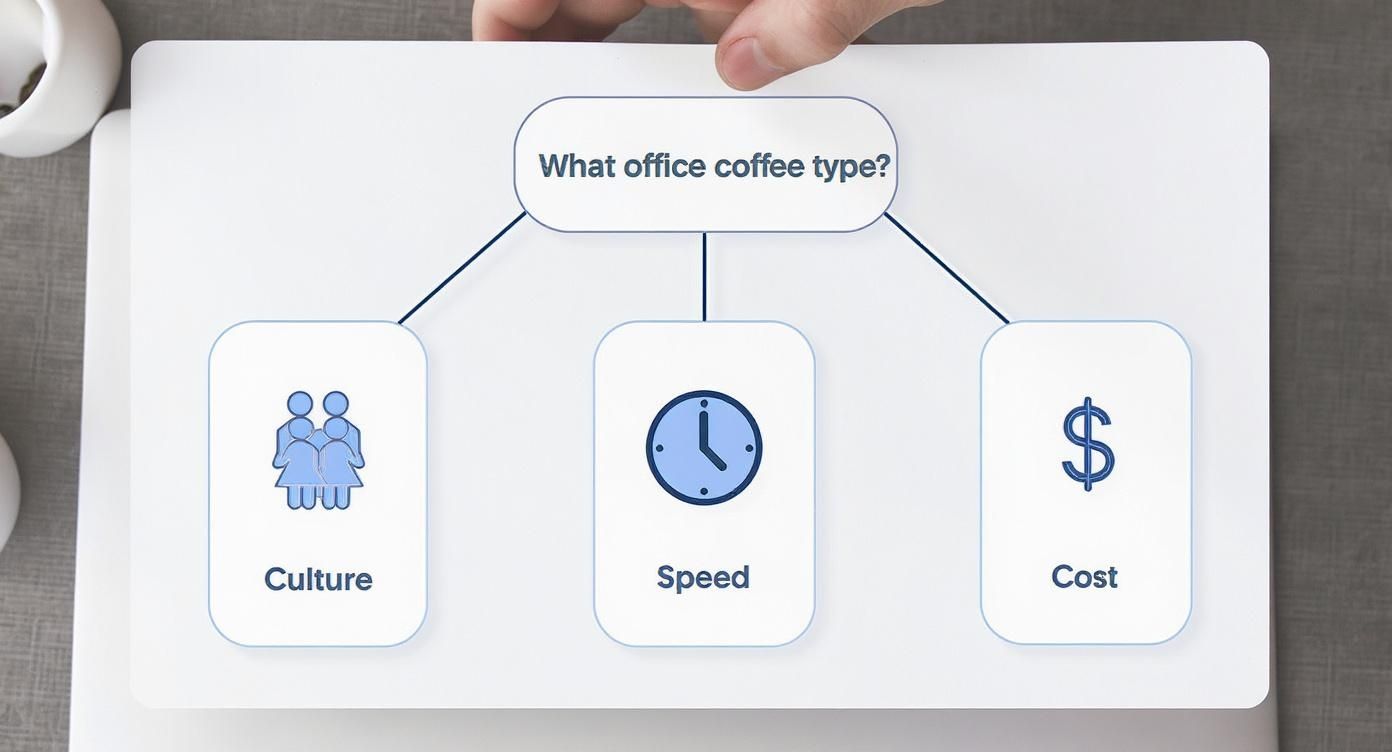
As the infographic shows, different business priorities point to very different machine categories, helping you narrow down your search from the get-go.
For the Agile Start-Up (Under 15 People)
In a small, dynamic team, everything comes down to convenience, speed, and a minimal footprint. The office energy is often fast-paced, and no one has the time to get bogged down with complex cleaning routines or maintenance schedules. The daily coffee volume is fairly low, but the expectation for a decent brew is still high.
The perfect solution here is all about simplicity without sacrificing flavour. This is where a high-quality pod or capsule system really shines. It delivers consistent, good-quality coffee in under a minute with virtually no mess.
For small teams, the goal is empowerment, not administration. A low-maintenance, high-convenience machine frees up everyone's time to focus on what truly matters—growing the business.
Here’s what to weigh up for smaller teams:
- Budget: The initial hardware cost is low, but the per-cup cost of capsules can be higher. For a small team, this is often a manageable and predictable operational expense.
- Maintenance: This is the biggest win. Daily upkeep is minimal—usually just emptying a pod bin and refilling the water tank.
- Variety: Pod systems offer a huge array of coffee types and flavours, which is great for catering to everyone's personal preferences in a small group.
For the Growing Business (15-50 People)
As a company scales, so does its coffee consumption. A machine that was fine for a team of ten will start to struggle, leading to queues and constant refilling. At this stage, you have to balance a need for higher capacity with ongoing costs and maintenance demands.
This is the point where a bean-to-cup machine becomes a serious contender. It offers a huge step up in coffee quality, using fresh whole beans for a far superior taste and aroma. While the initial investment is higher, the per-cup cost is substantially lower than pods, making it much more economical as you grow.
A mid-sized business needs a solution that feels like a genuine workplace perk. The ability to make lattes, cappuccinos, and flat whites at the touch of a button adds real value to the employee experience, turning the coffee corner into a proper social hub.
For the Bustling Corporation (50+ People)
In a large corporate environment, the coffee machine is a mission-critical piece of kit. It needs to be an absolute workhorse, capable of serving hundreds of cups a day without faltering. Reliability, speed, and minimal staff intervention are the absolute top priorities here.
The only practical solution is a high-capacity, plumbed-in bean-to-cup machine. A direct water line is non-negotiable; constantly refilling a large water tank for over 50 people is a logistical nightmare and a massive drain on everyone’s time.
These machines are built for endurance and high-volume output. The key things to look for are:
- Capacity: You’ll want large bean hoppers and internal waste bins to cut down on how often they need refilling and emptying.
- Speed: Dual boilers and efficient brewing mechanisms are essential to stop queues from forming during peak times, like the morning rush.
- Service: A comprehensive maintenance contract is vital. For a large organisation, machine downtime is simply not an option, so having professional support on call is crucial.
Choosing Your Office Coffee Machine at a Glance
To make things even clearer, this table gives you a quick snapshot to help match your office profile with the right machine.
| Office Profile and Team Size | Top Priorities | Recommended Machine Category | Typical Budget Strategy |
|---|---|---|---|
| Agile Start-Up (Under 15) | Convenience, speed, low maintenance, variety | Pod or Capsule Machine | Low initial cost, higher per-cup cost (opex) |
| Growing Business (15-50) | Quality, variety, cost-per-cup, employee perk | Bean-to-Cup Machine | Higher initial cost (capex), lower ongoing per-cup |
| Bustling Corporation (50+) | Speed, reliability, high capacity, low-touch | Plumbed-In, High-Capacity BTC | Significant capex plus a non-negotiable service plan |
Ultimately, the best choice aligns with your team's daily habits and the operational realities of your workplace, ensuring the coffee station is a source of joy, not frustration.
A Deep Dive into Coffee Machine Technology
Choosing the right coffee machine for your office isn't just about team size. It's about understanding the technology behind the brew and what it means for your daily operations. To make a smart choice, we need to look at how different systems stack up in terms of coffee quality, speed, long-term cost, and the all-important daily cleaning commitment.
Let's break down the three main players in the workplace coffee game: the fresh-ground appeal of bean-to-cup, the plug-and-play ease of pod systems, and the classic reliability of filter machines. Each has its own set of trade-offs, and the best fit is always the one that clicks with your company culture.
The Artistry of Bean-to-Cup Machines
Bean-to-cup is where you'll find the best automated coffee quality in an office. These machines are engineered to give you a genuine café experience, grinding whole beans on the spot for every single drink. This is a game-changer because coffee starts losing its flavour and aroma almost instantly after being ground.
By keeping the beans whole until the last second, these machines deliver a cup that is noticeably fresher and more flavourful. The espresso they produce becomes the base for everything from a punchy Americano to a silky-smooth latte, all made with just the press of a button.
This dedication to freshness is their biggest selling point. It turns the office coffee break from a quick caffeine hit into a proper perk, sending a clear message to your team that you value their well-being.
But this quality comes with a catch: maintenance. The internal parts, especially the milk frothers, are more complex and need a diligent daily clean to stay hygienic and working properly. A quick rinse at closing time and a proper clean once a week are non-negotiable.
The Efficiency of Pod and Capsule Systems
Pod and capsule systems are the undisputed champions of convenience. The whole concept is built around single-serve, hermetically sealed pods of pre-ground coffee, which means every cup tastes exactly like the last one.
That consistency is a massive plus in a busy office. There's no guesswork involved, no fiddling with grind sizes or tamping—just a reliable, decent cup of coffee in under a minute. They're incredibly simple to use, which means anyone can get a quick, satisfying brew without any fuss.
The small footprint of most pod machines also makes them a great fit for smaller office kitchens or breakout areas where you're short on counter space.
The real magic of pod technology is its ability to offer variety and speed with virtually zero mess. It’s the ultimate low-friction solution for fast-paced workplaces where time is everything.
The trade-offs, however, are significant. The cost per cup is always higher than using whole beans, and that expense adds up fast as your team grows. On top of that, the environmental impact of single-use pods is a big consideration for any business trying to be more socially conscious.
The Simplicity of Filter Drip Machines
Filter drip machines are the old-school workhorses of the office coffee world. Their strength is simple: they brew large batches of smooth, consistent coffee with minimal effort. The process involves passing hot water through ground coffee in a filter, which then drips into a carafe below.
It’s an incredibly efficient way to serve a lot of people at once, making it the perfect choice for meeting rooms, conferences, or that first-thing-in-the-morning rush. The cost-per-cup is exceptionally low, since buying pre-ground coffee in bulk is one of the most economical ways to keep a large group caffeinated.
Maintenance is a breeze, too. A daily rinse of the pot and filter basket is usually all it takes, making it a low-stress option for whoever is in charge of office supplies. It won't make you a fancy latte, but for classic black coffee, its reliability is hard to beat.
There's no denying the growing demand for better coffee at work. The move towards automatic espresso systems in UK offices is picking up speed, making them one of the fastest-growing segments in the market. In fact, automatic espresso systems in the UK are projected to grow at a CAGR of 7.87% through 2030, leaving other machine types behind. This is all driven by a desire for both quality and convenience. You can find more insights on UK office coffee trends over at Mordor Intelligence. This trend really highlights the shift away from basic coffee towards more sophisticated perks.
Head-to-Head Technology Comparison
To really see the difference, let’s line these technologies up against the factors that matter most in a typical workday.
| Evaluation Metric | Bean-to-Cup Technology | Pod/Capsule Technology | Filter Drip Technology |
|---|---|---|---|
| Ultimate Priority | Uncompromising Freshness & Variety | Unbeatable Convenience & Speed | Unmatched Volume & Simplicity |
| Best-Fit Scenario | A culture that sees premium coffee as a key social perk. | A fast-paced environment where efficiency is everything. | Serving large groups quickly and on a budget. |
| Key Differentiator | Grinds fresh beans for every cup to maximise flavour. | Delivers a perfectly consistent result every time with zero mess. | Brews large batches, ideal for high-demand periods. |
| Hidden Consideration | The daily cleaning routine is essential and must be followed. | The recurring pod cost and environmental impact need to be weighed up. | Can't create speciality, milk-based drinks like lattes. |
This side-by-side look makes it clear: the "best" machine is all about your specific situation. A creative agency trying to build a collaborative, café-style vibe will get huge value from a bean-to-cup machine. On the other hand, a high-energy sales team will probably prefer the raw speed of a pod system to keep them fuelled and focused. Nailing these fundamental differences is the first step to choosing a machine that actually works for your team.
Features That Define a Great Coffee Experience
What separates a good office coffee machine from a great one? It’s all in the details. The right features don't just brew a decent cup; they transform the daily break into a genuinely valued workplace perk—an experience that actually energises your team. These are the thoughtful functions that decide whether your new machine becomes the heart of the office or just another forgotten appliance.
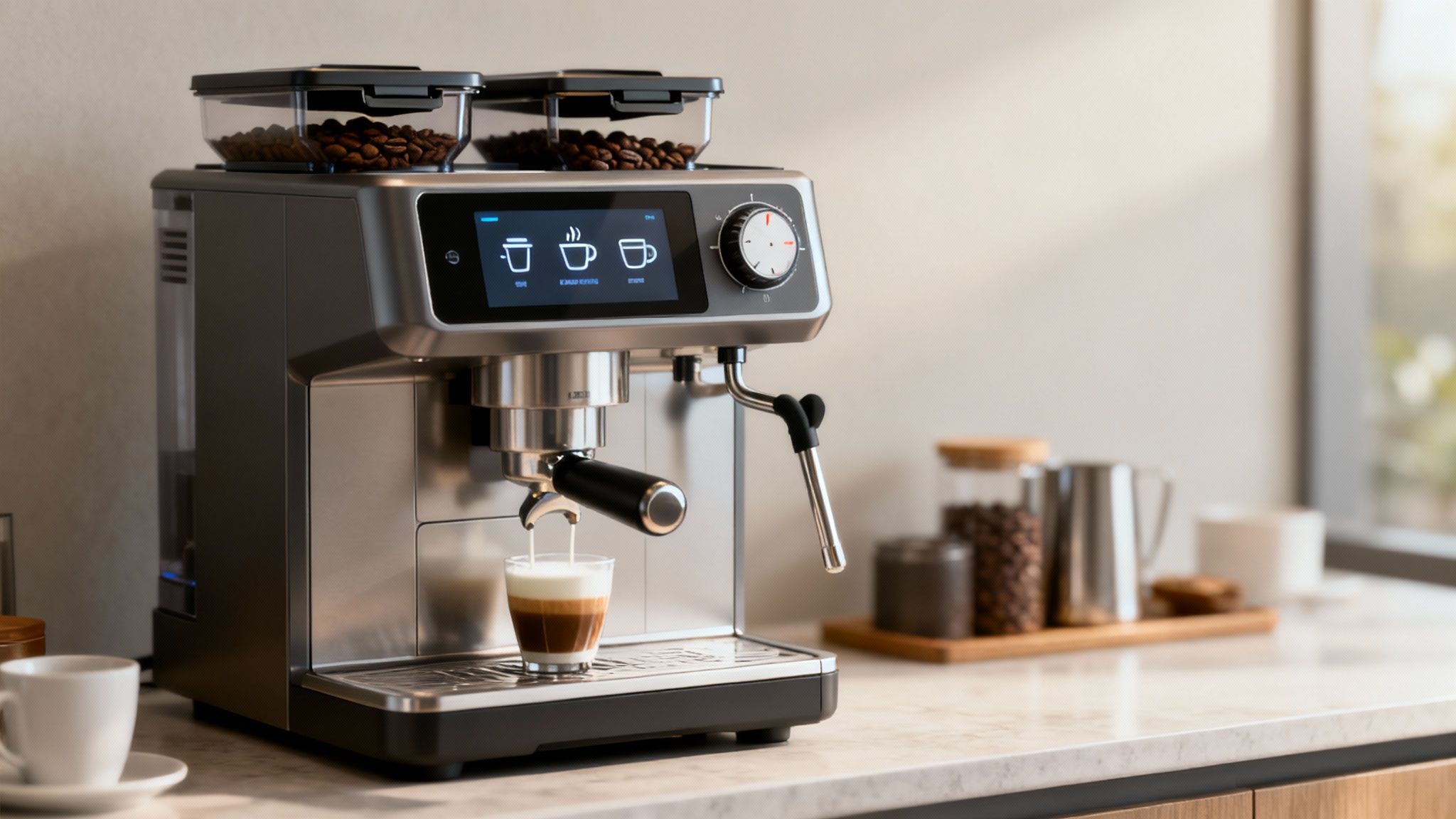
Let's break down the specific capabilities that deliver real benefits—cutting down queues, boosting satisfaction, and making life easier for everyone involved.
Convenience and Customisation
A truly great office coffee machine lets staff craft their perfect drink with zero fuss. Striking this balance between simplicity and choice is the key to getting everyone on board and keeping them happy.
For starters, customisable strength settings are a must. They let each person dial in the intensity of their espresso, moving beyond a generic, one-size-fits-all brew. This simple adjustment caters to everyone, from the person who wants a mild latte to the one who needs a powerful double shot to get going.
It’s just as important to offer a proper variety of drinks.
- Integrated Milk Frothers: A quality automatic frother is non-negotiable if you want to serve up café-style drinks like cappuccinos and flat whites. Look for systems that can handle both dairy and alternative milks to make sure everyone feels included.
- Dual Bean Hoppers: This is a simple but brilliant feature. It allows you to offer regular and decaf beans at the same time, which is a huge plus for team members who love the flavour of coffee but don't want the caffeine hit later in the day.
Streamlining Daily Operations
Beyond the coffee itself, the best machines are designed to make life easier for facilities managers and office staff. Anything that reduces manual work is a win.
The single most impactful feature here is a plumbed-in water line. For any office with more than a handful of people, this is a game-changer. It completely eliminates the constant, disruptive task of refilling a water tank, ensuring a continuous supply and saving a surprising amount of time each day.
A direct water connection is more than a convenience; it's a strategic choice. It removes a daily point of friction, improves coffee flavour with filtered water, and protects the machine from limescale buildup, extending its operational life.
And speaking of water, its quality can dramatically change the taste and aroma of your coffee. Investing in a commercial water purifier can elevate the whole experience and protect your equipment. It ensures every cup is brewed with clean, great-tasting water and helps prevent the internal mineral deposits that lead to costly repairs.
Modern Innovations for a Better Experience
Modern coffee tech is all about intuitive controls and simple upkeep, making sure the machine is always ready when your team needs it. An intuitive touchscreen interface is pretty much standard on premium models now. Clear, visual menus guide users through their choices, making it easy for anyone—including new starters and visitors—to make a drink without needing a tutorial.
Another essential is the automated cleaning cycle. These systems automatically rinse the milk and coffee circuits after they've been idle for a while or at the end of the day. This drastically reduces the daily hands-on cleaning, keeps hygiene standards high, and prevents blockages. This feature alone is a massive time-saver and a critical part of maintaining the best coffee machine for the office.
Balancing Cost, Sustainability, and Long-Term Value
Choosing the right coffee machine for your office isn’t just a purchase; it’s a long-term investment that says a lot about your company. The sticker price is only the beginning. To make a genuinely smart decision, you need to look at the total cost of ownership and what that machine delivers in value over its entire life. This means getting into the weeds on everything from per-cup costs and energy use to maintenance plans.
It's all about seeing past the initial outlay and understanding the bigger financial picture.
Unpacking the Total Cost of Ownership
The true expense of an office coffee machine plays out over years, not just on the day it’s installed. To really get a handle on it, you have to break down all the moving parts.
First up, calculate the per-cup cost. This is where bean-to-cup systems really start to shine. Yes, the initial hardware costs more, but whole beans are far cheaper than single-use pods. As your team drinks more coffee, those savings quickly add up.
Then you have the day-to-day running costs:
- Energy Consumption: Look for machines with energy-saving modes. They automatically power down during off-peak hours, and while it seems like a small detail, it can make a real dent in your electricity bills over a year.
- Maintenance Contracts: For a high-end bean-to-cup machine, a service contract is a no-brainer. It gives you peace of mind, covering routine checks and unexpected breakdowns, which means no costly downtime or unhappy staff.
- Consumables: Don't forget to factor in essentials like cleaning tablets, water filters, and milk system cleaners. They're vital for keeping the machine hygienic and running smoothly for years to come.
Leasing Versus Buying Your Office Machine
One of the biggest financial questions is whether to buy the machine outright or lease it. There’s no single right answer; it really depends on your business priorities.
Buying a machine means you own it. It's a capital expense you can depreciate over time, and it gives you the freedom to pick your own coffee suppliers and handle maintenance yourself. If you have the in-house know-how, this can be the more cost-effective route.
Leasing a machine, on the other hand, converts the cost into a predictable monthly operational expense. This is often bundled with a full service and maintenance package, so you never have to worry about surprise repair bills. Leasing also makes it easy to upgrade to the latest tech when your contract is up, ensuring your office always has a modern, reliable machine.
For a lot of businesses, leasing is the more strategic play. It keeps your capital free, makes budgeting a breeze with a fixed monthly cost, and offloads all the maintenance headaches so you can focus on running your company.
Embracing Sustainability in the Workplace
Corporate responsibility isn't just a buzzword anymore—it's a core part of how modern businesses operate. The coffee machine you choose can be a powerful symbol of your company's commitment to sustainability.
Here in the UK, the market is clearly shifting towards energy-efficient, eco-friendly machines. Businesses are now actively looking for features like energy-saving modes, recyclable parts, and even vendor take-back programmes to hit their environmental targets. This is happening alongside a growing demand for premium, ethically sourced coffee beans. You can find more insights on this trend in the European coffee market over at Renub Research.
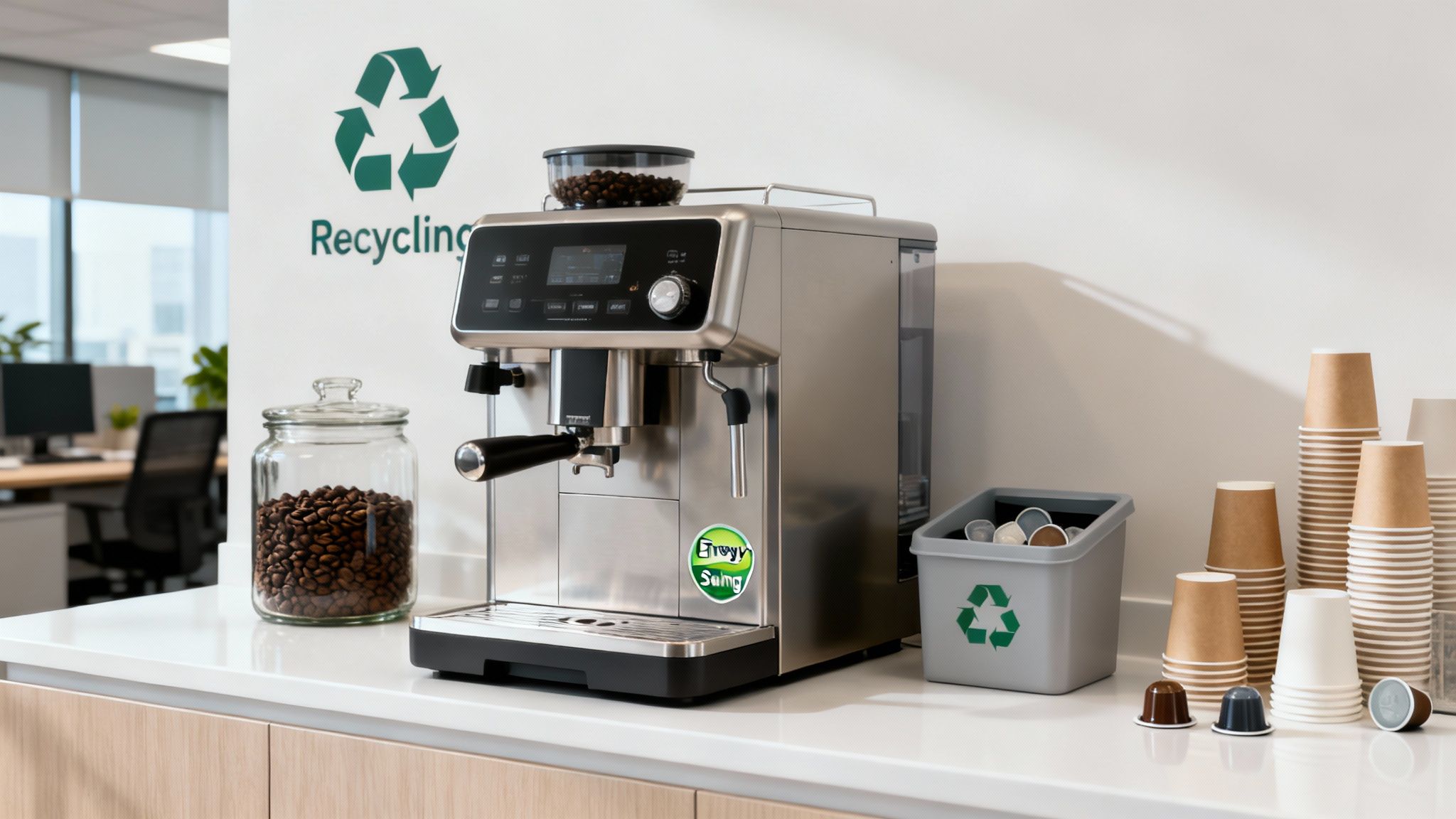
Think about the waste you're creating. Whole beans produce compostable coffee grounds, a much greener alternative to the plastic or aluminium pods that end up in landfill. Choosing a machine that supports a waste-conscious culture sends a clear message to your employees and clients about what your brand stands for.
Answering Your Office Coffee Questions
When it comes to picking the right coffee machine for your office, the final decision usually boils down to a few practical questions. Thinking about budgets, day-to-day upkeep, and long-term value is essential before you commit to anything. This section gets straight to the point, tackling the most common queries we hear from businesses.
We want to clear up any last-minute uncertainties so you can move forward with confidence and get your team excited about a genuinely great coffee experience.
Should Our Office Buy or Lease a Coffee Machine?
This is a major financial crossroads for any business. For many, leasing is the smarter route, especially if you want predictable monthly costs and zero hassle. A lease usually bundles the machine, installation, regular servicing, and any emergency repairs into one simple payment. This completely removes the risk of a huge, unexpected bill if a complex machine decides to break down. Plus, it gives you the flexibility to upgrade when your lease is up.
On the other hand, buying makes sense if you prefer to own your assets outright and have the budget or in-house capacity to handle maintenance and repairs yourself. But for the more sophisticated, high-end machines where a single fault could run into thousands, leasing provides a crucial safety net.
For most organisations, leasing just makes more sense. It protects your capital, simplifies budgeting into a fixed operational cost, and hands all the maintenance headaches over to the experts. That frees you up to focus on what you do best.
How Much Daily Maintenance Is Realistically Required?
The time you’ll spend on daily cleaning varies hugely between machines, and it’s a hidden cost you absolutely have to factor in. If you underestimate this, you'll end up with a neglected machine and bad coffee, which defeats the whole purpose of the investment.
- Bean-to-Cup Machines: These are the most demanding. They need a daily milk system rinse (which is often automated but still needs someone to start it) and a proper deep clean of the brew group every week to keep things hygienic and working properly.
- Filter Drip Machines: Much, much simpler. The main job is just cleaning the jug and filter basket each day, which only takes a minute or two.
- Pod and Capsule Systems: The lowest-effort option by a mile. Apart from emptying the used pod bin, they just need descaling every few months.
When you're calculating the total cost, don't forget to account for the staff time needed to keep up with these essential routines.
What Is the Real Cost of a ‘Free on Loan’ Machine?
The idea of a 'free on loan' machine sounds incredibly tempting, but it’s vital to read the small print. It's not a gift—it’s a binding contract. These deals lock you into buying all your coffee and supplies directly from that one supplier, often at prices that are far higher than you’d pay on the open market.
So, while you skip the initial cost of the hardware, the total amount you spend over the life of the contract can end up being substantially more. It's a classic case of paying a hefty premium for convenience.
Before you even consider it, you need to calculate the total cost of their coffee and supplies over the full contract period. Only then can you properly compare it against the cost of buying a machine and sourcing your own beans at competitive prices.
Is a Plumbed-In Water Connection Worth It?
For any office that regularly serves more than 20 people, a direct water line is an absolute game-changer. It completely gets rid of the thankless and disruptive task of refilling the water tank, which is a real productivity killer that can interrupt people multiple times a day.
A plumbed-in system also ensures a constant supply of filtered water. Not only does this make the coffee taste noticeably better, but it also dramatically reduces the build-up of limescale inside the machine. This is vital for protecting the internal parts and extending the machine's life, ultimately saving you money on future repairs. For smaller teams, a manual-fill model is usually fine and offers more flexibility on where you can place it.
Ready to transform your workplace with a truly premium coffee experience? At Ue Coffee Roasters, we partner with world-class machine manufacturers to bring café-quality beverages directly to your team. Explore our tailored office solutions and discover how exceptional coffee can fuel a more inspired and connected company culture. Visit us at https://www.uecoffeeroasters.com to learn more.