

Choosing the Best Commercial Espresso Machines
Picking the right commercial espresso machine is probably the single most important decision you'll make for your café. This isn't just about buying a piece of kit; it's about choosing the very heart of your business. It's the engine that powers your mornings, the tool that defines your quality, and the reliable partner your baristas will lean on, day in and day out.
Forget the technical specs for a moment. The best machine is one that marries a smooth, intuitive workflow for your staff with the kind of unwavering consistency that keeps customers coming back. It’s an extension of your brand and your vision for what a great coffee experience should be.
This guide is here to help you find a machine that doesn't just meet your practical needs but actually inspires your team. We'll walk through how to find equipment that empowers an efficient workflow, delights every customer, and lays a solid foundation for growth.
Understanding the Growing UK Market
The UK's coffee scene is more vibrant and competitive than ever, which is a massive opportunity for anyone running a café. To really make your shop stand out, it pays to understand the bigger picture through solid beverage industry market research. Knowing the trends helps you position your brand and make smarter choices.
The simple fact is, the demand for high-quality coffee has fuelled huge growth in the equipment sector. Back in 2022, the UK coffee machine market was already worth USD 268.6 million. Projections show it climbing to USD 425.2 million by 2030. That's a serious rate of growth, and it highlights just how crucial it is to make a wise, future-proof investment in your gear.
Your espresso machine isn't just hardware; it’s a statement. It tells your customers you’re serious about quality and dedicated to crafting an exceptional experience, one perfect cup at a time.
Ultimately, the goal is to select a machine that becomes the reliable centre of your entire operation, supporting your vision and helping you thrive.
Matching the Machine to Your Reality
Before you get lost in a world of gleaming stainless steel and polished chrome, let’s be honest. The first and most crucial step in finding the right commercial espresso machine is to take a hard look at your own business. The most powerful, feature-rich machine on the market is worthless if it doesn’t actually fit your day-to-day workflow.
Think of it as drawing up a blueprint before you start building. This plan isn't about technical specs just yet; it's about the real-world demands of your space, your staff, and your customers. Getting this part right is the foundation for an investment that will pay you back for years.
Gauging Your True Volume Needs
The most common mistake I see is people misjudging their capacity. It’s easy to be optimistic, but a machine that can't keep up with your peak morning rush will create queues, frustrate your baristas, and ultimately cost you sales. On the flip side, overspending on a high-capacity beast for a quiet cafe ties up cash that could be better spent elsewhere.
So, let's get specific. Don't just guess your daily sales—you need to calculate your peak hour demand. This is the number that really counts.
- Track your orders: For one full week, jot down how many coffee-based drinks you sell during your single busiest 60-minute window each day.
- Find your peak: Pull out the highest number from that week. Let's say your busiest hour saw 75 orders.
- Plan for growth: Always add a buffer. A good rule of thumb is 20-30% to account for future growth and those unexpectedly busy days. So, 75 orders + 22 (30%) gives you 97 drinks per hour.
That number, 97, is your magic number. It tells you instantly that a single-group machine would be a disaster, and a two-group machine is probably your sweet spot. It provides enough capacity to handle the rush without being overkill.
This visual breaks down the core pillars of your choice, walking you through the critical balance between your brand, workflow, and customer expectations.
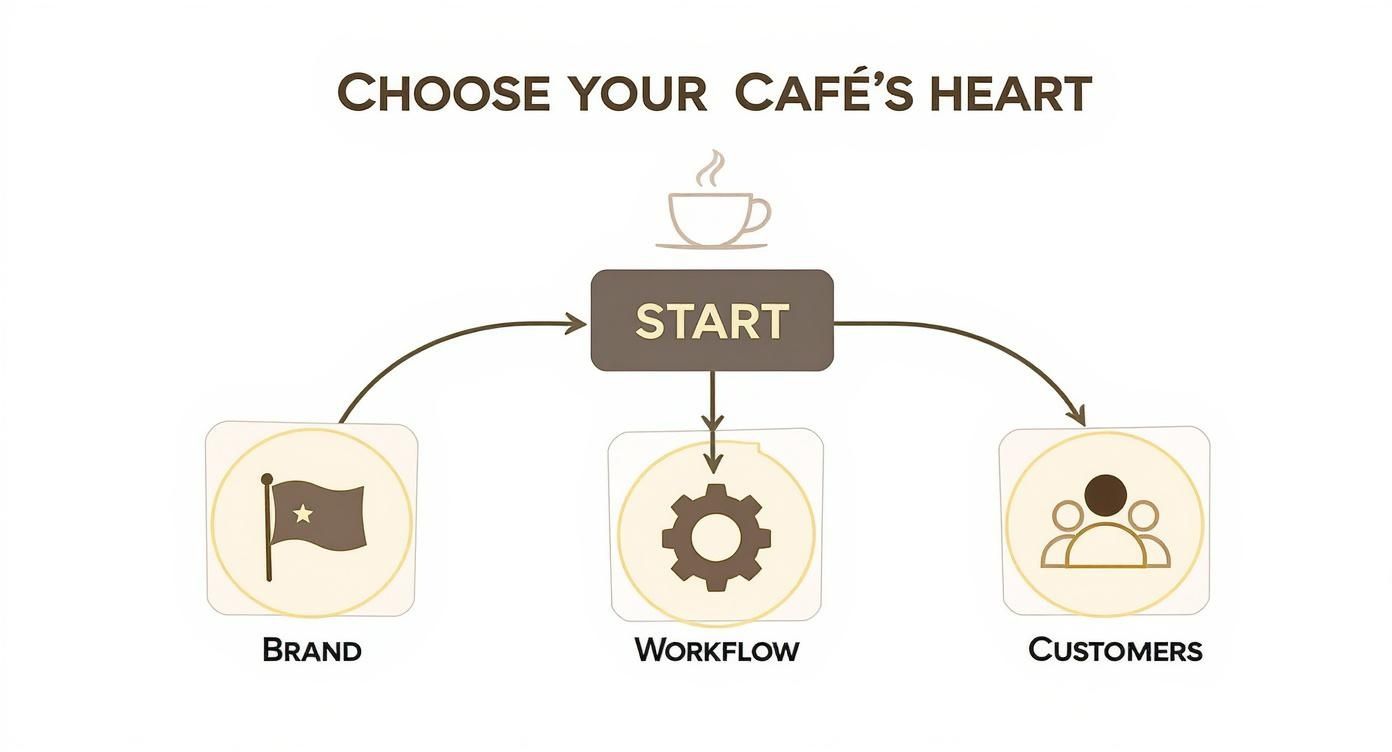
When you break down the decision into these three areas, it becomes clear that the best machine is a perfect blend of brand identity, operational efficiency, and the kind of experience you want to create for every customer.
Aligning with Your Business Model
The type of business you run dictates your machine needs just as much as your volume. The demands of a frantic takeaway spot are worlds apart from a fine-dining restaurant where coffee is part of the overall experience.
A grab-and-go cafe in a busy city centre needs one thing above all: speed. Here, an automatic (volumetric) machine is your best friend. Baristas can hit a pre-programmed button for a single or double shot, guaranteeing every single espresso is identical, even when they’re juggling three orders at once.
In contrast, a high-end restaurant might want to emphasise the craft and theatre of coffee making. For them, a semi-automatic machine is perfect. It gives a skilled barista total control over the extraction, allowing them to dial in an exquisite shot for a discerning diner. The quiet operation of certain models is also a huge bonus in a relaxed atmosphere.
The goal isn't just to make coffee; it's to make coffee in a way that enhances your specific business model. The machine should feel like a natural, seamless part of the customer experience you've created.
To make this clearer, here’s a quick breakdown of which machine types generally suit different business environments.
Machine Type vs Business Model
| Machine Type | Ideal For | Barista Skill Level | Key Advantage |
|---|---|---|---|
| Super-Automatic | Offices, hotels, self-service areas, convenience stores | Low (None required) | Ultimate consistency with zero training |
| Automatic | High-volume cafes, busy takeaways, coffee shops | Low to Medium | Speed, consistency, and ease of use during rushes |
| Semi-Automatic | Speciality coffee shops, restaurants, artisan cafes | Medium to High | Full control over shot time for handcrafted quality |
| Manual (Lever) | High-end speciality shops, roasteries, enthusiast cafes | High (Expert) | Unmatched control for nuanced, exceptional espresso |
This table should give you a starting point for matching technology to your operational reality.
Considering Your Team's Skillset
Finally, be honest about your team. A manual lever machine is a beautiful thing, but only in the hands of a seasoned professional who truly understands pressure profiling and the art of extraction. They can pull shots that are genuinely exceptional.
But what if your team has a mix of experience levels, or you have high staff turnover? In that case, consistency is king.
This is where a super-automatic machine—one that handles everything from grinding and tamping to brewing at the touch of a button—can be a game-changer. It almost completely removes human error, ensuring the coffee at 4 PM tastes exactly the same as the one served at 8 AM, no matter who is behind the counter. It’s all about protecting your quality standard.
Decoding the Technology That Matters
Beneath the polished steel of any great commercial espresso machine is a world of engineering built for one purpose: turning roasted beans into liquid gold. To really figure out which machine will be the heart of your operation, you need to see past the marketing fluff and get to grips with the core tech that dictates performance, consistency, and daily workflow.
This isn’t about becoming an engineer. It’s about knowing enough to make a smart decision based on how the machine will actually perform during a busy Saturday morning rush.
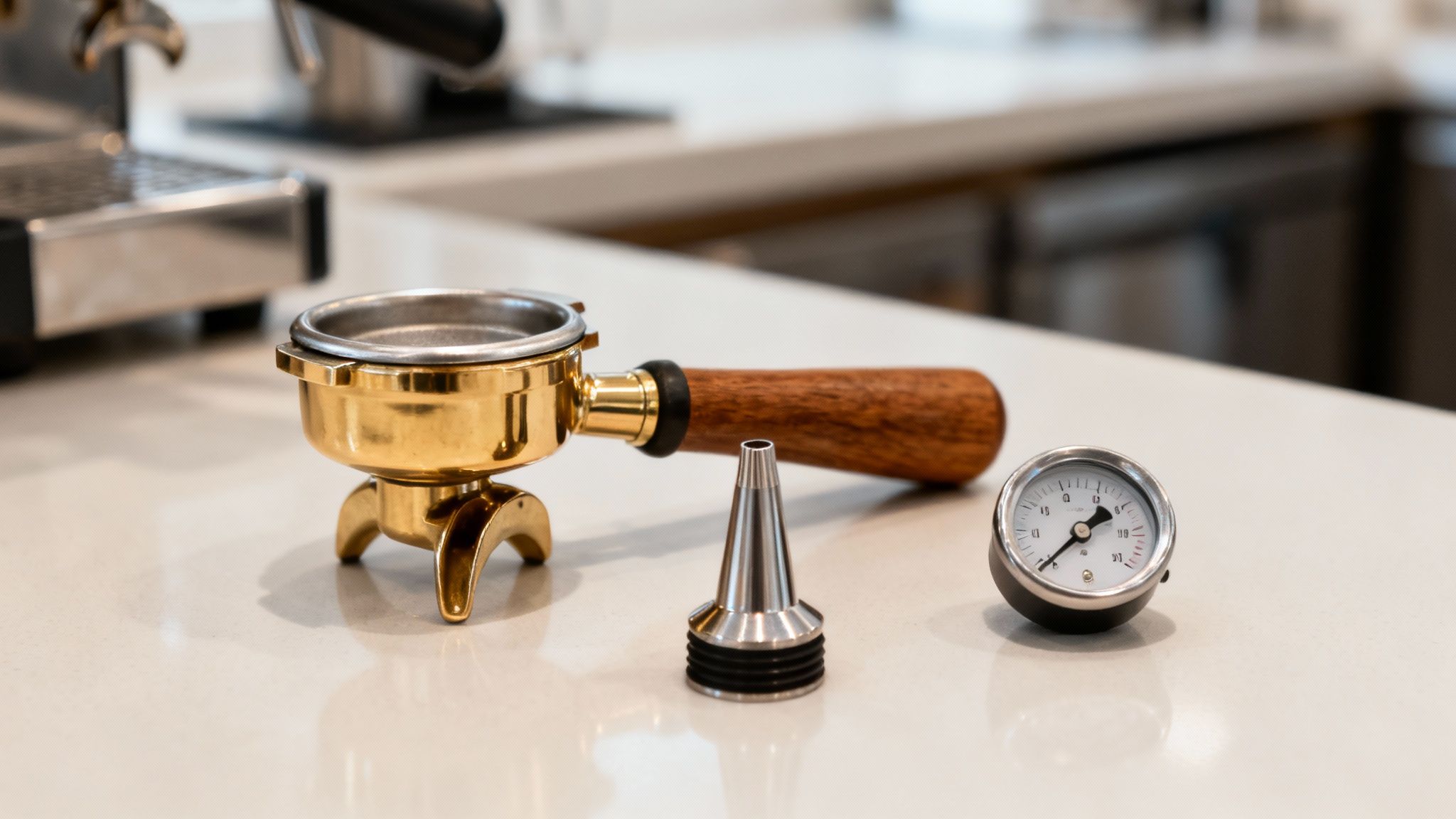
Let's break down the components that genuinely matter. Understanding these will give you the confidence to look at any machine and know exactly what it’s capable of.
The Powerhouse: The Boiler System
The boiler is the engine room of your espresso machine. It’s responsible for heating water for both brewing and steaming, and its design has a massive impact on whether you can keep up when the dockets are flying. There are three main types you'll come across.
- Single Boiler: You’ll find these in smaller, entry-level machines. A single boiler heats water for both brewing and steaming, but you can't do both at the same time. You pull a shot, then wait for the boiler to climb to a higher temperature for milk. Honestly, this system is a non-starter for almost any commercial setting because of the workflow bottleneck it creates.
- Heat Exchanger (HX): A brilliant piece of kit. An HX machine has one big boiler kept at steaming temperature. A separate copper tube—the heat exchanger—runs through it, flash-heating fresh water to the perfect brewing temperature as it travels to the group head. This means you can pull shots and steam milk simultaneously, which is non-negotiable for any serious café.
- Multi-Boiler (or Dual Boiler): This is the top of the mountain for temperature stability. These machines have separate boilers for brewing and steaming, each with its own controls. This setup gives you unbelievable precision, letting you dial in the brew boiler to an exact temperature for a specific coffee, while the steam boiler is always ready to go with powerful, dry steam.
For a bustling café where speed and consistency are king, a heat exchanger offers a fantastic balance of performance and value. But if you're a speciality shop obsessed with exploring the nuances of single-origin beans, the surgical precision of a multi-boiler is an invaluable tool for unlocking flavour.
Group Heads and Portafilters: Where the Magic Happens
The group head is where it all comes together. It’s the part of the machine that locks in the portafilter (the handle holding the basket of coffee) and shoots hot, pressurised water through the grounds. The number of group heads basically defines your machine's output capacity.
Most commercial machines now use a standard 58mm portafilter size. It’s become the industry benchmark for a good reason—it provides an ideal surface area for water to flow evenly through the coffee puck, which leads to a more balanced and consistent extraction. While you might see other sizes, sticking with 58mm means you’ll have a massive choice of baskets, tampers, and other accessories from countless manufacturers.
The push for better brewing tech is a huge driver of market growth, with coffee businesses investing in machines that give them more control. This is all happening as UK customers are spending more on high-quality coffee experiences. You can dive deeper into these trends and learn more about the growing UK coffee machines market.
Mastering Temperature and Pressure
Beyond the main hardware, two invisible forces govern the quality of every shot: temperature stability and pressure profiling.
- Temperature Stability: Keeping your water temperature consistent is absolutely critical. A tiny fluctuation of just one or two degrees can turn a beautifully sweet shot into a sour, disappointing one. Multi-boiler machines are the champions here, but modern HX machines often use PID controllers (Proportional-Integral-Derivative) to regulate temperature with incredible accuracy. Think of a PID as a super-smart thermostat for your machine, ensuring every single shot is pulled at the right temperature.
- Pressure Profiling: This is where espresso becomes a real art form. Traditionally, machines just slam the coffee with a constant nine bars of pressure. Pressure profiling technology lets the barista manipulate this pressure during the shot. You could start with a gentle pre-infusion at low pressure, ramp up to nine bars, and then taper off at the end. This control can bring out completely different flavours, reduce bitterness, and create a much richer, more complex espresso.
Ultimately, decoding this technology isn’t about memorising specs. It’s about understanding how each component helps your baristas and serves your coffee philosophy. It’s about choosing a partner that empowers you to create amazing coffee for your customers, cup after cup.
Budgeting for Long-Term Value
An espresso machine is a huge investment, but the number on the price tag is just the opening chapter of the story. If you really want to find the best commercial espresso machine for your business, you need to look beyond the initial purchase and get your head around the total cost of ownership. This bigger-picture view is your secret weapon for making a smart financial decision that will support your business for years to come.
Thinking about long-term value helps you avoid a classic mistake: choosing a cheaper machine that ends up costing you more in repairs, downtime, and lost sales. A truly great investment is one that’s reliable, efficient, and backed by solid support, keeping your coffee flowing and your customers happy.
Uncovering the Initial Hidden Costs
Beyond the machine itself, several upfront costs are absolutely non-negotiable for a professional setup. Budgeting for these from the very start ensures a smooth launch and protects your shiny new equipment from day one.
- Professional Installation: This is not a DIY job. A certified technician will make sure the machine is correctly connected to your water and power supply, calibrated for peak performance, and compliant with UK safety regulations. A botched installation can void your warranty and cause immediate, expensive problems.
- Water Filtration System: Limescale is the number one enemy of any espresso machine. A high-quality commercial water filtration system is vital, especially in the hard water areas common across the UK. It protects the internal components from damaging mineral buildup, keeps your coffee tasting great, and prevents costly descaling and repairs down the line.
- Essential Accessories: Don't forget the tools of the trade. You’ll need to budget for high-quality portafilters, tampers, milk steaming pitchers, scales, and cleaning supplies. These aren’t optional extras; they’re fundamental to your workflow and quality control.
These initial expenses are an investment in the longevity and performance of your machine.
“Viewing your espresso machine purchase through the lens of total cost of ownership shifts the focus from 'How much does it cost?' to 'What is its true value over time?' A reliable, efficient machine isn't an expense; it's a revenue-generating asset.”
This perspective is crucial for building a sustainable and profitable coffee programme.
Planning for Ongoing Operational Expenses
Once your machine is up and running, your focus shifts to the ongoing costs that will become part of your regular operating budget. Being aware of these helps you forecast accurately and avoid any nasty financial surprises.
The most significant ongoing costs include:
- Energy Consumption: Modern machines are getting more energy-efficient, but a large, multi-boiler unit running all day will still make a dent in your electricity bill. Look for models with insulated boilers or programmable eco-modes that can cut power usage during quieter periods.
- Routine Maintenance: This is more than just a daily clean. You need to plan for annual or semi-annual professional servicing, which includes replacing group head gaskets, shower screens, and other wear-and-tear parts. Preventative maintenance is always cheaper than emergency repairs.
- Potential Repairs: Even the most reliable machine can have issues. It’s wise to set aside a small contingency fund for unexpected repairs or part replacements that might fall outside your warranty. A good relationship with a local, reputable service technician is invaluable here.
Understanding these financial commitments is key to managing your cash flow effectively. To better understand your options and ensure you're making a financially sound investment, it's worth delving deeper into how you can fund your purchase, including specialised options like restaurant equipment financing. Thinking strategically about funding means you can get the right asset without compromising your business's financial health.
Planning for Maintenance and Support
Buying a commercial espresso machine is a bit like entering a long-term partnership. The initial excitement of choosing the perfect model is just the beginning. The real work—and the real success—comes from the commitment you make to it long after it’s unboxed. Your relationship with this machine doesn't stop at the till; it’s an ongoing collaboration that will shape your coffee quality and operational flow for years.
Thinking about maintenance and support from day one isn't the most glamorous part of the process, but it's your secret weapon against costly downtime. A well-maintained machine is the reliable heart of your business, consistently pulling great shots and keeping customers happy. Get this right, and you're building a foundation for a thriving cafe.
Unlocking Peak Performance from Day One
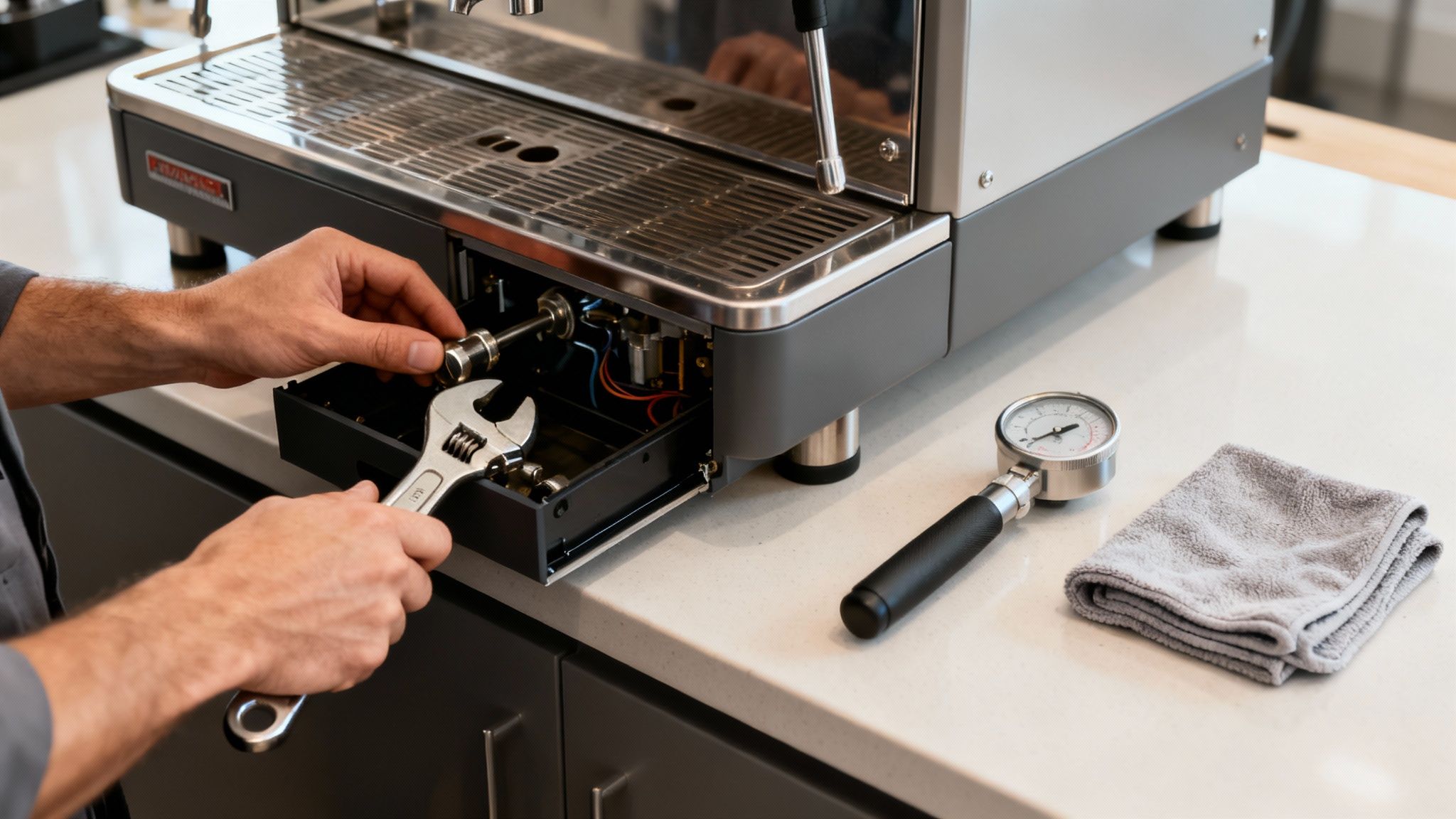
The journey to incredible espresso starts the moment your machine is delivered. Professional installation and calibration aren't just 'nice-to-haves'; they're absolutely essential for unlocking your equipment's potential. A certified technician does a lot more than just plug it in.
They’ll meticulously:
- Ensure the machine is correctly and safely hooked up to your water and electrical systems, meeting all UK regulations.
- Dial in the brew temperature, pressure, and volumetric settings to perfectly match your chosen coffee beans.
- Give your team a run-through on daily operations and the all-important cleaning basics.
Trying to install it yourself might seem like a way to save a few quid, but it can void your warranty and, worse, lead to poor performance or even immediate damage. A professional setup ensures your machine is perfectly tuned from the very first shot.
The Rhythm of Reliability: A Cleaning Schedule
If there’s one thing you can do to protect your investment and the flavour of your coffee, it's establishing a strict, non-negotiable cleaning routine. Believe it or not, over 90% of espresso machine malfunctions can be traced back to a lack of regular cleaning, especially from limescale and old coffee oil buildup.
Think of it as a simple daily and weekly rhythm that keeps your business running smoothly.
Daily Rituals (At the end of every day):
- Backflush each group head with a proper cleaning powder to dissolve built-up coffee oils.
- Scrub the group head shower screens and gaskets.
- Give the portafilters and baskets a thorough clean, soaking them overnight if they need it.
- Wipe down steam wands and purge them properly to stop milk residue from building up.
Weekly Tasks:
- Run a deeper backflush on all the group heads.
- Check and clear out the drip tray and waste pipes to prevent nasty blockages.
- Have a quick look at the seals and gaskets for any signs of wear.
Monthly Checks:
- Check your water filtration system and get those cartridges replaced as recommended.
- Keep an eye on the machine's overall performance—any odd changes in pressure or temperature?
This isn't just about avoiding breakdowns; it’s about quality control. A clean machine produces consistently fantastic coffee, free from the rancid, bitter taste of old oils.
Your Insurance Policy: Reliable Technical Support
When you're shopping around, the supplier you choose is just as important as the machine itself. A piece of hardware is only as good as the support network behind it. Before you sign on the dotted line, you need to ask some tough questions about their service department.
Choosing a supplier is like choosing a business partner. You need someone who will be there for you when things go wrong, not just when making the sale. A strong support system is your ultimate insurance policy against costly downtime.
Picture this: it’s 9 AM on a busy Friday, and your machine suddenly dies. How quickly can a qualified technician get to your shop? Do they keep essential spare parts in stock locally, or are you facing a two-week wait for something to be shipped from Italy?
A supplier with a responsive service team can turn a potential disaster into a minor hiccup. Prioritise partners who offer clear service agreements, have parts readily available, and have a solid reputation for being there when you need them. This kind of foresight is what separates a good investment from a truly great one.
Making Your Final Decision with Confidence
You’ve done the hard work. You’ve crunched the numbers, decoded the tech, and got your head around the true cost of bringing the right commercial espresso machine into your business. Now it’s time to pull all that knowledge together and make your move with absolute conviction.
This isn’t about taking a punt; it’s about making a calculated, confident choice. The final decision really rests on one thing: ensuring the machine is backed by a partnership that will help you succeed. The perfect machine isn’t just the one that makes incredible coffee—it’s the one supported by a reliable network that has your back when you need it most.
Your Pre-Purchase Checklist
Before you sign on the dotted line, it’s crucial to have one last, frank conversation with your potential supplier. This is your moment to iron out the details that turn a good purchase into a great long-term investment.
Use these questions as a final sanity check to make sure there are no nasty surprises waiting for you down the road.
- Warranty Details: What, exactly, does the warranty cover? Get specific about parts and labour. How long does it last, and what could potentially void it?
- Service Agreements: What happens when the warranty runs out? Do they offer ongoing service or maintenance plans? You need to know the call-out fees and, most importantly, the response times for an emergency repair.
- Training and Onboarding: Is on-site barista training included? How thorough is it, and what are the options for training new staff in the future?
- Parts Availability: How quickly can they get their hands on common spare parts like group head gaskets or heating elements? Are these parts stocked locally in the UK, or are you facing a long wait for them to be shipped from overseas?
Getting clear, straight answers here is non-negotiable.
The machine you choose has to do more than just make coffee. It must fit your budget, handle your volume, empower your team, and be backed by a service network you can trust implicitly.
This final check is all about protecting your investment. You aren’t just buying a piece of equipment; you’re choosing the heart of your business and a partner for the journey ahead. Step forward without doubt, certain that you’ve made the right decision to fuel your vision and delight your customers for years to come.
Your Questions, Answered
Choosing the right commercial coffee machine can feel like a huge decision, but getting it right starts with asking the right questions. Let's tackle some of the most common queries we hear from business owners looking to find the perfect machine for their setup.
How Many Group Heads Do I Really Need?
This all comes down to your busiest hour. The number of group heads you need is a direct reflection of your peak demand, and it's about striking that perfect balance between capacity and workflow so your customers aren't left waiting.
A cosy, neighbourhood café with a steady but manageable flow can often run brilliantly on a two-group machine. It allows one barista to work efficiently, pulling shots and steaming milk without getting bogged down.
However, if you're running a high-volume spot—think a bustling city-centre coffee shop or a train station kiosk—you'll almost certainly need a three-group or even a four-group machine to stop queues from forming during those morning rushes.
A good rule of thumb? It’s always better to have a little extra capacity in reserve than to constantly redline your machine. Planning for growth ensures your equipment can support your success, not hold it back.
What Is the Difference Between Automatic and Semi-Automatic?
The real difference here is about control—specifically, who's in charge of the shot extraction.
With a semi-automatic machine, your barista is in the driver's seat. They manually start and stop the flow of water, which allows for genuine artistry and the freedom to tweak each and every shot. It’s perfect for cafes where nuance and craft are front and centre.
An automatic (or volumetric) machine, on the other hand, uses pre-programmed settings for single and double shots. The barista just hits a button, and the machine dispenses a precise, pre-measured volume of water before stopping on its own. This guarantees rock-solid consistency, which is an invaluable asset in busy spots where speed and repeatability are everything.
Why Is a Water Filtration System So Important?
Honestly, a professional water filtration system is non-negotiable, and for two critical reasons.
First, your espresso is over 98% water, so its mineral content directly shapes the flavour in the cup. Unfiltered water can bring unwanted tastes that completely mask the delicate, complex notes of your coffee beans.
Second—and this is the big one—limescale buildup from hard water is the number one cause of catastrophic espresso machine failure. Think of a quality commercial filtration system as your machine’s best line of defence. It removes the damaging minerals that clog up internal components, not only extending the life of your machine but also helping you avoid thousands in potential repair bills down the line.
Should I Buy a New or Used Espresso Machine?
The initial savings of a used machine can look pretty tempting, but it’s a path that often comes with hidden risks. You rarely get a clear picture of its service history, it almost certainly won't have a warranty, and it could end up needing costly repairs much sooner than you’d planned.
A new machine gives you a manufacturer's warranty, the latest in energy-efficient tech, and the peace of mind that comes with a fresh start. For most new businesses, that reliability and long-term value make investing in new equipment well worth it.
At Ue Coffee Roasters, we know that the right equipment is the foundation of an incredible coffee programme. We partner with industry-leading brands to provide seamless, high-quality bean-to-cup solutions that bring the craft of speciality coffee right into your workplace. Ready to elevate your office environment? Learn more about our workplace coffee systems.