

A Guide to Brazil Coffee Beans
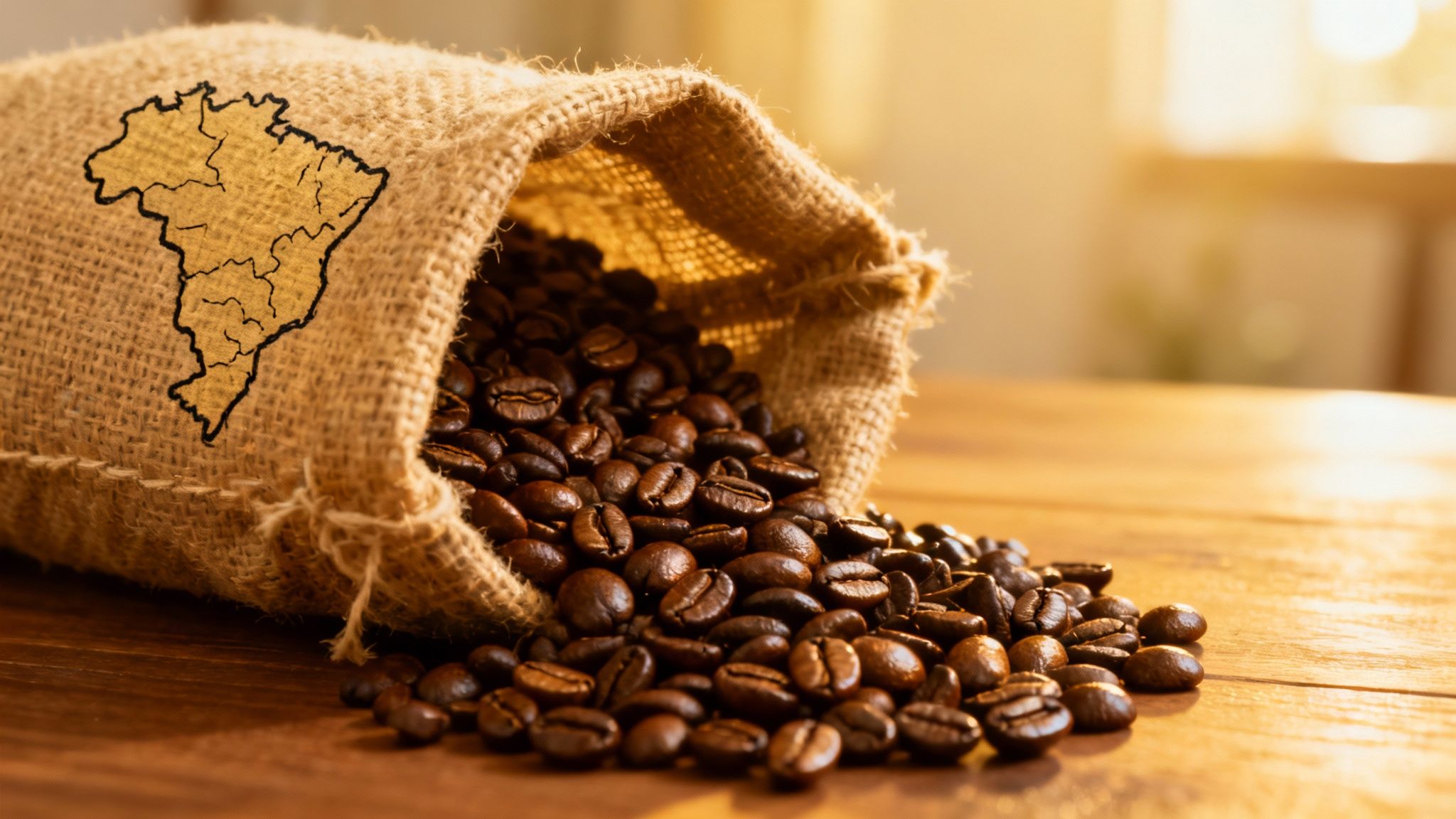
When you think of coffee, there’s a good chance you’re thinking of Brazil, even if you don’t realise it. Brazilian coffee beans are the absolute cornerstone of the global coffee industry, loved for their smooth, low-acidity flavour that’s packed with comforting notes of chocolate and nuts.
As the world's largest coffee producer for over 150 years, Brazil’s influence is everywhere. It shapes everything from speciality single-origin roasts to the rich, reliable espresso blends that power cafés around the globe. To truly understand coffee, you have to start here, with the soul of these celebrated beans.
The Heartbeat of the Global Coffee Scene
Picture the coffee world as a huge, sprawling ecosystem. Right at its very centre, you'll find Brazil—the undisputed giant whose beans form the foundation of countless daily rituals. This isn't just about sheer volume; it's about a familiar, welcoming flavour that has become a benchmark for quality and consistency worldwide.
This guide is your invitation to discover what makes Brazil coffee beans so universally adored. It’s a story that unfolds across sun-drenched plantations, guided by innovative farmers, and driven by a dedication to quality you can taste in every single cup.
Why Brazil Dominates the Coffee Landscape
Brazil’s success is no accident. It’s the result of a perfect harmony between geography, climate, and generations of human ingenuity. The country's vast, relatively flat plateaus are perfectly suited for large-scale cultivation, allowing for efficient harvesting that ensures a steady, high-quality supply for the rest of the world.
It’s this unique environment that gives Brazilian coffee its signature characteristics:
- A Smooth and Mild Flavour: These beans are incredibly approachable, lacking the sharp, biting acidity you might find in coffees from other regions.
- Rich, Comforting Notes: Think of warm, familiar tastes like milk chocolate, toasted nuts, and a hint of sweet caramel. It’s a flavour profile that feels like a warm embrace.
- Full-Bodied Texture: Brazilian coffee has a pleasant weight on the palate, creating a satisfying and well-rounded experience from the first sip to the last.
Brazil produces roughly one-third of the world's entire coffee supply. This incredible output doesn't just satisfy global demand; it stabilises the market, making it the reliable, steady heartbeat of the entire industry.
Of course, the coffee scene doesn't exist in a vacuum; it’s closely tied to wider shifts in how we all eat and drink. For a deeper look at where things are headed, it's worth exploring the 10 Food Service Industry Trends Shaping 2025 and Beyond. This context helps us appreciate how Brazilian coffee continues to adapt and thrive.
So, from the sprawling plantations of Minas Gerais to the best way to brew a cup in your own kitchen, let's uncover the soul and craft behind the beans that power our mornings and connect us all.
A Journey Through Brazil's Coffee Regions
To really get to grips with Brazilian coffee beans, you have to understand where they come from. We're not just talking about geography here; we're talking about 'terroir'—that unique blend of soil, climate, and altitude that gives each bean its distinct personality. Every region tells a different story, adding its own unique chapter to the rich, comforting brew in your cup.
Think of Brazil's coffee lands as a mosaic of flavours. Because the country is so vast, a coffee grown in one area can taste completely different from another, even if they're only a few hundred miles apart. This diversity is Brazil's greatest strength, offering a whole spectrum of profiles from classic and balanced to surprisingly sweet and complex.
This regional character is a big deal for coffee lovers, especially here in the UK. Brazil is, by far, the biggest coffee supplier to the United Kingdom. To put it in perspective, the UK imported around $246 million worth of coffee from Brazil in a single year, making it our top non-European source by a long shot. You can dig into the numbers and see the latest coffee export data on Trading Economics.
Minas Gerais: The Engine of Brazilian Coffee
When most people think of Brazilian coffee, they're often picturing a coffee from Minas Gerais. This southeastern state is an absolute powerhouse, growing roughly half of all the coffee in Brazil. Its rolling hills and stable climate create the perfect conditions for the classic, balanced flavours the world knows and loves.
Within this huge region, a few key areas really stand out:
- Cerrado Mineiro: This was the first region in Brazil to get a "Designation of Origin" status, much like you see with fine wines. Its well-defined seasons help produce coffees with a lovely caramel sweetness and nutty notes.
- Sul de Minas: Famous for its small family farms and high-quality beans, this area gives us coffees with a full body and hints of chocolate and citrus. It's a true coffee hotspot, accounting for 30% of the country's entire speciality Arabica output.
- Matas de Minas: With its humid climate and mountainous terrain, this region often produces beans with a fuller body and surprising fruity or spicy notes.
Mogiana: A Sweet Ascent
Heading further north, along the border of São Paulo and Minas Gerais, you’ll find the Mogiana region. Here, the higher altitudes and rich volcanic soil work together to create something pretty special. The cooler temperatures at these elevations mean the coffee cherries ripen more slowly, allowing more complex sugars to develop inside the bean.
Think of it like slow-roasting a vegetable versus blasting it with high heat. The slower process brings out deeper, sweeter, and more intricate flavours. That's exactly what’s happening to the coffee beans growing in the high-altitude farms of Mogiana.
The end result is a coffee that’s noticeably sweeter and often more fruit-forward than its neighbours. It still has that classic Brazilian smoothness, but with an added layer of bright, delightful complexity. This makes beans from Mogiana a top choice for single-origin brews, where their unique character can really take centre stage. Once you connect the place to the palate, you start to see how each region's story shapes the comforting brew in your hands.
Decoding Brazilian Coffee Varietals and Flavours
Ever wondered why a Granny Smith apple is so tart and crisp, while a Red Delicious is mellow and sweet? It all comes down to their genetics. Coffee is exactly the same. The different genetic strains are called varietals, and they are the secret behind the signature taste of Brazil coffee beans.
Getting to know these varietals is your key to understanding why that daily cup of Brazilian coffee feels so reliably comforting and familiar.
Over generations, Brazilian farmers have cultivated specific varietals that thrive in the country’s unique climate and topography. These are the unsung heroes behind that classic low-acidity, full-bodied profile that has captured the world's heart. They aren’t just names on a bag; they're a guarantee of a certain flavour experience.
This infographic breaks down how a region's 'terroir'—its unique environment—shapes the final flavour in your cup. It traces the path from the central concept out to specific growing areas like Minas Gerais and Mogiana.
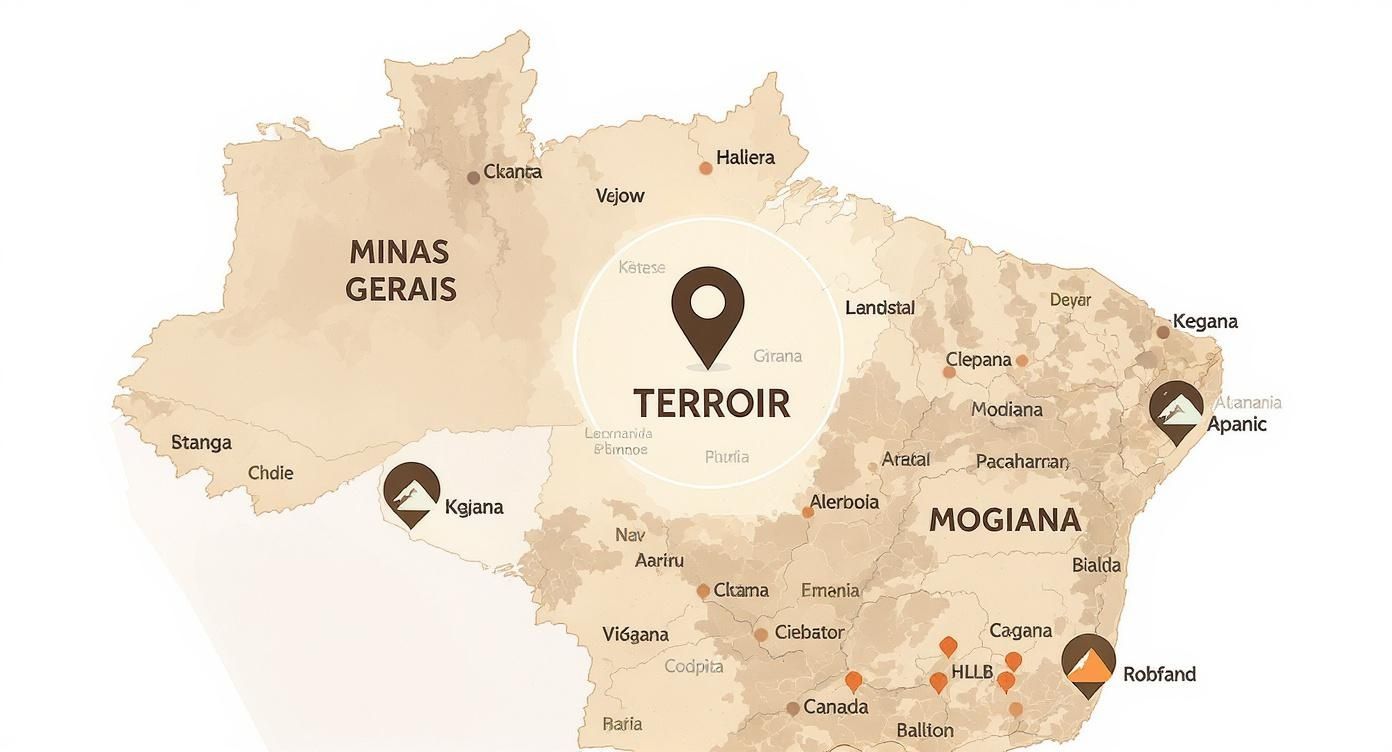
As you can see, the distinct geographical features, like the rolling hills of Minas Gerais, are directly linked to the coffee's taste.
The Most Common Brazilian Varietals
While countless coffee types exist, a select few form the cornerstone of Brazilian coffee production. They consistently deliver the smooth, approachable flavour that makes these beans so incredibly versatile and loved in homes, cafés, and offices everywhere.
These are the main players you’ll come across:
- Bourbon: One of the most famous varietals in the coffee world, celebrated for its sweet, caramel-like notes and wonderfully complex character. It's a true classic that often forms the backbone of many high-quality blends.
- Caturra: A natural mutation of Bourbon, Caturra is prized for its bright acidity (by Brazilian standards, at least!) and subtle citrus undertones, which give it a slightly livelier feel in the cup.
- Mundo Novo: This robust hybrid of Bourbon and another classic, Typica, is a farmer's dream. It's exceptionally productive and perfectly suited to Brazil’s climate, yielding a sweet, full-bodied coffee with very low acidity.
Think of these varietals like a family tree. Bourbon is the distinguished ancestor. Varietals like Caturra and Mundo Novo are its successful descendants, each carrying on the family legacy while adding their own unique twist.
This shared genetic heritage is precisely why Brazilian coffee is such a reliable foundation for so many different coffee experiences, from a simple black coffee to a complex espresso blend.
A Look at Common Brazilian Varietals
To help you get a better handle on what to expect, here’s a quick comparison of the most popular varietals and their typical flavour profiles.
| Common Brazilian Coffee Varietals and Their Flavor Profiles | |||
|---|---|---|---|
| Varietal | Typical Flavor Notes | Acidity Level | Body |
| Bourbon | Caramel, chocolate, malt, sweet fruit | Low to Medium | Medium |
| Caturra | Lemon, lime, honey, nutty | Medium | Light to Medium |
| Mundo Novo | Dark chocolate, roasted nuts, earthy sweetness | Low | Full, heavy |
| Catuaí | Caramel, honey, nutmeg | Low | Medium |
Each of these varietals brings something slightly different to the table, but they all share that characteristically smooth and approachable quality that defines Brazilian coffee.
The Signature Flavour Profile
When you combine these specific varietals with Brazil's typically lower growing altitudes, you consistently get a cup defined by comforting and harmonious flavours. When you brew a cup of Brazilian coffee, you are tasting the direct result of this deliberate cultivation.
The profile is almost always marked by a rich, full body and very low acidity, making it incredibly smooth on the palate. This gentle, soft character allows the deeper, sweeter notes to take centre stage, creating a brew that’s both deeply satisfying and exceptionally easy to drink.
You can pretty much always count on finding these inviting notes:
- Chocolate: Anything from creamy milk chocolate to deeper, dark cocoa.
- Nuts: Toasted almonds, peanuts, and walnuts are very common.
- Caramel: A soft, lingering sweetness that rounds out the finish.
This signature combination is what makes Brazilian coffee the secret weapon behind world-class espresso. Its low acidity and full body create that thick, stable crema every barista dreams of, while its chocolatey notes pair perfectly with milk in a latte or cappuccino. It’s this dependable, delicious character that makes it the perfect choice for your daily brew.
The Art of Sun-Kissed Coffee Processing
The journey from a plump, ruby-red coffee cherry to the familiar brown bean in your grinder is where the real magic happens. In Brazil, this isn't just a technical step; it's a craft perfected over generations, born from the country’s abundant sunshine and dry seasons. These processing methods are the final, crucial touch that defines the classic flavour of Brazil coffee beans.
Unlike many other coffee-growing nations where water is plentiful, Brazil’s climate demanded a different approach. Farmers learned to work in harmony with the sun, developing techniques that not only conserve water but also coax incredible depth and sweetness out of the beans. This is the secret behind that comforting, smooth character the world has come to love.
The Natural Process: A Sun-Kissed Tradition
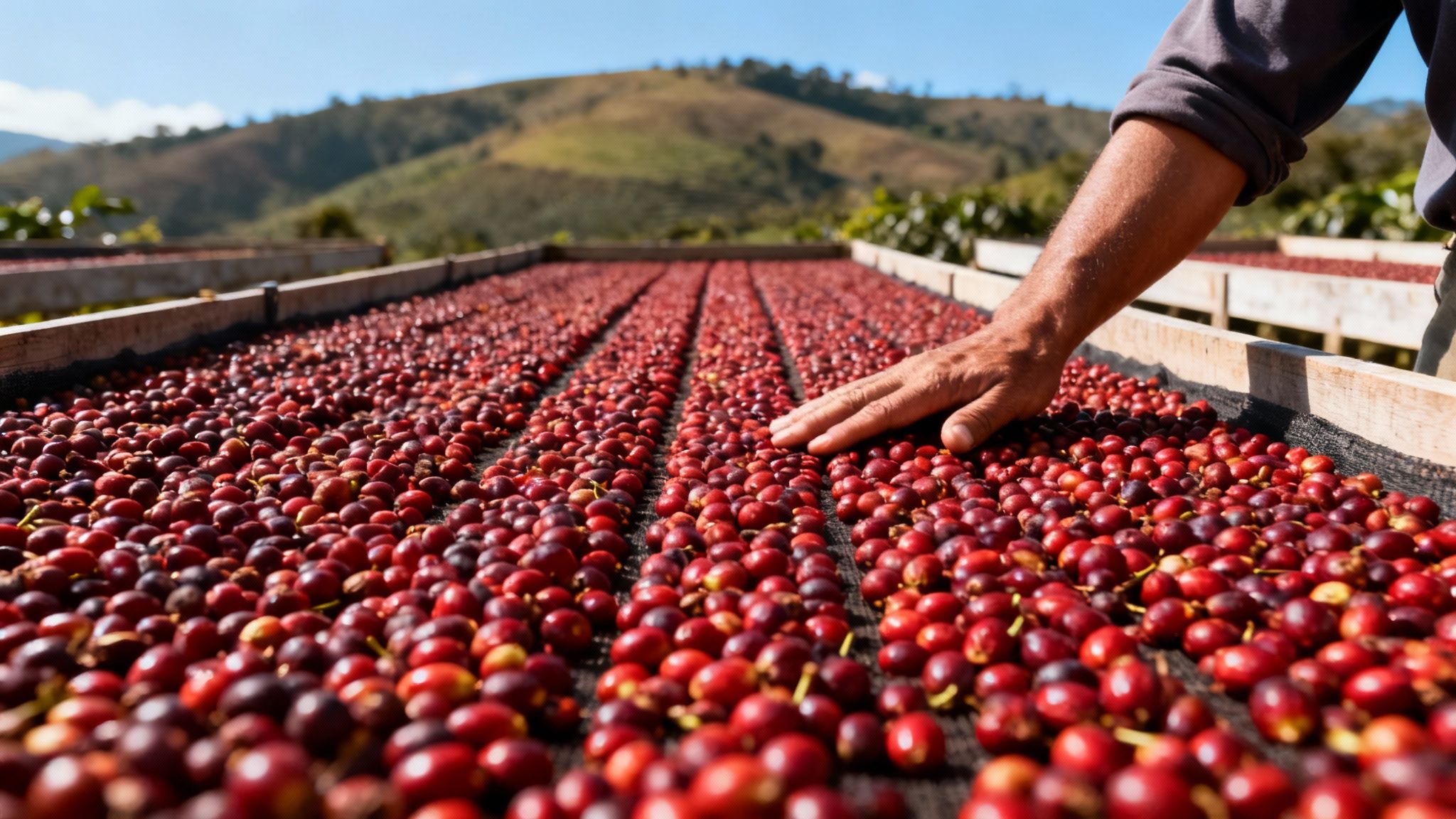
The most traditional and widely used method in Brazil is the natural process. Think of how sun-dried tomatoes are made—the whole fruit is left to dry, allowing its flavours to concentrate and intensify. The same idea applies here.
Entire, unwashed coffee cherries are spread out on huge patios or raised beds to dry under the brilliant Brazilian sun. This can take up to four weeks, a slow and patient process where the sugars and fruity compounds from the cherry pulp are absorbed right into the bean.
This sun-powered fermentation results in a coffee with:
- Remarkable Sweetness: That long contact with the fruit pulp gives the bean a distinct, almost jam-like sweetness.
- Heavy Body: The final cup feels wonderfully rich and full on the palate.
- Complex Fruit Notes: It often develops flavours of berries, raisins, and other stone fruits, adding layers to the classic chocolatey base.
The Pulped Natural Method: A Modern Balance
For a cup that offers a cleaner, more refined profile, many Brazilian producers now use the pulped natural (or honey) process. It’s a fantastic middle ground between the traditional natural process and the fully washed methods you see elsewhere.
Here, the outer skin of the coffee cherry is stripped away, but a good amount of the sticky, sugary fruit mucilage is left clinging to the bean as it dries. This technique needs careful management, but it rewards the farmer with a cup that beautifully marries sweetness with clarity.
The pulped natural process is a perfect compromise. It keeps much of the body and sweetness from the natural method while introducing a cleaner finish and brighter notes, creating a cup that is both complex and incredibly approachable.
This method produces a coffee that strikes an exquisite balance, showcasing both the bean's inherent qualities and the sweetness of its fruit. It’s a testament to the ongoing refinement that keeps Brazilian coffee at the top of its game.
These processing methods are a core reason why the UK coffee market relies so heavily on Brazilian exports. In fact, Brazil’s export value to the UK recently hit approximately $246 million, cementing its place as a key partner in our national coffee habit. You can discover key insights into the UK coffee market on Statista to learn more about these global trade dynamics.
Brewing the Perfect Cup of Brazilian Coffee
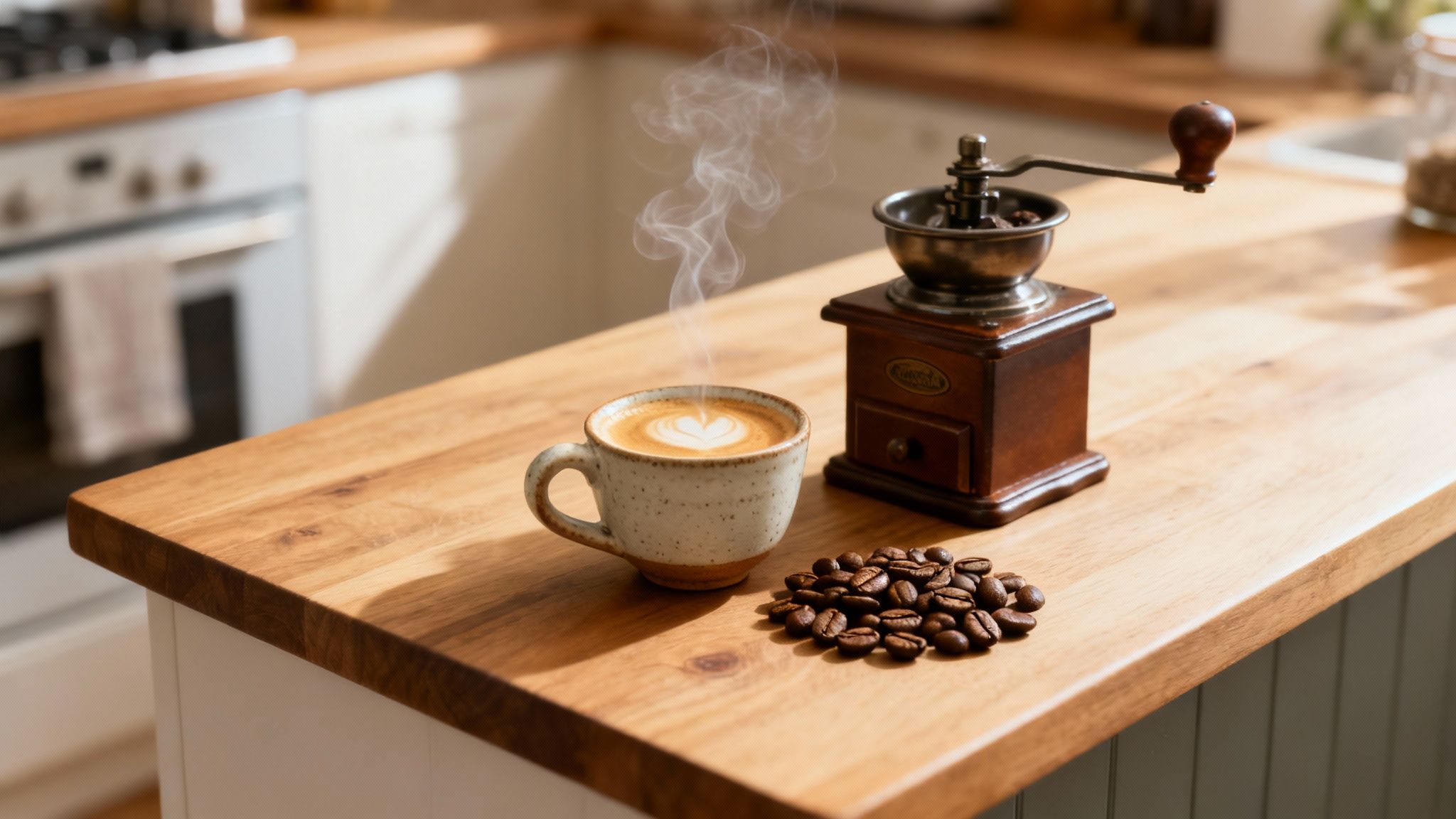
All that talk of history, terroir, and processing methods comes down to this one moment—right here in your kitchen. This is where the story of your Brazil coffee beans reaches its delicious conclusion, turning a simple bean into a moment of pure comfort. And the best part? With a few simple techniques, you can unlock its full potential and craft a truly exceptional cup at home.
The beauty of Brazilian coffee is just how forgiving and versatile it is. Its signature low acidity and full body make it a dream to work with, whether you're pulling a syrupy espresso shot or brewing a gentle filter coffee. The goal is always the same: to bring out those wonderful notes of chocolate, nuts, and caramel.
Espresso and Moka Pot: The Perfect Match
For methods that use pressure, like an espresso machine or a stovetop Moka pot, Brazilian beans are an absolute classic. Their natural character is perfectly suited to creating a rich, concentrated brew that forms the heart of drinks like lattes and cappuccinos.
The low acidity is the real hero here. It guarantees the resulting shot is smooth and sweet, never sharp or sour. This, combined with a full body, produces a thick, stable, and beautiful crema—that lovely reddish-brown foam on top of a perfect espresso. To get this at home, you’ll want a fine grind, similar to the texture of table salt. This allows the pressurised water to extract all those deep, chocolatey flavours efficiently.
French Press and Drip Methods
If you prefer a longer, more mellow cup, immersion methods like the French press or pour-over drippers are fantastic choices. These brewing styles allow the coffee's subtler nuances to shine through, creating a smooth, balanced, and incredibly comforting drink.
For these methods, grind size is your most important tool:
- French Press: Go for a coarse grind, something that looks like rough sea salt. This stops the coffee from over-extracting during its long steep, which can make it bitter, and ensures a clean press without loads of sediment.
- Drip Coffee Maker/Pour-Over: A medium grind is ideal, similar to granulated sugar. This consistency allows water to flow through at just the right pace—extracting all the sweetness without tasting watery or weak.
Think of your grind size as the gatekeeper of flavour. A finer grind has more surface area, releasing flavour quickly under pressure. A coarser grind has less surface area, perfect for a slower, more gentle extraction.
Your Brewing Blueprint
No matter which method you choose, a few universal principles will elevate your brew from good to great. Think of this as your simple guide to consistently delicious coffee.
Start with a solid coffee-to-water ratio. A great starting point is 1:16, which means one part coffee to sixteen parts water. For example, use 15 grams of coffee for every 240 ml of water. Feel free to adjust this to your personal taste, but it’s a reliable foundation for a balanced cup.
Water temperature also plays a massive role. Aim for water that is just off the boil, ideally between 90°C and 96°C. If it’s too hot, it can scorch the grounds and create a bitter taste. Too cool, and you'll end up with a weak, under-extracted brew. Following these simple steps will have you brewing cafe-quality coffee at home, unlocking the delicious potential inside every single bean.
Your Brazilian Coffee Questions Answered
We’ve covered a lot of ground on our journey through Brazil coffee beans, but it’s natural to have a few questions still percolating. Let's round things off by tackling some of the most common queries, connecting the dots from the sun-drenched farms of Minas Gerais right to the cup in your hand.
Think of this as our final chat over a great brew, making sure you feel ready to choose, brew, and enjoy your next coffee with total confidence.
What Makes Brazilian Coffee Beans So Special?
The magic really lies in a combination of two things: lower growing altitudes and sun-focused processing methods. This pairing creates a coffee that is exceptionally smooth and noticeably low in acidity, which allows its deeper, more comforting flavours to take centre stage.
It’s a flavour profile that feels like a warm embrace.
That incredibly approachable flavour—defined by a full body and notes of chocolate, caramel, and nuts—is exactly what has made it a global favourite. It’s the perfect foundation for countless espresso blends and a deeply satisfying choice for your daily cup.
This consistent, welcoming taste is its true superpower. It’s a coffee that doesn’t shout for your attention with sharp, bright notes; instead, it invites you in with its smooth, gentle character.
Do Brazil Coffee Beans Have a Lot of Caffeine?
This is a great question, but the answer has more to do with the coffee species than its country of origin. The vast majority of speciality coffee from Brazil is of the Arabica species, which naturally contains less caffeine than its more intense cousin, Robusta.
So, a standard cup brewed with Brazilian Arabica beans will give you a pleasant, moderate energy boost. It’s the ideal lift for your daily routine, offering clarity and focus without ever making you feel jittery or overwhelmed. Think of it as a steady, reliable source of fuel for your day.
Is Brazilian Coffee a Good Choice for Espresso?
It’s not just a good choice—it’s one of the best. Brazil coffee beans are a cornerstone of the espresso world for a few key reasons. Their natural low acidity, rich body, and deep chocolatey notes create what many consider the quintessential espresso shot.
This profile delivers a classic, balanced flavour that’s both smooth and powerful. Better yet, it’s the secret behind that thick, stable, and beautiful crema every coffee lover looks for. Whether you’re pulling a straight shot or using it as the base for a latte or cappuccino, Brazilian beans provide a flawless, delicious foundation.
At Ue Coffee Roasters, we believe a great day at the office starts with a truly exceptional cup of coffee. We bring the craft and quality of speciality Brazilian beans directly to your workplace, providing a seamless, café-quality experience that boosts morale and inspires your team. Explore our premium office coffee and refreshment solutions at https://www.uecoffeeroasters.com.