

The Ultimate Guide to Coffee Machine Filters
Let’s be honest, the secret to a genuinely great cup of coffee isn’t just the beans or the fancy machine. It’s the unsung hero working away inside: the coffee machine filter. It's easily the single most important component for turning a decent office brew into something truly special.
The Journey from Good to Great Coffee Starts Here
Welcome to the real engine room of your coffee machine. If your business has invested in a high-quality bean-to-cup system, then getting to grips with filtration isn't just a minor detail—it’s the key to protecting that investment and pouring a consistently perfect cup, every single time. It's about more than just maintenance; it’s about mastering the craft of brilliant coffee that lifts spirits and makes a real statement.
This guide will demystify the world of filters, showing you how to go from an average brew to genuine coffee excellence. We’ll break down the two critical types of filtration that work in tandem to get the job done, each playing its own crucial role.
The Two Pillars of Coffee Filtration
The path to a better cup of coffee is built on understanding these two key players:
- Brew Filters: These are the artists, shaping the final flavour and texture. They work directly with the ground coffee, deciding the clarity, body, and overall character that makes it into your cup.
- Water Filters: These are the purifiers, laying the groundwork. They get to work before brewing even begins, stripping out impurities and balancing minerals in the water. This creates a clean, neutral canvas that lets the coffee beans' true flavour shine through.
Think of it like this: your coffee beans are the lead actor, but the water filter is the director setting the stage perfectly. Meanwhile, the brew filter is the editor, shaping the final performance. If one of them isn’t on form, the whole production falls flat.
By getting to know how each type of coffee machine filter works, you’re not just learning to maintain your equipment. You’re learning how to actively improve every single drink it makes. This knowledge transforms the daily coffee run from a simple habit into a powerful tool for workplace happiness. For any office or facilities manager, this is the key to making sure your premium machine delivers on its promise, cup after glorious cup.
Understanding Brew Filters vs Water Filters
To get from a good cup of coffee to a truly brilliant one, you need to understand the two unsung heroes working inside your machine. It’s simple when you break it down: a brew filter is the gatekeeper of flavour and texture, while a water filter is the guardian of your most important ingredient. One shapes the final drink; the other perfects the starting point.
This distinction is crucial. Brew filters—whether they’re disposable paper or a permanent mesh screen—have the final say on what lands in your cup. They’re in direct contact with the coffee grounds, controlling how water flows through them and deciding which delicate oils and fine particles make the cut. This single step determines whether your coffee has a crisp, clean finish or a rich, full-bodied character.
Water filters, on the other hand, do their work long before brewing even begins. These systems, often using activated charcoal or scale-control technology, focus entirely on the water itself. Their job is to create a pure, neutral canvas, allowing the true potential of your coffee beans to shine through.
Brew Filters: The Gatekeeper of Flavour
Brew filters are all about the final performance—what you actually taste and feel in the cup. They’re responsible for the mouthfeel, clarity, and body of the coffee.
In an office setting, you’ll mainly come across two types:
- Paper Filters: These are the masters of clarity. Their tightly woven fibres trap nearly all the coffee oils and micro-grounds. The result is a brew that’s exceptionally clean and bright, letting the more subtle, nuanced flavours of the beans take centre stage.
- Permanent Mesh Filters: Usually made from stainless steel, these filters have larger pores that allow more natural oils and some fine sediment to pass through. This creates a coffee with a heavier body, a richer texture, and a more robust flavour profile.
There’s no right or wrong choice here; it's all about the kind of coffee experience you want to create. A paper filter gives you that light, crisp result, while a mesh filter delivers a bolder, more viscous cup.
Water Filters: The Guardian of Purity
While the brew filter shapes the coffee, the water filter protects both the flavour and the machine itself. Since coffee is over 98% water, the quality of that water is everything. Water filters are there to tackle impurities that can ruin your brew before it even starts.
A water filter ensures the only thing you taste is the coffee, not the journey the water took to get there. It strips out distractions like chlorine and prevents the damaging build-up of limescale, protecting your investment and guaranteeing a pure taste.
These filters are the silent guardians that stop a chemical aftertaste from chlorine or a dull, chalky flavour from hard water minerals. By removing these unwanted elements, they let the complex flavour notes of your beans—whether fruity, floral, or chocolatey—come through loud and clear.
To help you visualise how these two components work together, let's compare them side-by-side.
Brew Filters vs Water Filters at a Glance
| Attribute | Brew Filters (Paper/Mesh) | Water Filters (Charcoal/Scale) |
|---|---|---|
| Purpose | To separate coffee grounds from the liquid brew | To purify water before it enters the machine |
| What It Affects | Flavour, body, clarity, and mouthfeel of the final cup | Taste purity, machine longevity, and performance |
| Location in Machine | In the brew group, where coffee is made | Attached to the water inlet line or in the water tank |
| Common Types | Disposable paper, reusable stainless steel mesh | Activated charcoal, ion exchange resin, reverse osmosis |
Ultimately, one filter manages the extraction process, while the other ensures the ingredient quality is top-notch. You need both working in harmony for the best results.
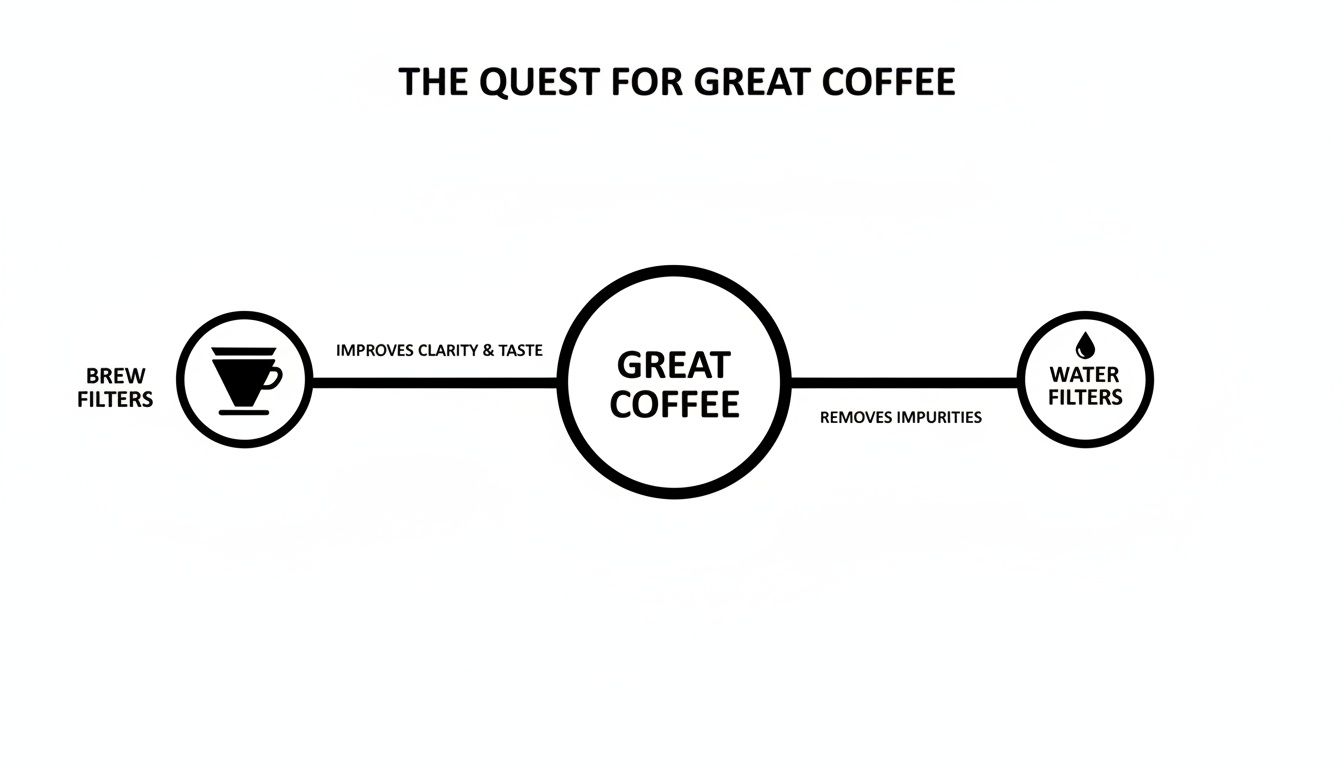
As you can see, achieving a superior cup of coffee is a two-step process. It requires both the purification of the water and the careful shaping of the final brew.
The UK's passion for great coffee isn't just a cultural trend; it's big business. The UK holds a commanding 24.6% share of the European coffee filter paper market. This reflects the explosion in speciality coffee and represents a huge slice of the USD 2.1 billion global market—a figure projected to hit USD 3.6 billion within a decade.
If you're looking to dive deeper into water quality beyond just coffee, you can find some excellent general water filter advice from dedicated resources. Mastering both the brew and water filters in your coffee machine is the real secret to unlocking its full potential and delivering a consistently fantastic coffee experience for your team.
Why Water Quality Is Your Coffee's Secret Weapon
It sounds a bit mad, but your finished cup of coffee is over 98% water. That simple fact makes water the single most important—and most overlooked—ingredient in your daily brew. The quality of the water coming out of your tap holds the power to make a coffee that sings or one that falls disappointingly flat.
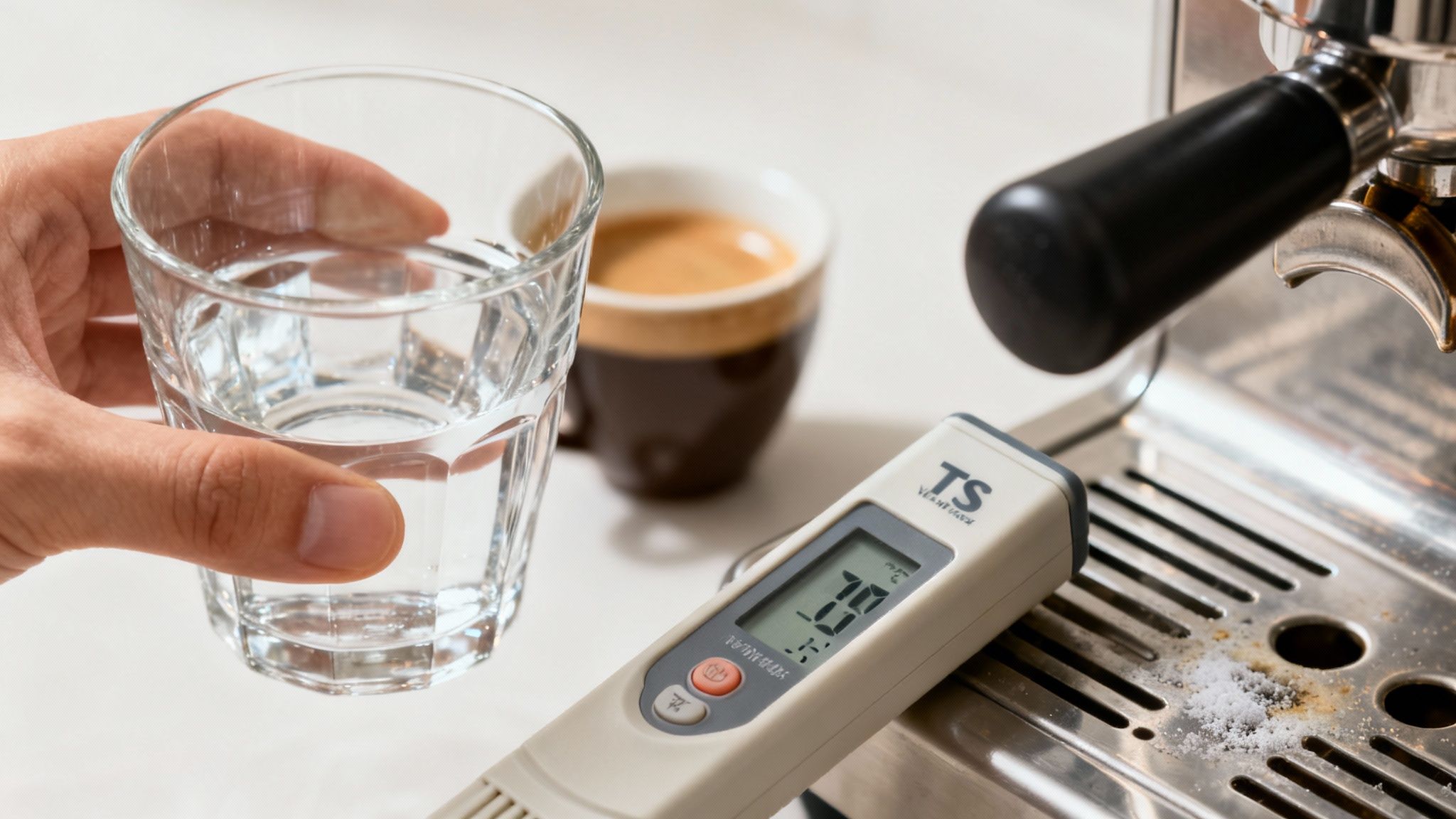
Think of water as the canvas your coffee’s flavour is painted on. If that canvas is already smudged with impurities, the final picture will be compromised, no matter how amazing the coffee beans are. The stuff hiding in your tap water can be a real saboteur.
This is where the right coffee machine filters stop being an optional extra and become an essential tool. They clean the canvas, making sure the only thing you taste is the coffee itself.
The Taste Saboteurs in Your Tap Water
Two main culprits lurk in unfiltered tap water, and each one has a uniquely damaging effect on your coffee's flavour. Getting to know them is the first step toward a better cup.
First up is chlorine, the chemical used to keep our municipal water safe. It’s vital for public health, but even tiny amounts can leave a harsh, medicinal aftertaste in your coffee—think swimming pool. It completely smothers the delicate floral or fruity notes you should be tasting.
Then you’ve got excess minerals—mostly calcium and magnesium—which give us “hard water.” A certain amount of minerals is actually good for flavour extraction, but too much is a disaster. It causes over-extraction, pulling out bitter, chalky compounds from the coffee grounds and leaving you with a dull, lifeless brew.
Water quality is the foundation of every great cup. Unfiltered water forces your premium coffee beans to compete with chlorine and excess minerals, but filtered water lets their true character sing. It’s the difference between a muted performance and a standing ovation.
By tackling these issues, a water filter doesn’t just get rid of bad tastes; it creates the perfect stage for the good ones to shine.
The Hidden Danger to Your Machine
The damage from poor water quality goes way beyond just a bad-tasting brew. For any business that's invested in a high-end bean-to-cup machine, limescale is a silent and very expensive threat.
When hard water gets hot, those calcium and magnesium minerals turn into limescale—a hard, chalky deposit. Picture it as cholesterol building up in your coffee machine's arteries. It quietly clogs the boiler, heating elements, pipes, and valves.
The consequences get progressively worse:
- Reduced Efficiency: Limescale acts as an insulator, making the heating elements work much harder and use more energy just to reach the right temperature.
- Inconsistent Brewing: Clogged pipes mess with water flow, leading to dodgy shot volumes and poor extraction. Your coffee quality becomes a lottery.
- Expensive Breakdowns: Eventually, the strain causes components to fail. That means costly repairs and frustrating downtime for the whole office.
A proper water filtration system is your machine’s best line of defence. For those serious about preventing mineral buildup and ensuring the purest brew, exploring advanced water purification methods like reverse osmosis can be a game-changer. It's a proactive step that protects your investment for the long haul.
By getting a handle on your water quality, you turn a potential liability into your greatest asset. The right filters not only elevate the flavour in every cup but also protect the heart of your office coffee setup, keeping it running smoothly for years.
How to Choose the Right Filters for Your Machine
Moving from the 'why' to the 'how', picking the right coffee machine filters can feel like a bit of a puzzle. But once you break it down, the path to the perfect choice is actually pretty clear. It’s not about finding one single "best" filter, but about matching the right one to your machine, your water, and your office’s daily rhythm.
This is your no-nonsense guide to getting it right. By focusing on three core pillars—machine compatibility, local water quality, and daily coffee consumption—you can confidently set your system up for flawless performance and consistently brilliant coffee.
Start with Machine Compatibility
First things first: any filter you choose must be designed for your specific coffee machine. High-performance bean-to-cup systems are finely tuned pieces of kit. Using an incompatible filter is a bit like putting the wrong fuel in a high-performance car; you'll get poor results and, eventually, cause some serious damage.
You should always prioritise manufacturer-approved filters. This isn't just a friendly suggestion; it's often a condition of your machine's warranty. A third-party filter might save you a few pounds upfront, but it could easily void your warranty, leaving you with a hefty bill if something goes wrong down the line.
Protect Your Investment: The manufacturer knows their machine's flow rates, pressure needs, and internal pathways better than anyone. Sticking with their specified filters guarantees a perfect fit, optimal performance, and total peace of mind.
Assess Your Local Water Hardness
Like we’ve covered, water quality is a massive piece of the puzzle. Before you can choose the right water filter, you need to know exactly what you’re working with. The mineral content in your local water supply—its "hardness"—will determine which type of filtration you need to protect your machine and nail your coffee’s flavour.
Figuring out your water hardness is simple:
- Test Strips: These are cheap, easy to use, and give you an instant reading.
- Local Water Supplier: Your local council or water company usually provides detailed quality reports online. Just pop in your postcode.
- Visual Clues: Have a look inside your kettle. If you see a white, chalky residue (limescale), you’ve got hard water.
Once you know your water’s profile, you can pick a filter designed to handle it. For soft water areas, a basic activated charcoal filter might be all you need to get rid of chlorine. But for hard water regions, a more robust system with ion-exchange resin is essential to stop limescale in its tracks.
Factor in Your Daily Coffee Volume
So, how much coffee does your office actually get through? The answer is crucial for choosing the right capacity filter and setting a realistic replacement schedule. A filter's lifespan is measured in litres, and a busy office can burn through that allowance surprisingly quickly.
If you underestimate your consumption, the filter will be exhausted long before its next scheduled change, leaving your machine unprotected. Overestimate, and you’ll be throwing away perfectly good filters and wasting money.
The best approach? Track your average daily consumption for a week to get a solid baseline. This data will help you choose a filter rated for your office's real-world needs, ensuring it works effectively right up until it’s time for a new one.
Paper vs Permanent Brew Filters
The final piece of the puzzle is the brew filter itself. Here, the choice really comes down to balancing convenience, cost, and your company's values.
- Disposable Paper Filters: These offer unbeatable convenience and hygiene. Every brew is fresh, and clean-up is as simple as it gets, making them ideal for busy workplaces. They also produce a very clean, bright-tasting cup by trapping oils and fine sediment.
- Permanent Mesh Filters: A fantastic, sustainable option. They need a quick daily rinse, but they completely eliminate recurring waste and cost. Mesh filters also allow more of the coffee's natural oils into the cup, resulting in a brew with a fuller body and richer texture.
The choice often says a lot about your office culture. Are you all about speed and simplicity, or are sustainability and long-term savings more important? There’s no wrong answer, but it’s a decision worth making consciously.
While high-end bean-to-cup machines are becoming a workplace standard, it's worth noting the enduring popularity of simpler methods. In the UK coffee machine market, drip filter machines have long been a cornerstone, commanding a dominant 55.51% revenue share in a recent year. This just goes to show how fundamental the principles of filter brewing are to the British coffee palate. You can read the full research about the UK coffee machine market to understand these trends better.
Mastering Filter Installation and Maintenance
Think of a pristine filter as the very heartbeat of your coffee machine. It's not just another task on the list; getting the rhythm of installation and maintenance right is the single most powerful thing you can do to guarantee a perfect cup, every single time. This simple routine protects your investment, keeps the machine running smoothly, and fuels a brilliant coffee culture in your workplace.
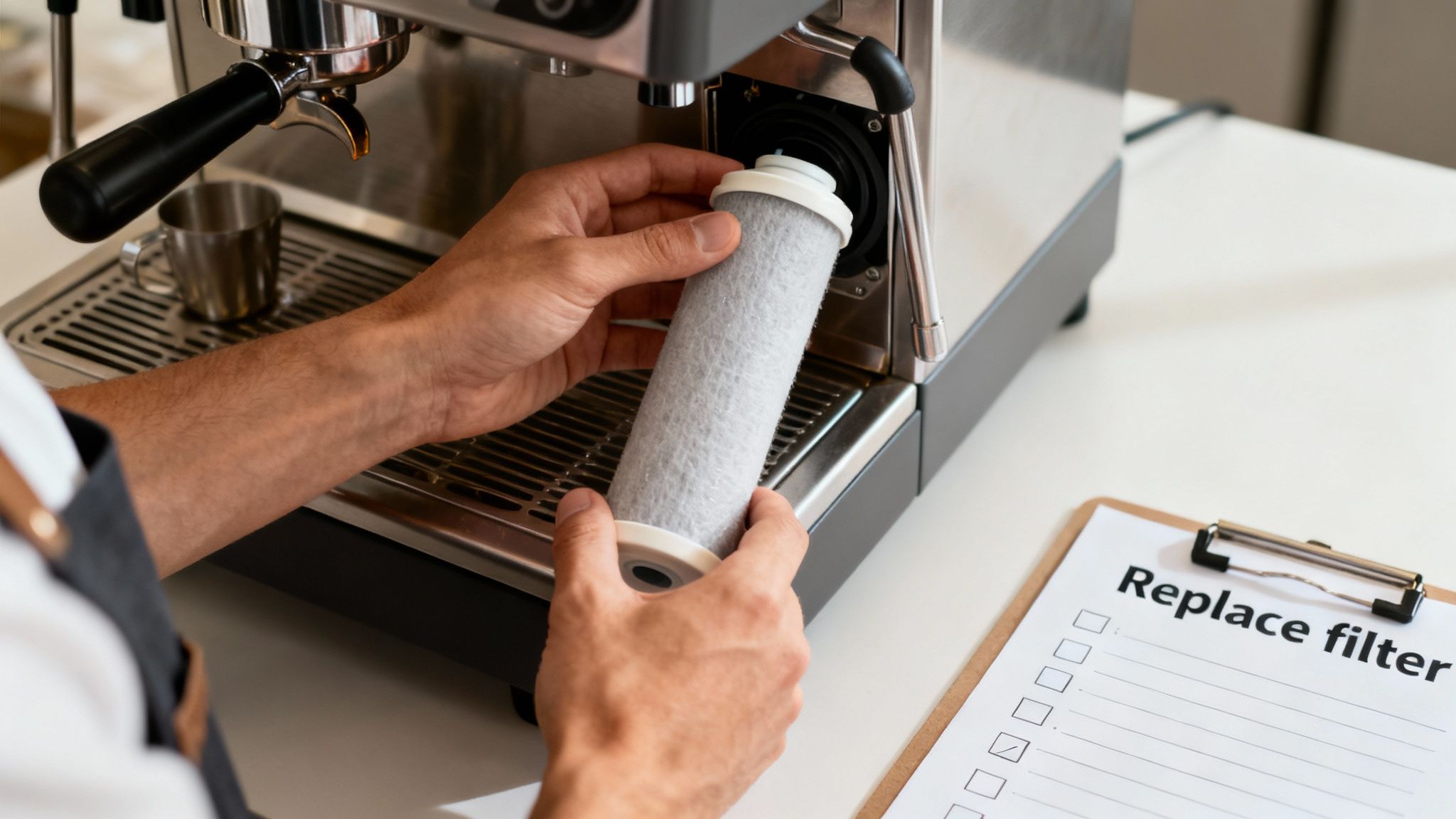
It all starts with a flawless installation. When you pop in a new water filter, you can't just slot it in and hope for the best. A proper flush is non-negotiable. This primes the filter, washing away any loose carbon particles from the manufacturing process and ensuring it’s ready to perform perfectly from day one.
The Universal Steps for Water Filter Installation
While your machine's manual should always be your go-to guide, the good news is that most water filter installations follow a similar, straightforward process. Get this right, and you're setting the stage for months of pure, delicious coffee.
- Soak the New Filter: Pop your new coffee machine filter cartridge into a bowl of fresh, cold water for about 15 minutes. This saturates the filtration media inside, which is key to preventing annoying airlocks later.
- Rinse and Flush: After its bath, hold the filter under a running tap for around 60 seconds. This quick rinse helps clear out any last fine particles.
- Install Securely: Following your machine’s instructions, take out the old filter and insert the new one. Listen for a click or feel it lock firmly into place—a perfect seal is crucial.
- Run Priming Cycles: Now, run at least two full tanks of water through the machine without any coffee. This final flush purges the entire system, confirms water is flowing properly, and gets the filter ready for its first real brew.
Your Practical Maintenance Schedule
Consistency is everything when it comes to long-term performance. A simple, predictable schedule turns maintenance from a chore that gets forgotten into a powerful habit. Use the following as a starting point and tweak it to fit your office’s coffee consumption.
A proactive maintenance schedule is your machine’s health plan. It prevents problems before they start, ensuring every cup is as fresh and delicious as the last, and saving you from the stress and cost of unexpected downtime.
Here’s a practical schedule that outlines what to check and when for a typical office environment.
Sample Office Coffee Filter Maintenance Schedule
| Task | Frequency | Key Indicators for Replacement |
|---|---|---|
| Clean Brew Basket/Mesh Filter | Daily | This is a must for hygiene and taste. Old grounds left overnight will make every brew taste bitter and stale. |
| Check Water Flow and Brew Time | Weekly | Notice if your machine seems sluggish or is taking longer to brew. This is often the first sign a water filter is getting clogged. |
| Replace Water Filter Cartridge | Every 2-3 months or as per manufacturer's litre rating | Keep an eye on the machine's display for a 'replace filter' alert. If it doesn't have one, just mark the date in a shared calendar. |
This isn't a niche concern. Filter coffee machines are a huge part of the UK's coffee market, commanding the largest revenue share at 55.51% of the USD 268.6 million coffee machine market in a recent year. Their popularity underscores just how important proper maintenance is. You can find more insights in the comprehensive Coffee At Home Report UK.
To stay on top of this, just create a simple log sheet next to the machine or set up recurring calendar reminders for the facilities team. A little organisation goes a long way.
Recognising the Signs of a Failing Filter
Often, your coffee machine will give you a heads-up when something’s wrong—you just need to know what to look for. Catching these early warnings can stop a small hiccup from turning into a major headache.
- A Decline in Taste: If the coffee suddenly tastes off—maybe bitter, chalky, or with a strange chemical tang—your water filter has probably given up the ghost.
- Slower Brewing Times: A noticeable increase in how long it takes to brew a cup is a classic sign of a clogged filter that’s struggling to let water through.
- Visible Limescale: If you start seeing white, flaky bits around the water nozzle or in the drip tray, your scale filter is no longer doing its job.
By mastering this simple but essential maintenance routine, you take full control of your office coffee quality. You’re not just changing a filter; you’re making sure every team member gets the fresh, vibrant, and inspiring coffee experience they deserve, day in and day out.
The Big Picture on Cost and Sustainability
Choosing the right coffee machine filters is about more than just day-to-day maintenance. It’s a strategic decision that speaks volumes about your company’s commitment to quality, efficiency, and responsibility. Think of high-quality filtration not as an expense, but as a crucial investment in the longevity of your equipment and the happiness of your team.
The upfront cost is tiny when you weigh it against the long-term savings. Limescale is the silent killer of coffee machines, responsible for over 50% of all breakdowns. By tackling this head-on, you protect your investment, prevent frustrating downtime, and ensure the office coffee hub remains a reliable source of morale, not a maintenance headache.
Balancing the Budget with Your Green Goals
The conversation around filters also opens up a brilliant opportunity to align your daily operations with your company's bigger environmental goals. The choice between different filter types lets you make a conscious decision about your workplace's footprint.
Here’s a quick look at the trade-offs:
- Compostable Paper Filters: These are fantastic for convenience and hygiene, delivering a clean, bright cup by trapping even the finest sediment. For businesses that prioritise sustainability, opting for unbleached, compostable paper filters is a simple way to slash landfill waste.
- Reusable Mesh Filters: If you're championing a zero-waste philosophy, permanent mesh filters are the way to go. They completely eliminate the need for disposables. Yes, they need a quick daily rinse, but their durability means huge long-term cost savings and a minimal environmental footprint.
Making a thoughtful filter choice is one of those small acts with a big impact. It’s a daily demonstration of your company’s values, showing you care just as much about the planet as you do about the quality of the coffee. It’s about building a coffee programme that is as responsible as it is delicious.
Smart Ordering for Uninterrupted Coffee
Finally, let's talk about smart supply management. The last thing anyone wants is for the office coffee ritual to grind to a halt because you've run out of filters. A strategic approach to ordering ensures this never happens, all while keeping your budget in check.
Setting up a bulk supply subscription is easily the most effective solution. Not only does it streamline your operations, but it also brings down the per-unit cost of your filters significantly. By automating the delivery, you create a seamless system that guarantees you always have what you need on hand.
This proactive strategy takes one more thing off your busy to-do list, ensuring your premium coffee machine is always primed and ready to deliver that perfect cup. It's a simple, effective way to manage costs, support your sustainability goals, and keep your team happily caffeinated without missing a beat.
Got Questions? We’ve Got Answers
When it comes to coffee machine filters, a few questions pop up time and time again. Getting to grips with the basics is the best way to make a smart choice for your office setup, so let's clear up some of the most common queries we hear.
Can I Use Any Brand of Water Filter in My Machine?
It’s tempting to grab a generic filter, but we strongly advise against it. The best bet is always to stick with the filter brand your machine's manufacturer recommends or a high-quality equivalent they’ve certified.
Using an unapproved third-party filter isn't just a gamble on performance—it can lead to leaks, poor filtration, and even damage your machine. Crucially, it could also void your warranty, leaving you with a costly repair bill. Always double-check compatibility before you buy.
How Do I Know if My Office Has Hard Water?
The quickest way is to grab a water hardness test strip. They’re inexpensive and give you a reading in seconds. You can also check your local council or water supplier’s website, as they usually publish water quality reports for your area based on your postcode.
The most obvious tell-tale sign, though? Look for a chalky, white build-up (limescale) inside kettles or around taps. If you see that, you’ve got hard water.
Are Permanent Mesh Filters More Cost-Effective?
They certainly can be. A permanent mesh filter costs more upfront, but you’ll save money in the long run by cutting out the recurring cost of paper filters. The trade-off is that they need a good clean every day.
Ultimately, the right choice comes down to what your workplace values most. Paper filters offer convenience and a slightly cleaner taste profile, while mesh filters are a win for long-term savings and sustainability.
Ready to elevate your workplace with a truly premium coffee experience? Ue Coffee Roasters provides complete bean-to-cup solutions, from industry-leading machines to speciality coffee and all the consumables you need to ensure every cup is exceptional. Discover our office coffee solutions.