

Ultimate Coffee Machines for the Office Guide
Choosing the right coffee machines for the office isn't just an operational box to tick; it's a genuine investment in your company's culture and the daily experience of your team. A great coffee setup is a powerful signal that you’re committed to employee wellbeing. It can turn a simple break into a real moment of connection and refreshment that shapes the whole workday.
Transform Your Office Culture With Quality Coffee

Imagine the subtle but powerful shift in your workplace atmosphere. Deciding to upgrade from a basic filter machine to a high-quality bean-to-cup system can spark a real transformation in team energy and creativity. It naturally creates a hub where staff gather, not just for a caffeine hit, but for those spontaneous chats where the best ideas happen.
Think of it as the modern-day water cooler, but far more effective. When colleagues can make their own café-style drinks—from a rich flat white to a perfectly pulled espresso—the coffee station becomes a destination. These informal interactions are where brilliant ideas are often born and where relationships across departments are strengthened.
A Catalyst for Connection and Morale
One HR manager I spoke with shared a brilliant story. After swapping their outdated machine for a programmable espresso system, they saw a remarkable change. The new setup became a point of pride and a clear sign that the company genuinely valued its people. This one small change contributed to a 20% climb in measured employee engagement within a single quarter.
Investing in proper coffee brings tangible benefits that ripple through the whole organisation:
- Boosts Morale: A premium coffee offering is a highly visible daily perk that makes employees feel properly looked after.
- Encourages Collaboration: It creates a social epicentre, fostering conversations that might not happen otherwise.
- Enhances Productivity: A great cup of coffee provides the focus and energy needed to tackle a challenging afternoon.
This modest investment is a powerful tool for reinforcing your company's commitment to creating a positive and inspiring workplace. It positions great coffee not just as a beverage, but as a strategic asset for building a thriving office culture.
Getting to Grips with Your Office Coffee Needs
Before you even start looking at shiny new machines, the most important step is to figure out what your team actually needs. This isn't just about picking a nice-looking model; it's about matching the right solution to your company's daily rhythm and culture. Getting this right from the start saves a lot of headaches (and money) down the line and makes sure your new coffee spot becomes the heart of the office.
First up, think about the daily flow. How many people are going to be using it every day? Pinpoint the peak times – that mad morning rush or the 3 PM slump – because that will tell you what kind of speed and capacity you’re looking for. A 75-person tech firm, for example, will likely need a high-output machine that can churn out a dozen different specialty coffees between 8:30 and 10:00 AM without a massive queue forming.
Mapping Your Space and Tastes
Next, let's get practical. You need to know your physical space inside and out. It’s well worth understanding a few basic space planning principles to make sure the area works efficiently. Get the tape measure out and check the countertop space you have to play with. What about utilities? Is there a direct water line nearby for a plumbed-in model, or are you going to need a machine with a tank you have to refill?
At the same time, it’s a great idea to find out what your colleagues actually want to drink. A quick poll or a chat in the kitchen can give you a clear picture and help you decide on the right menu:
- The Purists: How many just want a straightforward Americano or a classic filter coffee?
- The Milk Lovers: Are lattes, cappuccinos, and flat whites going to be in high demand?
- Beyond Coffee: Is there any interest in a good hot chocolate or other non-coffee options?
To get a handle on all these moving parts, a simple checklist can be a lifesaver. It helps you organise your thoughts and build a clear picture of what you're looking for.
Office Coffee Needs Assessment Checklist
| Consideration | Key Questions to Ask | Example Scenario (75-Person Office) |
|---|---|---|
| Headcount & Usage | How many staff will use it daily? What are the peak demand times (e.g., 9 AM, 1 PM)? | 75 employees. High traffic 8:30-10 AM. Machine must serve 30-40 drinks quickly. |
| Physical Space | What's the available countertop footprint? Is there a water line and a dedicated power socket? | Counter space is limited to 60cm wide. Yes, a water line is available for a plumbed-in machine. |
| Drink Preferences | What's the most popular drink style? Is fresh milk essential? Any demand for non-coffee drinks? | Strong preference for fresh milk lattes and flat whites. About 20% want black coffee. A few requests for hot chocolate. |
| Budget | What's the total budget for the machine (purchase/lease)? What about ongoing costs (beans, milk, cleaning)? | Initial budget of £4,000. Ongoing monthly budget of £250 for all consumables and maintenance. |
| Maintenance | Who will be responsible for daily cleaning and restocking? Do you need a service contract? | The office manager will handle daily cleaning. A full-service maintenance contract is preferred. |
This isn't just a UK trend; the demand for better brewing tech in the workplace is growing fast. Businesses are realising that a great cup of coffee is a simple, effective way to boost employee satisfaction.
Once you’ve built a detailed profile of your headcount, peak times, physical space, and drink preferences, you've got a solid brief. This checklist is easily your most powerful tool for navigating the huge range of coffee machines for the office, making sure your final choice is a perfect fit for both your team and your workplace.
Compare Types of Office Coffee Machines
Choosing the right coffee machine for your office isn't just about the tech specs; it's about matching it to your company's unique rhythm and culture. The perfect machine for a buzzing, fast-paced sales floor might be completely wrong for a relaxed creative agency. Getting this right is the key to a coffee programme that inspires, rather than frustrates.
This simple decision tree can help you visualise which path to take based on your headcount, the variety of drinks you want, and whether you have plumbing available.
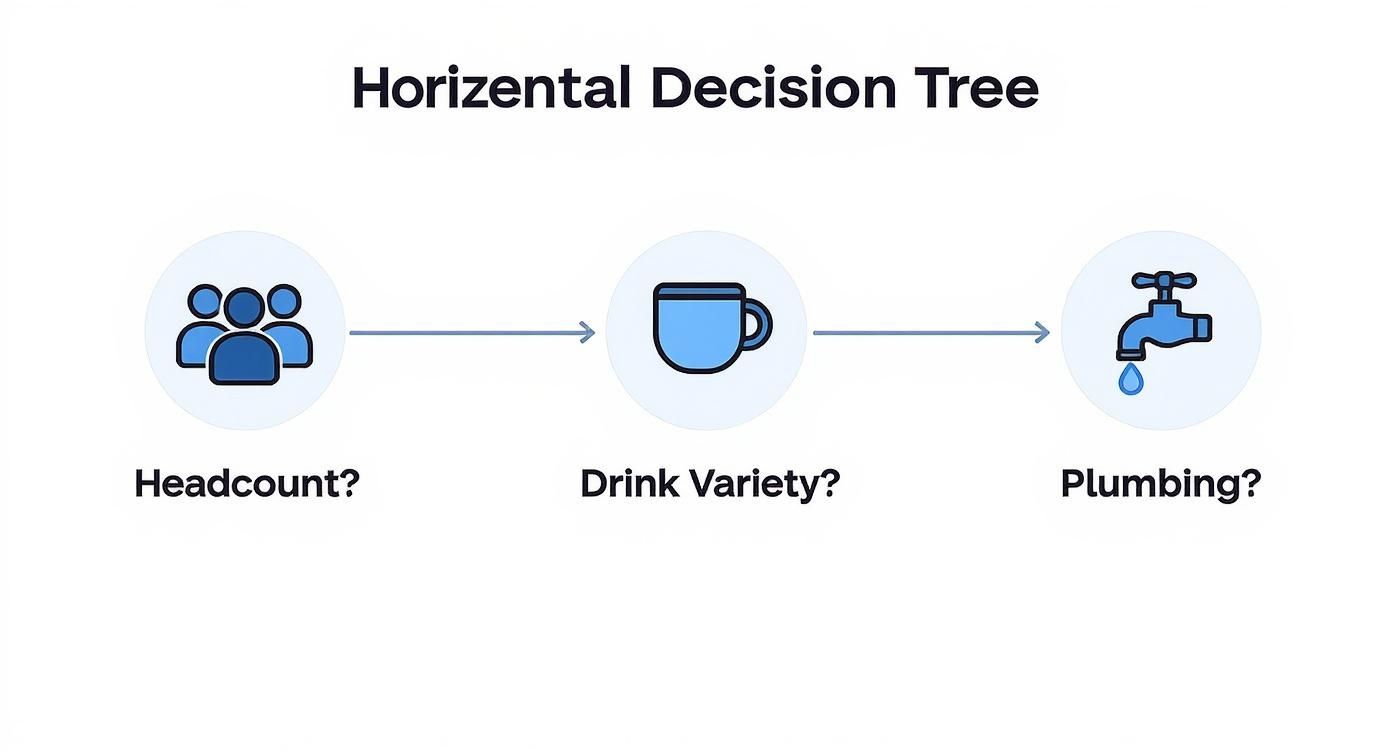
As the guide shows, factors like team size and the complexity of drinks you want to offer will quickly narrow down the best machine categories for your workplace.
Bean-to-Cup All-in-One Systems
Think of these as the workhorses of the modern office. Bean-to-cup coffee machines for the office grind fresh beans for every single drink, delivering consistently great coffee at the touch of a button. They offer an impressive menu, from a strong espresso to a creamy flat white, all without needing any barista skills.
I once worked with a busy financial services firm with around 100 employees that needed speed and variety above all else. A bean-to-cup model was the perfect fit. It allowed staff to grab a perfect latte in under a minute, which kept the queues short and morale high during those hectic morning hours. They really are the ultimate solution for premium coffee with maximum convenience.
Hands-On Espresso Machines
For some workplaces, the process of making coffee is just as important as the final product. A traditional, hands-on espresso machine can turn the coffee station into a dynamic, social hub. Yes, it requires a bit of training, but the reward is unparalleled quality and a real sense of craft.
A design agency I know installed a proper espresso bar to encourage staff to take genuine breaks away from their desks. It sparked amazing conversations between departments as colleagues learned how to pull shots and steam milk together. This option is ideal for creative or people-focused cultures where community and shared experiences are really valued.
Remember, the goal isn't just to serve coffee; it's to create an experience that enhances the workday. The right machine becomes a cherished part of your office's daily rhythm.
Pod-Based and Filter Coffee Brewers
Sometimes, simplicity and volume are what matter most. Pod-based systems are incredibly user-friendly and offer a huge range of flavours with virtually no mess. They're a brilliant choice for smaller teams or reception areas where ease of use is the top priority.
On the other hand, high-volume filter coffee units are lifesavers for meeting rooms or events where you need to serve a lot of people at once. They produce large batches of consistent, pleasant coffee that can be kept warm and ready to pour, ensuring no one misses out during a long presentation.
Compare Leasing, Renting, and Buying Options
So, you’ve decided a bean-to-cup machine is the way to go. The next big question is how to get it into your office. It really comes down to three main routes: leasing, renting, or buying it outright. Each has its own distinct advantages, and the right choice depends entirely on your budget, flexibility needs, and long-term plans.
Let’s be honest, leasing has become incredibly popular for a reason. It bundles everything—the machine, regular servicing, and even your coffee bean deliveries—into one neat, predictable monthly payment. For a busy office manager, this is a dream. It makes budgeting straightforward and completely eliminates the headache of unexpected repair bills.
Renting, on the other hand, is all about flexibility. Think of it as a try-before-you-buy (or lease). It’s perfect if you’re not quite sure which model suits your team, or if you anticipate your company’s needs changing soon. You can easily scale up or switch machines without being tied into a long-term commitment.
Then there’s buying it outright. This means a significant initial investment, of course, but it can genuinely be the most cost-effective option in the long run, especially if you have an in-house team that can handle basic maintenance. We often see finance teams calculate that buying pays for itself after just 2–3 years in a busy office.
Here's a quick breakdown of how they stack up:
| Option | What We Love About It | What to Watch Out For |
|---|---|---|
| Leasing | One fixed payment covers everything. Simple. | You're committed for a longer term. |
| Renting | Great for trials and scaling up or down. | The monthly cost is usually higher. |
| Buying | The best long-term value for money. | That initial cost can be a hurdle. |
It's no surprise that rental and lease models have really taken off in the UK. Companies just prefer knowing exactly what they'll be spending each month. Plus, with modern IoT-enabled machines, maintenance has become much smarter. These machines can flag issues before they become problems, which has been shown to cut downtime by a massive 30% and makes the service side of a lease even more reliable. You can discover more insights about office coffee leases in recent market reports.
Thinking Through the Numbers
This is where your finance team will want to get involved. A simple "cost-per-cup" model is the best way to see the bigger picture. It’s not just about the machine's price tag; it helps you uncover those sneaky hidden costs, like emergency call-out fees or premium rates for certain coffee beans.
We saw this play out with a London fintech client. They were renting their machine but, after running the numbers, realised a tailored lease plan would save them £3,200 a year. They made the switch and immediately used those savings to upgrade their entire refreshments station with premium teas and healthy snacks. A huge win for the team.
How to Model Your Cost-Per-Cup
It doesn't need to be complicated. Just open up a spreadsheet and start listing out all your potential fixed and variable costs.
- Start with the machine fee (whether it's a purchase price, lease, or rental cost).
- Add your consumables—beans, milk, sugar, cups.
- Factor in any service charges or maintenance plans.
- Then, just estimate how many cups your team will drink daily and compare the monthly totals across each option.
This simple exercise will quickly highlight your break-even point and show you the potential return on investment for each scenario.
“Getting clarity on our cost-per-cup completely transformed how we saw our coffee budget. We finally understood the real ROI.” – A Facilities Manager we worked with.
If you’re still unsure, a short-term rental for 4–6 weeks is a brilliant way to test your assumptions. If the machine keeps everyone happy, the coffee quality is a hit, and the costs line up with your model, you can then negotiate a lease or purchase with total confidence.
Just be sure to read the fine print. You'll want to negotiate terms that allow for changes in your coffee volume or even early upgrades. And always, always review the service-level agreement before you sign anything. It's the best way to make sure there are no hidden surprises down the line, ensuring your path to better office coffee is a smooth one.
Getting Set Up and Keeping Things Running Smoothly
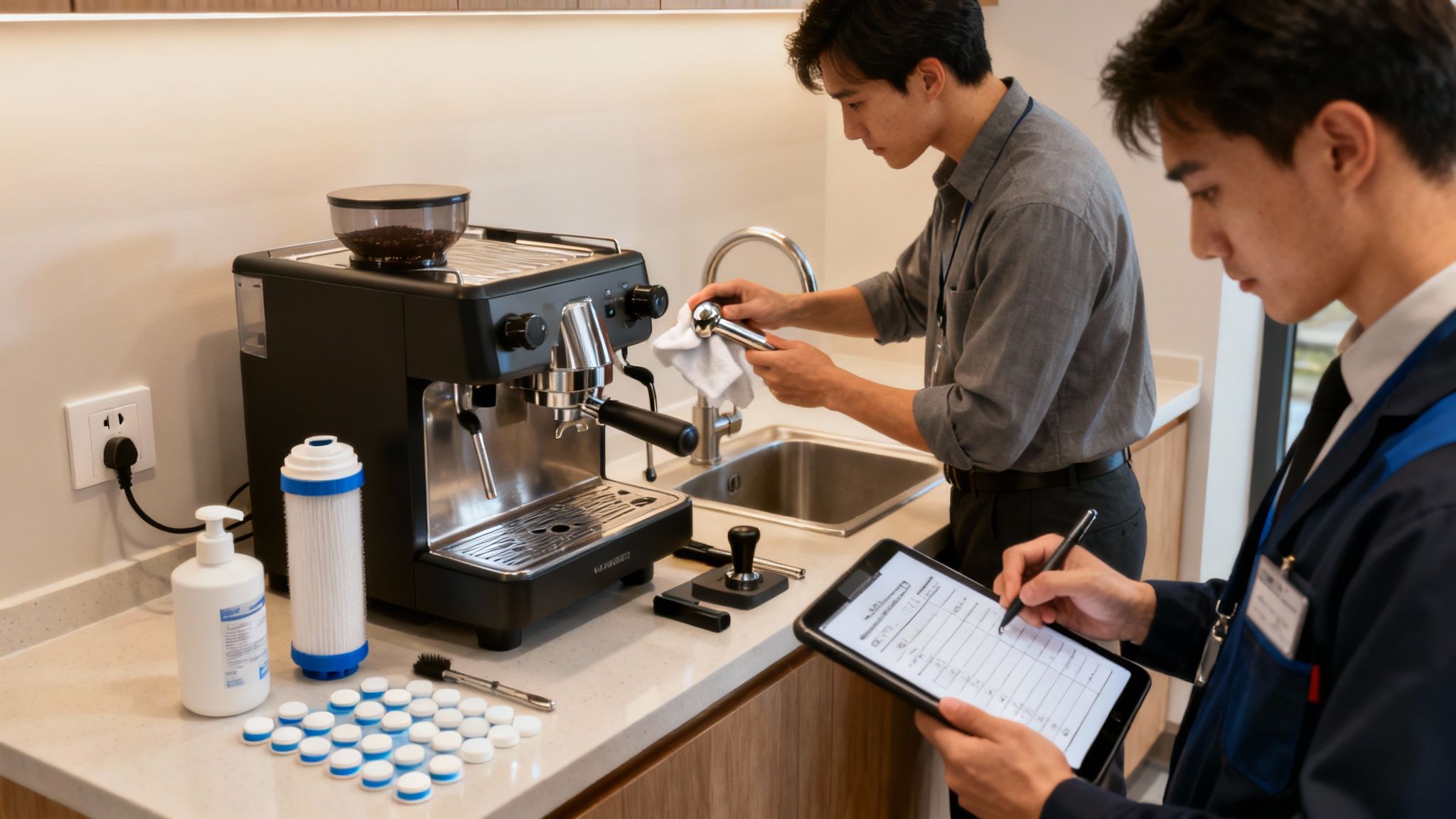
A fantastic coffee machine is only as good as its setup and upkeep. Before the delivery truck even pulls up, it pays to do a quick pre-installation check of the intended spot. Make sure you’ve got the right power supply, a water line if you’re plumbing it in, and enough counter space for the machine and all its bits and pieces.
This little bit of homework saves you from any day-one headaches. It’s a lot like bringing in any new equipment; thinking through the logistics first is key. In fact, seeing how experts handle something like professional office furniture assembly offers a great parallel for how a well-planned process makes everything go off without a hitch.
Creating a Simple Maintenance Rhythm
Once your new machine is in place, the secret to a long and happy life is a simple, repeatable maintenance routine. This isn't about creating a complex manual; it's about building a system that actually gets followed.
A great way to start is by deputising a small team of volunteer ‘coffee champions’ – those colleagues who are genuinely enthusiastic about their daily brew and happy to take ownership of a few small tasks.
Their daily checklist could include:
- Wiping down the surfaces and steam wand.
- Emptying the used coffee grounds container.
- Hitting 'go' on the automated cleaning cycle at the end of the day.
This kind of shared ownership turns a boring chore into a point of pride. It's a proactive approach that keeps the coffee tasting great and minimises annoying downtime. There's a reason the UK's coffee machine market hit USD 268.6 million back in 2022; modern offices know that a reliable machine is crucial for keeping spirits high.
I once got a tip from an office manager who halved their machine's downtime: she laminated a simple daily checklist and stuck it right next to the machine. It’s a brilliant visual nudge that empowers everyone to pitch in.
Finally, don’t forget to book in a professional service every quarter. This protects your investment by catching small issues before they become big, expensive problems, ensuring your team stays happily caffeinated all year round.
Common Questions About Office Coffee Machines
Diving into the world of office coffee machines can feel a bit overwhelming at first, but a few key bits of information can make all the difference. Most office managers we talk to are weighing up the same things: budget, must-have features, and the day-to-day reality of keeping the machine running smoothly.
Getting these questions answered upfront helps you move forward with confidence, making sure you end up with a machine your team will actually love and use.
Budgeting for Your Coffee Solution
The first question is nearly always about the price tag. While buying a high-quality bean-to-cup machine outright is an option—with prices ranging from £1,500 to over £10,000—most businesses find leasing is the smarter move.
A typical lease will land somewhere between £20 and £100+ per week. This turns a hefty capital expense into a simple, predictable operational cost. Better yet, these agreements often bundle in regular maintenance and sometimes even your coffee supply, making budgeting a breeze.
Prioritising the Right Features
With so many bells and whistles out there, what really matters in a busy office? Shiny touch screens and endless drink menus are tempting, but the most important feature is far more practical: ease of cleaning and maintenance.
A machine with automated cleaning cycles and straightforward daily upkeep will save you countless headaches. A reliable machine that’s always ready to go is infinitely more valuable than a flashy one that's constantly out of action.
"The single most important feature for an office environment is ease of cleaning. A machine that’s simple to maintain will be used and loved; one that’s difficult will quickly become a source of problems and fall into disuse."
A classic dilemma is the fresh milk vs. powdered milk debate. There’s no denying fresh milk delivers that authentic café taste for lattes and flat whites, but it does require daily cleaning of the milk lines to keep things hygienic.
Powdered milk systems, on the other hand, are much lower maintenance and more convenient, though some coffee purists might notice a difference in flavour. The best way forward? Ask your team. If proper speciality coffees are a top priority, that little bit of extra daily effort for fresh milk is an investment that pays off every time.
Ready to elevate your workplace with a truly premium coffee experience? At Ue Coffee Roasters, we provide complete refreshment solutions, from world-class bean-to-cup machines to speciality teas and hot chocolate. Discover how we can help you boost morale and create a vibrant office culture by visiting https://www.uecoffeeroasters.com.