

Finding Your Perfect Coffee Shop Suppliers
Finding the right suppliers for your coffee shop is one of the most important partnerships you’ll ever forge. This isn’t just about ticking boxes on a shopping list; it’s about finding partners who get your vision. Every single thing, from the ethically-sourced single-origin beans to the takeaway cups, tells the story of your brand.
Define Your Cafe's Signature Experience
Before you even dream of tasting a single coffee bean, you need to pin down the soul of your coffee shop. What’s the unique feeling you want customers to have when they walk through your doors?
Getting this blueprint right from the start is absolutely crucial. It’s what helps you find partners who will bring your vision to life, rather than just sell you products. It’s the difference between opening just another café and creating a true community hub that people love.
Your journey starts with the main event: the coffee itself. Are you picturing a bright, adventurous menu filled with single-origin beans and complex flavour profiles? Or is your goal to perfect a smooth, comforting house blend that becomes a daily ritual for your local customers? Your answer will point you toward the right kind of roaster.
This visual guide breaks down the journey from a rough idea to a solid list of needs, so you can walk into meetings with suppliers feeling clear and confident.
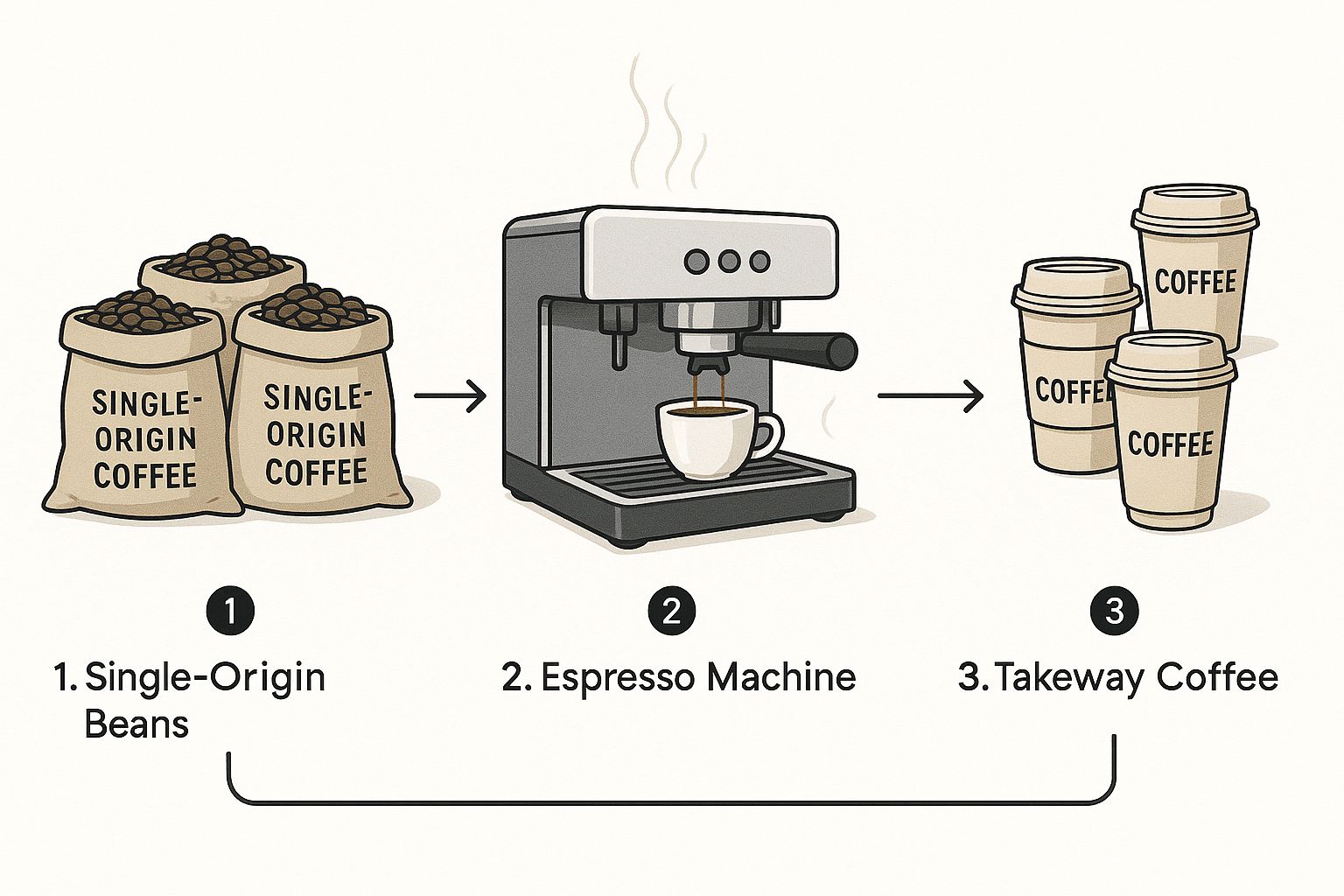
Mapping out your brand’s core elements—from the beans to the equipment and even the cups—turns a vague concept into a proper, actionable plan.
Building Your Comprehensive Needs List
Once you’ve got your coffee profile locked down, the vision starts to expand to everything else. Think of this not as a shopping list, but as a carefully curated collection of items that all reinforce your brand’s story.
- Essential Equipment: Which espresso machine can handle your expected volume and workflow? Does its look and feel match your café's design? Don't forget the grinders, brewers, and a top-notch water filtration system—they're just as important.
- Dairy and Alternatives: The quality of your milk and plant-based alternatives can make or break a drink. Will you partner with a brilliant local dairy or a national distributor known for barista-quality products?
- Branded Consumables: Your takeaway cups are basically a walking advertisement for your business. Think about the material, how it feels in the hand, and even the quality of the lid. Every tiny detail signals your commitment to excellence.
Walking into a meeting with potential suppliers armed with a detailed blueprint of your needs does more than just keep you organised. It shows them you’re a serious, visionary partner. It proves you’ve done your homework and you’re ready to build something special together.
This level of preparation is non-negotiable in such a bustling market. With UK consumers expected to spend around £6.1 billion on coffee outside the home in 2025, a clear and unique identity is what will help you capture a slice of that passion. You can discover more insights into the UK coffee market's growth and what it means for new cafés.
Ultimately, getting this foundational stage right sets the entire trajectory for your success. When you know exactly what you’re building, finding the right craftspeople to help you build it becomes an inspiring and focused mission.
Discover Partners Who Share Your Passion
Once your unique vision is crystal clear, it’s time to find the people who will help you build it. This isn't just about sourcing vendors; it's about forging genuine partnerships with coffee shop suppliers who are as committed to your dream as you are. This is the moment your blueprint starts to become a real, thriving business.
Finding the perfect partner means looking beyond a simple product catalogue. You need to dig deeper into a company's values, reputation, and their absolute commitment to quality. When you get it right, your suppliers will feel less like contractors and more like an extension of your own team.
Attending Industry Trade Shows
Industry trade shows are an incredible place to kick off your search. They offer a vibrant, hands-on environment where you can meet roasters, equipment manufacturers, and other key suppliers face-to-face. It’s a brilliant opportunity to taste different coffees, see machinery in action, and have those meaningful conversations that a website just can't replicate.
To get the most out of these events, try to schedule appointments with suppliers on your shortlist beforehand. This ensures you get dedicated time with the right people. Go beyond the sales pitch—ask about their sourcing philosophy, the support they offer new cafés, and what they believe makes a partnership successful.
Leveraging Local and Online Networks
Never underestimate the power of your local business community. It can be a goldmine of authentic, honest recommendations. Connect with other independent café owners or restaurateurs whose businesses you admire. A referral from a trusted peer is often the most reliable signal of a quality supplier.
At the same time, dive into some targeted online research. Look for suppliers who have glowing testimonials and a strong, transparent presence. Their digital footprint, from their website to their social media, often reveals a lot about their passion for the craft and how they support their clients. As you explore the market, you might look into specific local restaurant supply services that can cater to your broader operational needs.
Finding a supplier is an agreement. Forging a partnership is a relationship. The former transacts on price, while the latter collaborates on a shared vision for quality, growth, and creating something truly special for your community.
This distinction is absolutely vital in today's market. The UK coffee scene is booming, with over 11,000 branded coffee shop outlets recorded in early 2025—a massive 16% increase from previous years. This rapid growth just goes to show how crucial it is to have reliable, high-quality coffee shop suppliers supporting your every move.
Creating Your Curated Shortlist
As you gather names and information, start curating a shortlist of potential partners who truly align with your brand's core values. It’s not just about the coffee beans or the price tag.
Ask yourself these questions:
- Ethical Sourcing: Can they show you transparent and sustainable sourcing practices?
- Industry Reputation: What’s their standing within the coffee community? Do people respect them?
- Support Systems: What kind of training, maintenance, and technical support do they actually offer?
This careful vetting process ensures you move forward with a select group of suppliers who are genuinely invested in helping you build not just a coffee shop, but a legacy.
Mastering the Art of Quality Tasting
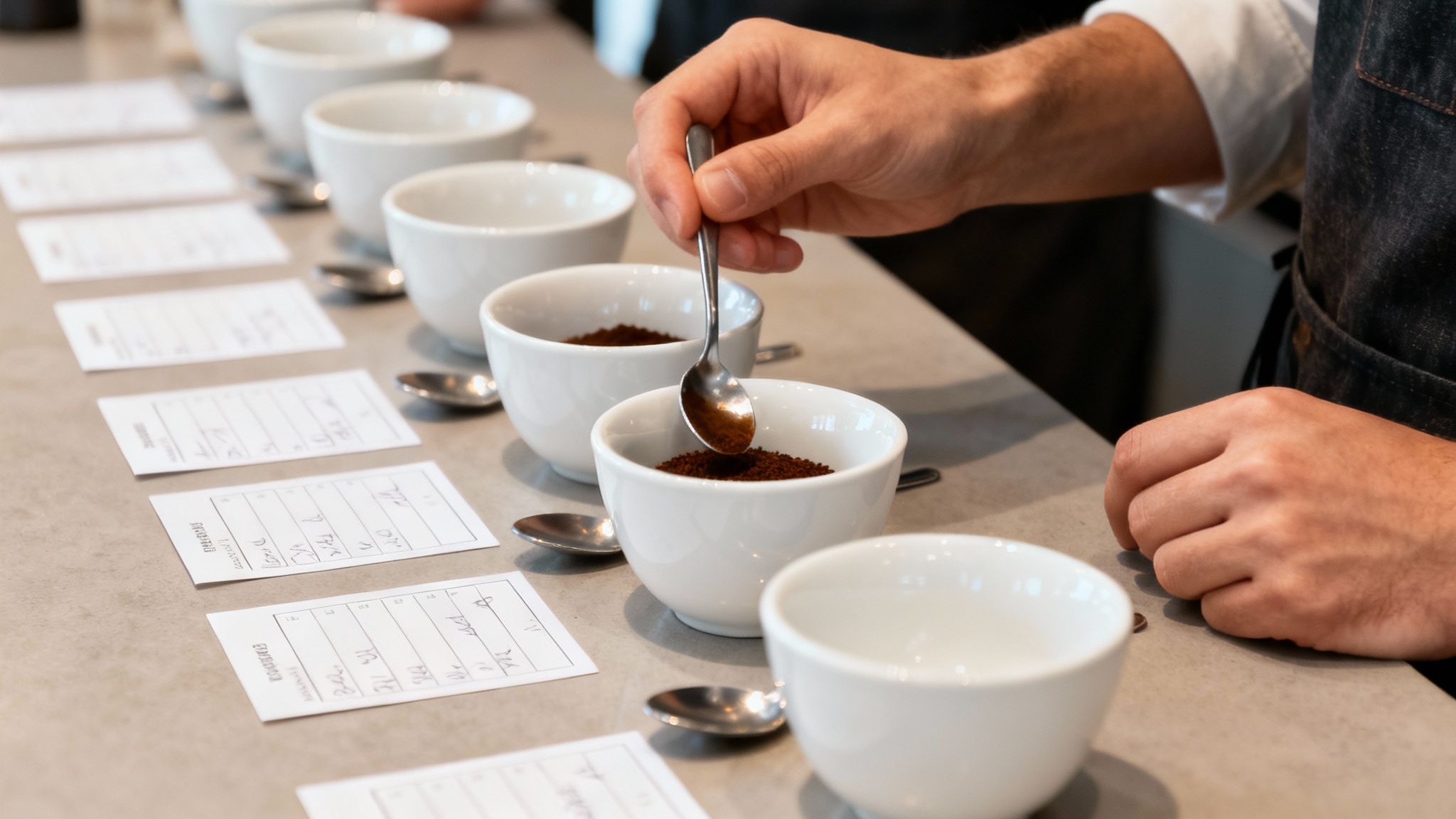
This is where your vision really starts to take shape—the tasting. Forget the spreadsheets and supplier calls for a moment. A formal cupping session is your most crucial quality control tool, a sensory deep-dive that reveals the true character of each coffee you’re considering.
Organising a tasting isn’t about ceremony; it's about systematic evaluation. It’s an inspiring process that connects you directly to the heart of your product, letting you compare different roasts side-by-side and find the one that perfectly captures your brand’s signature flavour.
From the Cupping Table to the Espresso Machine
Tasting a coffee in isolation is just the beginning. A bean that sings on the cupping table might behave completely differently under the pressure of an espresso machine. The real test is how it performs in a genuine café setting.
Your evaluation has to be practical. How does each coffee extract? Does it produce a rich, stable crema? And most importantly, how does its flavour profile translate into the drinks you'll actually be serving? A coffee’s bright, acidic notes might be stunning in a pour-over but could get lost or become unbalanced in a flat white.
This hands-on evaluation is your final, most important checkpoint. It’s where you confirm that every single product, from the house blend to the guest roast, not only meets but exceeds the high standards your future customers will come to expect and love.
This is the stage that separates the good cafés from the truly great ones. It’s all about ensuring consistency and showing a deep commitment to the craft.
Don't Forget the Supporting Cast
Your dedication to quality has to extend to every single item on your menu. Even the most incredible espresso can be let down by a sub-par supporting cast. Now is your chance to test everything together.
- Alternative Milks: How well do they steam? Do they create a silky, lasting microfoam perfect for latte art, or do they separate and curdle?
- Takeaway Cups and Lids: This might seem minor, but a leaky lid can ruin a customer's entire experience. Do they fit securely and feel sturdy?
- Syrups and Powders: Do the syrups complement your coffee’s flavour profile without completely overpowering it? Does the hot chocolate mix create a rich, luxurious drink?
Every detail matters. Your chosen coffee shop suppliers should provide products that work in harmony to create a flawless experience for your customers. For a closer look at how renowned establishments maintain their high standards, it’s worth exploring this Stumptown Coffee Roasters case study. This meticulous, hands-on approach is what ensures every element reinforces your promise of an exceptional experience.
It’s About More Than Just the Price Tag
The cheapest quote is almost never the best deal. When you’re hunting for coffee shop suppliers, it's so easy to get fixated on the cost of goods. But a true partner offers value that goes way beyond the price on a bag of beans.
It's the unseen support systems that separate a simple vendor from a strategic ally—someone who will genuinely champion your growth. Thinking about this relationship holistically isn't just a nice idea; it's a critical investment in your café's future. A supplier who just drops boxes at your door is fulfilling an order. A partner who provides training, insights, and emergency support is helping you build a legacy.
The Strength of Their Support System
Your espresso machine is the heart of your entire operation. Downtime isn't just an inconvenience; it's lost revenue and unhappy customers. So, a crucial question to ask any potential supplier is about their technical support. How quickly can they get to you when a grinder jams during the morning rush or a machine desperately needs calibration?
A great supplier offers more than just a helpline. They provide comprehensive training for your team—not just on day one, but as an ongoing resource. This is what empowers your baristas to master their craft, really understand the equipment, and pull consistently exceptional shots.
- Responsive Technical Aid: Do they have a dedicated team of technicians on call for emergencies? What are their guaranteed response times? Don't be afraid to ask for specifics.
- Preventative Maintenance: Do they offer scheduled maintenance plans? These are designed to keep your equipment in peak condition and prevent those costly, stressful breakdowns in the first place.
- Barista Education: What does their training programme actually cover? Does it go beyond the basics into advanced skills like latte art, sensory development, or workflow efficiency?
This level of support is invaluable. It’s the safety net that lets you focus on your customers, knowing you have experts ready to solve any technical headache that comes your way.
How Well Do They Fit Logistically?
Beyond the coffee and the gear, the day-to-day logistics of your supply chain can make or break your cash flow and operational smoothness. A supplier with rigid delivery schedules or sky-high minimum order quantities might be a nightmare for a new, independent café trying to find its feet.
Look for flexibility. Can they accommodate your limited storage space with more frequent, smaller deliveries? A supplier who genuinely understands the challenges of a growing business will work with you to find solutions that make sense.
Choosing a supplier is like hiring a key team member who works outside your four walls. Their reliability, expertise, and willingness to collaborate directly influence your daily success and long-term potential. They should be as invested in your coffee quality as you are.
Even better, a forward-thinking supplier acts as your eyes and ears in the market. They're the ones who can give you a heads-up on emerging trends, suggest an exciting new single-origin bean to feature as a guest roast, or help you develop a signature seasonal drink menu. This collaborative spirit turns a simple transactional arrangement into a powerful partnership, ensuring you select someone who will help you innovate and grow, not just fulfil orders.
Forging a Lasting and Successful Partnership

You’ve done the research, sipped your way through countless samples, and finally picked your winner. This is the moment a promising roaster or equipment provider becomes a core part of your business. But the final, and most vital, step is to build a rock-solid foundation for a long-term relationship with your chosen coffee shop suppliers.
This isn’t just about signing on the dotted line and waiting for the first delivery to show up. It's about creating a genuine partnership built on clarity, open communication, and a shared passion for incredible coffee. Get this right, and your supply chain transforms from a simple necessity into one of your greatest competitive advantages.
Negotiating a Clear and Fair Contract
Think of your contract as the blueprint for your partnership. It’s your chance to make sure there are no nasty surprises down the line. A good, fair agreement should clearly spell out all the critical details that will shape your day-to-day operations and protect everyone involved.
Don't just fixate on the price per kilo. The real goal here is to create total clarity around every part of the service.
- Pricing Structures: Is the price fixed for a certain period, or will it fluctuate with the market? Make sure you understand exactly how and when any adjustments might happen.
- Lead Times and Delivery: What are the guaranteed delivery days? What’s the absolute cut-off time for placing an order if you're running low?
- Support Protocols: The contract needs to specify response times for technical support. If your grinder dies mid-morning rush, how quickly can you expect help?
Having these terms clearly defined from day one prevents misunderstandings and establishes a professional, reliable working relationship right from the start.
Nurturing the Partnership for Long-Term Growth
Once the ink on the contract is dry, the real work begins. The most successful coffee shops I know don't see their suppliers as vendors; they see them as an extension of their own team. This means moving beyond transactional emails to foster open and regular communication.
A supplier relationship is more than just an exchange of goods for money. It's an adaptable, living partnership that must evolve as your business grows. When you treat your suppliers as collaborators, they become deeply invested in your success.
Schedule regular check-ins to chat about what's working and what could be better. Share your future plans, whether that’s launching a new seasonal menu or dreaming of a second location. This kind of open dialogue allows your supplier to anticipate your needs and offer proactive support before you even have to ask.
The UK's coffee scene is a powerhouse, not just at home but globally. In 2023 alone, the country exported a massive 92,050 metric tons of coffee. This growth highlights the immense expertise right here on our doorstep. By building a strong, collaborative relationship, you tap into that deep well of knowledge, turning your supplier into a valuable source of market insights and fresh ideas. You can learn more about the UK coffee export market and its global reach. It’s this collaborative spirit that will help you adapt, innovate, and thrive.
Common Questions About Coffee Suppliers
Getting into the coffee world is an exciting journey, but it’s one that naturally comes with a lot of questions. Trying to navigate the landscape of coffee shop suppliers can feel overwhelming, so let's clear up some of the most common queries with straightforward, practical advice to help you move forward with confidence.
How Many Suppliers Should I Have?
This is one of the first dilemmas new owners face. When it comes to your core coffee beans—the absolute heart of your menu—it's nearly always best to start with a single, primary supplier. This approach lets you build a really strong, collaborative relationship, guarantees consistency in every cup you serve, and can often unlock better pricing as you buy in larger volumes.
For everything else, though, think like a curator. Smart diversification is your best friend.
- Local Bakery: Find a beloved local baker for your pastries and cakes. It adds a powerful story of community support to your menu.
- Specialty Distributor: Source your alternative milks from a supplier who specialises in barista-quality options to ensure you get perfect microfoam every single time.
- Paper Goods Specialist: Partner with a company that can provide high-quality, branded cups and sleeves that feel great in your customers' hands.
Down the line, you can always introduce a guest roast from a second coffee supplier. It's a great way to add a bit of excitement and variety without disrupting the consistency of your core offering.
Identifying Red Flags in a Potential Supplier
This is where you need to trust your gut. By far, the biggest red flag is poor communication. If a potential partner is slow to respond, vague with their answers, or disorganised before you’ve even signed a contract, just imagine what it will be like when you have an urgent problem.
Other serious warning signs include a noticeable drop in quality between the samples they send and your first bulk order, a rigid refusal to discuss reasonable terms, or a lack of transparency about where their coffee actually comes from. A partnership should feel collaborative and energising right from the very first conversation.
Your choice of supplier is a direct reflection of your brand's identity. It’s a decision that communicates your values, your commitment to quality, and the unique story you want to share with every customer who walks through your door.
Choosing Between National and Local Suppliers
Finally, the classic question: should you go with a large national supplier or a small local roaster? There's no single right answer here. The best choice is the one that aligns perfectly with your brand's story.
A local roaster offers a powerful narrative of community, freshness, and craft, which can be a huge marketing advantage. On the other hand, national suppliers often provide more robust support systems, like equipment financing, in-depth barista training programmes, and the logistical scale to handle high volumes. Neither is inherently better; the right one is the one that empowers you to create the exact coffee shop experience you’ve always dreamed of.
At Ue Coffee Roasters, we understand that exceptional coffee is just the beginning. We provide premium, speciality coffee and state-of-the-art Franke bean-to-cup machine solutions to elevate your workplace or café. Discover how we can become your perfect partner in quality and refreshment.