
A Guide to Ethiopian Yirgacheffe Coffee
If you’ve ever heard a coffee described as ‘wine-like,’ chances are the speaker was savouring a cup of Ethiopian Yirgacheffe. It’s one of those truly special single-origins that coffee connoisseurs across the UK get genuinely excited about, and for good reason. Its signature bright, floral, and citrusy character is simply unforgettable.
For many in the UK's thriving speciality coffee scene, Yirgacheffe is the benchmark. It delivers a sensory experience that can turn a casual coffee drinker into a lifelong enthusiast and still manages to wow seasoned professionals.
Your Journey into Ethiopian Yirgacheffe Coffee
Consider this your personal guide to one of speciality coffee's most celebrated origins. We're not just going to define it; we're going on a journey to explore the story, the flavour, and the heritage that makes every single cup feel like an event. If you love coffee here in the UK, getting to know this bean is your ticket to appreciating the incredible quality-driven scene right on your doorstep.
We’ll peel back the layers to understand what makes these coffees from a tiny, high-altitude pocket of Southern Ethiopia so remarkable. The UK’s coffee community has fallen hard for Yirgacheffe, not just for its dazzling taste, but for the history and meticulous craft it embodies. This guide is your key to understanding why.
What You Will Discover
We've designed this guide to help you get the absolute most out of every brew. We’ll be diving into the key elements that have made this coffee a star in British cafés and kitchens alike.
- The Rich Heritage: We'll look at the cultural roots of coffee in Ethiopia and see how the Yirgacheffe region set a new standard for excellence.
- A Unique Flavour Profile: You’ll learn to pick out those classic, delicate notes of jasmine, bergamot, and lemon that define a great Yirgacheffe.
- From Farm to UK Roaster: We'll trace the bean's journey, highlighting why direct relationships with farmers are so crucial for the quality we get to enjoy in the UK.
- Mastering the Brew: You’ll get practical, no-nonsense tips for brewing at home to make the coffee’s complex, delicate character truly sing.
Ethiopian Yirgacheffe isn't just another coffee. It's an invitation to experience the very birthplace of coffee itself. Its growing popularity in the UK is a sign that we’re all craving authentic, high-quality beans that tell a story with every sip.
By the end of this, you'll have the confidence to choose, brew, and talk about Ethiopian Yirgacheffe like a pro. You'll see why it holds such a revered spot on the world stage and, more importantly, how to unlock its incredible qualities in your own cup.
Right, let’s get started.
The Story Behind the Bean
To really understand Ethiopian Yirgacheffe, you have to look beyond the tasting notes. Every sip is steeped in history, a story that takes you right back to the highlands of Southern Ethiopia – the very birthplace of coffee. This isn't just a timeline of facts; it’s a living, breathing narrative about culture, tradition, and the deep bond between the people and the land they cultivate.
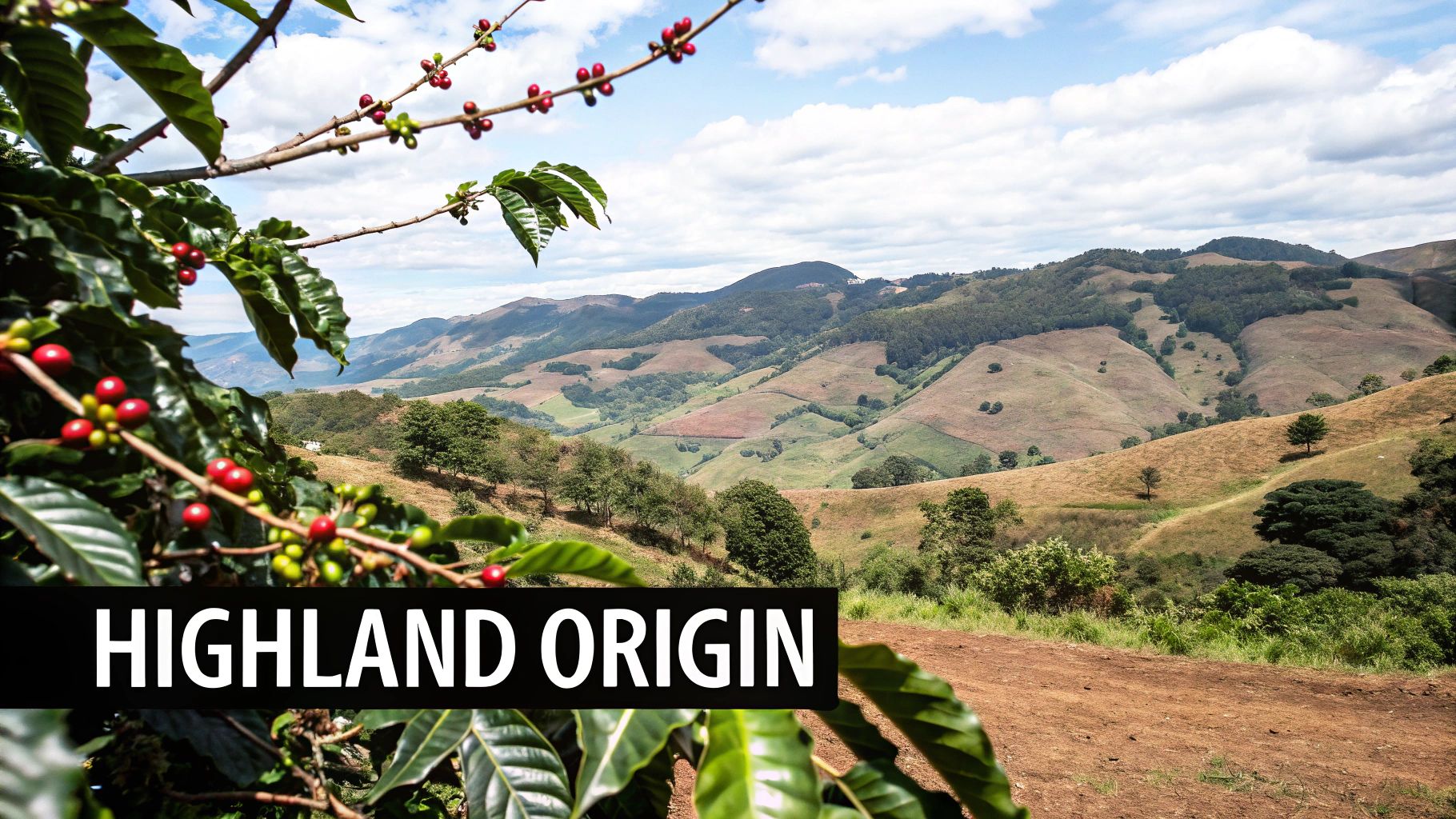
In Ethiopia, coffee is far more than just a commodity or a morning habit. It’s woven into the fabric of society, a truth beautifully captured in the famous proverb, "Buna dabo naw" which means "Coffee is our bread." This really puts into perspective its vital role in community, conversation, and hospitality – a world away from the grab-and-go culture many of us are used to in the UK.
The Rise of a Coffee Powerhouse
For centuries, coffee trees have simply grown wild across Ethiopia, especially in the ancient Kaffa region, which is where the word ‘coffee’ likely comes from. The environment here is a coffee plant’s paradise: high altitudes, rich fertile soil, and just the right amount of rain. The trees just thrive, naturally, without needing intensive, modern farming. This is what gives us the 'heirloom' varieties – beans with a huge amount of genetic diversity and a massive potential for unique flavours.
It was in this incredible setting that the Yirgacheffe region, once a small part of the larger Sidamo zone, began to make a name for itself. The farmers here, mostly smallholders working tiny plots of land, started perfecting how they processed their coffee cherries after picking them. They discovered that by taking meticulous care, they could unlock these incredibly bright, clean, and floral notes that were unlike anything else being produced.
The emergence of Ethiopian Yirgacheffe as a world-renowned coffee origin wasn't an accident. It was the result of generations of farmers understanding their unique environment and developing the craft to showcase its remarkable qualities, a tradition that continues to inspire the UK speciality coffee scene today.
This dedication to quality made Yirgacheffe stand out, and word of its exceptional character started to travel. Its reputation wasn't built on massive plantations, but on the combined effort of countless small family farms.
From Coffee Gardens to Your UK Cup
The way coffee is grown in Yirgacheffe is central to its story. Most of it comes from what are often called ‘coffee gardens’. Forget any image you have of vast, neat rows of crops; this is something else entirely.
These gardens are small patches of land, often right next to a family's home, where coffee is planted alongside other food crops like bananas and spices. This intercropping creates a rich, biodiverse ecosystem that naturally keeps the soil healthy and, in turn, contributes to the coffee’s complex flavour profile. It’s a sustainable, organic-by-default system that has been passed down for generations.
This intimate, small-scale approach means every single harvest is handled with immense personal care and attention. It's this dedication, a skill passed down through families, that eventually caught the eye of specialty coffee buyers. As the UK's coffee scene became more sophisticated, people started looking for coffees with a real story and a clear line of sight back to the farmer.
The journey of Yirgacheffe coffee, from these lush little gardens to the cups of coffee lovers here in the UK, is a fantastic testament to its undeniable quality. It’s a bridge connecting ancient farming traditions with our modern search for an exceptional coffee experience.
What Makes Yirgacheffe's Flavour So Unique?
To really get to grips with Ethiopian Yirgacheffe, you have to understand its profound sense of place. Just like a fine wine is shaped by its ‘terroir’, Yirgacheffe’s famous flavour profile is a direct result of its environment. It’s a magical blend of geography, climate, and human skill that creates a taste so distinct it’s become a benchmark for speciality coffee here in the UK.
The secret starts with the altitude. The coffee cherries are grown in the lush, green highlands of Southern Ethiopia, nestled at elevations between 1,500 and 2,200 metres. At these heights, the cooler air slows down the ripening process. This gives the coffee cherries more time to develop the complex sugars and vibrant acids that form the foundation of Yirgacheffe’s bright, elegant character.
This unique environment is part of a much bigger story. The entire coffee economy in Ethiopia directly supports millions of smallholder farmers. You can discover more insights about the Ethiopian coffee market and its global significance.
Decoding the Tasting Notes
Talk of tasting notes can sometimes feel a bit intimidating, but with Yirgacheffe, they are often beautifully clear and easy to spot. Imagine stepping into a fragrant garden on a warm day; that’s the kind of sensory experience you'll find in the cup. These aren't artificial flavourings, but natural aromatic compounds unlocked during roasting and brewing.
Some of the most common and celebrated notes you'll find in a cup of Yirgacheffe include:
- Floral Aromas: Think of the delicate scent of jasmine or honeysuckle. This is one of the most sought-after characteristics and a sure sign of a high-quality Yirgacheffe.
- Citrus Brightness: Often described as having notes of bergamot (that distinct flavour in Earl Grey tea) or a zesty spritz of lemon. This gives the coffee its signature clean and lively acidity.
- Stone Fruit Sweetness: Beneath the bright top notes, you'll often find softer, sweeter flavours like fresh peach or ripe apricot, which add body and a satisfying finish.
These flavours come together to create a coffee that is both complex and incredibly refreshing. It’s a profile that has captivated the UK coffee scene, offering a delightful alternative to the heavier, chocolatey notes found in many other single-origin coffees.
The Power of Processing
Once the coffee cherries are picked, the journey to your cup has only just begun. The next step, processing, is where the farmers' skill can dramatically shape the final flavour. It is arguably the most influential factor after the terroir itself. In Yirgacheffe, two methods dominate, and each produces a remarkably different result.
Understanding the difference between washed and natural processing is the key that unlocks the full spectrum of Yirgacheffe’s potential. It empowers you to choose a coffee that perfectly matches your personal taste.
Washed Process: In this method, the fruit pulp is washed off the bean before it is dried. This technique tends to produce a coffee that is exceptionally clean, bright, and highlights the intrinsic flavours of the bean itself. For Yirgacheffe, this means turning up the volume on those signature floral and citrus notes. The result is a cup with sparkling acidity and a tea-like delicacy.
Natural Process: Here, the entire coffee cherry is left intact and dried in the sun on raised beds. The bean ferments inside the fruit, absorbing sugars and flavours from the surrounding pulp. This method produces a coffee with a heavier body, a more syrupy sweetness, and intense, jammy fruit notes like blueberry or strawberry.
Yirgacheffe Flavour Profiles: Washed vs. Natural Processing
To really see how these methods create two different worlds of flavour from the same bean, let’s put them side-by-side.
| Characteristic | Washed Process | Natural (Sun-Dried) Process |
|---|---|---|
| Primary Flavours | Bright citrus (lemon, bergamot), delicate floral (jasmine) | Intense, ripe fruit (blueberry, strawberry, tropical) |
| Acidity | High, sparkling, clean | Mellow, wine-like, complex |
| Body | Light to medium, often described as 'tea-like' | Medium to heavy, syrupy and smooth |
| Sweetness | Crisp, clean sweetness | Deep, jammy, and pronounced |
| Overall Profile | Elegant, refined, and highlights origin character | Bold, fruity, and showcases the processing influence |
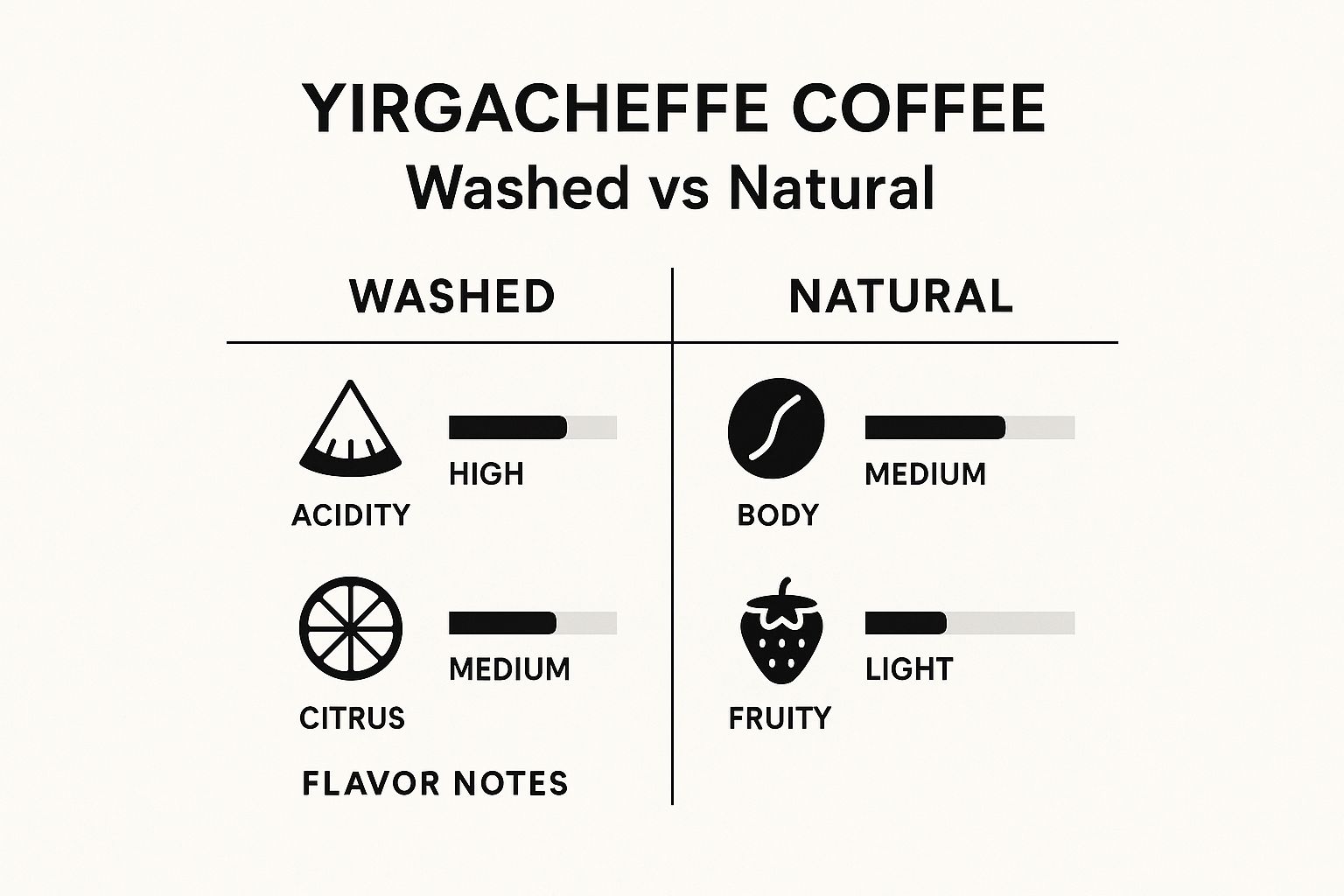
As you can see, the washed process leans into a brighter, cleaner cup, while the natural process dials up the fruit and sweetness. Ultimately, neither method is 'better' than the other; they are simply different expressions of the same exceptional coffee. It just means there’s an exciting range of profiles for coffee lovers in the UK to explore.
How Yirgacheffe Reaches Your UK Cup
Ever wondered how a coffee bean travels from a high-altitude "coffee garden" in Ethiopia all the way to your morning cup here in the UK? It’s a remarkable journey, one that’s packed with dedication, complex logistics, and a shared passion for incredible quality. This trip transforms a hand-picked coffee cherry into the premium product we celebrate in cafés and homes across Britain. It’s a supply chain built on precision and, more and more, on real human relationships.

For a long time, most of Ethiopia's coffee was funnelled through a central commodity exchange. It was an efficient system, but it often meant beans from various farms were all mixed together. For a special micro-lot from one specific farm, this was a disaster—its unique character could easily be lost in the crowd.
Thankfully, that’s all changing. We're seeing a huge shift towards direct trade and more transparent sourcing, which allows UK roasters like us to connect straight with the farmers and washing stations in Yirgacheffe. This is absolutely vital for quality.
The Rise of Direct Relationships
Direct trade is so much more than just a different way to buy coffee; it’s a genuine partnership. When UK roasters build these relationships, it creates a powerful feedback loop. Farmers get rewarded for the hard work they put into producing exceptional quality, and in return, roasters get access to truly unique coffees with a clear story and provenance. This is exactly what discerning UK coffee drinkers are looking for.
This direct approach brings some key benefits to the table:
- Traceability: Roasters know precisely which farm or cooperative their beans come from. This means the unique terroir and processing methods are celebrated, not lost.
- Quality Incentives: Farmers can earn a much better price for their best lots, encouraging them to keep up their meticulous work and invest back into their farms.
- Consumer Confidence: You, the coffee lover, can feel confident that you’re drinking a coffee with a transparent and ethical journey behind it.
This focus on where coffee comes from isn't just a trend; you can see it in the import data. The demand for single-origin coffees like Yirgacheffe is backed by significant trade activity, and you can explore more about these UK import trends for Ethiopian coffee for yourself.
Why UK Roasters Champion Yirgacheffe
For any specialty coffee roaster in the UK, putting a Yirgacheffe on the menu is a statement. Its bright, floral, and citrusy flavour profile is so distinct and recognisable that it acts as the perfect introduction to the world of specialty coffee, while still being complex enough to excite the most seasoned palates.
By sourcing and showcasing exceptional Ethiopian Yirgacheffe coffee, UK roasters are not just selling a product. They are sharing a story of origin, craft, and the incredible potential that exists within a single coffee bean.
This commitment goes far beyond just buying the green beans. We meticulously develop specific roast profiles to bring out the coffee’s delicate notes. A washed Yirgacheffe, for instance, might get a lighter roast to accentuate its tea-like body and floral aromas. A natural processed one, on the other hand, might be roasted a touch differently to draw out its deep, jammy sweetness.
It’s this careful attention to detail that ensures the bean's incredible journey is honoured, right up until it reaches your brewer. The result is a cup that doesn't just taste delicious but also tells a compelling story of its origin—and that’s what makes Yirgacheffe a true star in the UK coffee scene.
Brewing Yirgacheffe to Perfection at Home
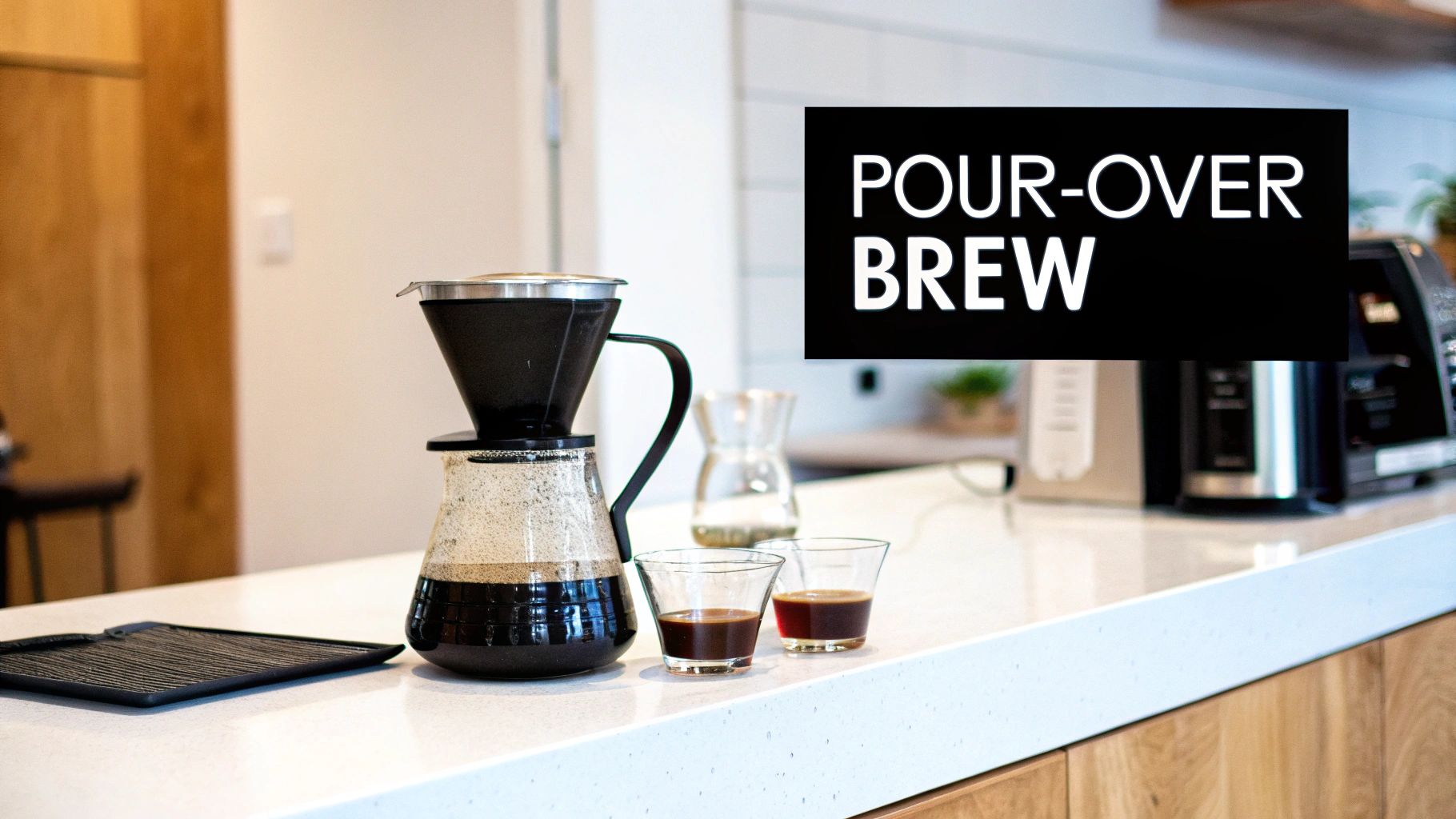
So, you’ve brought a bag of our Ethiopian Yirgacheffe coffee home. That’s the first step. The next, and arguably most exciting, is unlocking all that spectacular flavour locked inside the beans. It's time to turn your kitchen into your favourite speciality coffee spot.
The real beauty of Yirgacheffe is its delicate and complex character, which means your brewing technique can make a world of difference. This isn’t about intimidating, rigid rules. It’s about giving you the confidence and know-how to brew a truly remarkable cup, every single time. We'll walk through three of the most popular methods—V60, AeroPress, and French Press—and explain not just what to do, but why things like grind size and water temperature matter so much.
Think of it like being a chef with a prized ingredient. You wouldn't cook a delicate piece of fish the same way you’d sear a steak. Brewing Yirgacheffe is similar; it needs a lighter touch to let those gorgeous floral and citrus notes sing, rather than being drowned out.
Mastering the V60 Pour-Over
The V60 is a darling of the UK speciality coffee scene for a good reason. Its iconic design gives you total control over the brewing process, making it the perfect tool for highlighting the clean, bright, and almost tea-like qualities of a washed Ethiopian Yirgacheffe.
With a V60, your goal is a clean, crisp extraction. A medium-fine grind, roughly the texture of table salt, is your starting point. Go too coarse, and the water will rush through, leaving you with a weak, sour coffee. Grind too fine, and you’ll over-extract, creating a bitter brew that completely masks those lovely delicate notes.
Here’s a simple recipe to get you going:
- Preparation: Pop a paper filter into your V60, place it on your mug, and give it a good rinse with hot water. This gets rid of any papery taste and preheats everything.
- Coffee & Water: Add 15g of your medium-fine ground coffee. You'll be using 250g of water. Make sure it's filtered and just off the boil, somewhere around 92-96°C.
- The Bloom: Start a timer and pour about 50g of water over the grounds, making sure they’re all saturated. Let it ‘bloom’ for 30-45 seconds. This crucial step releases trapped CO2 and sets you up for an even extraction.
- Main Pour: Gently pour the rest of the water in slow, steady circles. Try to finish your pour by the 2-minute mark.
- The Drawdown: Now, just let all the water filter through the coffee bed. Your total brew time should land somewhere between 2:30 and 3:00 minutes.
The V60 puts you in the driver's seat. Each variable—from the speed of your pour to the water temperature—is a dial you can turn to perfectly tune the final cup to your liking, making it an inspiring tool for any home brewer.
The Versatile AeroPress
The AeroPress is a true marvel of coffee engineering, loved by home brewers and travelling coffee pros alike for its sheer versatility. It uses immersion-style brewing combined with pressure, which results in a rich and incredibly full-flavoured cup. It’s just as fantastic for washed Yirgacheffe as it is for natural, able to pull out clean acidity or deep, fruity sweetness.
For the AeroPress, you’ll want a slightly finer grind than your V60 setting. The brew time is much shorter, so the increased surface area helps extract all that flavour efficiently without veering into bitterness. Best of all, this method is incredibly forgiving and practically begs you to experiment.
Here's a classic way to use it:
- Set Up: Put a paper filter in the cap, twist it onto the AeroPress chamber, and place it over a sturdy mug. Give it a quick rinse with hot water.
- Add Coffee & Water: Add 17g of fine-drip ground coffee. Start your timer and quickly add 200g of water (a little cooler this time, around 88-92°C).
- Stir & Steep: Give it a gentle stir for about 10 seconds to wet all the grounds. Pop the plunger in the top to create a vacuum seal and let it all steep for 90 seconds.
- Press: Now, press the plunger down firmly and steadily. This part should take about 30 seconds. Stop when you hear a tell-tale hissing sound.
- Dilute: What you have is a coffee concentrate. You can top it up with a splash of hot water to get it to your preferred strength, much like an Americano.
The Full-Bodied French Press
The French Press is a classic for a reason. It produces a full-bodied, rich, and textured coffee by allowing the natural coffee oils and fine sediment to stay in the final cup. This method is absolutely superb for a natural processed Ethiopian Yirgacheffe, as it beautifully complements its inherent sweetness and almost syrupy body.
The key to a great French Press is a coarse grind—think breadcrumbs. This is vital to prevent the filter from clogging and to stop the brew from becoming muddy and over-extracted.
Follow these simple steps for a truly satisfying brew:
- Grind & Add: Add 30g of coarse-ground coffee to your pre-warmed French Press.
- Bloom & Fill: Start a timer and pour in 500g of hot water (around 94°C). Make sure all the grounds are fully saturated.
- Steep: Put the lid on, but don’t plunge just yet. Let the coffee steep for a full 4 minutes.
- Plunge & Serve: At the 4-minute mark, slowly and steadily press the plunger all the way to the bottom. It's important to serve it straight away to prevent the coffee from continuing to extract and turning bitter.
Of all the coffees you’ll find in the UK’s bustling speciality scene, some just have that certain star quality. Ethiopian Yirgacheffe is one of them. Its journey to the top shelf isn’t some happy accident; it’s a story of discerning tastes, smart economics, and the UK coffee drinker’s growing desire for a brew with real character and a story to tell.
While the UK isn’t the biggest coffee importer by sheer volume, it has become a seriously influential stage for the world’s best beans. We’ve moved past the generic, looking instead for single origins that taste of a specific place. With its unmistakable floral aromas and bright, citrusy zing, Yirgacheffe delivers exactly that.
The Economics of Excellence
Our collective thirst for brilliant coffee has a real economic ripple effect. The UK market for premium Ethiopian coffee is not just stable; it's booming. This reflects a wider trend where UK consumers are increasingly investing in speciality beans like Yirgacheffe.
This isn’t just a UK trend, either. Globally, the Ethiopian coffee market is tipped to hit $532.6 million, with forecasts showing steady annual growth. You can get a deeper look into the UK's coffee import landscape on Tank Coffee.
This momentum is fantastic because it reinforces Yirgacheffe's value. As demand grows, it rewards the Ethiopian farmers and co-ops for the painstaking work they put into growing and processing these exceptional beans.
For us as coffee drinkers in the UK, this all translates into something very simple: better access to world-class coffee. It means a steady supply of beans sourced with care, roasted with skill, and brewed with a genuine appreciation for what makes them so special.
A Market Driven by Sophistication
Let’s be honest, the modern UK coffee drinker knows their stuff. We’re not just buying a caffeine hit; we’re investing in an experience. This curiosity has created the perfect environment for a coffee like Yirgacheffe to truly shine.
This demand for quality works its way right back down the supply chain. It encourages roasters like us to build direct relationships with producers. It champions transparency, so you see more details on the bag and in the café—the farm, the processing method, the specific tasting notes you can expect.
Here’s what today’s sophisticated UK market really cares about:
- Distinct Provenance: People want the story. They want to know the region, the altitude, and the names of the people who grew their coffee.
- Unique Flavour Profiles: The classic chocolate-and-nut combo is great, but it’s no longer the only game in town. Drinkers are actively hunting for the bright, fruity, and floral notes that make Yirgacheffe so unforgettable.
- Ethical Sourcing: There’s a growing awareness around sustainability and fair pay. A coffee with a clear, ethical sourcing story is rightly prized.
As the global appetite for Ethiopian coffee continues to grow, its presence and reputation in the UK will only get stronger. It’s a safe bet that Ethiopian Yirgacheffe coffee will remain a celebrated fixture in our cafés and kitchens for a long time to come—a perfect example of how quality and story can create a true market star.
Your Yirgacheffe Coffee Questions Answered
Diving into the world of Ethiopian Yirgacheffe is an exciting journey, and it’s natural to have a few practical questions pop up along the way. As you get to know this exceptional coffee, you’ll want to be sure you’re getting the very best from every bean.
We’ve pulled together some of the most common queries we hear from coffee lovers to help you perfect your home-brewing experience. From storing your precious beans to pairing them with the right food, think of this as your go-to guide for enjoying Yirgacheffe to its absolute fullest.
How Should I Store My Yirgacheffe Beans?
To keep those delicate floral and citrus aromas that make Yirgacheffe so special, proper storage is everything. Your goal is to shield the beans from their four main enemies: oxygen, light, heat, and moisture.
The best approach is simple: keep your ethiopian yirgacheffe coffee beans in an airtight container and pop it in a cool, dark cupboard. Contrary to some old advice, you should steer clear of the fridge or freezer. The temperature fluctuations and condensation can seriously harm the coffee’s cellular structure, muting its beautiful, complex flavours. For the freshest possible taste, always buy whole beans and grind them just moments before you brew.
Storing your beans correctly is like protecting a fine wine. A little care goes a long way in preserving the complex character that journeyed all the way from Ethiopia to your kitchen.
What Foods Pair Well With This Coffee?
Pairing food with coffee can turn a simple break into a memorable experience, and Yirgacheffe’s unique profile makes it a real joy to match. Its bright, zesty notes and floral undertones work beautifully with foods that complement its delicate nature, rather than competing with it.
Think light and fruity. Here are a few fantastic pairings for your next coffee moment:
- Fruit Tarts and Scones: A lemon tart or a scone slathered with raspberry jam will echo the coffee’s own citrus and berry notes perfectly.
- Light Pastries: Something simple, like buttery shortbread or a plain croissant, won't overpower the coffee’s subtle complexity.
- Breakfast Foods: The bright acidity is brilliant at cutting through the richness of Greek yoghurt with a drizzle of honey, or a bowl of fresh berries and granola.
The general rule of thumb is to avoid anything too heavy or intensely flavoured—a rich chocolate cake, for instance, would likely overwhelm the coffee's elegant profile.
Is Yirgacheffe High In Caffeine?
Like other top-quality Arabica coffees, Yirgacheffe has a moderate amount of caffeine. It’s a common myth that a coffee's origin dictates its caffeine kick, but the truth is, the amount in your cup has far more to do with how you brew it.
The specific variety of the coffee plant, the roast level, and most importantly, your coffee-to-water ratio all play a much bigger role. A double espresso will naturally have more caffeine than a single, and an immersion brew like a French press might extract a little more caffeine than a quick pour-over. Put simply, if you brew Yirgacheffe using your favourite method, you can expect a similar caffeine level to any other Arabica coffee you’d prepare in the same way.
Ready to brew your own perfect cup? At Ue Coffee Roasters, we source exceptional single-origin beans, including exquisite Ethiopian Yirgacheffe, roasted with care in the Cotswolds. Explore our full collection and find your next favourite coffee today. Discover our coffee selection.