

Ground Coffee for Cafetieres: A UK Brew Guide
When it comes to making coffee in a cafetière, one rule stands above all others: your grind needs to be coarse and consistent. Think of the texture of rough sea salt. This isn't just a matter of preference; it's fundamental to getting a clean, flavourful brew. Too fine, and you’ll end up with a muddy, bitter cup. Too coarse, and it'll be weak and under-extracted.
Your Invitation to a Better Brew
Let's be honest, anyone can make coffee in a cafetière. But making great coffee? That's a different story. This guide is your invitation to move beyond the basics and start a daily ritual that delivers a truly satisfying cup, brewed exactly how you like it.
We're going to dive into why the French press, as it’s also known, is still such a beloved brewer in kitchens across the UK. It has a unique talent for pulling out deep, complex flavours that other methods can sometimes strip away. This is for the coffee lover who wants to go deeper than just "add coffee, add water."
Why We Still Love the Cafetière in the UK
In a world of high-tech coffee gadgets, the humble cafetière holds its own. Its enduring charm is in its simplicity and the sheer quality of the coffee it produces. It’s a beautifully manual process that puts you in the driver's seat, connecting you directly to your brew. For many of us, it’s a welcome pause in a hectic day—a few mindful minutes to craft something genuinely brilliant.
The UK's speciality coffee scene has exploded, and more of us than ever are trying to bring that café experience home. The cafetière is the perfect tool for the job, letting the unique character of incredible beans really take centre stage.
The real beauty of a cafetière is its honesty. There's no paper filter to hide behind. It presents the coffee in its purest form, complete with all the rich oils that give the brew its signature body and aroma.
This desire for quality is a nationwide trend. The UK coffee market is growing steadily, particularly the at-home brewing scene that champions ground coffee for cafetieres. In fact, some projections see the overall UK market hitting a value of around £7 billion by 2030, with the speciality sector potentially pushing that figure towards an impressive £9.2 billion. It's clear we have a real appetite for better coffee in our own homes. You can find more insights into the growing UK coffee market and its future trends online.
What You'll Discover
In this guide, we'll demystify the small details that make a huge difference. Get ready to transform your morning routine as we explore:
- The Perfect Grind: Why coarse is king and how consistency is the secret to a great cup, every single time.
- Choosing Your Beans: How to find beans with flavour profiles that truly shine in a French press.
- Nailing the Ratios: Mastering the simple coffee-to-water balance for repeatable results.
- Technique & Timing: From the bloom to the plunge, we’ll cover why every step matters.
This is all about celebrating the incredible speciality coffee culture we have right here in the United Kingdom. Right, let's get brewing.
Choosing Your Ideal Coffee and Grind
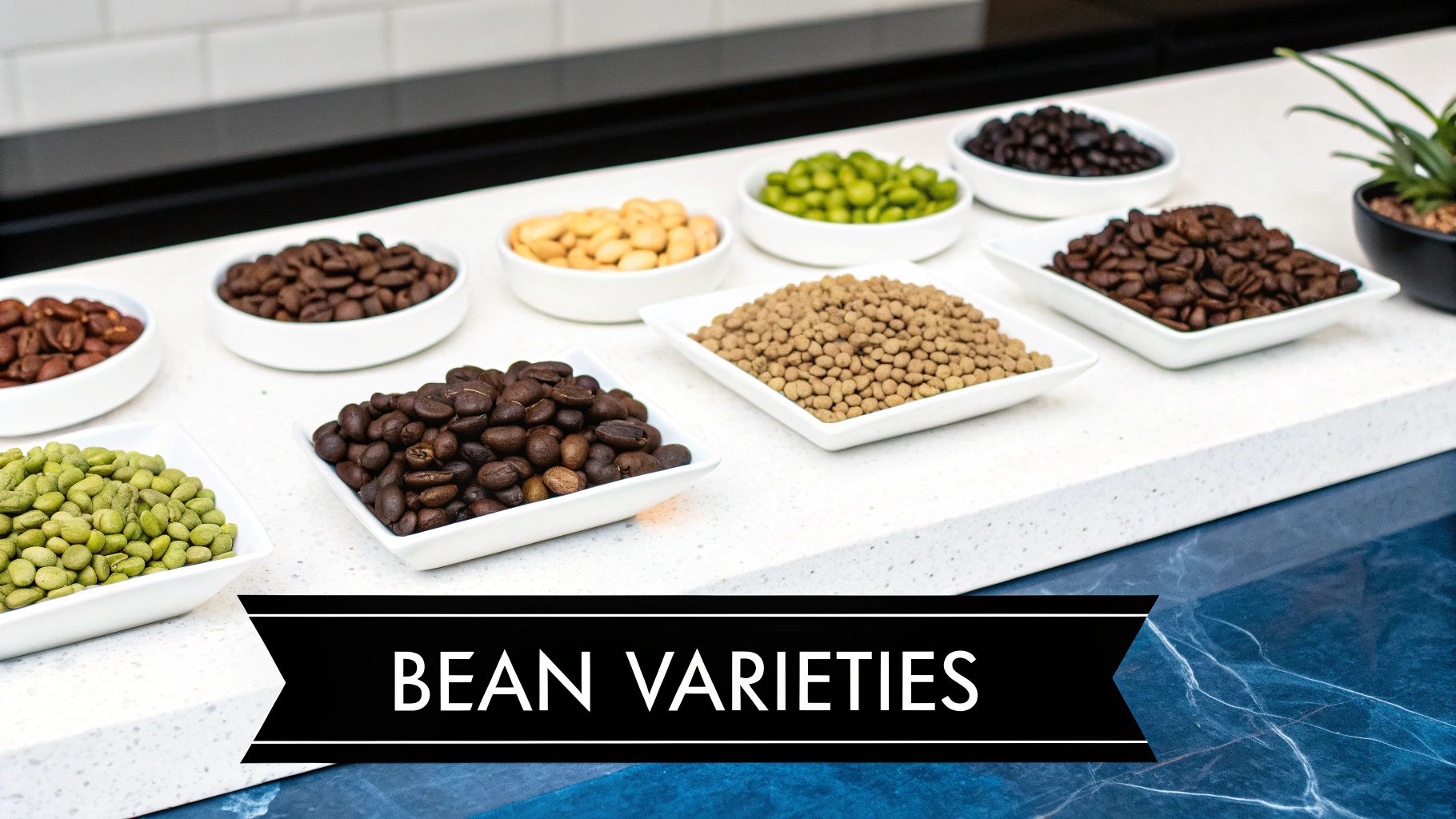
The journey to an exceptional cup of coffee begins long before water meets the grounds. It starts with the beans. This is where you set the stage, and for a cafetière, picking the right origin and roast can turn a daily routine into a moment of genuine delight.
The cafetière is uniquely suited to highlighting the full body and rich oils of coffee, making certain flavour profiles truly sing. Think of the deep, chocolatey notes of a Brazilian Santos or the bright, almost floral character of an Ethiopian Yirgacheffe. The immersion brewing of a French press lets every nuance shine through.
The UK’s appetite for better, more interesting coffee is growing fast. It’s a core part of our daily lives, with an estimated 98 million cups consumed across the country every single day. While instant coffee still has its place, there’s a clear shift towards more authentic brewing methods. This is driven by a desire for traceable, ethically sourced beans—qualities that are the hallmark of speciality ground coffee for cafetieres.
Navigating Coffee Labels
When you're faced with a shelf of speciality coffee, the labels can seem a bit daunting. But a few key terms will empower you to pick the perfect bag for your palate.
- Tasting Notes: These aren't added flavours but the natural characteristics of the bean, influenced by its origin and roast. Look for descriptions like "dark chocolate, hazelnut, and caramel" for a rich, comforting cup, or "red berry, citrus, and floral" for something more vibrant.
- Roast Level: For a cafetière, a medium or medium-dark roast is often a brilliant starting point. It develops the coffee's natural sweetness and body without introducing the overly bitter notes that a very dark roast sometimes can.
- Processing Method: You'll often see terms like 'washed' or 'natural'. Washed coffees tend to be cleaner and brighter, while natural processed coffees are often fruitier and fuller-bodied.
While our focus is on cafetière brewing, you might find the general principles in this guide to selecting the best coffee useful, too.
Single Origin or Blend?
Another choice you'll face is between single-origin coffee and blends. Neither is better; they just offer different experiences.
A single-origin coffee comes from a specific farm or region. This lets you taste the unique 'terroir' of that place—much like with wine. It’s a fantastic way to explore the diverse world of coffee, from the bright acidity of a Kenyan bean to the earthy depth of one from Sumatra.
Blends, on the other hand, are expertly crafted by roasters to achieve a specific, balanced flavour profile. They often combine beans from different origins to create a harmonious and consistent cup that’s perfect for your daily brew.
The real magic happens when you find a coffee that speaks to you. Don't be afraid to experiment. Try a bold blend one week and a bright single-origin the next. Your perfect coffee is out there waiting to be discovered.
Coffee Flavour Profiles for Your Cafetière
To help you get started, we've put together a quick comparison of some popular single-origin coffees that work beautifully in a cafetière. Each origin brings something unique to the cup.
| Origin Region | Common Tasting Notes | Acidity | Body | Best Roast Level |
|---|---|---|---|---|
| Colombia | Caramel, chocolate, nutty, citrus | Medium | Medium, smooth | Medium |
| Ethiopia | Floral, blueberry, red fruits, tea-like | Bright, high | Light to medium | Light to Medium |
| Brazil | Chocolate, roasted nuts, caramel | Low | Full, creamy | Medium to Dark |
| Kenya | Blackcurrant, grapefruit, tomato | High, wine-like | Medium to full | Medium |
| Sumatra | Earthy, dark chocolate, tobacco | Very low | Heavy, syrupy | Medium-Dark to Dark |
This table is just a starting point. The best way to find your favourite is to get brewing and see what you enjoy most.
The All-Important Coarse Grind
If there is one non-negotiable rule for cafetière brewing, it is this: you must use a coarse grind.
Imagine the texture of breadcrumbs or coarse sea salt. That’s the sweet spot. A coarse grind is essential because it allows for a slow, even extraction of flavour over the four-minute brew time.
If the grind is too fine (like the powder used for espresso), the water will extract flavour too quickly, resulting in a harsh, bitter taste. It will also clog the mesh filter and allow fine sediment, or 'sludge', to pass through into your cup.
Consistency is just as crucial as the size. A mix of fine dust and large chunks will give you a muddled brew that’s both bitter and weak. This is why a quality burr grinder is a worthwhile investment. If you're buying pre-ground, however, always make sure it is specifically labelled as ground coffee for cafetieres. This guarantees the right coarseness for a truly magnificent brew.
Mastering Your Brew Ratio and Technique
If there's one secret to unlocking truly exceptional coffee, day in and day out, it's consistency. Ditching the guesswork is the single biggest leap you can take to elevate your brewing game. This is where the brew ratio comes in—a simple, reliable framework for getting delicious results every single time.
In the world of speciality coffee, we often talk about a 'golden ratio'. Think of it as your trusted starting point. For a cafetière, a ratio of 1 part coffee to 15 parts water (1:15) is the perfect place to begin.
What does that mean in practice? For every gram of your ground coffee for cafetieres, you'll use 15 grams (which is the same as 15ml) of water. Forget scoops and estimations. A simple set of digital scales is the secret weapon of every home barista who makes great coffee without fail. It takes the variables out of the equation and gives you a repeatable recipe for success.
Your Guide to Perfect Cafetière Ratios
To take the mental maths out of your morning routine, I've put together some practical measurements for the most common cafetière sizes you'll find in UK kitchens. This is your blueprint for a balanced, full-bodied brew.
| Cafetière Size (Cups) | Volume (ml) | Coarsely Ground Coffee (grams) | Water Volume (ml) |
|---|---|---|---|
| 3-Cup | 350ml | 20g | 300ml |
| 4-Cup | 500ml | 30g | 450ml |
| 8-Cup | 1000ml | 60g | 900ml |
| 12-Cup | 1500ml | 90g | 1350ml |
Treat these ratios not as strict rules, but as your trusted starting point. If you find the brew a little too strong, try a 1:16 or 1:17 ratio next time. If you prefer it bolder, adjust to 1:14. This is your coffee, and you are in complete control.
With your ratio dialled in, the real magic happens in the technique. It’s more than just mixing coffee and water; it's a mindful process where each step builds on the last to create a truly flavourful cup.
The Four Pillars of a Perfect Brew
Get these four fundamentals right, and you'll transform your daily cafetière from a simple drink into a genuine ritual.
1. Get Your Water Temperature Right
Using water straight from a boiling kettle is one of the most common mistakes people make. It's simply too hot and will scorch the delicate coffee grounds, leaving you with a bitter, harsh taste.
The sweet spot for extraction is between 93-96°C. The easiest way to hit this? Just let your kettle sit for 30-60 seconds after it has boiled. This small pause makes a world of difference, allowing the natural sweetness of the coffee to shine through without any burnt notes.
2. Don’t Skip the Bloom
The 'bloom' is a beautiful and vital moment in the brewing process. After adding your ground coffee to the cafetière, pour in just enough hot water to saturate all the grounds—about double the weight of the coffee itself.
You'll see the coffee bed bubble and expand. That’s carbon dioxide, trapped inside the beans since roasting, finally being released. Letting the coffee bloom for 30 seconds before adding the rest of your water ensures a much more even and flavourful extraction.
3. Stick to the Four-Minute Steep
Patience is a virtue, especially with immersion brewing. Once all the water is in, give it a gentle stir to make sure all the grounds are submerged. Pop the lid on top (without plunging!) and set a timer for four minutes.
This four-minute window is perfect for a coarse grind. It's just enough time for the water to extract all the good stuff—the sugars, oils, and acids—without pulling out the bitter compounds that come from over-extraction.
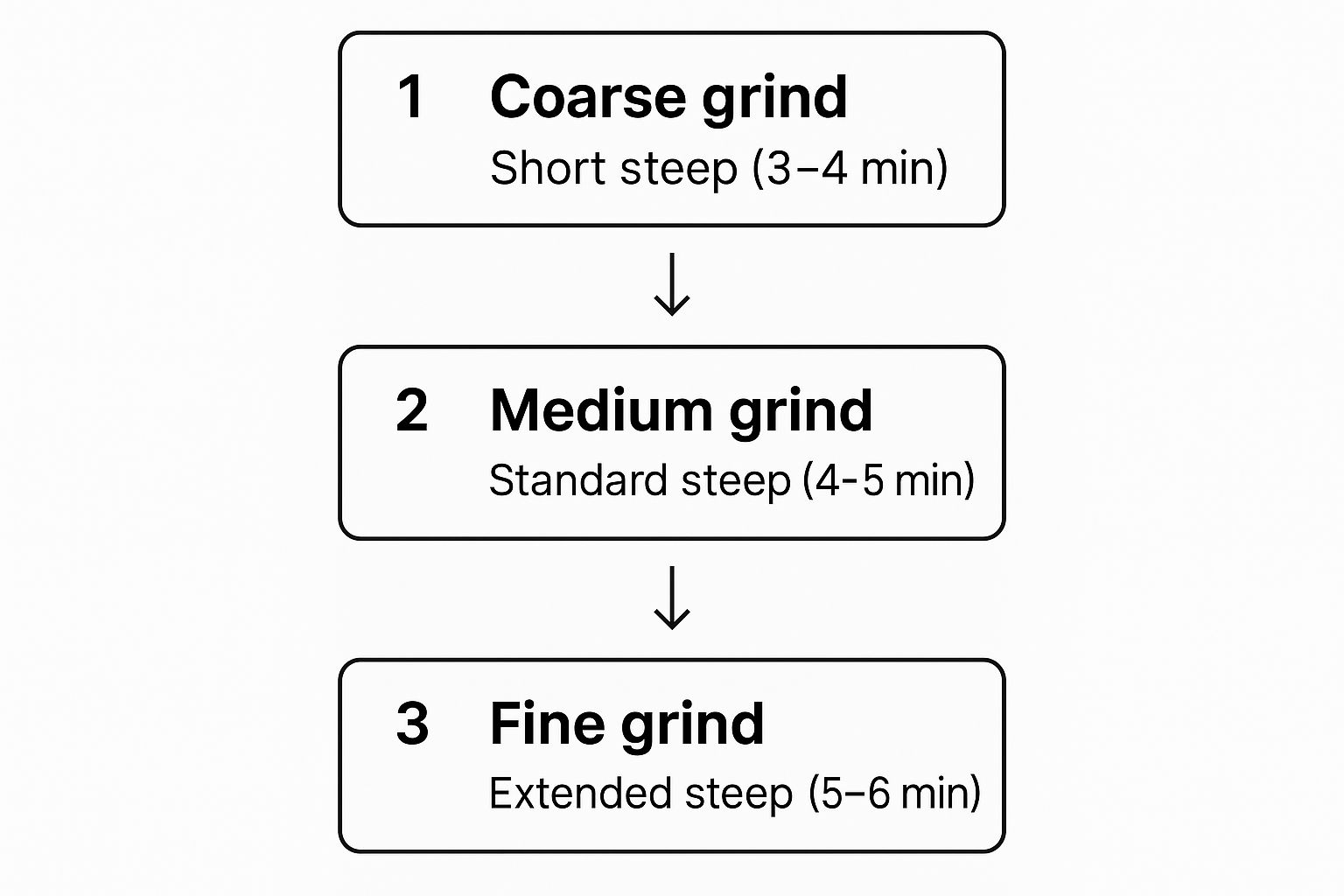
As you can see, a coarser grind needs more time, while a finer grind requires a shorter steep to achieve a balanced extraction.
4. The Slow and Steady Plunge
When your timer goes off, it's time for the final step. The key here is to be slow and gentle. Plunging too quickly or aggressively stirs up all the fine coffee particles at the bottom, forcing them through the mesh filter and straight into your cup.
This is what causes that undesirable silty, muddy texture. Instead, apply slow, even pressure, taking around 15-20 seconds to press the plunger all the way down. This simple act of restraint is your final guard against a cloudy cup, ensuring a clean and satisfying finish.
Once it's plunged, pour the coffee immediately to stop it from continuing to brew.
Troubleshooting Common Cafetière Problems
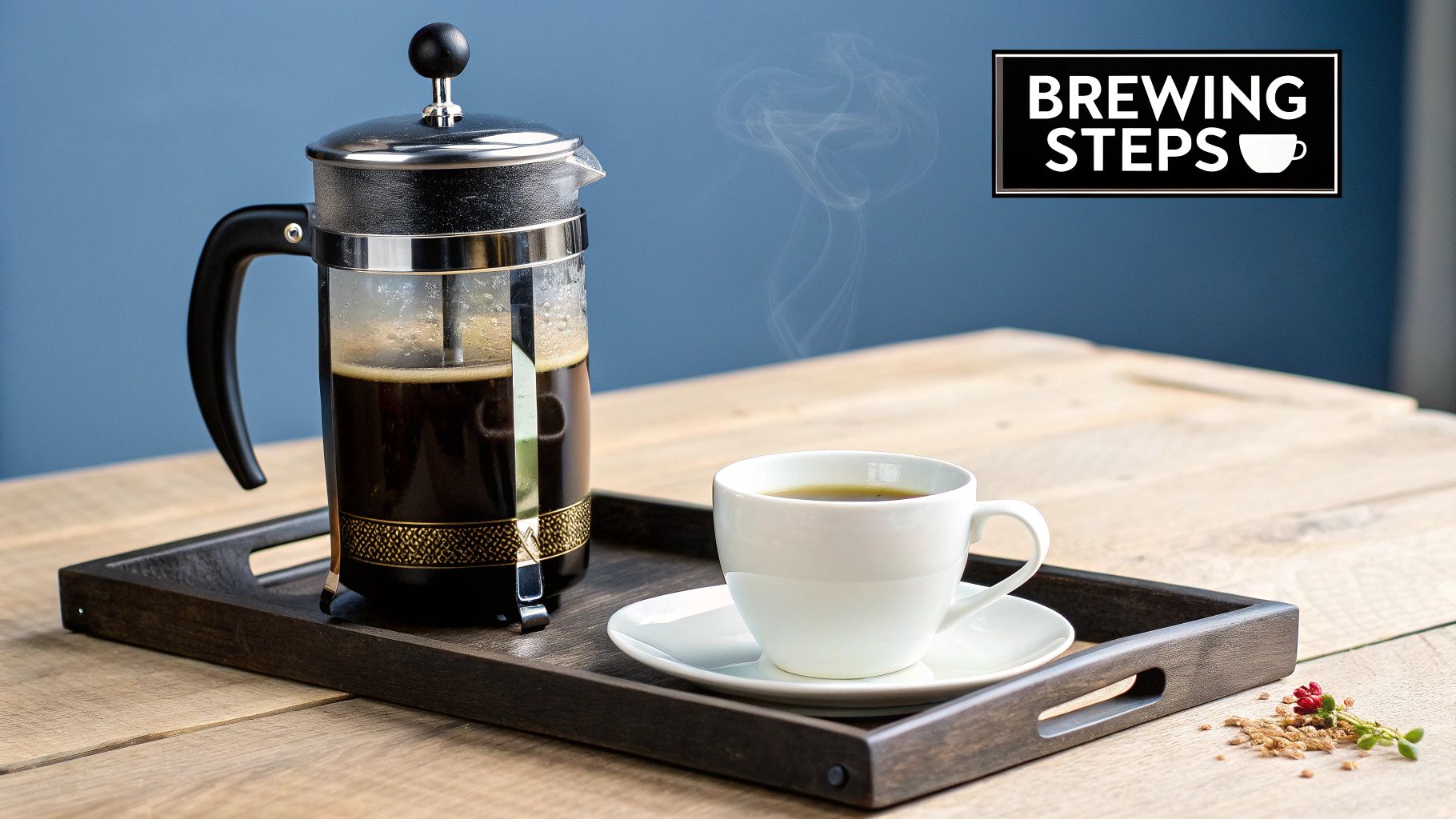
Even with the right beans and a technique you trust, some brews just don't turn out right. Don't think of it as a failure—think of it as your coffee trying to tell you something. Learning to read these signals is the last step in becoming a truly confident home brewer, someone who can fix any problem and nail that perfect cup.
Every coffee lover in the UK has been there. It’s all part of the craft. That desire for a brilliant home brew is helping to fuel the speciality sector’s growth. In fact, a significant portion of UK coffee consumers show a real willingness to invest in better products like speciality ground coffee for cafetieres. You can find more insights on the growing UK coffee market here.
Think of this section as your personal troubleshooting guide, here to help you diagnose and solve those little issues that stand between you and a truly exceptional cafetière coffee.
Why Does My Coffee Taste Weak and Watery?
This is probably the most common complaint, but luckily, it’s one of the easiest to solve. A weak, lifeless cup is a dead giveaway for under-extraction. It simply means the water hasn’t had enough time or contact to pull out all the good stuff—the rich, soluble flavours locked inside the beans.
Let's look at the usual suspects:
- Your Grind is Too Coarse: If the grounds are too big, water zips right past them without grabbing enough flavour. You're aiming for a texture like coarse sea salt, not gravel.
- Incorrect Brew Ratio: You might just be using too much water for the amount of coffee you have. Double-check your coffee-to-water ratio; an extra gram or two of coffee can make a massive difference.
- Steep Time is Too Short: Cutting that four-minute steep short is a guaranteed way to get a weak brew. Patience is key here. Let it do its thing for the full duration.
Your first move should always be to check the grind. If that looks right, then try adjusting your brew ratio by adding a little more coffee. This step-by-step approach helps you find the problem without changing everything at once.
Why is My Coffee Harsh and Bitter?
At the other end of the scale, you have that harsh, astringent bitterness of over-extraction. This is what happens when the water pulls too much from the grounds, including all the unpleasant, bitter compounds. It can leave a dry feeling in your mouth, completely masking the coffee's natural sweetness.
Here’s what to check when your coffee tastes too strong:
- Your Grind is Too Fine: This is the number one cause. Fine grounds have a massive surface area, so they release their flavour way too quickly, leading to that classic bitterness.
- Steeping for Too Long: Leaving your coffee to brew for much longer than five minutes will almost always lead to over-extraction. And remember to pour all the coffee out of the cafetière as soon as you plunge.
- Water is Too Hot: Pouring boiling water straight from the kettle can scorch the grounds, creating a burnt, bitter taste. Just let the kettle sit for 30-60 seconds after it clicks off.
Start by making your grind a little coarser. More often than not, this one small change is all it takes to bring the brew back into balance and let those sweet, complex notes shine through.
What Causes a Silty or Cloudy Cup?
Finding a layer of sludge at the bottom of your mug is a classic cafetière issue. A tiny bit of sediment is normal—it’s just the nature of a metal filter—but a really muddy cup points to a few specific problems.
A clean cup is all in the details. A cloudy brew usually means too many fine coffee particles have snuck past the filter.
Here are three things to check:
- Assess Your Grind Consistency: Look at your grounds. Are there lots of fine, dusty bits mixed in with the coarse stuff? An inconsistent grind is a recipe for a murky cup. This is where a quality burr grinder really proves its worth over a blade grinder.
- Inspect Your Plunger and Filter: Take a look at the mesh filter. Is it clean, free from damage, and sitting snugly against the glass? Any little gaps will let grounds slip through when you press down.
- Perfect Your Plunge: Are you plunging too quickly? A fast, aggressive plunge stirs everything up, forcing fine particles straight through the mesh. A slow, steady plunge taking about 15-20 seconds is your best bet for a clean finish.
Caring for Your Cafetière for Lasting Flavour
A clean cafetière is the secret weapon in your mission for the perfect brew. It's an easy detail to let slide, but over time, the rich oils and fine grounds from your speciality coffee will build up. This residue can turn rancid, lending a bitter, stale taste that will ruin even the best ground coffee for cafetières.
This isn't just about hygiene; it's about respecting the coffee and protecting the purity of its flavour. A simple, consistent cleaning routine is all it takes to make sure every cup tastes as fresh and vibrant as the last. Think of it as preparing a clean canvas for your daily masterpiece.
The Essential Daily Rinse
Your daily routine doesn't need to be a chore. The best thing you can do is give your cafetière a thorough rinse right after you've poured your last cup. Leaving spent grounds to sit for hours is what allows those oils to stick and build up.
Just empty the used grounds into your food waste or compost bin—never down the sink, as this is a recipe for blocked pipes. Next, fill the carafe with warm water, plunge the filter up and down a few times to knock loose any trapped particles, and give all the parts a good rinse. This quick, two-minute job makes all the difference.
Neglecting your cafetière is like using a dirty glass for a fine wine. A clean brewer ensures you’re tasting the coffee, not the ghost of brews past. It’s the final step in respecting the entire journey from farm to cup.
This simple habit prevents most of that flavour-killing build-up. But for long-term performance and truly exceptional coffee, a regular deep clean is non-negotiable.
Your Weekly Deep-Cleaning Ritual
Once a week, or whenever you notice a dull film on the glass or a lingering coffee smell, it's time for a proper scrub. This process gets rid of stubborn oils and ensures your filter mechanism is working exactly as it should.
Start by carefully taking the plunger apart. Unscrew the bottom plate to separate the mesh filter and the spiral plate. These nooks and crannies are where the finest grounds love to hide.
You don't need harsh chemicals for a powerful clean. A simple paste made from baking soda and a little water works wonders.
- The Scrub: Use a soft brush or sponge to apply the baking soda paste to all the individual bits—the mesh screen, the spiral plate, and inside the glass jug. Gently scrub away any oily residue.
- The Soak: For a really deep clean, pop all the disassembled parts into the carafe. Add a tablespoon of baking soda or a specialised coffee equipment cleaning powder, fill it with hot water, and let it soak for 15-20 minutes.
- The Final Rinse: After its bath, give everything one last, thorough rinse with fresh water to make sure no cleaning solution is left behind. Put the plunger back together, and your cafetière will be as good as new.
This straightforward maintenance protects your gear and guarantees that the beautiful, complex notes of your chosen coffee are what you actually taste, cup after glorious cup.
Your Cafetière Questions Answered
As you get deeper into the craft of home brewing, you’re bound to have questions. That’s a brilliant sign. It shows you’re thinking about the details and are ready to take your coffee from good to genuinely exceptional.
This final section tackles some of the most common queries we hear from coffee lovers across the UK. Think of it as your go-to reference, designed to give you the confidence to brew amazing cafetière coffee, every single time.
Can I Use Filter Ground Coffee in My Cafetière?
While it might be tempting in a pinch, it’s really not a good idea. Filter coffee is ground far too finely for a cafetière’s mesh filter, which is built to handle a coarse grind.
Using a fine grind leads to two main problems. First, a lot of sediment will slip right through the filter, leaving you with a cloudy, sludgy texture in your cup. Secondly, those fine particles over-extract almost instantly, creating a harsh, bitter flavour that completely masks the coffee's natural sweetness. For a clean, balanced brew, you absolutely need a coarse grind.
Why Does My Cafetière Coffee Taste Bitter?
Bitterness is the classic sign of over-extraction. This is what happens when hot water pulls too many of the wrong compounds from the coffee grounds. Fortunately, it's usually an easy fix once you look at a few key variables.
The most common culprits are:
- A Grind That Is Too Fine: This creates more surface area, causing the coffee to extract way too quickly.
- Steeping for Too Long: Anything much over five minutes is almost guaranteed to produce a bitter brew.
- Water That Is Too Hot: Pouring water straight from a boiling kettle can literally scorch the grounds.
To fix this, make sure your grind is consistently coarse, aim for a steep time of exactly four minutes, and let your kettle sit for 30-60 seconds after it boils before you pour.
Think of extraction as a spectrum. On one end, you get sour, weak coffee (under-extracted), and on the other, you have harsh, bitter coffee (over-extracted). Your goal is to find that perfect sweet spot right in the middle, where the flavour is balanced and delicious.
How Should I Store My Ground Coffee?
Proper storage is crucial for keeping your coffee’s flavour and aroma intact. The four enemies of freshness are oxygen, light, heat, and moisture. To protect your grounds, always keep them in an airtight container in a cool, dark place, like a kitchen cupboard.
Many people ask about the fridge or freezer, but it’s best to avoid them. Condensation can easily form, which will damage the coffee’s delicate oils and ruin its flavour. The best approach, especially with the UK’s vibrant speciality coffee scene, is to buy your ground coffee for cafetières in smaller bags from a local roaster and use it within two weeks of opening.
Is It Better to Grind My Own Beans?
For the ultimate coffee experience, the answer is a resounding yes. Grinding your beans fresh just before you brew is the single biggest improvement you can make to your coffee routine. The moment coffee is ground, it starts losing its aromatic compounds, so grinding on demand captures the bean at its absolute peak.
That said, a high-quality, pre-ground coffee from a reputable speciality roaster can still produce a fantastic cup. If you're just starting out, a great pre-ground option is the perfect place to begin. As your passion grows, investing in a quality burr grinder is a worthwhile next step to unlock even more flavour.
At Ue Coffee Roasters, we live and breathe coffee. From sourcing the finest speciality beans to providing the equipment and knowledge you need, we're here to support your brewing adventure. Discover our curated selection of ground coffee, perfect for your cafetière, and start your journey to a better brew today. Visit us at https://www.uecoffeeroasters.com.