

How to Create a Positive Work Environment in Your Workplace
Creating a positive work environment is about so much more than a few superficial perks. It's about building a solid foundation of psychological safety, supportive leadership, and genuine employee wellbeing. The best company cultures I've seen aren't built on grand gestures, but on the small, consistent actions that show people you trust and care for them, day in and day out.
The Foundation of a Positive Workplace Culture
A thriving workplace doesn't just happen by accident. It's the direct result of intentional choices and sustained effort. While some leaders get caught up in planning big annual events, the real magic is in the daily experiences that shape how people feel about their work, their team, and the company.
It all comes down to creating an atmosphere where people feel safe enough to share a half-baked idea, supported enough by their managers to take a risk, and genuinely seen for the effort they put in.
This guide is a practical blueprint for making that happen. We're moving past the theory to give you actionable steps, broken down into four key pillars that form the bedrock of any great company culture:
- Psychological Safety: This is about creating a space where team members feel they can speak up, voice concerns, and be themselves without fearing negative consequences.
- Supportive Leadership: It's the shift from simply managing tasks to actively coaching, mentoring, and empowering your people. Trust is built through compassion and clear guidance.
- Meaningful Recognition: This means setting up systems to acknowledge hard work and celebrate successes in ways that actually feel personal and significant.
- Genuine Wellbeing: This is a real investment in the holistic health of your employees—mental, physical, and social—often supported by thoughtful workplace amenities that make daily life better.
The flowchart below shows how these elements connect, starting with safety and leadership and building towards recognition and a thriving culture.
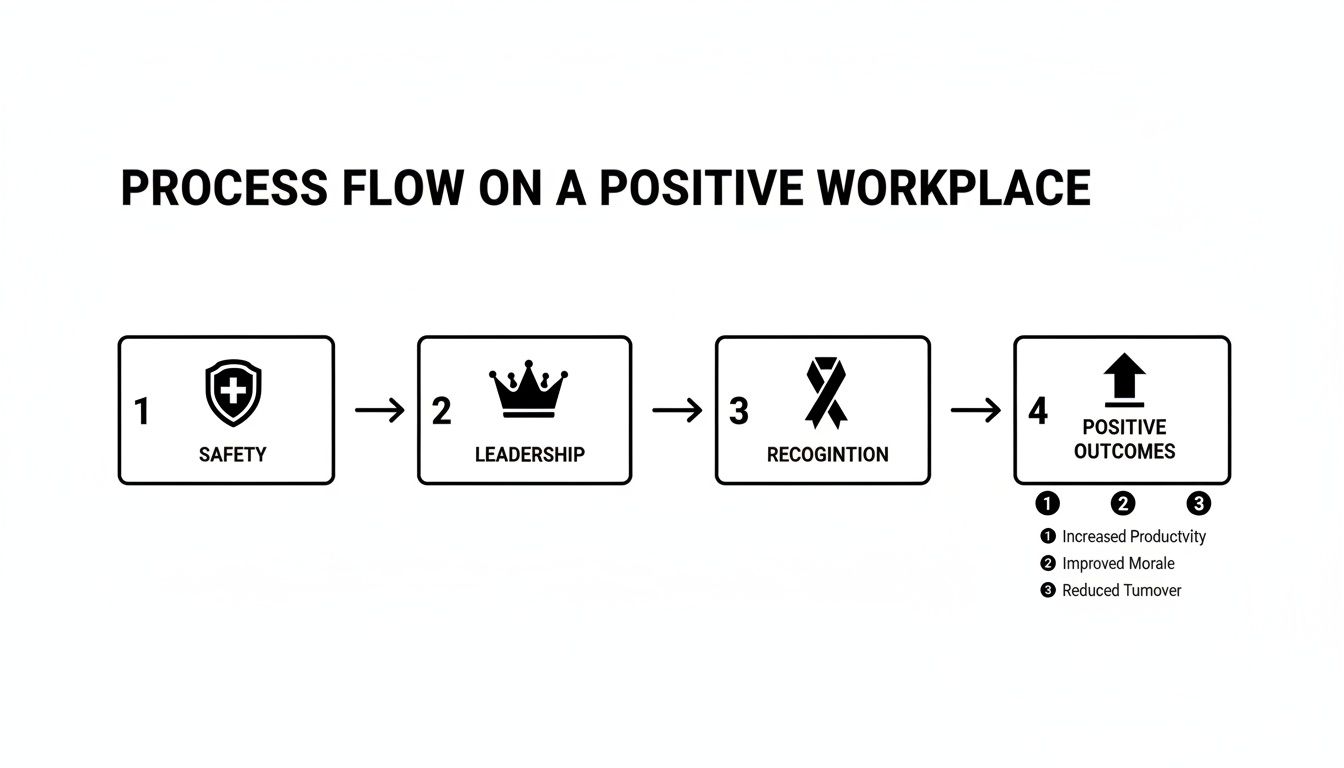
As you can see, each element builds on the last. Get one right, and it strengthens the others, creating a powerful compounding effect on morale and engagement.
The Power of Everyday Investments
You'd be surprised how much impact small, thoughtful investments in the daily workplace experience can have. Simple gestures, like providing genuinely good refreshments, send a consistent message: we care about your comfort and happiness.
Think of a premium office coffee station not just as a perk, but as a natural hub for connection, a place where ideas get sparked and relationships are built over a decent flat white. These small daily rituals are what reinforce the positive culture you're trying to create.
A great culture isn't a mystery; it's just a series of deliberate, positive choices. When employees feel valued in small ways every single day, they become more invested, collaborative, and inspired to do their best work.
Ultimately, a positive environment is an ecosystem. Every component, from a manager's tone of voice to the quality of the coffee in the kitchen, plays a part in the overall health of the organisation. When you get these elements aligned, the result is a workplace where people don't just show up—they thrive.
The table below gives a quick overview of these foundational pillars and how they directly benefit your business.
Key Pillars of a Positive Work Environment
This table summarises the core components of a thriving workplace culture and their direct benefits to the organisation.
| Pillar | Core Action | Primary Benefit |
|---|---|---|
| Psychological Safety | Foster open communication and vulnerability without fear of blame. | Increased innovation, better problem-solving, and higher team engagement. |
| Supportive Leadership | Train managers to be coaches who empower and develop their teams. | Improved employee retention, higher morale, and stronger performance. |
| Meaningful Recognition | Implement consistent and personalised systems for acknowledging effort. | Boosted motivation, reinforced company values, and a culture of appreciation. |
| Genuine Wellbeing | Invest in resources that support mental, physical, and social health. | Reduced burnout, lower absenteeism, and enhanced employee loyalty. |
By focusing on these four pillars, you're not just improving the 'vibe' of the office; you're making a strategic investment in the long-term success and resilience of your entire organisation.
Building Deeper Connections Within Your Team
A positive work environment isn’t just about hitting targets and having productive meetings. It's built on something much more human: the strength of the relationships that tie your team together. This fabric of trust, camaraderie, and mutual support is what helps everyone navigate challenges and celebrate wins.
But forget the forced team-building exercises and awkward icebreakers. Genuine connection isn’t born from a script.

It blossoms in the small, unscripted moments of the workday—the shared laugh in the kitchen, the quick chat while waiting for the kettle to boil, or the collaborative spark that happens over a freshly brewed coffee. These seemingly minor interactions are the lifeblood of a strong team culture. The real key is to intentionally create spaces and opportunities where these organic interactions can happen naturally.
Transforming Shared Spaces into Connection Hubs
Your breakout area or office kitchen holds incredible, often untapped, potential. Too often, it’s a purely functional, uninspired space for a quick solo mission. By reimagining this area as a vibrant social hub, you can actively encourage the very interactions that build a fantastic work environment.
Think of it as creating an inviting ‘office café’. This isn’t just about aesthetics; it’s a strategic move to give your team a destination—a place they want to be. Equipping this space with a high-quality, café-style refreshment station becomes a powerful catalyst.
A simple coffee break can evolve from a solitary pause into a valuable team ritual. When colleagues gather around a modern bean-to-cup machine, they’re not just getting a drink; they're sharing an experience. These moments break down hierarchical barriers and allow for conversations that just wouldn't happen at a desk.
The Power of a Shared Break
In the UK, fostering strong interpersonal relationships is a cornerstone of a positive workplace. In fact, data reveals that a staggering 70% of employees cite good relationships with colleagues as the top factor making them happiest at work.
This relational harmony doesn't just boost morale; it drives performance. Happy workers are shown to be 12% more productive. This really underscores the power of investing in shared break-time experiences that build camaraderie organically. You can find more insights in the Drewberry Employee Benefits and Workplace Satisfaction Survey.
Investing in the tools for social interaction—from premium coffee to comfortable seating—is a direct investment in your team’s happiness and collective success. It sends a clear message that you value both their work and their wellbeing.
This focus on connection pays dividends. It transforms a group of individuals into a cohesive unit that communicates more effectively, collaborates more freely, and supports one another through thick and thin.
Practical Steps to Encourage Organic Connection
Creating these social sparks doesn't require a huge budget, but it does demand thoughtful planning. Here are a few actionable ways to turn your shared spaces into engines of team connection:
- Elevate the Experience: Ditch the instant coffee. Investing in a high-quality bean-to-cup machine, speciality coffees, premium loose-leaf teas, and other nice refreshments makes the break area a destination, not a last resort.
- Design for Comfort: Provide a mix of comfortable seating. Think bar stools for quick chats and maybe some softer chairs to invite longer, more relaxed conversations.
- Schedule Social Time: Introduce something informal and optional, like a "mid-morning coffee catch-up." This carves out dedicated time for non-work chat without the pressure of a formal meeting.
- Lead by Example: Encourage leaders and managers to actually use these spaces. When they grab a coffee and chat with the team, it signals that taking a break and connecting is not just allowed, but actively encouraged.
By taking these steps, you’re not just upgrading your office amenities; you’re strategically nurturing the human connections essential for a truly positive, resilient, and high-performing workplace culture.
Here is the rewritten section, crafted to sound human-written and natural, following your specific instructions and examples.
Empower Your Team with Flexibility and Trust
The rigid 9-to-5 workday is quickly becoming a thing of the past. In its place, a new model is emerging—one built on trust and genuine empowerment. Giving your team flexibility isn't just a trendy perk; it's a clear signal that you trust them to get the job done, regardless of where or when they do it.
This shift is about more than just logistics. It's about respecting your employees as whole people with lives, families, and commitments beyond their job titles. When you give someone control over their schedule, you empower them to manage their energy, cut down on stress, and bring their sharpest, most focused self to work. It’s a non-negotiable for any business serious about creating a positive work environment.
What Real Flexibility Looks Like
True flexibility goes way beyond letting people work from home a couple of days a week. It’s about cultivating a culture of autonomy where results matter more than hours logged at a desk. It means accepting that a one-size-fits-all approach just doesn't work. A working parent might need to adjust their hours for the school run, while an early bird might do their most creative thinking at 7 a.m.
Smart UK businesses are embracing this by offering dynamic hybrid models and other arrangements that cater to these different needs. This might mean:
- Core Hours: The team agrees to be online and available for collaboration during a set window, say 10 a.m. to 3 p.m., but has the freedom to structure the rest of their day.
- Compressed Weeks: Employees work their full hours over fewer days, giving them a longer weekend to properly switch off and recharge.
- Job Sharing: Two people share the responsibilities of one full-time role, a great way to retain skilled professionals who need a part-time schedule.
And this isn't just guesswork. The data shows that 80% of UK employees who have formal flexible working arrangements report a positive impact on their quality of life. In fact, flexibility is now often valued more than pensions or bonuses, and companies that offer it see 25% lower staff turnover. You can dig into the specifics in the full CIPD Good Work Index report.
Making the Office a Place People Want to Be
For a flexible model to truly succeed, the office has to change its role. It can no longer be the place people have to go. It needs to become a destination they choose to visit. This means that when your team does come in, the experience has to be seamless, supportive, and, frankly, better than what they have at home.
This is where thoughtful, high-quality amenities make all the difference. Instead of trying to force people back with rigid attendance policies, you can draw them in by creating an environment that feels welcoming and energising, no matter when they show up.
An office designed for flexibility doesn't compete with remote work; it complements it. It becomes the central hub for connection, collaboration, and culture—a place that makes the entire work experience richer.
A huge part of this is providing on-demand refreshments that work with an agile schedule. The old, fixed 11 a.m. tea break doesn’t cut it anymore. People need access to great coffee and snacks whenever they're on-site, whether that’s for an early-morning meeting or a late-afternoon brainstorm.
Fuelling a Flexible Workforce
Think about the challenge for an office manager trying to support a team with unpredictable schedules. The answer lies in great self-service systems that deliver consistent quality anytime. A premium, bean-to-cup coffee machine is the perfect example. It empowers anyone to grab a barista-quality drink at the touch of a button, keeping them energised and focused without needing to stick to a rigid break time.
This simple act sends a powerful message: we support you, whenever you're here. It’s a tangible demonstration of the trust you’re trying to build. By equipping your workspace with appealing, easy-to-access amenities, you make sure the office remains an attractive and supportive hub that truly empowers your team.
Creating a Culture of Appreciation and Recognition
Feeling genuinely valued is one of the most powerful, yet overlooked, drivers of motivation at work. It doesn’t come from a once-a-year bonus or a generic “employee of the month” plaque. It’s built through a consistent, heartfelt culture of recognition that celebrates the effort just as much as the outcome.
To really get this right, you have to move beyond the rigid annual performance review. True appreciation is timely, specific, and woven into the fabric of your daily operations. It's about catching someone doing something great and acknowledging it right then and there, reinforcing the very behaviours you want to see more of.

When you make this shift, appreciation stops being a top-down management chore and becomes a shared responsibility, empowering everyone to celebrate their colleagues' contributions.
The Impact of Timely and Specific Praise
A quick "good job" is nice, but it lacks real impact. Specific praise, on the other hand, is a game-changer. It highlights exactly what an employee did well, making them far more likely to repeat that action.
Just look at the difference:
- Generic: "Thanks for your help with the presentation."
- Specific: "Thank you for finding that crucial data point under a tight deadline. Your attention to detail made the entire presentation stronger."
The second example validates the person's specific skill and effort, which makes the praise far more meaningful. It shows you were actually paying attention. For a deeper dive into how this works, it’s worth understanding why recognizing colleagues' hard work builds a positive workplace.
A culture of recognition isn’t about grand gestures. It's about making gratitude a daily habit, ensuring that every team member feels seen, valued, and essential to the company's success.
This is especially critical in the UK. A staggering 88% of British employees say they work harder when they feel appreciated, yet the UK scores surprisingly low on global appreciation metrics. This has a direct knock-on effect on engagement and retention, with poor culture fuelling 39% of job-seeking. These small acts of recognition matter more than ever. You can read the full research about the UK's Appreciation Index to see the data for yourself.
Fostering Peer-to-Peer Acknowledgment
While feedback from a manager is crucial, some of the most powerful recognition comes from peers. These are the people in the trenches who see the day-to-day effort, the late nights, and the collaborative spirit that managers might miss.
Creating systems for peer-to-peer acknowledgment is a brilliant move. It could be as simple as a dedicated channel on Slack for "shout-outs" or a regular slot in your weekly team meeting where colleagues can publicly thank one another. Encouraging this flattens hierarchies and builds a much stronger, more supportive team fabric.
The Power of 'Everyday Appreciation'
Alongside formal recognition, there’s what I call 'everyday appreciation'. These are the small, tangible perks that serve as constant, quiet reminders that you're grateful for your team's hard work. They’re the daily "thank yous" that don't need words.
This is exactly where thoughtful, premium office amenities make a profound impact. Providing access to speciality coffee, high-quality teas, and other nice refreshments isn't just another benefit; it’s a daily gesture of care.
Think about an employee starting a challenging morning. Being able to make themselves a perfect flat white from a quality bean-to-cup machine without leaving the office is more than a convenience. It's a small moment of comfort provided by their employer—a subtle message that their wellbeing is a priority.
These details send a powerful signal:
- Quality Over Cost-Cutting: Investing in premium refreshments shows you value quality and are willing to invest in your team's daily experience.
- A Daily Ritual of Care: Unlike an annual bonus, a great cup of coffee is a perk your team can enjoy every single day, constantly reinforcing a positive culture.
- Fostering Connection: A well-stocked, inviting refreshment hub becomes a natural gathering spot, sparking the informal chats that build real camaraderie.
Ultimately, a culture of appreciation is an ecosystem. It’s the combination of specific praise, peer-led shout-outs, and tangible daily perks that creates a place where people feel seen, supported, and inspired to do their best work.
Designing an Inspiring and Energising Workspace
The physical space where we work is far more than just a collection of desks and chairs. It’s a powerful, non-verbal communicator of your company culture. An uninspired, poorly lit office silently suggests that creativity and comfort aren’t priorities.
In contrast, a thoughtfully designed workspace can actively energise your team. It can spark creativity, encourage collaboration, and make everyone feel genuinely good about coming to work. The goal is to craft a space that not only supports different work styles but also makes people feel valued from the moment they walk through the door.
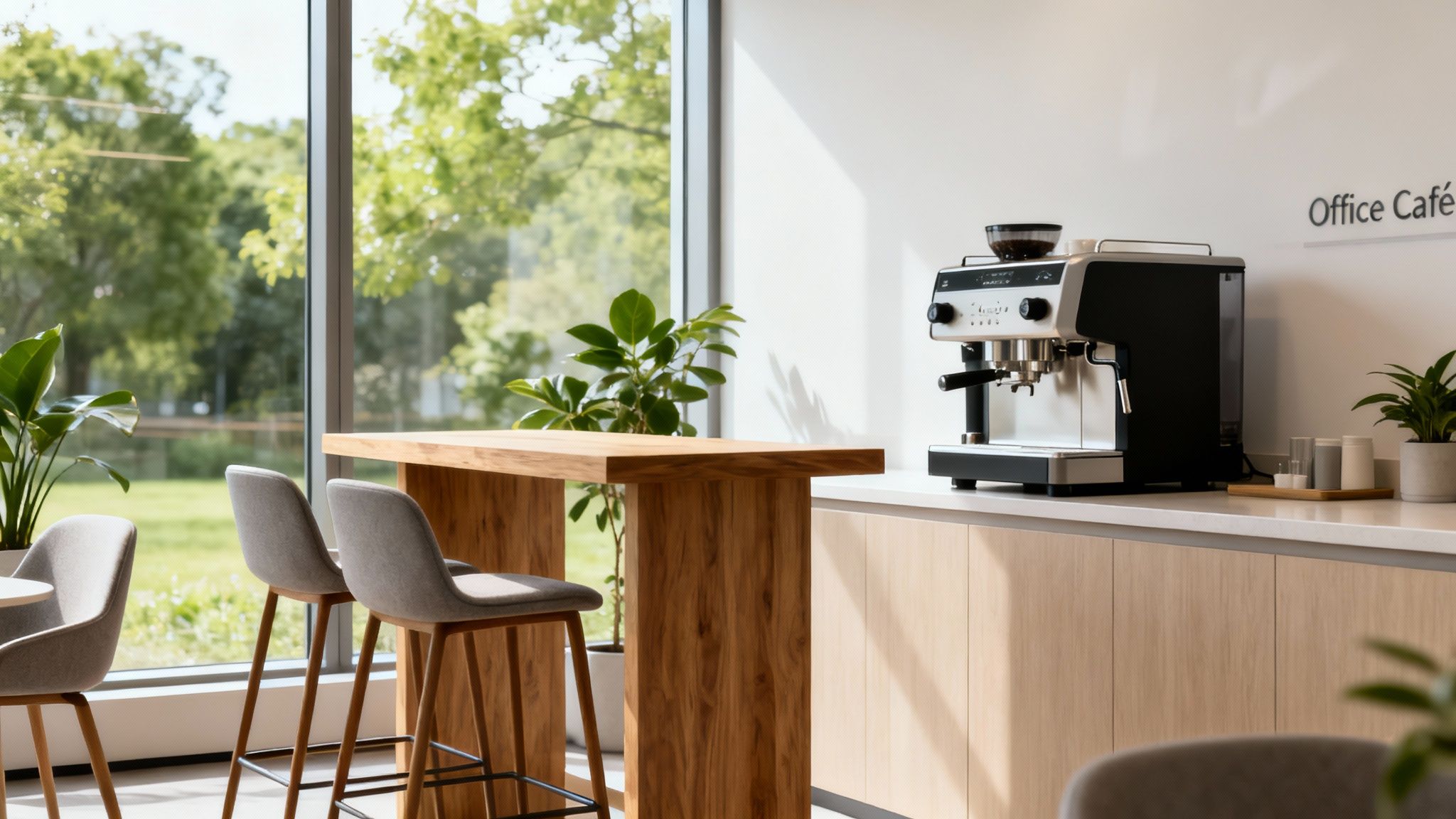
This isn't just about aesthetics. Strategic design choices directly impact focus, mood, and overall wellbeing, playing a crucial role in building a positive work environment.
Beyond the Desk: The Fundamentals of an Inspiring Space
Before thinking about grand features, you have to get the fundamentals right. These core elements are the foundation of a workspace where people can do their best work without physical or mental friction. A few small adjustments here can make a world of difference.
Here are three areas to nail down first:
- Lighting: Poor lighting is a notorious energy-sapper, leading to eye strain and headaches. Maximise natural light wherever you can. Ditch the harsh, overhead fluorescent glare and supplement with warm, layered artificial lighting that mimics daylight.
- Ergonomics: An uncomfortable chair or a poorly positioned monitor is a recipe for distraction and long-term physical issues. Investing in adjustable, ergonomic furniture is a direct investment in your team’s health and ability to focus.
- Biophilic Design: Humans have an innate connection to nature. Bringing natural elements into the office—like live plants, natural wood finishes, or even a water feature—is proven to reduce stress and improve cognitive function. It simply makes a space feel calmer and more welcoming.
The Office Café: The New Heart of the Workplace
While individual workstations are for focused tasks, the breakout space is where your culture truly comes alive. It’s the modern office's secret weapon. It’s time to move beyond the sterile staff kitchen and reimagine this area as an ‘office café’—a vibrant, inviting destination that serves as the social heart of your workplace.
This isn’t about a massive renovation; it's about a shift in mindset. You're creating a space that encourages people to intentionally pause, step away from their screens, and connect with their colleagues on a human level.
A well-designed office café isn't an expense. It's a strategic investment in the spontaneous conversations and casual connections that fuel collaboration and build a stronger, more cohesive team.
It quickly becomes the natural hub for everything from impromptu brainstorming sessions to simply sharing a laugh over a great cup of coffee. This is where relationships are built and a genuine sense of community is forged.
Fuelling Connection with Premium Refreshments
What’s at the centre of any great café? Exceptional coffee. The quality of your refreshments is a powerful signal of how much you value your team's daily experience. A cheap jar of instant coffee sends one message, while a premium bean-to-cup machine sends a very different one.
Anchoring your office café with a high-quality refreshment hub is what makes it a true destination. When employees know they can get an excellent flat white or a perfectly brewed loose-leaf tea without leaving the building, the break area becomes a genuine perk—a place they actively want to visit.
This isn’t just about providing caffeine; it’s about curating an experience. A diverse selection of high-quality options ensures there’s something for everyone, making the entire team feel considered and cared for. It's a simple, daily reminder of your company's commitment to their wellbeing.
This transforms the simple act of taking a break into a meaningful ritual. It’s in these moments—sharing a coffee, catching up in a comfortable space, and recharging for the tasks ahead—that a truly positive work environment is built and sustained.
Sustaining a Positive Culture Over the Long Term
Getting a positive work environment off the ground is one thing, but keeping it alive for the long haul? That’s the real challenge. It's not a project you can simply tick off a list. Think of it as a continuous loop of listening, adapting, and improving to keep your culture vibrant and resilient.
Once you’ve built momentum, the key is to treat your company culture like a living thing. It needs constant care and attention. You have to keep your finger on the pulse, ready to step in and solve small issues before they snowball into bigger problems.
Keeping the Conversation Going
If there’s one secret to long-term cultural health, it’s creating reliable channels for people to give feedback. Relying only on an annual survey is like checking the weather once a year—you’ll miss all the crucial day-to-day shifts in the atmosphere.
To get a genuine, real-time view of how your team is feeling, you need a few different touchpoints. This creates a safety net where every voice has a chance to be heard, whether that’s in a group setting or a quiet, private chat.
A strong feedback system should always include:
- Regular Pulse Surveys: Short, frequent surveys—think monthly or quarterly—are perfect for tracking sentiment on key themes like workload, management support, and overall morale.
- Meaningful One-on-Ones: These need to be safe spaces for honest conversation. They should be just as much about wellbeing and career goals as they are about project updates.
- Open Forums or Town Halls: Regular, transparent all-hands meetings where leadership shares updates and answers the tough questions are incredible for building trust.
From Feedback to Action
Gathering feedback is only half the battle. To keep a positive culture thriving, leaders must constantly work on improving employee engagement. The most critical step is turning what you’ve learned into visible, meaningful action.
When employees see their suggestions being put into practice, it validates their input and encourages them to keep sharing. It creates a powerful positive feedback loop. And even if you can't act on every single piece of feedback, simply communicating why a certain decision was made is vital. Transparency here is non-negotiable.
A positive culture is sustained not by grand, infrequent gestures, but by the consistent, everyday proof that you are listening and that you genuinely care. It's the small, iterative improvements that build lasting trust and loyalty.
This process of continuous improvement should always circle back to the core themes of connection, recognition, flexibility, and wellbeing. These are the pillars you have to consistently measure and nurture.
For example, if pulse surveys show a dip in team connection, that’s a clear signal to invest more in social opportunities—maybe by upgrading the breakout space or organising an informal team lunch. If recognition scores are looking low, perhaps it’s time to introduce a new peer-to-peer shout-out system. This iterative approach keeps your efforts relevant and impactful, directly addressing the evolving needs of your team. It's this active, responsive dedication that will ensure your positive work environment doesn't just exist, but truly thrives for years to come.
At Ue Coffee Roasters, we believe that a great cup of coffee is more than just a drink—it's a daily ritual that fosters connection and shows appreciation. Elevate your workplace with our premium, bean-to-cup solutions and curated refreshments to build a culture where your team feels valued every day. Discover our office coffee solutions at https://www.uecoffeeroasters.com.