

How to Improve Employee Morale and Reignite Your Team's Spark
To really boost your team's morale, you need to get the foundations right: recognising contributions, fostering open communication, and investing in employee wellbeing. Get these in place, and you'll build a culture of trust and appreciation where people feel genuinely valued. This guide is a practical playbook to help you spot the issues and roll out strategies that bring the spark back to your team.
The Hidden Costs of a Quietly Demotivated Team
It often starts with a whisper, not a bang. Fewer new ideas in meetings. A bit more cynicism in the air. A noticeable drop in the energy people have for collaborating. That’s the real face of low morale, and it's so much more damaging than just a high turnover rate. When a team is stretched thin, the burnout ripples outwards, and it can quietly grind your entire organisation to a halt.

This isn’t just a "vibe" problem; it's a serious business challenge. In the UK, a staggering 81% of businesses are dealing with low employee morale. The main cause? People feel completely overstretched, juggling too many tasks without enough time. It's gotten so bad that over a quarter (27%) of leaders now say employee stress is the single biggest killer of productivity.
Companies are trying to fight back with upskilling and hybrid work models, but these efforts work so much better when you also invest in the workplace environment itself. You can discover more insights into the UK's productivity challenges on celonis.com.
What starts as a temporary slump can easily become a deep-rooted issue that erodes your company's foundation if you ignore it.
Spotting the Early Warning Signs
Managers often miss the first signs of falling morale because they're looking at performance metrics, not people's behaviour. But it’s these subtle shifts that signal trouble long before absenteeism or turnover rates spike.
I've learned to spot these subtle signals over the years, and they're almost always the same. The table below breaks down what to look for, from the quiet signs of disengagement to the real-world impact they have on your business.
| Indicator Category | Subtle Signs to Watch For | Potential Business Impact |
|---|---|---|
| Engagement & Initiative | Fewer people volunteering for new tasks; a "that's not my job" attitude starts to appear. | Innovation stalls; projects move slower as ownership becomes fragmented. |
| Team Atmosphere | Lack of enthusiasm in meetings; forced celebrations; good news is met with a shrug. | A negative culture takes root, making it harder to attract and retain top talent. |
| Communication & Collaboration | Teams become siloed; communication is purely transactional, no more casual chats or idea-sharing. | Cross-functional projects suffer; problem-solving becomes less effective and more isolated. |
| Individual Behaviour | Increased cynicism or negativity; more frequent complaints about minor issues. | Customer service quality drops as employee frustration bleeds into external interactions. |
These aren't just minor dips in mood; they are quiet calls for help. A proactive approach to understanding how to improve employee morale means listening to what isn't being said just as much as what is.
A team's collective silence in a brainstorming session is often louder than any complaint. It's the sound of disengagement, where great ideas go to die because people no longer feel safe or motivated enough to share them.
The Tangible Impact on Business Outcomes
This slow drain on team spirit has real, measurable consequences that hit your bottom line. It's not just about a less cheerful office; it's about a direct hit to business performance.
First, innovation grinds to a halt. A motivated team is a curious one, always on the lookout for better ways to solve problems. A demotivated one sticks to the script, too afraid of failure or just too tired to experiment. This creative paralysis makes it impossible to adapt to market changes or get ahead of the competition.
Then there's the hit to customer care. Employees who feel uncared for will find it incredibly hard to care for your customers. That quiet resentment comes out as shorter tempers, less patience, and zero willingness to go the extra mile. Your clients will feel that shift long before any internal survey picks it up.
I saw this play out with a marketing team tasked with a major product launch. They were overloaded with unrealistic deadlines and got almost no support. Their initial excitement quickly turned to pure exhaustion. Collaboration fell apart, creativity dried up, and the final campaign was just… flat. It completely missed its targets. The financial cost of the failed launch was bad enough, but the long-term damage to team trust was even worse. That’s exactly why leaders have to act on this stuff with real urgency.
Cultivating a Culture of Trust and Open Communication
Great morale isn't about grand gestures or one-off team-building days. It’s nurtured in the small, everyday moments—the belief that you can voice an idea, ask a tough question, or even admit a mistake without fear of being shut down. This is the heart of psychological safety, and it's the absolute bedrock of a motivated, high-performing team.

This foundation of trust is more critical than ever. In the UK, just 60% of workers feel motivated enough to go the extra mile, a figure that trails the global average by 11%. A big part of the problem? A massive trust deficit, with only 38% of employees actually trusting their senior leadership. When you see that 33% point to poor communication as a direct cause of low morale, it’s clear where the work needs to be done.
This isn't about corporate buzzwords. It's about getting back to basics and rebuilding genuine connections that close the gap between leadership and the rest of the team.
Making Two-Way Feedback a Reality
Let's be honest, the traditional annual review is broken. Real communication is a continuous conversation, not a one-way critique once a year. To build that essential trust, you need to create channels where feedback flows freely—up, down, and sideways.
This means doing more than just asking for feedback; you have to prove you’re actually listening. A huge part of this is establishing psychological safety so people feel comfortable taking interpersonal risks. There's some excellent guidance on how to create psychological safety in remote teams that has lessons for every type of workplace.
Here are a few ways to put this into practice:
- Run 'Start, Stop, Continue' Sessions: Ask your team what the company should start, stop, and continue doing. It's a brilliantly simple framework for gathering actionable insights and making everyone feel heard.
- Implement "You Said, We Did" Updates: Regularly share the feedback you’ve received (anonymously, of course) and, crucially, what you’ve done about it. This creates a powerful loop that proves you’re not just listening, but acting.
- Train Managers in Active Listening: Often, the biggest barrier to open communication is a manager who’s just waiting for their turn to speak. Invest in training that teaches leaders how to listen with intent, ask better questions, and make their people feel genuinely understood.
Lead with Visibility and Consistency
Trust isn't built behind closed doors. For employees to buy into the company's direction, they need to see and hear from leaders regularly. When managers are visible and approachable, it demystifies the hierarchy and breaks down the "us vs. them" mentality that kills morale.
Trust is the residue of promises fulfilled. It's not about being perfect, but about being predictable and consistent in your words and actions. When your team knows what to expect from you, they can focus their energy on their work instead of worrying about what’s coming next.
A visible leader doesn't just send out company-wide emails. They walk the floor, grab a coffee in the break room, and pop into team chats. This isn’t about micromanaging; it’s about being present and human.
I once worked with a CEO who started hosting an informal 30-minute "ask me anything" session every Friday morning. At first, only a few people showed up. But as they saw he would answer the tough questions honestly, it became a cornerstone of the company culture.
That consistency is everything. If your messaging changes with the wind, or if you only appear when there's bad news, you'll erode trust faster than you can build it. A steady, authentic presence gives your team solid ground to stand on, giving them the confidence to invest themselves fully in their work.
The Art of Meaningful Recognition and Valued Perks
Recognition isn't about grand, infrequent gestures. It’s about making people feel seen and valued in the small, everyday moments. If you want to genuinely improve employee morale, you have to build a culture of appreciation that feels authentic and continuous, not forced or transactional. It’s a fundamental shift from just rewarding outputs to truly valuing people.

This distinction is critical. Think about this: research shows that employees who don't feel adequately recognised are twice as likely to say they'll quit in the next year. That single statistic reveals a powerful truth—appreciation is one of the most direct and effective levers you have for keeping your best people and boosting motivation.
The challenge is getting past sporadic praise and putting systems in place that make recognition a natural part of your company’s DNA.
Beyond the Bonus Cheque: What Truly Motivates
While a competitive salary is obviously essential, it’s often the non-monetary rewards that build a deep, lasting sense of loyalty. These are the things that show you care about your team as people, not just as cogs in a machine. Real motivation comes from feeling respected, trusted, and invested in.
Compare a year-end bonus to consistent, timely praise. The bonus is great, of course, but that specific, immediate feedback validates effort in the moment. It reinforces positive behaviours and makes an individual feel their contribution matters right now, not just at an annual review.
Consider these powerful, low-cost motivators:
- Public Acknowledgement: Dedicate a few minutes in team meetings or a company-wide email to celebrate specific wins. Highlighting how someone's work directly led to a project's success is far more impactful than a generic "good job."
- Peer-to-Peer Recognition Platforms: When you empower colleagues to celebrate each other, you foster a supportive, collaborative atmosphere. A simple Slack channel dedicated to "shout-outs" can totally transform your culture by encouraging everyone to look for the good in others' work.
- Opportunities for Growth: Investing in an employee's development sends a clear signal that you believe in their future. This could mean sponsoring a certification, offering mentorship, or giving them the lead on a challenging new project.
These strategies tap into that core human need to feel seen and appreciated, which is the very bedrock of high morale.
Turning Daily Routines into Valued Perks
This is where thoughtful workplace amenities become unspoken—but powerful—tools for recognition. A perk isn't just about offering something for free; it's about demonstrating care and elevating the daily employee experience. When you intentionally improve a routine part of the day, you send a consistent, tangible message that you value your team.
Take the daily coffee break. For many, it's a mundane ritual with some instant granules or a tired filter machine. It gets the job done, but there’s no real enjoyment there.
By upgrading this simple ritual to a premium experience, you're not just providing coffee; you're offering a moment of affordable luxury and a genuine perk that enhances every single workday. It’s a small change that makes a big statement.
Think about the subconscious message this sends. Investing in a high-quality, bean-to-cup coffee solution communicates a few key things:
- We invest in your daily happiness: This isn't a one-off treat; it’s a commitment to making every day a little bit better.
- You deserve quality: We believe our team is worth more than the bare minimum.
- We want you to connect: A great coffee station becomes a natural social hub, encouraging the informal chats that build strong team bonds.
This is how a simple amenity becomes part of your recognition strategy. Unlike an annual bonus that’s quickly forgotten, this is a perk that employees interact with and appreciate multiple times a day. It’s a constant, physical reminder that the company cares enough to invest in the small details—and ultimately, those are the gestures that build a culture where people feel genuinely valued and motivated to do their best work.
Designing a Workplace That People Want to Be In
Let’s be honest: a great office is more than just desks and chairs. It’s a powerful, strategic tool for boosting morale and making your workplace a destination people actually want to be in.
When your physical space is designed with real intention, it sends a clear message: you care about your team's comfort, their productivity, and their wellbeing. This isn’t about splashing out on expensive overhauls, but making thoughtful changes that genuinely improve daily work life. Our physical surroundings have a huge impact on our mood and motivation. A cluttered, poorly lit, or uncomfortable space is a constant, low-level drain on energy. On the flip side, an environment that supports different work styles and encourages connection can be a massive driver of positivity. It’s one of the most tangible ways to show you’re invested in your people.
From Functional to Inspirational Spaces
Transforming your office starts with a simple realisation: a one-size-fits-all, open-plan layout doesn't work for every person or every task. A truly effective workplace needs variety, offering a mix of spaces that cater to different needs throughout the day. This is where you can start actively designing a workplace that helps improve morale.
Think about the different kinds of work your team does. There are times for intense, heads-down concentration, and then there are moments for dynamic, energetic collaboration. Your office should be ableto support both, seamlessly.
-
Ergonomic Essentials: Let's start with the basics. High-quality, adjustable chairs and desks aren't a luxury; they're fundamental to preventing physical discomfort and burnout. Small investments like dual monitors or proper laptop stands can make a massive difference to daily comfort and output.
-
Dedicated Quiet Zones: Open-plan offices are brilliant for collaboration but can be a nightmare for deep focus. Creating designated "library rules" zones—with comfortable seating where conversation is off-limits—gives people an essential escape from the buzz when they need to concentrate.
-
Vibrant Collaborative Hubs: Conversely, you need areas that practically hum with energy. Think meeting rooms and open spaces kitted out with whiteboards, comfy lounge-style seating, and easy access to power points. These spots should feel inviting, encouraging those spontaneous brainstorming sessions that just don't happen on a video call.
The best office designs are like a well-planned city. You have quiet residential streets, bustling town squares, and inviting parks. Your workplace should offer that same variety, allowing people to choose the environment that best suits their task and mood.
The Break Area as the Heart of Your Culture
Right at the centre of this transformation is the often-overlooked 'third space'—the office kitchen or break area. This space holds so much potential. It can be far more than just a place to grab a quick drink; it can become the social heartbeat of your entire workplace.
This is where a premium refreshment station becomes a total game-changer for morale.
Imagine curating a break area with a top-tier bean-to-cup coffee machine, offering speciality blends that rival any high-street café. Add a selection of artisanal loose-leaf teas, genuinely nice snacks, and maybe even a sparkling water tap. This isn't just about providing drinks; it's about creating an experience.
This thoughtful approach offers a daily, affordable luxury that makes your team feel genuinely looked after. It transforms the mundane coffee run into a moment of real pleasure and connection. Suddenly, the break room is no longer just functional—it’s the place where colleagues from different departments naturally cross paths, where ideas are sparked in casual conversation, and where team bonds are quietly strengthened.
By investing in this central hub, you create a constant, tangible reminder of your commitment to the team's happiness. Unlike a yearly bonus, this is a perk people appreciate multiple times a day, every single day. It’s a simple but incredibly effective way to show you value the small details that make the workday better.
Now, let's look at how different levels of investment in your workplace environment can pay off. Not every business can afford a complete redesign, but even small, smart upgrades can have a surprisingly big impact on how people feel about coming to work.
High-Impact Workplace Environment Enhancements
| Enhancement Level | Examples | Impact on Morale | Implementation Ease |
|---|---|---|---|
| Foundational | Ergonomic chairs, good lighting, clean & tidy spaces, decent Wi-Fi. | Moderate | Easy |
| Intermediate | Quiet zones, collaborative hubs with whiteboards, quality office plants. | High | Medium |
| Premium | Bean-to-cup coffee machine, high-end snacks & teas, comfortable lounge furniture. | Very High | Medium |
| Transformational | Full redesign with varied work zones, outdoor spaces, wellness rooms. | Exceptional | Difficult |
As you can see, you don’t need to aim for a "transformational" overhaul from day one. Moving from foundational to intermediate or premium enhancements can deliver a significant boost in morale for a relatively modest investment of time and resources. The key is to be intentional and focus on changes that have the biggest daily impact on your team's experience.
Sustaining High Morale for the Long Haul
Getting a quick morale boost is one thing. Keeping that positive energy alive day in, and day out is the real challenge. The goal isn't just a temporary lift; it's about weaving high morale into the very fabric of your company culture. This is how you move from one-off perks to creating a resilient, motivated team that’s in it for the long haul.
This final step isn’t about grand gestures. It’s all about consistency and paying attention to what's actually working. By building a simple framework to gather feedback and, crucially, act on it, you can make sure your efforts are having a real, lasting impact.
Measuring What Matters Most
You can't improve what you don't measure. To get a real sense of whether your initiatives are landing, you need clear, meaningful metrics. This shifts your strategy from guesswork to a data-informed approach, letting you fine-tune things for the biggest impact.
The employee Net Promoter Score (eNPS) is a brilliant place to start. It’s a simple but incredibly powerful metric that boils down to one question: "On a scale of 0-10, how likely are you to recommend our company as a place to work?" That single score gives you a fantastic snapshot of overall sentiment.
But numbers only tell half the story. You need to know the "why" behind the score.
- Pulse Surveys: Think of these as a quick, regular health check. Short surveys sent out weekly or bi-weekly with a few targeted questions on things like workload, recognition, or wellbeing can give you a real-time gauge of the team’s mood.
- Qualitative Feedback from One-on-Ones: This is where the magic happens. Train your managers to go beyond project updates and dig a little deeper. Questions like, "What's one thing we could do to make your work life better?" or "When did you feel most energised at work this week?" uncover the kind of insights you just can't get from a survey.
The honest answers from these conversations are pure gold. They provide the context you need to steer your long-term strategy in the right direction.
Just as important is the physical environment. A well-designed workspace is a key driver in sustaining morale, and it doesn't happen by accident. It's a deliberate process focusing on ergonomics for comfort, quiet zones for deep work, and social hubs for connection.
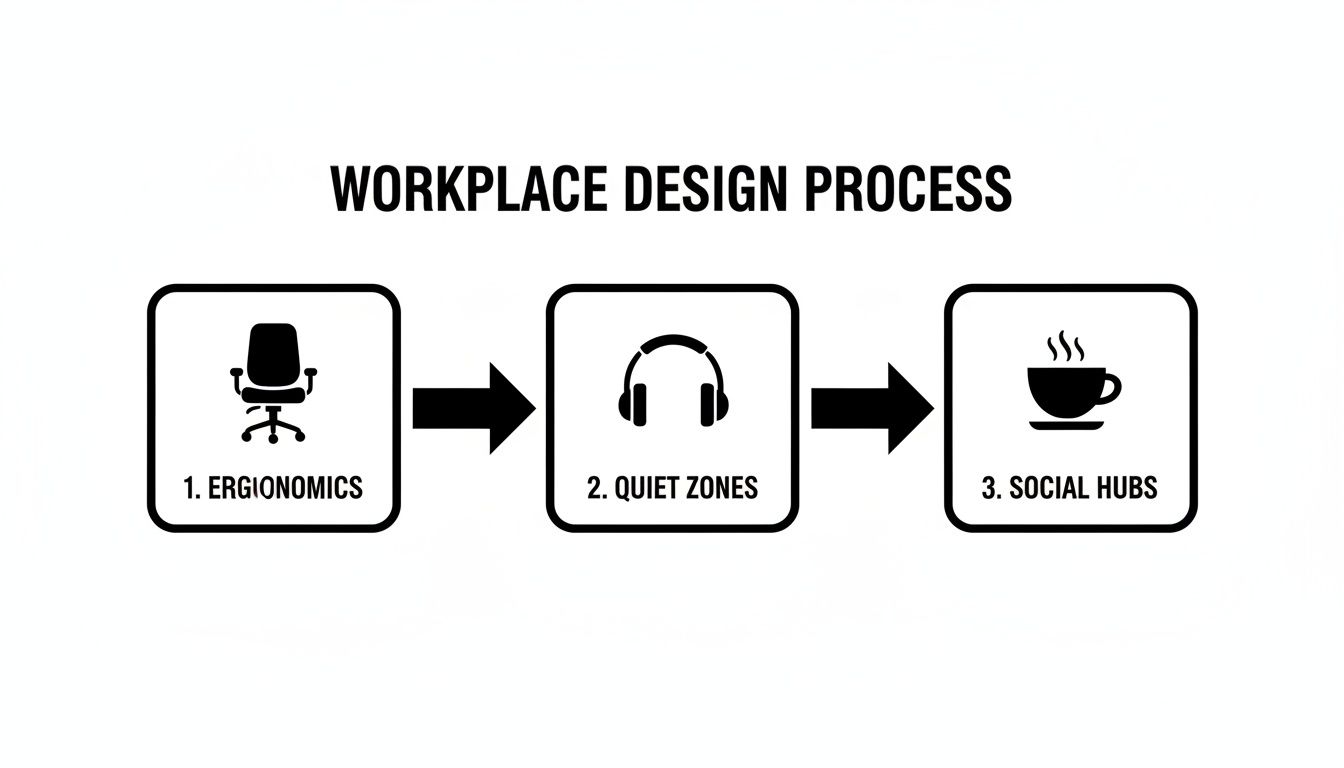
This flow shows that creating a supportive office isn’t just about putting desks in a room. It's a thoughtful journey from individual comfort to enabling focused work and, finally, fostering a genuine sense of community.
Building a Lasting Culture of High Morale
Data is only useful if it leads to action. The final piece of the puzzle is creating a virtuous cycle of feedback and improvement that becomes a permanent part of how you operate. This is how high morale becomes the default setting, not a fleeting target.
Recent data shows just how much teams respond when you get this right. UK employee engagement saw a promising rebound to 85.33% in early 2025, a significant 4.72-point jump driven by surges in motivation and advocacy. Even though only 10% of UK workers felt truly engaged before this, and a staggering 40% experienced daily stress, the right initiatives clearly made a huge difference. In fact, enhanced workplace experiences can make teams 28% more likely to recommend their employer.
Sustaining morale isn’t about launching a new programme every quarter. It's about making small, consistent deposits of trust, recognition, and support every single day. Over time, these deposits compound into a culture that can weather any storm.
To keep that momentum going, you can implement further strategies to improve employee engagement. A great way to do this is by creating a dedicated "Culture Committee" with people from different departments who can review feedback and suggest new ideas. It gives employees a voice and ensures your efforts stay relevant.
Ultimately, sustaining high morale boils down to leadership. When leaders consistently model the right behaviours, genuinely prioritise wellbeing, and act on feedback, they create an environment where people don’t just show up for a paycheque—they come to contribute, connect, and thrive. That is the foundation of an unstoppable team.
Frequently Asked Questions
When you're trying to figure out how to improve employee morale, a lot of practical questions come up. We hear them all the time from leaders and managers. Here are a few of the most common ones we get asked, along with some straight-talking answers.
What Is the Single Most Effective Way to Start Improving Employee Morale?
Honestly? The most powerful first step is to focus on genuine communication and recognition. Before you spend a penny on perks or new initiatives, you need to create an environment where people feel both heard and genuinely appreciated for the work they do.
It starts with small, consistent acts. A specific thank you in a team meeting, an open-door policy that people actually use, asking for feedback and acting on it. This stuff builds a foundation of trust. Once you have that, any other initiatives—like upgrading the breakroom—will land as genuine acts of care, not just superficial gestures.
A team that feels heard is a team that feels valued. The simple act of listening with intent can be more powerful than any expensive perk, as it lays the groundwork for psychological safety and genuine engagement.
How Can We Boost Morale on a Tight Budget?
Improving morale doesn’t have to break the bank. In fact, some of the most effective strategies are low-cost but have a high impact on your team’s daily experience.
Start with the things that cost nothing but your time and effort. Public praise for a job well done, offering flexible hours where the role allows, or just carving out intentional time for the team to connect without a work agenda. These are incredibly powerful.
You can also make a big impression by upgrading existing amenities cost-effectively. For example, switching from a jar of instant coffee to a really good speciality blend can completely transform a daily ritual into a valued perk. It’s a tangible investment in employee wellbeing for a relatively small cost per head, but it shows you care about the small details that make the workday that much better.
How Long Does It Take to See Real Improvement in Employee Morale?
You can get small, immediate lifts with a few quick wins. A heartfelt team-wide thank you or a surprise upgrade to the office snacks can create positive ripples straight away.
But a deep, sustainable shift in company-wide morale? That’s more of a long-term commitment. You’ll typically start to see meaningful improvements in trust, engagement, and the overall atmosphere within three to six months of consistent effort.
The key word here is consistency. Morale is built through repeated positive experiences, not one-off events. It’s vital to maintain your initiatives and embed them into the culture, rather than treating them like a short campaign. Lasting change comes from the cumulative effect of all those small, thoughtful actions being repeated day in, day out.
Ready to transform your breakroom into a hub of positive energy? At Ue Coffee Roasters, we provide premium, bean-to-cup coffee solutions that make every day better for your team. Discover how our speciality coffee and refreshments can become a cornerstone of your morale-boosting strategy. Learn more at uecoffeeroasters.com.