

A Leader's Guide On How To Improve Employee Retention
Improving employee retention isn't just an HR problem to solve during annual reviews; it's about earning loyalty, day in and day out. It’s a delicate mix of competitive pay, real career progression, and a positive culture where people genuinely feel seen and valued. True success comes from getting to the heart of why people really leave—whether it’s down to poor leadership or just seeing a dead end where a career path should be.
Beyond The Balance Sheet: The Real Cost Of Losing Your People
That revolving door in your business costs a lot more than just recruitment fees. While the financial hit is obvious, the true cost of high employee turnover snakes its way through every part of your organisation, often in ways that never show up on a balance sheet. Losing good people is an insidious drain on your company's vitality.
When a team member walks out the door, their work doesn’t just vanish. It lands on the desks of those left behind, cranking up their stress and workload. This added pressure is a fast track to burnout, plummeting engagement, and a dip in productivity that can easily trigger more departures.
The Hidden Toll on Morale and Momentum
High turnover is a culture killer. Simple as that. When your team sees colleagues and work friends consistently heading for the exit, it chips away at trust and psychological safety. It's only natural for them to start wondering if they should be looking elsewhere, too. This kind of uncertainty makes it impossible to build the strong, collaborative bonds that fuel truly great work.
Every person who leaves also takes a chunk of institutional knowledge with them. You lose their nuanced understanding of your processes, their client relationships, and all the internal know-how they’ve built over time. A new hire, no matter how talented, can't replicate that overnight, leading to a period of inefficiency and potential slip-ups.
Quantifying the Impact in the UK
The numbers really bring the challenge UK businesses are facing into sharp focus. The average annual employee turnover rate now sits at a hefty 15% as of Spring 2025, a figure that points to some serious underlying costs for companies nationwide.
To see just how widespread the dissatisfaction is, consider this: in 2024, there were over 20,000 monthly Google searches for 'resignation letter templates'. Even more revealing is that 15% of people who left their jobs cited being 'unmotivated' as their reason—a feeling almost always tied to poor engagement.
Before you can fix the problem, you need to understand the main culprits. For most UK businesses, the drivers of turnover fall into a few key categories.
Key Drivers of Employee Turnover in the UK
| Turnover Driver | Impact on Retention | Potential Solution Area |
|---|---|---|
| Lack of Career Growth | Employees feel stagnant and see no future, prompting them to look elsewhere for advancement. | Career Pathing, Training & Development |
| Inadequate Compensation | Below-market pay or poor benefits make staff feel undervalued and easily poached by competitors. | Compensation & Benefits Review |
| Poor Management | Ineffective or unsupportive managers are a primary reason people leave their jobs, not the company. | Leadership Training, 360-Degree Feedback |
| Negative Work Culture | A toxic or unappreciative environment erodes morale and drives away top talent. | Culture Initiatives, Recognition Programmes |
| Work-Life Imbalance | Burnout from excessive workloads or lack of flexibility leads to exhaustion and resignations. | Wellbeing Programmes, Flexible Work Policies |
Recognising these patterns in your own organisation is the first critical step toward building a strategy that actually works.
When you reframe retention as a core business strategy rather than just an HR metric, you shift from a reactive mindset to a proactive one. The goal isn't just to stop people from leaving; it's to build a place where they genuinely want to stay and contribute their best work.
Investing in your employee experience quickly becomes a powerful driver for sustainable growth. Implementing robust corporate employee wellness programmes is a proactive way to invest in your people, slashing the costs tied to turnover while boosting morale across the board.
Even simple, meaningful daily gestures—like providing a premium on-site coffee experience—send a consistent message: we value you and your wellbeing. This isn't an expense; it’s a foundational investment in the stability, knowledge, and spirit of your company.
Finding The 'Why' Behind The Goodbye
To genuinely improve employee retention, you have to dig deeper than surface-level assumptions and get to the real reasons people are leaving. It’s almost never just about the money.
The real 'why' is usually buried in the day-to-day frustrations, the missed opportunities for growth, and the subtle currents of your company culture. Uncovering it is a bit like organisational detective work—and it requires a lot more listening than telling.
This isn’t about collecting data for the sake of it. It’s about weaving conversations, numbers, and honest feedback into a clear story for change. Once you understand the specific pain points driving your best people away, you can build a powerful business case for targeted fixes that your leadership team simply can't ignore.
The Honest Exit Interview
The exit interview is your last, and often most candid, chance to learn from someone walking out the door. But so many companies waste it with a checklist of generic questions that only invite polite, unhelpful answers.
To get to the good stuff, you need to create an atmosphere of trust where people feel safe enough to be blunt.
Instead of just asking, "So, why are you leaving?", try digging a bit deeper with more thoughtful prompts:
- "What was the specific moment or event that made you start looking for a new role?" This helps pinpoint the exact trigger.
- "Can you think of a time you felt totally engaged and motivated here? What about a time you felt the complete opposite?" This gives you concrete examples of what your culture does right—and wrong.
- "If you were giving your manager advice on how to lead the team better, what would you say?" This frames the feedback constructively, focusing on improvement rather than just airing grievances.
Uncovering Patterns in Turnover Data
Your HR system is a goldmine of clues, if you know where to look. Analysing your turnover rate isn't just about knowing the overall percentage; it’s about spotting the hidden patterns that tell the real story.
By slicing and dicing the data, you can zero in on the specific problem areas that need attention right now.
Start by breaking down your turnover by:
- Department: Is one team a revolving door while another is rock-solid? This could flag issues with workload, leadership, or a toxic sub-culture.
- Manager: A consistently high turnover rate under one particular manager is a massive red flag. Remember the old saying: people don't leave companies, they leave bosses.
- Tenure: Are you losing new hires within their first 6-12 months? This points to a disconnect between what you promised in the interview and the reality of the job, or a flawed onboarding process.
The goal is to move from broad generalisations to specific, actionable insights. Knowing that 15% of your staff left last year is interesting. Knowing that 70% of them were from the marketing team under one specific leader is a problem you can actually solve.
Beyond the obvious recruitment costs, every person who leaves takes a little bit of your productivity, morale, and institutional knowledge with them. It’s a chain reaction of hidden costs, as this visual shows.
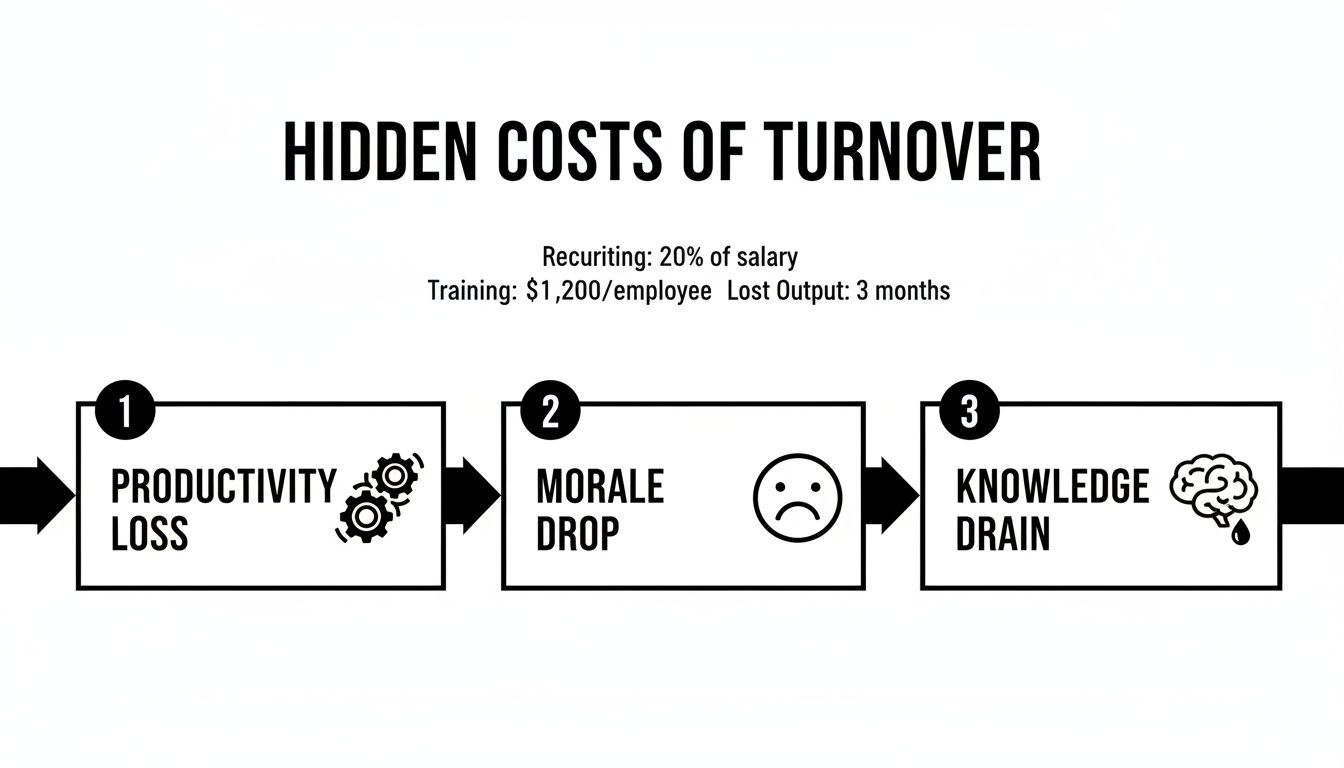
Losing a team member isn't a single event; it's a domino effect that can ripple through the entire organisation’s health and momentum.
The Power of Anonymous Surveys
While exit interviews help you understand why people left, anonymous engagement surveys are your best tool for preventing people from leaving in the first place. They give you a real-time pulse check on your team’s morale, letting you tackle issues before they fester.
For these to work, anonymity has to be guaranteed. No exceptions. This is the only way you'll get the frank feedback you need.
Focus your questions on the big drivers of engagement: leadership effectiveness, career opportunities, work-life balance, and recognition. A mix of simple rating scales and open-ended questions is ideal—it gives you quantitative data to track over time, plus rich, qualitative comments that add colour and context to the numbers.
Why Great People Quit Bad Bosses
You can have the best perks, the most flexible schedules, and a competitive salary package, but if your people dread coming to work, none of it matters. Let's be honest: when a great employee quits, they aren’t just leaving a company. More often than not, they’re escaping a bad boss.
Leadership isn't just a title on an organisational chart. It's the single most powerful force shaping your team's day-to-day experience, their motivation, and ultimately, their decision to stick around. Even the most generous benefits can’t hide the soul-crushing reality of working for someone who doesn't inspire, support, or respect their team.
Simply put, investing in your managers is the first and most critical step in building a culture people don't want to leave.

The Ripple Effect of Poor Leadership
A bad manager doesn't just demotivate one person. They create waves of disengagement that can destabilise an entire department. Micromanagement strangles autonomy, poor communication creates chaos, and a total lack of recognition makes people feel invisible.
This isn't just about morale; it has a direct, measurable impact on your bottom line.
The numbers from the UK workforce tell a pretty stark story. A recent analysis of 10 million UK workers showed just how deeply leadership quality affects commitment. An incredible 94% of employees said they wanted to stay with their company when they rated both senior leaders and their direct managers highly. That number plummets to a dismal 19% when both are seen as poor.
It gets worse. When a senior leader leaves, it can trigger a mass exodus. Teams affected by a senior leader's departure see a 40% higher attrition rate within just six months. That’s a huge jump from the 16% attrition seen after a direct manager changes. You can dive deeper into the data in the full research on UK attrition rates from Personnel Today.
Cultivating Leaders Who Retain Talent
Turning managers into leaders people want to work for doesn’t just happen. It takes a deliberate investment in developing the right skills—and I'm not talking about technical expertise. I'm talking about the emotional intelligence and coaching abilities that really move the needle.
To build a leadership team that actually keeps people, you need to focus on these areas:
- Emotional Intelligence Training: Give your managers the tools to understand their own emotions and, just as importantly, recognise and influence the emotions of their team. This is the bedrock of empathy.
- Coaching Over Commanding: Train them to ditch the top-down, directive style. A great leader asks smart questions and guides their team to find their own solutions, which builds a massive sense of ownership.
- Giving Meaningful Recognition: Teach them how to give specific, timely, and genuine praise. It’s not about grand gestures; it's about consistently making people feel seen and valued for their work.
A manager's job isn't to have all the answers. It's to create an environment where the best ideas can surface. When leaders build trust and psychological safety, they unlock their team's true potential and give people a powerful reason to stay.
From Manager to Mentor
The very best leaders I've ever worked with were more like mentors. They were genuinely invested in the careers of their people. They actively looked for opportunities to help their team members grow, whether that was through a challenging new project, a training course, or an internal move.
This isn’t a small shift; it’s a fundamental change in mindset. Instead of seeing their team as a collection of resources to get tasks done, great leaders see them as individuals with their own goals and ambitions. They have regular, forward-looking chats about where people want to go in their careers, connecting personal ambitions with company needs.
When someone knows their manager is in their corner, fighting for their development, it creates a powerful sense of loyalty. That relationship becomes an anchor, making them far less likely to have their head turned by a LinkedIn message. Empowering your managers to be mentors is how you turn a job into a career—and a workplace into a community.
Cultivating Careers And Valuing Autonomy
While great leadership sets the foundation, it’s the clear path forward that keeps your best people locked in for the long haul. Today's top talent isn't just looking for a pay cheque; they're looking for a trajectory. If all they see is a dead end, their eyes will inevitably start to wander.
To really move the needle on retention, you have to show them you’re invested in their future, not just their output this quarter. This means creating genuine opportunities for them to grow and giving them the autonomy to shape their own professional journey.
This kind of investment builds a deep, lasting commitment that a simple salary bump can never quite replicate.
Building Career Paths, Even Without Ladders
Not every organisation has a traditional corporate ladder to climb, and that’s completely fine. Growth doesn't always have to mean a new title. You can create meaningful development opportunities even in the flattest of company structures just by thinking a bit more laterally.
The trick is to focus on expanding skills and responsibilities, not just moving up. This shows your team they're gaining valuable experience that makes them more capable professionals—a seriously powerful motivator.
Try getting these strategies off the ground:
- Project-Based Growth: Assign people to cross-functional projects that stretch their abilities and give them a peek into other parts of the business.
- Skill Development Funding: Set aside a dedicated budget for professional development. Let team members chase courses, certifications, or workshops that align with both their interests and your company’s goals.
- Mentorship Programmes: Pair junior employees with senior leaders who can offer guidance, share institutional knowledge, and help them navigate their career goals. It’s a low-cost, high-impact way to show you care.
By championing these alternative routes, you prove that development is a real priority, building loyalty by investing directly in your people's potential.
Granting employees control over their work and their career is one of the most profound retention tools you have. It builds trust, fosters ownership, and creates a culture where people feel empowered to bring their best ideas to the table.
This sense of ownership is crucial for keeping people engaged long-term and a cornerstone of any effective retention strategy.
The Undeniable Power Of Flexibility And Trust
Beyond structured career paths, one of the most valuable things an employer can offer is autonomy over how and where work gets done. Trusting your employees with flexibility is a massive signal of respect that pays you back in loyalty, time and time again.
Adaptable schedules and remote or hybrid options are no longer just perks; they are fundamental expectations for a huge chunk of the workforce. Forcing a rigid, one-size-fits-all model can actively push talented people away, especially when they’ve already proven they can deliver incredible results with more freedom.
This is especially true in sectors like retail and hospitality. Schedule flexibility has become a top retention driver for UK hourly workers, with a massive 72% citing it as the most important factor in their job decisions. With 63% planning to quit within the next year and 68% looking to leave their industry entirely, ignoring this demand for autonomy is a risk few can afford. You can dig deeper into these trends by exploring the insights from the 2025 hourly workforce report.
Embracing flexibility shows that you see your employees as responsible adults. It fosters a mature, results-oriented culture where performance is measured by output, not by hours clocked at a desk. When people feel trusted, they’re far more likely to be engaged, motivated, and committed to your organisation’s success.
How Small Perks Create Big Connections
While strong leadership and clear career paths are the bedrock of employee retention, it's the daily workplace experience where your culture truly lives or dies. The small, consistent moments are what make your team feel genuinely valued. This is where thoughtful amenities stop being a line-item expense and become a powerful investment in wellbeing and connection.
Too often, workplace perks are just an afterthought—a box-ticking exercise that results in a sad fruit bowl and a pot of stale, lukewarm coffee. But when these gestures are done without any real intention, they can do more harm than good. They send a subtle but clear message: employee wellbeing is a low priority.

From Breakroom to Community Hub
Imagine turning that forgotten breakroom into a vibrant hub for connection—a space that could genuinely rival the high-street café experience. A premium refreshment station with specialty, bean-to-cup coffee, artisanal loose-leaf teas, and decent snacks does more than just caffeinate your team. It creates a destination.
This simple, tangible gesture provides a space for the kind of spontaneous, informal chats that build the strongest teams. It’s where a developer from one department can bump into a marketer from another, sparking a new idea over a flat white. It’s where colleagues can decompress, celebrate a small win, or just connect as people, not job titles. These moments of camaraderie are the glue that holds a great workplace culture together.
The Power of a Daily Ritual
A high-quality coffee break is more than just a perk; it’s a ritual. It’s a signal that the company cares about the details of its people's day. When you invest in a premium coffee and refreshment solution, you're making a daily statement: 'We care about your wellbeing and want you to have the best.' This kind of consistent, positive reinforcement is incredibly powerful for morale.
It tells your team they deserve quality. It encourages them to take mindful breaks, which we know boosts focus and helps prevent burnout. Ultimately, this small daily luxury makes the office a more inviting place, helping to draw people in and foster a stronger sense of community, especially in a hybrid world.
Perks aren't about extravagance; they're about thoughtfulness. A high-impact perk is one that improves an employee's daily life, reduces friction, and makes them feel genuinely cared for. It’s the difference between a generic benefit and a meaningful gesture.
High-Impact Versus Low-Impact Workplace Perks
Not all perks are created equal. Some offer a fleeting moment of excitement, while others deliver lasting value that deeply influences an employee's decision to stay. Strategic, high-quality amenities consistently outperform generic, low-effort alternatives precisely because they directly enhance the day-to-day work environment.
This table shows how a more thoughtful approach delivers a much higher return on employee satisfaction.
| Perk Category | Example | Impact on Retention & Morale |
|---|---|---|
| Refreshments | A premium, bean-to-cup coffee and tea station with quality snack options. | High: Creates a daily ritual of quality, fosters social connection, and signals genuine care for employee wellbeing. |
| Wellness | Subsidised gym memberships or access to mental health support apps. | High: Provides ongoing, tangible support for physical and mental health, showing a long-term commitment. |
| Social Events | Regular, well-organised team lunches or departmental away days. | High: Builds genuine team cohesion and inclusivity in a structured, accessible way. |
In the end, the goal is to create an environment people are proud to be a part of. Small, daily investments in your team’s experience, like providing an exceptional cup of coffee, compound over time. They become a cornerstone of a culture that doesn’t just attract top talent—it gives them a compelling reason to build their career with you.
Your Employee Retention Questions Answered
So, you’ve dug into the real costs of turnover, weighed up the impact of leadership, and seen how a strong culture and thoughtful perks can make a world of difference. Now, let’s get into the nitty-gritty.
Here are the practical questions that we hear time and again from leaders and HR pros who are serious about building a workplace people genuinely don’t want to leave.
What Is The Single Most Effective Strategy To Improve Employee Retention?
If I had to pick just one thing, the data and my experience both point to the same answer: the quality of your leadership. There really is no magic bullet, but this comes closest. A great leader creates an environment built on trust, genuine recognition, and real opportunities for growth. It makes people feel fundamentally valued.
I've seen teams with so-so compensation stick together for years because they had a manager who genuinely cared and supported them. On the flip side, I’ve seen a terrible manager clear out a team of top performers, no matter how great the benefits package was.
Investing in proper leadership development will give you the highest possible return on your retention efforts. It’s the one lever that lifts every other part of the employee experience, from day-to-day morale to long-term career ambition.
How Can Small Businesses With Limited Budgets Improve Retention?
This is where small businesses can actually outmanoeuvre the big corporations. You don’t need a massive budget to keep your best people; you just need to be more thoughtful and consistent.
Start with your culture. Creating a positive, respectful place where people feel heard is the foundation. It costs nothing but your time and intention.
Beyond that, here are a few low-cost, high-impact moves:
- Offer Real Flexibility: Letting people adjust their hours or work from a different location is one of the most valued benefits you can offer, and it often has zero direct cost.
- Be Radically Transparent: Keep your team in the loop on how the business is doing. When people understand the ‘why’ behind decisions, it builds an incredible amount of trust and makes them feel like part of the journey.
- Create Ways to Grow: Growth isn’t always a new job title. Give people a chance to lead a project, mentor a newcomer, or learn a new skill. It keeps the work interesting and shows you’re invested in their development.
- Invest in Thoughtful Perks: Small, daily gestures often mean more than a minor pay bump. A premium office coffee station, for instance, sends a powerful message every single day that you care about your team’s well-being. For more practical strategies, this is a comprehensive guide on improving employee retention.
These actions show a real commitment to your people, fostering a kind of loyalty that money just can't buy.
How Do We Measure The Success Of Our Retention Initiatives?
You can’t just guess if your strategies are working. You need to track a few key metrics to see if you’re actually moving the needle. A successful initiative won't just impact one number; you should see positive trends across the board.
Before you roll out any changes, establish a clear baseline for each of these metrics. That's the only way you'll know the true impact of your efforts.
Your retention dashboard should include:
- Employee Turnover Rate: This is your headline number. Track it quarterly and annually, but also break it down by department, manager, and employee tenure. This will help you find the specific hotspots that need attention.
- Employee Engagement Scores: Use regular, anonymous surveys to get a real pulse on morale. An improving score is a fantastic leading indicator that your efforts are on the right track.
- Absenteeism Rates: A sudden spike in unscheduled absences is often a warning sign. Monitoring this can give you a heads-up that something is wrong within a team or across the company before people start handing in their notice.
- Exit Interview Data: Don't just file these away. Actually analyse them. Look for recurring themes. Are people constantly mentioning a lack of growth? Is one particular manager’s name coming up over and over again?
A successful strategy will show a steady drop in your turnover rate, a climb in engagement scores, and more positive feedback from those who do decide to leave.
Do Office Perks Like Free Coffee Really Make A Difference?
They absolutely can, but there's a huge caveat: it’s all about the quality and the thought behind it. A pot of cheap, stale coffee that’s been stewing for hours does nothing for morale. In fact, it might even signal that you cut corners.
But when you provide a premium, café-quality experience, you’re making a genuine investment in your team's daily wellbeing. It turns the simple act of grabbing a coffee into a positive ritual.
Think about it this way:
- It becomes a hub for connection: A great coffee station is a natural gathering spot. It’s where those spontaneous chats and collaborations happen that build strong team bonds.
- It signals a commitment to quality: Offering high-quality refreshments shows you value excellence in all areas of the workplace, which says a lot about your company culture.
- It enhances the daily experience: It's a tangible, consistent gesture that says, "We care about you and your day." That little luxury can make the office a much more appealing place to be.
When you already have great leadership and real career paths, thoughtful perks like a premium coffee programme are the finishing touch. They help create a culture people are proud to be part of—and one they'll think twice about leaving.
At UE Coffee Roasters, we know that small details make a big impact. Our premium office coffee and refreshment solutions are designed to elevate your workplace, turning your breakroom into a hub of connection and morale. By bringing the quality of a high-street café directly to your team, you send a powerful daily message of appreciation.
Discover how our Franke bean-to-cup machines and curated selection of speciality coffees, teas, and consumables can help you build a culture people love. Explore our workplace solutions.