

How to Improve Employee Satisfaction: Practical Strategies That Boost Morale
Improving employee satisfaction isn't about grand gestures or one-off perks. It’s about creating a genuinely supportive culture through consistent recognition, open lines of communication, and meaningful improvements to the daily grind. It's about showing your team they are valued assets, not just numbers on a spreadsheet.
Why Employee Satisfaction Is Your Greatest Asset
Let’s be honest, the cost of an unhappy team shows up everywhere—from high turnover rates to a noticeable lag in innovation. The proof is in the numbers. Companies with highly engaged teams are reportedly 23% more profitable, a clear signal that a positive workplace atmosphere directly fuels business success.
This guide moves beyond the temporary fixes. We're digging into a foundational truth: improving employee satisfaction is about creating an environment where people genuinely want to be.

We'll show you how consistent, meaningful enhancements to daily work life can spark a powerful cultural shift. This isn't about flashy, expensive overhauls, but about the small, daily signals that prove you care. To really unlock the potential of a contented workforce, it can be helpful to see how external expertise can help by leveraging specialized HR outsourcing for employee satisfaction.
The roadmap below lays out the core pillars we’ll cover, giving you a clear path from understanding what your team needs to building a workplace they’ll love.
A Strategic Roadmap to Better Employee Satisfaction
Here's a quick summary of the key strategic pillars for enhancing employee satisfaction that we'll explore throughout this guide.
| Strategic Pillar | Key Action | Primary Goal |
|---|---|---|
| Listen First | Conduct anonymous surveys and hold open feedback sessions. | Uncover the real challenges and opportunities within your team. |
| Act on Quick Wins | Elevate daily experiences like break time with quality refreshments. | Build immediate goodwill and show you're serious about change. |
| Build a Supportive Culture | Introduce flexible policies and clear growth opportunities. | Drive long-term loyalty and support work-life integration. |
| Maintain Momentum | Track key metrics and transparently share your progress. | Create a culture of continuous improvement and trust. |
This table serves as your high-level plan. Now, let’s get into the details of putting these pillars into practice.
Listening to What Your Team Genuinely Needs
Before you can start improving employee satisfaction, you first have to figure out where you’re starting from. Guessing what your team wants is a surefire way to waste time and roll out initiatives that nobody asked for. The real work begins with listening—properly, actively, and with a genuine interest in understanding their day-to-day reality.
Any meaningful change has to be built on a foundation of honest, unfiltered feedback. This means going beyond the generic annual survey and opening up real channels for proper conversations. When your team feels they have psychological safety—the belief that they won't be penalised for speaking up with ideas, questions, or concerns—they’ll tell you exactly what needs to get better.

Go Beyond Standard Surveys
While anonymous surveys have their place, they often just skim the surface. If you want to get to the heart of what really matters, you’ve got to mix up your feedback methods. This shows you’re serious about hearing every voice, not just ticking a box.
Here are a few powerful ways to do just that:
- ‘Stay’ Interviews: We’re all familiar with exit interviews, but what about asking your best people why they stay? This simple switch from reactive to proactive uncovers the golden nuggets of your company culture—the things you absolutely must protect and build on.
- Small Focus Groups: Get small, informal groups together to chat about specific topics. A room with five to eight employees is the sweet spot. It creates a comfortable space where people feel they can share candid thoughts on everything from management styles to the quality of the coffee.
- Always-On Feedback Channels: Set up a simple digital suggestion box or a dedicated Slack channel where staff can drop ideas or flag issues whenever they pop up. The secret here is to respond quickly. Acknowledge every single submission, even if you can’t act on it straight away.
Asking Questions That Inspire Honesty
The quality of the answers you get is directly linked to the quality of the questions you ask. Ditch the leading or vague queries. Instead, focus on open-ended prompts that invite detailed, thoughtful responses. You’re looking for patterns—both in what people love and what drives them mad.
An organisation’s ability to learn, and translate that learning into action, is the ultimate competitive advantage. When you actively listen, you're not just solving problems; you're building a culture of trust and continuous improvement.
Try dropping some of these into your next feedback session:
- "If we could improve just one thing to make your daily work experience better, what would it be?"
- "Think about a recent day when you felt really energised and productive. What was going on that day?"
- "If you had a magic wand, what’s the one thing you’d change about our office environment tomorrow?"
By properly listening to the answers, you’ll gather the insights you need to make changes that actually count. From here on out, every new initiative will be a direct response to what your team has told you they need, guaranteeing a much bigger impact on satisfaction.
Boosting Morale with Recognition and Quality Experiences
After listening to your team, it’s time to act. While big, long-term cultural shifts are the ultimate goal, you can build incredible momentum with some 'quick wins'. These are immediate, visible changes that show you've heard the feedback and are serious about making things better. It’s a surefire way to generate goodwill right from the start.
Sometimes, it’s the smallest gestures that have the biggest impact. This isn’t about rolling out grand, expensive programmes; it's about consistently showing appreciation and improving the quality of everyday life at work.

Cultivate a Culture of Daily Appreciation
Annual awards and formal bonuses are fine, but they don’t fuel day-to-day motivation. Real recognition is about making people feel seen and valued for what they do, big or small, right in the moment. It’s the difference between a once-a-year ceremony and a continuous culture of gratitude.
This simple shift has a measurable impact. Appreciation is a powerful lever in UK workplaces, where an incredible 88% of employees say they work harder when they feel appreciated. Despite this, the UK scores a surprisingly low 61.8 out of 100 on the Appreciation Index, which points to a huge opportunity for businesses to stand out. Engaged employees are not just more satisfied—they're more profitable and more loyal. You can dig into the numbers in the full research about UK employee appreciation.
Here are a few simple ways to start building this culture:
- Peer-to-Peer Shout-Outs: Create a dedicated channel in your team chat where anyone can publicly thank a colleague for their help.
- Specific, Timely Praise: Encourage managers to move beyond a generic "good job." Instead, they should praise specific actions and explain the positive impact on a project or the team.
- Celebrating Small Wins: Acknowledge when someone navigates a difficult client call or cracks a tricky technical problem. These moments matter.
Transform the Everyday with Quality Experiences
Another powerful quick win is to elevate a routine part of the day that everyone shares. The humble coffee break is a perfect candidate. It’s an often-overlooked ritual that holds immense potential to show you care and improve the entire office atmosphere.
Think about the message your current break room sends. A kettle and a jar of instant coffee might tick a box, but it hardly inspires. Now, imagine swapping that for a premium bean-to-cup coffee machine that serves up delicious, barista-quality drinks at the touch of a button.
This isn't just about providing better coffee; it's about transforming a mundane moment into a cherished daily ritual. It becomes a tangible, daily reminder that the company invests in its team's well-being and happiness.
Suddenly, the break room is no longer just a place to grab a quick drink. It becomes a social hub. A great cup of coffee encourages spontaneous chats between colleagues from different departments, sparking new ideas and strengthening workplace friendships.
By thoughtfully enhancing these everyday moments, you give your team a genuine chance to recharge. It’s a simple yet highly visible investment in their daily happiness, and it contributes significantly to creating a more positive and satisfying place to work. It shows you understand how to improve employee satisfaction from the ground up.
Building a Sustainable Culture People Won't Want to Leave
While quick wins are great for building momentum, the real magic happens when you weave employee satisfaction into the very fabric of your company. Lasting change isn’t about perks; it’s about creating a culture built on trust, growth, and a genuine respect for life outside the office.
These are the things that make your organisation a place people are proud to work for. It means looking beyond the day-to-day and asking the big questions. Are we creating an environment where people can see a real future for themselves? Are we giving them the autonomy and support they need not just to do their jobs, but to truly thrive?
Championing Flexibility and Work-Life Integration
The line between our professional and personal lives has never been more blurred. Today's top talent isn't just looking for a job; they're looking for an employer who gets that. Genuine flexibility is no longer a nice-to-have—it’s a non-negotiable part of a modern, supportive workplace.
This isn’t just about allowing remote work. It’s a deeper shift towards trusting your team to manage their own time and deliver incredible results, no matter where or when they work.
And the payoff is huge. The CIPD Good Work Index 2025 recently found that formal flexible working arrangements have a positive impact on quality of life for a staggering 80% of users. For businesses, this is a massive retention tool, as inflexible setups create a 59% departure risk. When you factor in that 40% of UK employees feel stressed daily, you realise just how critical these initiatives are. You can discover more insights about flexible working trends and see the data for yourself.
Designing Clear Pathways for Growth
Let's be honest: nobody wants to feel like they're in a dead-end job. One of the biggest drivers of long-term satisfaction is seeing a clear path for progression within the company. If your best people can't see where they're headed, they'll inevitably start looking for a map that leads elsewhere.
Creating that clarity takes more than just having a few senior roles open. It’s about being intentional with professional development.
- Transparent Career Frameworks: Map out exactly what skills, competencies, and experience are needed to move from one level to the next. Don't hide this information—make it accessible to everyone.
- Meaningful Development Plans: Sit down with your people and create personalised growth plans. These should align their personal career goals with the company's needs.
- Investment in Learning: Show you're invested in their future. Offer access to training, workshops, mentorship programmes, or even help fund relevant qualifications.
Investing in your team's growth is a direct investment in your company's future. When people know you believe in their potential, they become more engaged, more skilled, and infinitely more loyal.
Cultivating Empathetic and Supportive Leadership
Ultimately, your culture is a direct reflection of your leaders. You can introduce the best policies in the world, but if your managers aren't equipped to lead with empathy and trust, all your efforts will fall flat.
For most employees, their manager is the company. That relationship is everything.
You need to invest in training your managers to be coaches, not just bosses. Give them the skills to have supportive one-to-ones, deliver constructive feedback, and actually listen to their team's concerns. When managers foster an environment of psychological safety, it unlocks creativity, sparks collaboration, and builds the kind of resilient, happy teams that people simply don't want to leave.
Measuring What Matters and Communicating Your Commitment
Improving employee satisfaction isn’t a one-and-done project; it’s a continuous commitment that needs to be woven right into the fabric of your company culture. To keep the momentum going, you absolutely have to track your progress and, just as importantly, share the journey openly with your team. This creates a powerful feedback loop where actions lead to real, measurable results, proving your efforts are making a genuine difference.
The trick is to move beyond gut feelings and focus on tangible data. By regularly monitoring a few key metrics, you can connect the dots between the changes you’ve made—like introducing flexible working or upgrading the office coffee machine—and their actual impact on morale and retention.
Key Metrics for Tracking Satisfaction
To know if you're winning, you need a clear scoreboard. The goal isn't to drown in data, but to pick a few core metrics that give you a holistic view of your workplace's health. You want the numbers that tell the most important stories about your team's experience.
Here are a few essential metrics I always recommend starting with:
- Employee Net Promoter Score (eNPS): This one is beautifully simple. It just asks, "On a scale of 0-10, how likely are you to recommend our company as a place to work?" It’s a quick, surprisingly effective way to gauge overall loyalty and sentiment.
- Voluntary Turnover Rate: Let's be honest, tracking how many people choose to leave is one of the clearest indicators of satisfaction. If that number starts to drop, it’s a strong sign your initiatives are hitting the mark.
- Absenteeism Rate: A sudden spike in unplanned absences can often signal low morale or burnout bubbling under the surface. Monitoring this helps you spot potential issues before they become widespread problems.
This infographic shows how addressing key employee needs can reverse declining satisfaction, focusing on work-life balance, burnout, and retention.
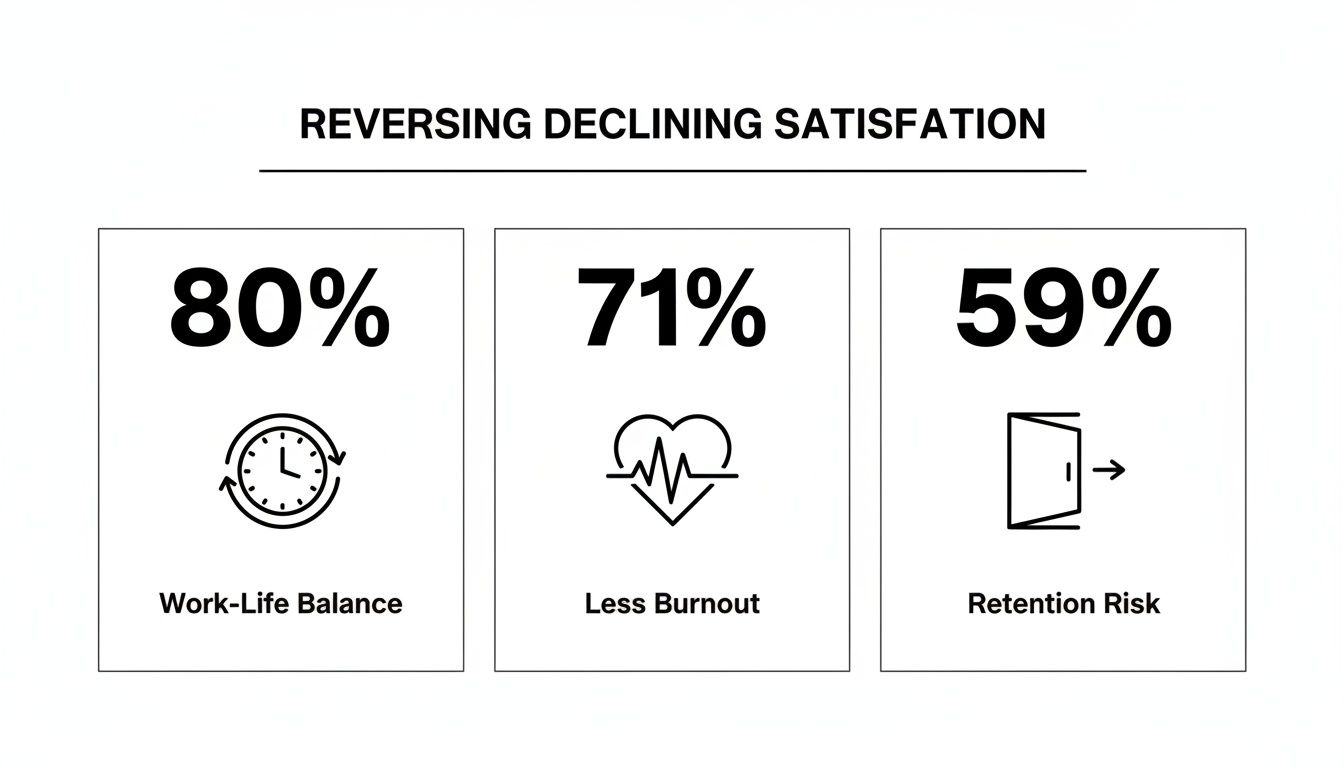
The data really drives home that initiatives improving work-life balance and reducing burnout are crucial for keeping your team intact and engaged.
The Power of Transparent Communication
Measurement is only half the battle. The real secret sauce is communicating your findings—and your next steps—with radical transparency. Sharing survey results, both the good and the bad, builds incredible trust. It shows you respect your team enough to be honest with them.
When you share results and follow up with a clear action plan, you transform feedback from a simple survey into a collaborative conversation about building a better workplace together.
This kind of transparency holds leadership accountable and makes employees feel genuinely heard. You'd be surprised how much impact small, visible improvements can have. Providing high-quality workplace refreshments, for instance, can have a massive effect. Engaged employees, boosted by morale-enhancers like this, are reportedly 14% more productive and 41% less absent.
With 39% of UK workers considering a new role because of poor company culture, perks like premium onsite coffee can directly tackle this issue, helping to reduce turnover by creating a more inviting and engaging environment. You can read the full research about UK employee engagement to see the connection for yourself.
Celebrate your progress publicly. When you launch a new initiative based on feedback, shout about it. When your eNPS score climbs, share the good news. This constant dialogue reinforces your commitment and turns improving satisfaction into a shared mission everyone can get behind.
A Few Common Questions About Team Happiness
Starting a project to improve employee satisfaction always brings up a few practical questions. As a leader, you want to make sure your efforts are effective, sustainable, and actually land well with your team. Here are my answers to some of the most common queries I hear, with clear advice to help you get it right.
Where Do I Start if My Budget Is Limited?
If you’re working with a tight budget, the trick is to focus on high-impact, low-cost actions that punch well above their weight. Honestly, the most powerful first step costs absolutely nothing: listening.
You can use free tools like Google Forms to put together simple, anonymous surveys. Just the act of asking for opinions and showing your team that their voice matters can build an incredible amount of goodwill.
Next, get serious about recognition. A peer-to-peer shout-out system in your company's team chat is a free and brilliant way to celebrate wins and build a positive vibe. In the same vein, regular, transparent updates from leadership help build trust without costing a penny.
For a small but very tangible investment, think about upgrading a single, shared experience. Elevating the daily office break with proper, speciality coffee and a well-chosen selection of teas is a visible, daily reminder that you care. It’s a modest cost that delivers a surprisingly big and immediate morale boost.
How Often Should We Survey Our Team About Satisfaction?
Finding the right survey rhythm is all about matching the pace of your business. A big, comprehensive survey once a year is great for shaping your long-term strategy. But don't let that be your only touchpoint.
Supplement that annual deep-dive with lightweight 'pulse' surveys, maybe quarterly or even monthly. These quick check-ins are perfect for keeping an eye on morale and getting feedback on recent changes you’ve made.
The most important rule is this: never ask for feedback if you aren't prepared to act on it. Surveying your team and then letting the results gather dust is more damaging to trust than not asking in the first place.
Always, always close the loop. Acknowledge what you've heard—both the good and the difficult stuff—and clearly communicate what you’re doing as a result. That transparency shows respect and turns feedback into a real conversation.
How Can I Prove the ROI of These Initiatives?
To prove the return on investment, you have to connect your happiness initiatives to real business outcomes. Before you start, benchmark key metrics like your current employee turnover rate, absenteeism, and average cost-per-hire. Get those numbers down on paper.
After implementing your changes, track these same numbers over the next six to twelve months. You can then calculate the direct savings from reduced turnover, factoring in recruitment fees, lost training hours, and the productivity dip that comes with onboarding.
Also, look at performance indicators that matter to your business, whether that’s project completion rates, sales figures, or customer satisfaction scores. A happier, more engaged team is a more productive team. Presenting this clear 'before and after' data makes a powerful and compelling business case for continuing to invest in your people.
Ready to create a workplace people genuinely love coming to? Ue Coffee Roasters can help you transform your office break into a premium experience that boosts morale and shows your team you care. Discover our speciality coffee and refreshment solutions at https://www.uecoffeeroasters.com.