

How to Improve Staff Retention Proven Strategies
Improving staff retention isn't just an HR box-ticking exercise; it's a direct measure of your company's health. The real secret is creating a place where people feel genuinely valued, supported, and can see a future for themselves. That means focusing on a strong culture, good leadership, and meaningful perks—not just superficial benefits.
Beyond The Resignation Letter: The Real Cost Of Turnover
When a great team member hands in their notice, the immediate panic is all about finding a replacement. You see the recruitment fees and the hours spent on interviews piling up. But the true cost of employee turnover runs much deeper, sending ripples through your business that quietly eat away at its foundations.
The departure of just one key person can derail projects, put a strain on client relationships, and leave a huge knowledge gap. Think about the project manager who remembers every client's quirky preferences, or the developer who knows the ins and outs of your old legacy code. When they walk out the door, that institutional memory goes with them, leaving the rest of the team to scramble.
The Hidden Financial Drain
Productivity always takes a hit as the remaining staff get stretched thin, often juggling extra work while a new hire is brought up to speed. This is a fast track to frustration and burnout, which just increases the risk of more people leaving. To really get a grip on the costs, it's crucial to tackle the reasons people leave in the first place, including offering strategies for overcoming burnout at work.
The financial hit is massive. Experts estimate that replacing an employee can cost anywhere from 50% to over 200% of their annual salary, depending on their role. For a mid-level manager on £50,000, that’s a £25,000 to £100,000 loss that never shows up as a neat line item on the budget.
This isn't just about paying a recruiter. It's the lost productivity, the cost of training someone new, and all the time your managers spend sifting through CVs instead of doing their actual jobs.
Understanding The Turnover Landscape
To build a solid business case for focusing on retention, you need to understand the scale of the problem. This infographic breaks down some key turnover stats in the UK, highlighting the annual rates and those critical first few months of a new job.
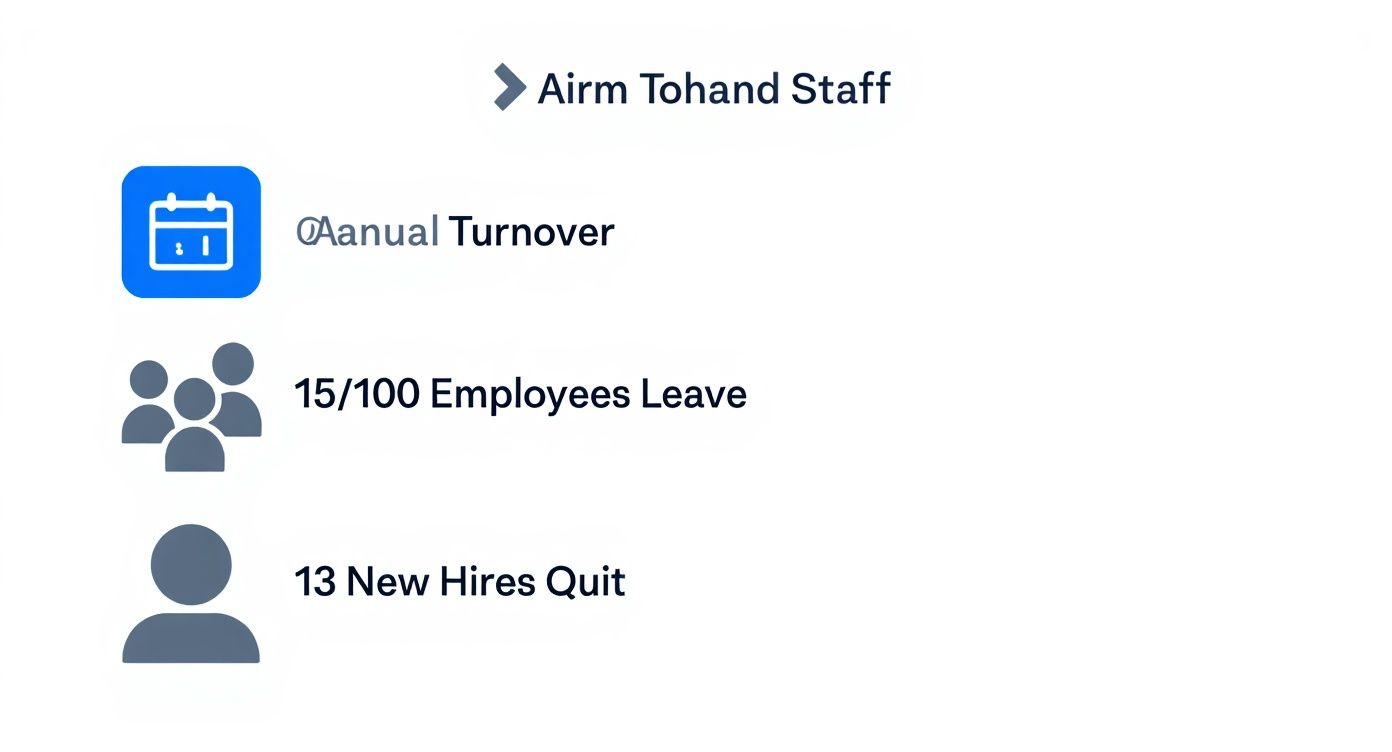
These numbers paint a pretty clear picture. In the UK, the average employee turnover rate hovers around 15% annually. For a company with 100 people, that’s 15 empty desks to fill every year.
Worse still, the problem is often front-loaded. A staggering one-third of new hires quit within their first six months. That constant cycle of hiring and training puts a massive strain on everyone.
Investing in retention isn't just a "nice-to-have" HR goal; it's a financial and operational must. Once you understand these hidden costs, you can shift the conversation from scrambling to hire to proactively building a culture that keeps your best people right where they are.
Cultivating a Culture That People Never Want to Leave
A competitive salary might get talented people through the door, but it’s the day-to-day experience—the culture—that makes them stay for the long haul. Building a workplace that people genuinely don’t want to leave isn't about grand, expensive gestures. It’s about the small, consistent, meaningful actions that show your team they’re truly valued.
It’s time to move past the corporate buzzwords and focus on the tangible pillars that actually improve staff retention. This is about creating an atmosphere where your team feels safe, recognised, and connected to a bigger purpose.

Foster True Psychological Safety
Psychological safety is the absolute bedrock of a high-retention culture. It’s the shared belief that it’s okay to take risks, voice ideas, and even admit mistakes without being humiliated or punished. When people feel safe, they bring their full, authentic selves to work.
Think about a project meeting where a junior team member spots a potential flaw in a senior manager’s plan. In an unsafe environment, they’d stay silent, fearing they’d be shot down. In a safe one, that feedback is welcomed as a valuable contribution. That’s the difference.
Building this kind of trust doesn't happen overnight. It requires leaders to be vulnerable, admit their own mistakes, and actively ask for dissenting opinions. The goal is to make it clear that the team's success is more important than anyone's ego.
When you get this right, you unlock a level of creativity and innovation you just can't buy. People aren't afraid to fail, and that creates a deeply satisfying work experience they’ll be reluctant to leave.
Build a Powerful Culture of Recognition
Everyone wants to know their work matters. A strong culture of recognition goes far beyond an annual bonus; it’s about acknowledging both the big wins and the consistent daily efforts that keep the business moving. Honestly, a lack of recognition is one of the fastest ways to lose good people.
For recognition to actually work, it needs to be:
- Specific: Instead of a generic "good job," try, "The way you handled that difficult client call with such patience was brilliant—you really saved the relationship."
- Timely: Acknowledge great work as soon as it happens, not weeks later in a performance review. This reinforces positive behaviour in the moment.
- Varied: Recognition can come from leaders, peers, or even through a company-wide newsletter. A simple "thank you" during a team huddle can be incredibly powerful.
This consistent appreciation makes employees feel seen and genuinely valued, which strengthens their emotional connection to the company.
Champion Professional Growth and Development
One of the most compelling reasons for an employee to stay put is seeing a clear path for growth. Study after study shows that a lack of development opportunities is a primary reason people start looking elsewhere. If your best people feel like they’ve hit a ceiling, they will find another ladder to climb.
This is where you can truly show you’re invested in them by highlighting the benefits of continuing education for career and personal growth.
And growth doesn't always mean a straight-line promotion. You can support it by:
- Offering a learning budget: Let employees attend workshops, take online courses, or earn certifications in their field.
- Creating mentorship programmes: Pair junior staff with experienced leaders who can guide their development.
- Encouraging cross-departmental projects: Allow people to learn new skills and get a broader understanding of the business.
When you invest in your team's future, you send a powerful message: you're invested in them as people. This builds a deep sense of loyalty that’s tough for any competitor to break. Your workplace becomes more than just a job; it becomes a place of genuine fulfilment.
To tie this all together, here's a quick breakdown of the core pillars that drive a positive workplace culture and how you, as a manager, can bring them to life.
Key Drivers of a Positive Workplace Culture
| Cultural Pillar | Why It Matters for Retention | Actionable Steps for Managers |
|---|---|---|
| Psychological Safety | Employees feel safe to innovate, ask questions, and be themselves without fear of reprisal, leading to higher engagement. | Actively solicit feedback in meetings. When mistakes happen, frame them as learning opportunities. Model vulnerability by admitting your own errors. |
| Meaningful Recognition | Feeling valued and seen for contributions strengthens an employee's emotional connection to their role and the company. | Create a peer-to-peer recognition system (e.g., a "kudos" channel). Give specific, timely praise both publicly and privately. Acknowledge effort, not just results. |
| Growth & Development | A clear path for advancement shows employees they have a future with the company, preventing stagnation and attrition. | Hold regular career pathing conversations. Offer a budget for courses or certifications. Facilitate mentorship pairings between junior and senior staff. |
| Open Communication | Transparent communication builds trust and ensures everyone feels informed and included in the company's direction. | Host regular town halls or "Ask Me Anything" sessions with leadership. Share both wins and challenges openly. Ensure feedback channels are accessible to everyone. |
| Work-Life Balance | Supporting employees' well-being outside of work prevents burnout and shows the company cares about them as whole people. | Respect working hours and discourage an "always on" mentality. Offer flexible scheduling where possible. Lead by example by taking proper breaks and holidays. |
Focusing on these key areas does more than just tick boxes—it builds a foundation of trust, respect, and mutual investment that makes your workplace a hard one to leave.
Why Great Leaders Are Your Best Retention Tool
You’ve probably heard the old saying: people don’t leave jobs, they leave managers. It’s a bit of a cliché, but it’s stuck around for a reason—it’s true. While a great company culture sets the stage, it’s the leaders on the ground who make or break an employee’s daily experience. A manager's direct influence can either inspire a team to do incredible work or become the number one reason your best talent starts polishing their CV.
Investing in your leadership is, without a doubt, one of the most powerful moves you can make to improve staff retention. A great leader is a coach, a mentor, and a champion all rolled into one. They create an environment where people feel seen, supported, and genuinely motivated. That personal connection is something no free lunch or office perk can ever truly replace.

From Manager to Coach
The old-school idea of a "manager" who just directs tasks is completely outdated. Today’s most effective leaders are coaches. Their focus is on developing their people, not just overseeing their to-do lists. They get that their success is measured by the success of their team. This simple shift in mindset is absolutely crucial for keeping people engaged and loyal.
So, what does a coaching approach actually look like?
- Consistent, constructive feedback: They don't wait for the dreaded annual review. Great leaders offer guidance in the moment, framing feedback as a tool for growth, not a criticism.
- Asking the right questions: Instead of just handing out answers, they ask questions that spark critical thinking and problem-solving. This empowers the team to find their own solutions.
- Championing career growth: They take a real interest in their team's ambitions and actively hunt for opportunities—be it a new project, a training course, or a mentorship connection—to help them get there.
This isn't just management; it's an investment in a person's future. That builds a deep sense of trust and shows your team you're in their corner for the long haul.
The Real-World Impact of Leadership
The link between leadership and retention isn't just a fluffy HR concept; it’s a measurable reality. The quality of a person's manager directly impacts how likely they are to stick around. When leadership is strong, people feel secure and motivated. When it’s weak, even a brilliant team can fall apart at the seams.
The numbers in the UK are stark. When an employee rated both their direct manager and senior leader as great, their commitment to stay was a staggering 94%. But when both were seen as poor? That figure plummeted to just 19%.
On top of that, instability at the top creates a ripple effect of uncertainty. Teams that go through a leadership change see a 40% higher attrition rate within six months compared to stable teams. The data is clear: investing in developing and keeping great leaders is a direct investment in keeping your entire team. You can dig deeper into these UK attrition rates to see the full picture.
Leading with Empathy and Authenticity
Beyond the practical skills of coaching and feedback, it’s the human elements that really cement loyalty. Empathy isn’t just about being nice; it’s about genuinely understanding that your team members are whole people with lives, challenges, and dreams outside of their job titles.
An empathetic leader is approachable. They create a safe space where people can be open without fear of judgement. They check in on their team's well-being, listen properly, and show flexibility when life (inevitably) happens.
Authenticity is the other side of that coin. Leaders who are genuine, transparent, and even a little vulnerable are far more relatable and trustworthy. They aren't afraid to say, "I don't know" or admit they made a mistake. This helps build a culture where perfection isn't the goal—honesty and effort are.
Practical Steps to Develop Your Leaders
Turning good managers into great leaders is a marathon, not a sprint. It's an ongoing process. Here are a few practical ways to get started:
- Invest in Proper Leadership Training: Go beyond the basics. Provide targeted training on coaching, giving effective feedback, emotional intelligence, and navigating difficult conversations.
- Set Up Peer Mentorship: Let your newer managers learn from the seasoned pros. Create a simple programme where they can connect, share challenges, and learn from those who have been there before.
- Gather 360-Degree Feedback: Implement a system where leaders get anonymous feedback from their team, their peers, and their own boss. It gives them a well-rounded view of their strengths and blind spots.
- Make Leadership a Core Value: Don't just talk about it. Build leadership qualities into your performance reviews and company values. Recognise and reward the managers who are brilliant at developing and retaining their people.
At the end of the day, great leaders are the glue that holds a talented team together. When you focus on developing their ability to coach, empathise, and lead with authenticity, you create a positive ripple effect that boosts morale, engagement, and, most importantly, stops your best people from walking out the door.
Rethinking Perks: From Ping-Pong Tables to Real Value
In the race to attract and keep top talent, the office perks arms race got a little out of hand for a while. It felt like every "modern" office had to have a ping-pong table or a brightly-coloured beanbag chair.
But once the novelty wears off, you realise these things don't get to the heart of what makes people want to stay.
Meaningful perks aren't about distracting gimmicks; they’re about genuinely improving your team’s work life. They show a real investment in their well-being, their sense of community, and their professional growth. And that’s a cornerstone of any solid staff retention strategy.
The Hidden Power of a Great Coffee Culture
Think about where the best, most candid conversations happen in your office. It’s almost never in a formal meeting room. It’s usually in the kitchen, by the coffee machine.
This is where informal collaboration sparks, where friendships across departments are built, and where people take a much-needed mental break.
Elevating your office coffee from a basic necessity to a premium experience sends a powerful daily message: we care about your well-being and the quality of your day here. It turns the coffee corner from a quick caffeine stop into a central hub for connection.
A high-quality, bean-to-cup coffee machine isn't just about good flavour; it's about creating a ritual. It gives people a reason to step away from their desks, chat with a colleague they might not otherwise see, and properly recharge. These small moments are the threads that weave a strong company culture together.
Perks That Offer Real Flexibility and Support
Beyond the coffee bar, the most valuable perks are the ones that give your team something they can’t easily get elsewhere: balance, support, and trust. People today are looking for an employer who sees them as a whole person, not just a cog in a machine.
This is where truly flexible work schedules come in. We’re not just talking about allowing remote work a couple of days a week. It’s about trusting your team to manage their own time to hit their deadlines while also handling life’s other demands, like a school run or a doctor's appointment.
A recent study found that 48% of job seekers now actively look for hybrid roles. Companies that resist this shift and demand rigid, on-site hours without a good reason are fighting a losing battle for talent.
Meaningful wellness programmes also show you're invested. This could be anything from subsidised gym memberships to access to mental health support services. The key is to offer resources that genuinely support your team's physical and mental health.
Investing in Their Future, Not Just Their Present
One of the most powerful retention tools you have is a clear commitment to your team's professional growth. When employees see a path for development, they see a future with your company.
A dedicated learning budget is a tangible way to show you are invested in that future. This doesn't have to be a huge expense. It can be a set amount per employee, per year, that they can use for things like:
- Online Courses and Certifications: Platforms like Coursera or LinkedIn Learning offer endless opportunities to upskill.
- Industry Conferences and Workshops: Letting team members network and learn from peers keeps them engaged and brings fresh ideas back into the business.
- Books and Subscriptions: A simple but effective way to support continuous learning in their specific field.
When you invest in your team's skills, you're not just making them better at their jobs; you're showing them they are valued assets worth developing. This builds a deep loyalty that a pay rise alone can't buy. It tells them their career growth is a shared priority, creating a powerful reason to stay and grow with you.
How to Measure and Improve Your Retention Rate
You can't improve what you don't measure. All the cultural improvements and valuable perks in the world are fantastic, but to truly understand their impact—and build a business case for future investment—you need to get comfortable with the data.
Tracking your retention rate transforms your efforts from guesswork into a focused, data-backed strategy. It gives you a clear benchmark, a starting point from which you can set realistic goals and celebrate genuine progress. This is the language that connects HR initiatives to bottom-line business success, proving the tangible return on investing in your people.

Calculating Your Staff Retention Rate
First things first, let’s get the calculation down. Knowing how to work out your retention rate is fundamental for any UK employer wanting to monitor workforce stability. Thankfully, the formula itself is pretty straightforward.
Take the number of employees you have at the end of a period, subtract any new hires who joined during that time, then divide that figure by the number of employees you had at the start. Multiply the result by 100 to get your percentage.
Let’s say a UK tech company started a six-month period with 50 employees. By the end, they had 58 on the books, having hired 16 new people along the way. Using the formula: ((58 - 16) ÷ 50) × 100, their retention rate is 84%. For a deeper dive into applying this metric, it's worth exploring these insights on employee retention rates.
What Does a Good Retention Rate Look Like?
Once you have your number, the next question is obvious: is it any good? The answer really depends on your industry. Generally, a rate of 90% or higher is considered excellent and suggests a stable, engaged workforce.
But context is everything. The hospitality and retail sectors naturally have higher turnover, so an 80% rate might be fantastic. In contrast, sectors like finance or government often see much lower churn, so an 85% rate could signal a problem.
Your goal should be to benchmark against your specific industry average and then focus on consistent, incremental improvement. A 5% increase year-on-year is a significant achievement that directly impacts your bottom line.
Don't just calculate your retention rate annually. Breaking it down quarterly or even by department can reveal hidden trends. You might discover that one team leader is a retention superstar, while another area needs urgent support.
This more granular view allows you to pinpoint exactly where your strategies are working and where they need a tweak, making your efforts far more effective.
Looking Beyond the Numbers
Your retention rate is the "what," but it can't tell you the "why." To truly understand what's driving people to stay or leave, you have to pair this quantitative data with qualitative insights. The numbers tell you a story; your people provide the narrative.
This is where exit interviews and anonymous employee surveys become invaluable. They help you uncover the root causes behind your turnover figures.
- Exit Interviews: When conducted properly by a neutral party like HR, these conversations can provide incredibly candid feedback. Ask departing employees not just why they are leaving, but what could have made them stay.
- Anonymous Surveys: For current staff, anonymity is key to getting honest answers. Use regular pulse surveys to ask about management, workload, career opportunities, and culture. These check-ins can flag issues long before they lead to resignations.
For instance, your data might show high turnover in the sales team. An exit interview could reveal that the commission structure is seen as unfair, while an anonymous survey might highlight that the team feels their manager doesn't provide enough support.
Without this human context, you're just staring at a percentage. By combining hard data with real feedback, you get the complete picture. This allows you to move from simply tracking a metric to making informed, strategic decisions that genuinely improve staff retention and build a workplace people are proud to be part of.
Common Questions About Improving Staff Retention
So, you understand the big picture of what makes a great company culture, but putting it all into practice? That’s where the real questions pop up. It’s one thing to talk about principles and another to navigate the day-to-day realities. Let’s tackle some of the most common queries we hear from managers and business owners.
Here are a few clear, straightforward answers to help you move forward.
How Quickly Can We Expect to See Improvements?
Improving your retention rate is a long game, not an overnight fix. While small, positive changes—like bringing in a brilliant office coffee station or launching a new recognition programme—can boost morale almost instantly, seeing a real impact on your turnover figures takes time.
Typically, you’ll start to notice a shift in employee engagement and general sentiment within three to six months. But for a significant, lasting improvement in your actual retention rate? That’s more likely to become clear over a 12 to 18-month period. The key is to be patient and consistent. Your efforts will compound.
Is Salary the Most Important Factor in Retention?
Let’s be honest: salary is crucial. It’s a fundamental part of the employment deal. If your compensation isn’t competitive for your industry and location, you'll always struggle to keep talented people, no matter how amazing your culture is.
However, research consistently shows that once pay is seen as fair, other factors become much more powerful drivers of loyalty. Think of salary as the foundation of a house. Without a solid one, the whole thing will eventually collapse. But it's the culture, leadership, and opportunities for growth that make it a place someone actually wants to live.
A lack of professional growth is a huge reason people look elsewhere. One study found that 34% of workers felt they didn't have enough opportunity to achieve their career goals with their current employer. This really highlights that a sense of progress is just as critical as the paycheque.
What Is the First Step We Should Take?
If you're wondering where on earth to begin, the single most impactful first step is to simply listen. You can't fix problems you don't fully understand. Before you rush to launch any new initiatives, take the time to gather honest feedback from your team.
Here are a few effective ways to start listening:
- Anonymous Surveys: Use simple pulse surveys to ask direct questions about workload, management support, and career satisfaction. Anonymity is absolutely essential if you want truthful answers.
- "Stay" Interviews: We all do exit interviews, but what about talking to the people who aren't leaving? Sit down with your high-performing, long-term employees and ask them what they love about their job and what makes them stay.
- Small Group Discussions: Facilitate some open, informal conversations with different teams. This will help you understand their unique challenges and find out what they value most.
This initial listening phase will give you a clear roadmap. It ensures the changes you make are the ones your team actually wants and needs, which is the most direct path to making a real difference.
Ready to make a tangible improvement to your team's daily experience? A premium office coffee solution from Ue Coffee Roasters is more than just a perk; it's a daily investment in culture, collaboration, and morale. Discover how our speciality coffee and Franke bean-to-cup machines can transform your workplace at Ue Coffee Roasters' official website.