

How to Improve Workplace Culture from Good to Great
Improving your company culture isn't a passive exercise; it’s an act of active cultivation. It means getting serious about defining your values, making communication a genuine two-way street, and consistently showing every single person on your team that they are trusted and respected. That’s how you turn an office into a community where people actually want to be.
Why Your Company Culture Is More Fragile Than You Think

Even in the most successful businesses, tiny cracks can appear in the foundation. Company culture isn't a trophy you win and put on a shelf; it's a living, breathing thing that needs constant attention. Far too often, leaders treat culture as a fluffy "nice-to-have" while they chase hard metrics.
This completely misses the point. Culture is the engine driving everything else. It’s what keeps your best people around, fuels productivity, and sparks the kind of innovation that gives you an edge. When it starts to weaken, you feel the tremors everywhere, from daily morale right through to the bottom line.
A culture can become surprisingly fragile when people struggle with navigating workplace relationships and stress. Small tensions, unresolved conflicts, or a feeling that it’s not safe to speak up can quietly eat away at the trust and togetherness you’ve worked so hard to build.
The Slow Burn of Culture Rot
The real danger isn’t some dramatic, overnight collapse. It’s a slow, almost invisible decay often called 'culture rot'. It starts small—with minor compromises or overlooked issues—and grows into widespread disengagement. And it’s far more common than most leaders think.
In the UK, an alarming 54% of workplaces are showing clear signs of this decay, where the core values and positive behaviours that once defined them have started to erode. It’s a trend that’s quietly lowering morale, fracturing teamwork, and dragging down performance in offices across the country. You can read more on the findings from Robert Walters and see how this is redefining workplace dynamics into 2025.
Culture rot doesn't announce its arrival. It creeps in through inconsistent leadership, a lack of recognition, and the gradual acceptance of behaviours that contradict your stated values.
Spotting the early warning signs is the first step toward fixing things. So, what does this 'rot' actually look like on a day-to-day basis? It often shows up in a few key ways:
- Communication Silos: Teams stop sharing information freely. You end up with duplicated work and a total lack of synergy between departments.
- Declining Engagement: The passion is gone. People start going through the motions, doing just enough to get by instead of bringing their best ideas to the table.
- Increased Cynicism: Sincere company announcements are met with eye-rolls and sceptical whispers. Trust has been broken.
- Higher Turnover: Your best people start heading for the door, not for a bigger salary, but for a healthier and more supportive place to work.
This guide will take you beyond the buzzwords and give you tangible, real-world strategies to build a better workplace. It’s time to move from just managing people to actively cultivating a culture where they don't just show up—they feel a true sense of purpose and belonging.
Diagnosing Your Culture Before You Prescribe a Solution

Before you can start building a better workplace, you need to understand the ground you're standing on. It’s tempting to jump straight to trendy perks or new initiatives, but doing that without a clear diagnosis is like trying to fix an engine blindfolded. You might get lucky, but you’re far more likely to make things worse.
Truly understanding your culture means getting past assumptions. It requires a real commitment to listening and creating a space where your team feels safe enough to share the unvarnished truth about what it’s really like to work at your company, day in and day out.
This diagnostic phase is the most critical step in your journey to improve workplace culture. This is where you gather the raw materials needed to build a strategy that tackles root causes, not just the symptoms.
Uncover the Truth with Anonymous Surveys
Your first port of call should be a well-designed, anonymous survey. And anonymity is non-negotiable. It gives people the psychological safety they need to be completely honest without fear of judgement or reprisal. This is your best shot at gathering real, quantitative data on how people are genuinely feeling.
But a generic, off-the-shelf survey won’t cut it. You need to ask specific questions that dig into the core elements of your culture, like respect, fairness, and belonging. Move beyond simple yes/no questions to capture the nuances of their daily experiences.
Consider questions that reveal deeper insights:
- On a scale of 1-10, how comfortable do you feel sharing an opinion that differs from your manager's? This is a direct measure of psychological safety.
- Do you feel that recognition and praise are distributed fairly across the team? This probes for perceptions of fairness and even favouritism.
- Do you have a clear understanding of how your role contributes to the company’s overall mission? This assesses alignment and a sense of purpose.
The Power of Culture Conversations
While surveys give you the 'what', one-on-one conversations will always reveal the 'why'. These aren't performance reviews; they are culture conversations. The goal is to schedule informal chats with a good cross-section of employees from different departments, roles, and tenures.
Your job here is to listen far more than you talk. Create a relaxed atmosphere—grab a coffee, find a quiet corner—and use open-ended questions to encourage storytelling. You’ll be surprised by the patterns that emerge. Common threads often pop up around communication breakdowns, a lack of connection between teams, or a quiet desire for more meaningful recognition.
The most profound insights often come from the quietest corners of your organisation. Actively seek out those voices and listen intently to what they have to say—and just as importantly, what they choose not to say.
When you pair these honest conversations with solid survey data, you get a 360-degree view of your current culture. You'll be able to pinpoint specific friction points, whether they're communication silos, unclear values, or a simple lack of appreciation. Only with this foundation of truth can you begin to prescribe solutions that will create genuine, lasting change.
Building Connection Through Shared Rituals and Spaces

A magnetic workplace culture isn't built on grand gestures or annual away days. It’s forged in the small, consistent moments that happen every single day.
These shared experiences are the threads that weave individual employees into a genuine community. They create a sense of belonging that policies and memos simply can't replicate.
To truly improve workplace culture, we need to think like architects of connection, intentionally designing rituals and spaces that invite people to come together. This means moving beyond the predictable (and often exclusionary) after-work drinks and creating social touchpoints that resonate with a diverse team.
The goal here is to foster spontaneous interactions, not forced fun. When people have opportunities to connect authentically, trust deepens, communication barriers fall, and collaboration starts to feel second nature. These moments are the lifeblood of a thriving, supportive environment.
More Than Just a Party
Crafting inclusive social events is a powerful way to strengthen team bonds. While many UK companies host an average of just three social events per year, these gatherings are vital.
Research shows that an impressive 80.3% of employees find work socials inclusive for different age groups, and 79.6% feel they successfully welcome new starters. As detailed in Capital on Tap's report on social culture, well-planned events can bridge generational and onboarding gaps surprisingly well.
Thinking beyond the pub quiz is key. The best events cater to different personalities, schedules, and interests, ensuring everyone feels they can join in without pressure.
Inclusive Social Event Ideas for a Modern Workplace
Traditional after-work drinks don't work for everyone. Here are some fresh ideas that cater to a wider range of preferences, helping you build a more connected and inclusive team.
| Event Type | Key Benefit | Inclusivity Focus | Refreshment Pairing Idea |
|---|---|---|---|
| Charity Volunteer Day | Builds camaraderie and shared purpose outside of work pressures. | Appeals to all ages; not centred on alcohol or late nights. | Hearty sandwiches, soup, and high-quality filter coffee to keep energy levels up. |
| Lunch & Learn Workshops | Empowers employees to share skills, fostering respect and learning. | Focuses on professional/personal growth; fits within the workday. | A spread of healthy salads, wraps, and a selection of speciality teas. |
| Team Wellness Challenge | Promotes healthy habits and friendly, low-stakes competition. | Great for teetotallers and those with different physical abilities. | Fresh fruit smoothies, protein snacks, and infused water stations. |
| Morning Coffee & Croissants | A relaxed, low-commitment way to start the day with informal chat. | Easy for parents to attend before school runs; time-boxed. | Barista-quality flat whites, lattes, and a variety of fresh pastries. |
By diversifying your social calendar, you send a clear message: everyone is welcome, and every contribution is valued.
The Heart of the Office
Beyond scheduled events, the physical environment itself plays a massive role. Think about the places in your office where people naturally gather. More often than not, it's the kitchen. This space holds incredible, untapped potential to become the social heart of your workplace.
Imagine transforming a basic kitchen into a vibrant breakout area—a central hub that acts as a magnet for your team. This isn't just about providing a place to get a drink; it's about creating a destination that sparks conversation and collaboration. A well-designed social space encourages people to step away from their desks and chat with colleagues they might not otherwise see.
Your refreshment station is more than a utility; it's a daily ritual. Elevating it from a mundane necessity to a premium experience sends a powerful message: we care about your wellbeing and we value the moments you take to connect with each other.
Investing in a high-quality, self-service refreshment station is one of the most effective ways to make this happen. When employees can enjoy a superb, barista-quality coffee or a speciality tea without leaving the building, their routine break is transformed.
It becomes a small daily perk that makes everyone feel appreciated. This single, consistent touchpoint can do more for daily morale and team cohesion than a dozen one-off events, turning an ordinary space into an extraordinary cultural asset.
Supercharging Daily Morale and Employee Wellbeing
A great company culture isn’t built on big, flashy annual events. It’s woven from the small, consistent threads of daily experience. It’s about creating an environment where people feel seen, supported, and energised every single day. If you want to combat burnout and properly supercharge morale, focusing on these daily touchpoints is where the real magic happens.
This means shifting your mindset from occasional perks to consistent, meaningful support. It’s about building genuine systems for recognition, actually championing work-life balance, and giving your team the autonomy they need to do their best work. These are the things that show you truly trust and value your people.
It’s no secret that the emotional wellbeing of your team directly impacts performance. To foster a thriving environment, implementing effective workplace stress management strategies is crucial, especially with a diverse workforce. Sometimes, it’s the small, thoughtful adjustments to the daily routine that make all the difference.
Empowering Through Trust and Recognition
Meaningful recognition is so much more than a generic 'employee of the month' award. It's about creating a culture where appreciation is specific, timely, and flows in all directions—from peers, managers, and leadership alike. When people feel their hard work is genuinely noticed, their motivation sky-rockets.
Just as important is empowering your team with real autonomy. Micromanagement is an absolute culture killer; it screams a fundamental lack of trust. When you give employees ownership over their work and the flexibility to manage their own time, you’re showing respect for their expertise and their lives outside the office.
This blend of recognition and autonomy is what builds a powerful sense of pride and responsibility.
A simple, heartfelt 'thank you' for a specific contribution can often be more impactful than a formal award. Make appreciation a daily habit, not an annual event.
Elevating the Physical Environment
The physical space your team works in has a massive influence on their mood and productivity. A drab, uninspiring office can drain energy, while a vibrant, comfortable environment can spark creativity and collaboration. Investing in the quality of your workplace amenities sends a powerful message: we care about your wellbeing.
This is where small, high-impact upgrades can make a huge difference. Think about the daily rituals your team already shares. The coffee break is a universal one, offering a moment to pause, recharge, and connect with colleagues.
Transforming this simple break into a premium experience is a surprisingly effective way to boost daily morale. A high-quality refreshment station with barista-style coffee and speciality teas turns a mundane moment into a valued perk. It shows you're invested in the little details that make the workday better, helping your team feel properly supported and appreciated.
The current state of employee engagement in the UK really underscores the urgency here. A shocking 10% of UK workers feel truly engaged at work, putting the nation at 33rd out of 38 European countries. With 40% feeling stressed and many feeling sad or angry on a daily basis, the emotional toll is clear. A focus on wellbeing is no longer a 'nice-to-have'. You can explore more on these findings to understand the scale of the engagement challenge.
Turning Your Culture Strategy into Measurable Success
An inspiring vision for a better workplace is a fantastic starting point, but let’s be honest, it’s just an idea without a clear and actionable plan. To truly improve workplace culture, you need to translate that strategy into concrete steps and prove its value with tangible results. This is how you turn a 'soft' concept into a hard business driver that everyone can get behind.
The key is to think in manageable sprints, not a single, overwhelming project. Breaking down your culture initiatives into a 90-day plan helps you build momentum and show off some quick wins. This approach makes the whole process feel much more achievable and keeps your team energised.
Your First 90-Day Culture Sprint
A 90-day sprint gives you a focused timeframe to kick off changes and see what’s working. It’s all about building a solid foundation for long-term success.
You could structure your plan around monthly goals. Here’s how that might look:
- Month 1 (Days 1-30): Launch and Listen. Get the word out. Communicate the new culture vision across the entire company. Use this time to launch your first culture survey (something like an eNPS) to establish a clear baseline of where you stand right now.
- Month 2 (Days 31-60): Act on Feedback. Dive into those survey results and immediately tackle one or two key pain points. This could be as simple as clarifying communication channels or as exciting as rolling out a new peer-to-peer recognition platform.
- Month 3 (Days 61-90): Measure and Refine. Time for a check-in. Run a follow-up pulse survey to measure the impact of your initial changes. Share the results—good or bad—transparently and use what you’ve learned to plan your next 90-day sprint.
Getting everyone on board is absolutely critical. This means clear, consistent communication. You need to articulate the 'why' behind the changes, explaining how a better culture benefits everyone from the newest hire to the senior leadership team. A great way to do this is by assigning 'culture champions' at different levels to help spread the message and lead by example.
This simple process flow shows how recognising, empowering, and supporting your team directly contributes to a daily boost in morale.
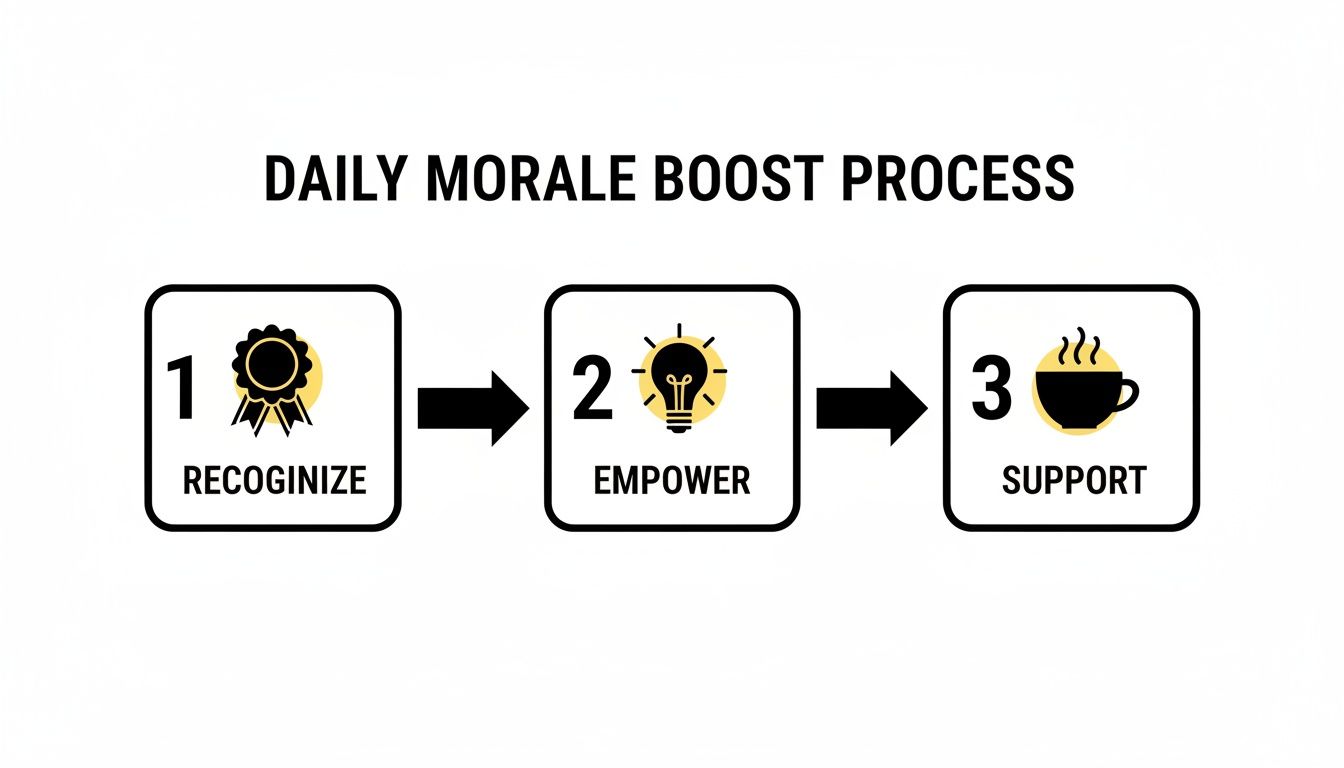
Each step builds on the last, creating a reinforcing loop where employees feel valued and are, in turn, more engaged and productive. It really is that simple.
Tracking the KPIs That Matter
To prove your efforts are paying off, you need to track the right metrics. Moving beyond gut feelings and into hard data is what gives your culture strategy credibility and secures its budget for the future.
Your culture isn't just a feeling; it's a measurable asset. By tracking the right KPIs, you can directly link a healthier, more connected workplace to improved business performance and prove its undeniable value.
Focus on a handful of key performance indicators (KPIs) that tell a clear story. Forget vanity metrics; you need numbers that actually mean something.
- Employee Net Promoter Score (eNPS): This is a powerful one. It’s a simple metric that asks how likely employees are to recommend your company as a great place to work. It gives you a fantastic snapshot of overall loyalty and satisfaction.
- Voluntary Turnover Rate: Tracking the percentage of employees who choose to leave is a direct indicator of cultural health. When this number starts dropping, you know your changes are making people want to stay.
- Absenteeism Rate: High rates of unscheduled absence can often be a symptom of burnout or low morale. Keeping an eye on this can help you spot underlying issues within your culture before they become bigger problems.
By focusing on these metrics, you can confidently show how investing in your people and environment delivers a real, positive return for the business.
Your Workplace Culture Questions, Answered
Starting the journey to improve your workplace culture is one of the most powerful things a leader can do. But as you move from vision to action, practical questions always come up. Let’s tackle some of the most common ones.
This is where you can fine-tune your strategy, get ahead of potential roadblocks, and start building a magnetic environment where people genuinely want to be.
How Can We Improve Workplace Culture on a Tight Budget?
You don't need a huge budget to make a real difference. In fact, some of the most effective changes cost nothing at all.
Start by introducing a peer-to-peer recognition programme, being more transparent in company-wide updates, and simply asking for feedback in regular, informal chats. Clarifying your company values and celebrating small wins publicly can also have a massive impact without touching your budget.
When you do have a little to spend, focus on high-impact, low-cost upgrades. For example, investing in a premium, self-service coffee solution often works out cheaper than letting everyone expense their daily café runs. More importantly, it creates a central hub for connection that everyone can enjoy, every single day.
How Long Does It Take to See a Real Change?
While you can feel small, positive shifts within just a few weeks of being consistent, true cultural transformation is a marathon, not a sprint. You should expect to see measurable improvements in things like engagement surveys and general morale within the first 3-6 months.
But for that new culture to truly 'stick' and become the natural way everyone operates? That takes time. Be prepared for 12-18 months of consistent effort, with leaders leading by example and reinforcing the new behaviours. The key is patience and persistence; real change needs time to weave itself into the fabric of your organisation.
What Is the Single Most Important Factor?
If you have to pick just one thing, it’s leadership commitment. Full stop. Culture change has to be driven from the top. When senior leaders actively live the behaviours they want to see, talk openly about why culture matters, and hold everyone (including themselves) accountable, the rest of the team will follow.
Without genuine buy-in from leadership, even the most brilliant initiatives will fail to get off the ground and create lasting change. Leaders set the tone for everything—trust, psychological safety, and the values that really matter.
Their actions are the blueprint for everyone else, turning abstract ideas into something tangible people can see and copy. When your team sees that you're all in, they'll be inspired to join the journey with you, making it a collective effort instead of just another top-down mandate.
Ready to make a tangible investment in your team's daily wellbeing? At Ue Coffee Roasters, we provide premium, barista-quality coffee solutions that become the heart of your office, fostering connection one cup at a time. Discover our workplace refreshment solutions today.