

How to improve workplace morale: Practical tips for UK teams
Improving workplace morale isn't just a feel-good initiative; it’s about intentionally creating an environment where people feel valued, supported, and genuinely connected to their work. It's a strategic mix of open communication, meaningful recognition, and a real investment in employee wellbeing that turns a disengaged office into a thriving community.
When you know how to improve workplace morale, you unlock a powerful chain reaction of higher productivity, innovation, and loyalty.
The Hidden Costs of Low Workplace Morale in the UK
Low morale is more than a fleeting bad mood in the office. It's a silent threat to your business's health and stability. For many UK companies, this isn’t a hypothetical problem—it’s the day-to-day reality. Widespread disengagement and burnout have become critical business risks, often growing from outdated systems and overwhelming stress.
The scale of this issue is pretty staggering. Recent findings show that 81% of British businesses report struggling with low employee morale, linking it directly to challenges with productivity. On top of that, over a quarter of these leaders—27% to be exact—point to employee stress and burnout as major roadblocks. The full findings from the survey conducted by Opinium on behalf of Celonis paint a clear picture.
If you’re facing this, you're far from alone.
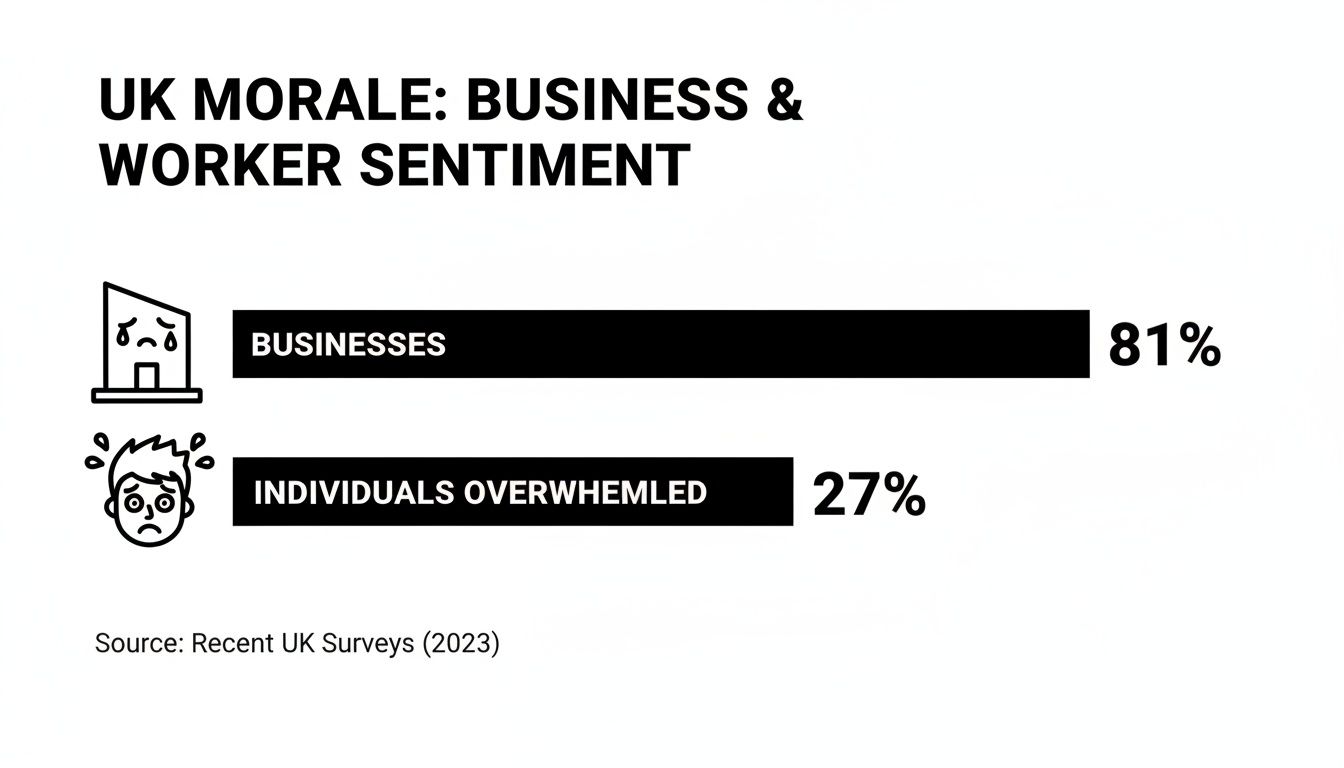
This data really brings it home: low morale is a systemic issue hitting the vast majority of UK workplaces, with burnout as a primary driver.
The good news? There's a clear path to turning this around. By adopting proactive, people-first strategies, you can transform a struggling workplace into a hub of motivation and success. This guide will walk you through the real foundations of building a high-morale culture, focusing on actionable steps that stick, not just temporary fixes.
From Symptoms to Solutions: A Morale Turnaround Plan
Before we dive deep, it helps to connect the dots between what you’re seeing and where to start. Use this table to quickly identify the signs of low morale in your team and the corresponding strategies we'll explore to fix them.
| Common Symptom of Low Morale | Strategic Solution Area |
|---|---|
| Increased absenteeism and sick days | Wellbeing & Support |
| Lack of initiative or enthusiasm | Recognition & Purpose |
| High employee turnover | Diagnosis & Feedback |
| Frequent conflicts or complaints | Communication & Transparency |
| Drop in productivity or quality | Environment & Resources |
| Social withdrawal or quietness | Connection & Community |
Think of this as your roadmap. Each symptom points to an opportunity to make a meaningful change.
In the sections that follow, we'll get into the specifics of how to:
- Diagnose the root causes of discontent through effective surveys and data analysis.
- Build a culture of trust with transparent and consistent communication.
- Implement meaningful recognition that makes employees feel genuinely seen and valued.
- Design a supportive environment that prioritises wellbeing and connection.
A proactive approach to morale isn't about damage control. It's about building a resilient, engaged, and inspired workforce that becomes your greatest competitive advantage. This guide provides the blueprint for that transformation.
Pinpointing the Real Issues Before You Act
Jumping to solutions without a clear diagnosis is like trying to fix an engine with a blindfold on. It’s a common mistake. Before you roll out any new morale-boosting initiatives, you need to put on your cultural detective hat. The real goal here is to listen deeply and uncover the root causes of discontent, ensuring every action you take is a direct response to what your team actually needs.
This diagnostic phase is absolutely crucial. A team lunch won't fix deep-seated issues like a lack of trust or career stagnation. To really understand how to improve workplace morale, you have to gather honest, unfiltered feedback from the people living it every single day.
Going Beyond Surface-Level Surveys
Anonymous surveys can be your most powerful tool, but only if you're asking the right questions. Generic happiness scales just won’t cut it. You need to design your survey to dig into the more meaningful aspects of the employee experience.
Focus your questions on specific, actionable areas:
- Psychological Safety: Do people feel safe enough to voice a different opinion or admit they made a mistake without getting penalised?
- Recognition and Value: Do employees feel their hard work is genuinely seen and appreciated by their manager and the leadership team?
- Connection and Belonging: Is there a real sense of camaraderie, or do people just feel like colleagues working in silos?
- Workload and Resources: Is the workload actually manageable? Does everyone have the right tools to do their job well?
By asking these kinds of targeted questions, you move beyond a simple "happy or not" metric. You start to build a detailed map of your workplace culture, highlighting its strengths and, more importantly, the precise pressure points causing friction.
The best feedback often comes from questions that uncover the why behind a feeling. Asking "How valued do you feel on a scale of 1-10?" is a start. But following up with "What's one thing that would make you feel more appreciated?" is where you'll find the real solutions.
Reading the Signals in Your Existing Data
Believe it or not, your company’s data is already telling you a story about morale. You just need to know how to read it. KPIs that seem purely operational are often direct reflections of how your team is feeling.
Keep an eye out for patterns in these key areas:
- Absenteeism Rates: A sudden spike in sick days or last-minute absences? That's a classic red flag for burnout or disengagement.
- Employee Turnover: High turnover is the most expensive symptom of low morale, period. You need to dig into why people are leaving. Using tools like effective exit survey examples can give you invaluable, honest insights here.
- Productivity Metrics: Are deadlines being missed more often? Has the quality of work taken a dip? These aren’t just performance problems; they're often morale problems in disguise.
When you can connect these dots—say, showing how a drop in project completion rates lines up with survey feedback about unmanageable workloads—you have a powerful, evidence-backed case for change.
The Power of a Confidential Conversation
While anonymous data is essential, some of the most profound insights come from a simple, human conversation. This is where confidential 'stay interviews' and informal focus groups come into their own. Unlike an exit interview, a stay interview is proactive. You’re asking your best people what keeps them here and, crucially, what might make them think about leaving.
You have to create a safe space for these discussions by guaranteeing absolute confidentiality. The goal isn't to hear what you want to hear; it's to get the unvarnished truth. Ask open-ended questions like, "What does a really good day at work look like for you?" or "If you could change one thing about your role, what would it be?" This human-centric approach builds trust and shows your team that their voices truly matter, setting the stage for meaningful and lasting improvements.
Fostering a Culture of Trust Through Open Communication
When communication breaks down, the foundations of an organisation start to crack. It’s in that silence that negativity, gossip, and disengagement really take root. If you want to build a truly inspiring place to work, you have to create a culture where transparency is a daily practice, not just a buzzword.

It all starts at the top. Leadership needs to swap corporate jargon for genuine conversations. That means talking openly about company goals, acknowledging challenges head-on, and celebrating the wins as a team.
Establishing a Reliable Communication Rhythm
Sporadic updates and last-minute announcements are a recipe for anxiety. What you need is a consistent, reliable rhythm of communication your team can actually depend on. This predictability creates a sense of stability and psychological safety.
Think of it as the steady heartbeat of your organisation. When people know when and how they'll hear important information, they feel connected to the bigger picture, which gets rid of the uncertainty that kills morale.
A solid communication framework doesn't have to be boring. It could look something like this:
- Energetic Weekly Huddles: Think short, stand-up style meetings—maybe 15-20 minutes—to get everyone aligned on priorities, share quick wins, and tackle any immediate roadblocks.
- Monthly 'All-Hands' Meetings: This is leadership’s chance to give a transparent update on business performance, project milestones, and what’s coming next.
- Candid 'Ask-Me-Anything' Sessions: Regular, open-floor Q&As with senior leaders where no question is off-limits. This is a powerful way to show you’re serious about transparency.
The key isn't rigidity; it's consistency. When your team knows they have a regular chance to hear from leadership and ask questions, they feel respected and included in the company's journey.
Training Managers to Be Exceptional Communicators
Let’s be honest: your managers are the most critical communication link you have. They’re the ones translating company strategy into daily tasks and are the first port of call for most employees. If they aren’t great listeners and communicators, even the best top-down strategies will fall flat.
Investing in their communication skills is simply non-negotiable. The reality is that many UK workplaces are already starting from behind. Recent data shows that only 38% of UK employees trust senior leadership, which is a tough environment to build from. You can get a deeper insight into the current state of the UK workplace and what it means for businesses.
Equipping managers with skills for active listening, giving constructive feedback, and handling difficult conversations is one of the highest-return investments you can make in your culture. They are your culture carriers.
Creating Channels for Two-Way Feedback
Real communication is a dialogue, not a monologue. To build genuine trust, you need to create clear, safe, and easy-to-use channels for feedback to flow in every direction—up, down, and across the business. People need to believe their voice actually matters and that their ideas can lead to real change.
Consider setting up a multi-channel feedback system:
- Anonymous Suggestion Platforms: Use digital tools where people can submit ideas or concerns without fear of reprisal. This is vital for psychological safety.
- Regular Pulse Surveys: Short, frequent surveys are great for tracking how people are feeling about specific topics over time, letting you respond to dips in morale before they become a major issue.
- Manager 1-to-1s: Coach your managers to dedicate part of their one-to-ones specifically to asking for feedback on team processes, workload, and general wellbeing.
When you actively ask for and act on feedback, you send a powerful message. You show your team they aren't just cogs in a machine but valued partners in the business's success. That feeling of empowerment is the very essence of a high-morale workplace.
Unlocking Motivation with Meaningful Recognition
Feeling invisible at work is a fast track to burnout. If you really want to know how to improve workplace morale, you need to build a culture where people feel seen, valued, and genuinely appreciated for what they do. This is about moving beyond tired ‘employee of the month’ schemes and creating a recognition system that actually feels authentic.

It all comes down to creating small moments of acknowledgement that connect on a personal level. Think about it: a thoughtful, specific 'thank you' for navigating a tough project often means far more than a generic certificate. That's the heart of meaningful recognition.
Moving Beyond Recognition to True Appreciation
It helps to get your head around the subtle but powerful difference between recognition and appreciation. They sound similar, but they do very different jobs when it comes to motivating your team.
- Recognition is about performance and results. It’s praising what someone does—like, "Great job on hitting your sales target this quarter."
- Appreciation is about value and character. It’s valuing who someone is—for instance, "I really appreciate your positive attitude during that difficult project; it kept everyone going."
A healthy workplace absolutely needs both. Recognition validates effort and shows people what good looks like, but appreciation is what builds genuine human connection and loyalty. When your team members feel valued for who they are, not just what they produce, they develop a much stronger sense of belonging.
Building a Dynamic Recognition System
A one-size-fits-all approach to recognition just doesn't land. Different things motivate different people, so your system needs to be dynamic and layered. The goal is to create more opportunities for positive reinforcement to happen naturally and often.
Here are a few effective strategies to get you started:
- Peer-to-Peer Shout-Outs: Set up a simple system where colleagues can publicly thank each other. This could be a dedicated Slack channel or a regular slot in team meetings. It builds camaraderie and empowers everyone to celebrate wins, not just managers.
- Immediate Spot Rewards: Don't wait for a quarterly review. When you see someone go above and beyond, acknowledge it right there and then. It could be a small gift card, an extra hour for lunch, or even just a heartfelt email with their manager cc'd. Timeliness is what makes the gesture feel genuine.
- Personalised Thank You Notes: In our digital world, a handwritten note can have a massive impact. Taking five minutes to write a specific message shows you’ve really paid attention and value their effort.
This approach stops recognition from being a stiff, top-down process. Instead, it gets woven into the fabric of your daily interactions, creating a continuous cycle of positive reinforcement.
The most powerful recognition is specific, timely, and personal. It shows you're not just ticking a box; you're paying attention to the individual contributions that drive the team forward.
The good news is that these kinds of targeted efforts are making a real difference. Recent data shows a promising rebound in UK workplaces, with overall employee engagement climbing to 85.33% in the first half of 2025. This positive shift was largely driven by big gains in motivation and advocacy, proving just how quickly thoughtful changes can boost morale. You can explore the full 2025 mid-year trends report for a closer look.
Connecting Recognition to a Bigger Purpose
Ultimately, the most profound way to motivate your team is to help them see the direct impact their work has on the bigger picture. Recognition becomes so much more powerful when it's linked to the company's mission and values.
When you give praise, don't just state what they did well; explain why it mattered. For example, instead of saying, "Thanks for finishing that report early," try something like, "Thank you for getting that report done ahead of schedule. It gave the leadership team the extra time we needed to make a much more informed decision, which helps us move closer to our company goal."
That simple shift in language transforms praise from a compliment into a powerful affirmation of their role in the company's success. When people understand how their daily tasks contribute to a larger purpose, they find a deep sense of meaning that fuels engagement far more than any reward ever could. This is how you unlock motivation that lasts.
Designing an Environment Where People Want to Be
Your physical office speaks volumes. It’s sending a powerful, unspoken message to your team every single day about how much you value their contribution and wellbeing. Investing in your workspace isn't just another expense; it’s a strategic move to create a place where people genuinely want to be, feel supported, and can do their best work.
It’s all about crafting an experience that energises, not drains. When you’re thinking about how to improve workplace morale, the physical and psychological comfort of your team should be right at the top of your list. You'd be surprised how small, thoughtful adjustments can lead to massive shifts in daily attitude and productivity.
Optimising the Physical Workspace for Wellbeing
An uncomfortable workspace is a direct path to distraction and burnout. Aches, pains, and eye strain from poor setups slowly chip away at focus and morale throughout the day. Prioritising physical comfort is one of the most fundamental ways you can show your team you care about their long-term health.
It all starts with the basics: ergonomics. Providing adjustable chairs, proper monitor stands, and decent keyboards isn't a luxury—it’s essential for preventing chronic discomfort. The goal is to let each person tailor their immediate workspace to their physical needs, which cuts down on strain and boosts focus.
But don't stop at the desk. Think about the overall flow of the office. A study by Gensler found that the most effective workplaces strike a balance between spaces for focused work and areas designed for collaboration.
- Dedicated Quiet Zones: Set up "library-rules" areas where people can escape the noise and get into deep work. This shows respect for different working styles and reduces the frustration of constant interruptions.
- Vibrant Collaborative Hubs: Designate comfortable, open areas with whiteboards and casual seating. These spots encourage the kind of spontaneous brainstorming and teamwork that just doesn't happen on a video call.
- Natural Light and Greenery: Maximise natural light wherever you can and bring in some plants. Biophilic design has been proven time and again to reduce stress and improve mood.
The Surprising Impact of Premium Amenities
High-quality amenities are one of the most tangible ways to show you appreciate your team. They can transform routine moments, like a quick coffee break, into genuine opportunities to connect and recharge. This is where you can make a huge impact on the day-to-day employee experience.
Take your coffee and refreshment service, for example. Providing an exceptional setup does so much more than just caffeinate your team. It sends a clear signal: we care about the details of your day. Swapping out a jar of instant coffee for a premium bean-to-cup machine that makes barista-quality drinks elevates a simple break into a valued ritual.
When an employee can grab a delicious flat white or a refreshing loose-leaf tea without leaving the office, it feels like a genuine perk. That coffee point becomes a social hub, fostering the informal chats where team bonds are really strengthened.
These small, daily upgrades collectively build a culture of care. They are consistent, physical reminders that the company is invested in making the workplace a pleasant and rewarding place to be. It’s a simple change that pays dividends in team spirit.
Fostering a Culture of Work-Life Balance
A beautiful office with great coffee doesn't mean much if your team is too burnt out to enjoy it. The most inspiring environments are always built on policies that actively promote a healthy work-life balance and support mental wellbeing.
Flexible working options aren't a niche request anymore; they're a core expectation. Allowing for hybrid schedules or flexible start and finish times shows you trust your team to manage their own time. This autonomy is a powerful morale booster, giving people the freedom to fit work and life together more effectively.
On top of that, it's vital to create an atmosphere where mental health is openly supported. This could mean providing easily accessible resources like employee assistance programmes (EAPs) or subscriptions to wellness apps. To truly design a place where people want to be, it's worth exploring how implementing reasonable adjustments for mental health at work can support every single employee.
By taking this holistic approach—combining a thoughtfully designed physical space with supportive, human-first policies—you create a workplace that doesn’t just attract talent, but keeps it. You build an environment where your team feels respected, supported, and energised to bring their A-game.
Proving the ROI of a High-Morale Workplace

Boosting morale isn't just about creating a positive atmosphere; it's a smart business move that delivers real, measurable results. But to get long-term buy-in for your people-first initiatives, you need to connect your efforts directly to the bottom line. It's about moving beyond anecdotal wins and showing stakeholders the tangible value of a thriving workplace.
When you take a data-driven approach, your efforts shift from being a "nice-to-have" expense to a core driver of business success. Showing how an investment in a recognition platform or a premium refreshment service directly impacts key performance indicators builds an undeniable case for continuing to put your team’s wellbeing first.
Tracking the Right Metrics for Success
Once you’ve rolled out your new strategies, the first step is to watch the numbers that reflect a healthier, more engaged workforce. These are the hard figures that tell the story of your cultural shift.
Start by keeping an eye on these key areas:
- Staff Retention Rates: Calculate the drop in employee turnover. High morale and loyalty go hand-in-hand, and keeping skilled people on board is a massive financial win.
- Absenteeism: Track the number of unscheduled absences. A happier, less-stressed team takes fewer sick days, which means more consistent productivity across the board.
- Productivity Benchmarks: Look at things like project completion rates, sales figures, or other output-specific data. Engaged employees are simply more focused and efficient.
- Recruitment Costs: A positive employer brand attracts top talent organically. This naturally reduces how much you need to spend on expensive recruitment drives.
These data points paint a clear, quantitative picture of the impact your morale-boosting efforts are having on the business.
Measuring the Shift in Sentiment
Alongside the hard data, you need to capture the positive change in how your employees actually feel. This is where follow-up pulse surveys are indispensable. They let you track shifts in sentiment over time, drawing a direct line between your new initiatives and an improved employee experience.
When you're calculating the return on investment (ROI), it’s all about weighing the cost of your initiatives against the financial gains. For example, the expense of a premium coffee service can be easily offset by the savings from just a 5% reduction in staff turnover. A simple calculation like that makes the value crystal clear.
Calculating the Return on Your Investment
Creating a straightforward framework for calculating ROI will solidify your business case. First, tally up the total cost of your morale-boosting programmes. This should include everything from the subscription for recognition software to the monthly expense of providing great coffee and snacks.
Next, quantify the financial benefits you’ve tracked. Put a monetary value on reduced turnover (the cost to replace an employee is often estimated at 33% of their annual salary), increased productivity, and lower absenteeism.
By subtracting the total cost from the total financial gain, you reveal a clear ROI. This evidence-based approach is your most powerful tool for getting the support you need to keep investing in your company’s greatest asset: its people.
Common Questions About Improving Workplace Morale
Even with the best strategy in hand, a few practical questions always pop up once you start making changes. Let’s tackle some of the most common ones you might be wondering about.
How Quickly Can We See Results?
This is the big one, isn't it? While some changes create an immediate, noticeable buzz, you need to remember that a lasting cultural shift is a marathon, not a sprint.
You’ll likely see an instant lift from introducing something tangible like a premium coffee station or launching a new recognition initiative. But the deep-rooted benefits—things like higher trust, genuine engagement, and lower staff turnover—build up over several months.
The secret here is consistency, not speed. A sustained, thoughtful effort over six months will always deliver more meaningful results than a single, grand gesture that’s quickly forgotten. The goal is to weave these positive changes into the very fabric of your daily operations.
What If We Have a Very Limited Budget?
Improving morale doesn’t have to break the bank. In fact, many of the most powerful strategies are low-cost or completely free. It’s not about expensive perks; it’s about genuine appreciation.
If you're working with tight purse strings, focus your energy on actions like:
- Meaningful, specific praise: A handwritten thank-you note or a public shout-out during a team meeting costs nothing but makes people feel seen and valued.
- Increased transparency: Holding regular, candid 'ask-me-anything' sessions with leadership is a powerful way to build trust without touching the budget.
- Flexible working hours: Offering more autonomy over schedules is one of the most highly valued perks today, and it costs absolutely nothing to implement.
At its core, high morale comes from feeling valued and respected. Authentic communication and consistent appreciation will always deliver a far higher return than flashy, expensive gestures.
Where Should We Start for the Biggest Impact?
If you need to prioritise, put your managers first. They are the single biggest influence on an employee's daily experience at work. No other initiative will stick if your managers aren't on board.
Your first step should be equipping your managers with the skills they need to be better communicators, to give regular and constructive feedback, and to genuinely listen to their teams. When your managers are engaged and supportive, that positive effect cascades throughout the entire organisation. It creates a solid foundation for every other initiative to succeed.
Ready to transform your office break room into a hub of positivity and connection? Ue Coffee Roasters provides premium office coffee solutions, including Franke bean-to-cup machines and a curated selection of teas and refreshments, designed to elevate the daily experience for your team. Discover how great coffee can fuel great work at https://www.uecoffeeroasters.com.