

How to Improve Workplace Productivity: Simple, Actionable Strategies That Deliver
Improving workplace productivity is about much more than just tracking hours. It's about cultivating an environment where focused, high-quality work can actually happen. This means looking at everything from company culture and daily processes to the design of the workspace itself.
This guide is your playbook for making it happen, from quick wins you can implement tomorrow to long-term strategies that build a high-performance ecosystem.
Solving the UK's Productivity Puzzle
Let's be honest—the gap between the hours people work and what they actually produce is a huge challenge for many UK businesses. It's a quiet drain on resources, morale, and innovation. But seen another way, it’s a massive opportunity for growth.
By getting to the root of the problem, office and facility managers can roll out targeted changes that make a genuine difference.
The scale of the issue is pretty stark. The average UK employee is at their desk for 8 hours a day but is only truly productive for 2 hours and 53 minutes. That's a staggering gap. It’s one of the reasons the nation lags behind G7 peers like France, Germany, and the US in GDP per hour. And with only 21% of UK employees feeling productive all day, it’s clear the solution isn't just expecting people to work harder. If you want to dig deeper into the numbers, this report on UK workplace productivity statistics is a great resource.
This isn't about micromanagement or squeezing every last minute out of the day. It’s about creating the conditions where your team wants to do their best work because they feel focused, valued, and properly supported.
From Problem to Performance
Getting from "we have a productivity problem" to seeing a real, measurable impact requires a clear strategy. Small, intentional changes can kickstart a cycle of improvement, leading to a more engaged and effective workforce.
This visual shows that journey—from acknowledging the problem to implementing a smart strategy and seeing the positive impact on the other side.
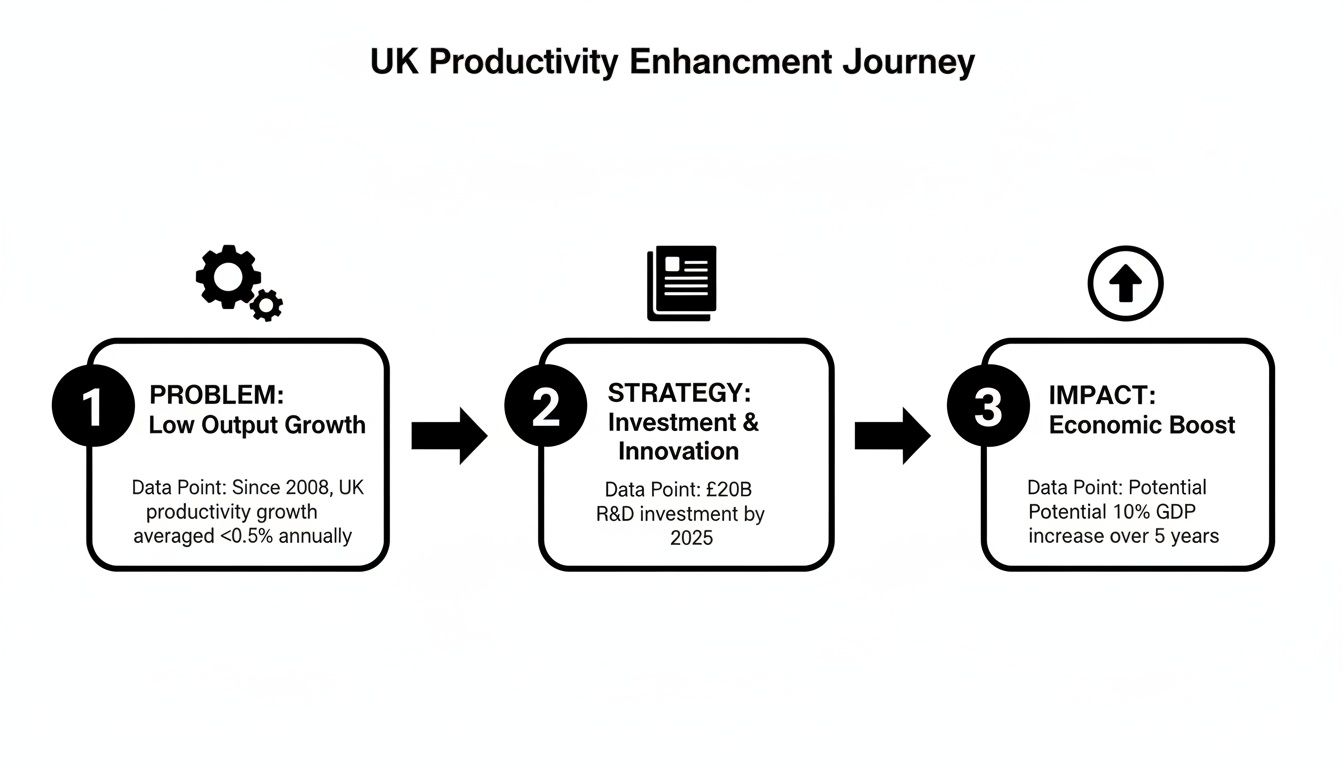
The key takeaway? Tackling the productivity gap needs a structured playbook, not just a few random initiatives.
Building Your Productivity Playbook
Creating a truly productive workplace is a continuous process, not a one-off project. It starts with a commitment to view productivity through a holistic lens, considering everything from daily workflows to the quality of the coffee in the break room.
The most successful organisations realise that productivity isn't about maximising hours; it's about maximising focus and energy. When you invest in your team's wellbeing and environment, high performance naturally follows.
This playbook will guide you through a series of actionable steps, covering:
- Quick Wins: Simple changes you can make this week for immediate gains.
- Process and Culture: Long-term shifts that build a foundation for sustained success.
- Workspace Design: How your physical environment can either hinder or help focus.
- Wellbeing Strategies: The crucial link between employee wellbeing and output.
By focusing on these areas, you can transform your office from a place where people simply show up to an environment where they genuinely thrive.
Rethinking the Rhythm of the Workday
Is the traditional 9-to-5 really working for your team, or is it just an old habit holding everyone back? To make a real difference in workplace productivity, we have to look beyond the desk and question the very rhythm of the day itself. The future isn't about logging more hours; it's about making those hours more focused, energised, and effective.
Challenging the old "time equals output" belief can feel a bit radical, but the proof is in the pudding. Groundbreaking four-day week trials here in the UK have shown some remarkable results. When companies switched their focus from hours worked to results achieved, they didn't just keep up—they often saw performance improve.
This kind of change requires a deep cultural shift, one that treats rest not as a luxury, but as a critical part of the job.
The Power of a Shorter, Smarter Week
The numbers from those trials really speak for themselves. Companies that tried a four-day model found that a shorter week naturally sharpens focus. Knowing a three-day weekend is just around the corner motivates people to cut out the fluff and zero in on what truly matters.
This new rhythm led to a huge drop in employee stress. In fact, a stunning 39% of participants said they felt less stressed, and 71% experienced lower levels of burnout. A year later, nearly 90% of the companies involved decided to stick with it, proving it wasn't just a flash in the pan. These figures show that when you prioritise wellbeing, productivity often follows. You can read more about the UK's four-day week work stats to dig into the findings.
This isn’t just about getting an extra day off. It’s a complete mindset change that prioritises deep, meaningful work over just being busy.
Elevating Breaks into Strategic Resets
The quality of our work is directly linked to the quality of our breaks. Let's be honest, mindlessly scrolling on your phone for ten minutes doesn't really recharge the batteries; it often just adds to the mental clutter. A proper break is an intentional pause that lets your brain reset, clearing the path for the next burst of focused effort.
A great break isn't an escape from work; it's an investment in the quality of the work to come. It’s the space where creativity recharges and complex problems find simple solutions.
Creating an office that encourages these kinds of meaningful pauses is one of the most powerful things an office manager can do. It’s all about designing a space that pulls people away from their screens and invites them to genuinely switch off. This is where the idea of the office as a 'third space'—somewhere between home and a traditional workplace—really comes to life.
The Coffee Bar as a Productivity Hub
A high-quality coffee bar is so much more than a nice perk; it's the beating heart of a productive office. It becomes the natural hub for those strategic resets, turning a quick coffee run into a moment of connection or quiet reflection.
Think about the difference between a sad-looking kettle in a sterile kitchenette and a welcoming space with speciality coffee on tap.
- It encourages movement: It physically draws people away from their desks, breaking the sedentary cycle that kills energy and creativity.
- It sparks connection: It becomes a natural spot for those informal chats that build team bonds and often lead to brilliant, spontaneous ideas.
- It shows you care: Providing a premium refreshment experience sends a clear signal that the company values its people and appreciates their hard work.
When an employee can craft a perfect flat white or brew a fragrant loose-leaf tea, the act itself becomes a small, mindful ritual. This little moment of enjoyment helps them return to their work feeling refreshed and ready to tackle the next challenge. It’s these small, intentional improvements to the daily rhythm that add up, building a team that's resilient, focused, and truly productive.
Designing a High-Performance Workspace
The physical space where your team works is one of the most powerful—and often overlooked—tools you have for boosting productivity. It’s so much more than desks and chairs; your office environment is constantly sending signals that either support focus and collaboration or create friction and distraction. By being intentional with your workspace design, you can actively shape a high-performance culture.

This means ditching the one-size-fits-all layout. We have to accept that different tasks demand different settings. An open-plan office might be great for that buzzing creative energy, but it can be a total nightmare for someone trying to write a detailed report. The goal is to build a balanced ecosystem of spaces that empowers people to choose the environment that best suits their work at any given moment.
Moving Beyond the Open Plan
For years, the open-plan office was sold as the secret to collaboration. What we know now is that it often just leads to constant interruptions and kills focused work. A truly productive workspace offers variety and choice, catering to the full spectrum of work styles you have on your team.
This approach is known as activity-based working (ABW). Instead of tying every employee to a permanent desk, you create a variety of 'zones,' each designed for a specific purpose. This empowers your team to move freely between different areas depending on what they need to get done throughout the day.
This strategic zoning is a genuine game-changer for workplace productivity.
Creating Purposeful Work Zones
To build a workspace that actually works, start by thinking about the kinds of activities your team engages in daily. Then, design distinct areas that cater to these needs, rooting out those hidden productivity killers like poor lighting or distracting high-traffic corridors along the way.
Here are the essential zones you should be considering:
- Focus Zones: These are sanctuaries for deep work. Think single-person pods, quiet rooms with a strict no-phone-call policy, or even library-style areas with comfy seating and excellent task lighting. Acoustic panels and sound-absorbing materials are non-negotiable here to minimise distractions.
- Collaboration Zones: These are your dynamic spaces built for teamwork. They can range from informal lounge areas with whiteboards and sofas to more structured project rooms with large screens for presentations. The key is to make them vibrant and accessible, encouraging those spontaneous brainstorming sessions.
- Social and Refreshment Hubs: This is where the magic of informal connection happens. A well-designed break area, centred around a high-quality coffee and tea station, becomes the heart of the office. It’s a neutral ground where people from different departments can interact naturally, building relationships and sparking unexpected ideas.
Your refreshment station isn't just a place for a break; it's the central hub where culture is built. The informal conversations that happen over a great cup of coffee are often where the most brilliant and innovative ideas are born.
By providing a premium experience here—think speciality bean-to-cup coffee and a curated selection of fine teas—you send a powerful message. It shows you value your team's wellbeing and want to create moments of genuine connection.
The Impact of Light and Sound
Beyond the layout, two environmental factors have a massive impact on concentration and energy levels: lighting and acoustics. Getting these right is a non-negotiable part of designing for productivity.
Countless studies have shown that natural light boosts mood and alertness. Where you can, arrange desks to maximise exposure to windows. For areas without natural light, look into 'human-centric' lighting that mimics the colour temperature of daylight throughout the day. This can help regulate employees' circadian rhythms and cut down on eye strain.
Similarly, uncontrolled noise is one of the biggest focus killers. You don’t need a silent office, but you absolutely need to manage sound. Use soft furnishings, acoustic baffles, and even living plant walls to absorb ambient noise. This creates a calmer atmosphere where your team can concentrate without feeling totally isolated. Your office design should be an intentional strategy, not just an afterthought.
How Premium Refreshments Fuel Success
Let's reframe how we think about the office tea and coffee station. Viewing it as a strategic investment, rather than just another line item in the budget, is one of the most powerful shifts you can make to boost workplace productivity. A genuinely high-quality refreshment experience is more than a convenience; it's a tool for enhancing focus, wellbeing, and ultimately, your bottom line. It’s about creating small, meaningful daily rituals that build a positive and productive culture.
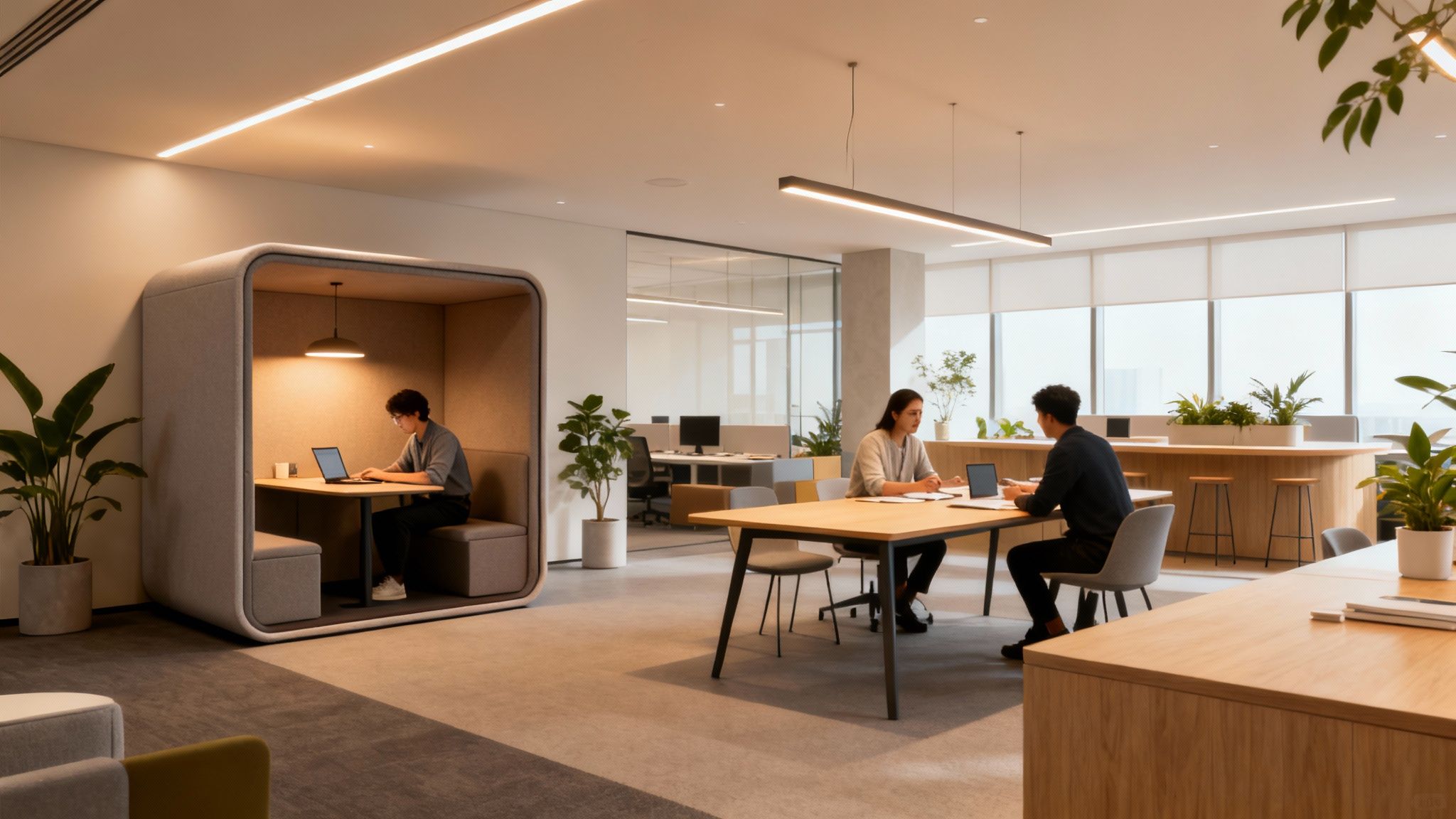
When your team has access to exceptional bean-to-cup coffee, premium teas, and great-tasting filtered water, they feel properly valued. It’s a simple but effective gesture that massively reduces the need for people to nip out for their caffeine fix, keeping that valuable energy and focus right where you want it—within your workspace.
The Hidden Costs of the Off-site Coffee Run
That daily trip to the high-street coffee shop might seem harmless, but the lost time adds up faster than you’d think.
Imagine an employee takes 15 minutes each day to walk to a café, wait in line, and get back to their desk. Over a year, that’s more than 60 hours of lost work time. For a team of just 20 people, you’re looking at over 1,200 hours annually spent away from their tasks.
Providing a premium, on-site alternative tackles this productivity drain head-on. When someone can craft a perfect latte or brew a speciality tea without leaving the building, you reclaim those hours and channel that time back into focused, productive work.
Providing a café-quality experience in-house isn't just about saving time; it's about transforming break time from a disruption into a strategic recharge. It keeps the creative momentum flowing within your walls.
It’s not just about the time saved, either. This approach strengthens internal connections, as colleagues are far more likely to grab a coffee together, sparking those informal chats where real collaboration happens.
Crafting Rituals That Enhance Focus and Creativity
A well-stocked refreshment hub quickly becomes the heart of the office, the backdrop for crucial moments in the workday. This is where small, intentional rituals can have a huge impact on performance and morale.
Picture a marketing team hitting a creative wall. Instead of just staring at a whiteboard, they gather around the coffee machine. The simple act of choosing a drink, the aroma of fresh coffee, and the warm cup creates a mental shift. In that relaxed setting, a new conversation starts, and suddenly, an innovative idea for a campaign emerges.
Or think about an account manager prepping for a big client presentation. Feeling the pressure, they step away from their screen to make a flat white. That five-minute ritual is a mindful pause. It calms their nerves, sharpens their focus, and allows them to return to their work with renewed confidence.
These moments prove a key point: the quality of the break often dictates the quality of the work that comes after.
More Than a Perk—It's a Statement of Value
Investing in premium refreshments sends a clear and powerful message to your team: we care about your wellbeing and appreciate your hard work. In today's competitive job market, small details like this make a huge difference in employee retention and satisfaction.
A survey of over 1.3 million employees revealed that feeling genuinely cared for by an employer is a cornerstone of a great workplace. Companies that get this right see much higher levels of discretionary effort—that willingness from employees to go above and beyond their basic job description.
Here’s how a top-tier refreshment programme contributes to a culture of value:
- Boosts Morale: It’s a tangible, daily reminder that the company is invested in the employee experience.
- Fosters Equality: Everyone, from the CEO to the newest intern, has access to the same high-quality amenities, breaking down subtle hierarchies.
- Encourages Connection: It creates a natural, inviting social hub that sparks spontaneous interactions and strengthens team bonds.
Ultimately, a fantastic coffee and tea offering is a low-cost, high-impact way to improve workplace productivity. It keeps your team on-site, focused, and feeling appreciated, turning the simple act of taking a break into a strategic advantage.
Streamlining Workflows with Smart Tools
Even the most talented team can get bogged down by clunky, inefficient systems. To really unlock another level of workplace productivity, you have to look beyond individual effort and start examining the workflows holding everyone together. It's about auditing your daily processes to find and stamp out the hidden bottlenecks that silently drain time, energy, and morale.

Often, these friction points are so ingrained in "the way we do things" that nobody even questions them anymore. Think of messy Slack channels where important information gets lost, or outdated project tools that need constant manual updates. By fixing these core operations, you give your team the freedom to focus on high-value work, turning frustration into flow.
Identifying and Eliminating Bottlenecks
A good first step is to simply map out your team's most common workflows. Where does a project kick off, and what are all the little steps it takes to get over the finish line? By visualising the journey, you can quickly spot the areas where things slow down or grind to a halt.
Are approvals always stuck waiting for one specific person? Does information get lost when moving between different software platforms? These are classic bottlenecks. Exploring effective business process improvement techniques is the best way to start untangling these hold-ups and creating smoother systems.
A great workflow isn't about adding more rules; it's about removing unnecessary steps. The goal is to create the clearest, simplest path for your team to do their best work.
Once you’ve found a bottleneck, you can start fixing it. It might be as simple as setting up a shared digital approval system or as big as adopting a whole new project management platform. The key is to solve the root cause, not just patch over the symptoms.
Automating the Repetitive to Unleash Creativity
So many office roles are filled with repetitive, low-value tasks that eat up a surprising amount of the day. Think data entry, pulling standard reports, or chasing people with reminder emails. These are perfect candidates for automation.
Research shows that even small automations can deliver huge time savings. For instance, workers using generative AI reported saving an average of 5.4% of their total work hours. For someone on a 40-hour week, that's over two hours back in their pocket for more strategic thinking.
Here are a few prime areas to consider for automation:
- Data Management: Use tools that automatically sync information between your CRM and email marketing platforms.
- Meeting Scheduling: Get software that finds mutual availability and sends calendar invites without the endless email chain.
- Onboarding Processes: Automate the sending of welcome documents and IT setup requests for new starters.
By handing these manual chores over to technology, you free up your team’s mental energy for problem-solving and innovation—the very things that actually drive the business forward.
Choosing the Right Productivity Tech Stack
The market for productivity tools is massive, and it’s easy to get overwhelmed. The secret isn't to adopt every shiny new app but to build a cohesive tech stack where each tool has a clear purpose and plays nicely with the others. A jumble of disconnected apps just creates more confusion.
To help you choose wisely, it's worth thinking about the main job each type of tool does and how it solves your team's specific challenges.
Choosing Your Productivity Tech Stack
This table breaks down the main categories to help you select technology that genuinely supports your team's unique workflows.
| Tool Category | Primary Function | Example Scenarios | Key Features to Look For |
|---|---|---|---|
| Communication Hubs | Centralises team conversations and cuts down on internal email. | A marketing team discussing a campaign launch in a dedicated channel. | Integrations with other apps, robust search functionality, video call capabilities. |
| Project Management | Provides a single source of truth for tasks, deadlines, and progress. | An engineering team tracking a software development sprint from start to finish. | Customisable workflows, different view options (Kanban, Gantt), clear task ownership. |
| Knowledge Bases | Creates a central library for company information and processes. | A new employee finding answers to HR questions without needing to ask a manager. | Easy-to-use editor, powerful search, permission controls. |
| Automation Platforms | Connects different apps to automate repetitive, multi-step tasks. | Automatically creating a project task when a new client signs a contract. | "If-then" logic builders, a wide range of app connectors, user-friendly interface. |
When you choose the right tools, your technology becomes a true asset. It should reduce administrative headaches and make collaboration feel effortless, which directly contributes to a more productive and satisfying place to work.
Building a Culture of Productivity and Wellbeing
Ultimately, any lasting boost in productivity doesn't come from a single new tool or initiative. It grows out of a healthy, high-trust company culture where people feel supported, valued, and connected to something bigger.
This is the final piece of the puzzle. It’s the thread that ties all the other strategies together, proving that the right environment is your single greatest asset. We're not just talking about adding more perks; this is about building a foundation of psychological safety and mutual respect.
When your team can genuinely count on their colleagues and trust their leaders, they bring their best, most innovative selves to work every single day.
The Pillars of a High-Performance Culture
A truly productive culture isn’t an accident. It stands on a few non-negotiable pillars that elevate a team from just getting tasks done to achieving incredible results together. Get these right, and you create an ecosystem where performance and wellbeing both flourish.
So, what are they?
- Transparent Communication: Leaders who share information openly—even the tough stuff—build huge amounts of credibility and cut down on uncertainty. That clarity lets teams focus their energy on finding solutions instead of speculating about problems.
- Meaningful Recognition: A culture that celebrates wins, both big and small, is a culture that stays motivated. This is more than an annual awards night; it's about the daily habit of noticing and acknowledging good work and extra effort.
- A Genuine Commitment to Wellbeing: Your team can spot performative wellness schemes from a mile off. A real commitment means weaving wellbeing into how you work, actively encouraging proper breaks, and offering resources that truly support mental and emotional health.
When these elements click into place, they create a powerful feedback loop. People who feel cared for are more engaged, and engaged people are naturally more productive. Simple as that.
Fostering Connection Through Daily Rituals
Often, the strongest cultural fabric is woven from small, everyday interactions. Think about those informal chats that happen while waiting for the coffee machine to finish its magic. It’s in these unscripted moments that team bonds are forged and brilliant ideas are sparked.
Creating spaces and opportunities for these rituals is vital. A premium refreshment station, for example, is more than a place to get great drinks. It’s a natural social hub, a neutral ground where people from different departments can connect in a relaxed, informal way.
The most productive workplaces understand that culture isn't built in boardrooms; it's built in the small, human moments of connection that happen every day. A shared laugh over a cup of tea is as important as any project meeting.
Encouraging these little rituals—a team's morning coffee run, a shared afternoon tea break—helps fight the isolation that can easily creep into even the busiest offices. Beyond just personal habits, fostering an environment where the team's collective output thrives is key; you can explore more practical tips to improve team productivity and see how these small cultural shifts can deliver big results.
Implementing Effective Feedback Loops
A culture of continuous improvement needs open, honest feedback to survive. The problem is, many organisations just don't get it right. The key is creating structured, safe channels for both giving and receiving constructive input.
This is about shifting feedback from a dreaded annual review to a regular, helpful part of the workflow. For instance, try implementing brief, informal "check-ins" at the end of a project. It gives the team a chance to discuss what went well and what could be better next time, completely free of blame.
This approach cultivates a growth mindset across the entire company. It reframes challenges as learning opportunities and empowers every single team member to help make things better. That collaborative spirit is the engine of a truly agile and productive workplace.