

How to increase employee engagement: practical steps to boost morale
Boosting employee engagement is about so much more than sending out an annual survey. It's about creating a continuous loop of listening to what your team needs, taking genuine action, and consistently improving the entire workplace experience. At its heart, this is a strategic push built on recognition, career growth, and a genuinely supportive culture. It’s about fundamentally changing how people connect with their work.
Moving Beyond Metrics to Meaningful Engagement
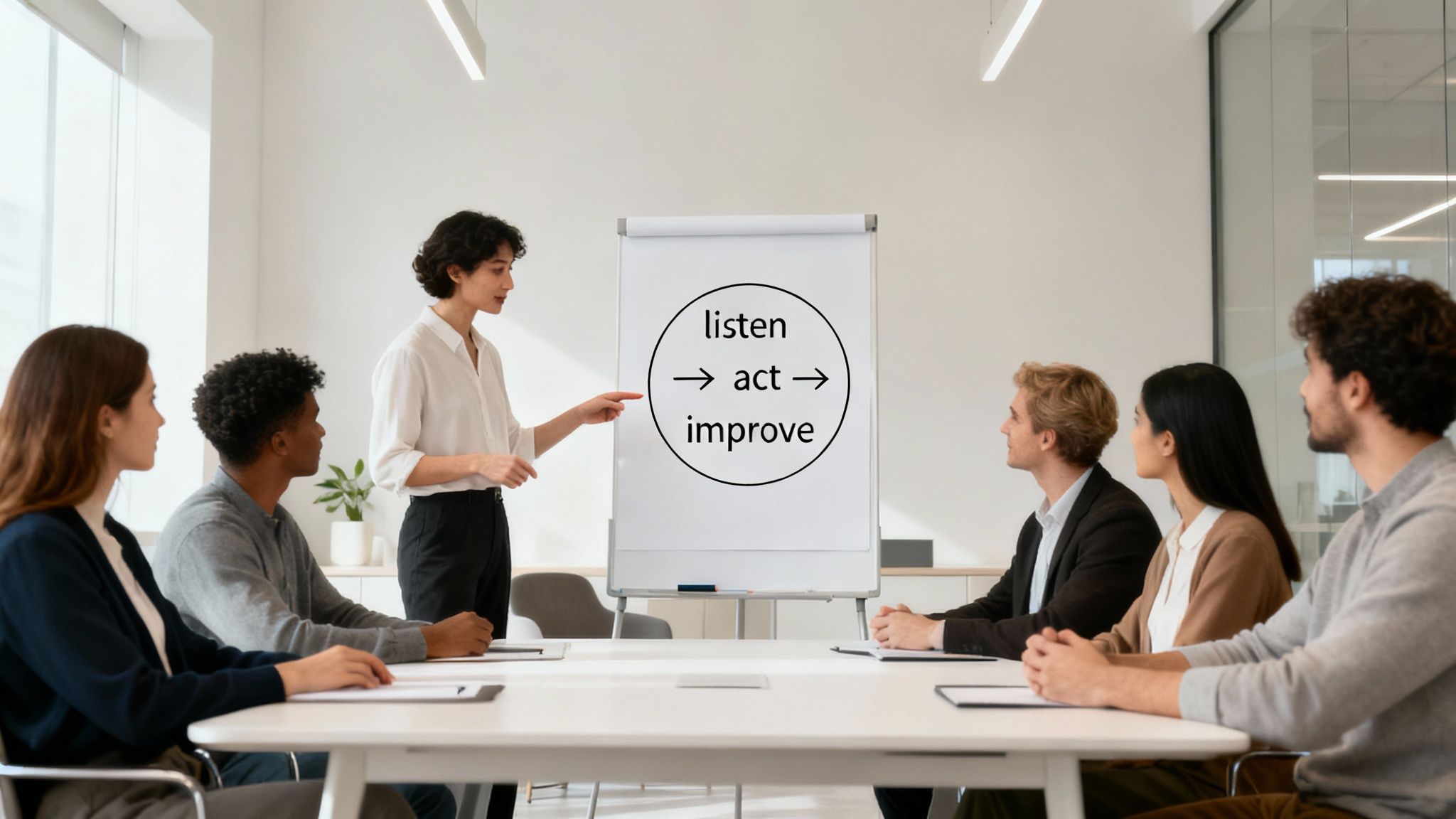
Let's be honest—the old annual survey and pizza party combo just doesn't cut it anymore. Genuine engagement isn't some box for HR to tick; it's the engine that powers your entire business. It’s the emotional commitment an employee has to your company and its mission.
True engagement means building an environment where people feel seen, heard, and genuinely valued. When your team is engaged, they aren't just working for a pay cheque. They’re investing that extra bit of discretionary effort, sparking new ideas, and becoming your company's most passionate advocates. This guide is about ditching the outdated tactics and digging into what truly inspires that level of commitment.
Why Engagement Is a Strategic Imperative
A disengaged employee isn't just an unhappy one. They represent a real cost to the business through lost productivity, higher staff turnover, and a drop in customer satisfaction.
The challenge is particularly sharp in the UK. Recent data shows that only 65% of UK employees feel engaged, putting the country in the lower 40% globally. Even more telling, a staggering 16% of UK staff reported seeing no positive changes after their company ran an engagement survey. That highlights a massive disconnect between collecting feedback and actually following through. This gap is where your biggest opportunity lies.
Engagement is not an initiative; it's the outcome of an organisational culture that values its people as its greatest asset. When you focus on building that culture, the engagement metrics naturally follow.
A Framework for Lasting Change
This guide offers a practical framework built on that continuous cycle: listen, act, and improve. Instead of one-off fixes, we're focusing on how to weave engagement into the very fabric of your organisation. To get started, it's worth exploring the foundational ways to increase employee engagement that foster deeper connections and commitment.
To help you build a truly effective engagement strategy, we've broken it down into four core pillars. These pillars form a roadmap for diagnosing issues, taking meaningful action, and embedding positive change into your company culture for the long haul.
The Four Pillars of an Effective Engagement Strategy
| Pillar | Focus Area | Key Outcome |
|---|---|---|
| Accurate Diagnosis | Gaining a true understanding of your team's pulse. | Clear, data-backed insights into what drives (or drains) morale. |
| Actionable Strategy | Turning feedback into quick wins and long-term cultural shifts. | Increased trust, momentum, and visible proof that you're listening. |
| Cultural Foundations | Building a culture of recognition, growth, and well-being. | An environment where people feel valued and see a future with you. |
| Sustained Momentum | Continuously measuring, refining, and communicating your efforts. | Engagement becomes an embedded part of "how we do things around here." |
This approach gives you a solid starting point for transforming engagement from a corporate buzzword into your company's greatest competitive advantage.
Getting a Real Feel for Your Team's Experience

Before you can ignite passion and drive in your team, you first have to understand their reality. Guesswork is the enemy here; what you think your employees feel and what they actually experience are often worlds apart. The first real step toward meaningful change is to stop assuming and start listening.
This is all about creating channels for honest, unfiltered feedback. It’s your chance to build a clear picture of the daily highs and lows that define your team’s relationship with their work, their colleagues, and the company itself. This diagnostic phase is the foundation for everything that comes next.
Moving Beyond the Annual Survey
Let’s be honest, the traditional, lengthy annual survey often feels like a chore. By the time the data is crunched, it’s already out of date. To get a real-time sense of your team's morale, you need a much more agile approach. This is where pulse surveys come in.
These are short, frequent check-ins—think five to ten targeted questions sent out quarterly or even monthly. Their power is in their focus and timeliness. Instead of trying to ask about everything all at once, you can zero in on specific, relevant topics.
For instance, one month’s pulse could focus on workload and well-being, while the next might explore how people feel about leadership and communication. This doesn’t just give you current data; it shows your team you're consistently invested in their experience.
Crafting Questions That Get Real Answers
The quality of your feedback lives and dies by the quality of your questions. To truly understand what drives engagement, you have to ask questions that dig beneath the surface. Ditch the generic queries and focus on the core elements of a positive workplace.
Here are a few areas to explore, with some sample questions:
- Psychological Safety: "Do you feel comfortable sharing a different opinion in team meetings?" This gets to the heart of whether your environment encourages open dialogue or enforces conformity.
- Manager Support: "How confident are you that your manager has your back when you face a challenge?" This reveals the strength of that all-important manager-employee relationship.
- Work-Life Integration: "Does your current workload allow you to disconnect and recharge properly outside of work hours?" This uncovers burnout risks before they spiral.
- Recognition and Value: "In the last month, have you felt genuinely recognised for your contributions?" This measures whether your appreciation efforts are actually landing.
Asking more specific, behaviour-focused questions helps you move from vague satisfaction scores to genuinely actionable insights about your company culture.
The goal isn't just to collect data; it's to start a conversation. Every survey question should be an invitation for your employees to share their perspective, trusting that it will be heard and respected.
Looking at the Bigger Picture
Surveys are vital, but they're only one piece of the puzzle. The true story of your team's experience is also told through your existing business metrics. These are the "hidden signals" that often speak louder than survey responses.
Start by digging into the trends in these key areas:
- Absenteeism Rates: Is there a specific team or department with a noticeably higher rate of unplanned absences? This is often a leading indicator of stress, burnout, or poor management.
- Turnover Data: Don't just look at who is leaving, but when. A spike in departures three to six months after a big project or organisational change tells a powerful story.
- Productivity Metrics: A slow, steady decline in a team's output can signal waning motivation long before anyone formally raises an issue.
Recent findings for UK workplaces show that while engagement is improving slightly post-pandemic, it’s still not where it needs to be. It’s also clear that individual circumstances, like neurodivergence or health conditions, create very different experiences of work, reinforcing the need for a personalised and inclusive approach. You can discover more about the current state of UK employee engagement here.
By combining this hard data with the human feedback from your pulse surveys, you can build a comprehensive, multi-layered understanding. This complete view allows you to pinpoint specific pain points and identify the bright spots you can learn from, setting the stage for targeted, effective action.
Turning Feedback into Real Change
Asking for feedback is easy. The hard part is proving you’ve actually listened. When your team sees their words sparking genuine action, that’s when the real magic happens. If you don't act on the insights you've gathered, you don't just stall progress—you actively break trust and make people cynical about ever giving feedback again. This is the moment of truth.
To get this right, you need to bridge the gap between what people say and what the business does. It’s a two-pronged attack: combine quick, visible changes with deeper, foundational cultural improvements. It’s all about showing people you’re paying attention right now, while also building a better workplace for the long haul.
Land Some Quick Wins to Build Trust
Quick wins are high-impact, low-effort changes that send a clear message: "We heard you." They're the proof that feedback isn’t just disappearing into a black hole. These small actions show you're responsive and build the goodwill you'll need to tackle the bigger, more complex stuff later.
Think about the common frustrations that always pop up in surveys or team chats. Often, they’re minor irritants that have a massive impact on daily morale.
- Fixing that nagging tech issue. Is there a piece of software that always crashes or a workflow that's painfully clunky? Prioritising a fix shows you value your team's time and sanity.
- Clarifying a confusing process. If everyone’s baffled by the expense reporting system or the holiday request protocol, a simple, clear guide can wipe out a source of daily friction.
- Improving a physical space. Little things like adding more plants, upgrading the ancient coffee machine, or finally fixing the printer can make the office a much more pleasant place to be.
These small victories won't transform your company culture overnight, but they are absolutely crucial for building trust. They show your team you're listening and ready to act, which makes them far more likely to stay bought into the whole process.
The fastest way to lose an employee's trust is to ask for their opinion and then do nothing with it. Conversely, the fastest way to build it is to act on their feedback, no matter how small the change may seem.
Go Beyond Fixes to Lasting Cultural Shifts
While quick wins build momentum, lasting engagement is built on the bedrock of your company culture. This is the slower, more deliberate work of weaving the principles of engagement into the very fabric of your organisation. It requires a commitment that goes far beyond simple fixes.
This deeper work means taking a hard look at the systems, processes, and leadership behaviours that shape your employees' day-to-day lives. It’s about making your company values something people actually live by, not just words on a poster.
This is where a lot of organisations fall down. Data from a 2025 Perkbox report surveying UK HR leaders reveals a massive "action gap." While an overwhelming 98.2% of HR professionals say they monitor engagement, only about half actually put concrete plans in place based on what they find. This is especially damaging in areas like career progression, where we know that providing learning opportunities can boost engagement by 23%. You can dig into the full employee engagement report for more insights.
Weave Engagement into Your Leadership Model
Your managers are the single biggest lever you have for influencing employee engagement. They are the daily interpreters of your company culture. If you’re serious about engagement, investing in their development isn’t optional.
This means training leaders not just to manage tasks, but to coach, mentor, and genuinely support their people. A proper leadership development programme should be built around the skills that actually drive engagement:
- Giving effective feedback: This means training managers to give recognition that is timely, specific, and sincere. It also means teaching them how to deliver constructive feedback that feels supportive, not critical.
- Fostering psychological safety: You need to give leaders the tools to create an environment where team members feel safe enough to speak up, take calculated risks, and admit mistakes without fearing blame.
- Conducting meaningful career conversations: It’s time to move beyond the dreaded annual review. Equip managers to have regular, forward-looking chats about an employee’s aspirations and how the company can help them get there.
When you empower your managers, you scale your engagement efforts across the entire business. They become the champions of the culture you’re trying to build, turning abstract goals into tangible, everyday actions. It’s this systematic approach that ensures engagement becomes a sustainable part of how you operate, not just another short-lived initiative.
Building a Culture of Recognition and Growth
Once you’ve started to turn employee feedback into meaningful action, it’s time to focus on the things that truly drive motivation: feeling valued and seeing a clear path forward. People don't just work for a paycheque. They work for a purpose, for a sense of achievement, and for the belief that they’re growing both personally and professionally.
If these elements are missing, even the most well-thought-out engagement strategy will eventually run out of steam. The most powerful thing you can do is build a culture where recognition and development are simply part of your company's DNA. This is how you show your team you’re invested in them as people, not just as resources.
The Power of Genuine Recognition
Let's be honest: annual bonuses and yearly performance reviews just don't cut it anymore. While fair compensation is table stakes, it’s the small, frequent, and sincere moments of recognition that have the biggest impact on daily morale. The data is clear—employees who feel their contributions are consistently valued are far more likely to be engaged.
But genuine recognition is more than just a quick "good job." To actually land, it needs to be:
- Timely: Acknowledge great work as it happens, not weeks later. Immediate feedback reinforces positive behaviour and makes the appreciation feel authentic.
- Specific: Instead of a generic "thanks for your hard work," try something like, "The way you handled that difficult client call with such patience was brilliant; you really saved the situation." Specificity proves you’re actually paying attention.
- Peer-Driven: Recognition doesn’t always have to come from the top down. A simple "shout-out" channel in your team chat can work wonders for camaraderie and creates a more supportive, collaborative culture.
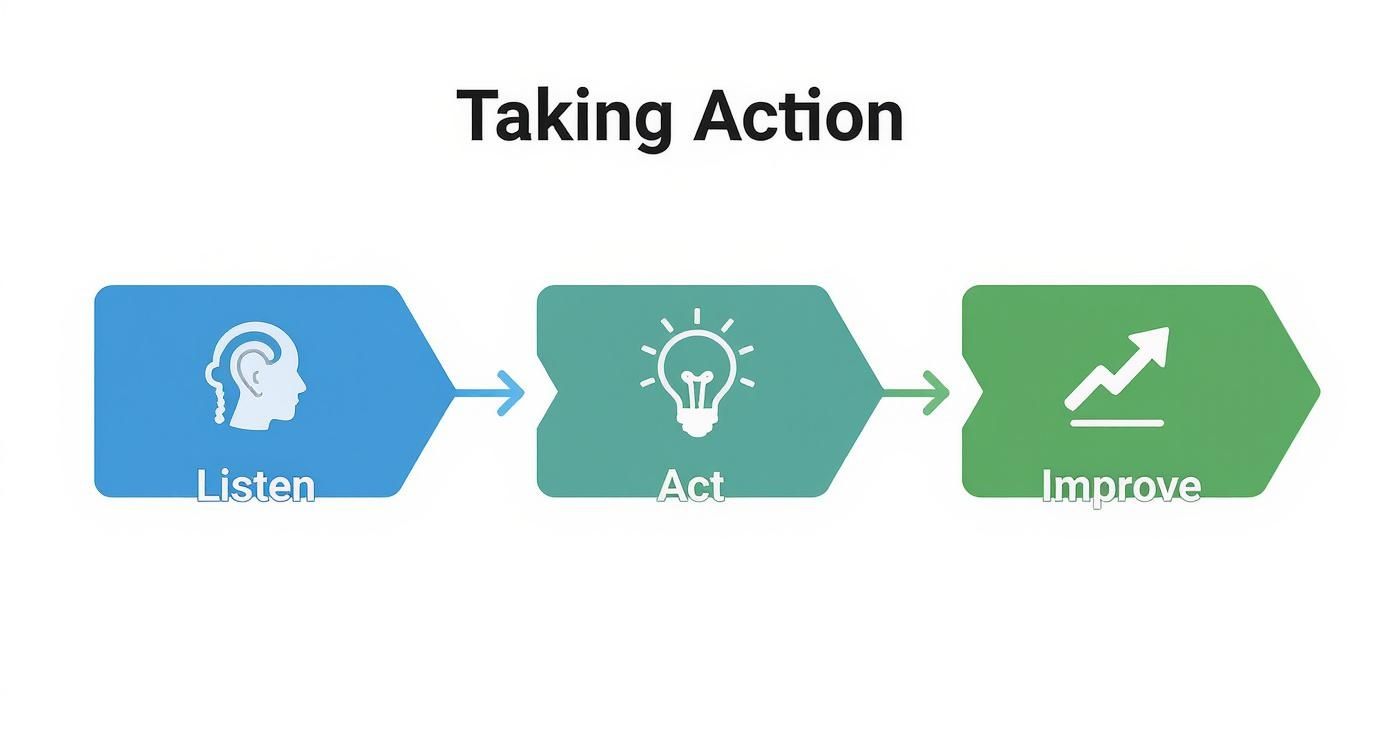
This simple cycle—listen, act, improve—is the engine of a healthy culture. It shows that feedback isn't just collected; it’s valued and acted upon, creating a loop of continuous improvement.
Creating Pathways for Growth
A dead-end job is a huge retention risk. If an employee can't see a future with your company, they'll start looking for one elsewhere. It’s no surprise that a lack of career development is one of the top reasons talented people leave. In fact, one study found that 50% of employees would consider leaving a role if they didn't get the development opportunities they needed.
Building these pathways isn't just for huge corporations with rigid hierarchical ladders. Even in a flatter organisation, you can foster growth by focusing on skills and experiences rather than just job titles.
People’s greatest motivation is to be part of something they believe in, to feel like they are making progress, and to know their contribution matters. Growth opportunities are the clearest signal you can send that you believe in their future.
Here are a few practical ways to build a robust development culture:
- Introduce Mentorship Programmes: Pairing experienced staff with newer team members is a fantastic, low-cost way to transfer knowledge, build relationships, and offer personalised career guidance.
- Promote Internally First: Make it a non-negotiable policy to advertise new roles internally before looking outside. This sends a powerful message that you trust your team and prioritise their growth.
- Invest in Skill-Building: This doesn't always mean expensive external courses. Think internal workshops, access to online learning platforms like LinkedIn Learning or Coursera, or creating cross-departmental projects where people can learn new skills on the job.
When you actively invest in your team’s professional journey, you're doing more than just filling skill gaps. You're showing them they have a vibrant future right where they are—and that sense of progress is one of the most powerful drivers of employee engagement there is.
Crafting an Environment Where People Want to Be

The physical space where your team spends their days sends a constant, powerful message about how much you truly value them. It's far more than just a place to work; it's an ecosystem that can either drain energy or inspire real creativity. If you’re serious about increasing employee engagement, creating a workplace that people genuinely want to be in is non-negotiable.
This isn't about installing a slide or splashing out on extravagant redesigns. It’s about being intentional with the details that shape your team's daily experience, proving you’re committed to their well-being and productivity. These thoughtful touches show you care about their comfort and focus, which is the foundation for a positive atmosphere where great work can flourish.
Designing Spaces for People, Not Just Tasks
The old one-size-fits-all office layout just doesn’t cut it for the dynamic needs of a modern team. Different tasks demand different environments, and a truly supportive workplace offers variety and choice. It's time to think beyond endless rows of identical desks and create a more flexible, human-centric space.
Start by looking at the practical elements that make a tangible difference:
- Ergonomic Setups: Investing in quality chairs, adjustable desks, and proper monitor stands isn't a luxury—it's a necessity. It’s a clear signal that you care about your team's physical health and helps prevent the discomfort that absolutely kills focus.
- Designated Quiet Zones: For any task that requires deep concentration, an open-plan office can be a nightmare. Carving out dedicated "library rules" zones allows people to escape the noise and find their flow.
- Comfortable Communal Areas: Spaces designed for connection, with comfortable seating well away from workstations, are where the magic happens. They encourage the spontaneous conversations that build relationships and spark new ideas.
When you're fostering a workplace people genuinely want to be in, you have to proactively tackle the issues that lead to disengagement. It's worth embedding strategies to prevent employee burnout, which are often linked directly to a stressful or unsupportive physical environment.
An office should feel like a resource that supports your team's best work, not a barrier they have to overcome. The goal is to provide a palette of spaces that empower them to choose the right environment for the task at hand.
Looking at your workplace environment through this lens can reveal where small, strategic investments will deliver the biggest returns on morale and engagement.
Workplace Environment Impact Analysis
| Environmental Factor | Low-Investment Approach (Low Impact) | Strategic Investment Approach (High Impact) |
|---|---|---|
| Workstations | Standard, non-adjustable desks and chairs. | Fully ergonomic chairs, sit-stand desks, and monitor arms. |
| Lighting | Standard overhead fluorescent lights. | Zoned lighting with dimmers, desk lamps, and maximised natural light. |
| Noise Control | Open-plan layout with no acoustic separation. | Designated quiet zones, acoustic panels, and high-backed seating. |
| Refreshments | Basic instant coffee and a kettle. | Premium bean-to-cup coffee and a variety of healthy snacks and drinks. |
Ultimately, a strategic approach demonstrates a deeper commitment to employee well-being, which pays dividends in loyalty and productivity.
The Surprising Power of Premium Refreshments
While ergonomic chairs and quiet zones support individual work, the right office amenities can completely transform your workplace culture. One of the most impactful—yet frequently overlooked—areas is your approach to refreshments. Especially coffee. It’s a small detail that speaks volumes.
A sad jar of instant coffee granules sends a message of minimum effort. In stark contrast, investing in an exceptional coffee experience—with premium, freshly roasted beans and a modern bean-to-cup machine—signals a genuine commitment to quality and employee well-being.
This is about more than just a caffeine hit. A great coffee break becomes a vital ritual for renewal and collaboration. It’s a chance for colleagues from different departments to actually connect, share ideas, and recharge away from their screens. Transforming a simple break into a genuinely enjoyable moment can significantly boost morale and create a more sociable, connected workplace. These are the small, consistent investments that make your office a destination, not just a location.
Right, so you’ve put in the hard work. The office vibe is better, teams are collaborating more, and there’s a genuine buzz in the air. But to keep this momentum going and make sure it’s not just a flash in the pan, you need to prove it’s delivering real business results.
This isn’t just about justifying the budget for nice coffee and a few team lunches. It’s about cementing employee engagement as a core part of your company's strategy—showing that when your people thrive, the entire business moves forward.
It’s time to connect the dots between your initiatives and the bottom line. Let's build a compelling, data-driven story that gets leadership on board and secures the ongoing investment your team deserves.
Tracking Progress Against Your Baseline
Remember that initial diagnosis you did right at the start? Those baseline metrics from surveys, turnover reports, and productivity data are now your secret weapon. The goal is to create a crystal-clear "before and after" picture.
You should be looking for clear shifts in a few key areas:
- Pulse Survey Scores: Are the numbers for manager support, recognition, or well-being on a steady upward climb since you rolled out your changes?
- Employee Net Promoter Score (eNPS): Are more people willing to recommend your company as a great place to work than before?
- Retention Rates: Has voluntary turnover dropped, especially among your top performers, in the months following your engagement push?
When you present this data side-by-side, you move beyond "it feels better around here" and offer concrete proof that your efforts are making a measurable difference.
Calculating the Return on Investment
To really grab the attention of the C-suite, you need to talk their language: money. Translating engagement wins into financial terms might sound daunting, but you don't need a degree in finance to do it effectively.
When you can show that investing in your people directly cuts costs and boosts revenue, employee engagement stops being a 'nice-to-have' HR project and becomes an undeniable business imperative.
Take staff turnover, for example. The cost to replace an employee is staggering—often estimated to be anywhere from 50% to 250% of their annual salary once you factor in recruitment fees, training time, and lost productivity. If you can show a tangible reduction in turnover, you can calculate a real cost saving that speaks directly to the company's financial health.
It’s the same story with productivity. Teams with high engagement are proven to be more productive and deliver far better customer service. You can tie this directly to increased sales figures or glowing customer satisfaction scores.
Suddenly, the narrative is simple but incredibly powerful: when we invest in our people, our business thrives.
Your Questions, Answered
As you start putting these ideas into action, a few practical questions are bound to pop up. Moving from a plan on paper to a real-world programme is where the details really matter. Here are some of the most common questions we get asked.
How Often Should We Be Running Engagement Surveys?
While that big, comprehensive annual survey gives you a fantastic deep dive, the real magic happens with more frequent 'pulse' surveys. Think of them as short, sharp check-ins—maybe just 5-10 questions sent out quarterly or even monthly to see how people are feeling about specific topics.
This approach lets you spot issues before they grow, quickly see if a new initiative is landing well, and, most importantly, show your team you’re always listening. The key, though, is to act on the feedback every single time. Nothing kills trust faster than asking for opinions and then doing nothing with them.
If We Can Only Do One Thing, What’s the Most Effective Way to Improve Engagement?
If I had to pick just one thing, it would be this: train your line managers. No one has a bigger impact on an employee’s day-to-day reality than their direct manager. They shape everything from workload and feedback to recognition and career chats. Research from Gallup is crystal clear on this, finding that managers account for a staggering 70% of the difference in team engagement.
Investing in leadership training that gives managers the tools to listen, coach constructively, and genuinely support their team’s well-being will give you the biggest return. It’s the one change that ripples out across the entire organisation.
Our Budget Is Tight. What Are Some Low-Cost Ways to Boost Engagement?
You don’t need a massive budget to make a real difference. In fact, some of the most powerful engagement strategies cost next to nothing.
Here are a few high-impact ideas that are light on the wallet:
- Champion Peer-to-Peer Recognition: Set up a simple way for people to give public ‘shout-outs’ to colleagues who’ve gone above and beyond. It could be a Slack channel, a section in a team meeting, or a board in the kitchen. This builds a supportive culture and costs zero.
- Be Radically Transparent: Start regular team huddles or a weekly update email from leadership. Just keeping people in the loop builds a huge amount of trust and makes them feel part of the journey.
- Offer Flexibility Where You Can: Giving people more control over their schedule is one of the most valued perks out there. It often costs the business nothing but can make a world of difference to someone’s work-life balance and morale.
At UE Coffee Roasters, we know that a brilliant workplace culture is built on the details. Offering a premium, café-quality coffee experience is a simple but powerful way to show your team you care about their well-being. Find out how our office coffee solutions can help you create an environment where your team feels appreciated and energised, every single day.