

how to reduce staff turnover: Retain top talent fast
Learning how to reduce staff turnover isn't about plugging leaks—it's about creating a workplace people genuinely don't want to leave. The focus has to be on the big three: strong leadership, meaningful recognition, and a thriving environment. This isn't a reactive fix; it's a core strategy for sustainable business success.
The True Impact of a Revolving Door Workplace
That constant cycle of goodbyes and hellos is more than just an HR headache. It’s a direct hit to your bottom line, your team’s spirit, and your institutional memory.
When talented people walk out the door, they take invaluable knowledge with them—the unspoken "how things really get done around here" that you can't just write down in a manual. This loss stalls projects and forces the remaining team members to pick up the slack, which is a fast track to burnout and sinking morale.
It creates a subtle but powerful feeling of instability, where even your most loyal staff start quietly questioning their own future with the company. Before you know it, that erosion of trust can weaken the very foundations of a collaborative and productive culture.
A Cost Beyond the Balance Sheet
The financial toll of constantly replacing staff is staggering and, frankly, often underestimated. Recent data paints a stark picture for UK businesses, highlighting just how urgent retention has become.
Predicted attrition data shows that nearly one in four UK workers—a massive 23%—plan to quit their jobs in 2025. That rate is significantly higher than in comparable economies like the US (19%). With the cost to replace an employee starting at a minimum of £11,200, the financial drain is undeniable. You can read the full research about UK attrition rates to see the detailed breakdown.
This infographic really puts the challenge into perspective.
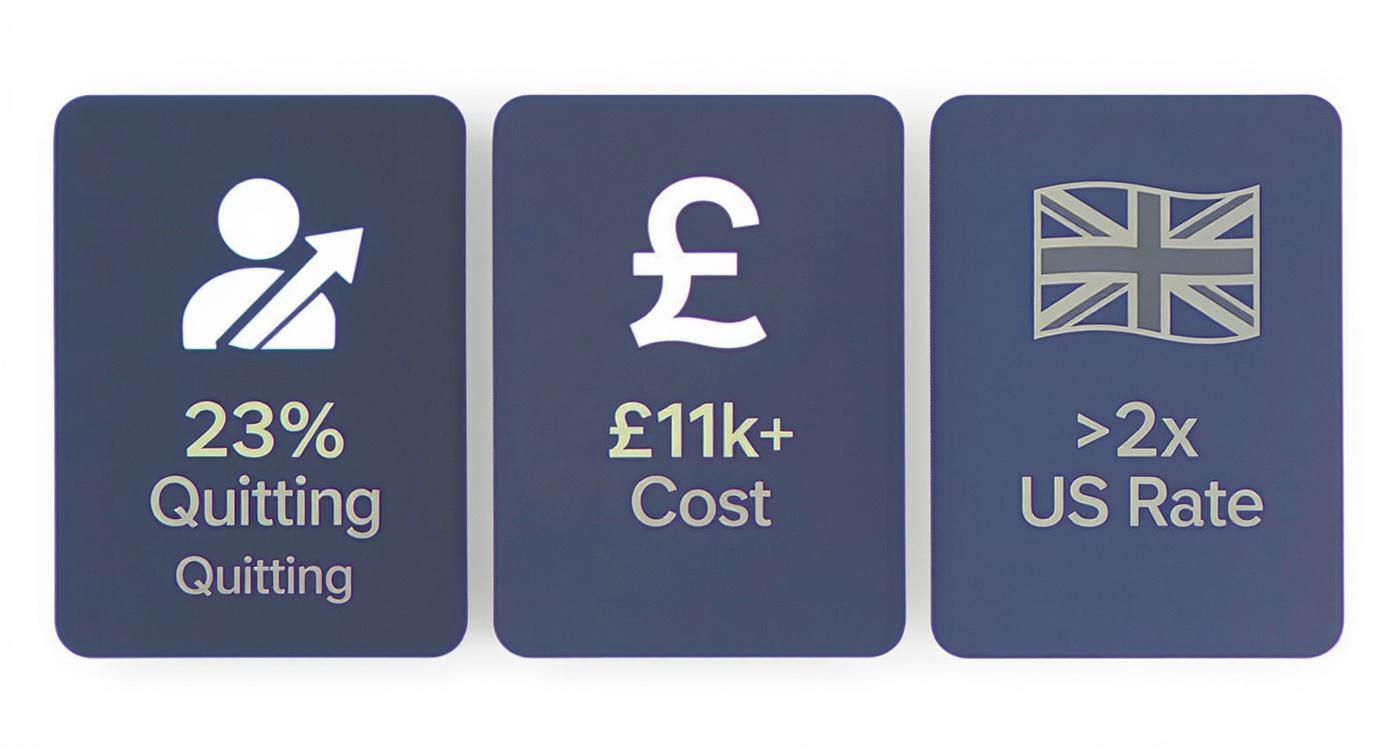
The data makes it crystal clear: high turnover isn't some theoretical problem. It's a present and growing threat to both the financial health and the cultural stability of businesses across the UK.
A Snapshot of Effective Retention Strategies
To reduce staff turnover, UK businesses should focus on these three core areas. This table gives a quick overview of the key strategies we'll explore.
| Strategy Pillar | Core Focus | Expected Business Outcome |
|---|---|---|
| Inspirational Leadership | Training managers to coach, support, and empower their teams. | Higher engagement, increased team productivity, and lower department-specific turnover. |
| Meaningful Recognition | Creating programmes that genuinely acknowledge contributions and make staff feel valued. | Improved morale, stronger employee loyalty, and a culture of appreciation. |
| Thriving Environment | Building a culture of connection, well-being, and purpose through thoughtful initiatives. | Enhanced collaboration, reduced burnout, and a workplace that attracts top talent. |
Each pillar works together to build a workplace that people are proud to be a part of.
Shifting Focus from Reactive to Proactive
The first real step is to start seeing retention as a core business pillar, not just a problem to be solved when someone resigns. This guide will unpack what it takes to build a workplace that inspires that kind of loyalty. We’ll get into the practical ways you can cultivate an environment where people feel valued, supported, and genuinely motivated to build their careers with you.
By focusing on the employee experience, you stop plugging leaks and start building a stronger, more resilient ship. Retention becomes a natural outcome of a great place to work, not just another HR metric to track.
Throughout this guide, we'll delve into actionable strategies covering:
- Inspirational Leadership: Exploring how great managers become the number one reason people stay.
- Meaningful Recognition: Mastering the art of making your team feel genuinely seen and appreciated.
- Thriving Environments: Creating a culture of connection, purpose, and well-being that people want to be part of.
Discovering Why Your Best People Actually Leave
Before you can build a culture people won't want to leave, you first have to understand why they’re walking away right now. This means moving past assumptions and digging into the real, sometimes uncomfortable, reasons for their departure. Think of it as turning an ending into a new beginning for your retention strategy.
This isn’t just a box-ticking exercise. It demands genuine curiosity and a commitment to hearing the unvarnished truth. The goal is to create safe channels for honest feedback, where both departing and current employees feel their insights are valued and will lead to real change.

Unlocking Honest Feedback
Let's be honest: the standard exit interview often fails. It's treated as a formality, and you get generic platitudes instead of constructive feedback. To fix this, you need to shift the approach.
Make sure the interview is a genuine conversation, not an interrogation. Crucially, have it conducted by a neutral party like HR, rather than the employee’s direct manager. This simple change can dramatically increase how honest the responses are.
Anonymous employee surveys are another powerful tool for getting to the truth of day-to-day experiences. When people feel safe from any repercussions, they’re far more likely to share candid thoughts on management, workload, and company culture.
The most valuable insights often come from the quiet frustrations that build over time. By actively seeking them out, you turn passive dissatisfaction into an actionable roadmap for improvement.
To get the most useful data, focus your questions on specific, tangible areas. Vague questions get vague answers, so be direct about what you need to know.
Actionable Intelligence Gathering
To make this process truly effective, you need a mix of methods for gathering feedback. Here’s what I’ve seen work best:
-
Structured Exit Interviews: Don't just wing it. Create a consistent set of open-ended questions focused on things like role satisfaction, management support, and their reasons for leaving. Ask things like, "What prompted you to start looking for a new opportunity?" and "Was there a specific event that influenced your decision?"
-
Anonymous Pulse Surveys: Don't wait for people to hand in their notice. Regularly send out short, anonymous surveys to your current team to gauge morale and satisfaction. This proactive approach helps you spot problems before they turn into resignations.
-
"Stay" Interviews: This is a game-changer. Sit down with your high-performers and ask them why they stay. What do they value most about their role, the team, and the company? This gives you a crystal-clear picture of what you’re doing right and what you absolutely need to protect.
A UK-based tech firm I know of provides a compelling example. They were facing a rising turnover rate among their developers and decided to get serious about feedback. They implemented anonymous surveys and completely revamped their exit interview process.
The data consistently pointed to two core issues: a lack of clear career progression and wildly inconsistent management styles between teams. Armed with this specific intelligence, they introduced a transparent skills framework for promotions and rolled out mandatory leadership training.
The result? Within a year, their developer turnover had dropped by an incredible 40%. It just goes to show that truly listening is the first step to creating lasting change.
How Great Leaders Inspire Unwavering Loyalty
It’s an old saying because it’s true: people don’t leave companies, they leave managers. While a dozen different things might influence someone's decision to stay or go, the single most powerful lever you have for retention is the quality of your leadership.
A great manager can turn a job into a career. They create a ripple effect of engagement and commitment that a bigger salary just can't buy. If you want to get serious about reducing staff turnover, you need to focus on transforming your managers into mentors who build loyal, high-performing teams. This isn’t about a one-off training day; it's about embedding a culture of supportive, continuous development.

From Manager to Mentor
The shift from being a taskmaster to a true leader involves a fundamental change in mindset. A manager oversees tasks, but a mentor invests in people. The goal is to equip your leaders with the skills to coach, empower, and genuinely champion their team members.
This means training them in those crucial soft skills that often get overlooked:
- Active Listening: Teaching managers to hear what’s not being said and to understand the real motivations behind their team's feedback.
- Constructive Feedback: Moving beyond the dreaded annual review to create a culture of regular, supportive, and forward-looking chats about performance and growth.
- Empathetic Leadership: Helping them connect with their team on a human level, understanding their challenges and celebrating their successes.
When you treat leadership development as an ongoing journey, your managers become the very reason your best people choose to stay.
Creating a Culture of Supportive Feedback
The best leaders don’t wait for problems to pop up. They build environments where open dialogue is the norm and feedback is seen as a gift for growth, not a criticism. This all comes down to creating psychological safety, where team members feel secure enough to voice concerns or admit mistakes without fearing blame.
A manager’s ability to foster psychological safety directly impacts their team's innovation and resilience. When people feel safe to fail, they also feel safe to take the creative risks that drive a business forward.
The data overwhelmingly backs this up. Staff retention is tightly linked to management, with employees being 94% more likely to stay when supported by great managers. In stark contrast, poor leadership can cause commitment to plummet to as low as 19%. These figures make it crystal clear: investing in your leaders is one of the most direct and impactful ways to improve retention. You can discover more insights about the impact of leadership on UK staff retention on Personnel Today.
Empowering Managers to Recognise and Reward
To be truly effective, managers need the autonomy to recognise their people's contributions in meaningful ways. A centralised, one-size-fits-all recognition programme often misses the mark because it lacks that personal context.
Giving managers discretionary budgets or simple tools for spot rewards allows them to acknowledge great work in real-time. Whether it's a small bonus for smashing a target, a team lunch to celebrate a project milestone, or just a heartfelt public thank you, these timely gestures show employees their efforts are truly seen and valued. This empowerment reinforces the manager's role as a leader who not only directs work but also genuinely appreciates the people doing it.
Creating a Culture People Don't Want to Leave
A magnetic workplace culture isn’t built on grand, superficial perks. It’s forged from a sense of belonging, purpose, and genuine care. While the big gestures are nice, it's often the small, consistent signals of appreciation that show your team they’re truly valued.
These thoughtful investments create an environment where people feel seen, supported, and connected to their colleagues. It all starts by turning the office from just a place to work into a space people actually enjoy being in.
Something as simple as providing really good office coffee can be a powerful catalyst for connection. It encourages those spontaneous, informal chats in the kitchen that build camaraderie and spark new ideas, making the whole place feel more welcoming.

Beyond the Coffee Cup
But creating a thriving environment goes deeper than just great refreshments. It’s about taking a holistic approach to employee well-being—one that proves your commitment to their health and happiness, both inside and outside of work.
True flexible working is a cornerstone here. This isn’t about rigid, one-size-fits-all policies. It's about trusting your team to manage their time and responsibilities in a way that suits their lives. When people feel they have that control, their loyalty and motivation naturally follow.
Meaningful wellness support is another critical piece of the puzzle. To really build an environment where people thrive and stay, you need to look at implementing robust best employee wellness programs. These initiatives send a clear message: we care about you as a whole person, not just an employee.
Fostering a Motivated Workforce
Keeping your team engaged is non-negotiable for retention, especially when you look at why people leave. The UK sees an average employee turnover rate of around 15% a year, but that figure hides some important details. For instance, 15% of employees who resign point to feeling unmotivated as the main reason. This makes job satisfaction a critical focus for any business trying to hold on to its talent.
When people feel a genuine sense of purpose and connection at work, their motivation soars. A great culture isn't just about preventing people from leaving; it's about inspiring them to stay and do their best work.
To build this kind of culture, focus on initiatives that foster that connection and purpose:
- Peer-to-Peer Recognition: Create simple, easy ways for colleagues to celebrate each other's successes. This reinforces a collaborative and supportive atmosphere.
- Clear Impact: Regularly show how individual and team efforts contribute to the company's wider mission. Help everyone see the value in what they do.
- Community Building: Organise social events or volunteer days that let people connect on a more personal level, strengthening relationships across the whole business.
By weaving these elements together, you’re not just creating a workplace; you’re building a community. And when people feel like they belong to one, they're far less likely to start looking elsewhere.
Building a Fair Compensation and Recognition Plan
Feeling undervalued is one of the quickest ways to push talented people towards the exit. If you want to inspire loyalty and keep your best staff from looking elsewhere, you need a plan that feels both fair in what you pay and genuine in how you show appreciation. It’s about much more than just a salary; it's about making your team feel seen for everything they bring to the table.
Getting this right requires a delicate balance. While competitive pay is the foundation, it’s the consistent, authentic recognition that builds the emotional connection tying an employee to your company. Get either part of this equation wrong, and you leave yourself wide open to losing your best people.
Aligning Pay with Market Realities
First things first, you have to get the basics right. In a competitive market, you simply cannot afford to fall behind on what you pay people.
Regularly conducting salary benchmarks is non-negotiable for any UK business that’s serious about retention. This isn't a one-and-done task; it's an ongoing process to make sure your pay scales are fair and competitive within your specific industry and region.
When employees know they are being compensated fairly, it removes a massive source of dissatisfaction and distraction. That kind of transparency builds trust and lets them focus on their work and their growth within your company, rather than constantly wondering if the grass is greener somewhere else.
The reality in the UK is that compensation is a huge factor. The country faces an average staff turnover rate of around 16.8%, and a massive 60% of employees who leave point to insufficient pay as a key reason. Add in that poor recognition accounts for 44% of departures, and it's crystal clear that a dual focus on pay and appreciation is essential. You can discover more insights about UK employee turnover statistics on Folks HR.
Designing Recognition That Actually Resonates
Beyond the payslip, a powerful recognition system is what truly makes people feel valued. For this to work, it has to be specific, timely, and authentic. A generic "good job" in a monthly newsletter just doesn't hit the same as immediate, personal praise for a specific achievement.
Recognition is a powerful currency. When you invest it wisely, you build a culture where people feel a deep sense of belonging and are motivated to go the extra mile, not because they have to, but because they want to.
To build a system that genuinely connects with your team, think about a multi-layered approach that celebrates people in different ways:
-
Peer-to-Peer Shout-Outs: Give your team the power to recognise each other. Simple tools like a dedicated Slack channel or a "kudos" section in team meetings can create a powerful, self-sustaining culture of appreciation.
-
Celebrating Milestones: Acknowledge both professional anniversaries and personal life events. Remembering a work anniversary or celebrating a personal win shows you care about your team as people, not just as cogs in a machine.
-
Transparent Advancement: Create clear, visible pathways for career progression. When people can see a real future for themselves at the company, they are far more invested in staying for the long haul. This is recognition in its most forward-looking form.
Your Questions on Reducing Staff Turnover Answered
Taking that first step to tackle staff turnover can feel like a huge task, but a bit of clarity goes a long way. Most leaders I talk to find themselves asking the same core questions when they start out. So, let's get them answered and give you the confidence to move forward.
This isn’t about finding one magic bullet. It’s about making a series of smart, intentional changes that, over time, build a culture people genuinely want to be a part of.
Where Is the Best Place to Start?
It always, always starts with listening. Before you change a single thing, you need to understand what it’s really like to work at your company right now.
Get some structured exit interviews in place and start sending out anonymous "pulse" surveys. These are your direct lines to the unfiltered truth—the real reasons people are leaving and the frustrations your current team might be quietly dealing with. Look for patterns around management styles, workload, recognition (or lack thereof), and career paths.
The goal isn't just to collect data; it's to find actionable insights. The patterns you spot will become the bedrock of your retention strategy, making sure you’re solving the right problems from day one.
Once you have that initial feedback, your first move should be to invest in your managers. Great leadership is the single biggest lever you can pull for retention, making it the most logical and high-impact place to begin.
How Can Small Businesses Make a Big Impact on a Tight Budget?
You don’t need a massive budget to show your team they’re valued. In my experience, high-impact, low-cost initiatives often hit home the hardest because they feel authentic and personal.
Here are a few budget-friendly ideas that really work:
- Public Recognition: Create a dedicated Slack or Teams channel for peer-to-peer shout-outs. A culture of appreciation costs absolutely nothing but is priceless for morale.
- Flexible Working: Offering genuine flexibility with hours or location is one of today's most sought-after benefits, and it’s built on trust, not money.
- Thoughtful Office Perks: Small touches make a big difference. Providing genuinely good office coffee, for example, creates a welcoming vibe and encourages people to connect without a major financial outlay.
Initiatives like these prove you care about the day-to-day experience. For a deeper dive, you can find plenty of practical ideas in guides covering top retention strategies to reduce employee turnover.
What Is a Realistic Timeline for Seeing Results?
Patience is crucial here. While you can get an almost instant morale boost with a few quick wins, seeing a meaningful drop in your turnover rate is a long game.
You can expect to see early positive signs, like better feedback in your pulse surveys, within the first three to six months. But seeing a measurable dent in your annual turnover stats? That typically takes 12 to 18 months of consistent effort.
This gives your cultural changes—like better management and improved recognition—enough time to actually take root and influence people’s decisions to stay. The key is consistency. Retention isn't a one-time project; it's an ongoing commitment.
At UE Coffee Roasters, we believe that creating a brilliant workplace culture starts with the small, daily rituals that bring people together. Providing a premium, barista-level coffee experience in your office is a simple yet powerful way to boost morale and show your team you care. Discover how our speciality coffee and refreshment solutions can help you build an environment people love. Learn more about our office coffee solutions.