

How to Reduce Workplace Stress - how to reduce workplace stress for teams
Reducing workplace stress isn't a one-size-fits-all fix. It’s a multi-layered challenge that calls for a smart approach, blending individual coping skills, supportive management, and an environment that actually helps people unwind. Think of it as combining personal resilience, thoughtful leadership, and a calming physical space to build a real foundation for wellbeing and productivity.
Why Workplace Stress Is More Than Just a Bad Day
Workplace stress has quietly morphed from a personal struggle into a serious business problem. It’s a silent drain on productivity, morale, and fresh thinking. We’re not talking about the occasional tight deadline or a tough project; this is about the relentless pressure of modern work. It’s the constant ping of notifications blurring the lines between work and home, and that nagging feeling of being ‘always on’.

This constant state of high alert simply isn't sustainable. When left unchecked, it triggers a domino effect that doesn’t just hit individuals—it ripples through the entire organisation, touching every part of the business.
The True Cost of Workplace Pressure
The scale of the problem in the UK is genuinely staggering. The Health and Safety Executive (HSE) recently reported that a shocking 964,000 workers were suffering from work-related stress, depression, or anxiety. This wasn’t a minor issue; it accounted for 46% of all work-related ill health cases and resulted in 17.1 million working days lost.
The financial hit is just as alarming, costing the UK economy an estimated £21.6 billion to £28 billion each year in lost productivity and staff turnover. You can dive into the full stress statistics to see just how deep this issue really runs.
But this guide is about action, not just awareness. We believe that tackling stress head-on is not only possible but essential for creating a workplace that’s resilient, human-centric, and ultimately, thriving.
Workplace wellbeing is no longer a perk; it's a strategic necessity. A company's greatest asset is its people, and investing in their mental health is the most powerful investment you can make in your future success.
To make things clear and actionable, we've organised our solutions around three core pillars.
The strategies we're about to explore are designed to work together, creating a comprehensive support system. Below is a quick overview of how these pillars target different areas of the business.
Three Pillars of Workplace Stress Reduction
| Strategy Area | Who It's For | Key Actions |
|---|---|---|
| Individual Empowerment | All Employees | Provide practical tools and techniques for building personal resilience and managing daily pressures. |
| Managerial Support | Team Leaders & Managers | Equip leaders to foster a psychologically safe culture, spot signs of burnout, and offer meaningful support. |
| Environmental Design | Facility & Office Managers | Shape the physical workspace to actively reduce stress, encourage breaks, and foster genuine connection. |
By addressing these key areas in tandem, you can start building a healthier, more productive, and genuinely supportive work environment. It's time to move from surviving to thriving.
Building Personal Resilience in the Modern Workplace
Juggling the pressures of a busy work life isn't about just powering through anymore. It’s about building personal resilience—developing the skills to manage stress, protect your energy, and feel in control of your day. It all starts with you.

The first step? Master the art of the mindful micro-break. I’m not talking about scrolling through social media, which often just adds to the mental noise. A real micro-break is a deliberate, five-minute reset.
Picture this: you step away from your screen to make a great cup of tea or a proper coffee. Instead of rushing, you focus entirely on the process—the sound of the machine, the aroma of freshly ground beans, the warmth of the mug in your hands. This simple moment of mindfulness can genuinely lower your heart rate and clear your head, making it an incredibly effective tool for cutting through workplace stress.
Taming an Overwhelming To-Do List
We've all been there. The to-do list is a mile long, productivity grinds to a halt, and anxiety starts to creep in. One of the most effective strategies I’ve seen is breaking your day into focused chunks, often called the Pomodoro Technique.
It’s all about working with your brain's natural rhythm, not against it. You work in sharp, 25-minute bursts, followed by a non-negotiable five-minute break. This stop-start approach keeps your energy high and turns a mountain of work into a series of small, achievable hills. After four rounds, you treat yourself to a longer, more restorative break.
Here’s a simple way to try it:
- Pick a Task: Just one. No multitasking.
- Focus for 25: Set a timer and give that single task your full attention for 25 minutes.
- Take a Real Break: When the timer goes off, step away. Stretch, grab a drink, look out the window—anything but work.
- Repeat and Reward: After four cycles, take a proper break of 15-30 minutes.
This isn’t just about ticking boxes; it’s a way of working that respects your mental limits. You’ll find it builds momentum and gives you a real sense of accomplishment as the day goes on.
Setting boundaries is not a sign of weakness; it is a sign of self-respect. Protecting your time and energy allows you to bring your best self to your work and your life.
The Power of Setting Professional Boundaries
Lastly, true resilience means learning to set firm but professional boundaries. This is more important than ever now that technology has blurred the lines between our work and personal lives. It’s about clearly communicating your capacity and protecting your own wellbeing.
It could be as simple as not checking emails after 6 pm or politely declining a last-minute request when you’re already swamped. Saying, "I can't get to that today, but I can prioritise it first thing tomorrow morning," is a perfectly professional way to manage expectations without burning yourself out.
These small acts of self-preservation are absolutely vital for building long-term resilience and keeping burnout at bay.
How Managers Can Foster a Supportive Team Culture
A manager’s influence on their team’s stress levels is enormous. Leaders don't just assign tasks; they set the emotional tone for the entire group. Moving beyond simple oversight to actively fostering a psychologically safe environment is the most powerful way to reduce workplace stress.

This starts with a fundamental shift in perspective. Instead of a culture where mistakes are feared and hidden, imagine one of shared learning, where challenges are met with curiosity, not blame. This transformation begins with open, honest communication.
The pressure on UK workers is immense. A recent report revealed that a staggering 91% of adults have experienced high or extreme stress in the last year. The same research showed that 79% feel moderate-to-high levels of stress specifically from their work. By creating an open culture, managers can directly combat this trend.
Championing Wellbeing Through Action
True support isn’t just about words; it's about observable actions. Championing flexible work arrangements, for example, shows trust and respects that your team members have lives outside the office. It acknowledges that productivity isn't tied to a specific desk between nine and five.
Another key action is celebrating effort and progress, not just the final win. When you acknowledge the hard work and dedication behind a project, you validate your team’s commitment. This simple recognition builds morale and makes people feel seen and valued, which is a powerful antidote to stress.
A supportive manager acts as a buffer, not an amplifier, of stress. Your role is to clear obstacles and create an environment where your team can do their best work without sacrificing their wellbeing.
Practical Tools for Meaningful Support
To make support tangible, you need the right tools and frameworks. This means moving beyond the generic "How are you?" and learning to conduct meaningful wellbeing check-ins.
Here are some conversational prompts to get you started:
- "What's one thing I could do this week to better support you?"
- "Are there any roadblocks I can help clear for you right now?"
- "How is your workload feeling at the moment? Let's look at your priorities together."
These questions open the door for genuine conversations about pressure points. Effective communication and healthy dynamics are crucial for reducing tension; it's all about navigating workplace relationships amidst stress. By facilitating these discussions, you transform from a task-assigner into a true ally for your team’s mental health.
Ultimately, ensuring workloads are fair and manageable is a non-negotiable part of this process. Regularly reviewing responsibilities and redistributing tasks when needed prevents individual burnout and shows that the team’s health is a collective priority.
Designing a Workspace That Calms and Connects
Your physical environment speaks volumes. A thoughtfully designed workspace sends a powerful message that you value your team's wellbeing, transforming the office from a place of obligation into a hub of inspiration and calm. This is about moving beyond mere aesthetics to create a space that actively helps people unwind.
The goal is to design an environment that nurtures both focus and restoration. It's a well-known fact that access to natural light alone can improve sleep by an average of 46 minutes per night, which has a huge knock-on effect on an employee’s ability to manage stress. Simple, functional changes can make an enormous difference to how your team feels day-to-day.
It all starts with looking critically at how your space is actually used. Does it support different work styles and emotional needs throughout the day? The best spaces are varied, intentional, and human-centric.
The Power of Biophilic Design
One of the most effective ways to lower stress is to bring nature into the office, a practice known as biophilic design. The presence of indoor plants has been proven time and again to reduce physiological and psychological stress. It’s a simple yet profound way to reconnect us with the natural world, even when we're indoors.
But this goes further than just sticking a few potted plants on a windowsill. Think bigger:
- Living Walls: A vertical garden can become a stunning, oxygen-producing focal point that genuinely calms the senses.
- Natural Materials: Using wood, stone, and natural fibres in furniture and decor creates a grounding, tactile atmosphere.
- Abundant Greenery: Weave a variety of plants throughout common areas, near desks, and in meeting rooms to soften the space.
These features don't just look good; they actively work to clean the air, dampen noise, and create a more tranquil setting—all key ingredients for reducing the low-level anxiety that can simmer in a busy office.
Creating Zones for Different Needs
The one-size-fits-all office layout is dead. To thrive, people need different environments for different tasks, and providing that choice is a powerful way to empower your team and lower stress. The trick is to create distinct zones designed for specific purposes.
A designated quiet zone, for instance, is invaluable. This should be a tech-free or low-tech area where employees can go for deep, uninterrupted focus or simply to decompress without a screen in sight. It’s a clear acknowledgement that not all work is collaborative and shows respect for the need for quiet contemplation.
The most supportive workplaces are those that recognise our humanity. They provide spaces not just for productivity, but for pause, connection, and genuine restoration.
This approach gives individuals agency over their environment, allowing them to pick a space that best suits their task, mood, and energy level at any given moment.
Elevating the Break Room into a Restoration Hub
The humble break room holds incredible potential. All too often, it’s a forgotten corner with a sputtering kettle and a sad-looking jar of instant coffee. By transforming it into a genuine restoration hub, you signal a deep investment in employee care and connection.
This is where providing premium refreshment solutions becomes a real game-changer. Imagine offering a beautifully crafted, speciality coffee that rivals any high-street café, available at the touch of a button. It turns a simple coffee break from a rushed caffeine fix into a mindful, restorative ritual.
This isn’t just about the drinks themselves; it's a powerful gesture. Offering high-quality options like artisanal teas or single-origin hot chocolate tells your team they are worth the investment. It encourages them to take meaningful pauses—moments to step away from their screens, connect with colleagues, and truly recharge. These small interactions build morale, foster a sense of community, and are a formidable defence against burnout.
Your Action Plan for a Less Stressed Workplace
It’s one thing to talk about big ideas, but turning them into a practical, actionable roadmap is where the real change happens. Reducing workplace stress isn't a one-off project or a box-ticking exercise. It's a collaborative effort that needs everyone on board—from team members and managers right through to the wider organisation.
The goal here is to move from theory to practice. Investing in wellbeing isn’t just another line on a spreadsheet; it's a direct investment in your company's future creativity, productivity, and overall success.
Your First Steps to Implementation
Getting started always feels like the hardest part. The trick is to break it down into manageable steps that don’t feel so overwhelming. A great way to begin is by gathering honest feedback and making a few small, high-impact changes to the office environment. This shows you're serious and committed right from the off.
Here’s a simple checklist to get the ball rolling:
- Gauge Employee Needs: Start with thoughtful, anonymous surveys to get a real sense of the specific pressure points your team is dealing with.
- Review Managerial Training: Check if your leaders actually have the right tools and training to support their teams' mental health.
- Audit Your Physical Space: Take a proper look at your office. Where can you bring in more natural light, create quiet zones, or improve the break areas?
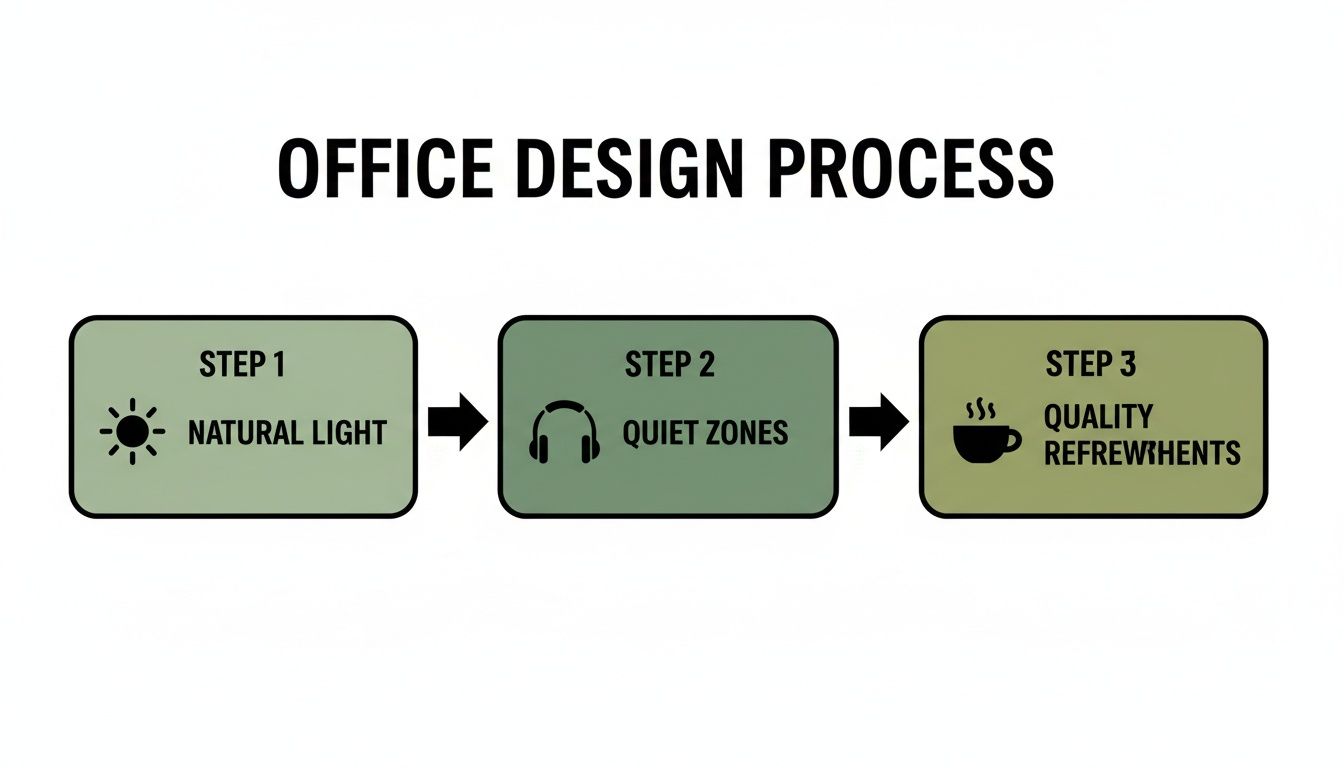
As this visual shows, a supportive environment flows logically from foundational elements like good lighting to thoughtful amenities like quality refreshments.
Building a Sustainable Wellbeing Culture
A one-time wellness week or a single initiative won't fix the underlying causes of stress. Lasting change comes from embedding wellbeing deep into your company culture, making it a constant priority, not just a temporary focus.
An investment in employee wellbeing is a direct investment in your company's resilience. When your people thrive, your business thrives.
One of the most powerful and visible upgrades you can make is creating a high-quality refreshment station. It’s a tangible, daily reminder that you genuinely care about your team's restoration and connection.
For a deeper dive, there are some great effective strategies for managing work stress and achieving work-life balance that you can explore. When you combine these broader strategies with specific, visible actions, you create a powerful system that supports everyone.
Your Questions About Workplace Stress, Answered
When you start talking about tackling stress at work, a lot of practical questions naturally come up. How do we know if any of this is actually working? What if we don't have a big budget? How do we get everyone, from the top down, on board?
Let's get into it.
How Can We Measure the Success of Our Wellbeing Initiatives?
Figuring out if your efforts are making a difference isn't just about crunching numbers on a spreadsheet. It's a mix of hard data and, just as importantly, the human side of things.
Of course, you can track metrics like absenteeism and employee turnover. You’d hope to see those numbers drop as people feel more supported. But don't stop there—the real story is often in what your team tells you directly.
A few ways to get a clearer picture:
- Pulse Surveys: Think short, regular, and anonymous check-ins. They’re brilliant for tracking team morale and stress levels over time, helping you spot trends before they become major issues.
- Focus Groups: Sometimes you need a proper conversation to understand what’s really going on. Facilitated chats can uncover the why behind the data that a survey might miss.
- Utilisation Rates: Simply put, are people using the new stuff? Is the quiet zone actually quiet? Is the new coffee station a popular spot for a five-minute breather? This tells you what's landing well.
Ultimately, you’ll feel the success. It looks like more collaboration, better engagement, and a genuine shift in the atmosphere around the office.
What if We Have a Limited Budget for Big Changes?
You don't need a massive budget to make a real impact. Honestly, some of the most effective ways to lower workplace stress are low-cost moves that focus on culture, not expensive overhauls. Start small and let the positive changes build on each other.
For example, introducing flexible start and finish times costs absolutely nothing but shows a huge amount of trust. Training managers to have empathetic, human conversations about wellbeing is an investment in your people's skills, not just in things.
The most powerful investments are often in culture, not just infrastructure. A simple, well-executed change, like upgrading to a premium office coffee experience, can have an outsized impact on daily morale and connection.
Upgrading your office coffee and refreshments is a perfect example of a high-impact, manageable investment. It’s a tangible, daily perk that tells your team you care and actively encourages the very breaks that help prevent burnout.
How Do We Get Buy-In from Senior Leadership and Employees?
Getting everyone on the same page means framing wellbeing as a smart investment, not just another cost. It’s about looking after the company's most valuable asset: its people.
For senior leadership, it’s all about the business case. You need to connect the dots between wellbeing initiatives and the things they care about—like productivity, retaining your best people, and fostering innovation.
For your team, it’s all about involvement. Don't just roll out solutions from on high; create them together. Ask people what they actually need through surveys, workshops, and open forums. When people feel heard and see their suggestions—whether it's for a better breakout space or just a much better cup of coffee—being put into action, they become part of the solution.
This collaborative approach is the key to creating a workplace that’s genuinely supportive and less stressful for everyone.
Ready to turn your office break room into a hub of restoration and connection? At Ue Coffee Roasters, we provide premium coffee and refreshment solutions that show your team you value their wellbeing. Explore our offerings at https://www.uecoffeeroasters.com.