
UK's Guide to Medium Roast Coffee Beans
Step into the heart of the UK's speciality coffee scene, where one style, in particular, has captured the nation's taste buds. Medium roast coffee beans are the ultimate crowd-pleaser, striking that perfect harmony between the bean's own unique character and the comforting flavours developed during roasting. It’s the ideal starting point for anyone new to speciality coffee and a rich, complex world for the seasoned enthusiast to explore.
A Nation Fuelled by Quality Coffee
The UK's love affair with coffee has blossomed into something truly special. It’s no longer just a quick morning fix; it's a national passion, a cornerstone of our social lives and daily routines. And this isn't just a feeling—the numbers tell a compelling story of a nation that has fallen hard for the humble bean.
Amazingly, the UK is estimated to drink a staggering 98 million cups of coffee every single day. This has made it one of the most popular drinks in the country, with consumption habits constantly evolving. This shift isn't just about quantity, either. It’s about a growing demand for quality, with 54.3% of all coffee purchased now being roasted coffee rather than instant.
The Rise of the Speciality Scene
This surge is being driven by a collective thirst for better, more flavourful experiences. The days of putting up with a generic, bitter brew are long gone. Today, coffee lovers across the UK are actively seeking out coffees with character, a story, and an exceptional taste profile. This is what's fuelling the growth of our vibrant speciality coffee market.
This whole movement is built on a foundation of quality that stretches from the farm right to your cup. It’s about understanding where your coffee comes from, how it was roasted, and the best way to brew it. If you're curious about how successful coffee businesses operate, you can get a glimpse into their world with this Stumptown Coffee Roasters case study.
Right at the centre of this exciting movement, you’ll find medium roast coffee beans. They are the versatile, approachable heart of the speciality coffee world, offering the perfect entry point for newcomers and endless complexity for seasoned fans.
Why Medium Roast Resonates in the UK
The appeal of medium roast coffee lies in its remarkable balance. You could call it the diplomat of the coffee world, successfully bridging the gap between the bright, often zesty notes of a light roast and the bold, smoky intensity of a dark roast.
This balance makes it incredibly versatile and perfectly suited to the British palate. A great medium roast offers:
- Approachable Flavours: Think comforting and familiar notes of milk chocolate, toasted nuts, and sweet caramel.
- Retained Origin Character: Unlike darker roasts that can steamroll a bean's natural taste, a medium roast lets the unique flavours of its origin—whether it’s from Ethiopia or Colombia—shine through.
- Brewing Flexibility: They perform brilliantly across all the popular home brewing methods, from a classic French press to a delicate pour-over.
This guide is your invitation to explore this wonderfully balanced world. We want to empower you to select and brew an exceptional cup at home, connecting you to a global story of craft and flavour, right from your kitchen.
Decoding the Perfect Medium Roast Balance
So, what exactly puts the 'medium' in medium roast coffee beans? Let's skip the textbook definitions and think about it like an artist at their easel.
Imagine a light roast as a detailed pencil sketch. It’s sharp and precise, capturing all the raw, bright, and often acidic details of the coffee’s origin. You're seeing the pure, unadulterated essence of the green bean itself.
A dark roast, on the other hand, is a bold oil painting. Here, the artist's technique—the roast—is the star of the show. The thick, rich textures and smoky, intense colours of the roasting process dominate the canvas, creating a powerful, roasty character that defines the final piece.
And a medium roast? That’s a watercolour painting. It’s a masterful balance of both worlds. The original landscape (the bean's inherent flavour) is still clear and celebrated, but the artist has layered it with beautiful, transparent washes of colour and depth.
This is the real magic of medium roast coffee. It lets the bean's origin sing while introducing comforting, roasted notes that create a harmonious and complete picture. It's this very balance that has so thoroughly captivated the UK speciality coffee scene.
The Roaster's Craft
Achieving that perfect balance is a delicate dance with time and temperature. It all centres around a critical moment in the roasting process known as the 'first crack'.
As green coffee beans heat up, the moisture inside turns to steam, building pressure until they audibly pop or crack—a lot like popcorn. This first crack is a huge milestone; it's the point where the beans officially become drinkable coffee.
If a roaster stops the process right after this happens, they get a light roast. But the art of crafting exceptional medium roast coffee beans lies in pushing just a little further. The roaster has to skilfully manage the development time after the first crack, but—and this is crucial—stop before the 'second crack' begins. This second crack is the sign of a much darker roast, where oils are forced to the bean's surface and the more delicate origin flavours are lost to bold, smoky notes.
This specific window—between the end of the first crack and the start of the second—is where the perfect medium roast is born. It’s a true testament to the roaster's skill, demanding immense precision to develop sweetness and body without erasing the bean’s unique identity.
Visual Clues for the Perfect Medium Roast
When you’re browsing for beans from your favourite UK roaster, you can learn to spot a quality medium roast just by looking. There are a few tell-tale signs that show this perfect balance has been struck.
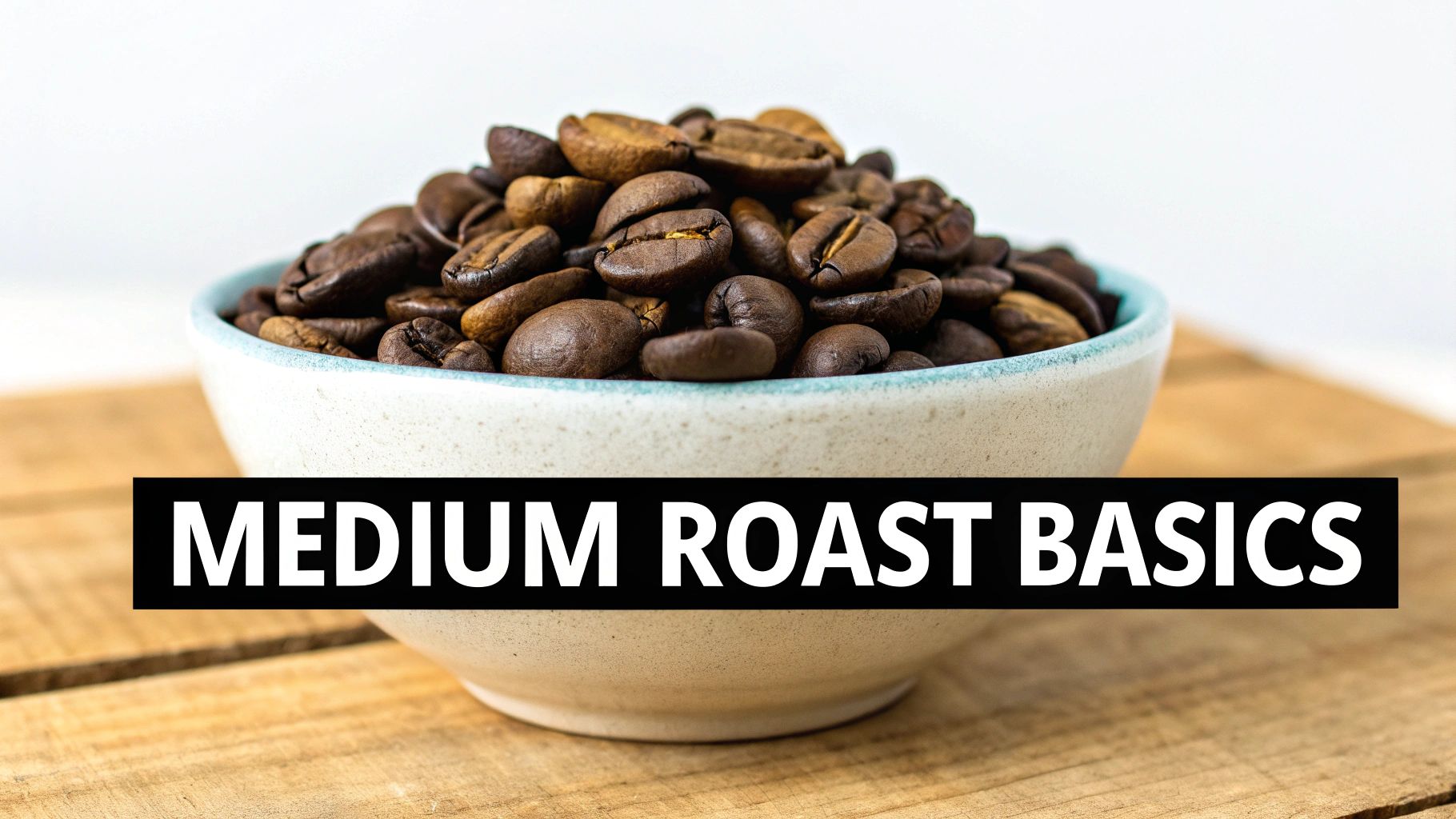
- Colour: Look for a rich, cinnamon to milk-chocolate brown colour. It should be noticeably darker than the pale tan of a light roast but stop well short of the deep, dark brown or almost black shade of a dark roast.
- Surface Texture: This is a key indicator. Medium roast coffee beans should have a dry, non-glossy surface. If you see a significant oily sheen, the beans have likely been roasted longer, pushing them firmly into dark roast territory as the internal oils have breached the surface.
- Size and Shape: The beans will look slightly larger and more rounded than their original green selves after expanding during that first crack, but they won't be as swollen or fragile as a dark-roasted bean.
Understanding these visual cues makes you a much more informed coffee buyer. It empowers you to check that the medium roast coffee beans you choose really do offer that watercolour-like balance of origin flavour and roasted depth, promising a truly satisfying and well-rounded cup every single time.
Navigating the Medium Roast Flavour Spectrum
Let’s get into the best part: the incredible world of flavour you’ll find in a bag of medium roast coffee. This roast level is the sweet spot. It’s where a coffee’s true personality—shaped by its home soil, climate, and how it was processed—really gets to shine. It’s the perfect marriage between the bean’s natural character and the roaster’s skill.
Think of it like wine. You know a Sauvignon Blanc from the Loire Valley in France will taste completely different to one from New Zealand. Coffee is no different. With medium roast coffee beans, those unique regional fingerprints are beautifully preserved for you to taste.
The possibilities are genuinely exciting. Your cup could take you from the comforting, classic notes of chocolate and nuts found in Latin American coffees all the way to the bright, vibrant symphony of fruits and flowers that African beans are famous for. There’s truly something for everyone on this spectrum.
Discovering Flavour Families
To get your head around this huge world of taste, it helps to think in terms of flavour families. When you pick up a bag of medium roast from a UK roaster, you’ll see tasting notes on the label. These aren’t just marketing fluff; they are real clues to the sensory journey waiting inside.
Here are some of the common flavour families you’ll come across:
- Nutty & Chocolatey: These are the classic, comforting coffee flavours. We’re talking toasted almonds, hazelnuts, smooth milk chocolate, or rich cocoa. You'll find these notes time and again in beans from Central and South America.
- Fruity & Sweet: This family can be subtle, with hints of stone fruits like cherry or plum, or it can be bold and vibrant with notes of berries. Some coffees even have a jam-like sweetness, often a signature of beans from certain African or South American regions.
- Floral & Tea-Like: Some of the most delicate and prized medium roasts live here. Imagine the fragrant aroma of jasmine, the gentle sweetness of honeysuckle, or the zesty elegance of bergamot, much like a good Earl Grey tea. These are often the calling cards of high-altitude Ethiopian coffees.
- Spicy & Earthy: Less common but no less fascinating, these notes add a wonderful layer of complexity. You might taste hints of warm spices like cinnamon or clove, or a deep, earthy quality often linked to beans from Indonesia.
A medium roast gives these flavour families the perfect stage. It softens the sharp acidity of a light roast and sidesteps the smoky bitterness of a dark roast, letting these complex, delicious notes take the spotlight.
The image below is a great visual for the rich and inviting notes that make a cup of medium roast so special.
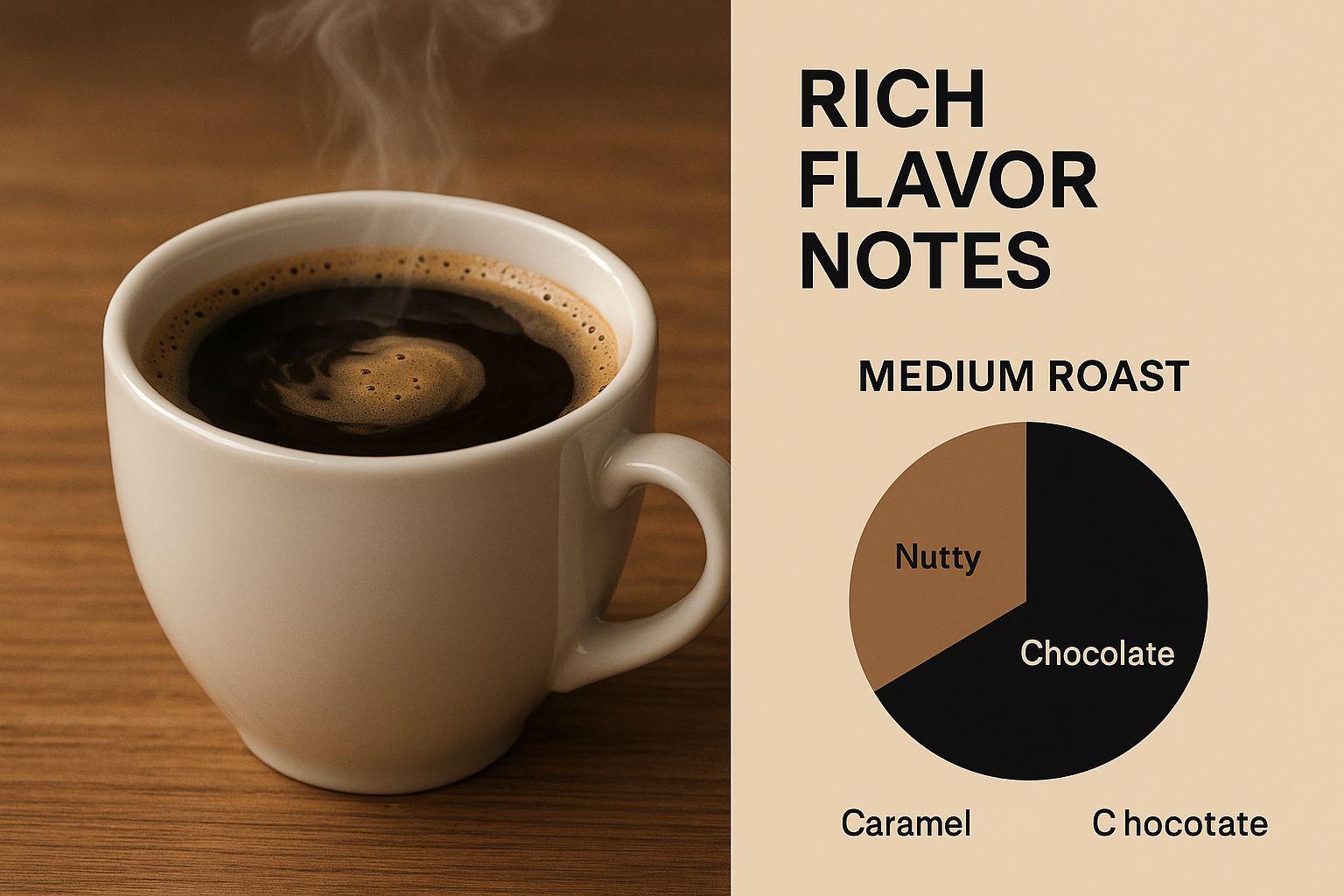
It’s a fantastic reminder that one cup can hold a whole world of flavour, from bright and fruity to deep and chocolatey.
Connecting Flavour to Origin
Here’s where it gets really fun: learning to connect these flavours to where the coffee was grown. The unique combination of soil, altitude, and climate—what the experts call terroir—has a massive impact on the final taste in your cup. Once you have this knowledge, you can confidently walk into any UK roastery and pick out medium roast coffee beans you know you’ll love.
Think of the table below as your personal map to the world of coffee flavour. It links the main growing regions to the signature tastes they’re known for.
Medium Roast Flavour Profiles by Origin
| Origin Region | Common Flavour Notes | Acidity Level | Body |
|---|---|---|---|
| South America (e.g., Brazil, Colombia) | Milk chocolate, caramel, toasted nuts, brown sugar, occasional red fruit. | Low to Medium | Medium to Full |
| Central America (e.g., Costa Rica, Guatemala) | Well-balanced with notes of citrus, apple, brown sugar, and a clean finish. | Medium to Bright | Medium |
| Africa (e.g., Ethiopia, Kenya) | Bright and complex; can be floral (jasmine), fruity (berries, stone fruit), or citrusy (bergamot, lemon). | Bright and Pronounced | Light to Medium |
| Asia (e.g., Sumatra, Papua New Guinea) | Deep and earthy; notes of dark chocolate, cedar, sweet tobacco, and warming spices. | Low | Full and Syrupy |
This simple guide gives you the power to be a more adventurous and informed coffee drinker. If you know you love a smooth, chocolatey brew for your morning flat white, a Brazilian medium roast is a brilliant choice. But if you’re after a vibrant, aromatic cup for a weekend pour-over, exploring beans from Ethiopia will be a real treat. Your journey into the fantastic world of medium roast is just getting started.
Brewing Your Best Cup of Medium Roast Coffee
This is where the real magic happens. You’ve got a bag of exceptional medium roast coffee beans, humming with potential flavour and aroma. Now, it’s time to unlock it. Your brewing technique is the final, crucial step that transforms those beans into a genuinely beautiful cup of coffee.
The balanced profile of a medium roast makes it a true all-rounder, wonderfully suited to the most popular brewing methods found in UK homes. It has enough body to stand up to immersion methods like the French press, yet enough clarity to really sing in a pour-over.
Brewing shouldn't feel like a chore. Think of it as a rewarding daily ritual—a moment of focus that connects you to the heart of your coffee. Let's explore how to get the very best from your beans with three classic brewers.
The French Press: A Full-Bodied Classic
For those who love a rich, full-bodied, and deeply satisfying cup, the French press is an unbeatable choice. This classic immersion method lets the coffee grounds and water mingle for several minutes, extracting a huge amount of flavour and oils.
The result is a brew with a heavy, almost velvety texture that’s just perfect for a lazy weekend morning. Medium roast beans are ideal here, as their balanced sweetness and chocolatey or nutty notes are amplified by the full-immersion process, creating a comforting and robust coffee experience.
To get started, here's a simple recipe to follow:
- Coffee Dose: Aim for a ratio of about 1:15. For a typical 3-cup (350ml) French press, use around 23g of coffee to 350ml of water.
- Grind Size: Go for a coarse grind. It should look similar to coarse sea salt. This stops the filter from clogging and prevents the coffee from becoming overly bitter.
- Brew Time: A total brew time of 4 minutes is a fantastic starting point. After pouring the water, let it steep for the full four minutes before gently plunging the filter.
This method is beautifully simple and forgiving, making it an excellent way to consistently enjoy the rich character of your favourite medium roast.
The V60 Pour-Over: For Clarity and Nuance
If you want to taste the delicate, bright, and nuanced side of your medium roast coffee beans, the V60 pour-over is your best friend. This brewing method gives you incredible control, allowing you to highlight the subtle floral, fruity, and sweet notes that make a specific coffee unique.
The V60 is perfect for exploring single-origin medium roasts from regions like Ethiopia or Central America. The paper filter traps oils and fine particles, resulting in an exceptionally clean, vibrant, and almost tea-like cup that lets the bean's origin story take centre stage.
Brewing with a V60 is a more hands-on process, but it’s this engagement that makes it so rewarding. It’s a meditative ritual that puts you in complete control of the final flavour.
Here is a foundational recipe for a brilliant V60 brew:
- Coffee Dose: A ratio of 1:16 is a great place to begin. Use 15g of coffee for 250ml of hot water.
- Grind Size: You'll need a medium-fine grind, something like table salt. This allows for proper water flow and extraction.
- Brew Time: Aim for a total brew time of around 2.5 to 3 minutes. This includes a 30-second "bloom," where you pour a small amount of water to let the coffee de-gas before continuing with the main pour.
Mastering the V60 takes a little practice, but the exceptionally clean and flavourful results are more than worth the effort.
The AeroPress: A Versatile Powerhouse
The AeroPress is the champion of versatility and convenience, beloved by coffee lovers across the UK for its ability to produce a stunning cup in about a minute. It combines immersion and pressure to create a brew that is clean, sweet, and low in acidity.
One of the AeroPress's greatest strengths is its sheer flexibility. You can create everything from a concentrated, espresso-style shot to a longer, filter-style coffee. This adaptability makes it a perfect match for medium roast coffee beans, as you can tweak your recipe to highlight either their richer body or their brighter notes.
Here’s a classic AeroPress recipe to get you brewing:
- Coffee Dose: Start with a ratio around 1:14. A dose of 14g of coffee to 200ml of water works brilliantly.
- Grind Size: Use a fine to medium-fine grind, slightly finer than you would for a V60.
- Brew Time: This method is fast. Aim for a total time of 1 minute and 30 seconds, including a 30-second steep before plunging for another 30 seconds.
No matter which method you choose, view these recipes as starting points. The real joy comes from experimenting. Try adjusting your grind size or brew time slightly and see how it changes the taste in your cup. This is how you’ll truly make each coffee your own.
How to Buy Exceptional Medium Roast Beans in the UK
Stepping into the UK’s speciality coffee scene can feel both exciting and a bit overwhelming. With so many roasters and bags to choose from, how do you find those truly exceptional medium roast coffee beans that will elevate your daily brew?
The secret isn’t just picking the prettiest bag. It’s about learning to read the story the beans have to tell. Once you know what to look for, you can buy with confidence, decoding the label to find a coffee that genuinely matches your taste.
Medium roast is a cornerstone of the UK’s coffee culture, especially for those of us brewing at home. A massive 65-75% of all coffee in the UK is consumed at home, and with the average coffee drinker getting through about 1.02 kilograms of beans a year, you can bet a good chunk of that is a beautifully balanced medium roast. You can learn more about UK coffee consumption habits from SQ Magazine.
The Most Important Detail: Roast Date
If you only look for one thing on a bag of coffee, make it the roast date. This is your single best indicator of freshness and flavour—far more important than any 'best before' date. Think of coffee like fresh bread; its flavour is at its absolute peak in the first few weeks after it comes out of the roaster.
After that initial window, those delicate, complex aromas start to fade, leaving you with a cup that’s flat and a bit lacklustre. Any quality UK roaster worth their salt will print the exact day the beans were roasted. For the best possible experience, try to buy beans roasted between three days and three weeks ago.
Decoding the Coffee Label
A good bag of coffee is packed with useful information. Learning to read it is like getting insider tips straight from the roaster.
- Single Origin vs Blend: Single-origin means the coffee comes from one specific farm or region, giving you a pure taste of its unique terroir. A blend combines beans from different places, created by the roaster to achieve a specific, consistent flavour profile—often one that's perfectly balanced and approachable.
- Processing Method: This has a huge impact on flavour. ‘Washed’ coffees are typically clean, bright, and acidic. ‘Natural’ coffees are often more wild, with bold, fruity notes. ‘Honey’ processed beans sit somewhere in between, known for their sweetness and full body.
- Tasting Notes: Look for phrases like "milk chocolate, hazelnut, and red apple." These aren't added flavours; they're the roaster's suggestion of what the coffee naturally tastes like. Use them as a guide to find profiles you know you'll enjoy.
Think of the coffee label as a treasure map. By understanding the symbols and clues—origin, processing, tasting notes—you can navigate your way to a truly remarkable cup that suits your personal preferences.
Making a Good Choice a Great One
Beyond the details on the bag, where you buy from matters, too. Your purchasing power can support a better, more interesting coffee world. Many of the UK's best roasters are small, independent businesses dedicated to their craft. Hunting them down online or in your local area is a fantastic way to get your hands on incredibly fresh, high-quality coffee.
Keep an eye out for ethical sourcing information as well. Certifications like Fairtrade ensure farmers are paid a fair, stable price for their crop. Even better, some roasters practice Direct Trade, building close relationships with farms and paying premium prices for exceptional quality. When you choose beans with these credentials, you're not just buying a delicious product—you're investing in a more sustainable and equitable future for coffee.
Why Every Generation Connects Over Medium Roast
Coffee trends in the UK can be fleeting, but one constant remains a comforting presence in kitchens and cafés alike: a quality bag of medium roast coffee beans. Think of it as the great unifier, the true 'diplomat' of the coffee world, skilfully bridging the taste preferences that often separate different generations.
This unique ability to bring people together boils down to its incredible balance. For Millennials, who really drove the UK’s vibrant third-wave café scene, medium roast is the perfect middle ground between sophistication and approachability. It offers just enough complexity and origin character to be interesting, without the sharp, challenging acidity that can sometimes define lighter roasts.
The Heart of Home Brewing
For older generations with their well-established coffee rituals, a medium roast often represents the ideal daily brew. Its rich, rounded flavour is deeply satisfying but steers clear of the intense bitterness or smoky notes found in very dark roasts, making it a perfect, dependable fit for those cherished routines. This is especially true at home, where comfort and consistency are king.
The numbers back this up, showing that different age groups have their own distinct coffee habits. Generation X and Baby Boomers in the UK, for example, have higher daily consumption averages, reaching 2.1 and 2.2 cups per day respectively. Given their preference for a balanced, classic flavour, it’s easy to see how the dependable character of medium roast fuels a huge part of this daily ritual. You can dive deeper into these consumption patterns with insights published by Balance Coffee.
Medium roast coffee is the common ground where tradition and modernity meet. It’s that familiar flavour parents can share with their grown-up children—an experience that tastes like home yet feels special every single time.
Ultimately, its widespread appeal is beautifully simple. Medium roast genuinely offers something for everyone:
- For the adventurer: It’s a clear window into the coffee’s unique origin story.
- For the traditionalist: It delivers that classic, comforting coffee flavour we all know and love.
- For the newcomer: It’s an approachable and wonderfully forgiving introduction to the world of speciality coffee.
This universal charm has cemented medium roast's role at the very heart of the UK's love for coffee, ensuring it remains a treasured staple on everyone's shelf, no matter their age. It’s the one coffee we can all agree on, the flavour that brings everyone to the table.
Your Medium Roast Coffee Questions, Answered
Even with all the details, you’re bound to have questions on your journey to the perfect cup. It’s all part of the fun. So, let’s tackle some of the most common queries we hear from UK coffee lovers about medium roast beans. Think of this as your personal coffee FAQ, with clear, practical answers to help you get the absolute most out of every bag.
Does Medium Roast Have Less Caffeine?
This is probably one of the biggest myths in the coffee world, and it’s time to put it to rest. The short answer is no. In reality, the difference in caffeine between light, medium, and dark roasts is practically non-existent. Caffeine is a surprisingly stable compound, and the roasting process doesn't really touch it.
What actually determines the kick in your cup are two things: the amount of coffee grounds you use and your brewing method. A cup of medium roast will have a very similar caffeine level to a light or dark roast if you use the same recipe.
What Is the Best Way to Store My Beans?
To keep your medium roast beans tasting their best, you need to protect them from their four biggest enemies: oxygen, light, heat, and moisture. The best place for them is an airtight, opaque container kept at room temperature. A cool, dark cupboard is perfect.
Forget the fridge or freezer. It might seem like a good idea, but the constant temperature shifts and condensation will wreck the delicate flavour and aroma you paid for. The real secret? Buy fresh beans from UK roasters in smaller, more frequent batches and only grind them right before you brew.
Can I Use Medium Roast Beans for Espresso?
Absolutely! In fact, medium roasts are a fantastic choice for espresso. They produce a beautifully balanced and deeply satisfying shot that hits all the right notes. You get a lovely sweetness and a pleasant body, showcasing the coffee's origin without the sharp acidity of some light roasts or the overpowering bitterness of many dark roasts.
It’s this perfect balance that makes a medium roast the go-to choice for so many speciality UK cafés for their house espresso. It’s delicious on its own but also has enough character to stand up to milk in drinks like a flat white or a latte.
What Is a Single Origin vs a Blend?
Getting your head around this is a game-changer, as it helps you pinpoint exactly what you’ll enjoy.
- Single-Origin: When you see "single-origin," it means the coffee comes from one specific farm, producer, or region. This lets you taste the unique terroir—the distinct character of that one place. It’s the perfect way to explore exciting and unique flavours.
- Blend: A medium roast blend, on the other hand, is a thoughtful combination of beans from different origins. A skilled roaster crafts these to create a specific flavour profile that’s consistent, harmonious, and balanced. Blends are often designed for versatility, making them a brilliant choice for your reliable daily brew.
At Ue Coffee Roasters, we’re here to help you dive into the rich and rewarding world of speciality coffee. Our carefully sourced and expertly roasted medium roast beans are the perfect place to start your flavour journey. Find your next favourite coffee and elevate your home brewing today at https://www.uecoffeeroasters.com.