

Milk for Coffee Machines: The Ultimate Guide to Frothing, Storage & More
Choosing the right milk for your coffee machine is about more than just taste. It’s the secret ingredient that turns a standard office coffee break into a daily ritual people actually look forward to. Get it right, and your coffee station becomes the heart of the office—a place that boosts morale, sparks ideas, and makes everyone feel valued.
Crafting The Perfect Office Coffee Experience
Think of your office coffee machine not just as a perk, but as a central hub for connection and creativity. The quality of the coffee experience you offer sends a clear message to your team about how much you care about their daily well-being. A thoughtful milk selection is a simple but powerful way to elevate this experience, showing a commitment to quality in every single cup.
This guide will walk you through everything you need to know, from the science behind a perfect microfoam to the nitty-gritty of supply and storage. By the end, you'll be able to make smart choices that satisfy your team's taste buds and work for your business. It’s all about creating those small moments of delight that make the workday feel a little more special.
Why Milk Matters More Than Ever
The demand for high-quality, milk-based coffee is huge, and it's actually driving the coffee machine industry itself. In the UK, the market is booming, fuelled almost entirely by our love for lattes and cappuccinos.
The market was valued at $699.77 billion in 2024 and is projected to hit a staggering $1,211.32 billion by 2035, with speciality machines that have integrated milk systems leading the charge. You can dig into the full coffee machine market report from Market Research Future to see the trends for yourself. This surge just goes to show how essential great milk-frothing capabilities have become.
The Science of a Flawless Milk Foam
Ever wondered what transforms simple milk into the velvety, dream-like foam that crowns a perfect latte? It’s not magic, but a beautiful dance of science happening right inside your coffee machine. The secret boils down to two key players: proteins and fats.
Think of milk proteins as a delicate, invisible net. When the barista wand steams the milk, this net stretches out, trapping thousands of tiny air bubbles. This is what creates the foam's structure and volume.
Fats, on the other hand, are all about the experience. They coat each of those tiny bubbles, giving the foam its rich, creamy texture and that luxurious mouthfeel we all love. This is exactly why whole milk is often the gold standard in cafés; its perfect balance of protein and fat creates a stable, glossy microfoam that’s not just delicious but also the ideal canvas for latte art.
This appreciation for a great milk-based coffee is completely reshaping the UK coffee scene. Machines built for excellent milk frothing are now leading the charge, with the espresso machine market alone valued at a huge USD 516.28 million in 2024. It’s a trend that's set to grow by over 6% a year, driven by the fact that 55% of coffee drinkers now prefer milky coffees at home, trying to replicate the café culture they love.
The Rise of Barista-Grade Alternatives
But what about those who prefer plant-based options? For years, getting that same flawless foam from almond, soy, or oat milk felt like an impossible task. Standard plant-based milks just don't have the same protein and fat structure as dairy, which often meant they'd separate or create a thin, bubbly foam when heated.
This is where 'barista edition' milks completely changed the game. These aren't just regular plant milks with fancy packaging; they are expertly formulated to perform under pressure.
Barista-style plant milks are specifically engineered with added stabilisers and emulsifiers. This allows them to replicate the frothing performance of dairy, creating a consistently smooth and creamy texture without curdling when they meet the heat and acidity of espresso.
These specialised formulas mean that everyone in the office, regardless of their dietary preference, can enjoy a genuinely superb café-quality coffee.
Milk Performance at a Glance
Choosing the right milk can feel complicated, but it doesn't have to be. This quick table breaks down how common milk types perform when it comes to frothing.
| Milk Type | Frothing Capability | Flavour Profile | Best For |
|---|---|---|---|
| Whole Dairy Milk | Excellent | Rich, creamy, slightly sweet | Lattes, Cappuccinos, Flat Whites |
| Skimmed Dairy Milk | Good | Lighter, less creamy | Lattes where foam is key, not richness |
| Oat Milk (Barista) | Excellent | Creamy, neutral, oat-like | The best all-round dairy alternative |
| Soya Milk (Barista) | Very Good | Distinct, slightly nutty | Those who enjoy its unique flavour |
| Almond Milk (Barista) | Good | Light, nutty, subtle | Lighter drinks, can be watery |
As you can see, the 'barista' versions are crucial for getting great results from plant-based alternatives, ensuring everyone gets a top-notch drink.
This conceptual map shows how offering premium coffee, supported by the right choice of milk, feeds directly into a thriving and positive workplace culture.
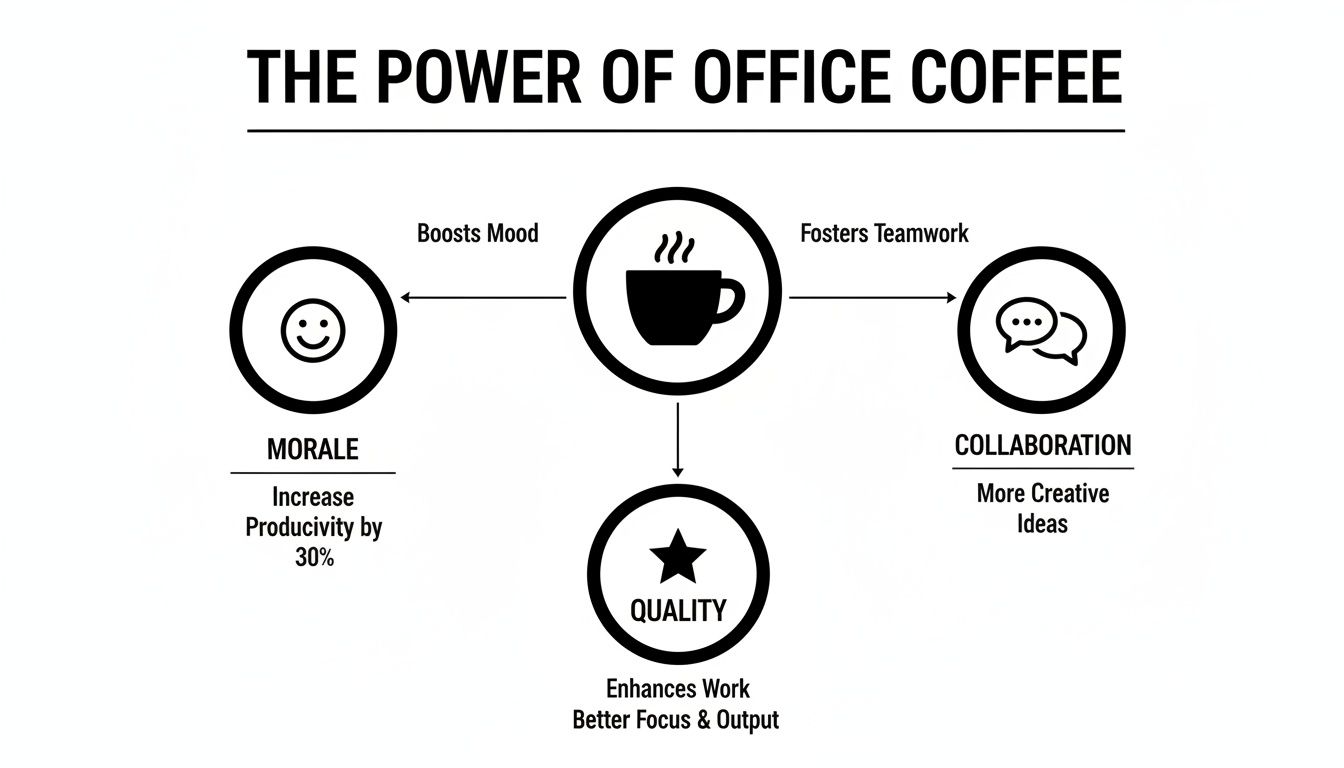
The image makes it clear: quality coffee is linked to better morale, stronger collaboration, and an overall feeling that the company cares. For those serious about mastering the craft, a professional barista training package can be invaluable, empowering you to turn these scientific principles into delicious, everyday reality.
Choosing the Right Milk Supply for Your Office
So, you’ve picked the perfect milk type for your team. That’s a huge step, but the journey isn't quite over. How you get that milk delivered, stored, and into your machine is where you can unlock some serious office efficiency.
Choosing the right supply format for your milk for coffee machines can transform a daily chore into a completely seamless operation. It ensures your team always has what it needs, without the hassle of waste or worry.
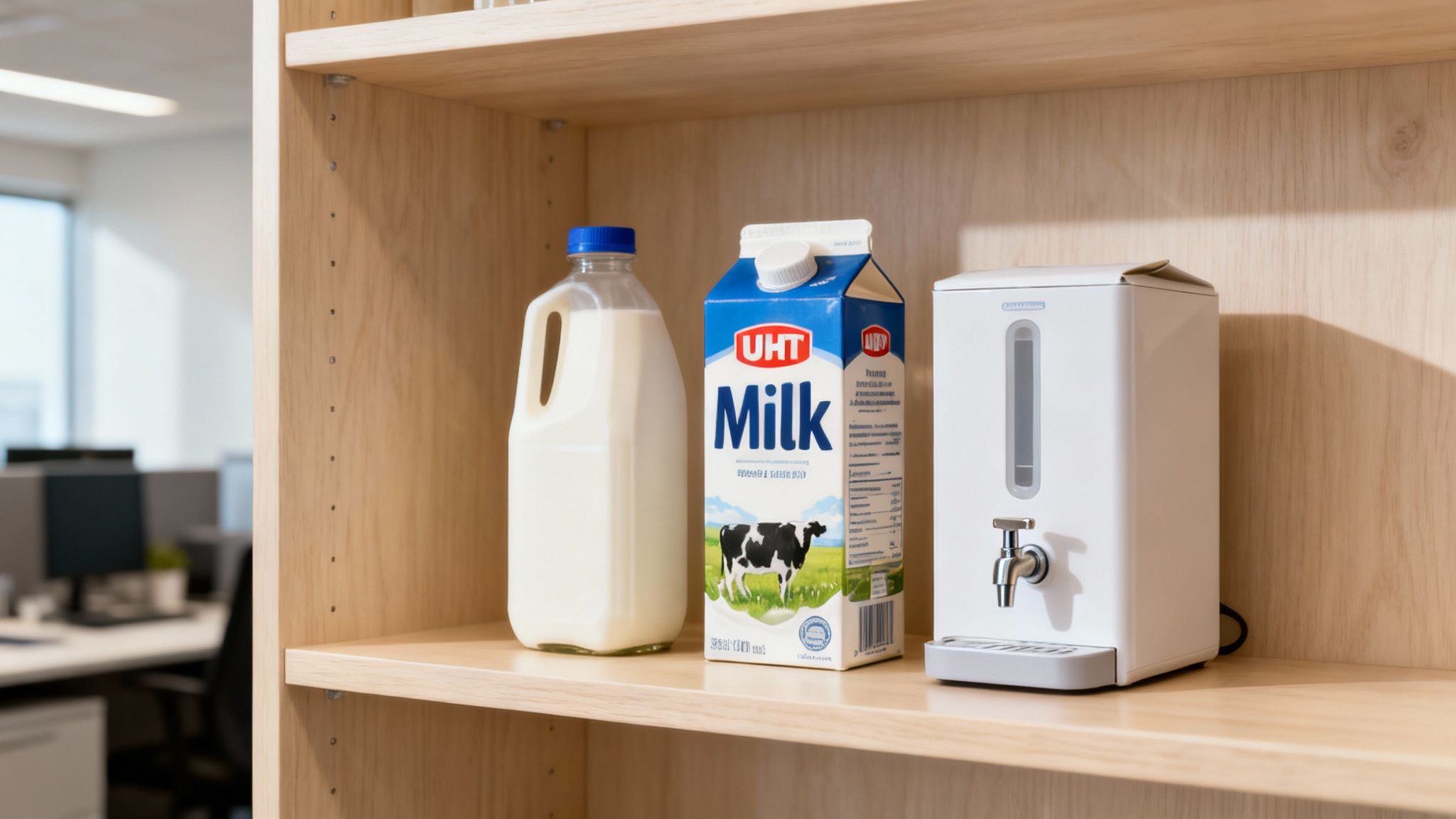
This decision ripples through everything from fridge space and stock management to the daily workflow of your office manager. Let's break down the most common supply options to see which one fits your workplace best.
Fresh Milk: The Gold Standard for Taste
For many, there's simply no substitute for the classic taste of fresh milk. It delivers an unrivalled flavour and texture, creating lattes and cappuccinos that taste like they’ve come straight from a high-street café.
This premium quality, however, does come with some logistical strings attached. Fresh milk demands constant refrigeration and has a short shelf life, which often means smaller, more frequent deliveries. For smaller teams or any office where quality is the absolute top priority, it's a fantastic choice that shows a real commitment to excellence.
UHT Milk: The Practical Powerhouse
When reliability and convenience are top of the list, Ultra-High Temperature (UHT) milk is the undisputed champion. This milk is heat-treated to give it a seriously long shelf life, meaning it can be stored at room temperature for months before being opened.
This completely changes the game for stock management. You can order in larger quantities without worrying about spoilage, which massively reduces the risk of running out of milk mid-morning. It also cuts down on food waste—a growing concern for many businesses. While the flavour is subtly different from fresh, modern UHT milk offers brilliant performance and consistency, making it a dependable workhorse for any busy office.
UHT milk offers a powerful combination of quality and practicality. Its extended shelf life simplifies logistics, reduces waste, and ensures you always have a reliable supply of milk for coffee machines, making it an ideal choice for offices seeking operational efficiency.
Bag-in-Box Systems: The High-Volume Solution
For larger offices or high-traffic areas, the 'bag-in-box' system is a brilliantly efficient solution. This format uses a large, sealed bag of milk—usually UHT—housed inside a cardboard box. This then connects directly to a dedicated dispenser or coffee machine.
The benefits are immediate and impactful.
- Reduced Waste: It minimises packaging waste compared to countless individual cartons.
- Simplified Refills: Swapping out a bag is far quicker and cleaner than restocking a fridge with bottles.
- Consistent Supply: These large-format containers ensure a continuous flow of milk, perfect for handling those morning coffee rushes.
This system is designed for scale. It keeps your premium coffee service running smoothly even in the most demanding environments, making sure every team member gets their perfect cup without delay.
Keeping Your Coffee Machine Running Smoothly
You’ve invested in a fantastic bean-to-cup coffee machine to boost your team's happiness and productivity. Great move. But to protect that investment, the way you handle milk isn't just a suggestion—it's the best insurance policy you can have. Your machine’s internal pipes and pumps are precision-engineered, and choosing the right milk for coffee machines is step one for long-term reliability.

This is especially true for models with integrated milk systems. These machines pull milk through a maze of narrow tubes, pumps, and steam wands at very high temperatures. Using a milk with the wrong fat content, or a plant-based alternative that isn’t up to the task, can leave behind a sticky residue. Before you know it, you’ve got clogs and performance issues.
The Non-Negotiable Cleaning Routine
When it comes to milk and coffee machines, there’s one golden rule: hygiene is non-negotiable. Milk is an organic product. Even the tiniest leftover droplets can spoil, souring the flavour of your coffee and creating a breeding ground for bacteria. This makes a consistent cleaning schedule absolutely essential.
Think of it this way: you wouldn't leave a glass of milk on the counter all day and drink it the next morning. The same logic applies to the hidden parts of your coffee machine. Skipping this crucial step doesn't just ruin the taste of your coffee—it can lead to some seriously expensive repairs down the line.
A disciplined cleaning routine is the single most effective way to guarantee consistent drink quality and extend the life of your equipment. It prevents flavour contamination and safeguards against mechanical failures caused by milk residue buildup.
It’s no accident that most professional-grade machines have automated cleaning cycles. These systems are designed to flush the entire milk circuit with hot water or a special cleaning solution, purging any lingering milk solids. This should be a non-negotiable part of your end-of-day shutdown.
Daily and Weekly Cleaning Tasks
To keep your machine in peak condition, all you need is a simple, two-tiered cleaning approach.
-
Daily Clean (End of Day): This is your quick, essential reset. Run the machine’s automated milk cleaning cycle. Every single day. It usually takes just a few minutes and is your best defence against immediate residue buildup, ensuring the machine is fresh and ready for the morning rush.
-
Weekly Clean (Deeper Maintenance): Once a week, it’s time for a more thorough clean using a manufacturer-approved milk system cleaner. This powerful solution dissolves the stubborn fat and protein deposits that hot water alone can’t touch. It’s a vital step for maintaining impeccable hygiene and keeping your machine running like new.
This small investment of time—a few minutes daily and a bit more weekly—is the key to serving delicious, fresh-tasting coffee every single day. By stopping problems before they start, you protect your machine, delight your team, and ensure every cup is as perfect as the last.
Mastering Milk Purchasing and Storage Logistics
Getting your milk supply right is the final piece of the puzzle. It’s about turning a daily hassle into a smart, streamlined operation. This isn't just about avoiding the dreaded morning realisation that the fridge is empty; it's about building a cost-effective, waste-reducing system that keeps your office coffee programme running smoothly.
So, let's nail down the logistics of milk for coffee machines.
The first step? Stop guessing and start forecasting. Get a handle on your weekly consumption. How many people are drinking milk-based coffees? Are cappuccinos the office favourite, or have flat whites taken over? Answering these simple questions helps you accurately predict how much milk you actually need.
This one small change eliminates both last-minute panic buys and the waste that comes from over-ordering. You can manage your inventory with confidence, ensuring you have exactly what you need, when you need it.
Strategic Sourcing and Storage
Once you know your numbers, you can start buying smarter. Partnering with a dedicated dairy or food service supplier can be a game-changer. They offer reliable, scheduled deliveries and much better pricing on bulk orders, turning your milk supply from a chaotic chore into a predictable, manageable expense.
But all that effort goes to waste without proper storage. When it comes to keeping milk for your coffee machines, understanding the different types and capacities of commercial refrigerators is key to getting your logistics right. The sweet spot for fresh milk is between 1°C and 4°C.
Maintaining a consistent, cool temperature is crucial. It slows bacterial growth, preserving the milk's freshness and flavour, which directly impacts the quality of every coffee served.
To make sure nothing gets wasted, bring in a simple 'first in, first out' (FIFO) system. It just means new deliveries go to the back of the fridge, and older stock moves to the front. This rotation guarantees you’re always using the freshest milk first, which is a massive win for minimising spoilage. It's a tiny organisational habit that makes a huge difference to your budget and your sustainability goals.
Your Coffee Machine Milk Questions, Answered
Getting the milk right for your office coffee machine can feel like a minefield, but it doesn't have to be. We’ve pulled together the most common questions we hear to give you clear, straightforward answers. Think of this as your go-to guide for making great milk-based coffee, every time.
What Is the Best Milk for a Bean-to-Cup Coffee Machine?
When it comes to dairy, whole milk is the undisputed champion. There’s a reason every high-street café uses it. The higher fat and protein content is the secret sauce for creating that rich, creamy microfoam that holds its shape in a latte or cappuccino. It just delivers that authentic, velvety texture people love.
For plant-based options, the golden rule is simple: always, always go for a 'barista edition'. These have been specifically formulated to handle the heat and pressure of a commercial machine. They foam up beautifully without any of the dreaded curdling.
How Often Should I Clean My Coffee Machine's Milk System?
This one’s non-negotiable: the milk system needs cleaning daily. Most professional-grade coffee machines have an automated cleaning cycle, and you need to run it at the end of every single day. No exceptions. It’s a quick job that prevents old milk residue from building up, which can cause blockages and, worse, ruin the flavour of your coffee.
For total peace of mind and to keep your machine in peak condition, we also recommend a more thorough weekly clean using a manufacturer-approved solution.
Can I Use UHT Milk Instead of Fresh Milk?
Absolutely. In fact, for many offices, UHT milk is an incredibly smart and practical choice. Its long shelf life is a massive advantage for stock management and storage, cutting down on waste and making sure you never run out unexpectedly.
While it does taste slightly different from fresh milk, it performs brilliantly when it comes to frothing. You get great consistency, making it a reliable and high-quality workhorse for businesses that need both convenience and quality.
Why Does My Plant-Based Milk Curdle in Coffee?
Curdling is a classic problem. It’s what happens when the proteins in non-dairy milk have a bad reaction to the heat and acidity of a shot of espresso. It’s frustrating to see, but thankfully, there's an easy fix.
The single most effective way to stop curdling is to only use a 'barista' version of your plant-based milk. These are cleverly designed with acidity regulators and emulsifiers that keep everything stable at high temperatures. The result is a perfectly smooth, beautifully blended drink, every single time.
By choosing the right carton, you can guarantee a flawless coffee for everyone on the team.
Ready to elevate your office coffee from a simple perk to a celebrated daily ritual? At Ue Coffee Roasters, we provide premium, bean-to-cup solutions that bring the quality of a high-street café directly to your workplace. Discover our range of speciality coffee and refreshment solutions at https://www.uecoffeeroasters.com.