

Office Manager Responsibilities and Duties Explained
The role of an office manager goes so much further than just keeping the administrative wheels turning. In a modern business, they are the strategic heart of a thriving workplace. Think of them as operational experts, cultural architects, and the crucial link ensuring a company's big-picture vision translates into its day-to-day reality.
The Modern Office Manager: Far More Than Admin
Step into the command centre of any successful company, and you’ll find an office manager orchestrating its unique rhythm. This isn't just a job; it's a dynamic career for people who want to make a real, tangible impact on an organisation and its people. The role has grown into a strategic partnership, one that’s absolutely essential for sustainable growth and employee happiness.

The responsibilities are as diverse as they are critical. It’s a role that demands a rare blend of sharp operational skills and a real knack for dealing with people. They are the true driving force behind a workplace that feels productive, positive, and seamless.
A Role of Balance and Impact
The office manager is often the one central figure who interacts with everyone, from the newest hire right up to the executive team. It's a unique position that requires a careful balance between managing complex projects and taking decisive action, all while sticking to established procedures. It’s a career that promises no two days will be the same and offers endless opportunities for learning.
In the United Kingdom, professionals in this role typically work 38 to 40 hours per week, with an average salary sitting around £35,158. Of course, that figure can jump significantly in major business hubs. London-based office managers, for example, often earn between £40,000 and £60,000 annually, depending on their experience and the scope of their duties. You can get a better feel for salary expectations on findcourses.co.uk.
The office manager's true power lies in their ability to translate company strategy into daily operational reality. They are the custodians of the work environment, ensuring it empowers employees to do their best work.
Core Domains of Responsibility
To really grasp the full scope of the position, it helps to look at an office manager's duties through a few key lenses. Each of these areas represents a vital contribution to the organisation’s overall health and efficiency:
- Cultural Architecture: They actively shape the company atmosphere, organising events, championing wellness initiatives, and creating a space that feels inclusive and welcoming for everyone.
- Operational Strategy: This is about designing and implementing the systems that keep the business running smoothly. It covers everything from managing supplies and vendor relationships to optimising the office layout for better collaboration.
- Financial Oversight: They're often tasked with handling budgets, negotiating with suppliers to get the best value, and processing invoices. It’s their job to ensure fiscal responsibility and sniff out opportunities for cost savings.
Becoming the Architect of Workplace Culture
An office manager's biggest impact is often felt in the company's heartbeat—its culture. This role goes way beyond administrative tasks; it’s about strategically building an environment where people feel valued, connected, and genuinely happy to come to work. It's about turning a physical space into a thriving community.

When an office manager gets this right, the results are obvious. The team is happy, people feel appreciated, and the entire business reaps the rewards of higher morale. This strategic side of office manager responsibilities and duties is all about creating genuine moments of connection.
Fostering Connection and Belonging
A huge part of the job is organising meaningful team events that build a real sense of community. This isn’t just about booking the annual Christmas do. It’s about creating regular opportunities for colleagues to interact on a human level.
These activities are the perfect antidote to workplace loneliness and a massive booster for engagement. With a bit of thoughtful planning, simple get-togethers become powerful team-building tools.
- Celebrating Milestones: Acknowledging birthdays, work anniversaries, and professional wins makes people feel seen and appreciated.
- Organising Social Events: This could be anything from casual monthly lunches and after-work drinks to bigger team-building away days.
- Spearheading Wellness Initiatives: Championing mental and physical health through workshops, fitness challenges, or mindfulness sessions shows the company truly cares.
This hands-on approach to culture-building is a direct investment in keeping your best people. When employees feel a bond with their colleagues and the company’s values, they’re far more likely to stick around.
Curating the Employee Experience
It's often the small details that have the biggest impact on daily morale and productivity. The office manager is the curator of this everyday experience, shaping all the subtle signals that define the workplace atmosphere.
Think about the break area. A welcoming and well-stocked kitchen is more than just a perk; it’s a natural hub for informal chats and a quick mental reset. Providing high-quality refreshments sends a clear message that the company values its team's comfort and wellbeing.
A great cup of coffee in the morning or a selection of premium teas for an afternoon break are small gestures that create a consistently positive experience. They become part of the daily ritual that makes the office a place people genuinely want to be.
Ultimately, these cultural responsibilities are about shaping the company’s identity from the inside out. Through thoughtful planning and a genuine focus on people, the office manager becomes the true architect of a workplace where everyone can thrive.
Driving Value Through Financial Oversight
This is where the role of an office manager truly shifts from coordinator to strategic business partner. Beyond shaping the office culture, financial oversight is one of the most vital responsibilities you'll have, and it's where you can prove your value in a clear, measurable way.
It’s about much more than just tracking numbers on a spreadsheet. You're the guardian of the company's resources. This means having a sharp eye for detail across several key areas, from managing departmental budgets and processing supplier invoices to keeping a close watch on employee expense reports. Your meticulous work ensures everything runs smoothly and with complete financial integrity. In short, you provide the leadership team with the clean, actionable data they need to make smart decisions.
Mastering Vendor and Supplier Negotiations
A huge part of an office manager's financial duty is getting to grips with vendor and supplier negotiations. This is your chance to add real, tangible value and show off your commercial savvy. By securing better terms or prices, you’re directly contributing to the company's bottom line.
Take the office coffee supply, for example. Choosing a premium refreshment partner isn't just about great-tasting coffee; it's a strategic financial move. A quality bean-to-cup machine can completely cut out those daily employee trips to high-street cafés. Think about the cumulative savings that represents over a year—for both your team and the business.
When an office manager negotiates a comprehensive refreshment package—one that includes speciality coffee, premium teas, and maintenance—they can often secure a much better overall rate than if they sourced everything separately. This kind of strategic procurement adds value that goes far beyond the initial cost.
This smart approach applies to everything, from your stationery supplier to the cleaning services you use. Every single contract is an opportunity to find new efficiencies and improve value.
Turning Expenses into Strategic Investments
Great financial management is about a shift in mindset: seeing expenses not as simple costs, but as investments in your team's productivity and morale. Making smart choices in office services can deliver surprisingly big returns, all without sacrificing the quality of the employee experience.
Here’s how those day-to-day financial duties create a strategic impact:
- Budget Management: You're the one allocating resources where they’ll have the biggest effect, making sure departments have what they need to thrive without overspending.
- Invoice Processing: Paying suppliers accurately and on time builds strong, positive relationships. That goodwill often translates into better service and even preferential terms down the line.
- Expense Reporting: Your diligent oversight stops unnecessary spending in its tracks and ensures everyone sticks to company policy, which maintains crucial financial discipline.
Ultimately, these financial responsibilities are at the very heart of the office manager role. By managing the company's finances with care and foresight, you become an indispensable ally to leadership, driving real value and paving the way for sustainable growth. Your work ensures the business doesn't just run smoothly today but stays financially healthy for tomorrow.
Ensuring a Safe and Seamless Workspace
A productive office is only possible when it’s built on a bedrock of safety and reliability. One of the most critical of all office manager responsibilities and duties is to be the guardian of the workspace, making sure it’s a secure, fully functional environment where your team can do their best work without a second thought.
This isn't about just putting out fires; it's about making sure they never start in the first place.

It’s this proactive mindset that elevates facilities management from a simple checklist to a core strategic function. Think of it as the difference between fixing a flickering lightbulb and scheduling preventative electrical maintenance so it never happens again. You’re the central point of contact, coordinating everything from building management and routine equipment servicing to regular safety audits that keep you one step ahead.
Upholding Workplace Health and Safety
There’s no room for compromise when it comes to workplace safety. In the UK, this means ensuring strict compliance with all health and safety regulations, a responsibility that falls squarely on the office manager’s shoulders. It demands a solid understanding of the legal requirements and, just as importantly, a commitment to embedding a true culture of safety within the team.
Some of the key duties here include:
- Conducting Fire Safety Drills: Organising regular, effective fire drills so that evacuation procedures become second nature to everyone.
- Maintaining First Aid Provisions: Keeping first aid kits fully stocked and accessible, and making sure designated, trained first-aiders are always on site.
- Performing Risk Assessments: Routinely scanning the workplace for potential hazards and putting measures in place to control or eliminate them.
Staying compliant with all relevant regulations is paramount. This requires a deep understanding of local laws as well as broader frameworks, like the principles outlined in comprehensive guides on Australian workplace safety standards. While the specific rules might change by region, the core principle of proactive safety is universal.
An office manager who champions health and safety does more than just tick compliance boxes. They build a powerful sense of psychological safety, showing every employee that their well-being is the company's absolute top priority.
This commitment is what allows people to truly thrive. When the office is safe, well-maintained, and runs like clockwork, it becomes an invisible force multiplier for productivity and innovation. Your foresight and meticulous planning lay the stable foundation a confident, thriving team needs to succeed.
Engineering Efficient Office Operations
Think of a truly great office manager as an organisational engineer. Their main goal is to design the internal systems that cut out friction and unlock productivity, creating a workplace that runs like a well-oiled machine. This side of the role is less about ticking off individual tasks and more about building, implementing, and constantly tweaking the procedures that underpin the entire business.
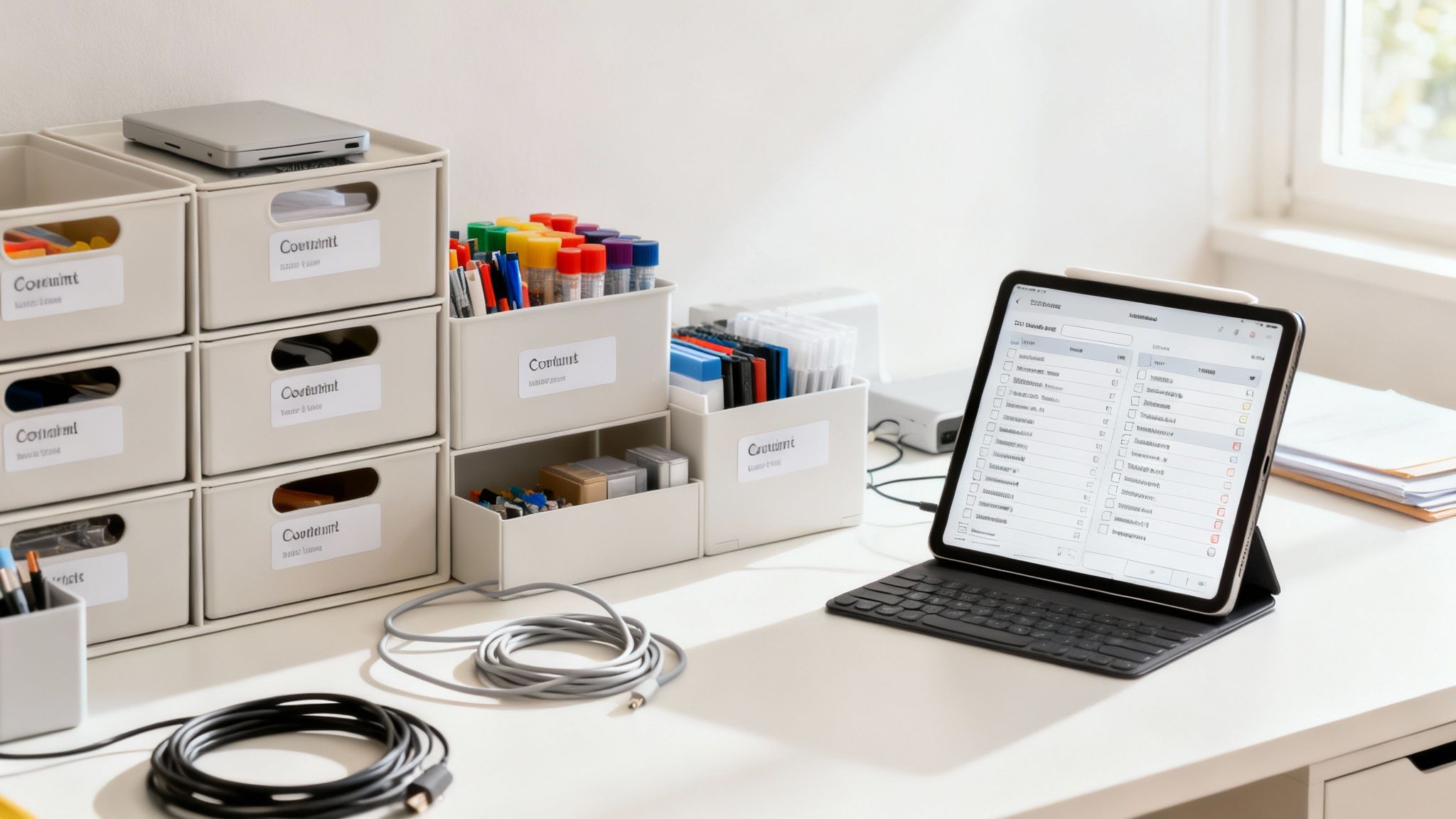
You can feel it when an office is organised effectively. The team is happy, processes are smooth, and the company’s finances are in good shape. This is the direct result of an office manager who excels at turning chaos into predictable, efficient workflows.
Designing a Productive Physical Environment
The physical layout of an office has a massive impact on workflow and collaboration. An office manager is responsible for shaping this space to meet the team's needs. This could mean anything from rearranging desks to create better "neighbourhoods" for collaborative teams to carving out quiet zones for deep, focused work.
Smart resource management is also a big part of this. It’s about creating straightforward systems for booking meeting rooms or grabbing shared equipment, stopping those frustrating bottlenecks and wasted minutes. When every resource is easy to find and use, the whole team can get on with their jobs.
The ultimate goal here is to create an environment where people can focus entirely on their core roles, free from the distraction of logistical hurdles. A well-organised office empowers the team by simply making efficiency the default setting.
This proactive approach to the physical workspace ensures the office itself becomes a tool for productivity, not an obstacle to it.
Mastering Inventory and Supply Management
Strategic inventory management is another mission-critical duty. This goes way beyond just ordering more pens when the cupboard runs low; it’s about anticipating needs for everything from essential tech to pantry supplies.
A well-managed inventory means the team never has to stop what they’re doing because they're missing a vital bit of kit. In the same way, a well-stocked kitchen with quality refreshments sends a powerful message. Providing premium coffee and teas isn't just a perk; it’s an operational strategy. It keeps staff onsite, engaged, and energised throughout the day, giving both morale and focus a serious boost.
Leveraging Technology for Automation
Finally, a modern office manager is always on the lookout for ways to use technology to automate those repetitive admin tasks. Bringing in software for expense reporting, scheduling, or digital facilities management frees up valuable time for everyone.
This focus on automation is a core part of an effective operational strategy:
- It cuts down on manual errors: Automation minimises the risk of human error in things like data entry or scheduling.
- It boosts efficiency: People can focus on high-value work instead of getting bogged down in repetitive admin.
- It improves workflows: Tech creates seamless, trackable processes for everything from supply requests to holiday bookings.
By engineering these efficient systems, an office manager does more than just keep things organised. They actively contribute to the company's bottom line by creating a frictionless environment where productivity can really thrive.
Supporting the Employee Experience Journey
While you might not have 'HR' in your job title, as an office manager, you are often the first and most consistent friendly face an employee encounters. You’re the architect of their first impressions and the steady hand that guides them through their time with the company. Honestly, it's one of the most rewarding parts of the job.
This all starts on day one. When you prepare a new hire's desk with all their tech ready to go and a thoughtful welcome kit, you're doing more than just ticking boxes. You're transforming what could be a nervy, admin-heavy day into a genuinely welcoming experience. It’s a small touch that sets a positive tone for their entire journey with the business.
The Heartbeat of Employee Support
Your role as a support system goes far beyond just onboarding. You become the go-to person for so many day-to-day employee needs, a responsibility that calls for a blend of empathy, discretion, and flawless organisation.
A clean, well-looked-after office is the foundation of this. It’s not just about hygiene; understanding the impact of professional cleaning services on workplace productivity shows a deeper, more strategic commitment to your team's wellbeing.
This people-first work is what keeps the business running smoothly and helps keep your best people around. Your key duties in this area often include:
- Maintaining Accurate Staff Records: Keeping all employee information up-to-date and, of course, confidential.
- Managing Leave Calendars: Tracking annual leave and absences to make sure teams are never caught short.
- Coordinating Onboarding Schedules: Juggling diaries and liaising with different departments to create a seamless first week for new starters.
By mastering these supportive duties, you do more than just manage an office; you nurture a community. You build the trust and reliability that makes the workplace feel like a supportive, efficient, and great place to be.
A Pathway to Career Growth
Getting these HR-adjacent duties right doesn't just benefit the company—it opens up some serious doors for your own career. Experience here has a direct impact on earning potential.
For example, office managers in London with 3-5 years of experience can expect to earn between £40,000 and £45,000 a year. With 5 or more years under your belt, that figure climbs to between £45,000 and £60,000. These people-focused skills are exactly what employers look for when filling supervisory roles, cementing your position as a vital part of the team's success.
A Few Final Questions
If you're looking to step into the role or are already leading the way in your organisation, a few questions naturally pop up. Let's tackle some of the most common ones.
What Skills Really Make an Office Manager Shine?
A great office manager is a master of balance, blending practical know-how with brilliant people skills. On the technical side of things, you absolutely need to be comfortable with office software, confident managing a budget, and have a good handle on basic HR processes. Those are the foundations.
But what truly sets the best apart are the soft skills. We’re talking next-level organisation, an almost psychic ability to solve problems before they happen, and communication that’s clear, calm, and effective. The real secret sauce? Adaptability—the art of juggling a dozen shifting priorities without breaking a sweat.
It all comes down to mastering the art of multitasking and prioritisation. The ability to see the bigger picture while keeping all the small details perfectly in line is what makes an office manager the true cornerstone of a business.
What Does a Typical Career Path Look Like?
The journey of an office manager is anything but linear—it’s full of potential. Many people get their start in roles like administrative assistant or receptionist before making the leap.
From there, the path can fork in several exciting ways. In a larger company, you might climb the ladder to a senior office manager, facilities manager, or even an operations manager position.
Others find their niche and specialise in executive assistance or pivot into HR coordination. For those with serious drive and a desire for further qualifications, a seasoned office manager in a small or mid-sized company could eventually grow into a Director of Administration or even a Chief Operating Officer.
How Has Hybrid Work Changed the Game?
Hybrid working has completely rewritten the job description. The focus has exploded from simply managing one physical space to curating an entire workplace experience that works for everyone, everywhere. The office manager responsibilities and duties have grown to match.
Today, it's about managing hot-desking systems, making sure the tech is seamless for both in-office and remote colleagues, and finding clever ways to build a strong, unified culture when your team is split.
The job is no longer just about overseeing a building; it’s about facilitating a connected, productive, and fair experience for every single person on the team, no matter where they happen to be logging in from.
Ready to elevate your workplace experience? Discover how Ue Coffee Roasters can transform your office with premium, barista-quality coffee and refreshment solutions. Find your perfect office coffee solution today!