

speciality coffee beans uk: A Flavour Guide
Imagine a cup of coffee so vibrant and full of flavour that it completely changes your morning ritual. This is the world of speciality coffee beans in the UK—a world that moves far beyond a simple caffeine hit and into one of sensory experience, craftsmanship, and connection.
Begin Your Speciality Coffee Journey
This guide is your personal invitation to discover what truly elevates a humble coffee bean to ‘speciality’ status. We’ll map out the incredible journey it takes, from a distant, sun-drenched farm right to your favourite mug at home. Let's get you curious and show you just how rewarding—and accessible—this world really is.
The UK’s passion for better coffee isn't just a niche interest anymore; it's a rapidly expanding cultural shift. You can see it on high streets and in kitchens across the country, and it's creating a powerful ripple effect.
A Growing Appreciation for Quality
The UK's coffee shop scene, a huge driver for speciality coffee, has already hit impressive sales of £6.1 billion across more than 10,900 outlets. And it’s not slowing down. The speciality and premium coffee market is forecast to grow substantially, potentially pushing the market value to an incredible £9.2 billion by 2030. You can learn more about the UK's coffee market growth and its exciting future.
This growth points to a collective desire for something more from our daily brew. People are actively seeking out coffees that offer a story, a distinct flavour profile, and a genuine connection to the people who grew them. It’s about turning a routine into a moment of pure enjoyment and discovery.
Think of speciality coffee not as a product, but as an experience. It's the difference between listening to music on a standard radio and hearing it on a high-fidelity sound system—every note is clearer, richer, and more defined.
This journey is all about understanding the dedication behind every cup. It means exploring the key elements that add up to an exceptional coffee, including:
- Exceptional Quality: Only the highest-grade beans, completely free of defects, make the cut.
- Unique Flavour Profiles: Discovering notes of fruit, chocolate, nuts, and florals you never knew coffee could have.
- Ethical Sourcing: Knowing that your purchase supports sustainable farming practices and fair wages for growers.
We’re here to guide you through this inspiring landscape, helping you find the perfect speciality coffee beans in the UK to start your own flavour adventure.
What Makes Speciality Coffee Different
So, what’s the real story behind ‘speciality coffee’? Think of it less as a brand and more like the ‘fine wine’ of the coffee world. It’s a mark of exceptional quality that reflects a commitment to excellence at every single stage—from the farmer’s careful cultivation to the roaster’s precise craft.
This isn't just clever marketing fluff; it’s a globally recognised standard. There's a clear, rigorous system that separates a good, everyday coffee from a truly outstanding speciality one.
The Official Seal of Quality
At the heart of it all is a scoring system created by the Specialty Coffee Association (SCA). This organisation basically sets the global benchmark for coffee quality, using a detailed 100-point scale.
To earn that coveted 'speciality' title, a coffee must score 80 points or higher. Anything that falls below this mark is considered commodity-grade—the stuff you typically find in instant coffee jars or big, generic bags at the supermarket.
This scoring isn’t just a matter of opinion. It’s carried out by certified coffee tasters known as Q Graders. These are experts with incredibly refined palates who follow a strict protocol called 'cupping' to evaluate every tiny detail of the coffee.
What the Experts Look For
During a cupping session, these Q Graders assess several key attributes to build a complete picture of the coffee's flavour profile. Each element plays a part in the final score.
- Aroma: This is the first impression, that incredible scent you get from the dry grounds and again when the hot water hits. They're looking for complexity—notes that could be floral, fruity, nutty, or spicy.
- Flavour and Aftertaste: This is the main event—the combined taste and aroma. Experts want a balanced and engaging flavour, followed by a pleasant and lingering aftertaste that stays with you long after you’ve taken a sip.
- Acidity: In speciality coffee, acidity is a good thing! It refers to a bright, crisp, and sparkling quality, much like the pleasant tartness of a green apple or a squeeze of citrus. It should feel vibrant, not sour.
- Body: This is all about the mouthfeel. Is the coffee light and tea-like, or is it rich, heavy, and creamy? A good body feels satisfying and well-rounded on the palate.
To even be considered for a speciality score, a coffee must be free of major defects. It’s a testament to the meticulous care taken during growing, harvesting, and processing—long before it ever reaches a roaster here in the UK.
This obsession with quality has created a huge surge in demand. Just look at the UK's coffee imports; in one recent month alone, we brought in coffee worth around £106 million. And with the average Brit drinking about 528 cups a year, more and more people are choosing speciality brews over the standard stuff. You can dive deeper into the UK’s coffee consumption habits and see the trends for yourself.
Ultimately, this whole process ensures that when you buy speciality coffee beans in the UK, you’re getting more than just a caffeine hit. You're experiencing the peak of what a coffee bean can be—a clean, sweet, and complex cup that tells the story of everyone involved in its journey. It’s a true celebration of flavour and craftsmanship.
Explore Coffee Flavours from Around the World
Every coffee bean tells a story, and that story begins with where it was grown. Think of this section as your passport to the world’s most famous coffee-growing regions, all nestled within the ‘Bean Belt’ – a band that wraps around the Earth’s equator. It's in this magical strip of the globe that a unique combination of climate, soil, and altitude creates an incredible spectrum of flavours.
To really get to grips with speciality coffee, you need to understand the concept of terroir. It’s a term borrowed from the wine world, but it applies perfectly here. Terroir is the unique fingerprint of a place – its soil, its climate, its elevation – all working together to give the coffee beans their distinct character. It’s why a coffee from one side of a mountain can taste completely different from one grown on the other.
Imagine sipping the bright, almost tea-like floral notes of an Ethiopian coffee, then comparing it to the deep, chocolatey richness of a Brazilian one. That stark difference? That's terroir at work. Learning where your beans come from is the first clue to what’s in the cup, opening up the incredible diversity that speciality coffee beans in the UK have to offer.
Coffee Flavour Profiles by Origin
The map of the coffee world is a rich tapestry of flavour. While every single farm has its own unique microclimate, certain regions have become famous for producing beans with signature taste profiles. As you start exploring, you'll quickly recognise these patterns and figure out what you love.
This quick-glance table gives you a head start on what to expect from some of the most popular coffee-growing regions you'll find here in the UK.
| Region | Common Tasting Notes | Acidity Level | Body |
|---|---|---|---|
| Africa (Ethiopia, Kenya) | Bright, floral, citrus, berry, wine-like | High | Light to Medium |
| South America (Brazil, Colombia) | Chocolate, nuts, caramel, brown sugar | Low to Medium | Medium to Full |
| Central America (Costa Rica, Guatemala) | Apple, citrus, milk chocolate, toffee | Medium to High | Medium |
| Asia (Indonesia, Papua New Guinea) | Earthy, spicy, dark chocolate, woody | Low | Full, syrupy |
Keep in mind, this is just a starting point! The real fun is in discovering the nuances that make each coffee special.
This helpful diagram shows the pillars that hold up the quality standards in the speciality coffee world.
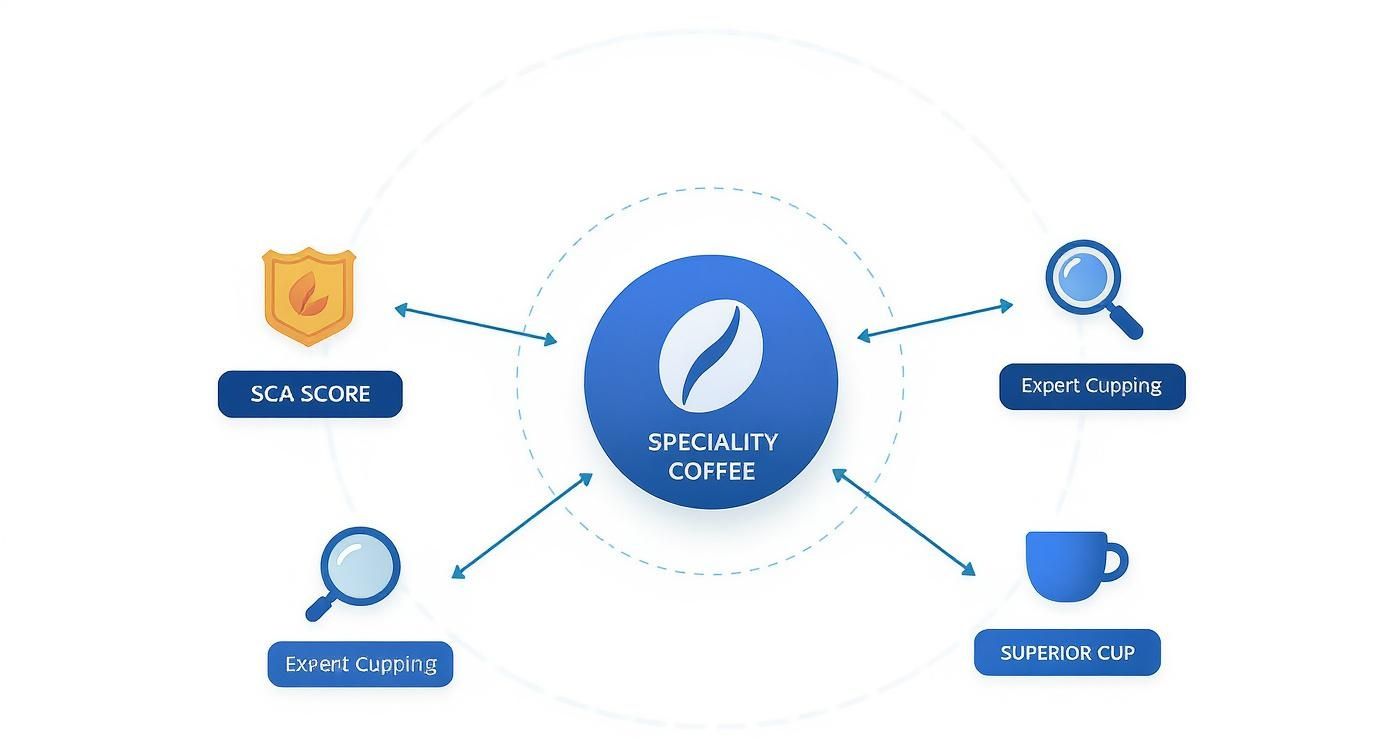
It’s a great visual reminder that speciality coffee is more than just a score; it's a holistic approach that brings together expert evaluation and an unwavering focus on creating a truly superior drinking experience.
How Processing Shapes the Final Flavour
If terroir provides the raw ingredients, the processing method is the recipe that brings those flavours to life. After the coffee cherries are picked from the tree, the beans inside have to be removed and dried. The technique used at this stage has a massive impact on the final taste.
Think of it like a chef taking one perfect ingredient. Roasting it brings out earthy, deep flavours, while poaching might preserve its delicate side. The same principle applies to coffee processing.
The processing method is a crucial decision made at the farm level. It can either amplify a coffee's natural brightness or dial up its fruity sweetness, sculpting the bean's final personality before it even reaches the roaster.
You’ll generally see three main methods listed on bags of speciality coffee:
- Washed Process: Here, all the fruit pulp is washed off the bean before it’s dried. This technique produces an exceptionally clean, crisp, and bright cup. It lets the coffee’s inherent acidity and delicate floral or citrus notes really shine.
- Natural Process: With this method, the entire coffee cherry is left to dry with the bean still inside. The sugars from the fruit ferment and get absorbed by the bean, creating a cup that's bursting with fruitiness, sweetness, and often has a heavier, more syrupy body.
- Honey Process: This is the happy medium between washed and natural. Some, but not all, of the fruit pulp is removed before drying. This process creates a beautifully balanced cup, often with a lovely round sweetness, a soft acidity, and a creamy mouthfeel.
Understanding both origin and processing gives you a powerful decoder ring for speciality coffee. Knowing whether you're about to brew a washed Ethiopian or a natural Brazilian helps you predict the flavour and pick out bags you’re far more likely to fall in love with.
How to Choose Your Perfect Coffee Beans
Stepping into the world of speciality coffee can feel a bit like learning a new language. You're faced with bags covered in words like ‘single origin’, ‘blend’, ‘roast level’, and intriguing tasting notes. It can all seem a little daunting.
But it really doesn't have to be. Think of this as your guide to decoding the map on the bag, helping you move from a hopeful guess to a confident choice that lands you the perfect brew. Every piece of information is a clue, and once you know what to look for, you'll be on your way to discovering flavours you absolutely love.
Single Origin vs Blends
One of the first things you'll see on a bag of speciality coffee beans in the UK is whether it's a 'single origin' or a 'blend'. Neither is inherently better—they just offer completely different experiences.
- Single Origin: This simply means the beans come from one specific place—a single farm, producer, or region. It’s the purest expression of that coffee's unique terroir (the soil, climate, and altitude that shape its flavour). If you want to really taste the bright, floral notes of an Ethiopian coffee or the classic nutty, chocolatey profile of a Brazilian one, single origin is the way to go. It’s perfect for the curious coffee drinker.
- Blends: A blend is a carefully crafted combination of beans from different origins, put together by a roaster to achieve a specific flavour. The goal here is usually balance, consistency, and a more rounded profile. Blends are fantastic for espresso and often make for a reliable, comforting daily brew that hits the spot every time.
Knowing this difference is the first step to figuring out what kind of coffee you're in the mood for.
Reading the Tasting Notes
Those three little words on the front of the bag—like "Blueberry, Dark Chocolate, Almond"—aren't added flavours. They’re the roaster's interpretation of the natural notes found within the bean, which come from its origin, how it was processed, and the roast itself.
Don't worry if you don't taste exactly what's listed right away. Developing your palate takes time. Just use these notes as a signpost. If you know you enjoy fruity flavours, look for coffees with notes of berries or citrus. If you prefer something rich and comforting, hunt down bags with notes of chocolate, caramel, or nuts.
Think of the roast date as your coffee’s ‘born-on’ date. This single piece of information is far more important than any ‘best before’ date. Freshly roasted coffee is alive with flavour and aroma, but these qualities start to fade a few weeks after roasting. Always look for the most recent roast date you can find.
The Importance of the Roast Level
How a bean is roasted has a massive impact on its final taste. Roasting is the art of unlocking the green coffee bean’s potential, developing its sugars and acids to create all those wonderful flavours we look for in a great cup.
- Light Roast: Roasted for a shorter time, these beans are lighter in colour and have no oil on the surface. A light roast is all about preserving the bean's original character, resulting in higher acidity, a lighter body, and bright, often fruity or floral notes.
- Medium Roast: This is the happy medium, creating a balanced profile with medium acidity and body. Here, you'll start to taste more of those classic "roasty" flavours working in harmony with the bean's origin notes.
- Dark Roast: Roasted the longest, these beans are dark, shiny, and often oily. The roasting process itself becomes the star of the show, leading to low acidity, a full, heavy body, and bold, smoky, or chocolatey notes.
The UK's speciality coffee scene is booming, proving just how much we've come to appreciate these details. The market recently generated around USD 5.03 billion in revenue, a figure that's expected to almost double by 2030. This growth is being driven by younger drinkers, with the 18-24 age group making up over 38% of the market and the 25-39 demographic growing the fastest. You can find more insights on the UK's expanding speciality coffee scene.
By putting your knowledge of origin, roast level, and tasting notes together, you can confidently navigate the exciting world of speciality coffee beans in the UK. You're now ready to pick the perfect bag, whether you're after a bright, zesty morning kick-starter or a smooth, comforting afternoon cup.
A Guide to Brewing Exceptional Coffee at Home
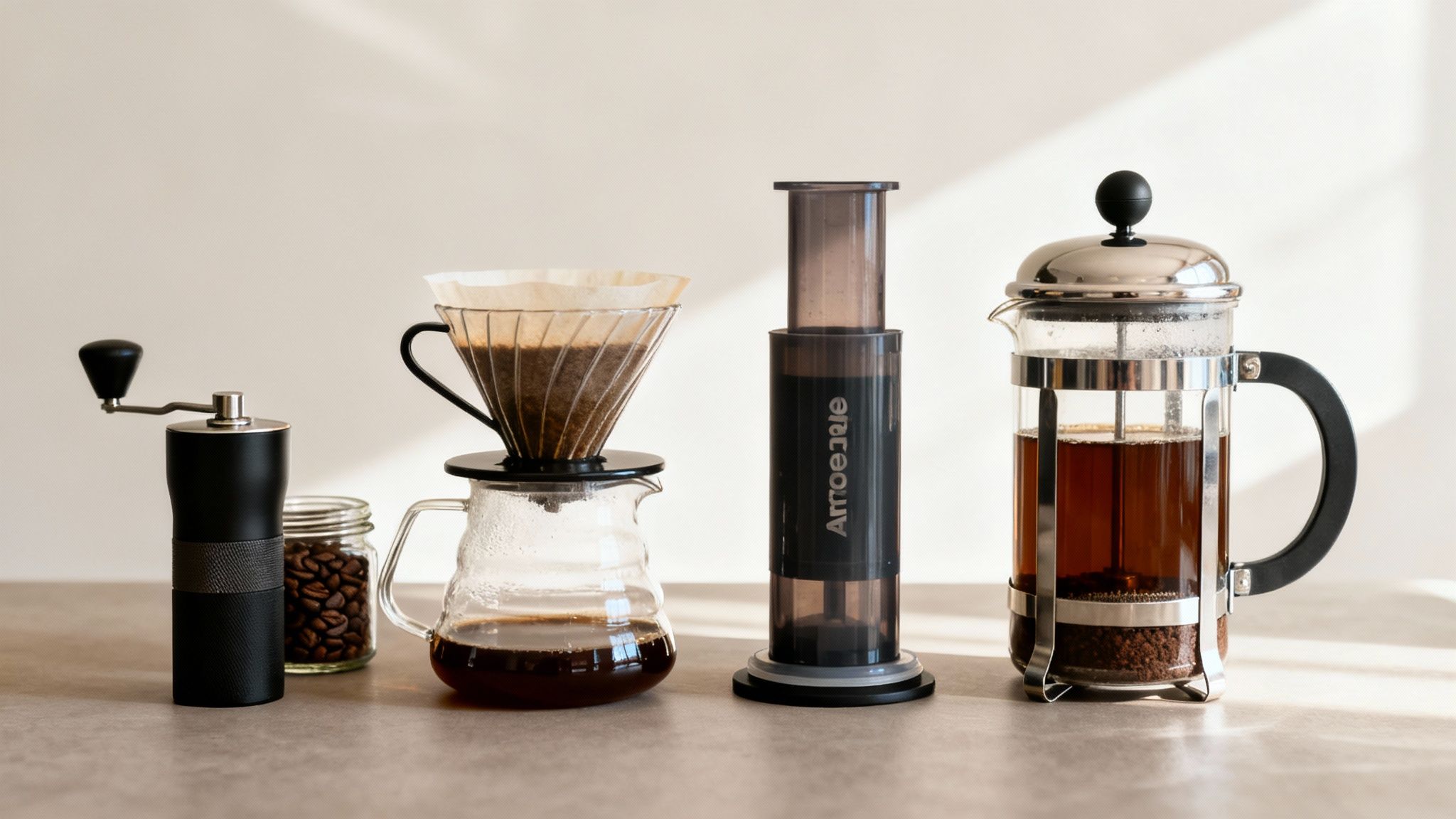
So, you’ve found the perfect beans. Now it’s time to do them justice. Brewing is where the magic really happens—it’s a delicate ritual focused on unlocking all those wonderful flavours locked inside. Think of it as an invitation to experiment, find joy in the process, and turn your kitchen into your new favourite coffee spot.
The good news is you don’t need a huge, expensive setup to make incredible coffee. The secret is getting a handle on a few foundational principles that apply to any brewing method you choose. Master these, and you’ll be making a consistently delicious cup every single time.
The Brewer's Most Important Tool
Before we get into machines or fancy gadgets, let's talk about the single most important piece of kit for anyone serious about great coffee: a quality burr grinder. Pre-ground coffee starts losing its aroma and flavour almost immediately as all those delicate compounds are exposed to oxygen. Grinding your beans just moments before you brew is an absolute game-changer.
But why a burr grinder? Imagine trying to chop vegetables with a blunt blade versus a sharp knife. Blade grinders smash beans into random, inconsistent pieces, leading to uneven extraction. Some grounds get over-brewed and turn bitter, while others are under-brewed and taste sour.
A burr grinder, on the other hand, uses two revolving abrasive surfaces to crush the beans into a uniform size. That consistency is the key to a balanced, clean, and flavourful brew. It’s an investment that pays for itself with every exceptional cup you make.
Mastering the Brewing Variables
Brewing is a science, but it’s a simple one. By controlling four key variables, you can dial in the perfect recipe for any bag of speciality coffee beans in the UK. Getting these right will transform your coffee from good to genuinely memorable.
Think of brewing like baking a cake. If your ingredient measurements or oven temperature are off, the result will be disappointing. Coffee is the same; precision with water, time, and temperature unlocks the intended flavours.
Here are the core elements you need to get right:
- Coffee-to-Water Ratio: This determines the strength and body of your brew. A brilliant starting point for most filter methods is a 1:16 ratio—that’s 1 gram of coffee for every 16 grams of water. Using a digital scale to weigh both your beans and your water is the only way to guarantee consistency.
- Water Temperature: The sweet spot for extraction is somewhere between 90°C and 96°C. Water that’s too cool will give you a flat, under-extracted cup, while boiling water can scorch the grounds and make everything taste bitter. A temperature-controlled kettle is great, but simply letting a boiled kettle sit for 30-60 seconds does the trick.
- Brew Time: This is the total time the water is in contact with the coffee grounds. The ideal time depends on your grind size and method, but it generally falls between 2 and 4 minutes. Too short, and your coffee will be weak and sour; too long, and it’ll become bitter and harsh.
- Grind Size: This needs to be matched to your brewing method. A fine grind (think table salt) is needed for quick methods like an AeroPress, while a coarse grind (more like breadcrumbs) is essential for a slow immersion brew like a French Press.
Popular Home-Brewing Methods in the UK
Once you have the fundamentals down, you can start exploring different brewers. Each method interacts with the coffee in a unique way, highlighting different characteristics in the final cup. Here’s a quick snapshot of three popular choices.
- V60 (Pour-Over): This elegant brewer produces a beautifully clean, bright, and nuanced cup. It gives you complete control, making it perfect for teasing out the delicate floral and fruity notes in light-roast single origins.
- AeroPress: Incredibly versatile and forgiving, the AeroPress uses pressure to create a rich, smooth concentrate in about a minute. You can dilute it to make a longer coffee or use it as an espresso-style base for lattes and flat whites.
- French Press (Cafetière): A true classic. This immersion brewer is known for producing a full-bodied, rich, and textured coffee. Because it uses a metal filter, more of the coffee's natural oils make it into the cup, creating a deeply satisfying and robust brew.
Ultimately, the best brewing method is the one you enjoy using the most. Start with one, get comfortable with the process, and let your curiosity guide you. The journey of brewing exceptional coffee at home is one of endless and delicious discovery.
Find and Support the UK Speciality Coffee Scene
Your journey into flavour doesn’t just end with the beans you choose. In many ways, it’s just the beginning. The next step is to connect with the incredible community that makes this whole world tick.
Finding and supporting the UK’s independent speciality coffee scene is how you transform a simple purchase into a meaningful experience. It’s a move that not only elevates your daily brew but also strengthens the passionate network of people behind it.
When you buy from a local, independent roaster, you’re getting so much more than coffee. You’re getting unparalleled freshness, with beans often roasted just days before they land in your hands. You also get direct access to expert advice from people who genuinely live and breathe coffee and are always eager to help you find your perfect match.
Most importantly, you're investing in small businesses that pour their hearts into their craft, enriching your local community and its economy.
Championing an Ethical and Sustainable Future
Beyond the local high street, the speciality coffee movement is built on a foundation of ethical and sustainable practices. That quality you taste in the cup? It's directly linked to the well-being of the farmers who grew the beans.
When you see sourcing information or certifications on a bag, it's a clear signal that the roaster is committed to a transparent supply chain. This means ensuring farmers receive fair prices for their incredible hard work, which in turn allows them to invest in sustainable farming methods that protect the environment for years to come.
It’s a powerful cycle where your choice supports both exceptional flavour and a positive global impact.
By choosing to buy from roasters who prioritise ethical sourcing, you become part of a movement that values people and the planet just as much as an incredible cup of coffee. Your decision helps build a more sustainable and equitable future for the entire industry.
Exploring the Community
The UK is absolutely brimming with brilliant independent roasters and cafés, each with a unique personality and a carefully curated selection of speciality coffee beans in the UK. The best way to immerse yourself in the culture is simply to step inside.
- Ask Questions: Baristas and roasters are your best resource. Don't be shy! Ask them what they're excited about right now or for a recommendation based on flavours you already enjoy.
- Try Something New: Be open to exploring different origins or processing methods you haven’t tried before. You might just stumble upon your new favourite coffee.
- Attend a Tasting: Many roasters host "cupping" sessions or tasting events. They're a fantastic, fun way to develop your palate and learn directly from the experts.
And while our focus here is on the UK, the joy of discovering excellent coffee spots is a universal pleasure. For anyone exploring further afield, this guide to top cafes in Melbourne Central is a great place to start.
Your Speciality Coffee Questions Answered
Diving into the world of speciality coffee is exciting, but it often comes with a few questions. Let's clear up some of the most common ones to help you get the most out of every single cup.
Is Speciality Coffee Stronger Than Regular Coffee?
When we talk about 'strength' in speciality coffee, we're almost always talking about flavour, not caffeine. So, is it stronger? In terms of taste, absolutely.
The real difference lies in the complex, clean flavour profile you get from high-grade, meticulously roasted beans. You’ll find far less of the bitterness you might be used to from standard coffee. Think of it like the difference between a simple stock cube and a rich, slow-simmered bone broth—one is a blunt instrument, the other is layered with nuance and depth.
When you taste a speciality coffee, you're experiencing the pure, vibrant character of the bean itself. The goal isn't just a jolt of energy but a memorable sensory experience that celebrates its origin and craftsmanship.
How Should I Store My Speciality Coffee Beans?
To keep those incredible flavours intact, you need to protect your beans from their four biggest enemies: oxygen, light, heat, and moisture. The best way to do this is to store your speciality coffee beans uk in an airtight container, tucked away in a cool, dark place like a kitchen cupboard.
It's a common myth that the fridge or freezer is a good spot, but the temperature fluctuations and condensation can seriously damage the delicate oils that carry all that wonderful flavour. My best advice? Buy smaller bags more often. It’s the surest way to guarantee maximum freshness from the first brew to the last.
What Is the Difference Between Single Origin and a Blend?
This is probably one of the first things people wonder about when they start exploring. It's actually quite simple.
- A single origin coffee comes from one specific farm, cooperative, or region. It’s all about showcasing the unique taste of that particular place—its soil, climate, and processing methods, often called its terroir.
- A blend, on the other hand, combines beans from different origins. A skilled roaster crafts a blend to create a specific, balanced, and consistent flavour profile that you can rely on time and time again.
Single origins are fantastic for an adventure, letting you explore the diverse and distinct tastes the coffee world has to offer. Blends, however, often make for a perfectly reliable and comforting everyday coffee, and they're especially popular for creating a consistently great espresso.
Ready to elevate your workplace refreshment offerings? Ue Coffee Roasters brings premium, barista-level coffee solutions directly to your office. Discover how our coffee machines and curated selection of teas and consumables can boost morale and create a more engaging culture. Explore our office coffee solutions today.