

Finding Great Suppliers for Coffee Shops in the UK
Choosing the right suppliers for your coffee shop isn't just about logistics. It’s about building the soul of your brand, one partnership at a time. These relationships are the bedrock of every single cup you serve, directly shaping your reputation, customer loyalty, and ultimately, your success.
The Foundation of Your Success: Building Your Supplier Network
Let's get to the heart of what will make or break your coffee shop. The suppliers you choose aren't just dropping off boxes at your door; they are the co-authors of your café's story. That rich aroma of your house blend? That comes from your roaster. The satisfying feel of a takeaway cup in a customer's hand? That's your packaging supplier.
Think of selecting your partners as a creative process. It’s your chance to define what makes your shop truly unique. In a crowded market, a thoughtfully curated network of suppliers is your secret weapon for delivering the kind of quality that keeps people coming back.
What Do You Actually Need? Defining Your Core Suppliers
Before you dive into searching, let's map out who you'll need on your team. Each supplier plays a vital role in crafting the experience you want to create for your customers.
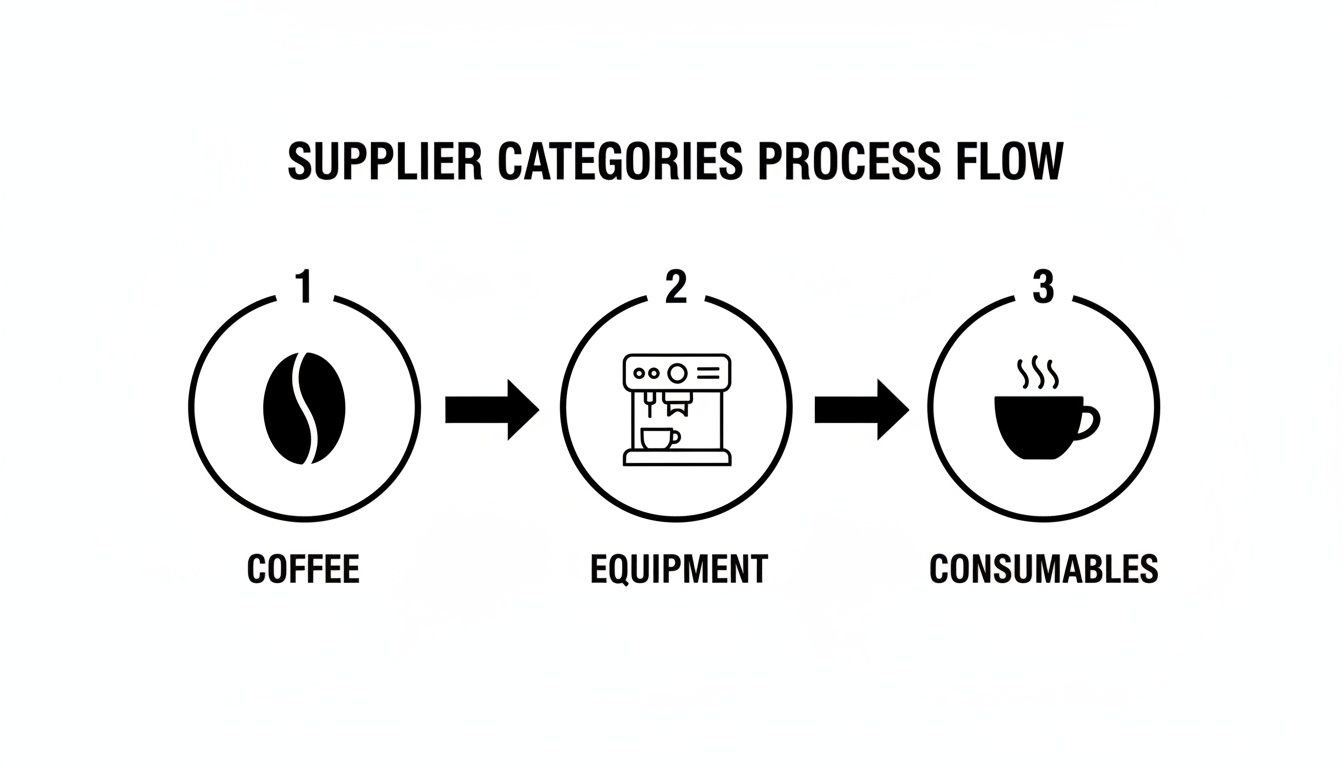
Let's break down the essential supplier categories you'll be sourcing.
Key Supplier Categories for Your Coffee Shop
This table gives you a quick overview of the essential supplier types you'll need to source for your business operations.
| Supplier Category | What They Provide | Key Consideration |
|---|---|---|
| Coffee Beans | Your core product—espresso blends, single origins, decaf. This is your most critical partnership. | Flavour profile, ethical sourcing story, consistency, training support, and price point. |
| Equipment | Espresso machines, grinders, batch brewers, and advanced bean-to-cup systems like Franke machines. | Performance, reliability, maintenance support, and whether the tech fits your workflow. |
| Consumables | Dairy and plant-based milks, syrups, sugars, cups, lids, sleeves, napkins, and often baked goods or snacks. | Quality, reliability of delivery, cost-effectiveness, and alignment with your brand's sustainability goals. |
| Training | Barista skills, workflow efficiency, and equipment maintenance. Sometimes provided by your roaster or equipment supplier. | Depth of knowledge, hands-on approach, and ongoing support for your team's development. |
Finding the right fit in each category is crucial, as they all work together to create a seamless operation and a fantastic customer experience.
Your supplier network is an ecosystem. The health of each relationship directly impacts the vitality of your business. Treat them like an extension of your own team, all working towards the shared goal of making your customers happy.
This guide will walk you through the real-world steps of finding, vetting, and onboarding the perfect partners for your coffee shop. We’ll move beyond just placing orders and focus on how to build strategic relationships that help you grow, ensuring every detail of what you offer is a testament to your vision.
Sourcing and Vetting Your Core Coffee Supplier
This is where the story of your coffee truly begins. Think of your core coffee supplier as the most important partnership you'll form—it’s a decision that defines the central flavour, character, and soul of your shop. Getting this right is a journey, moving from initial research to the final handshake, and it has to be built on shared values and exceptional quality.
The first step is simply identifying potential roasters. Go beyond a quick online search. Immerse yourself in the industry by attending trade events and local coffee festivals. This is where you get to meet roasters face-to-face, hear their stories, and—most importantly—taste their coffee firsthand.
This initial exploration isn't just about finding beans; it's about building a shortlist of partners whose passion and philosophy click with your own vision.
From Samples to Tasting Sessions
Once you have a handful of potential suppliers for coffee shops, it’s time to ask for samples. Don't be shy about this; any roaster serious about a partnership will be more than happy to provide them. From there, you need to arrange a formal tasting session, often called a "cupping," to evaluate each coffee systematically.
During the tasting, you're looking for a few key things:
- Flavour Profile: Does the coffee have the notes you're looking for? Is it balanced, complex, and memorable? Does it make you want another sip?
- Consistency: If you can, ask for samples from a couple of different roast batches. A great supplier delivers the same fantastic quality with every single order.
- Origin Story: Where do the beans come from? A compelling, transparent origin story isn't just a nice-to-have; it adds immense value and gives you something authentic to share with your customers.
This is the foundational first step. While equipment and consumables are vital, it all starts with the bean.
Aligning on Values and Vision
A great supplier relationship goes far beyond the beans themselves. It's about finding a partner whose values are a true match for yours. Don’t be afraid to ask pointed questions about their sourcing practices, sustainability efforts, and traceability. Can they tell you exactly which farm your coffee came from?
The best coffee suppliers are more than just vendors; they are collaborators invested in your success. They should be willing to offer training, help dial in your equipment for their beans, and provide ongoing support.
This partnership is absolutely crucial for consistency, especially in a competitive market. Just look at the bustling UK coffee shop scene: the top 10 chains operate 5,751 outlets, which is a staggering 82.7% market share. That kind of scale is only possible because they rely on key suppliers for unwavering bean quality. It shows just how vital reliable partners are in a market projected to surge from USD 11.85 billion to USD 25.13 billion by 2035. You can dig into more insights about the UK coffee market on Freshdi.com.
Negotiating Terms and Finalising the Partnership
So, you've found a roaster that ticks all the boxes. Now it’s time to talk practicalities. Get a clear understanding of their minimum order quantities (MOQs) and make sure they fit your projected volume. You also need to lock down delivery schedules to guarantee you always have fresh beans when you need them.
Before you even think about signing a long-term contract, negotiate a trial period. This is your chance to test their beans with your specific equipment—your espresso machine, your grinders, and your water filtration system.
Most importantly, a trial lets you get feedback from your very first customers. Their delight is the ultimate confirmation that you've found the right partner to help bring your vision to life.
Equipping Your Cafe for Excellence and Efficiency
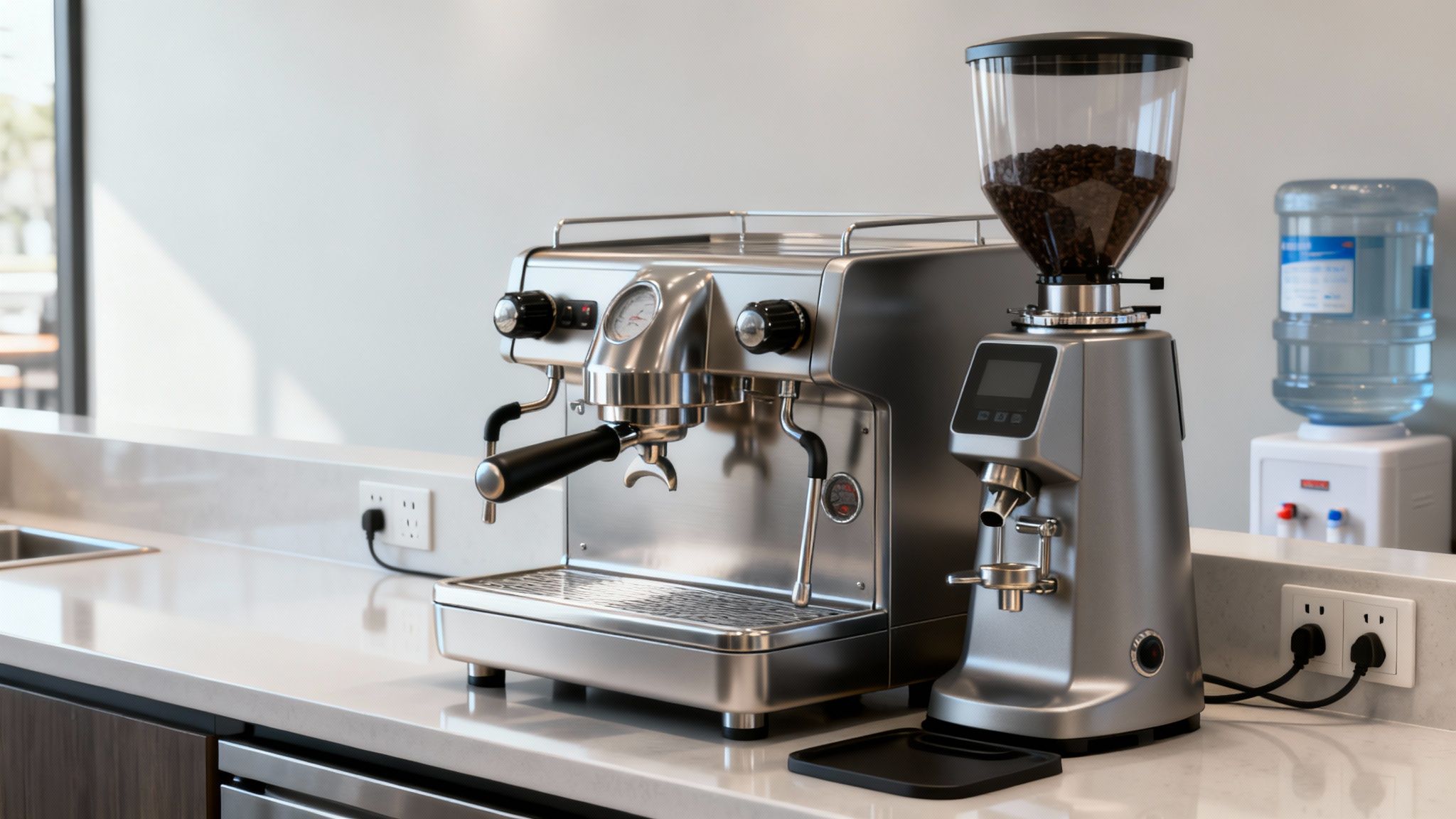
Your coffee can only ever be as good as the tools you use to make it. Choosing suppliers for the machinery that powers your daily grind—from the workhorse espresso machine to the burrs in your grinder—is a decision that touches every single cup you serve. This isn’t just about buying hardware; it’s an investment in the reliability and consistency that will build your reputation.
The relationship you have with your equipment supplier is a long-term one. You need a partner who offers more than just a machine in a box. Think about what happens after the sale. What does their maintenance package look like? How fast can they get a technician to you when your grinder dies during the morning rush? These are the practical realities that keep a coffee shop running smoothly.
Making the Right Financial Decision
One of the first big hurdles is deciding whether to buy your equipment outright or lease it. There are solid arguments for both, and the right path really depends on where your business is at and your financial strategy.
- Purchasing: This means a hefty upfront investment, but you own the asset. It builds long-term value and can be cheaper over several years. This route is often best for established businesses with healthy cash flow.
- Leasing: Leasing lowers that initial financial barrier, freeing up capital for other crucial areas like marketing or hiring staff. It often bundles in maintenance and service, giving you predictable monthly costs and taking a lot of stress off your plate.
This is a critical conversation to have when you’re looking for suppliers for coffee shops. A supplier offering flexible financing or leasing options can be a massive help, especially when you're just starting out.
Enhancing Consistency with Automation
In high-volume spots or modern workplaces, consistency is everything. This is where advanced automated systems, like bean-to-cup machines, really shine. They're engineered to pull the same high-quality espresso shot after shot, eliminating the human variables that can lead to an inconsistent cup.
These machines also streamline the workflow, freeing up your team to focus on customer service instead of getting bogged down in complex brewing steps. For an office, they offer a premium, self-service coffee solution that elevates the employee experience with almost no operational hassle. As the UK café industry grows to 11,456 outlets, suppliers who can provide both private-label coffee and automated machines are becoming vital partners for businesses looking to scale.
Vetting Suppliers and Hidden Essentials
When it comes to kitting out your shop, finding reliable equipment is non-negotiable. It pays to do your homework, and you can explore a practical guide to finding and vetting the best commercial kitchen equipment suppliers to make sure your decisions are well-informed.
One of the most overlooked—but absolutely critical—pieces of kit is your water filtration system. Bad water quality doesn't just ruin the flavour of your coffee; it can cause catastrophic limescale damage to your expensive espresso machine.
A great equipment supplier should also be an expert on water. Ask them to test yours and recommend a filtration system designed for your local supply. It’s a small investment upfront that protects your much larger machinery, guarantees a better-tasting product, and shows that a supplier is committed to your long-term success, not just a quick sale. It’s the true sign of a partner who’s as invested in your quality as you are.
Mastering the Supply of Consumables and Ancillary Products
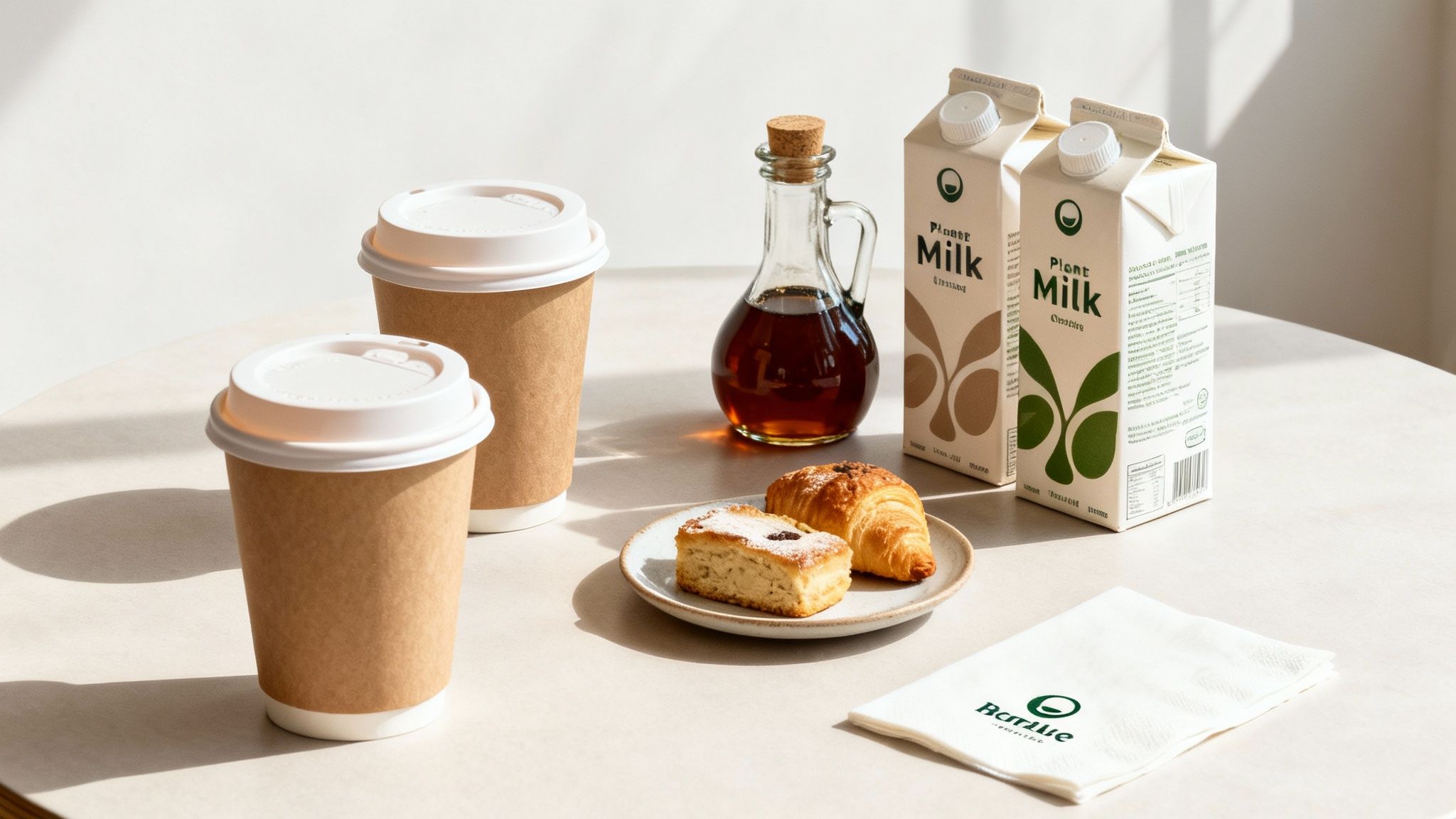
Beyond the bean, the true rhythm of a successful coffee shop is powered by a steady, reliable flow of everyday essentials. Mastering your supply chain for consumables is what turns a great coffee into a seamless customer experience. It’s the invisible force that prevents that dreaded moment of running out of oat milk or takeaway lids during the morning rush.
Honestly, it’s an art form—a delicate balance of quality, cost, and logistics.
A smart first step is often consolidation. Working with a single, high-quality distributor for items like milk, dairy alternatives, syrups, and cups can dramatically simplify your ordering process and slash your admin time. This approach can also unlock volume discounts, turning your combined purchasing power into tangible savings without sacrificing the quality your customers expect.
Evaluating Suppliers for Everyday Excellence
When you're vetting suppliers for coffee shops, your criteria for consumables must be laser-focused on freshness, reliability, and flexibility. For perishable items like milk and baked goods, freshness is completely non-negotiable.
Here are a few key questions I always ask potential suppliers:
- What's your delivery schedule like? You need frequent, reliable drops to keep perishables fresh and manage stock levels without over-ordering.
- How flexible are your order quantities? A great partner can accommodate fluctuations in demand, letting you scale up for a busy weekend or trim an order during a quiet spell.
- What are your sustainability credentials? Modern consumers genuinely care about eco-friendly packaging. Sourcing compostable cups or locally-produced goods can become a powerful part of your brand story.
The right ancillary products can transform your menu from standard to standout. A unique, locally made chai syrup or an exclusive pastry from an artisan bakery isn't just a product—it's a differentiator that creates buzz and an additional revenue stream.
Beyond Core Products: Ancillary Services
Thinking bigger, your network of suppliers should also cover essential operational services. These partnerships are just as critical for maintaining a clean, safe, and welcoming environment for both customers and staff.
For example, securing reliable suppliers for the less glamorous jobs is vital for smooth operations. This includes everything from waste management to hygiene maintenance. Partnering with professional pest control services ensures you uphold the highest standards of safety and cleanliness, protecting your hard-earned reputation and letting you focus on what you do best—serving fantastic coffee.
Building this robust supply chain for consumables and services is about creating a safety net for your business. It ensures that no matter how busy the day gets, you have every last detail covered, from the milk in your lattes to the napkins on the counter. This reliability frees you to focus on crafting an unforgettable experience for every person who walks through your door.
Building Strong Supplier Relationships and Logistics
Getting your suppliers signed up is a huge step, but the real work starts now. The magic isn't in the contract; it's in turning a simple transaction into a genuine partnership. Think of your suppliers as an extension of your team. Their success is your success, especially in a business where consistency is everything.
Great partnerships are built on proactive communication. Don't just call when there's a problem. A quick chat to share positive feedback or a heads-up about a big event that’ll spike your orders goes a long way. It builds trust and shows you value them as a critical part of your operation.
Establishing a Reliable Cadence
A smooth-running café relies on a predictable rhythm. You need to work with your suppliers to nail down a reliable ordering and delivery schedule that matches your sales flow. This isn't just about ordering more beans when the hopper is empty; it’s about looking ahead to prevent stockouts and cut down on waste.
A smart approach to logistics looks like this:
- Forecasting Your Needs: Get familiar with your sales data. Can you predict the busy periods, like bank holidays or the local Christmas market? Adjust your orders ahead of time.
- Setting Clear Expectations: Lock in your delivery windows and make sure everyone knows the procedure. A missed milk delivery during the morning rush can shut you down.
- Negotiating Payment Terms: Have an open conversation about payment terms that work for everyone. Paying your invoices on time builds incredible goodwill and often gives you a bit of leverage down the line.
When you manage your supply chain this way, it stops being a reactive headache and becomes a strategic asset. You can relax and focus on your customers, knowing everything you need is on its way.
"A loyal supplier relationship is your best insurance policy against the unexpected. When supply chains falter or prices fluctuate, a partner who values your business will work with you to find a solution, not just send an invoice."
Navigating Challenges Together
Sooner or later, things will go wrong. Your roaster might face a sudden price hike on green beans, or a delivery gets stuck in traffic. How you handle these moments is what truly defines your partnership. Come to the conversation looking for a solution that helps both of you, not just pointing fingers.
The UK coffee scene shows exactly why these relationships are so vital. With 8,654 cafes nationwide and growing at 3.5%, the demand for top-quality, speciality products is booming. As independent shops take on the big chains, reliable suppliers for coffee shops are what allow them to offer something unique and consistent. This whole ecosystem is supporting a market where an extra 7.9 million consumers now drink coffee every week—a massive opportunity for cafes with resilient supply chains. If you want to dive deeper, you can explore detailed statistics on the UK coffee market on Statista.com.
Ultimately, building these strong bonds is an investment in your own business's resilience. It ensures you have partners who are just as committed as you are to the quality of every single cup you serve.
Your Top Questions About Sourcing Answered
Finding the right partners to supply your coffee shop can feel like a huge task, but getting it right is one of the most important things you'll do. We get asked about this all the time, so let's walk through some of the most common questions and clear up the confusion.
How Many Coffee Suppliers Should I Have?
It's tempting to keep things simple with a single coffee supplier, and for your main house blend, that's a great approach. But I'd always recommend having a second roaster on your books.
Think of them as your source for exciting guest espressos or special single-origin filter coffees. Not only does this keep your menu fresh and interesting for regulars, but it's also a vital safety net. If your primary roaster ever runs into a supply issue, you won’t be left scrambling.
When it comes to things like milk, syrups, and cups, consolidating with one or two key distributors usually makes the most sense. It simplifies your ordering process and streamlines deliveries. The sweet spot is finding that balance between a resilient supply chain and day-to-day simplicity.
What Should I Really Be Asking a Potential Coffee Roaster?
Forget just asking about the price per kilo. The real partnership comes from the quality, consistency, and support they bring to the table.
Get straight to the point with questions that reveal who they really are:
- Where do your beans come from? Ask about traceability and their relationships with farmers. A roaster who can tell you the story behind the coffee gives you a powerful story to share with your customers.
- How fresh is your coffee? You need to know their roasting schedule. The difference between coffee roasted three days ago and three weeks ago is massive. Ask how they manage their roast-to-delivery timeline.
- What training do you offer? This is non-negotiable. Do they provide barista training? Will they help you dial in their beans on your equipment? A roaster who invests in your team's skills is a partner, not just a supplier.
How Can I Negotiate Better Terms?
Negotiation isn't about strong-arming for a lower price; it's a conversation built on a solid relationship. The best way to start is by being a fantastic customer. Pay your invoices on time, every time. Communicate clearly and build a good rapport.
Once you've established that trust, you're in a much better position to talk terms. You could open a discussion about discounts for buying in larger volumes or paying for orders upfront. Some suppliers for coffee shops are also open to better pricing if you’re willing to sign a longer-term contract.
Always approach it as a partnership. The goal is a win-win that helps both of your businesses grow. This collaborative mindset builds loyalty and almost always gets better results than playing hardball.
Should I Make Local Suppliers a Priority?
Yes, one hundred percent. Working with local suppliers gives you a massive advantage that goes way beyond just getting ingredients. You’ll slash your carbon footprint, pour money back into your local economy, and get a much fresher product—especially for things like milk, pastries, and other perishables.
It also gives you a brilliant story to tell. Customers today really care about supporting local and sustainable businesses. While you might need to source your espresso machine from further afield, making local partners the core of your supply chain is a powerful way to build your brand and stand out from the competition.
At Ue Coffee Roasters, we know that fantastic coffee is just one piece of the puzzle. We partner with businesses to bring a premium, high-street coffee experience right into the workplace, complete with world-class Franke bean-to-cup machines and everything else you need.
Ready to elevate your office environment? Explore our solutions at https://www.uecoffeeroasters.com.