

sustainable coffee companies: how to choose ethical brands
That daily cup of coffee is more than just a morning ritual. It’s your connection to a global story of farmers, communities, and fragile ecosystems. Sustainable coffee companies are at the heart of this story, shifting the industry from a simple commodity trade to a powerful force for good.
This isn’t just a fleeting trend. It’s a fundamental change, proving that the coffee you choose can genuinely uplift people and protect our planet.
Your Morning Coffee Can Change the World
Every time you brew a cup, you're experiencing the final step in a long, complex journey. It's a journey that starts thousands of miles away, in the hands of the farmers who cultivate the beans. For generations, that story was hidden, with a huge disconnect between the person drinking the coffee and the person who grew it.
Thankfully, that’s all changing. A powerful movement, driven by people like you and pioneering businesses, is rewriting the narrative.
This guide is about that shift. We want to paint a clear picture of how your choice of coffee can become a meaningful act, creating positive ripples around the world. It’s about realising that every sip can support farming families, preserve biodiversity, and bring economic stability to the communities that need it most.
A Journey of Purpose
The conversation around coffee is getting deeper. It's moved beyond just flavour notes and brewing methods to include bigger questions about ethics, environmental impact, and fairness. Sustainable coffee companies are leading this charge, building businesses that put people and the planet first.
They’re proving that exceptional quality and social responsibility aren't mutually exclusive—in fact, they go hand in hand.
Choosing sustainable coffee is an investment in a healthier planet and a more just global community. It transforms a simple purchase into a statement of values, connecting you directly to the people and places behind your favourite drink.
Our goal is to help you look beyond the branding on a coffee bag and understand the real story it tells. We’ll walk you through the key things you need to know to make informed choices, ensuring your coffee habit aligns with your values.
You’ll learn what truly makes a company sustainable, how to decode labels, and how to spot the partners who are genuinely committed to making a difference. Your morning ritual is about to become a whole lot more meaningful.
What Makes a Coffee Company Truly Sustainable
The word "sustainable" gets thrown around a lot these days, but what does it actually mean in the world of coffee? It’s so much more than a marketing buzzword. Real sustainability is a holistic approach that carefully balances the needs of people, the planet, and long-term prosperity.
Think of it like a three-legged stool. For the stool to stand firm, all three legs have to be strong and equal. If one is too short or weak, the whole thing wobbles and eventually collapses. That’s the perfect way to understand a genuinely sustainable coffee company.
The Three Pillars of Coffee Sustainability
To break it down, a truly sustainable coffee company is built on three core pillars: environmental stewardship, social equity, and economic viability. When these three elements work in harmony, they create a business model that not only produces great coffee but also contributes positively to the world. It’s a framework that ensures the entire supply chain—from the farm to your cup—is healthy, fair, and built to last.
| Pillar | Key Focus Areas | Why It Matters for the Future of Coffee |
|---|---|---|
| Environmental Stewardship | Shade-grown farming, water conservation, biodiversity, reducing carbon footprint, organic practices. | Protects the delicate ecosystems where coffee grows, prevents deforestation, and ensures the land remains fertile for future generations. |
| Social Equity | Fair wages, safe working conditions, community investment (schools, healthcare), direct trade relationships. | Empowers farmers and their families to thrive, not just survive. It ensures the human element of coffee is treated with dignity and respect. |
| Economic Viability | Premium prices for quality, long-term partnerships, financial stability for farmers, reinvestment in farms. | Creates a resilient and profitable system for everyone involved, making sustainability a practical and achievable goal, not just an ideal. |
Ultimately, these pillars are interconnected. You can't have one without the others. Environmental protection is meaningless if the farmers can't afford to live, and fair wages are unsustainable if the farm isn't profitable. True sustainability is about finding that perfect, powerful balance.
Pillar 1: Environmental Stewardship
The first leg of our stool is the planet itself. Sustainable coffee farming is all about working with nature, not against it. This starts right at the source, with how the coffee is grown.
Many sustainable farms use shade-grown farming, where coffee plants grow under the lush canopy of native trees. This method is a game-changer. It creates a rich, biodiverse habitat for birds and insects, naturally prevents soil erosion, and enriches the earth without needing synthetic fertilisers. Crucially, it means farmers are preserving vital forests instead of clearing them for sun-grown monocultures, which can quickly degrade the land.
Water conservation is another massive piece of the puzzle. Coffee processing can use huge amounts of water, but ethical companies support farms that use closed-loop systems, water treatment facilities, and clever washing techniques to slash their impact on local water sources.
This infographic shows just how connected every cup of coffee is to the planet, the farmers, and our global community.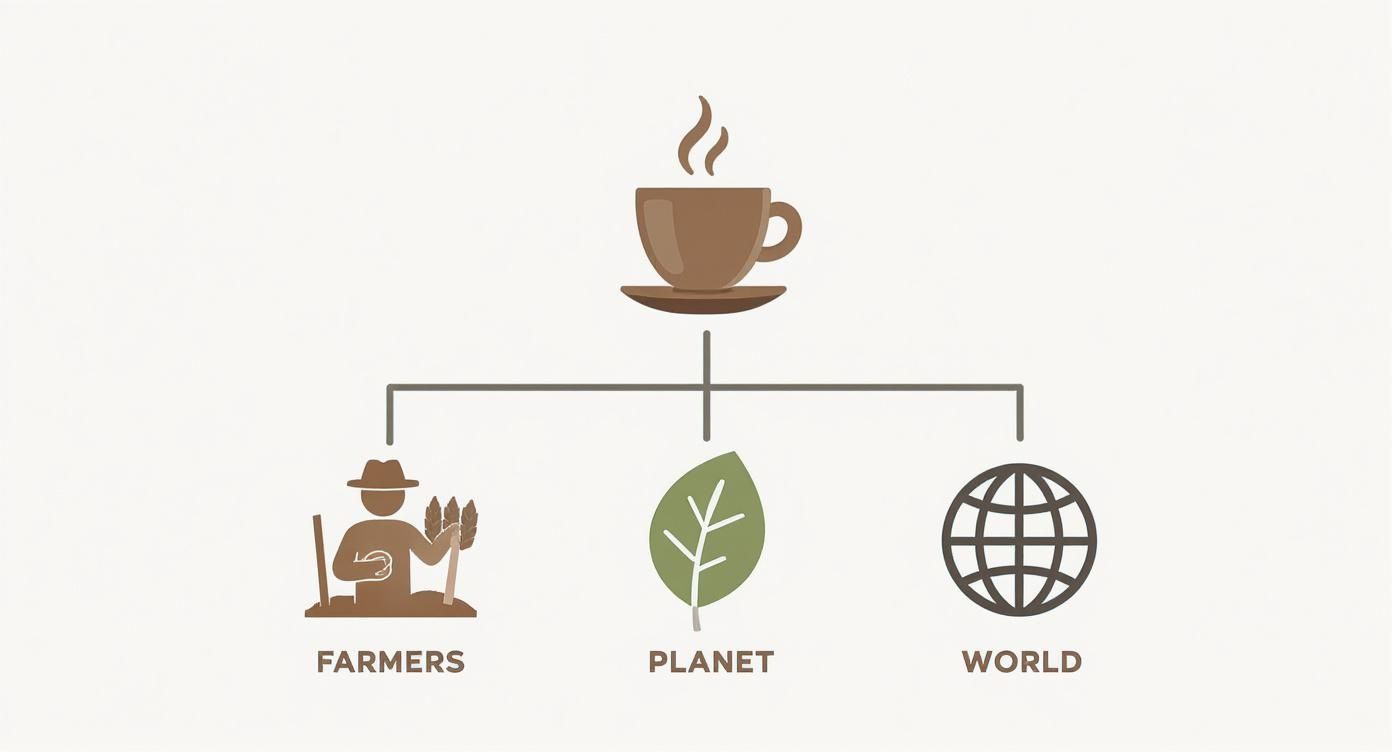
It’s a clear reminder that our simple daily ritual has far-reaching consequences for the people who grow our coffee and the health of our world.
Pillar 2: Social Equity
The second leg represents the people behind our morning brew—the farmers, their families, and their communities. Social equity is all about ensuring every person in the supply chain is treated with dignity and respect.
It begins with fair wages. This isn't just about covering production costs; it’s about paying farmers a price that provides a liveable income, allowing them to support their families, invest in education, and plan for the future. It’s the difference between merely surviving and truly thriving.
True sustainability is not charity; it is a business model built on mutual respect and shared success. It ensures that the people who grow our coffee can thrive, not just survive.
Beyond fair pay, social equity demands safe working conditions and investment in the wider community. This could be anything from providing protective gear to funding local schools or healthcare initiatives. Many of the best sustainable coffee companies build direct trade relationships, cutting out the middlemen to foster close, long-term partnerships with farmers and cooperatives. This ensures high standards are met and continually improved upon.
Pillar 3: Economic Viability
The final, crucial leg is economic viability. This pillar makes sure the entire system can last for generations to come. After all, if farming isn't profitable, no amount of good intention can keep it going.
Economic viability means paying premium prices for high-quality, sustainably grown coffee. This empowers farmers to reinvest in their land, adopt more eco-friendly techniques, and become more resilient to big challenges like climate change and volatile market prices. It creates a brilliant positive feedback loop: better practices lead to better coffee, which commands a better price, enabling even better practices.
Understanding different approaches, like circular economy business models for sustainable growth, helps to see what really defines an ethical and enduring company. It’s about building a system that’s profitable for everyone involved, from the farm right through to your cup.
When these three pillars—environmental, social, and economic—are held in perfect balance, a coffee company isn't just selling a product. It’s cultivating a better future for everyone.
Decoding the Labels on Your Coffee Bag
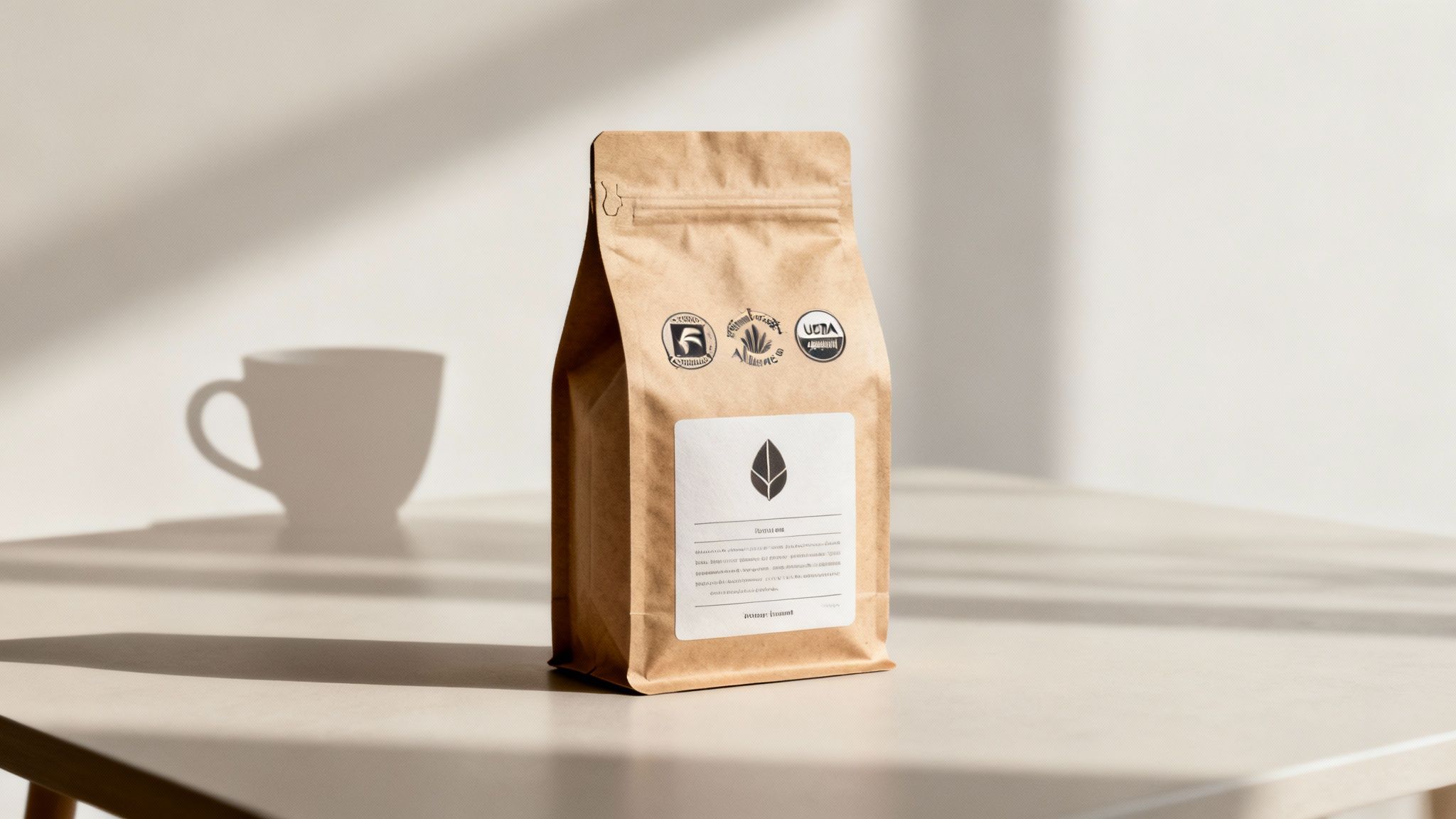
Walk down any coffee aisle and you'll be greeted by a colourful collection of seals and logos stamped across the packaging. These aren't just for decoration; they're windows into the story behind the beans. For sustainable coffee companies, these certifications are a promise—a commitment to ethics, environmental care, and quality you can trust.
But with so many different labels out there, it can feel like trying to learn a new language. Each seal represents a unique set of standards and priorities. Understanding them is the key to making choices that truly align with your values, ensuring the coffee in your cup is making a positive impact.
Let's demystify some of the most significant labels you'll come across.
The Fairtrade Mark: A Promise of Fairness
The Fairtrade logo is one of the most widely recognised symbols of ethical sourcing, and for good reason. At its heart, this certification is about creating a more equitable trading system for farmers in developing countries. It tackles the issue of volatile coffee prices head-on.
Think of the coffee market as a rollercoaster; prices can soar one month and plummet the next, leaving farmers in a precarious financial position. Fairtrade acts as a safety net.
Fairtrade sets a Minimum Price that must be paid to producers, shielding them from drastic price drops. On top of this, it provides an additional Fairtrade Premium—a sum of money for farmers and their communities to invest in projects like education, healthcare, or business improvements.
This model gives farmers the stability they desperately need to plan for the future, invest in their land, and build stronger, more resilient communities. When you see the Fairtrade mark, you know the people who grew your coffee received a fair deal.
Rainforest Alliance: Championing Biodiversity
If you spot a little green frog on your coffee bag, you've found a product certified by the Rainforest Alliance. This label signifies a deep commitment to environmental protection, social equity, and economic viability, with a real focus on biodiversity.
The Rainforest Alliance promotes farming practices that work in harmony with nature. This includes:
- Protecting Forests: Encouraging shade-grown coffee, which preserves natural forest canopies and prevents deforestation.
- Conserving Wildlife: Creating healthy habitats for countless species, from migratory birds to the iconic tree frog itself.
- Safeguarding Waterways: Implementing methods to protect local water sources from pollution and overuse.
- Promoting Worker Welfare: Upholding the rights and well-being of farm workers through fair wages and safe conditions.
Choosing a coffee with this seal means you're supporting farms that are actively regenerating ecosystems and fighting climate change, one coffee tree at a time.
USDA Organic: A Commitment to Natural Purity
The USDA Organic seal (or its UK equivalent from bodies like the Soil Association) is your guarantee that the coffee was grown without synthetic pesticides, herbicides, or fertilisers. This certification is all about purity and soil health.
Organic farming is a holistic approach that views the farm as an integrated ecosystem. Instead of relying on artificial chemicals, farmers use natural methods like composting to enrich the soil and crop rotation to manage pests. This not only keeps harmful chemicals out of our environment but also results in healthier, more resilient soil.
For many coffee lovers, the benefit is twofold. You get a cleaner cup of coffee, free from chemical residues, while also supporting farming practices that nourish the earth for generations to come.
Beyond Certification: The Power of Direct Trade
While certifications provide a valuable framework, some of the most impactful sustainable coffee companies operate on a model called Direct Trade. This isn't a formal certification with a logo, but rather a relationship-based philosophy.
In a Direct Trade model, roasters bypass the traditional commodity market and build personal, long-term relationships directly with farmers or cooperatives. They often pay prices significantly higher than Fairtrade minimums, rewarding producers for exceptional quality and sustainable practices.
This close partnership fosters transparency, collaboration, and mutual respect, allowing for a truly shared investment in a better coffee future.
Here is the rewritten section, crafted to match the style and tone of the provided examples.
The UK’s Growing Appetite for Ethical Coffee
The demand for sustainable coffee in the UK is much more than a fleeting trend. It's a genuine shift in what we value as consumers. Coffee drinkers across the country are now looking beyond the price tag and flavour profile, asking the important questions: Where did these beans come from? Who grew them? And what impact does my morning brew have on the planet?
This quiet revolution is reshaping the entire coffee landscape, from the independent café on the high street to the aisles of our biggest supermarkets. What was once a niche concern has now become a mainstream expectation. People are consciously choosing transparency and ethics, voting with their wallets for a higher standard of coffee that respects both people and the environment.
And it’s not just a feeling; the numbers back it up.
A Mainstream Movement
The momentum behind ethical coffee is impossible to ignore. As awareness grows, so does the demand for coffee that tells a story of fairness and environmental responsibility. Sustainable coffee companies are no longer on the fringe; they’re setting the new benchmark for what it means to be a modern, responsible business.
You can see this shift everywhere. Supermarket chains proudly stock certified coffee ranges, while local roasters build their entire brand on the back of direct relationships with farming co-operatives. This change wasn't dictated from the top down. It was sparked by millions of individual choices that, together, created a collective demand for better coffee.
The rise of the conscious consumer in the UK proves that when people demand better, the industry listens. Every choice to support a sustainable brand sends a clear message that ethics and quality are no longer optional extras—they’re expected.
This powerful trend is especially clear in the organic sector, a key pillar of the sustainable coffee market.
The Numbers Behind the Change
The UK’s organic coffee market tells a compelling story. In 2024, it generated $129.4 million in revenue. But the really telling part? It’s projected to reach $242.9 million by 2030—nearly doubling in just six years. This incredible growth is driven by a clear preference for traceable, ethically sourced beans, with Arabica varieties making up over 83% of organic sales this year. You can dive deeper into the data on the UK's organic coffee market growth at grandviewresearch.com.
These aren’t just statistics; they’re proof of a fundamental change in our priorities. It shows that UK consumers are actively seeking out products that align with their values and are willing to invest in a supply chain that’s transparent, fair, and kind to the environment.
This demand has created a positive ripple effect, encouraging more farmers to adopt organic practices and inspiring more roasters to seek out certification. It’s a perfect example of how our choices as consumers can build a more resilient and equitable coffee industry for everyone. The message is loud and clear: the future of coffee in the UK is sustainable.
How to Choose a Truly Sustainable Coffee Partner
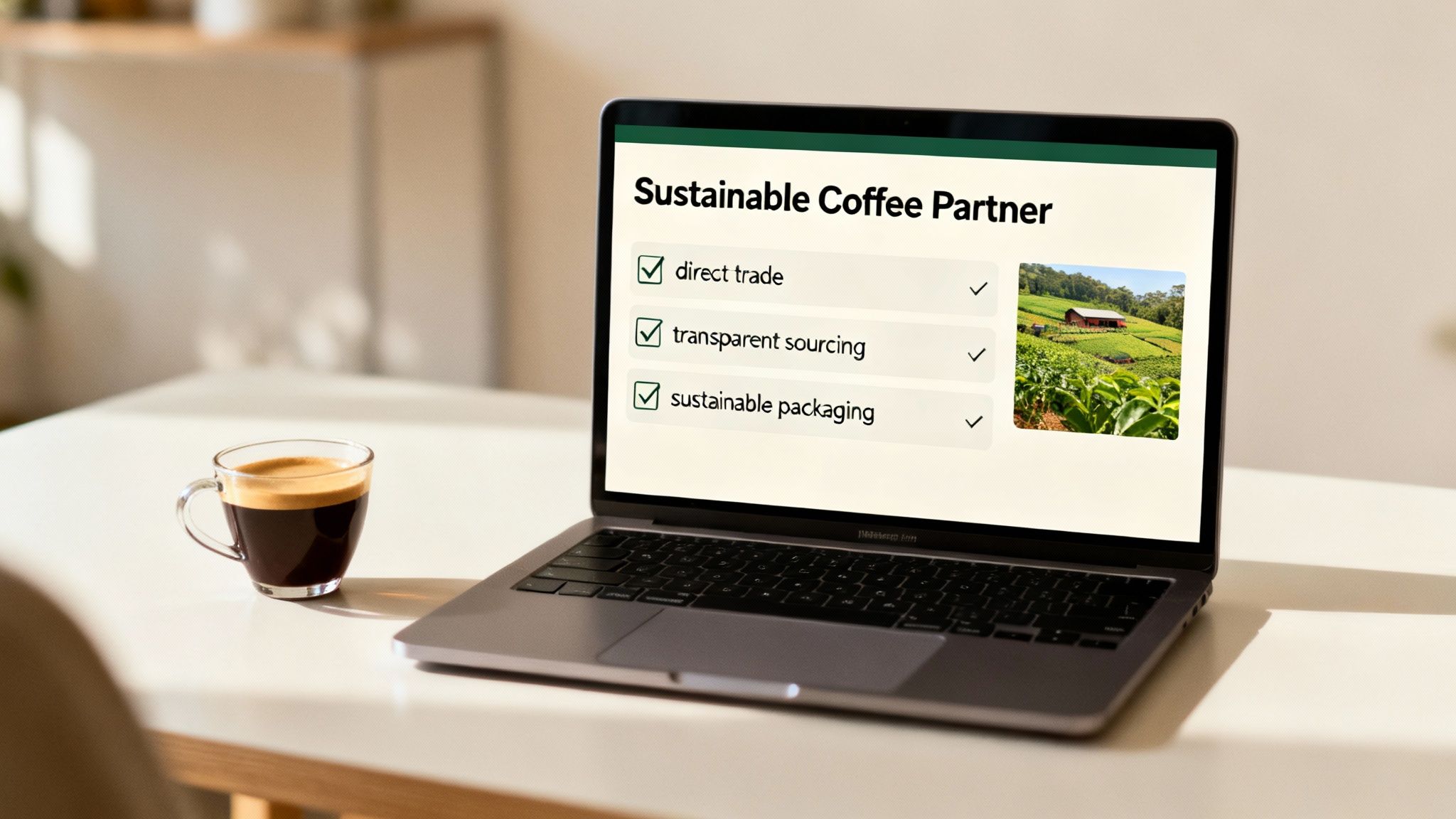
Now that you know what makes a coffee company genuinely sustainable, you can put that knowledge into action. Choosing the right partner isn't just about grabbing a bag off the shelf; it's about supporting a vision for a more equitable coffee world. This is where you shift from being a passive consumer to a conscious one.
This is your chance to look past the marketing slogans and certifications to find roasters who are really making a difference. It’s about asking the right questions, spotting the red flags, and feeling confident that your partner’s values line up with your own. Let’s break down the practical steps to find your perfect match.
Look for Radical Transparency
The biggest sign of a truly sustainable company? Transparency. Vague, feel-good phrases like "ethically sourced" or "eco-friendly" just don't cut it anymore. A committed partner will be proud to share the nitty-gritty details of their supply chain.
When you’re on their website, dig for specifics. Do they name the farms, estates, or cooperatives they work with? Do they share stories and photos of the farmers? The best sustainable coffee companies treat their producers as true partners and can't wait to introduce you to them.
Many of the most forward-thinking roasters now publish annual transparency reports. These documents go deep, often revealing the exact prices they paid for their green coffee—a practice that holds them accountable and proves they’re paying farmers a fair, liveable wage.
Investigate the Story Beyond the Seal
Certifications are a great starting point, but they aren't the whole story. A company’s real commitment to sustainability shines through in the relationships it builds. Look for proof of direct, long-term partnerships with farmers.
A truly sustainable relationship is built on more than just transactions; it's founded on mutual respect, shared goals, and a long-term commitment to quality and community. This is the heart of the direct trade model.
As you explore a potential partner, ask yourself these key questions:
- Do they talk about farm-level impact? Look for details about community projects they support, like building schools, improving local infrastructure, or funding healthcare initiatives.
- Is their pricing model clear? Do they explain how they ensure farmers are paid fairly, often well above commodity or even Fairtrade minimums?
- How long have they worked with their partners? Long-standing relationships are a strong sign of stability, trust, and a shared investment in a sustainable future.
Assess Their Commitment to the Planet
A company’s green credentials should extend all the way to its packaging. It’s a crucial, but often overlooked, piece of the puzzle. Look for roasters who are actively trying to reduce their environmental footprint.
Check for packaging that is:
- Recyclable: Many companies are switching to fully recyclable bags.
- Compostable: Some are using innovative plant-based materials that can be commercially or even home composted.
- Reduced: Look for minimalist designs and bulk-buying options that cut down on unnecessary materials.
This focus shows that a company is thinking about the entire lifecycle of its product, from seed to cup and beyond. It’s a clear signal that sustainability is woven into every part of their business. Choosing your partner is your chance to support a company that’s building a better world, one delicious, ethical, and thoughtfully packaged coffee at a time.
Your Questions on Sustainable Coffee Answered
Diving into the world of conscious coffee consumption can spark a lot of questions. As you start looking closer at what’s in your cup, it’s only natural to wonder about the real impact of your choices. This is a brilliant thing—it shows you’re shifting from simply drinking coffee to actively shaping a better, fairer coffee future.
To help you on this journey, we've put together answers to some of the most common questions we hear about sustainable coffee. Let's get straight to it, bust a few myths, and give you the confidence to make choices that genuinely matter.
Is Sustainable Coffee Always More Expensive?
It’s true that some sustainable coffees have a higher price tag, but it helps to think of this not as an "expense" but as the true cost of a quality, ethical product. That small premium is a powerful investment.
It covers the real-world costs of paying farmers a dignified wage, looking after soil health for future generations, and protecting the delicate ecosystems where our coffee grows. When farmers are paid fairly, they can afford to use these better practices, which ultimately safeguards the future of coffee for everyone.
Think of it this way: the price of sustainable coffee isn’t an added cost. Instead, it’s a reflection of a system where no one—neither people nor the planet—is paying a hidden price. It’s an investment in a resilient and just supply chain.
On top of that, many direct-to-consumer roasters offer very competitive pricing. The small increase you might pay often means a huge improvement in the coffee's quality and, more importantly, a major positive impact right at the source.
What Is the Difference Between Fair Trade and Direct Trade?
Both Fairtrade and Direct Trade are fantastic models designed to create a more equitable system for coffee farmers, but they get there in different ways. Understanding their unique approaches helps you appreciate the different strategies that sustainable coffee companies use.
-
Fairtrade: This is a formal certification system with a clear set of internationally agreed-upon standards. Its main features include a minimum price safety net to shield farmers from volatile market swings and an extra social premium paid to communities. This money is often reinvested in local projects like new schools or healthcare facilities.
-
Direct Trade: This model is all about relationships. It’s not a formal certification but a philosophy where roasters build personal, long-term partnerships directly with farmers or cooperatives. They often pay prices well above the Fairtrade minimum, working together on everything from quality improvements to sustainable farming methods.
One isn't inherently better than the other; they are simply different but equally valuable routes to the same destination: empowered farmers and a more just coffee world.
How Can I Spot Greenwashing Claims?
"Greenwashing" is when a company makes vague or misleading claims about its environmental or ethical practices to win over conscious consumers. The good news is, you can learn to spot it by looking for one key thing: transparency.
Genuinely sustainable companies are proud of their work and want to share the details. They provide real, concrete evidence of their impact. Greenwashers, on the other hand, often hide behind broad, feel-good buzzwords that don't actually mean anything.
Here are a few red flags to watch for:
- Using vague terms like "eco-friendly," "green," or "natural" without any proof.
- A lack of specifics about farm locations or producer partnerships.
- Making big claims without any third-party certifications or data to back them up.
A truly sustainable partner will tell you detailed stories. They'll name the farms they work with, publish transparency reports on their pricing, and be open about their entire process, from the farm right through to your cup.
Does Sustainable Coffee Actually Taste Better?
In a word: yes! The very practices that define sustainability—caring for the environment and for people—almost always lead to a higher-quality, more delicious cup of coffee. There's a direct link between ethical practices and exceptional flavour.
For instance, shade-grown coffee, a cornerstone of sustainable agriculture, allows the coffee cherries to ripen more slowly. This longer maturation process develops deeper, more complex, and nuanced flavours in the beans.
What's more, when farmers receive fair payment, they can afford to invest in better harvesting and processing equipment. They can take the time to meticulously hand-pick only the perfectly ripe cherries, which is absolutely crucial for producing the best-tasting coffee. A focus on rich, organic soil also makes for a healthier plant, which in turn yields a superior final product. All that care for the planet and its people translates directly into the quality you can taste.
At Ue Coffee Roasters, we believe that a truly exceptional cup of coffee is one that tastes good and does good. We bring the quality and craftsmanship of speciality coffee into your workplace, ensuring every sip supports a sustainable and ethical supply chain. Discover our premium refreshment solutions for your office and elevate your team's coffee experience by visiting us at https://www.uecoffeeroasters.com.